SGA donor owns estate ‘among the worst in Scotland for wildlife crime’

SGA donors 2014 EdradynateThe Scottish Gamekeepers’ Association publishes a quarterly magazine for its members. The latest edition (winter/spring 2014) includes a list of recent donors. We were intrigued to see the following entry:

MDCC Campbell Edradynate Estate (Donation: £1720)

Could this be Michael David Colin Craven Campbell, who resides in Hampshire but owns Edradynate Estate? So why would this entry be intriguing? Why wouldn’t they accept funding from Mr Campbell, who was awarded an MBE in 2008 for services to charity, was appointed by the Queen to become High Sheriff of Hampshire 2008-2009 and has an entry in Debretts? No reason whatsoever to reject a generous donation from such an upstanding and distinguished gentleman whose Debrett’s entry lists ‘shooting’ and ‘escaping to Scotland’ amongst his recreational activities. Right?

Edradynate Estate near Aberfeldy in Perthshire was described in 2004 by the then RSPB Investigations Officer Dave Dick as being “among the worst in Scotland for wildlife crime” (see here).

In January 2005, the then Police Wildlife Crime officer for Tayside Police, Alan Stewart, described Edradynate Estate as follows:

Edradynate Estate, which is owned by an absentee landlord from Hampshire, has probably the worst record in Scotland for poisoning incidents, going back more than a decade. In 14 separate incidents since 1998, 16 poisoned victims (9 buzzards, 1 cat, 1 tawny owl, 2 sparrowhawks, 1 common gull, 1 polecat and 1 carrion crow) and 12 poisoned baits (rabbits, wood pigeons and a pheasant) have been found, with traces of the pesticides Mevinphos, Carbofuran and Alphachloralose” (see here, page 3).

These two prominent wildlife crime investigators were commenting following the collapse of a case against two gamekeepers from Edradynate Estate. In 2002, the Head gamekeeper and an under keeper had been charged with nine offences relating to the alleged use of poisoned baits and bird cruelty, including the use of spring traps. These charges followed a police raid on Edradynate Estate where three rabbit baits, a dead buzzard and a dead crow had been found. Lab tests detected Carbofuran and Alphachloralose. A game bag and a knife seized during the search showed traces of these poisons when swabbed.

On 22 July 2004, two years after the original arrests and 13 court hearings later, the Fiscal dropped the case following a series of adjournments called by both the defence and the prosecution. A Crown Office spokeswoman admitted that the time taken to prepare the case for trial had been a major factor in the decision to drop the case.

The 2002 raid was the second police search on Edradynate Estate. In Alan Stewart’s book, Wildlife Detective, he writes the following:

This would be our second major search of the estate under warrant and we hoped this time to find sufficient evidence to bring to an end the catalogue of poisoned baits and victims that had turned up on the estate with the worst record by far not just in Tayside but in Scotland”.

The crimes didn’t end there.
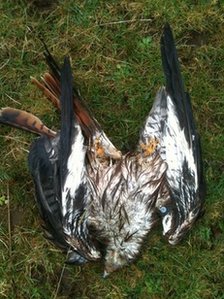
a dead red kiteIn July 2010 a poisoned red kite was discovered in the area (see here). According to Tayside Police, ‘five buzzards and a tawny owl met with the same fate in the same area in the last year’.

In September 2010, an un-named gamekeeper from Edradynate Estate, a self-proclaimed member of the SGA, talked to the Courier about the discovery of the poisoned red kite:

As a member of the Scottish Gamekeepers’ Association, I am against anything illegal. Anybody who does this should be jailed because it’s not on and I have never done anything like this in my life. To find a poisoned bird on my ground is just wrong because I don’t use poison and wouldn’t know how to.

There is something funny about this and I think someone else has killed this bird and planted it on my estate. Why they have done that, I don’t know. We have never seen a red kite, living or dead, in the Strathtay valley so I don’t know where this has come from. The laird is so upset about it, as am I, because it besmirches our reputation and it’s reflecting badly on me.

I am a professional person and I have worked hard for all these years on the estate and never had anything against my name. This is causing me a lot of stress and strain because I don’t know what is going to happen next. I’ve never been involved in anything like this before.

It’s very reassuring to know that I have the full support of the laird because this job is something I love doing.” (see here).

In March 2011 two poisoned buzzards and two poisoned crows were discovered, along with two poisoned pheasant baits. Carbofuran was detected this time. Tayside Police conducted another search (their third on this estate?) and it was reported that a 62 year old man was taken in for questioning but was released pending further enquiries (see here). We’re not aware of any other media statements about this incident.

In September 2013, the Crown deserted a case against Edradynate Estate’s Head gamekeeper on alleged firearms and explosives charges. The reason for this desertion was not made public (see here).

Nobody has ever been convicted for any of the alleged offences on Edradynate Estate.

Alan Stewart wrote about a 1995 incident on Edradynate Estate in his Wildlife Detective book, concerning the discovery of a poisoned cat belonging to the occupier of a cottage on Edradynate Estate. A search in a nearby wood had recovered a poisoned pheasant bait and a poisoned tawny owl – later all found to contain traces of Mevinphos. A further search had recovered two wood pigeon baits and a poisoned sparrowhawk, all found inside a pheasant pen. They all contained traces of Mevinphos. Stewart wrote:

I visited a number of residents on the estate and was absolutely shocked at what I learned. According to the interviews I carried out, my suspect had, at various times, set up a gun with a string attached to the trigger to pepper with wheat any intruder who brushed against the string. He had allegedly driven into Perth to the workplace of a person who lived on the estate, to remonstrate with him after a pheasant had been knocked down and killed by the person’s car. He had allegedly poisoned a tenant farmer’s collie, and also shot dead the dog of a visitor to a neighbouring estate after the dog had run off and was being pursued by its owner. I was taken aback by the vitriol these people had for my suspect but their hatred was tempered with fear and all interviews were ‘strictly off the record’. All those I spoke to were in tied houses and none wanted to become involved in a prosecution. News of my investigation had travelled fast and out of the blue I received a telephone call from a former factor for the estate. He had anticipated the reluctance of those who could potentially help, wished me the best of luck, but doubted that my enquiry would ever result in court proceedings”.

A prosecution in this case was attempted but the case was deserted after it became time-barred due to a lack of available evidence to link the individual suspect to the alleged offences.

Alan Stewart wrote:

The following week [just after the case had been deserted] I learned that another employee had borrowed the suspect’s Land Rover but it had broken down. In his search for tools to repair it, he had lifted up the passenger seat to search the compartment underneath as the most likely place for tools to be stored. Instead of tools there were three dead sparrowhawks. I am sure this would have clinched the case but naturally the employee wanted to keep his job and his house and the information came to me via a third party”.

Stewart wrote about another incident in 2001 – the discovery of a poisoned buzzard on the estate that had been killed by Carbofuran:

The usual enquiries were made and the usual suspect interviewed, but his involvement could not be established……..In the investigations on Edradynate Estate, we could prove beyond reasonable doubt that baits and dead birds and animals were being found with monotonous regularity on the estate. We could prove beyond reasonable doubt that the baits were laced with particular pesticides and that the victims had been poisoned after having consumed part of these baits. What we were so far unable to prove was who set the baits”.

Wildlife protection laws have had little impact on driven grouse moors

Fearnan Angus Glens Dec 2013There’s an excellent article in the Scotsman today, written by Duncan Orr-Ewing, Head of Species and Land Management at RSPB Scotland.
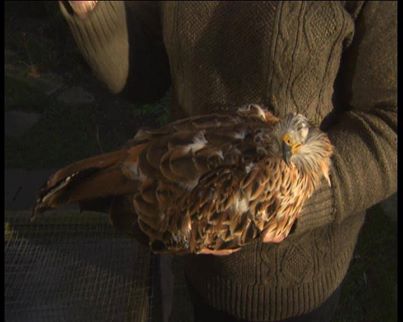
He discusses the failure of wildlife protection laws to aid the recovery of several raptor species, including the hen harrier, golden eagle, red kite and peregrine, on land managed for driven grouse shooting.

Read the article here.

On a related issue, Mark Avery’s blog today is all about the e-petition for the licensing of grouse moors and gamekeepers (which ends today) – and hints at the growing frustration of those who have been relying on the authorities to ‘sort out’ the illegal persecution of raptors on driven grouse moors. There’s a particularly pertinent comment from Pete Cosgrove:

Has anyone assessed what other criminal enterprises get ignored by Government in this kind of way?

There’s a definite ‘something’ in the air…


Red kite shot dead in West Yorkshire – police appeal 4 months later

Red Kite shot N Yorks Oct 2013Police are appealing for information four months after the discovery of a dead red kite in West Yorkshire.
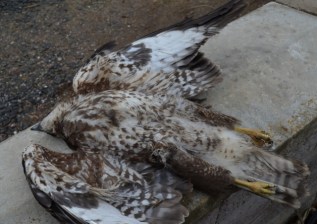
The one year old bird was found by a footpath on the River Wharfe between Wetherby and Harewood last October. It had been shot.

The news about this bird’s death emerged via the BBC Look North (Yorkshire) Facebook page a couple of days ago (as highlighted on the Birders Against Wildlife Crime Facebook page).

We’ve looked elsewhere for a press release but can’t find anything, either from October or now, including on the West Yorks Police website and police local community news sites.

What’s the point of waiting for four months before appealing for information? Why, after all the reassurances that ‘wildlife crime is a police priority’, are we still seeing these poor responses?

West Yorks Police have previously been applauded for their reaction to suspected raptor persecution in their area, and deservedly so (see here).


Buzzard poisonings in Northern Ireland: 1 confirmed, 3 suspected

BZNIPolice in Northern Ireland are appealing for information about the suspected poisonings of 3 buzzards in two separate incidents.

In the first incident (April 2013!) a dead buzzard was found on land at Drumdreenagh Road in the Hilltown area of Warrenpoint, County Down. We happen to know that this bird was found with a dead red kite which has since been confirmed as being poisoned with Carbofuran.

The second incident (October 2013) was also in the Hilltown area – this time two buzzards were found dead on land in the Lisnamulligan Road.

Anyone with information can contact the police in Warrenpoint on 0845-600-8000. Article in Newry Times here.

It’s more than a little concerning that the police appeal for information has only just appeared and that the cause of death has not yet been confirmed – poisoning is still only suspected at this stage. We’ve blogged before about the excessively long delays in getting toxicology results from the lab in Northern Ireland (e.g. see here) and it seems reasonable to assume from the information provided in the latest press release that this is an on-going problem. Such slow response times can only hinder the police investigations, and also the work of the conservationists trying to assess whether the buzzards were deliberately targeted or were the unintended victims of secondary poisoning.

Another dead buzzard that was found in Castledawson, Co. Londonderry in March 2013 has been confirmed as being poisoned with Carbofuran. The police put out an appeal for information about this incident in October 2013 (article here).

A community buyout proposal for Leadhills?

RK Leadhills 2013This looks interesting….

There will be a public meeting at 2.30pm next Saturday (January 18th 2014) at Leadhills Village Hall to discuss the possibility of a community land buyout scheme at Leadhills, South Lanarkshire.

The meeting, which is open to everyone, will hear talks from two prominent figures involved with community land buyout schemes as well as presentations by local residents on the community land buyout process and the benefits these schemes can bring.

A brighter future for the wildlife in and around Leadhills? We think so.

Further details of the meeting here

Photo: this red kite was found critically-injured in Leadhills village in August last year. It had been shot. It didn’t survive (see here).

Another dead buzzard in Scotland: another pathetic police response

Police Scotland has issued an embarrassingly vague press release following the discovery of a dead buzzard in suspicious circumstances.

According to the BBC report (here), which is presumably based upon the police’s press release, the dead bird was found “near the village of Tomatin in the Highlands” by a member of the public on 9th December 2013.

Police said an examination of the buzzard suggested it had not died of natural causes“.

In other words then, it had been illegally killed. The cause of death has not been mentioned, and nor has the specific location.

Given that Tomatin is in the heart of grouse moor country, and that this area is a well known raptor persecution hotspot on a par with the Angus Glens, we can’t help but question why this press release has been designed to be so deliberately cryptic. Who are the police trying to protect?

It’s not the first time, either. In June 2013 they issued a similarly cryptic press release following the discovery of a dead red kite in Aberdeenshire. They said: “After recovery of the carcass, a post mortem was carried out. This revealed that the bird’s death was not by natural causes“. It was later reported that the kite had been shot (see here).

In September 2010, they issued a vague appeal for information following the discovery of an osprey in the Highlands that died from what they described as “deliberately inflicted injuries“. It was later reported that the osprey had been shot (see here).

Is it any wonder that we’ve lost complete confidence in Police Scotland to investigate this type of wildlife crime? What other offence would trigger such an uninformative police statement? Have you ever seen a police response like it? It’s like a new game show, ‘Guess the Crime’, hosted by Police Scotland: Something illegal happened in the Central Belt four weeks ago. We’re not telling you what it was or where it happened; you’ll have to guess. Anyone with information is asked to contact the police‘.

Public anger over the continued illegal killing of raptors on grouse moors is already at an all-time high following the death of golden eagle ‘Fearnan’ last month, found poisoned in the Angus glens. The police’s continued unwillingness to provide transparency over these investigations is sure to add to that sense of fury. These criminals are getting away time after time, and it’s not hard to see why.

If you want to express your frustration and dissatisfaction with the way Police Scotland are behaving during these wildlife crime ‘investigations’ (and we use that term loosely), please email Environment Minister Paul Wheelhouse and ask him for an explanation: ministerforenvironment@scotland.gsi.gov.uk

We know that hundreds of you emailed him just before Xmas following the death of golden eagle Fearnan. Don’t underestimate how powerful that volume of messages from the public can be.

Golden eagle found poisoned on Angus grouse moor

A two-year old golden eagle named ‘Fearnan’ has been found dead on a Scottish grouse moor. He had been poisoned with a banned pesticide. The poison hasn’t been named but we’ll take an educated guess at Carbofuran, the gamekeepers’ poison of choice.

Interestingly, there are three separate press releases about this latest disgraceful crime:

One from the government via PAW (here)

One from the police (here)

One from RSPB Scotland (here)

Usually, we’re lucky to see anything for at least 4-5 months after the crime so it’s somewhat surprising to see the scuffle for media attention on this one. Could this be a sign that Environment Minister Wheelhouse has put his foot down and demanded that timely press statements are released? We can’t think of any other reason why the police should suddenly change their tactics from seemingly apathetic to seemingly responsive.

Of course, regular blog readers will already know that Fearnan is not the only poisoned eagle to have been found dead in the Angus Glens. In fact, there’s been a fair bit of raptor persecution over the last nine years. Here’s a list of incidents we’ve compiled from various published reports:

2004 May, near Edzell: long-eared owl and two short-eared owls starved to death in crow cage trap.  No prosecution.

2004 May, Invermark Estate: peregrine nest destroyed. No prosecution.

2006 March, Glenogil Estate: poisoned rabbit bait (Carbofuran). No prosecution.

2006 April, Easter Ogil: poisoned buzzard (Alphachloralose). No prosecution.

2006 April, Easter Ogil: poisoned tawny owl (Alphachloralose). No prosecution.

2006 May, Glenogil Estate: poisoned rabbit bait (Carbofuran). No prosecution.

2006 June, Glenogil Estate: poisoned woodpigeon bait (Carbofuran). No prosecution.

2006 June, Glenogil Estate: Traces of Carbofuran found in estate vehicles & on equipment during police search. No prosecution. Estate owner had £107k withdrawn from his farm subsidy payments. This was being appealed, but it is not known how this was resolved.

2006 July, Millden Estate; poisoned sheepdog (Lindane). No prosecution.

2007 November, Glenogil Estate: Disappearance of radio-tagged white-tailed eagle ‘Bird N’ coincides with tip off to police that bird been shot. No further transmissions or sightings of the bird.

2008 May, ‘Nr Noranside’: poisoned white-tailed eagle ‘White G’ (Carbofuran, Isophenfos, Bendiocarb). No prosecution.

2008 May, ‘Nr Noranside’: poisoned buzzard (Bendiocarb). No prosecution.

2008 May, ‘Nr Noranside’: poisoned mountain hare bait (Carbofuran, Isophenfos, Bendiocarb). No prosecution.

2008 May, Glenogil Estate: 32 x poisoned meat baits on fenceposts (Carbofuran, Isophenfos, Bendiocarb). No prosecution.

2008 October, ‘Glenogil Estate: poisoned meat bait on fencepost (Carbofuran). No prosecution.

2009 March, Glenogil Estate: poisoned buzzard (Carbofuran). No prosecution.

2009 March, Glenogil Estate: poisoned buzzard (Carbofuran). No prosecution.

2009 April, Millden Estate: poisoned buzzard (Alphachloralose). No prosecution.

2009 July, Millden Estate: poisoned golden eagle ‘Alma’ (Carbofuran). No prosecution.

2009 August, Glenogil Estate: poisoned white-tailed eagle “89” (Carbofuran). No prosecution.

2010 May, ‘Nr Noranside’: poisoned red kite (Carbofuran). No prosecution.

2010 September, Glenogil Estate: poisoned buzzard (Chloralose). No prosecution.

2010 October, Glenogil Estate: poisoned buzzard (Carbofuran). No prosecution.

2010 October, Glenogil Estate: poisoned pigeon bait (Carbofuran). No prosecution.

2010 October, Glenogil Estate: poisoned pigeon bait (Carbofuran). No prosecution.

2011 February, Airlie Estate: buzzard caught in illegal crow trap. (see below)

2011 March, Airlie Estate: 3 x buzzard caught in illegal crow trap. Prosecution (!) but dropped after statement from suspect given to SSPCA deemed inadmissible.

2011 April, Millden Estate: shot buzzard. No prosecution.

2012 April, ‘Nr Noranside’: Remains of buzzard found beside pheasant pen. Suspicious death.

2011 June, Rottal & Tarabuckle Estate: dead kestrel inside crow cage trap. No prosecution.

2012 February, ‘Nr Edzell’: spring-trapped buzzard. No prosecution.

2012 February, ‘Nr Bridgend’: remains of buzzard found under a rock. Suspicious death.

2012 May, Millden Estate: satellite-tagged golden eagle caught in spring trap, then apparently uplifted overnight and dumped on Deeside. No prosecution.

2012 May, Glen Esk: disappearance of sat-tagged red kite. No further transmissions or sightings of bird.

2013 January, Invermark Estate: white-tailed eagle nest tree felled. No prosecution.

2013 November, Glen Lethnot: poisoned golden eagle. Prosecution? Highly unlikely!

We think you’ll agree, this is overwhelming evidence that some people in the Angus Glens are systematically persecuting birds of prey, they have been for many years, and those same people are avoiding criminal justice for their disgusting and illegal activities. We call them The Untouchables.

Why have they been able to avoid prosecution for so long?

Now would be a good time to ask the Environment Minister for an explanation. While you’re at it, please also mention your revulsion about the continued practice of illegal raptor persecution on driven grouse moors. The time for estate licensing is here; the game-shooting industry, quite clearly, cannot or will not self-regulate.  Emails to: ministerforenvironment@scotland.gsi.gov.uk

RIP Fearnan.

posioned GE Lethnot 2013

Gamekeeping orgs’ half-witted attempts to blur the truth

Birdcrime 2012Earlier this month the RSPB published two reports: one detailing raptor persecution crimes in Scotland during 2012 (see here) and one detailing raptor persecution crimes throughout the UK in 2012 (see here).

You’d think that the RSPB’s so-called ‘partners’ in the Partnership for Action Against Wildlife Crime (PAW) would welcome the reports, highlighting as they do the continued criminal persecution of birds of prey. That’s what PAW partners are all about, right? Raising public awareness and finding ways of cracking down on wildlife crime?

Apparently not.

Here is the response of the National Gamekeepers’ Organisation to the RSPB’s UK-wide report. In case they decide to remove it from their website, we’ve reproduced it here:

NGO Comments on the RSPB 2013 Birdcrime Report

Saturday 14th Dec 2013

The National Gamekeepers’ Organisation has issued the following comment on publication of the latest edition of the RSPB Birdcrime Report.

A spokesman for the National Gamekeepers’ Organisation said: “The NGO stands for keepering within the law and automatically condemns illegal activity. That is why the NGO is proud to be a member of PAW – the Partnership for Action Against Wildlife Crime. Furthermore, science has proven gamekeepers to be some of the most effective conservationists working in the British countryside today.

Intriguingly the RSPB’s shrill comments on persecution appear to lack the context that is essential for the public to form its own considered opinion. What the RSPB fails to mention in its news release is that the UK’s bird of prey population, taken as a whole, is thriving, with almost all species at record high levels. 

This seems a curious oversight for a charity required by law to educate the public in a balanced manner. This very important omission is intriguing, given the RSPB’s usually conscientious approach to its work. I believe it is fair to ask whether it’s perhaps to encourage charitable donations to the RSPB in the run-up to Christmas, a time of year when people are quick to put their hands in their wallets?

To view the RSPB 2013 Birdcrime Report News Release visit http://www.rspb.org.uk/media/releases/359085-sixty-years-of-protection-but-the-killing-continues

Good god, where do we start? With the bit about gamekeepers being ‘some of the most effective conservationists working in the British countryside today’?!! Or the bit about how we, the general public, are unable to form our own ‘considered opinion’ because the report apparently ‘lacks context’?!!

How about the statement: “What the RSPB fails to mention in its news release is that the UK’s bird of prey population, taken as a whole, is thriving, with almost all species at record high levels“.

The reason the RSPB ‘failed to mention’ this is probably because it’s a big fat massive distortion of the truth! ‘Almost all species at record high levels‘? That would be ‘almost all species’ apart from golden eagle, white-tailed eagle, hen harrier, red kite, goshawk, peregrine; all of which are being held at unnaturally low population levels thanks to illegal persecution, according to countless scientific studies.

And what on earth does ‘taking the UK’s bird of prey population as a whole‘ mean? Where’s the scientific validity of that? It’s absolutely meaningless pseudo-scientific rubbish! It’s like saying there’s no need to be concerned about the near-extinction of rhinos or elephants in Africa because big mammals ‘as a whole’ are doing ok.

sam4Not to be outdone in the idiot stakes, the NGO’s Scottish colleagues at the Scottish Gamekeepers’ Association have published their own statement in response to the RSPB’s Scotland Persecution report.  We’ve reproduced it here:

SGA STATEMENT: RSPB BIRD OF PREY REPORT

Following the release of an unofficial report by the RSPB today on the Illegal Killing of Birds of Prey in 2012, the SGA issued the following response. An SGA Spokesman said: “The RSPB has clearly spent a lot of money in writing this report, which entitles them to put forward their own viewpoint. “With this agenda in mind, it is important, that the public refer to the actual crimes, as published annually by the Scottish Government with information provided officially by the Police and SASA, rather than speculative possible or suspected cases, which are clearly going to confuse the public. “All PAW partners, including ourselves, are fully behind the printing of the official statistics annually, based on actual legal cases, and see no reason why this should change. “While we have been encouraged by the progress made, with the official statistics stating a record of only 3 confirmed cases of illegal poisoning of birds of prey in 2012, reports such as this do little other than damage to on-going partnership efforts designed to reduce crimes against birds of prey. “As stated consistently, the SGA continues to advocate legal means to solving countryside conflicts. Because of this, the clarity and impartiality provided by law is important to us.”

Again, not what you might expect from a PAW ‘partner’. According to the SGA, the public are ‘clearly going to be confused’ by the report’s contents. Really? Is anybody ‘confused’? We’re not – the report presents the facts in the most clear way possible – the illegal persecution of raptors continues to take place on game-shooting estates up and down the country. Our raptors are still being poisoned, trapped, shot, and bludgeoned to death on sporting estates and the majority of the criminals are still avoiding prosecution: we call them The Untouchables.

It’s also interesting to see the SGA continue to peddle the myth that poisoning is in decline. According to our 2013 figures, poisoning in Scotland has actually increased by 66% in this, the Year of Natural Scotland, and that’s not including the discovery of poisoned baits…if we included every single poisoned bait found this year (as each one had the potential to kill at least one raptor had the baits not been discovered and removed), then the figure would jump to a phenomenal 1,333% increase in poisoning!!!

The SGA claims that the RSPB’s report does ‘little other than damage the on-going partnership efforts designed to reduce crimes against birds of prey’. We would argue that the SGA’s continued involvement in the PAW Scotland raptor group, and the NGO’s continued involvement in the English PAW group, does little other than taint the credibility of the PAW concept. In fact it doesn’t just taint it – it soaks it in implausibility. The sooner the other PAW partners realise this and vote these gamekeeping organisations off the panel, the better. PAW is not going to achieve anything as long as some of the ‘partners’ continue to deny and distort the facts. Oh, and harbour convicted wildlife criminals.

North Yorks still worst place for raptor persecution in 2012

The RSPB has published its 2012 Birdcrime report documenting bird persecution throughout the UK.

North Yorkshire has once again come top of the league for the number of reported crimes against birds of prey (34), with Aberdeenshire a close second with 31 reported incidents. Both counties, of course, include large areas of land used for driven grouse shooting.

The 2012 report includes statistics that are all too familiar: confirmed shootings of short-eared owls, sparrowhawks, buzzards, barn owls, tawny owls, hen harriers, golden eagles, marsh harriers, and peregrines; confirmed nest destruction of peregrines, goshawks and barn owls; confirmed illegal spring-trapping of buzzards, golden eagle and peregrine; other types of illegal trapping (including crow cage traps) of sparrowhawks, tawny owls, buzzards and goshawks; and the confirmed illegal poisoning of ravens, red kites, buzzards, golden eagles, marsh harriers, peregrines, cats and dogs.

Remember, these are just the confirmed incidents. Plenty more ‘probable’ and ‘unconfirmed’ cases, and of course there are all the incidents that went undiscovered/unreported.

Does that sound to you like the game-shooting industry is cleaning up its act?

Well done to the RSPB for their meticulous work and especially for their willingness to share these data with the general public.

RSPB press release here

Download the RSPB’s 2012 Birdcrime report here

The photograph shows the shot hen harrier Bowland Betty, found on a North Yorkshire grouse moor in 2012. Nobody has been brought to justice for her death.

Two marsh harriers and a red kite poisoned: late appeal for info

The RSPB and two county police forces have put out an appeal for information following the discovery of a poisoned pair of Marsh Harriers and a Red Kite.

According to the press release (see here), the two breeding Marsh Harriers were discovered in April on land adjacent to the RSPB’s Nene Washes Nature Reserve in Cambridgeshire. The Red Kite was discovered in Old Leake, Boston, Lincolnshire in May. Toxicology analyses showed that all three birds had been poisoned with the banned pesticide Aldicarb.

So here we are again, a ridiculously late appeal for information, seven and six months respectively after the birds had been found. Further more, according to the press release, the Chemicals Regulation Directorate (CRD) who funds the toxicology testing programme has already declared the two cases closed!

It seems there is more to these cases than meets the eye. Rumour has it that these cases have not been thoroughly investigated due to a lack of police resources. If that’s true, then why weren’t other agencies drafted in to help? Where’s all the much-heralded ‘partnership working’?

And why the bloody hell are appeals for information still coming so late? Every single bloody time it’s the same old story. What’s the point? Why is it so difficult to get these investigations right? That will be a question we’ll be posing in due course (and you can, too) to the newly-appointed ACPO (Association of Chief Police Officers) lead on Wildlife and Rural Crime, Chief Constable Simon Prince (from Wales). Watch this space.

In the meantime, we had a look at the quarterly poisoning results published by the CRD’s Wildlife Incident Investigation Scheme (see here). Have a look and see how many confirmed poisoning cases you can spot in England and Wales between Jan – June 2013 that have not been publicised in the media.

It seems the influence of The Untouchables spreads far and wide throughout these isles.

Here are the two poisoned Marsh Harriers

Marsh Harriers poisoned Nene 2013

And here is the poisoned Red Kite

RK poisoned Lincoln 2013