Yet another red kite found illegally poisoned in Nidderdale AONB

Press release from RSPB (28 November 2019)

Red Kite poisoned in Nidderdale

North Yorkshire Police and the RSPB are appealing for information after a protected red kite was found poisoned in an area of North Yorkshire with the worst record for the illegal killing of birds of prey in England.

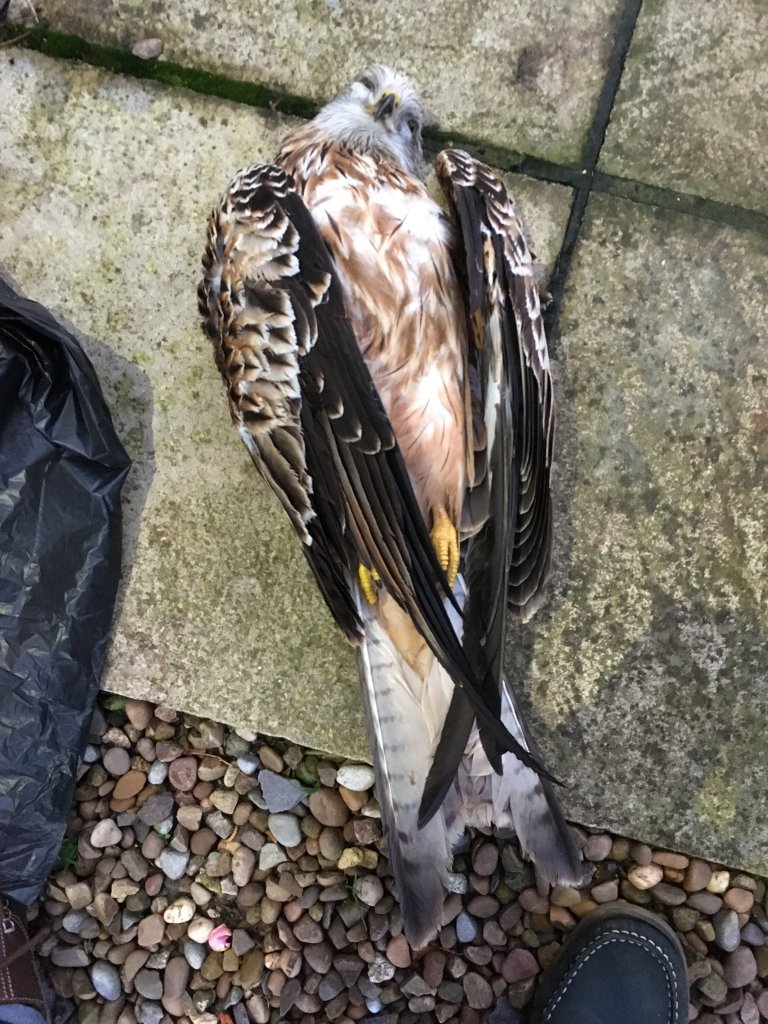
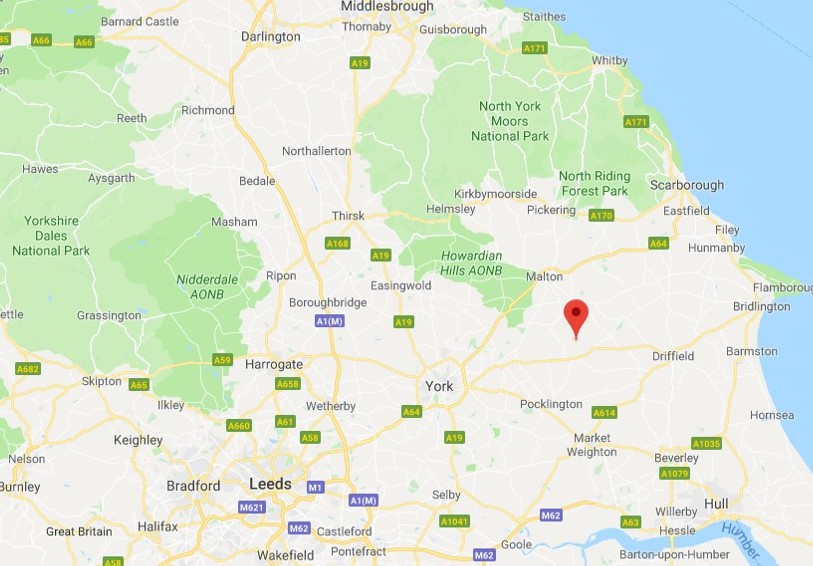
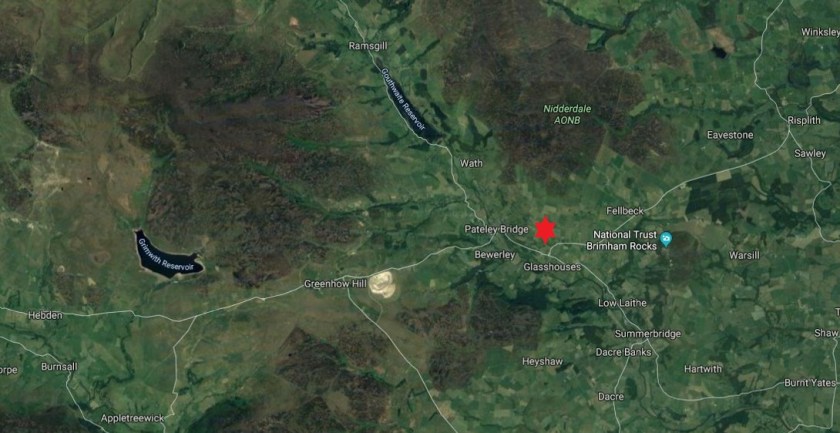
A member of the public found the bird dead under a tree in Blazefield, just outside Pateley Bridge, Nidderdale in March 2019. North Yorkshire Police submitted the bird to be tested for poison, and results show the bird tested positive for the insecticide bendiocarb. This is one of the top five most commonly abused substances involved in raptor poisoning cases. It is also extremely toxic to people and pets.

Killing a bird of prey is illegal under the Wildlife and Countryside Act 1981. Anyone found responsible for this bird’s death faces an unlimited fine and/or up to six months in jail. The police are now appealing for information. 

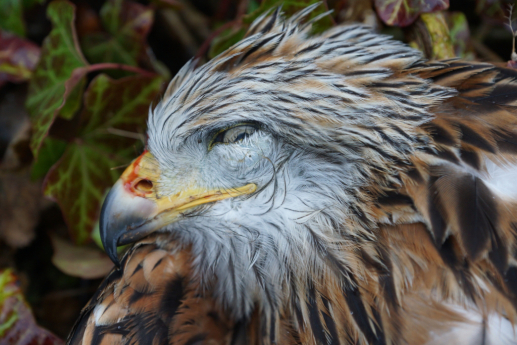
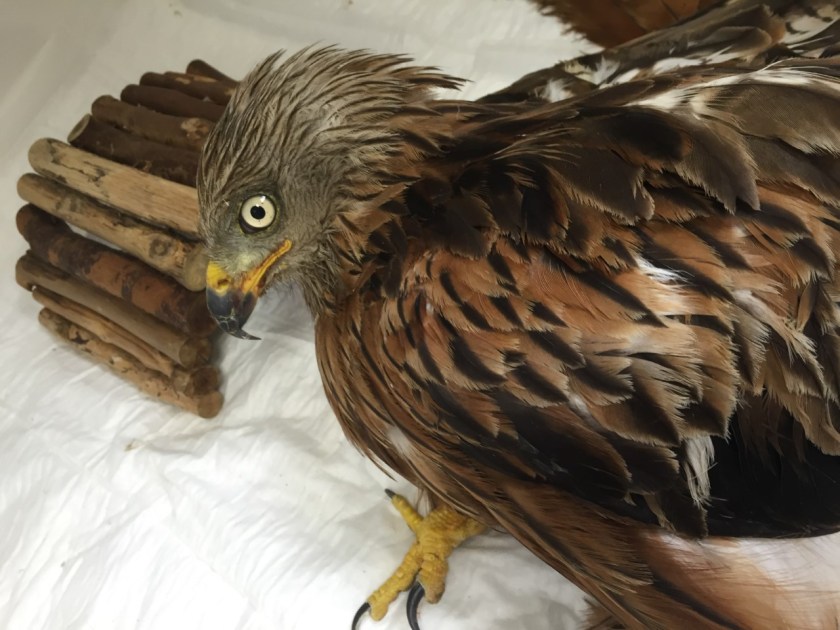
[A dead red kite]

[Blazefield, sandwiched between some of the most notorious wildlife-killing grouse moors in the UK]
Howard Jones, RSPB Investigations Officer, said: “Poison baits deliberately placed out in the open, where anyone could find them, puts people, pets and wildlife in danger. Based on government toxicology data, from 2009 to 2018 the RSPB recorded an astonishing 369 incidents of the illegal use of pesticides to kill or target birds of prey. Bendiocarb, a very toxic insecticide, is something we come across again and again being used for this purpose.”

According to data collated by the RSPB, the Nidderdale area – which is dominated by extensive driven grouse shooting – is the worst black spot for raptor persecution crimes in England, clocking up more incidents in the last seven years than anywhere else.

In September 2019, the Nidderdale AONB published their ‘bird of prey evidence report’ which highlighted the impact of illegal persecution upon the protected landscape’s birds of prey. The report stated that ‘The spread of red kites into the AONB is being restricted by illegal persecution’.

In August 2019, North Yorkshire Police appealed for information after a red kite was found shot and also poisoned in Wath, near Harrogate, within the Nidderdale AONB. This bird contained two pieces of shot, one of which was from an older injury which it had survived, indicating it had been shot on two occasions. But it was also found to contain a cocktail of highly toxic pesticides, and this was deemed the ultimate cause of death.

And in April 2019, a satellite-tagged hen harrier named River was found dead on Nidderdale’s Swinton Estate, following a search by North Yorkshire Police and RSPB Investigations. She too had been illegally shot.

Howard Jones added: “Nidderdale has become a death zone for birds of prey. Our message to the community is this: If you enjoy spending time in the countryside, please be vigilant. Report anything suspicious. If you have information about someone killing birds of prey, please speak out. This is happening on your doorstep, to your wildlife. Let’s make it known that this barbaric, relentless destruction of wildlife is not something North Yorkshire will tolerate.

“Finally, if you are being instructed to kill birds of prey, please do not break the law on someone else’s behalf. Call our confidential hotline on 0300 999 0101.”

ENDS

Eight months for this appeal for information to emerge? That’s pathetic. Let’s hope there was at least a local appeal for information – a spokesperson from North Yorkshire Police is quoted in this article in today’s Yorkshire Post saying “Despite extensive investigations……” so perhaps this included warnings to the local community that some criminal psychopath had been laying out deadly poisons in the area. Also interesting to note that the Yorkshire Post article says the banned poison Isophenphos was also detected in the kite’s carcass.

Regular readers of this blog will be only too aware of Nidderdale AONB’s reputation as a massive wildlife crime scene. We’ve blogged about it many, many times including the poisoning and shooting of red kiteshen harriersbuzzardsmarsh harriers on Nidderdale grouse moors (as reported by the AONB partnership in September 2019). We’ve also seen how the local community is turning against the criminals in their midst which is hardly surprising when according to the Chair of the Nidderdale AONB these crimes are “starting to have a damaging effect on tourism businesses”. 

[Photo by Ruth Tingay]

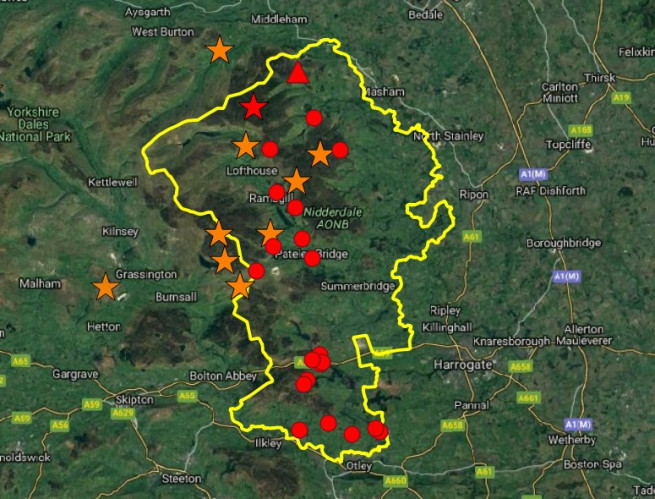
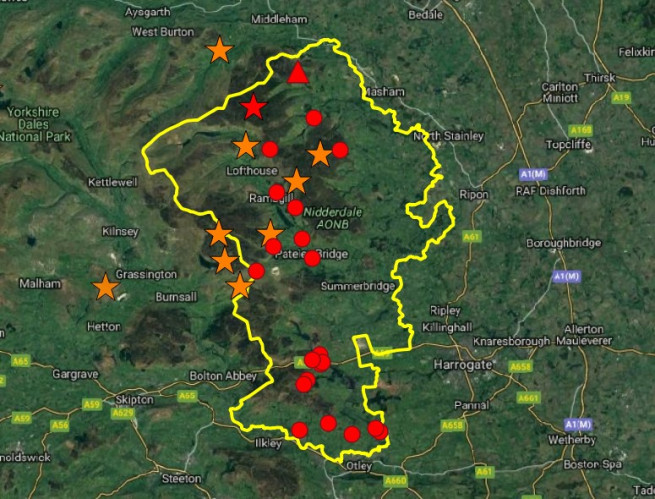
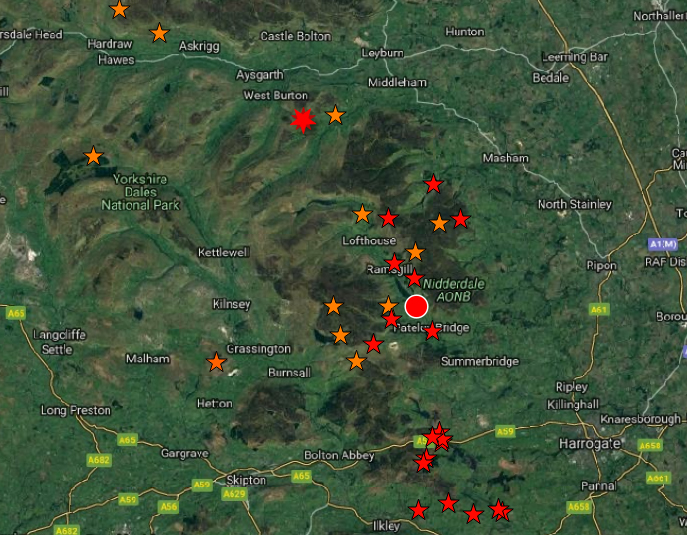
Here’s a map we produced a while ago showing the boundary of the Nidderdale AONB (yellow line), illegally killed red kites (red dots), missing satellite-tagged hen harriers (orange stars), shot hen harrier Bowland Betty (red star), shot hen harrier River (red triangle, which we now know should be closer to the red star on the Swinton Estate).

UPDATE 3 December 2019: Poisoned red kite in Nidderdale – two local businesses put up a reward (here)

Raptor persecution in Northern Ireland: ten year review and new strategies to tackle these crimes

Press release from the Partnership for Action Against Wildlife Crime Northern Ireland (PAW NI):

Birds of prey to be safeguarded by new technology

Satellite tracking devices are to be fitted onto birds of prey and nesting site surveillance installed, in the latest fight against wildlife crime.

‘Hawk-Eyes’, an advanced technology project, is being launched by the Partnership for Action Against Wildlife Crime Northern Ireland (PAW NI), alongside their ‘10 Years of Persecution’ Report.

The report reveals that from 2009-18, there were a total of 72 incidents of confirmed raptor persecution in Northern Ireland, resulting in the death or injury of 66 birds of prey and the destruction of two nesting sites.

Department of Agriculture, Environment and Rural Affairs (DAERA) Wildlife Officer Dr Jon Lees said buzzards and red kites are amongst the most common victims of persecution: “Sadly, a small proportion of our population still seem to think it’s ok to destroy these magnificent birds at the expense of the environment and the rest of the community.

“Raptors such as buzzards, red kites, peregrine falcons and Sparrowhawks, have been illegally targeted right across Northern Ireland to such an extent some areas are at risk of losing their natural top predators,” explained Dr Lees.

The methods these criminals use, such as poisoned bait, are often highly dangerous, putting livestock, pets and people at risk. These offenders care little for people’s safety. We rely heavily on the vigilance of the public to report these crimes and any evidence to the police or Crimestoppers,” Dr Lees added.

The “Hawk-Eyes” project, is funded and supported by the Department of Justice, – Assets Recovery Community Scheme (ARCS) and run through PAW NI, which brings together government Departments, PSNI and other enforcement agencies, environmental organisations, animal welfare groups and country sports associations with the common goal of combating wildlife crime through publicity, education and campaigning.

Some of the birds’ tracking information will be publicly available on the project website at http://wildlifecrimeni-hawkeyes.com, which will allow people to help protect these special birds by reporting such crimes.

PAW NI encourages people across Northern Ireland to be vigilant. If anyone sees or knows of any wildlife crime, report it to the PSNI by calling 101 or, in an emergency, 999. Crime can be reported anonymously to Crimestoppers on 0800 555 111.

ENDS

The ten year review report (2009-2018) can be downloaded here: PAW NI Raptor Persecution Report 2009 – 2018

The use of technology (nest cameras and satellite tags) in the Hawk Eyes project is very interesting, especially as it’s being funded by the Department of Justice’s Assets Recovery Community Scheme, where proceeds of crimes are distributed to help community projects. It would be great to see this approach repeated in England, Scotland and Wales.

Of most interest to us is that these tags are being deployed primarily to aid the detection of wildlife crime. Typically, up until now the main reason for deploying satellite tags has been as part of an ecological research project – the subsequent detection of wildlife crime hotspots (through the discovery of poisoned/shot/trapped sat tagged birds or the suspicious disappearance of tagged birds) has been a by-product of that research and not its primary aim. This is a very clear change of approach from the PAW NI and its also very pleasing to see that the police are key partners in it. Good stuff.

Will the use of satellite tag technology help to identify the criminals as well as the hotspots? Quite possibly. It doesn’t work in England, Scotland or Wales where there are large game shooting estates and where evidence can be quickly destroyed with relative ease (no witnesses around and thousands of acres in which to hide corpses/tags) and where multiple gamekeepers can hide in the crowd (a prosecution isn’t possible unless an individual suspect is identified) but the situation in Northern Ireland is quite different.

Raptor killing in Northern Ireland isn’t such an ‘organised crime’ as it is in the rest of the UK because there are very few large game shooting estates. It seems to be more localised and opportunistic in Northern Ireland, so the perpetrators aren’t so clued up on how to avoid detection. The deterrent effect of simply knowing that these birds might be tagged may also be significant in Northern Ireland because the raptor killers there won’t have wealthy employers prepared to fork out thousands of pounds for legal defence as they do on the game shooting estates in England and Scotland. The risk of getting caught and being afraid of the consequences might just do the trick in Northern Ireland.

Well done and good luck to the PAW NI team – a lot of people will be watching this project with interest.

Red kite illegally poisoned in North Yorkshire

Toxicology testing (by WIIS – Wildlife Incident Investigation Scheme) has confirmed that a dead red kite that was found ‘recently’ near Thixendale, North Yorkshire was illegally poisoned with the banned pesticide Carbofuran, according to local raptor rehabilitator Jean Thorpe.

We haven’t been able to find any further information about this crime.

[The poisoned red kite. Photo from Jean Thorpe]


Damning report highlights illegal killing of birds of prey on Nidderdale AONB grouse moors

The Nidderdale Area of Outstanding Natural Beauty (AONB) is an absolute hell hole for many birds of prey.

[Photo: Ruth Tingay]

This is no secret. The illegal killing of raptors on the grouse moors of this AONB has been documented and reported on for years, by the RSPB and by this blog. The area is notorious amongst raptor conservationists for the number of hen harriers that ‘disappear’ in suspicious circumstances (that’s a euphemism for ‘they have been killed’) and the number of red kite corpses that have been found either shot or poisoned, or sometimes both.

It’s a gaping black hole on the breeding distribution maps of many raptor species and despite this being a so-called protected area, in the words of Mark Avery it’s actually a massive wildlife crime scene.

Here’s a map we produced a while ago showing the boundary of the Nidderdale AONB (yellow line), illegally killed red kites (red dots), missing satellite-tagged hen harriers (orange stars), shot hen harrier Bowland Betty (red star), shot hen harrier River (red triangle, which we now know should be closer to the red star on the Swinton Estate).

Nidderdale AONB lies directly east of the Yorkshire Dales National Park, another raptor persecution hell hole. Last year, the Park Authority responded to public concerns about the killing of raptors on grouse moors by producing an evidence report on the scale of the problem. As we wrote at the time, ‘This report, which is very well written and referenced, is a significant move. There’s no attempt to deny or hide or obfuscate the facts, as we’ve seen so often before. It is a clear description of what’s been happening in this National Park and places grouse moor management at the centre of it all. It’s well worth a read‘.

Fast forward a year and now the Nidderdale AONB has done exactly the same:

You can download the report here: BoP-in-NiddAONB-Evidence-Report-FINAL-Sept-2019

It’s another well-written, fully-referenced report and there’s no hint of denial or obfuscation. It is particularly pleasing to see the use of RSPB persecution data, not just the inaccurate, out of date, watered-down RPPDG data that some pro-shooting organisations rely upon to minimise the perceived scale of the problem. Once again, the report’s conclusion is that grouse moor management is in the frame.

Well done to the author(s) of this report and well done to the Nidderdale AONB for having the balls to publish it.

Police warning as red kite confirmed poisoned in Nidderdale AONB

Last October (2018) a dead red kite had been found near Wath, in the Nidderdale Area of Outstanding Natural Beauty (AONB), a notorious raptor persecution black spot.

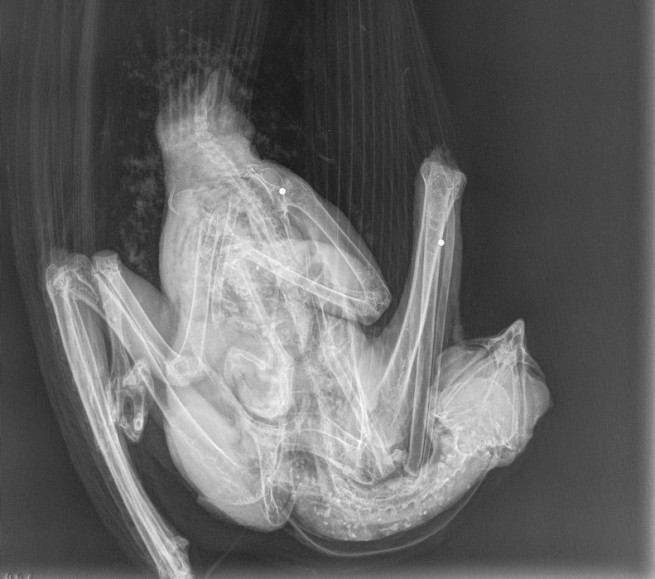
An x-ray confirmed the kite had been shot and North Yorkshire Police launched an investigation. We blogged about the case here.

It seems that wasn’t the end of the story. Although the x-ray revealed two pieces of shot, these were not considered to have caused the kite’s death so it was sent off for post-mortem and toxicology examination.

The results are now back (10 months on!!) and nobody will be surprised to learn that, like so many other red kites in Nidderdale, this one had not only been shot on two separate occasions, but it had also been poisoned with a concoction of banned pesticides.

North Yorkshire Police has now issued a warning and an appeal for information as follows:

POLICE PESTICIDE WARNING AFTER DEATH OF RED KITE (8 August 2019)

Police have issued a warning about illegal pesticides, after a post-mortem concluded a red kite died as a result of pesticide abuse.

At the end of October 2018 a red kite was found dead in Nidderdale. The finder in this case was the landowner, who was concerned that criminal activity may have taken place on his land.

North Yorkshire Police arranged for the bird to be x-rayed, and this showed there were two pieces of shot in the bird. However, it was not possible to say whether these had caused fatal injuries. Police released details of the incident, and appealed for information from the public.

Officers have now completed their enquiries. The dead bird was subjected to a post mortem, which concluded that the injury caused by one piece of shot was old and had healed. The damage caused by the second piece was recent but was not a fatal injury.

The bird was then submitted to the Wildlife Incident Investigation Scheme, which is administered by Natural England. It was subjected to toxicological tests which found several poisons in the bird. The largest quantity of poison was a substance called bendiocarb, a pesticide which is licenced [sic] for use in the UK. Smaller amounts of two other pesticides, isofenphos and carbofuran, which are both illegal in the UK, were also present. The report concluded that the kite had died as a result of the abuse of several pesticides.

At this time, officers have not received any information to help them identify any suspects. Although the investigation has now concluded, anyone with any information about this incident is asked to contact North Yorkshire Police, quoting reference 12180199938.

A spokesperson for North Yorkshire Police said: “The test results suggest that someone not only has access to two illegal poisons, but is also placing them, along with a legal pesticide, into the environment so that a wild bird has been able to consume them. In addition to being poisoned, the bird had also been shot at least twice during its life.”

Red kites have been successfully re-introduced to Yorkshire, having been extinct as a breeding bird in England, and they are now a familiar sight to people in Nidderdale. All birds are protected by law and it is a crime to intentionally kill, injure, or take any wild bird. If anybody has information about persecution of birds of prey, whether by poisoning or shooting, please call North Yorkshire Police on 101.

Anyone misusing pesticides may also be committing a variety of offences. If you come across an object which you believe may be contaminated with a pesticide or other poisons, please do not handle it. Report the situation immediately to the police giving accurate details of location and why you suspect involvement of a poison.

ENDS

There’s an RSPB blog about this case here.

Interesting to note the suggestion that Bendiocarb is a pesticide that is licensed for use in the UK. Not in Scotland it isn’t – it’s one of eight pesticides that are considered so highly toxic that it’s an offence to even have them in your possession, let alone use them (the others are Aldicarb, Alphachloralose, Aluminium phosphide, Carbofuran, Mevinphos, Sodium cyanide and Strychnine).

When an opportunity arose to have these substances banned in England, the then Wildlife Minister Richard Benyon (owner of grouse moor & pheasant shoot) refused to support such a move (see here).

So, here’s yet another red kite victim to add to all the other red kite victims that have been found either poisoned or shot on or close to grouse moors in the Nidderdale AONB, along with all those missing satellite-tagged hen harriers and two shot hen harriers.

RPUK map showing the boundary of the Nidderdale AONB (yellow line), illegally killed red kites (red dots), missing satellite-tagged hen harriers (orange stars), shot hen harrier Bowland Betty (red star), shot hen harrier River (red triangle).


Two red kites poisoned in south Scotland: tests awaited on third

From BBC Scotland today:

Kirkcudbright red kites were poisoned, tests reveal

Tests have confirmed that two out of three red kites found dead in southern Scotland last month were illegally poisoned. The birds were discovered near Kirkcudbright in early May. Post mortem examinations have shown illegal pesticides were used to kill two of the birds with results on the third still awaited.

[Red kite photo from Scottish Raptor Study Group]

Police said an investigation was ongoing and have asked for help from the public with information.

Det Con Gary Story said they were working closely with the Scottish SPCA and Science and Advice for Scottish Agriculture. “What we have established is that illegal pesticides have been used to kill two of the birds,” he said. The pesticides identified have been banned in the UK for many years but despite this there would still appear to be those who leave out poisoned bait, whether that is to target crows, foxes, raptors or other wildlife.

The use of such poisoned bait is illegal and totally unacceptable and those responsible should understand that their unlawful activities not only serve to have devastating consequences on their intended targets but also on various other forms of wildlife.”

He said they were “absolutely determined” to put a stop to the deaths and were working with landowners and farmers and RSPB Scotland as part of their investigation.

We have also carried out a number of land searches in the vicinity of where the birds have been located with a view to trying to locate poisoned bait at these locations,” he said. “It is anticipated that further land searches will take place in the near future.”

Scottish SPCA inspector Paul Tuchewicz said two dead red kites had been found within 50 yards of one another near Kirkcudbright on 10 May. “One of the birds had a tracker and we were able to check the last known location of the kite, which was a nest,” he said. “The nest was being used by ravens when we found it. After post mortem, the birds were found to have been poisoned with a banned substance.”

The third bird was found within 100 yards of the same location on 15 May.

A red kite trail in Dumfries and Galloway is reckoned to be worth millions of pounds to the local economy.

A study in 2017 said the Galloway Kite Trail had generated more than £8.2m since it was launched in 2003.

ENDS

These poor kites are the latest victims in a spate of illegal poisonings in south Scotland.

Between January and May 2018 four red kites and buzzards were illegally poisoned in Dumfries & Galloway (see here).

There was also the poisoned peregrine found in the Pentlands in May 2018 (here).

And then in December 2018 a buzzard was found poisoned near Mauchline (here).

Now we learn that at least two red kites have been found poisoned in May 2019 and potentially another one, test results pending.

So much for SNH’s claim in August 2018 that they were “reassured that raptor persecution is not an issue” in this region. Idiots.

It’s good to see strong statements of condemnation from Police Scotland and the SSPCA and confirmation that land searches have taken place and more are anticipated.

Let’s see how Scottish Ministers respond to this news. They said nothing about the recent illegal poisoning of birds in the Cairngorms National Park – are they also going to ignore more poisoning crimes in south Scotland?

Yet another red kite shot & killed in North Yorkshire’s Nidderdale AONB

North Yorkshire Police are appealing for information after the discovery of yet another shot & killed red kite in the Nidderdale Area of Outstanding Natural Beauty (AONB).

The latest in a long line of victims, this red kite was found dead on 25th October 2018 near to Wath.

[X-ray of the shot red kite showing two shotgun pellets. Image from North Yorkshire Police]

[RPUK map showing location of Wath in the Nidderdale AONB]

[RPUK map showing Wath sandwiched between two areas of grouse moor]

Nidderdale AONB is a notorious red kite persecution hotspot with a long history of illegally shot and poisoned red kites (e.g. see here), so much so that last year the Chair of the Nidderdale AONB’s Joint Advisory Committee issued a public statement condemning these killings and warning that it was having a damaging effect on local tourism businesses (see here).

[RPUK map showing the locations of illegally shot or poisoned red kites in the Nidderdale AONB since 2007]

North Yorkshire Police have issued an appeal for information about the latest red kite shooting, and also an appeal for information about a shot buzzard that was found near Selby earlier this month (we blogged about this buzzard a couple of weeks ago, see here).

Appealing for information, Sergeant Kevin Kelly from North Yorkshire Police’s Rural Taskforce said “It’s with much frustration, that I again make another witness appeal regarding two rare birds of prey, that we are privileged to have in our skies, being mindlessly and illegally shot.

If you have any information that will assist the investigation, please come forward and contact police via 101 and pass the information to the Force Control Room. Please quote reference 12180210290 for the buzzard investigation and 12180199938 for the red kite investigation.

We have two extremely experienced wildlife crime officers leading these investigations and they will follow up on any tangible enquiries.  I would also like to take this opportunity to thank the members of public for taking the responsibility to report these matters.

The police press statement includes a quote from the Nidderdale Moorland Group: “We have been made aware of this incident and we are fully supporting the Police investigation. An estate owner and moorland group member found the bird and handed it into the police. The Nidderdale Moorland Group is dismayed by this incident and is committed to helping eradicate wildlife crime. We would ask anyone with information to contact the police“.

Of course, it’s not just red kites that are illegally killed in this grouse moor dominated area of North Yorkshire. Nidderdale AONB and the neighbouring eastern side of the Yorkshire Dales National Park also just happens to be an area where satellite-tagged hen harriers ‘disappear’ without trace in highly suspicious circumstances.

[RPUK map showing Nidderdale AONB and the eastern side of the Yorkshire Dales National Park. Red dot = Wath. Small red stars = locations of illegally shot or posioned red kites since 2007. Orange stars = satellite-tagged hen harriers that have ‘disappeared’ in suspicious circumstances in recent years (data from Natural England). Large red star = hen harrier Bowland Betty who was found shot dead on a grouse moor in 2012]

There has never been a successful prosecution for any of these crimes.

For how much longer do you think DEFRA ministers Michael Gove MP and Dr Therese Coffey MP will continue to be wilfully blind to this so-bloody-obvious serious organised crime?

For how much longer do you think genuine conservation organisations will sit on ‘partnership’ groups with representatives of the grouse shooting industry and pretend that everyone’s working together to eradicate these crimes, when there are zero consequences for the criminals?

[A dead red kite, photo by Marc Ruddock]

Red kite shot in Ashwell, Hertfordshire

Press statement from Hertfordshire Constabulary (25 Oct 2018):

Red kite shot in Ashwell

Officers from Hertfordshire Constabulary’s Rural Support Team are currently investigating the shooting of a Red Kite.

The injured bird was spotted by a local gamekeeper on a bridleway called Green Lane, just off Northfields Road in Ashwell, on Saturday September 29. However he was unable to catch it until October 3. He then took the bird to a local vet where x-rays indicated that it had been shot and had also sustained broken wings. Sadly, it was therefore put to sleep.

Officers are appealing for anyone who has any information about the bird and its injuries to contact them as soon as possible.

Detective Constable Amanda Matthews said: “The reintroduction of Red Kites has been a fantastic success story and the expansion of the population into Hertfordshire and Bedfordshire has allowed more people to see these amazing birds.

The persecution of birds of prey is a National Wildlife Crime Priority and we treat all incidents of this nature very seriously. We are therefore urging people to come forward with any information that could assist us to progress this matter.

Anyone who has any information about the incident is asked to contact DC Amanda Matthews via the non-emergency number 101, quoting reference 41/47461/18. You can also report information online.

Alternatively, you can contact the independent crime-fighting charity Crimestoppers anonymously on 0800 555 111 or through their anonymous online form. No personal details are taken, information cannot be traced or recorded and you will never need to go to court.

ENDS

Full credit to the gamekeeper whose persistence enabled this critically-injured kite to be put out of its misery.


Despite best efforts, shot red kite didn’t make it

In July an injured red kite was found by a member of the public in woodland near Corby, Northants – she’d been shot and had three shotgun pellets lodged in her body. We blogged about her here.

She was cared for by Simon Dudhill and team at The Raptor Foundation in Cambridgeshire. Simon said at the time:

I have taken charge of a red kite that has been shot, with three shotgun pellets, in the leg, shoulder and ear. The leg and shoulder pellets are not really an issue governing the birds potential release as they are below joints. The pellet in the ear is lodged in the bony part of the skull and is causing the bird problems with balance. The vet and I both agree the bird could not be released back with the pellet still inside. We have been treating for infection and pain relief and the bird is making steady improvements. It was unable to stand on admission, but is now mobile along the floor to some degree. The vet is looking to operate later this week“.

[Photo by The Raptor Foundation]

Unfortunately, she didn’t make it.

Simon said:

Sadly, despite two months of hard work by ourselves and our vets, we had to make the extremely disappointing decision to put her to sleep. None of her balance had returned, she was only able to get about 15 inches off the ground onto a log, and the rest of the time she was dragging her wings and body along the ground. We all felt it was not in the bird’s best interest to keep her in this poor condition, as any further improvement was not expected“.

Climber witnesses shooting of red kite in Peak District National Park

Press release from RSPB (20/9/18):

SHOT RED KITE ‘LIKE BALLOON BURSTING’

A red kite seen falling from the sky accompanied by the sound of gunshots is the latest in a series of concerning incidents involving birds of prey in the Peak District National Park.

Climber Adam Long heard gunshots and saw the bird fall from the sky on 7 June near Saddleworth Moor, within the Peak District National Park. The shooter, however, remained out of sight. The police were called and spoke to the landowner, on whose land the incident is alleged to have occurred, but no leads were forthcoming.

Howard Jones, RSPB Investigations Officer, said: “Though red kites have enjoyed a remarkable comeback in many parts of the country, they are not commonly seen in this area, on the outskirts of Greater Manchester and are struggling to expand into the Peak District National Park despite plenty of suitable breeding habitat. Like all birds of prey, red kites are protected by law under the Wildlife and Countryside Act 1981. If someone is found to have shot this bird they face an unlimited fine and/or up to six months in jail.

The public play such an important role in reporting incidents like this. If you think you’ve witnessed a crime against a bird of prey while our walking, climbing, cycling or walking your dog, let the police know on 101 or contact the RSPB on 01767 680551.”

Adam, the climber who witnessed the event, said: “I saw the kite slowly soaring up the valley, then again when we’d started our climb. I heard two shots, and the kite fell out of the sky – it was like a balloon bursting, crumpling so suddenly then falling. I was completely shocked by the brazenness of it. You hear about this sort of thing happening, and that the chances of seeing or recording something are so slim, so to see this in broad daylight when anyone could have witnessed it was incredible. This is a popular valley for climbing and walking, plus there’s a busy A-road close by. I was literally tied to the crag when it happened so I couldn’t move to get a better view, but I rang the police as soon as I was able.”

The persecution of birds of prey in upland areas like the Peak District is a continuing issue with serious implications on raptor populations. Figures from the latest Birdcrime report showed that over 80 confirmed incidents of shooting, trapping, poisoning and destruction of birds of prey took place in 2016, but in the same year there were no convictions for crimes relating to raptor persecution.

In May this year a scientific paper in the journal British Birds identified significant associations between land managed for driven grouse shooting and the persecution of peregrines and goshawks in the northern Peak District. Populations of the birds were seen to have declined in the northern ‘Dark Peak’, but increased in the southern ‘White Peak’, which is virtually free from grouse shoots.

Chief Inspector Dave Henthorne of Greater Manchester Police (GMP), who is also the force’s lead for wildlife crime, said: “GMP officers spoke to a number of people regarding this incident. If there is evidence to link an individual with raptor persecution we will work with the RSPB to prosecute those responsible. In addition to prosecution, GMP would review any firearms license that the offenders possess.”

If you have any information relating to this incident, call Greater Manchester Police on 101.

If you find a wild bird which you suspect has been illegally killed or injured, contact RSPB investigations on 01767 680551 or fill in the online form.

ENDS

This shooting took place three and a half months ago. Why didn’t Greater Manchester Police issue an appeal for information at the time it happened?