Police raid at Moy Estate, Inverness after raptors found dead

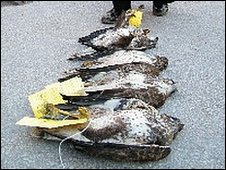
Police have conducted a raid on the Moy Estate, near Inverness, following the recent discovery of poisoned bait and dead raptors. The RSPB has been undertaking surveillance for several weeks at the estate after a dead grouse was found to have been used as a poisoned bait. This culminated in today’s police raid, where evidence (believed to include dead birds) has been removed for further investigation and toxicology tests. No arrests have been made as yet.

The 25,000 acre Moy Estate is a well-known grouse-shooting estate, and, rather embarrassingly, was one of the signatories of the recent letter to the government from numerous sporting estates who claimed to condemn raptor poisoning. Two people from Moy Estate signed the letter – Victor Beamish is the 19th signatory, and Estate owner Celia Mackintosh is the 143rd signatory. Click here to view that letter:  SRPBA LETTER MAY 2010

Yet another instance demonstrating the worthlessness of that letter. Well done Moy Estate, you have earned a place in our Named Estates directory. I can’t wait to hear what the SRPBA, SEBG and SGA have to say about this. I expect that Moy Estate will be expelled from all three groups, and that all three groups will also boycott the forthcoming Moy Field Sports Fair, being held on Moy Estate on 6th & 7th August 2010. You don’t think so? No, me neither, but if these three organisations wish to be taken seriously, they will stick to their previous promises and demonstrate their ‘condemnation’ of the illegal raptor persecution activities apparently uncovered at Moy Estate.

Full news story about the police raid: http://news.bbc.co.uk/1/hi/scotland/highlands_and_islands/10224789.stm

And here: http://www.pressandjournal.co.uk/Article.aspx/1767321?UserKey=

UPDATE: A quote from SRPBA Chief Executive Douglas McAdam about this incident, “We do not yet know the full facts of this case. We are appalled none the less at what appears to be yet further illegal persecution against Scotland’s wildlife, but we do need to await the outcome of the legal process to determine where guilt lies“. http://thescotsman.scotsman.com/scotland/Children-tracking–red-kite.6340484.jp

Douglas, I don’t think you need to be Inspector Clouseau to work this one out!

landowners’ condemnation of raptor persecution revisited

Last week, I reported that 23 of the shooting estates that had signed the letter to condemn raptor poisoning had had wildlife crime incidents recorded on their properties, and in some cases, employees had criminal convictions associated with wildlife crime. I decided to give them all the benefit of the doubt, as they may all have since changed ownership and/or staff since those incidents and subsequently changed their attitude towards raptor killing.  After some heavy duty googling, it appears that 6 of the 22 have changed ownership, 11 have not, and inconclusive material was found for 6.

Estates that do not appear to have changed ownership and/or staff since incidents of wildlife crime have been recorded on their land, yet are asking us to believe they now ‘condemn’ raptor poisoning are as follows:

Careston Castle, Dochfour Estate, Invercauld Estate, Haystoun Estate, Dougarie Estate, Haddo Estate, Dunecht Estate, Roxburghe Estate, Seafield & Strathsprey Estates, Innes Estate.

Estates that do appear to have changed ownership and/or staff since incidents of wildlife crime were recorded on their land are as follows:

Coignafearn Estate, Dunachton Estate, Glenfeshie Estate, Lothian Estate, Islay Estate, Wemyss & March Estates.

Inconclusive evidence of a change of ownership and/or staff since incidents of wildlife crime were recorded on their land include the following:

Rosehaugh Estate, Dinnet & Kinord Estate, Balmanno Estate, Straloch Farm, Aberarder Estate.

One estate that deserves special mention is Coignafearn Estate in the Monadhliaths. Previously known by raptor workers as a notorious eagle black-spot in the 1980s when it was owned by an age-ing Belgian, Baron Douharty, Coignafearn was bought by Dr Sigrid Rausing in 1998. The daughter of Tetra Pak billionaire Hans Rausing, she has since made tremendous efforts to run this estate positively for raptors, including building artifical nest sites to try and encourage breeding golden eagles back to her land.

If only all landowners were as enlightened as Dr Rausing.

landowners’ condemnation of raptor persecution exposed as a sham?

On 21 May 2010, this blog reported on the news that over 200 landowners (members of the Scottish Rural Property & Business Association – SRPBA)  had written a letter to Environment Minister Roseanna Cunningham MSP, condemning the continued practice of illegal raptor persecution on Scottish sporting estates.

This letter has now become available for public viewing: SRPBA LETTER MAY 2010

On close scrutiny of the signatories to this letter, it is now apparent that on 23 of the estates listed, wildlife crime incidents have been recorded, and on seven of them, estate employees have criminal convictions. Here they all are in their full glory:

Careston Estate, Brechin: Buzzard found poisoned by Chloralose 1992.

Dochfour Estate, Inverness: Buzzard found poisoned by Chloralose 1992.

Invercauld Estates, Braemar: Buzzard found poisoned by Chloralose 1992; Three Buzzards and a raven found poisoned by Carbofuran 2005; Gamekeeper convicted for illegal use of spring trap 1997.

Balmanno Estate, Bridge of Earn: Buzzard found poisoned by Carbofuran, illegal gin traps and egg collection – Gamekeeper convicted 2003.

Haystoun Estate, Peebles: Gamekeeper filmed allegedly removing Peregrine chick from nest – evidence ruled inadmissable in court (a legal technicality) – but keeper convicted of firearms offences 2003.

Haddo Estate, Aberdeenshire: Gamekeeper convicted for  laying poisoned baits and illegal traps and fined £2,600 in 1989.

Dunachton Estate, Kincraig: Buzzard found shot 1990; Buzzard found shot 1992.

Dougarie Estate, Isle of Arran: Eagle found poisoned by Chloralose 1991.

Rosehaugh Estate, Black Isle: Buzzards found poisoned by Mevinphos 1991.

Dinnet & Kinord Estates, Aboyne: Gamekeeper convicted for firearms offences and trespassing on neighbouring estate while carrying a firearm 2006; Golden eagle found poisoned 2006.

Straloch Farm, Blairgowrie: Buzzard found poisoned by Chloralose 1992.

Lothian Estates, Jedburgh: Osprey found shot 1993.

Glenfeshie Estate, Kincraig: Golden eagle found poisoned by Carbofuran 2006.

Islay Estates, Islay: Raven found poisoned by Mevinphos 1989; Buzzard found poisoned by Mevinphos 1989.

Dunecht Estates, Aberdeenshire: Buzzard found shot 2007.

Coignafearn Estate, Tomatin: Poisoned bait found 1983; Golden eagle found poisoned 1988.

Roxburghe Estate, Kelso: Buzzard found poisoned by Mevinphos 1989.

Seafield Estate, Strathsprey: Buzzard found poisoned by Chloralose 1991.

Innes Estate, Elgin: Dead Buzzards and crows found dying after poisoned by Carbofuran – Michael Royan (head gamekeeper) convicted of firearms offences and possession of illegal poisons 2007.

Carbeth Estate, Stirlingshire: Buzzard found poisoned by Chloralose 1989.

Wemyss & March Estates, Longniddry: Managers of the Barns Estate in Peebleshire, where gamekeeper was convicted of poisoning 20 raptors, described at the time as “Britain’s worst wildlife crime” 2004.

Alvie Estate, Kincraig: Golden eagle found poisoned 1980.

Aberarder Estate, Strathnairn: Eagle found poisoned 1993.

One has to ask, why are these estates still allowed a membership of SRPBA? Doesn’t their continued membership ruin any credibility of the SRPBA’s public pronouncements against illegal raptor persecution? Indeed, it seems to go against the SRPBA’s very own Code of Practice: http://srpba.com/view_item.aspx?item_id=136&open2=false

Although of course, we should point out that some of these Estates may have changed ownership/staff since some of these incidents occured – we should probably give them all the benefit of the doubt because after all, the SRPBA has ‘repeatedly condemned the illegal poisoning of wildlife’ and of course we should all accept that their members are all above board and not engaged in criminal activities.

The SRPBA is also a fully-fledged partner in the Partnership Against Wildlife Crime (PAW Scotland) – as a commited partner, I’m sure that the SRPBA has expelled any members that are associated with wildlife crime. Otherwise, what is the point of SRPBA being a partner in PAW Scotland? No point, other than paying lip-service to raptor conservation in a feeble attempt to protect their public image. But we are giving them the benefit of the doubt, aren’t we.

At the latest PAW Scotland meeting  that was held on 25 May 2010, Environment Minister Roseanna Cunningham MSP apparently congratulated the SRPBA on their letter. Let’s give her the benefit of the doubt too and assume she hadn’t read it yet.

3 golden eagles & other raptors found dead on Skibo Estate, Sutherland

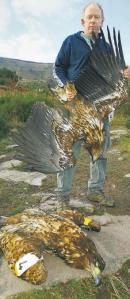
THREE golden eagles, a buzzard and a sparrowhawk have been found dead on Skibo Estate, Sutherland, in the last week. The bodies have been sent for toxicology analysis at the government laboratory in Edinburgh, on suspicion that they had been poisoned. Now, unless those THREE golden eagles all died of old age at the same time on the same estate, and the buzzard and sparrowhawk died of a heart attack at seeing the dead eagles, I think it’s fair to assume that the toxicology results will prove to be positive and that some of these birds have been illegally killed by someone with access to poison. Even PC Plod should be able to work out the connection here.

The police investigation is continuing and no arrests have been made. A statement from Skibo Castle said: “The owners and management of Skibo Castle are committed conservationists and do everything they can to support the welfare of wildlife and birds. We will cooperate fully with the authorities in their investigation”.

BBC news story: http://news.bbc.co.uk/1/hi/scotland/highlands_and_islands/8676871.stm

Skibo is a prestigious highland estate and was the location for Madonna’s marriage to Guy Ritchie in 2000. The estate includes a 3,000 hectare grouse moor and a members-only hotel. Skibo was bought for £23 million in 2003 by Ellis Short, an American multi-millionaire investment banker who also owns Sunderland football club. In 2007, his wife, Eve Short, is alleged to have threatened two pensioners who were walking their dogs on the estate, telling them she would have her gamekeeper shoot the dogs if they were seen again. According to the report, the estate later apologised to the pensioners after realising that the pensioners had every right to walk their dogs there, under the rules of the Scottish Access Code. http://dogblog.dogster.com/2007/01/07/obnoxious-owner-of-skibo-castle-threatens-to-shoot-pensioners-and-their-small-dogs-for-walking-on-property/

third dead sea eagle in a month – latest poisoning event in Ireland

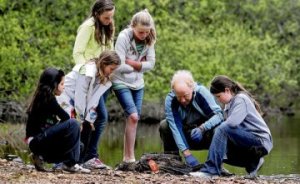
Project Manager Dr Allan Mee examines the carcass with the schoolchildren who found it

A third white-tailed sea eagle has been found poisoned in the space of one month in Ireland. The latest victim was found by schoolchildren on a kayaking trip in Kerry, within one kilometre of  the other two poisoning incidents. It is suspected that farmers in this area are placing sheep carcasses laced with poison to kill the eagles.

When will these stupid, selfish bastards stop? Probably not until the penalties for raptor persecution are increased substantially.

Full story: http://www.belfasttelegraph.co.uk/breaking-news/uk-ireland/sea-eagles-killed-by-poisoning-14804830.html

estate owner gets apology after being called an “arrogant old bastard” by wildlife crime officer

The Police Complaints Commissioner for Scotland, John McNeill, has told Tayside Police that they must deliver an ‘unreserved apology’ for derogatory comments made about an estate owner during an alleged wildlife crime incident.

The investigation centred around allegations from two former gamekeepers that their employer had instructed them to kill any buzzards that were caught in crow traps on the estate. During the investigation, the estate owner became aware that Tayside Police’s civilian wildlife crime officer had referred to the estate owner as an “arrogant old bastard”. The estate owner made a formal complaint to the Police Complaints Commissioner, and also complained about his arrest, which he said caused “unneccesary distress” to his family.

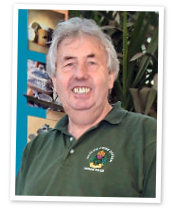
Alan Stewart

The civilian wildlife crime officer in question might be Alan Stewart, a high-profile former police inspector who has been investigating wildlife crime in Tayside for a number of years and is the only one listed on the Tayside Police website: http://www.tayside.police.uk/wildlife/officers.php

To read the Police Complaints Commissioner’s report in full: PCCS_-_1004-2010-00491-PF-TP_-_Final_report

Of course, while all this name-calling and crying to the police has been going on, the real issue of importance (the alleged illegal killing of buzzards on this estate) has been conveniently buried.

This is not the first time that Tayside Police’s effectiveness has been called into question. Earlier in 2010, the RSPB launched a stinging attack on Tayside Police for its apparent ‘lack of follow up’ on several alleged wildlife crimes in the region. The most prominent of these was the incident involving a poisoned white-tailed sea eagle that had been found dead on Glenogil Estate in August 2009. Tayside Police did not make an appeal for information until 6 months later, and only then because a local newspaper began to ask questions: http://news.scotsman.com/birdsofprey/RSPB-claims-police–less.6012566.jp

police investigation underway as six buzzards found poisoned

Derbyshire dead buzzards 2010A police investigation is underway in Derbyshire after the recent discovery of six dead buzzards. All had been poisoned.

On February 22nd 2010, two dead buzzards were found in Jebbs Lane, Idridgehay, near Ashbourne. Tests showed they had been poisoned.

On April 7th 2010, a farmer discovered 4 dead buzzards to the north of Kirk Ireton, near Ashbourne – just a few miles north of the Idridgehay poisonings.  The 4 dead buzzards were found next to the body of a dead pheasant and tests showed that the pheasant had been used as a poisoned bait.

Full story: http://news.bbc.co.uk/1/hi/england/derbyshire/8634955.stm

another gamekeeper convicted of illegal poisoning

26 year-old Ben Walker, a gamekeeper on the Sufton Estate, Herefordshire, has been convicted of 17 (yes, 17) charges relating to killing protected species with poisonous baits.

After a tip off, an undercover team from the RSPB spent several weeks in October and November 2009 making covert surveillance videos of Walker tending to his illegal baits on the Estate. He killed two buzzards and five ravens and told police he did it because they were a ‘threat’ to the birds he was rearing for a commercial shoot.

Walker received a £1,000 fine at Hereford Magistrates Court on 21 April 2010.  Once again, a judge has not imposed a custodial sentence, even though this option is available for these types of wildlife crime.

Well done to the Sufton Estate though, who sacked Walker for these offences. A second former employee is currently under investigation for wildlife crimes on this Estate.

Full story: http://news.bbc.co.uk/1/hi/england/hereford/worcs/8635231.stm

scotland’s red kites under threat from illegal killing

The red kite population in Scotland is under severe threat from illegal poisoning a new RSPB study has revealed.

An equal number of red kites were released in the Chiltern Hills in southern England and in The Black Isle near Inverness as part of a reintroduction project which began in 1989

The birds in the Chiltern Hills have flourished and numbers of breeding pairs had reached 320 pairs by 2006. In stark contrast the Black Isle birds have struggled to establish a viable breeding population and had only reached 46 pairs over the same period. Both populations of red kites have been closely monitored and productivity from successful nests in both studies were found to be similar and amongst the highest in Europe.

Red kites are mainly scavengers and their diet of carrion makes them extremely vulnerable to illegal poisoning. Although they pose absolutely no threat to game shooting interests they are all too often killed by gamekeepers illegally targeting other species.

Between 1989 and 2009, 64 red kites have been found poisoned in Scotland. Naturally considering the remote locations where these birds live, only a small proportion of poisoned birds will ever have been found.

Scottish Environment Minister Roseanna Cunningham said,

“Poisoning is an arbitrary method of killing which poses serious risks to other wildlife, and potentially people, in our countryside.

“The protection of Scotland’s wildlife has never before occupied such a prominent position politically or in terms of the law. I hope that our continued joint action to tackle raptor persecution across Scotland will reduce this threat to red kites.”

With sentences such as we have recently seen in the Redmyre Estate case, where gamekeeper Graham Barclay Kerr was fined a derisory £400 for shooting a buzzard with a high velocity rifle and admonished for possession of illegal and deadly poisons I don’t think Roseanna’s words will have the perpetrators of these crimes quaking in their plus fours.

Full story. http://news.bbc.co.uk/1/hi/scotland/highlands_and_islands/8629284.stm

Call to control poison in Ireland after more red kite deaths

Another poisoned red kite

Pressure to control the poison Alphachloralose, available over the counter in Ireland, is intensifying following the poisoning of two more red kites in County Wicklow. The young birds were part of an Irish reintroduction project and had only been released in July 2009.

Alphachloralose has been used to kill red kites, golden eagles and white-tailed eagles across Ireland in recent years. The Golden Eagle Trust, a local NGO attempting to re-introduce all three species back to ireland, have lodged a formal complaint with the European Commission over the State’s failure to protect the birds.

Full story: http://www.irishtimes.com/newspaper/ireland/2010/0329/1224267276974.html

Golden Eagle Trust website: http://www.goldeneagle.ie/