We have been asked by the Golden Eagle Trust (Ireland) to publish the following press release:
“The Irish Red Kite Reintroduction Project is part of an all-Ireland effort to restore red kites. These attractive birds were extinct in Ireland for about 200 years. The Golden Eagle Trust, National Parks and Wildlife Service, and the Welsh Kite Trust have collected (from Wales) and released 120 red kites in Co. Wicklow between 2007 and 2011 and 39 red kites in Co. Dublin in 2011. The RSPB released 80 red kites in Co. Down between 2008 and 2010. There are now 10-15 pairs of red kites breeding in Co. Wicklow and 5-6 pairs breeding in Co. Down.
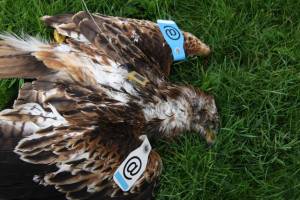 Following the successful release of red kites during the summer in Dublin and Wicklow, it is with disappointment that we report further recent kite deaths in Fingal. Since the release in July, this year, a total of eight (8) kites have now been recovered dead in Fingal since November.
The deaths include the satellite tagged kite known as ‘@’ which has flown as far as Co. Mayo on its travels and within a few weeks of returning to Fingal was found dead near Lusk.
Ms Phil Moore, from the Fingal LEADER Partnership expressed sadness saying ‘We just can’t believe ‘our baby’ is dead. We have all been following the satellite tagged kite since her release and have pictures all over the office of her journey; it is upsetting to know she is now dead’.
There were 39 red kites, collected for Fingal under licence fromWales with project partners, the Welsh Kite Trust. The Fingal Red Kite release programme is part of the final and fifth year of an ambitious project to re-establish red kites in Ireland. The deaths represent just over 20% of the red kites released in the Fingal area.
The Golden Eagle Trust is managing the project, which is funded by Fingal LEADER Partnership through the Rural Development Programme 2007 – 2013 and the National Parks and Wildlife Service (NPWS). Fingal County Council, at Newbridge Demesne, and a private landowner hosted and facilitated the two separate release cages.
The project is widely supported throughout local communities, a suite of volunteers and landowners. There were over 100 people involved in cage building, collections, feeding and subsequent monitoring of the released kites.
Each kite is fitted with a radio tag which has allowed the project team to follow the kites’ movements since release. Whilst these tags allow us to track their daily movements they have also led us to find the dead birds.
Dr Marc Ruddock, Red Kite Project Manager, said ‘There is nothing more heart-breaking than having to pick up the carcass of bird and putting it in a bag for post-mortem after having followed its development from a small, downy chick collected in Wales and then watching it flying free in Fingal’.
Earlier this year, a post-mortem protocol was agreed between NPWS, Department of Agriculture and the State Laboratory. Each of the red kite carcasses has been sent for testing at Backweston Campus, to establish the cause of death. This process and the rigorous work undertaken is fundamental to the growing understanding of environmental issues and the threats posed to kites and other wildlife.
It has now been confirmed that at least four of the kites contained the second-generation rodenticide, brodifacoum. This is an anti-coagulant rat poison usually recommended for indoor use only, which causes internal bleeding. It is widely recognised that rodenticides can kill non-target species.
Dietary analysis of the red kites, both in Wicklow and Dublin has shown that they are clearly hunting and scavenging rats, providing a natural control on rodent populations. The red kite is a specialist scavenger and is therefore likely to be at high risk of secondary poisoning if feeding on rats which are dead or dying from rodenticides.
We recognise the requirement for rat and mice control in terms of human health and food safety. But we urge amateur and professional users alike to ensure that rodent control programs are carefully planned and follow a defined treatment period to be effective.
The over-use of some chemicals could lead to resistance and accumulation in the environment. Those in the countryside should ensure best practice use of these chemicals to allow for more effective rodent control in the long-term and minimise the secondary poisoning risk to non-target wildlife. This includes other rodent-eating native raptors and owls such as kestrels, buzzards, barn owls, long-eared owls and red kites.
Best practice rodent eradication strategies record information such as the quantity and location of all baits and require baits to be regularly inspected and not left exposed to non-target animals and birds. Furthermore, dead rodents should be collected and disposed of safely and baits should be removed at the end of the treatment. Urban and rural rodenticide users are urged to be mindful of the potential environmental effects of the use of chemicals.
The farming and shooting communities in Fingal are very supportive of the project and are anxious to continue to control rats and mice effectively and minimise unintentional consequences for natural rat predators”. -END-
 The substance used to kill the other four kites that have been discovered since November has yet to be confirmed – toxicology tests are on-going. It’s possible they were also unintentionally killed by secondary rat poison, but it’s equally possible that they have been deliberately (and illegally) killed by other poisons. For example, at the beginning of November 2011, it was reported that a red kite and a buzzard had been illegally poisoned in County Wicklow by alphachloralose (see here). In addition, a map produced by the Golden Eagle Trust in 2010 (see figure) shows the extent of illegal poisoning across Ireland (the map does not include instances of unintentional secondary rat poisoning). Species affected include red kites, golden eagles, white-tailed eagles, buzzards and peregrines, killed with alphachloralose or carbofuran.
Golden Eagle Trust website here

 Following the blog post on 6 December 2011 (see
 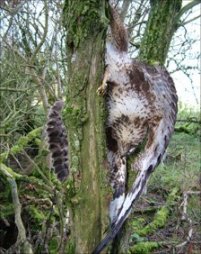 David Alexander Whitefield, the former gamekeeper at Culter Allers Estate in South Lanarkshire, was today sentenced following his December 2011 conviction for illegally poisoning four buzzards (see
  North Korean despot Kim Jong-il may be dead but the art of propaganda is alive and kicking here in the UK. A fine example of this is displayed in the latest [January 2012] edition of Modern Gamekeeping, the monthly rag for UK gamekeepers, where there are more calls for the introduction of licences to cull raptors.
 Further to the last blog entry (
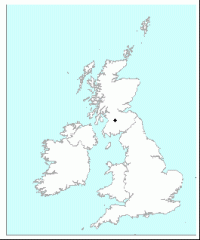
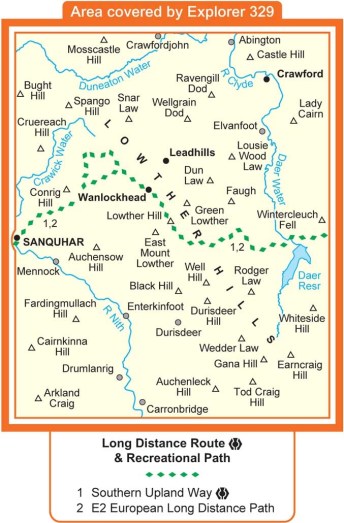 It was later discovered dead close to the Muirkirk and North Lowther Hills Special Protection Area (SPA), an area of moorland that receives special legal protection because of its breeding bird of prey population.
 News is coming in that a satellite-tagged red kite from Northern Scotland has been found dead in Ayrshire. Lab tests done by SASA have reportedly shown that this young bird was poisoned by an illegal pesticide.
 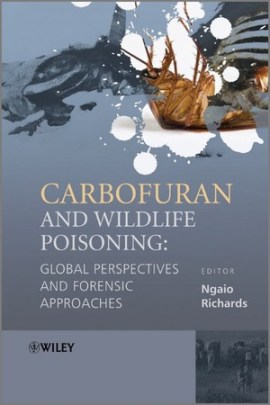 A definitive reference book was published last month that provides a comprehensive guide to the use of the pesticide Carbofuran and its role in wildlife poisoning.
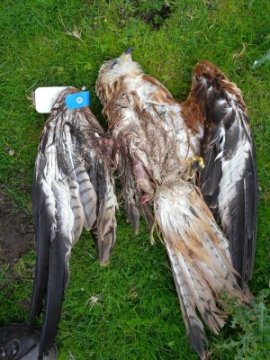 Further to the blog post in July 2011 about the arrest of a man in connection to the investigation of poisoned and shot red kites in Cumbria (see
  Raptor Persecution UK