Animal rights activists killing thousands of hen harriers

The long-awaited publication showing the results of the UK 2010 Hen Harrier Survey is finally here. Published in the scientific journal Bird Study, the paper (see here) documents significant declines across many parts of the UK.

No surprises there then.

England had a heady 12 pairs in 2010 (a country with sufficient habitat to support an estimated 323-340 pairs, according to the Hen Harrier Conservation Framework).

Scotland had 505 pairs in 2010 (a country with sufficient habitat to support an estimated 1467-1790 pairs).

Wales bucked the trend with at least a 33% increase to 57 pairs (none of which were found on habitat classified as grouse moor).

It should be remembered that these results are from 2010; there have been further documented declines since then, including just two (failed) breeding attempts in England this year and a consistent downward trend of breeding success in Scotland, according to the latest report from the Scottish Raptor Monitoring Scheme (see here).

The paper also documents a severe decline on the Isle of Man (49%) and bizarrely suggests that ‘there are no obvious drivers for this’. Eh? Could it possibly be anything to do with the systematic elimination of harriers on the mainland, reducing the number of birds available to travel to the Isle of Man? Just a thought.

So, where are the missing 962-1285 breeding pairs of hen harriers in Scotland?

And where are the missing 322-339 breeding pairs of hen harriers in England?

Widespread declines are indisputable. The relationship in England and Scotland between areas of reported declines and land managed for intensive driven grouse shooting is also indisputable. But what happened to all those birds? Those with a vested interest in the grouse-shooting industry will tell you it’s all down to climate change/habitat change/lack of prey/cold spring/wet spring/late spring/early spring/being eaten by golden eagles/too many foxes/too many buzzards/too many ravens/too many sparrowhawks/the work of animal activist extremists hell-bent on killing hen harriers to make the gamekeepers look bad…in fact they’ll blame anything except the blindingly fucking obvious.

Hen Harrier photo by Gordon Langsbury

Petition to name golden eagle as Scotland’s national bird

RSPB Scotland has launched an on-line petition to have the golden eagle named as Scotland’s national bird.

Capitalising on the golden eagle being recently voted as the nation’s favourite animal (in SNH’s ‘Big Five’ Campaign), the RSPB is hoping that Scottish Ministers will formally designate the species as a national symbol and thus show their commitment to protecting this bird from the appalling persecution it continues to suffer.

An RSPB spokeswoman said:

The petition urges ministers to formally designate the species as a national symbol, placing it alongside the lion rampant, Saltire and Scottish thistle as emblems of the country. There are currently just 431 pairs of golden eagles in the whole of Scotland. Owing to centuries of persecution, this most charismatic of birds has been almost entirely confined to the more remote areas of the country, such as the mountains and glens of the west coast and on the western isles, with numbers held at artificially low levels and many territories vacant. Its restricted range and tendency to favour the more remote and dramatic areas has made it become a coveted sight for any visitor who appreciates Scotland’s magnificent wildlife spectacles. But now RSPB Scotland is pressing for the adoption of the golden eagle as Scotland’s national bird, helping to raise its profile, turn around its fortunes and see it return once again to its former range thus increasing the chances of a sighting for visitors and local people.”

Stuart Housden, Head of RSPB Scotland said:

It is a stirring symbol of strength and pride, qualities well befitting to a modern Scotland and its people. 2013 is the Year of Natural Scotland – a period where the Scottish Government is celebrating our most impressive natural heritage. What better legacy can we provide for this initiative than to officially designate the eagle as Scotland’s national bird and join together for its future conservation? It would formally recognise the place this species has unofficially occupied in our culture for many centuries, and show our commitment and desire to protect and conserve it, and our wider national heritage, for generations to come.”

Please consider signing the petition – if nothing else, it will put further pressure on those who continue to shoot, poison and trap this species. Signing is easy – it takes seconds – the closing date is 6th December 2013. Please sign here.

Two marsh harriers and a red kite poisoned: late appeal for info

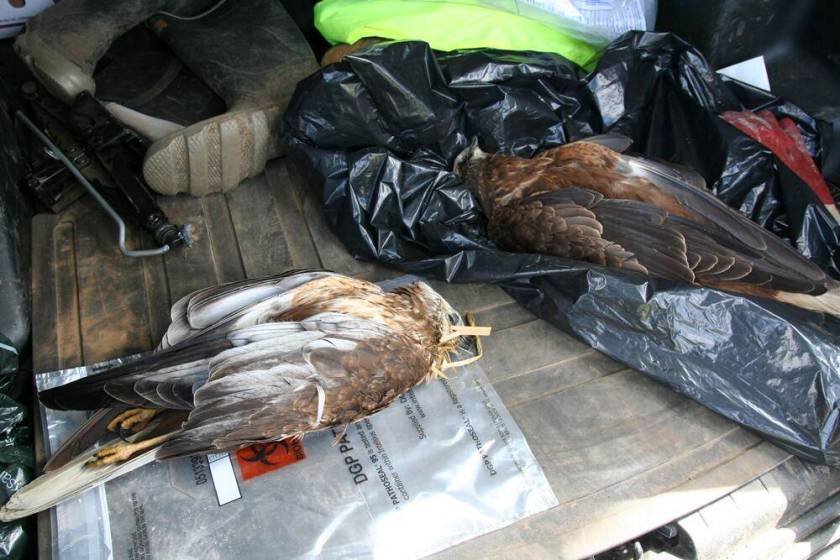
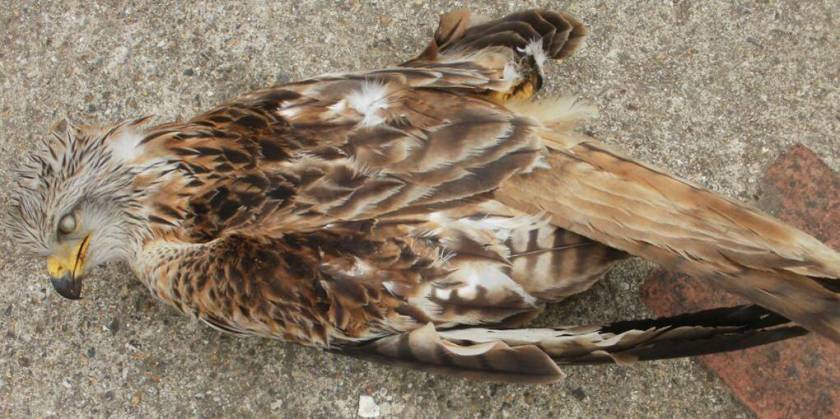
The RSPB and two county police forces have put out an appeal for information following the discovery of a poisoned pair of Marsh Harriers and a Red Kite.

According to the press release (see here), the two breeding Marsh Harriers were discovered in April on land adjacent to the RSPB’s Nene Washes Nature Reserve in Cambridgeshire. The Red Kite was discovered in Old Leake, Boston, Lincolnshire in May. Toxicology analyses showed that all three birds had been poisoned with the banned pesticide Aldicarb.

So here we are again, a ridiculously late appeal for information, seven and six months respectively after the birds had been found. Further more, according to the press release, the Chemicals Regulation Directorate (CRD) who funds the toxicology testing programme has already declared the two cases closed!

It seems there is more to these cases than meets the eye. Rumour has it that these cases have not been thoroughly investigated due to a lack of police resources. If that’s true, then why weren’t other agencies drafted in to help? Where’s all the much-heralded ‘partnership working’?

And why the bloody hell are appeals for information still coming so late? Every single bloody time it’s the same old story. What’s the point? Why is it so difficult to get these investigations right? That will be a question we’ll be posing in due course (and you can, too) to the newly-appointed ACPO (Association of Chief Police Officers) lead on Wildlife and Rural Crime, Chief Constable Simon Prince (from Wales). Watch this space.

In the meantime, we had a look at the quarterly poisoning results published by the CRD’s Wildlife Incident Investigation Scheme (see here). Have a look and see how many confirmed poisoning cases you can spot in England and Wales between Jan – June 2013 that have not been publicised in the media.

It seems the influence of The Untouchables spreads far and wide throughout these isles.

Here are the two poisoned Marsh Harriers

Marsh Harriers poisoned Nene 2013

And here is the poisoned Red Kite

RK poisoned Lincoln 2013

Poison awareness posters appear in Leadhills village

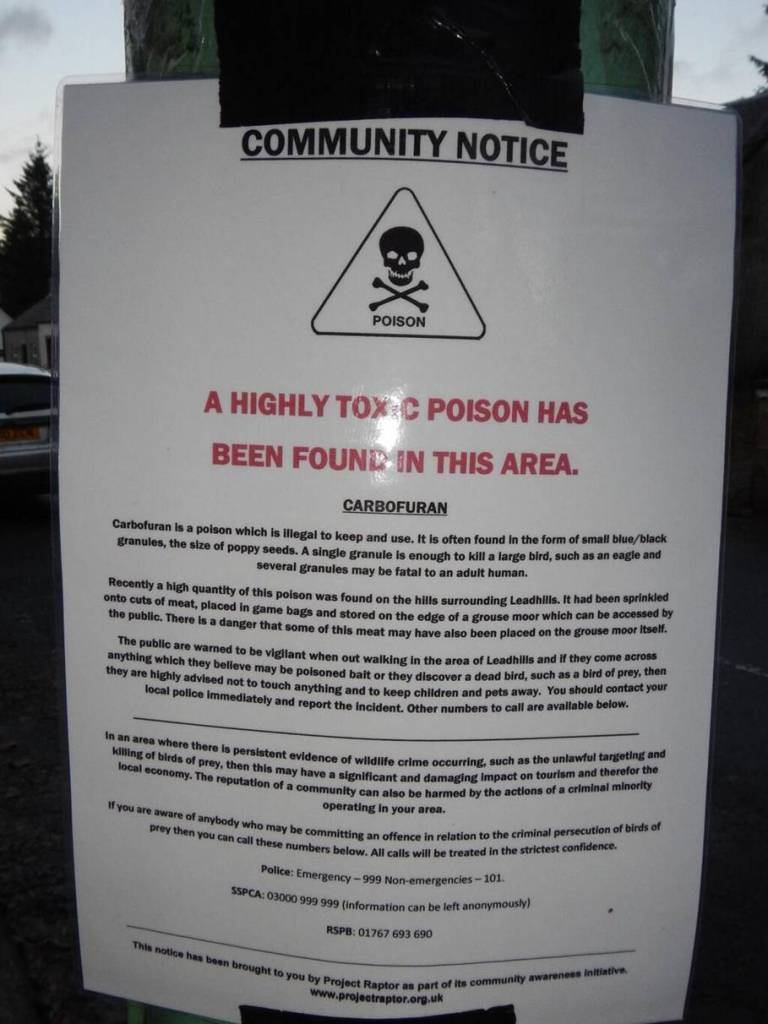
Leadhills village in South Lanarkshire has been saturated with a series of ‘poison awareness’ leaflets and posters, alerting the local community to the discovery of highly toxic (and illegal) poison on the surrounding hills earlier this year (see here). The poster warns the public of the dangers of coming in to contact with this poison (Carbofuran) and also provides contact telephone numbers (police, SSPCA and RSPB) if anyone finds any more or has information about who might be putting out the poison.

Is this community initiative the work of a local estate? Or the local police? Or the local council? Or PAW Scotland? Nope, none of the above. It’s the handiwork of Project Raptor.

It’ll be interesting to see how long the posters and leaflets remain on display. Last year we blogged about the mysterious disappearance of another sign at Leadhills (see here).

PR Leadhills flyer


No prosecution for poisoned baits found on Leadhills Estate?

leadhills estateEight months ago (March), a significant haul of pre-prepared poisoned baits was discovered on Leadhills Estate in South Lanarkshire. The baits comprised chopped up pieces of rabbit, liberally sprinkled with the banned poison Carbofuran, that had been placed inside two gamebags that had been hidden inside a wood next to a grouse moor.
The discovery was made by fieldworkers from Project Raptor and they duly reported their finding to the police. We waited for a press release and an appeal for information from the police but nothing came, so three months later (June) we blogged about it (here) because, unlike the police, we considered it a newsworthy item in the public interest, as apparently did BBC Scotland (here).

Recently, an update on the police investigation appeared on Project Raptor’s website:

24th October 2013. Project Raptor have contacted South Lanarkshire police and they have now informed us that evidence gathered from the two game bags has come back negative. This means that unless further evidence comes their way then this case is just another in a long line of wildlife crimes that have taken place within the Leadhills area over the years that will never be solved”.  See here for full update.

When Project Raptor says that ‘evidence gathered from the two gamebags has come back negative‘ they do not mean that the analysis of the poison came back negative – SASA has already confirmed the poison found on those baits was Carbofuran and they included the incident in their quarterly report on poisoning incidents. Rather, what we think Project Raptor is referring to is that any fingerprint or DNA testing that might have been done on the two gamebags has come back negative.

This means that there is no evidential link between the two gamebags and any individual person and therefore it is not possible to charge anyone for committing an offence in relation to these items.

This case is an excellent example of just how difficult it is to bring illegal poisoners to justice. It’s not the fault of the police that there isn’t enough evidence, although to be frank they are not blameless in this particular situation – had they had the foresight and interest to install a covert camera overlooking the site where the poisoned baits had been found they may well have caught the criminal(s) in the act of retrieving the bait or even adding more bait to the secret stash. They could (should) also have conducted a thorough search of the surrounding area, particularly the adjacent grouse moor, to see whether any of the baits had already been placed out on the hill. Given that one of the bags was full (of bait) and the other bag was only half-full, this would have been a reasonable assumption, especially given the reported history of poisoned baits being found on this estate (see here). Instead, the police decided to arrive on site in two marked police vehicles (thus alerting everybody to their presence and allowing any nearby criminal to hide any other incriminating evidence) and they quickly removed the gamebags and left the site without conducting a wider search. On top of all that, they still have not issued a press release about this case, giving us the impression that they’re just not all that bothered. At the very least they should be alerting the general public to the potential threat of people and their pets stumbling across what is a fatally toxic poison in a publicly-accessible area.

So is that it, then? Will the discovery of these baits (which we believe to be the biggest stash of pre-pared baits found since 32 poisoned baits were found on Glenogil Estate in 2008) just be conveniently ignored and everyone carries on as usual? For certain, these baits will not feature in any ‘official’ raptor persecution statistics because, as we were recently told by the Environment Minister’s office, where poisoned baits have been discovered but ‘no raptors were involved’ they cannot be listed as a raptor persecution incident. We don’t actually know whether ‘no raptors were involved’ at Leadhills because the police didn’t conduct a search to look for poisoned carcasses!

It looks certain that no action will be / can be brought in the criminal courts. But what about other types of action?

There’s the possibility of civil action – we will wait to see whether any single farm payments are withdrawn from Leadhills Estate by the Scottish Executive (as they were from Glenogil Estate in 2008 – see here) although we suspect any such action would be strongly challenged by the estate precisely because there is no evidential link between the baits and any employee of Leadhills Estate.

Great, isn’t it?

Is there any other type of action? Well, yes, there is. What we would really like to see is action taken by Scottish Land and Estates, the representative body of Scottish landowners. The only response we saw from SLE about the discovery of the poisoned baits on Leadhills Estate was a false accusation levelled at this blog for reporting the incident! (see here).

Interestingly, in a comment made on Mark Avery’s blog today, SLE Chief Executive Doug McAdam claims, “…..a range of partners, Scottish Land and Estates included, invest a significant amount of time and resource into working with and through PAW Scotland to help achieve this [eradication of golden eagle persecution], not just for golden eagles though, but all wildlife crime” (see here for his full comment).

So what, exactly, has SLE done about the continuing issue of alleged and confirmed illegal raptor persecution on Leadhills Estate? We’ve asked this time and time again but the question is just met with silence every time.

We’re not sure that Leadhills Estate is a member of SLE, although given that the owner of Leadhills Estate (Lord Hopetoun) also just happens to be a Board member of SLE, it would be quite strange if Leadhills Estate wasn’t an SLE member. Why doesn’t SLE publicly condemn the crimes that are alleged and confirmed at Leadhills Estate? If Leadhills Estate is an SLE member, why hasn’t SLE kicked them out, just as they did with Glasserton Estate earlier this year following the conviction of their gamekeeper (see here). McAdam may argue that nothing has been proven at Leadhills in relation to the latest discovery (in terms of a legal evidential link) and that would be accurate, but there is a long, long, long, long list of alleged and confirmed incidents from this estate, dating back decades (see here), several of which have resulted in criminal convictions.

It seems to us that SLE is repeatedly turning a blind eye to reported activities on this estate that the rest of us can see very clearly. Why would they do that if they’re so keen to eradicate raptor persecution?

So long, Sheriff Drummond

One of the most influential figures in the world of Scottish wildlife crime enforcement, and particularly in relation to raptor persecution, has finally retired. There are some who will be delighted with this news, others not so much.

Sheriff Kevin Drummond QC left office this week after 13 years in the Sheriff courts of the Scottish Borders. In addition, he’d played a significant role on various PAW Scotland committees, including Chair of the Legislation, Regulation and Guidance Sub Group (see here), and was a member of the high-level PAW Scotland Executive Group (see here). He was also heavily involved in the provision of ‘mock trials’ as part of a training programme for police wildlife crime officers and procurators fiscal to help prepare them for dealing with wildlife crime trials. Prior to being appointed Sheriff, he had worked as a leading defence QC whose clients included gamekeepers accused of wildlife crimes. His own reported hobbies include shooting and fishing (see here).

An article in the Selkirk Advertiser reporting his retirement (see here) describes the Sheriff as ‘well-respected’, ‘fair and consistent’ and ‘kind and approachable’. We’d agree with ‘consistent’ at least. In a number of cases over which Sheriff Drummond presided around 2006-2007 there was opportunity to sentence the convicted gamekeepers in his court to jail time – a provision that had at the time been recently introduced in an attempt to crack down on raptor persecution. Disappointingly, Sheriff Drummond decided that community service orders were adequate punishments for these convicted poisoners, including one case that had been described by one RSPB investigator as ‘the worst he had seen in 20 years’. This reluctance to send convicted poisoners to jail is still very much in evidence in Sheriff courts right across Scotland – there still hasn’t been a single one.

Sheriff Drummond held strong views against the introduction of vicarious liability – his visibly agitated performance in front of the WANE bill committee in 2010 was quite a display – and he also strongly opposed the concept of increasing the investigatory powers of SSPCA inspectors to allow them to take on raptor persecution cases (e.g. see here).

There were calls for the Sheriff’s dismissal from the PAW Scotland group following another of his outbursts at the Police Wildlife Crime Conference in 2010 when a wildlife investigator asked whether there should be tougher sentences for wildlife criminals. Sheriff Drummond’s reported response, “Get a life“, was met with ‘shock and bewilderment’ by conference delegates but was later defended by then Environment Minister Roseanna Cunningham (see here).

Many years earlier RSPB Investigator Dave Dick also found himself on the receiving end of one of the Sheriff’s seemingly characteristic tantrums. Here’s an excerpt from Dave’s 2012 book, Wildlife Crime: The Making of an Investigations Officer:

Thursday 20 June 1991. Jedburgh Sheriff Court and Jimmy [a gamekeeper] has got himself a QC – or more correctly, Jimmy’s boss, a wealthy Austrian banker, has got Jimmy a QC. Kevin Drummond, QC, who walks into the Fiscal’s office just before the trial is due to start, where I am having a last-minute conference as was the normal, efficient practice by 1991. Kevin announces that he is going to win this case because Section 19 of the 1981 Act does not permit a constable to enter land and search for evidence. The Fiscal may have been used to this robust, even arrogant approach but I wasn’t and in my naivety, combined with experience of Section 19 in court, I blurted out, “Do you really think that’s what Parliament thought, when they drew this up?” The resulting angry out-burst (‘You may be very good at what you do out there, Mr Dick, but in here, I’m in charge!’) was my first sight of an apparent lack of control which I have since witnessed many times“.

It is without question that Sheriff Drummond has had considerable influence on the approach taken to tackling wildlife crime in Scotland, at both a strategic governmental level as well as on the front-line level in court. That influence has been welcomed by some, while exasperating others.

Today is his 70th birthday and we wish him a long and enjoyable retirement – here’s hoping he doesn’t ‘do a Dysart‘ – we’re all hoping for the start of a new era.

Golden eagle voted nation’s ‘favourite’ wild animal

The golden eagle has taken pole position in a vote to identify the nation’s favourite wild animal. The poll was organised by SNH and VisitScotland to highlight the Year of Natural Scotland and included the so-called ‘Big 5’ species: golden eagle, red squirrel, red deer, harbour seal and otter. The golden eagle won by a landslide majority (see here).

But so what? Will winning this poll make any difference to the number of illegally poisoned, illegally shot or illegally trapped golden eagles that keep turning up on Scottish grouse moors? Or any difference to those young satellite-tagged golden eagles that keep mysteriously ‘disappearing’ over Scottish grouse moors? Or any difference to the number of grouse moor gamekeepers and grouse moor estate owners that are never prosecuted for killing our favourite species?

Here’s a link to all the blog entries we’ve written about golden eagle persecution in Scotland – a fairly comprehensive overview of how appallingly our favourite species is treated by those who won’t tolerate it on their moors and by those who are supposed to be protecting it.

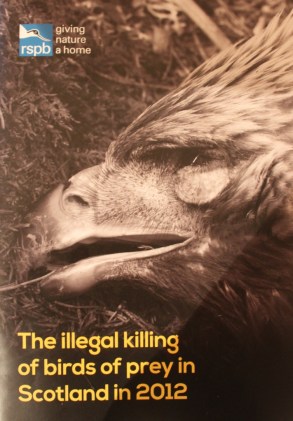
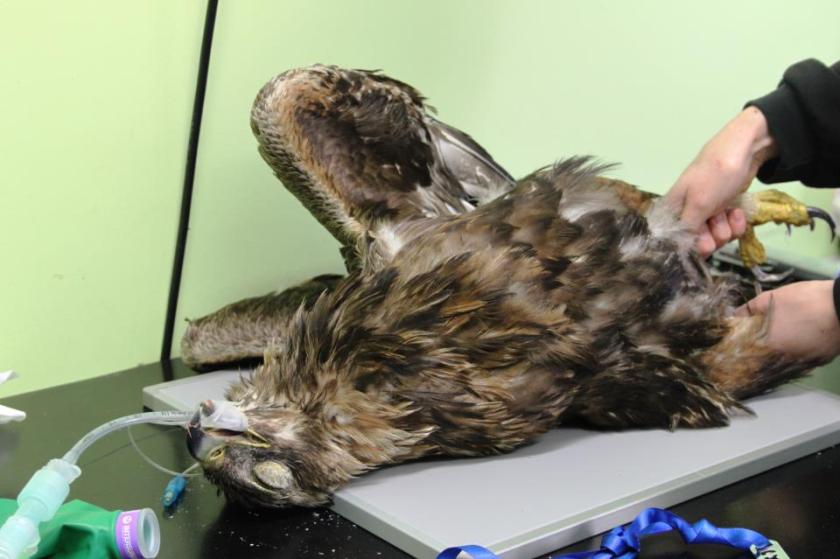
Here’s a photo of the golden eagle that was found shot and critically injured on a grouse moor in southern Scotland last year. Despite top veterinary care, he didn’t make it. This is what we’re allowing to happen to our ‘favourite’ species…

optable

More on that vicarious liability prosecution

wane1Regular blog readers will know that we’ve been chasing information about the first potential prosecution under the new vicarious liability legislation for some time.

The case in point relates to the conviction of gamekeeper Peter Bell, who was guilty of poisoning offences on the Glasserton and Physgill Estates in December 2012 (see here).

In July 2013 we asked the Environment Minister for an update on the VL prosecution (see here). He replied in August and said it would be inappropriate to comment as police enquiries had not yet concluded (see here). Fair enough.

By early October we expected the police enquiries to have been completed, ten months after the original offence was committed, so we asked the Environment Minister for an update (see here).

One of our blog readers wrote the following comment a couple of days ago:

I duly sent an e-mail to Mr Wheelhouse about the update on whether or not there would be a prosecution under the vicarious liability following Mr Bells conviction. I’m apparently not allowed to post the reply anywhere but was told Mr Wheelhouse is unable to enter into discussion about such matters and I was pointed in the direction of The Crown Office and Procurator Fiscal Service for any information I might want“.

Interesting. So the first excuse given was that ‘police enquiries had not yet concluded’, and that has now changed to ‘Wheelhouse is unable to enter into discussion’ (and apparently members of the public are not permitted to publish the Minister’s replies to their queries).

Anyone getting the impression that these answers are designed to subdue any further reporting on this case?

Wheelhouse has apparently suggested contacting the Crown Office and Procurator Fiscal Service for the information. Let’s do that, taking note of the word ‘service’ – they are supposedly serving us, the general public.

The thing is, we’re not too sure who within COPFS to contact for this information. Rumour has it that the head of the Wildlife and Environmental Crime Unit (WECU) at COPFS, Craig Harris, has since moved on. Rumour also has it that a new head of unit has been installed although it’s not clear who that person is, although six-figure-Dysart’s name has been mentioned. Hmm.

We could ask the Lord Advocate, Frank Mulholland QC, who is the ministerial head of COPFS, although we’ve been unable to find a direct email address for him.

Let’s try our luck with the COPFS’s general email address and ask the following questions:

Dear COPFS,

Please can you tell us the name of the new head of the Wildlife and Environmental Crime Unit at COPFS? And please could you tell us whether there will be a prosecution under the vicarious liability legislation relating to the poisoning offences carried out at the Glasserton and Physgill Estates in December 2012? Thanks.

Emails to: enquirypoint@copfs.gsi.gov.uk

UPDATE: The email address to use is apparently this: _WildlifeSpecialists@copfs.gsi.gov.uk  Please note the underscore at the beginning of the address. Thanks to the contributors who have provided this new address.

Scottish govt and police are concealing poisoning incidents

The fiasco that is wildlife crime reporting in Scotland continues today with the release of the Scottish Government’s poisoning stats for the second quarter of this year (i.e. incidents from April, May and June).

These stats are published by SASA (Science and Advice for Scottish Agriculture), a division of the Scottish Government. A few years ago they used to publish the figures in a timely way – these days they’ve introduced a delay of approximately six months.  Here they are.

The stats are quite interesting. Take note of the number of buzzard deaths attributed to ‘probable starving’. These are the buzzards that are supposedly devouring gamebirds quicker than you can say, “Quick, pass the Carbofuran”. But, there’s something far more interesting in the report than that….or rather it’s not in the report…

For some reason, several known poisoning incidents are ‘missing’ from the data. We know that these incidents took place in March, April and May in Highland and Tayside. For one of them (a poisoned buzzard in March), this incident should have been reported in the stats for Q1 (Jan, Feb, March), but it wasn’t. We didn’t challenge that because it was reasonable to assume that a police investigation/raid may still be on-going and any publicity about the poisoning might have compromised a police operation.

But, now it’s October. These poisonings took place 7, 6 and 5 months ago, respectively. There hasn’t been a whisper of a police press statement about any of them. Why not?

And now the Scottish Government’s quarterly poisoning report has been sanitised to remove any mention of these incidents. Why is that?

Who stands to benefit from the concealment of these incidents? Certainly some organisations with a vested interest in wanting the public to believe that poisoning incidents are still on a downward trend, when actually they are not – they are on the increase from last year’s figures but of course nobody wants to admit that and if the figures aren’t in the public domain then they don’t have to admit to it!

Who told SASA to remove the data on these incidents? Was it Police Scotland?

Why don’t we ask them. Let’s ask Sgt Andrew Mavin, who is the Police Scotland Wildlife Crime Coordinator and who is quoted as saying, “Tackling crime, keeping people safe and building confidence is at the centre of everything the new service in Scotland stands for and this is exactly the approach we take to wildlife crime” (see here).

Is it really, Sgt Mavin? Then how do you justify the concealment of these poisoning incidents from public scrutiny? Why didn’t Police Scotland issue a press statement about them? Why didn’t Police Scotland shout it from the rooftops that highly toxic and illegal poisons are being left out in the countryside putting peoples’ lives at risk? Did Police Scotland ask SASA to remove these incidents from their public report? How can we have any confidence in Police Scotland when we find out that serious crimes are being kept hidden from the general public?

Here is his email address: andrew.mavin@scotland.pnn.police.uk

And while we’re on the subject of official cover-ups….we’ve been having a closer look at the Scottish Government’s Wildlife Crime Annual Report (2012) that was published last week (see here). We’re still not ready to write a detailed review on that report but we did notice something that’s relevant to today’s blog – the 2012 poisoning figures given in that report number three incidents. Conveniently, at least one other poisoning incident is ‘missing’. It involved the death of a raven and a crow and the discovery of poisoned meat bait and 2 rabbit baits, and it happened in the ‘Borders’ in May 2012. We blogged about it (here).

Why was this incident excluded from the Scottish Government’s so-called ‘official report’ on wildlife crime in 2012? Was it because no raptor species was reported as being poisoned? In which case, in the 2013 report are we going to see the exclusion of the 35+ poisoned meat baits found in gamebags on Leadhills Estate this year, because no poisoned raptor was actually found?

Let’s ask Environment Minister Paul Wheelhouse: ministerforenvironment@scotland.gsi.gov.uk

Dear Environment Minister,

Please can you explain why confirmed wildlife poisoning incidents are being concealed from the public and excluded from official government reports?

Thanks.

Vicarious liability prosecution?

wane1On July 1st this year, Environment Minister Paul Wheelhouse set out his proposed ‘further measures’ to tackle the continuing problem of illegal raptor persecution (see here).

In response to his announcement, on July 2nd we asked him (see here) for clarification on some of these ‘further measures’ and also for updates on some previously promised measures, including prosecutions under the new vicarious liability legislation.

On August 4th we blogged about the Minister’s responses to our questions (see here).

One of the questions we’d asked him was this:

Question 3:

Please can you advise whether there will be a prosecution under the new vicarious liability legislation following the recent conviction of gamekeeper Peter Bell, found guilty of poisoning offences on the Glasserton and Physgill Estates? If you don’t know the answer (which would be surprising, given that you said in March 2013 that you would be “keeping an eye on this particular area [i.e. vicarious liability] with interest”, please can you provide the contact details of someone who can answer the question?

The Minister’s response was this:

It would be inappropriate to comment further on this case as police enquiries have not yet concluded.

At the time we said we weren’t too impressed with this response, seeing as though 8 months had already elapsed since the original crimes were committed (in December 2012). However, as this was the first time a potential prosecution had been considered under the new legislation, we didn’t have a benchmark for how long these cases might take. We also said we would ask, periodically, for updates on this case so that it couldn’t be quietly swept under the carpet.

It’s now October, ten months after the original crimes were committed, and there’s still no official word. We thought it was time to ask the Minister for another update.

Dear Paul Wheelhouse,

Please could you provide an update on whether there will be a prosecution under the new vicarious liability legislation following the recent conviction of gamekeeper Peter Bell, found guilty of poisoning offences on the Glasserton and Physgill Estates?

Thanks.

Emails to: ministerforenvironment@scotland.gsi.gov.uk