In November last year, conservation campaign group Wild Justice published a report (Collateral Damage) highlighting shockingly high levels of rodenticides (rat poisons) found in Buzzards and Red Kites and showed how the UK Government was ignoring the evidence (see press release here).
This led to a flurry of Parliamentary questions (see here) and promises for a review in 2025.
Since then, further reports show that the use of Second Generation Anticoagulant Rodenticides (SGARs), particularly Brodicfacoum, is causing widespread harm to wildlife including Foxes, Otters and Peregrines (see here).
A poisoned Red Kite. Photo by Dr Marc Ruddock
The Health & Safety Executive (HSE) which controls the approval regime in the UK for rodenticides and decides what can and cannot be used, has announced a consultation on rodenticides. The consultation is looking at what alternatives to SGARs are available.
If the HSE is going to continue to approve SGARs for use, it needs to show that no other viable alternatives are available.
Apart from taking preventative measures, there ARE other viable alternatives, but the chemical companies aren’t keen for these to be promoted because SGARs are highly profitable financially, even though they’re disastrous for many species, especially raptors, from an ecological perspective.
The alternatives include:
Non-SGAR alternative rodenticides such as Cholecalciferol, with which the targeted rodent stops feeding once a lethal intake has been consumed (reducing risk of secondary poisoning of predators and scavengers).
Zinc Phosphide – a highly effective acute rodenticide.
DR8 – a product developed with the support of the New Zealand Government which is specific to rats and poses no apparent secondary poisoning risk.
Carbon Dioxide gas (also known as Rat Ice).
Contraceptive products such as ContraPest, which controls rat populations by restricting rodent reproduction.
The HSE’s public consultation is not especially user-friendly, and nor does it seem to have been widely promoted (apart from amongst the chemical companies who will no doubt be pushing for the HSE to retain its approval for SGARs and to ignore the alternatives).
However, Wild Justice has prepared some helpful guidance on how to complete the consultation and is encouraging as many members of the public as possible to take part – you’ll find the guidance here.
The deadline for completing this consultation is this coming Tuesday (30 September 2025) so we don’t have long.
Please, if you have some time today, have a go at completing the consultation and help put pressure on the HSE to remove, or at least limit, the use of SGARs.
The trial of an 87-year-old man, accused of multiple offences linked to alleged raptor persecution, has been put on hold after his defence lawyer told the court he intends to apply for Judicial Review of the judge’s ruling that the case should not be dropped.
Brian Chorlton, of Morkery Lane, Castle Bytham, Lincolnshire, was summoned to court in April 2025 following reports that birds of prey were being poisoned in the Castle Bytham area.
In May 2025, Chorlton appeared at Lincoln Magistrates’ Court and pleaded not guilty to 11 charges relating to the unapproved or unlawful storage of the chemical Aldicarb, possession of a poisoner’s kit, and possession and use of four pole traps. The trial was set to take place in October 2025.
However, on 18 September 2025 a case management hearing took place at Lincoln Magistrates’ Court where the defence submitted three separate legal arguments calling for the case to be dismissed. I won’t elaborate on those arguments at this stage but they are unusual, and are not related to the use of covert surveillance as is often the case.
The District Judge rejected all three legal arguments and the application to dismiss the case was rejected.
The District Judge said he intended for the trial to proceed in October but offered a further case management hearing, due to take place one week later, to allow the defence time to consider the ruling.
That second case management trial took place at Lincoln Magistrates’ Court yesterday (25 September 2025) and the defence announced its intention to apply to the High Court for Judicial Review of the judge’s earlier ruling.
This means the original trial date (October 2025) has now been vacated. There will be a further case management hearing in January 2026 for the defence to update the court on its application for Judicial Review.
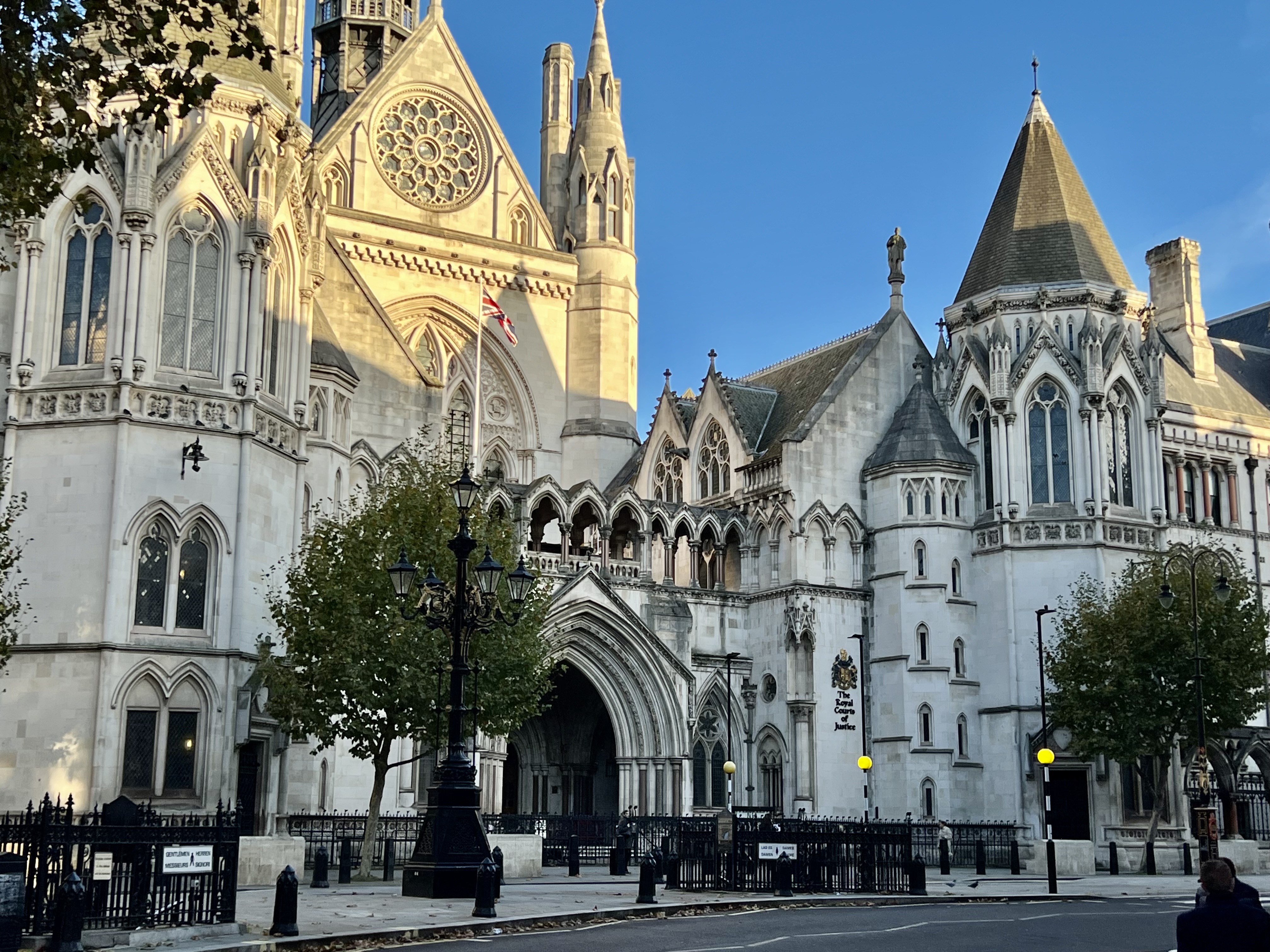
Royal Courts of Justice in London. Photo by Ruth Tingay
The application for Judicial Review is a process whereby the defence will be seeking permission from a High Court judge to proceed to a full Judicial Review. This typically takes between two to six months but can take longer, depending on the court’s schedule and the availability of a judge and also whether the judge wants an oral hearing or is satisfied with the written submissions on which to make a decision.
If permission is granted, the case will then move to a full Judicial Review and that can take up to a year before it’s heard, sometimes longer, and if the judge’s decision is reserved, there can then be a further wait, often months, waiting for the judgement to be delivered.
NB: As criminal proceedings are still live, comments have been switched off.
UPDATE 23 April 2026: Update on prosecution of 87-year-old William Brian Chorlton, accused of 11 offences relating to alleged raptor persecution in Lincolnshire (here)
Press release from Police Scotland (24 September 2025):
BIRD OF PREY FOUND TO BE POISONED IN PERTH & KINROSS AREA
Enquiries into the death of red kite are ongoing.
On 22 June, 2025 a dead red kite was found near to its nest to the north west of Braco, in the Perth and Kinross area.
Subsequent post mortem examination and toxicology testing have shown that the bird had ingested toxic levels of rodenticide.
The red kite was also found to have ingested the banned substance aldicarb. Aldicarb has been illegal in the UK since 2007 and no products containing this substance are approved for use in the UK.
Birds of prey, like all wild birds in Scotland, are protected under the Wildlife and Countryside Act 1981, and it is an offence to intentionally or recklessly kill or injure them.
Wildlife Crime Coordinator, Detective Sergeant David Lynn, said: “This red kite has been poisoned resulting in a very painful and distressing death. Legal rodenticides must be used with extreme caution to avoid the poisoning of non-target species or you may be liable to prosecution. The use of Aldicarb is an illegal and reckless act as this substance can be fatal for both animals and humans.
“Our investigation into this incident is continuing and we will pursue anyone who targets Scotland’s birds of prey. I would encourage anyone with any information in relation to this incident to contact us.
“We ask anyone using the area to be vigilant if they find anything suspicious, don’t touch it, but do take photos and report to Police Scotland immediately on 101.”
Anyone with information is asked to call Police Scotland on 101 quoting incident number 1176 of 23 September, 2025.
It’s been a long time coming, but today Natural England has announced it is finally pulling the plug on its project to ‘reintroduce’ Hen Harriers to southern England.
It may sound odd that a pro-raptor conservationist sees this as good news, but I have long argued against this project, for a number of reasons, but predominantly because I saw it as an unhelpful distraction to tackling the real issue – that of the illegal killing of Hen Harriers on the grouse moors of northern Britain.
Natural England has been planning a so-called ‘reintroduction’ of hen harriers to southern England since 2016, as part of DEFRA’s ludicrous Hen Harrier Action Plan.
I think the proposed reintroduction project was initially supported by the pro-grouse shooting lobby because they thought that Hen Harriers could be removed from the northern grouse moors (under the equally ludicrous brood meddling scheme) and released into southern England, thus removing what they saw as a ‘problem species’ to the other end of the country, leaving them to get on with killing Red Grouse for fun (and money) without those pesky Hen Harriers ruining their sport (and profit).
An apt cartoon depicting what many of us saw as the intentions of the stakeholders in Defra’s Hen Harrier Action Plan. Cartoon by Gerard Hobley.
However, that plan was thwarted when it was pointed out that it would be a breach of international legislation to remove Hen Harriers from Special Protection Areas (SPAs) that had been designated specifically for Hen Harriers, and release them elsewhere.
I suspect that the pro-grouse shooting lobby continued to support the proposed ‘reintroduction’ into southern England because they knew that if even a handful of Hen Harriers were successful in the south, it would take the heat / attention off the continued illegal killing in the north.
We saw exactly this, when the brood meddling trial resulted in a few more pairs of Hen Harriers being allowed to breed – the ongoing illegal killing was simply brushed under the carpet by the grouse shooting lobby, and in many cases, outright denied using comically farcical logic (e.g. here) or grotesquely distorted reasoning (e.g. here).
But Hen Harriers don’t need to be ‘reintroduced’ to southern England, or anywhere else in the UK for that matter. They are perfectly capable of breeding in the wild and recolonising their former range, over a relatively short space of time, IF, and only IF, their survival isn’t curtailed by grouse moor gamekeepers shooting, trapping and poisoning them, pulling off their heads and legs, or stamping on their eggs and chicks.
Instead of wasting hundreds of thousands of pounds on this distraction project over many years, those funds could instead have been directed towards a focused enforcement plan to bring those criminals to justice.
For those interested, I’ve written extensively about this project since November 2016 and you can find links to the key blog posts here.
Here is today’s announcement from Natural England about the conclusion of the project:
NATURAL ENGLAND HEN HARRIER PROGRAMME – UPDATE TO SOUTHERN REINTRODUCTION PROJECT
By Sofía Muñoz, Senior Officer, Hen Harrier Southern Reintroduction
Background
The Hen Harrier Southern Reintroduction Project was set up in 2018 with the aim of establishing a wild, farmland-nesting population of hen harriers (Circus cyaneus) in southern England.
The hen harrier is an iconic species and one of the UK’s rarest and most persecuted birds of prey. The combination of its beauty, charisma and rarity make this a highly cherished and valued bird. Hen harriers were once common across the UK but were driven to extinction across most of the British Isles during the 1800s. More recently, Natural England and many organisations have put great effort into helping them recolonise parts of Scotland and northern England.
In England, their numbers are now estimated to have risen to 50 territorial pairs recorded in 2023, from four territorial pairs in 2016 – an increase of 1150%. Despite this increase in numbers, hen harriers remain at risk from illegal killing and disturbance, which is where human activities disrupt nesting sites, which can cause parent birds to abandon their nest and lead to failed eggs or chick deaths.
Increasing hen harrier numbers is a particularly challenging task as they have a strong inclination to return to the same place they have hatched and fledged, meaning they don’t spread areas easily.
Project timeline
In 2018, the Hen Harrier Southern Reintroduction project was conceived to encourage recolonisation of hen harriers further south in the UK. The project initially sought to translocate young hen harriers from continental Europe for release in the UK. However, collaboration between EU states and new importation rules for animals following the UK’s exit from the EU meant that translocation of young fledging birds became unfeasible due to extensive quarantine periods.
Instead, a pioneering captive conservation breeding programme was developed which focussed on releasing offspring bred in the UK from adult birds imported from France and Spain. Beginning in late 2022, this ambitious programme hoped to boost the number of hen harriers in the UK with minimal impact on wild populations. The project sought to release a minimum of 100 juvenile hen harriers over a five-year period to ensure the best chances of success.
In continental Europe, hen harriers nest on farmland which is directly comparable to much of the arable landscape across southern England. As part of the project, release pens were situated among an arable crop and these would be used to introduce chicks to the site from the captive breeding facility several weeks before fledging. It was hoped that this would enable them to familiarise themselves with the habitat and area around the release site, leading to them returning to breed in this same location in subsequent years.
Latest situation
The third breeding season for the captive birds began in 2025. While the adult birds had not bred successfully in the first two years of the programme, advances in their breeding behaviour over the two years (2023; 2024) had been noted. This meant that the team were optimistic that that things were moving in the right direction to eventually produce chicks for release. However, to the team’s disappointment, the females unfortunately laid infertile eggs in 2025, meaning that no chicks would be released this year.
Following a thorough review, it has become clear that Natural England is no longer in a position to provide the long-term funding and resource needed to continue delivering the Hen Harrier Southern Reintroduction project, despite the progress to date. The difficult decision has therefore been made to conclude this project.
The welfare of the hen harriers held in captivity for the conservation breeding programme remains the priority for the project through its closing phase. A number of options exist for the birds, and these will be explored in full. As they are unsuitable for release into the wild, they will be transferred into the care of a suitable host organisation. Organisations will be considered suitable where they are able to ensure the ongoing welfare of the birds for the remainder of their natural lives. In addition, Natural England would not preclude continuation of the conservation breeding programme under the leadership of the chosen organisation if the priority of welfare is maintained.
Informing future conservation
Knowledge acquired through the delivery of this project can help to inform other conservation projects and expand our understanding of hen harrier biology. We have, for instance, gained a deeper insight into the health, genetics, and migratory patterns of hen harriers.
We would like to express our gratitude to all our partners, who have contributed their time, expertise, and commitment to this project over the years.
ENDS
I’ve asked Natural England for a copy of what it calls its “thorough review” of this failed project.
I’ll report if/when Natural England sends it to me.
Don’t hold your breath though, I’m still waiting for NE to send me a copy of its Hen Harrier Brood Meddling Social Science report that I asked for in April 2025 (here).
Oh, and we’re STILL waiting for NE to release this year’s Hen Harrier breeding figures, AND to release the details of at least seven post-mortem reports on dead Hen Harriers, many of them dating back over a year (here). More commentary on that from me to come shortly…
Officers from Lincolnshire Police Rural Crime Action Team are investigating after a number of dead birds of prey were found in the countryside between Belchford and West Ashby in recent months.
Four birds of prey were previously discovered in the area. As a result of these reports, we carried out a Section 19 search under the Wildlife and Countryside Act today. During this search, a further three dead birds of prey were located.
Also in attendance and assisting with our thanks were members of the RSPB and National Wildlife Crime Unit.
The search team included officers from Lincolnshire Police Rural Crime Action Team, the RSPB and the National Wildlife Crime Unit. Photo via Lincolnshire Police
All of the birds have been recovered and will be sent for specialist testing through the Wildlife Incident Investigation Scheme (WIIS) to establish the cause of death.
The Officer In Charge, Detective Constable Aaron Flint Lincolnshire Police’s Force Wildlife Crime officer, said:
“The discovery of multiple dead birds of prey in one locality is deeply concerning. We take all reports of suspected wildlife crime seriously, and our investigation is ongoing. Until we receive toxicology results, we cannot confirm the cause of death, but deliberate harm to birds of prey is a criminal offence and will be fully investigated.”
We are appealing for anyone who may have information which could assist our enquiries. Did you see anything suspicious in the area in recent weeks or months? Have you found any other dead wildlife, bait, or unusual items in the countryside locally?
If you can help, please contact Lincolnshire Police on 101, quoting crime number 25000511499, email aaron.flint@lincs.police.uk or alternatively, you can report anonymously via Crimestoppers on 0800 555 111.
ENDS
This isn’t the first police investigation into the illegal killing of birds of prey in this area.
In March this year, gamekeeper John Bryant 40, of West Ashby, Horncastle, Lincolnshire was convicted after a trial at Lincolnshire Magistrates’ Court of four offences in relation to an investigation into the illegal poisoning of a Red Kite and two Buzzards in the Belchford area (here).
Bryant was ordered to pay over £7,000 in fines (see here and here) and he also lost an appeal against the Police’s decision to revoke his shotgun and firearms certificates (here).
The discovery of seven more dead raptors in the same area this year is, as Detective Constable Aaron Flint says, ‘deeply concerning’.
Well done DC Aaron Flint and team for another successful multi-agency raid and a timely press release – this level of transparency is rare and I can think of a number of police forces who could learn lessons from this approach.
A new BBC documentary aired last night that charts the police investigation into a missing charity cyclist, Tony Parsons, who vanished at the Bridge of Orchy in 2017 and whose remains were found three years later buried in a stink pit on the Auch Estate.
The programme follows the criminal trial of twin brothers Alexander (Sandy) and Robert McKellar from the Auch Estate, initially charged with murder but in 2023 Alexander was eventually convicted for the lesser offence of culpable homicide and Robert for attempting to defeat the ends of justice.
This case was of interest to me because the Auch Estate was at the centre of another criminal investigation in 2009 after walkers discovered a dead Golden Eagle. Tests revealed it had been illegally poisoned with the banned pesticide Carbofuran.
In 2012 Auch Estate farm manager Tom McKellar was convicted and fined £1,200 for possession of Carbofuran (not for poisoning the eagle, even though he had reportedly admitted during interview of putting out poisoned baits). He was also found to be in possession of two unlicensed handguns but instead of receiving a mandatory five-year custodial sentence he was given a 300-hour community service order.
From the Guardian, June 2009
The new BBC documentary provides a fascinating insight into the difficulties of investigating serious crime on a remote rural estate and the parallels with investigations into illegal raptor persecution in these glens will not be lost on blog readers. The ease with which the McKellar twins could hide their appalling crimes for so long is sobering.
UPDATE 6 May 2026: ‘Should I Marry a Murderer?’ New Netflix documentary provides sobering insight into brutal killing and burial of charity cyclist Tony Parsons by McKellar twins at Auch Estate, Glen Orchy (here)
“Swaledale in the Yorkshire Dales National Park is statistically the worst location in England with three Hen Harriers confirmed to have been illegally killed and 14 more satellite-tagged birds suspiciously disappearing between 2016-2023“
and
“The most significant declines in Hen Harrier breeding in England in 2024 were observed in the North Pennines and the Yorkshire Dales, with decreases of 67% and 73% respectively, compared to 2023. Both regions are intensively managed for grouse shooting and have been linked to several confirmed and suspected Hen Harrier persecution incidents in recent years“.
Indeed, the forthcoming trial of a gamekeeper alleged to have been involved in the conspiracy to shoot and kill an untagged Hen Harrier relates to an incident filmed on a grouse moor in the Yorkshire Dales last October (as featured on Channel 4 News, here).
And yet another satellite-tagged Hen Harrier ‘disappeared’ in suspicious circumstances on a grouse moor in the Yorkshire Dales National Park earlier this year (here).
The Yorkshire Dales National Park was also where satellite-tagged Hen Harrier ‘Free’ was found dead. His post-mortem concluded that his ‘leg had been torn off while he was alive, and that the cause of death was the head being twisted and pulled off while the body was held tightly’ (see here).
Hen Harrier ‘Free’ during post-mortem examination. Photo via Natural England.
With all this recent history in mind, I’ve been following the progress of the development of the Yorkshire Dales National Park Authority’s latest five-year Management Plan (2025-2030), due to be published shortly.
As part of the Management Plan process, the Management Plan Partnership undertook a six-week public consultation process in January 2024 to find out what issues were important to residents and visitors.
A total of 1,106 responses were received, of which 50% were from people indicating they live and/or work in the National Park; 16% were from younger people (18-34); and 4% were from people identifying as being from non-white ethnic groups.
The online questionnaire identified 18 issues from which people were asked to rank their top six.
The top two priorities selected by respondents were:
Help nature to recover by creating, restoring and connecting important habitats;
Protect rare and threatened species, including ending illegal persecution of birds of prey.
That’s quite a significant result! And this isn’t the first time that the public has identified illegal raptor persecution as a major concern in this National Park (see here).
A second Management Plan consultation ran in January 2025 based on 40 proposed draft objectives, which included:
C6. Support implementation of the national Wildlife Crime Strategy to end the illegal killing and disturbance of birds of prey and other wildlife by 2028.
This proposed draft objective for tackling the illegal killing of birds of prey in the Yorkshire Dales National Park is quite different from the objective listed in the previous Management Plan (2019-2024) which was this:
C5. Work with moorland managers and other key stakeholders to devise and implement a local approach to end illegal persecution of raptors, including independent and scientifically robust monitoring, and co-ordinated hen harrier nest and winter roost site protection.
The latest draft objective for tackling illegal raptor persecution seems to have shifted significantly, away from the so-called ‘Bird of Prey Partnership’ approach, established in 2020 with representatives from the grouse-shooting industry, the raptor conservation community, RSPB, Natural England, Police, the Yorkshire Dales National Park Authority and the Nidderdale AONB (now renamed Nidderdale National Landscape) Authority.
That ‘partnership’, just like the similar one set up in the Peak District National Park and on which the Yorkshire Dales/Nidderdale Partnership was based, has failed miserably (e.g. see here) and has seen two of the ‘partners’ walk away (RSPB here, Northern England Raptor Forum here), both citing familiar complaints about the behaviour of the grouse moor lobby group, The Moorland Association.
The latest draft objective in the 2025-2030 Management Plan doesn’t mention the ‘partnership’ at all and instead focuses on ‘supporting the implementation of the [Police] National Wildlife Crime Strategy‘, which includes the national wildlife crime priorities of which raptor persecution is a key focus.
Does that mean a formal end to the Yorkshire Dales/Nidderdale Bird of Prey Partnership?
For anyone who still wants to pretend that the grouse shooting industry isn’t responsible for the systematic extermination of Hen Harriers on grouse moors across the UK, here’s the latest catalogue of crime that suggests otherwise.
This male hen harrier died in 2019 after his leg was almost severed in an illegally set trap that had been placed next to his nest on a Scottish grouse moor (see here). Photo by Ruth Tingay
This is the blog I now publish after every reported killing or suspicious disappearance.
“They disappear in the same way political dissidents in authoritarian dictatorships have disappeared” (Stephen Barlow, 22 January 2021).
Today the list has been updated to include the two most recently reported victims: an RSPB-satellite-tagged male called ‘Dynamo’ who vanished whilst hunting on a nearby grouse moor close to his nest site on United Utilities-owned land in the Forest of Bowland, Lancashire in May 2025 (here) and another male, this time-untagged, who also vanished from another active nest site on United Utilities-owned land in the Forest of Bowland, Lancashire, in May 2025 (here).
I’ve been compiling this list only since 2018 because that is the year that the grouse shooting industry ‘leaders’ would have us believe that the criminal persecution of Hen Harriers had stopped and that these birds were being welcomed back on to the UK’s grouse moors (see here).
This assertion was made shortly before the publication of a devastating new scientific paper that demonstrated that 72% of satellite-tagged Hen Harriers were confirmed or considered likely to have been illegally killed, and this was ten times more likely to occur over areas of land managed for grouse shooting relative to other land uses (see here). A further scientific paper published in 2023 by scientists at the RSPB, utilising even more recent data, echoed these results – see here.
2018 was also the year that Natural England issued a licence to begin a Hen Harrier brood meddling trial on grouse moors in northern England. For new blog readers, Hen Harrier brood meddling was a conservation sham sanctioned by DEFRA as part of its ludicrous ‘Hen Harrier Action Plan‘ and carried out by Natural England (NE), in cahoots with the very industry responsible for the species’ catastrophic decline in England.
For more background see here and for a critical evaluation of the trial after 5 years see this report by Wild Justice. In 2024 the brood meddling trial appeared to collapse for reasons which are not yet clear (see here) and the licence for the so-called ‘scientific trial’ expired. In March 2025 Natural England announced the end of the brood meddling trial (here) and in April 2025 announced that a licence application to continue brood meddling, submitted by the Moorland Association, had been refused (here).
Brood meddling was earlier described as a sort of ‘gentleman’s agreement’ by commentator Stephen Welch:
“I don’t get it, I thought the idea of that scheme was some kind of trade off – a gentleman’s agreement that the birds would be left in peace if they were moved from grouse moors at a certain density. It seems that one party is not keeping their side of the bargain“.
With at least 143 Hen Harriers gone since 2018, and 31 of those being brood meddled birds, there is no question that the grouse shooting industry was simply taking the piss. Meanwhile, Natural England pretended that ‘partnership working’ was the way to go and consecutive Tory DEFRA Ministers remained silent for all those years.
*n/a – no hen harriers were brood meddled in 2018. **Post mortem reports on a further seven hen harriers found dead in 2024/2025 are awaited. Those seven individuals are not included in this table.
‘Partnership working’ according to Natural England appeared to include authorising the removal of Hen Harrier chicks from a grouse moor already under investigation by the police for suspected raptor persecution (here) and accepting a £75k ‘donation’ from representatives of the grouse shooting industry with a contract clause that prevented Natural England from criticising them or the sham brood meddling trial (see here). This was in addition to a further £10k ‘donation’ that Natural England accepted, under the same terms, in 2021 (here).
Thankfully, the Scottish Government finally decided to act by introducing a grouse moor licensing scheme under the Wildlife Management & Muirburn (Scotland) Act 2024. The intention behind this new legislation is that grouse shooting estates could have their licences suspended/revoked if, on the balance of probability, it is shown that any raptor persecution crimes (& some other associated offences) are linked with grouse moor management on that estate. There, are, however, ongoing issues with the licence as it’s been significantly watered-down after an intervention from the grouse shooting industry (see here). Work is underway to address this.
In England a new Hen Harrier Taskforce was established in 2024, led by the National Wildlife Crime Unit, to use innovative techniques to target Hen Harrier persecution hotspots (locations where Hen Harriers repeatedly ‘disappear’ or are found illegally killed). It’s too early to judge the Taskforce’s success/failure and it’s been met with considerable resistance from the Moorland Association, the grouse moor owners’ lobby group (e.g. see here). So far though, it’s quite clear that the the illegal killing continues.
So here’s the latest gruesome list of ‘missing’/illegally killed hen harriers since 2018. Note that the majority of these birds (but not all) were fitted with satellite tags. How many more [untagged] harriers have been killed? We now have evidence that gamekeepers are specifically targeting untagged Hen Harriers, precisely to avoid detection (see here for extraordinary footage/audio captured by the RSPB’s Investigations Team as featured on Channel 4 News in October 2024).
February 2018: Hen Harrier Saorsa ‘disappeared’ in the Angus Glens in Scotland (here). The Scottish Gamekeepers Association later published wholly inaccurate information claiming the bird had been re-sighted. The RSPB dismissed this as “completely false” (here).
5 February 2018: Hen Harrier Marc ‘disappeared’ on a grouse moor in Durham (here).
9 February 2018: Hen Harrier Aalin ‘disappeared’ on a grouse moor in Wales (here).
March 2018: Hen Harrier Blue ‘disappeared’ in the Lake District National Park (here).
March 2018: Hen Harrier Finn ‘disappeared’ near Moffat in Scotland (here).
18 April 2018: Hen Harrier Lia ‘disappeared’ in Wales and her corpse was retrieved in a field in May 2018. Cause of death was unconfirmed but police treating death as suspicious (here).
8 August 2018: Hen Harrier Hilma ‘disappeared’ on a grouse moor in Northumberland (here).
16 August 2018: Hen Harrier Athena ‘disappeared’ on a grouse moor in Scotland (here).
26 August 2018: Hen Harrier Octavia ‘disappeared’ on a grouse moor in the Peak District National Park (here).
29 August 2018: Hen Harrier Margot ‘disappeared’ on a grouse moor in Scotland (here).
29 August 2018: Hen Harrier Heulwen ‘disappeared’ on a grouse moor in Wales (here).
3 September 2018: Hen Harrier Stelmaria ‘disappeared’ on a grouse moor in Scotland (here).
24 September 2018: Hen Harrier Heather ‘disappeared’ on a grouse moor in Scotland (here).
2 October 2018: Hen Harrier Mabel ‘disappeared’ on a grouse moor on the edge of the Yorkshire Dales National Park (here).
3 October 2018: Hen Harrier Thor ‘disappeared’ next to a grouse moor in Bowland, Lanacashire (here).
23 October 2018: Hen Harrier Tom ‘disappeared’ in South Wales (here).
26 October 2018: Hen Harrier Arthur ‘disappeared’ on a grouse moor in the North York Moors National Park (here).
1 November 2018: Hen Harrier Barney ‘disappeared’ on Bodmin Moor (here).
10 November 2018: Hen Harrier Rannoch ‘disappeared’ on a grouse moor in Scotland (here). Her corpse was found nearby in May 2019 – she’d been killed in an illegally-set spring trap (here).
14 November 2018: Hen Harrier River ‘disappeared’ on a grouse moor in the Nidderdale AONB (here). Her corpse was found nearby in April 2019 – she’d been illegally shot (here).
16 January 2019: Hen Harrier Vulcan ‘disappeared’ in Wiltshire close to Natural England’s proposed reintroduction site (here).
28 January 2019: Hen Harrier DeeCee ‘disappeared’ in Glen Esk, a grouse moor area of the Angus Glens (see here).
7 February 2019: Hen Harrier Skylar ‘disappeared’ next to a grouse moor in South Lanarkshire (here).
22 April 2019: Hen Harrier Marci ‘disappeared’ on a grouse moor in the Cairngorms National Park (here).
26 April 2019: Hen Harrier Rain ‘disappeared’ on a grouse moor in Nairnshire (here).
11 May 2019: An untagged male Hen Harrier was caught in an illegally-set trap next to his nest on a grouse moor in South Lanarkshire. He didn’t survive (here).
7 June 2019: An untagged Hen Harrier was found dead on a grouse moor in Scotland. A post mortem stated the bird had died as a result of ‘penetrating trauma’ injuries and that this bird had previously been shot (here).
5 September 2019: Wildland Hen Harrier 1 ‘disappeared’ on a grouse moor nr Dalnaspidal on the edge of the Cairngorms National Park (here).
11 September 2019: Hen Harrier Romario ‘disappeared’ on a grouse moor in the Cairngorms National Park (here).
14 September 2019: Hen Harrier (Brood meddled in 2019, #183704) ‘disappeared’ in the North Pennines (here).
23 September 2019: Hen Harrier (Brood meddled in 2019, #55149) ‘disappeared’ in North Pennines (here).
24 September 2019: Wildland Hen Harrier 2 ‘disappeared’ on a grouse moor at Invercauld in the Cairngorms National Park (here).
24 September 2019: Hen Harrier Bronwyn ‘disappeared’ near a grouse moor in North Wales (here).
10 October 2019: Hen Harrier Ada ‘disappeared’ on a grouse moor in the North Pennines AONB (here).
12 October 2019: Hen Harrier Thistle ‘disappeared’ on a grouse moor in Sutherland (here).
18 October 2019: Member of the public reports the witnessed shooting of an untagged male Hen Harrier on White Syke Hill in North Yorkshire (here).
November 2019: Hen Harrier Mary found illegally poisoned on a pheasant shoot in Ireland (here).
November 2019: Hen Harrier Artemis ‘disappeared’ near Long Formacus in south Scotland (RSPB pers comm).
14 December 2019: Hen harrier Oscar ‘disappeared’ in Eskdalemuir, south Scotland (here).
December 2019: Hen Harrier Ingmar ‘disappeared’ in the Strathbraan grouse moor area of Perthshire (RSPB pers comm).
27 January 2020: Members of the public report the witnessed shooting of a male Hen Harrier on Threshfield Moor in the Yorkshire Dales National Park (here).
23 March 2020: Hen Harrier Rosie ‘disappeared’ at an undisclosed roost site in Northumberland (here).
1 April 2020: Hen Harrier (Brood meddled in 2019, #183703) ‘disappeared’ in unnamed location, tag intermittent (here).
5 April 2020: Hen Harrier Hoolie ‘disappeared’ on a grouse moor in the Cairngorms National Park (here)
8 April 2020: Hen Harrier Marlin ‘disappeared’ on a grouse moor in the Cairngorms National Park (here).
19 May 2020: Hen Harrier Fingal ‘disappeared’ on a grouse moor in the Lowther Hills, Scotland (here).
21 May 2020: Hen Harrier (Brood meddled in 2019, #183701) ‘disappeared’ on a grouse moor in Cumbria shortly after returning from wintering in France (here).
27 May 2020: Hen Harrier Silver ‘disappeared’ on a grouse moor on Leadhills Estate, Scotland (here).
2020: day/month unknown: Unnamed male Hen Harrier breeding on RSPB Geltsdale Reserve, Cumbria ‘disappeared’ while away hunting (here).
9 July 2020: Unnamed female Hen Harrier (#201118) ‘disappeared’ from an undisclosed site in Northumberland (here).
25 July 2020: Hen Harrier Harriet ‘disappeared’ on a grouse moor in the Yorkshire Dales National Park (here).
14 August 2020: Hen Harrier Solo ‘disappeared’ in confidential nest area in Lancashire (here).
7 September 2020: Hen Harrier Dryad ‘disappeared’ on a grouse moor in the Yorkshire Dales National Park (here).
16 September 2020: Hen Harrier Fortune ‘disappeared’ from an undisclosed roost site in Northumberland (here).
19 September 2020: Hen Harrier Harold ‘disappeared’ on a grouse moor in the Yorkshire Dales National Park (here).
20 September 2020: Hen Harrier (Brood meddled in 2020, #55152) ‘disappeared’ next to a grouse moor in North Yorkshire (here).
24 February 2021: Hen Harrier Tarras ‘disappeared’ next to a grouse moor in Northumberland (here)
12th April 2021: Hen Harrier Yarrow ‘disappeared’ near Stockton, County Durham (here).
18 May 2021: Adult male Hen Harrier ‘disappeared’ from its breeding attempt on RSPB Geltsdale Reserve, Cumbria whilst away hunting (here).
18 May 2021: Another adult male Hen Harrier ‘disappeared’ from its breeding attempt on RSPB Geltsdale Reserve, Cumbria whilst away hunting (here).
24 July 2021: Hen Harrier Asta ‘disappeared’ at a ‘confidential site’ in the North Pennines (here). We learned 18 months later that her wings had been ripped off so her tag could be fitted to a crow in an attempt to cover up her death (here).
14th August 2021: Hen Harrier Josephine ‘disappeared’ at a ‘confidential site’ in Northumberland (here).
17 September 2021: Hen Harrier Reiver ‘disappeared’ in a grouse moor dominated region of Northumberland (here)
24 September 2021: Hen Harrier (Brood meddled in 2021, R2-F-1-21) ‘disappeared’ in Northumberland (here).
15 November 2021: Hen Harrier (brood meddled in 2020, #R2-F1-20) ‘disappeared’ at the edge of a grouse moor on Arkengarthdale Estate in the Yorkshire Dales National Park (here).
19 November 2021: Hen Harrier Val ‘disappeared’ in the Lake District National Park in Cumbria (here).
19 November 2021: Hen Harrier Percy ‘disappeared’ in Lothian, Scotland (here).
12 December 2021: Hen Harrier Jasmine ‘disappeared’ on a grouse moor (High Rigg Moor on the Middlesmoor Estate) in the Nidderdale AONB in North Yorkshire (here).
9 January 2022: Hen Harrier Ethel ‘disappeared’ in Northumberland (here).
26 January 2022: Hen Harrier Amelia ‘disappeared’ in Bowland (here).
10 February 2022: An unnamed satellite-tagged Hen Harrier ‘disappeared’ in a grouse moor dominated area of the Peak District National Park (here). One year later it was revealed that the satellite tag/harness of this young male called ‘Anu’ had been deliberately cut off (see here).
12 April 2022: Hen Harrier ‘Free’ (Tag ID 201121) ‘disappeared’ at a ‘confidential site’ in Cumbria (here). It later emerged he hadn’t disappeared, but his mutilated corpse was found on moorland in the Yorkshire Dales National Park. A post mortem revealed the cause of death was having his head twisted and pulled off. One leg had also been torn off whilst he was still alive (here).
April 2022: Hen Harrier ‘Pegasus’ (tagged by the RSPB) ‘disappeared’ on a grouse moor at Birkdale in the Yorkshire Dales National Park (here).
May 2022: A male breeding Hen Harrier ‘disappeared’ from a National Trust-owned grouse moor in the Peak District National Park (here).
May 2022: Another breeding male Hen Harrier ‘disappeared’ from a National Trust-owned grouse moor in the Peak District National Park (here).
14 May 2022: Hen Harrier ‘Harvey’ (Tag ID 213844) ‘disappeared’ from a ‘confidential site’ in the North Pennines (here).
20 June 2022: Hen harrier chick #1 stamped to death in nest on a grouse moor in the Yorkshire Dales National Park (here).
20 June 2022: Hen Harrier chick #2 stamped to death in nest on a grouse moor in the Yorkshire Dales National Park (here).
20 June 2022: Hen Harrier chick #3 stamped to death in nest on a grouse moor in the Yorkshire Dales National Park (here).
20 June 2022: Hen Harrier chick #4 stamped to death in nest on a grouse moor in the Yorkshire Dales National Park (here).
17 August 2022: Hen Harrier (brood meddled in 2022, #R1-M1-22) ‘disappeared’ on moorland in the Yorkshire Dales National Park (here).
September 2022: Hen Harrier ‘Sullis’ (tagged by the RSPB) ‘disappeared’ on a grouse moor in Cumbria (here).
5 October 2022: Hen Harrier (brood meddled in 2022, #R3-M2-22) ‘disappeared’ on moorland in the Yorkshire Dales National Park (here).
10 October 2022: Hen Harrier ‘Sia’ ‘disappeared’ near Hamsterley Forest in the North Pennines (here).
October 2022: Hen Harrier (brood meddled in 2021, #R1-F1-21) ‘disappeared’ in the North Sea off the North York Moors National Park (here).
1 December 2022: Hen Harrier male (brood meddled in 2021, #R1-M1-21) ‘disappeared’ on moorland in the Yorkshire Dales National Park (here).
7 December 2022: Hen Harrier female (brood meddled in 2020, #55144) ‘disappeared’ from winter roost (same as #R3-F1-22) on moorland in North Pennines AONB (here).
14 December 2022: Hen Harrier female (brood meddled in 2022, #R3-F1-22) ‘disappeared’ from winter roost (same as #R2-F2-20) on moorland in the North Pennines AONB (here). Later found dead with two shotgun pellets in corpse (here).
15 December 2022: Hen Harrier female (brood meddled in 2022, #R2-F1-22) ‘disappeared’ on moorland in the Yorkshire Dales National Park (here).
30 March 2023: Hen Harrier female (brood meddled in 2022, #R1-F3-22) ‘disappeared’ in Yorkshire (here). Notes from NE Sept 2023 spreadsheet update: “Final transmission location temporarily withheld at police request“.
1 April 2023: Hen Harrier male (brood meddled in 2022, #R2-M1-22) ‘disappeared’ in Yorkshire (here). Notes from NE Sept 2023 spreadsheet update: “Final transmission location temporarily withheld at police request“.
April 2023: Hen Harrier ‘Lagertha’ (tagged by RSPB) ‘disappeared’ in North Yorkshire (here).
April 2023: Hen Harrier ‘Nicola’ (Tag ID 234078) ”disappeared’ in North Yorkshire (here).
April 2023: Untagged male Hen Harrier ‘disappeared’ from an active nest on RSPB Geltsdale Reserve in Cumbria (here).
April 2023: Another untagged male Hen Harrier ‘disappeared’ from an active nest on RSPB Geltsdale Reserve in Cumbria (here).
April 2023: Untagged male Hen Harrier ‘disappeared’ from an active nest in Durham (here).
4/5 May 2023: Satellite-tagged male Hen Harrier called ‘Rush’ ‘disappeared’ from a grouse moor in Bowland AONB in Lancashire (here).
9/10 May 2023: Hen Harrier male called ‘Dagda’, tagged by the RSPB in Lancashire in June 2022 and who was breeding on the RSPB’s Geltsdale Reserve in 2023 until he ‘vanished’, only to be found dead on the neighbouring Knarsdale grouse moor in May 2023 – a post mortem revealed he had been shot (here).
17 May 2023: Satellite-tagged Hen Harrier called ‘Wayland’ ‘disappeared’ in the Clapham area of North Yorkshire, just north of the Bowland AONB (here).
31 May 2023: Hen Harrier male (brood meddled in 2022, tag #213932, name: R2-M3-22) ‘disappeared’ in Northumberland (grid ref: NY765687) (here).
11 June 2023: Hen Harrier male (brood meddled in 2021, tag #213922, name: R2-M1-21) ‘disappeared’ at a confidential site in the Yorkshire Dales National Park. Notes from the NE spreadsheet: “Final transmission location temporarily withheld at police request“ (here).
12 June 2023: Hen Harrier male (brood meddled in 2020, tag #203004, name: R1-M2-20) ‘disappeared’ on a grouse moor in Co. Durham (grid ref: NY976322) (here).
6 July 2023: Satellite-tagged female Hen Harrier named ‘Rubi’ (tag #201124a) ‘disappeared’ on a grouse moor in Co. Durham (grid ref: NY911151) (here).
23 July 2023: Hen Harrier female (brood meddled in 2023, tag #55154a, name: R1-F1-23) ‘disappeared’ on a grouse moor in Co. Durham (close to where ‘Rubi’ vanished), grid ref: NY910126 (here).
29 July 2023: Hen Harrier female (brood meddled in 2020, R2-F2-20) ‘disappeared’ at a confidential site in the North Pennines. Notes from the NE spreadsheet: “Dead. Recovered – awaiting PM results. Final transmission location temporarily withheld at police request“ (here). Later found dead with 3 shotgun pellets in corpse (here).
9 August 2023: Satellite-tagged Hen Harrier called ‘Martha’ ‘disappeared’ on a grouse moor (Westburnhope Moor) near Hexham in the North Pennines (here).
11 August 2023: Satellite-tagged hen harrier called ‘Selena’ ‘disappeared’ on a grouse moor (Mossdale Moor) in the Yorkshire Dales National Park (here).
11 August 2023: Hen Harrier female (brood meddled in 2023, tag #201118a, name: R3-F1-23) ‘disappeared’ in Co. Durham (grid ref: NZ072136) (here).
15 August 2023: Satellite-tagged Hen Harrier called ‘Hepit’ ‘disappeared’ on a grouse moor (Birkdale Common) near Kirkby Stephen in the Yorkshire Dales National Park (here).
24 August 2023: Hen Harrier female (brood meddled in 2023, tag #55155a, name: R1-F2-23) ‘disappeared’ at a confidential site in Northumberland. Notes from the NE spreadsheet: “Final transmission location temporarily withheld at police request“ (here).
August-Sept 2023: Satellite-tagged Hen Harrier called ‘Harmonia’ ‘disappeared’ in the Yorkshire Dales National Park (here).
September 2023: Hen Harrier female ‘Saranyu’, tagged by the RSPB in Cumbria in June 2023, ‘disappeared’ in Durham in September 2023 (no further details available yet – just outline info provided in 2022 Birdcrime report) (here).
September 2023: Hen Harrier female ‘Inger’, a female tagged by the RSPB in Perthshire in July 2022, ‘disappeared’ on a grouse moor in the Angus Glens in September 2023 (here).
15 September 2023: Hen Harrier male called ‘Rhys’, tagged in Cumbria on 1st August 2023, ‘disappeared’ on a grouse moor in the Yorkshire Dales National Park. Grid ref: SD798896 (here).
24 September 2023: Hen Harrier female (brood meddled in 2023, name: ‘R2-F2-23’) ‘disappeared’ in the North Pennines, grid ref: NY888062 (here).
25 September 2023: Hen Harrier female (brood meddled in 2022, name: ‘R1-F4-22’) ‘disappeared’ on a grouse moor in the Yorkshire Dales National Park, grid ref: SE077699 (here).
26 September 2023: Hen Harrier female called ‘Hope’, tagged in Cumbria on 21 July 2023, ‘disappeared’ next to a grouse moor in the Yorkshire Dales National Park, grid ref: SD801926 (here).
4 October 2023: Hen Harrier male (brood meddled in 2020, name: ‘R1-M3-20’) ‘disappeared’ in Co Durham, grid ref: NY935192 (here).
4 October 2023: Hen Harrier female (brood meddled in 2023, name: ‘R4-F1-23’) ‘disappeared’ on a grouse moor in the Yorkshire Dales National Park, grid ref: SE003981 (here).
14 October 2023: Hen Harrier male called ‘Cillian’, tagged in Cumbria on 1 August 2023, ‘disappeared’ in south west Scotland, grid ref: NY051946 (here).
15 November 2023: Hen Harrier female called ‘Hazel’, tagged in Cumbria on 21 July 2023, ‘disappeared’ on the Isle of Man, grid ref: SC251803 (here).
27 November 2023: Hen Harrier female called ‘Gill’, tagged in Northumberland on 10 July 2023, ‘disappeared’ at a confidential location in Teeside (here).
12 February 2024: Hen Harrier female called ‘Susie’, Tag ID 201122, found dead at a confidential location in Northumberland and the subject of an ongoing police investigation (here).
15 February 2024: Hen Harrier female called ‘Shalimar’, tagged on the National Trust for Scotland’s Mar Lodge estate in 2023, ‘disappeared’ in suspicious circumstances on a grouse moor in the notorious Angus Glens (here).
7 March 2024: Hen Harrier male (brood meddled in 2023, name R2-M1-23) found dead in Devon. According to an FoI response from Natural England in June 2024 this death is the subject of an ongoing police investigation (here).
24 April 2024: Hen Harrier male called ‘Ken’, Tag ID 213849a, ‘disappeared’ in suspicious circumstances close to a grouse moor in Bowland, grid ref SD 684601 (here).
17 May 2024: Hen Harrier male (brood meddled in 2023, name R2-M2-23) ‘disappeared’ in suspicious circumstances next to Middlesmoor grouse moor in Nidderdale, grid ref SE043754 (here).
25 June 2024: Hen Harrier female (brood meddled in 2023, name R2-F1-23) ‘disappeared’ in suspicious circumstances on a grouse moor in Yorkshire Dales National Park, grid ref NY985082 (here).
July 2024: Hen Harrier female named ‘Helius’ satellite tagged by the RSPB ‘disappeared’ in suspicious circumstances in Bowland (here).
October 2024: An un-tagged Hen Harrier was seemingly shot on a grouse moor by one of three gamekeepers being secretly filmed by the RSPB (here).
1 October 2024: Hen Harrier female named ‘Dreich’, Tag ID: 254842, ‘disappeared’ in Lanarkshire. Listed by NE as ‘Missing Fate Unknown, site confidential – ongoing investigation‘ (here).
15 October 2024: Hen Harrier male named ‘Baldur’, Tag ID: 240291, ‘disappeared’ in Northumberland. Listed by NE as ‘Missing Fate Unknown, site confidential – ongoing investigation‘ (here).
19 October 2024: Hen Harrier female named ‘Margaret’, Tag ID: 254844, ‘disappeared’ in Northumberland. Listed by NE as ‘Missing Fate Unknown, site confidential – ongoing investigation‘ (here).
12 January 2025: Hen Harrier female named ‘Dina’, Tag ID: 254837, ‘disappeared’ near a grouse moor in the Lammermuirs, south Scotland (grid ref: NT 681512). Listed by NE as ‘Missing Fate Unknown’ (here).
15 January 2025: Hen Harrier female named ‘Red’, hatched on the Tarras Valley Nature Reserve in 2024, ‘disappeared’ on a grouse moor in County Durham in the North Pennines, in the same area another tagged Hen Harrier (Sia) vanished in 2022 (here).
3 February 2025: Hen Harrier female (brood meddled in 2022, name R3-F2-22) ‘disappeared’ on a grouse moor in the North York Moors National Park. Listed by NE as ‘Missing Fate Unknown’ (here).
27 February 2025: Hen Harrier female named ‘Sita’, satellite-tagged on behalf of Hen Harrier Action in Bowland in 2024 and tracked by the RSPB, ‘disappeared’ from a roost site on an unnamed grouse moor in the Yorkshire Dales National Park (here). More details published on 1 October 2025 (here).
4 April 2025: Hen Harrier female named ‘Bonnie’, Tag ID: 254841, ‘disappeared’ in Scotland. Listed by NE as ‘Missing Fate Unknown. Site confidential – ongoing investigation’ (here).
10 April 2025: Hen Harrier female named ‘Gill’, Tag ID: 240294, ‘disappeared’ in Scotland. Listed by NE as ‘Missing Fate Unknown. Site confidential – ongoing investigation’ (here).
May 2025: Male Hen Harrier (with active nest on RSPB Geltsdale Reserve in Cumbria) ‘disappeared’. Strongly suspected to have been shot whilst away hunting on nearby grouse moor (here).
May 2025: Another male Hen Harrier (with another active nest on RSPB Geltsdale Reserve in Cumbria) ‘disappeared’. Strongly suspected to have been shot whilst away hunting on nearby grouse moor (here).
May 2025: Male Hen Harrier called ‘Dynamo’, satellite-tagged by the RSPB and with an active nest on United Utilities-owned land in Bowland, Lancashire, ‘disappeared’. Strongly suspected to have been shot whilst away hunting on a nearby grouse moor (here).
May 2025: Another male Hen Harrier (untagged) with an active nest on United Utilities-owned land in Bowland, Lancashire, ‘disappeared’. Strongly suspected to have been shot whilst away hunting on a nearby grouse moor (here).
To be continued…….
Of these 143 incidents, only one has resulted in an arrest and a subsequent prosecution (ongoing – after a ‘not guilty plea’ a gamekeeper is due in court again in September 2025, see here).
I had thought that when we reached 30 dead/missing Hen Harriers then the authorities might pretend to be interested and at least say a few words about this national scandal. We’ve now reached at least ONE HUNDRED AND FORTY THREE Hen Harriers, and still Govt ministers remain silent on the illegal persecution issue. They appear not to give a monkey’s. And yes, there are other things going on in the world, as always. That is not reason enough to ignore this blatant, brazen and systematic destruction of a supposedly protected species, being undertaken to satisfy the greed and bloodlust of a minority of society.
And let’s not forget the response from the (now former) Moorland Association Chair (and owner of Swinton Estate) Mark Cunliffe-Lister, who told BBC Radio 4 in August 2023 that, “Clearly any illegal [Hen Harrier] persecution is nothappening” (here), in the year when a record 33 Hen Harriers had been confirmed ‘missing’ and/or illegally killed.
Nor should we forget the response from the Game and Wildlife Conservation Trust’s (GWCT) Director of Policy Dr Alistair Leake who wrote a letter to the Guardian newspaper in November 2023 stating that the Hen Harrier brood management [meddling] scheme “is surely a shining example of human / wildlife conflict resolution that would be the envy of other countries trying to find similar solutions“ (I kid you not – here).
In addition to the seven outstanding cases from 2024/2025, which are not included on the 143 list above because post-mortems are apparently ‘still pending’ (they’re not pending at all, they’ve been completed but Natural England and the Hen Harrier Task Force are refusing to publicise the results – why is that?), I’m aware of at least anotherseven cases from 2025 that are still to be publicised. There may be others of which I’m not yet aware.
Back in March 2025 I blogged about the prospect of another futile ‘dialogue’ process between gamebird shooters and conservationists, purportedly to find a ‘solution’ to the ongoing illegal killing of hen harriers on grouse moors (see here).
There’s nothing novel about this approach. Those with long memories will recall the utterly pointless six year ‘Hen Harrier Dialogue’, facilitated by the Environment Council between 2006-2013, where grouse shooting industry representatives sat around a table pretending to have ‘constructive dialogue’ with conservationists. Whilst that was going on, the English Hen Harrier population was decimated to a single breeding pair.
This Hen Harrier had to be euthanised after its leg was almost severed in an illegally-set trap on a driven grouse moor. Photo: Ruth Tingay
That dialogue process achieved absolutely nothing for Hen Harrier conservation, but everything for the grouse shooting industry, who were able to masquerade as partners and claim to be working hard to address the illegal killing, thus delaying any hint of enforcement action from Defra.
The process eventually collapsed after three conservation organisations realised they’d been had and left, one by one (RSPB here, Northern England Raptor Forum here, Hawk & Owl Trust here).
This absurd charade has been repeated since with other pseudo ‘partnerships’, established over the years with good intentions to tackle raptor persecution but ultimately collapsing when the projects failed to meet any of the set targets (e.g. Peak District Bird of Prey Initiative here and here; and the Yorkshire Dales/Nidderdale Bird of Prey Partnership here and here).
It should be obvious but apparently it isn’t, that partnerships will only be successful if ALL participants share the same objectives. In the case of the conservation of the UK’s birds of prey, it’s clear that one side wants to protect raptors and the other side wants to kill them (either legally or illegally) because they’re perceived as a threat to their gamebird stocks.
The latest proposal for a ‘Hen Harrier Dialogue’ came at the beginning of this year from the Hen Harrier Taskforce, a police-led ‘partnership’ established to tackle the ongoing illegal killing of Hen Harriers on grouse moors. The ‘partners’ include the National Wildlife Crime Unit (NWCU), RSPB, Country Land & Business Association (CLA), BASC, National Gamekeepers Organisation, wildlife trusts (not sure which ones) and the National Parks.
Although from my FoI requests, it’s now become apparent that not all the partners supported the proposal.
Here’s a copy of the funding bid from the Hen Harrier Taskforce, sent to Defra via Natural England on 10 Feb 2025. They were asking for £400,000 for a three-year ‘dialogue’ process:
Andrew Muir MLA, Minister of Agriculture, Environment and Rural Affairs made the following statement in the Northern Ireland Assembly this week:
“The killing of birds of prey, whether deliberately or through improper use of pesticides or other poisons, is deplorable, it’s a crime, and it diminishes our biodiversity.
I recently met with the Northern Ireland Raptor Study Group, RSPB and Ulster Wildlife last week to discuss this issue and I recognise the need to address bird of prey persecution in Northern Ireland and am determined to take more action to help stamp out this repugnant activity.
My department is exploring ways to strengthen the enforcement and sanctions for the current plant protection product [PPP, also known as pesticides] legislation relating to storage and use of unauthorised plant protection products.
A new working group will also be established to pull together relevant stakeholders and fully consider a potential road map and requirements for any new secondary legislation to prohibit the possession of dangerous pesticides in Northern Ireland in the next Assembly mandate“.
Wow! 14 years of can-kicking by DAERA (Dept of Agriculture, Environment & Rural Affairs) seems to have finally been brought to an end by this decisive commitment to take action from Minister Muir.
Without doubt, this is a direct result of evidence-collecting and campaigning by the Northern Ireland Raptor Study Group (NIRSG), led by the wonderful Dr Eimear Rooney & Dr Marc Ruddock.
Following the discovery in May 2023 of two illegally poisoned White-tailed Eagles at Glenwherry, Northern Ireland’s only driven grouse moor, the NIRSG began a petition calling for Ministers to add a list of proscribed poisons to section 15B of the Wildlife (Northern Ireland) Order 1985, which has been missing from the legislation since it was last updated in 2011.
That petition attracted over 50,000 signatures (including many RPUK blog readers – thank you) and was handed in by the NIRSG to Minister Muir at Stormont last month, with support from the RSPB and Ulster Wildlife.
A week later, the Police Service of Northern Ireland revealed that a Red Kite had been found illegally poisoned in a raptor persecution hotspot in County Down (here).
Minister Muir’s recognition of this long-standing and ongoing issue, and his pledge to actually do something about it, is very welcome news and is in stark contrast to Defra’s pathetic filibustering on the same issue in England.
Huge congratulations to the Northern Ireland Raptor Study Group and their partners – this is a big win.