Wildlife crime on grouse moors in the Peak District National Park – an illustrated talk by Bob Berzins

Bob Berzins is a conservation campaigner who has spent a number of years highlighting the ecological damage caused by grouse-shooting interests on the moors of the Peak District National Park (e.g. see guest blogs he’s written for Mark Avery here, here, here, here, here, here, here and here).

Regular blog readers will be well aware that the Peak District National Park has been identified as a hotbed of illegal raptor persecution for many years (e.g. see here) and this reputation continued, in and around this National Park (!) even when the country was in lockdown last spring (see here).

[A shot buzzard found critically injured at Rushup Edge, near Mam Tor in the Peak District National Park on 13th January 2020. It had to be euthanised. Photo via Derbyshire Constabulary]

Bob’s willingness to speak out about his findings on these Peak District grouse moors has led to him being targeted, like so many of us, by a campaign of harassment and intimidation from members of the grouse shooting industry, presumably in an attempt to silence him.

It’s a measure of the man that he hasn’t quietly slinked off, even in the face of the most malicious abuse, but has instead stood his ground and continued to share his experience and knowledge.

A few days ago he gave an illustrated presentation (online, of course) to the Sheffield Green Party. His talk was entitled ‘Wildlife Crime in the Peak District’ and it’s now available to watch on YouTube:

Gamekeepers responsible for more illegal raptor killing than any other profession

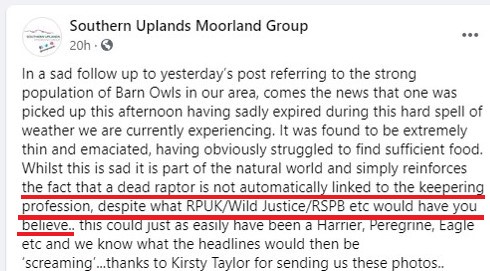
Somebody sent me a screen grab the other day of a statement posted on social media by the Southern Uplands Moorland Group (SUMG), which is one of a number of regional groups representing grouse moor estates around the country and designed to persuade the public that birds of prey are warmly welcomed and that gamekeepers love having birds of prey on their ground.

The statement published by the SUMG is fairly typical of the misrepresentation of facts that we’ve all come to expect from certain quarters of the grouse shooting industry. It reads as follows and I’ve underlined the sentence of interest:

Now, I can’t recall EVER saying on this blog that a dead raptor is automatically linked to the [game]keepering profession and there are numerous examples of illegal raptor killing offences that I’ve reported on here over the years where gamekeepers have quite clearly not been responsible (e.g. see here, here, here, here, here, here, here etc).

As a co-director of Wild Justice I’m also pretty certain that WJ has NEVER made such a claim. If there is such evidence, the SUMG are challenged to provide it.

I can’t speak for the RSPB but I can’t imagine they would EVER make such a ridiculous claim either.

Speaking for myself, I don’t even believe, as some do, that ALL gamekeepers are raptor killers. A lot of them are, of that there’s no doubt whatsoever, and some other gamekeepers will benefit from that killing even if they’re not doing the actual killing themselves, but I also know of some decent, law-abiding gamekeepers who are as thrilled at seeing a raptor as I am. I’ve met them and have worked with them, so I know they exist.

However, there’s no getting away from the undeniable evidence that shows overall, gamekeepers in the UK are responsible for more illegal raptor killing than any other profession. If you want to see the evidence, have a look at this pie chart published by the RSPB last year in their annual Birdcrime report:

Interestingly, one of the individuals included in the convicted gamekeepers section of this pie chart was a certain Alan Wilson, a member of the Scottish Gamekeepers Association who was convicted in 2019 of a catalogue of horrendous wildlife crimes he committed on the Longformacus Estate, a grouse/pheasant shooting moor in, er, the Southern Uplands (see here).

It strikes me that the Southern Uplands Moorland Group would do well to concentrate on ousting the criminals within the gamekeeping industry rather than smearing those of us who report on such crimes and who, quite legitimately, campaign for the Government to clamp down on the criminals involved.

51 hen harriers confirmed illegally killed or ‘missing’ since 2018

For anyone who still wants to pretend that the grouse shooting industry isn’t responsible for the systematic extermination of hen harriers on grouse moors across the UK, here’s the latest catalogue of crime that suggests otherwise.

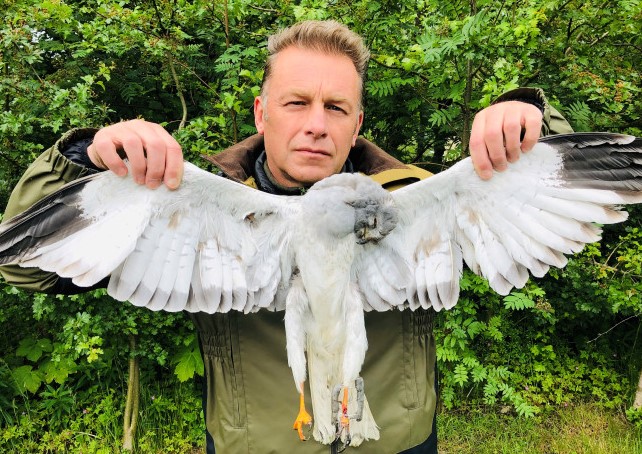
[This male hen harrier died in 2019 after his leg was almost severed in an illegally set trap that had been placed next to his nest on a Scottish grouse moor (see here). Photo by Ruth Tingay]

Ten days ago this list totalled 48 hen harriers, all either confirmed to have been illegally killed or to have ‘disappeared’, most of them on or next to driven grouse moors.

They disappear in the same way political dissidents in authoritarian dictatorships have disappeared” (Stephen Barlow, 22 January 2021).

Today the list has been updated to include some others whose reported disappearances in 2020 have been confirmed, including Bronwyn (here) and Rosie (here), bringing the current running total to 51 hen harriers.

This disgraceful catalogue will continue to grow – I know of at least one more on-going police investigation which has yet to be publicised and I suspect there’s one other, although I’m still waiting for clarification on that one.

I’ve been compiling this list only since 2018 because that is the year that the grouse shooting industry ‘leaders’ would have us believe that the criminal persecution of hen harriers had stopped and that these birds were being welcomed back on to the UK’s grouse moors (see here).

This assertion was made shortly before the publication of a devastating new scientific paper that demonstrated that 72% of satellite-tagged hen harriers were confirmed or considered likely to have been illegally killed, and this was ten times more likely to occur over areas of land managed for grouse shooting relative to other land uses (see here).

2018 was also the year that Natural England issued itself with a licence to begin a hen harrier brood meddling trial on grouse moors in northern England. For new blog readers, hen harrier brood meddling is a conservation sham sanctioned by DEFRA as part of its ludicrous ‘Hen Harrier Action Plan‘ and carried out by Natural England (NE), in cahoots with the very industry responsible for the species’ catastrophic decline in England. For more background see here.

Brood meddling has been described as a sort of ‘gentleman’s agreement’ by commentator Stephen Welch:

I don’t get it, I thought the idea of that scheme was some kind of trade off – a gentleman’s agreement that the birds would be left in peace if they were moved from grouse moors at a certain density. It seems that one party is not keeping their side of the bargain“.

With 51 hen harriers gone since 2018, I think it’s fair to say that the grouse shooting industry is simply taking the piss. Meanwhile, Natural England pretends that ‘partnership working’ is the way to go.

‘Partnership working’ appears to include authorising the removal of hen harrier chicks from a grouse moor already under investigation by the police for suspected raptor persecution (here) and accepting a £10K bung from representatives of the grouse shooting industry that prevents Natural England from criticising them (see here).

[Cartoon by Gill Lewis]

So here’s the latest gruesome list:

February 2018: Hen harrier Saorsa ‘disappeared’ in the Angus Glens in Scotland (here). The Scottish Gamekeepers Association later published wholly inaccurate information claiming the bird had been re-sighted. The RSPB dismissed this as “completely false” (here).

5 February 2018: Hen harrier Marc ‘disappeared’ on a grouse moor in Durham (here)

9 February 2018: Hen harrier Aalin ‘disappeared’ on a grouse moor in Wales (here)

March 2018: Hen harrier Blue ‘disappeared’ in the Lake District National Park (here)

March 2018: Hen harrier Finn ‘disappeared’ near Moffat in Scotland (here)

18 April 2018: Hen harrier Lia ‘disappeared’ in Wales and her corpse was retrieved in a field in May 2018. Cause of death was unconfirmed but police treating death as suspicious (here)

8 August 2018: Hen harrier Hilma ‘disappeared’ on a grouse moor in Northumberland (here).

16 August 2018: Hen harrier Athena ‘disappeared’ on a grouse moor in Scotland (here)

26 August 2018: Hen Harrier Octavia ‘disappeared’ on a grouse moor in the Peak District National Park (here)

29 August 2018: Hen harrier Margot ‘disappeared’ on a grouse moor in Scotland (here)

29 August 2018: Hen Harrier Heulwen ‘disappeared’ on a grouse moor in Wales (here)

3 September 2018: Hen harrier Stelmaria ‘disappeared’ on a grouse moor in Scotland (here)

24 September 2018: Hen harrier Heather ‘disappeared’ on a grouse moor in Scotland (here)

2 October 2018: Hen harrier Mabel ‘disappeared’ on a grouse moor on the edge of the Yorkshire Dales National Park (here)

3 October 2018: Hen Harrier Thor ‘disappeared’ next to a grouse moor in Bowland, Lanacashire (here)

23 October 2018: Hen harrier Tom ‘disappeared’ in South Wales (here)

26 October 2018: Hen harrier Arthur ‘disappeared’ on a grouse moor in the North York Moors National Park (here)

1 November 2018: Hen harrier Barney ‘disappeared’ on Bodmin Moor (here)

10 November 2018: Hen harrier Rannoch ‘disappeared’ on a grouse moor in Scotland (here). Her corpse was found nearby in May 2019 – she’d been killed in an illegally-set spring trap (here).

14 November 2018: Hen harrier River ‘disappeared’ on a grouse moor in the Nidderdale AONB (here). Her corpse was found nearby in April 2019 – she’d been illegally shot (here).

16 January 2019: Hen harrier Vulcan ‘disappeared’ in Wiltshire close to Natural England’s proposed reintroduction site (here)

7 February 2019: Hen harrier Skylar ‘disappeared’ next to a grouse moor in South Lanarkshire (here)

22 April 2019: Hen harrier Marci ‘disappeared’ on a grouse moor in the Cairngorms National Park (here)

26 April 2019: Hen harrier Rain ‘disappeared’ on a grouse moor in Nairnshire (here)

11 May 2019: An untagged male hen harrier was caught in an illegally-set trap next to his nest on a grouse moor in South Lanarkshire. He didn’t survive (here)

7 June 2019: An untagged hen harrier was found dead on a grouse moor in Scotland. A post mortem stated the bird had died as a result of ‘penetrating trauma’ injuries and that this bird had previously been shot (here)

5 September 2019: Wildland Hen Harrier 1 ‘disappeared’ on a grouse moor nr Dalnaspidal on the edge of the Cairngorms National Park (here)

11 September 2019: Hen harrier Romario ‘disappeared’ on a grouse moor in the Cairngorms National Park (here)

14 September 2019: Hen harrier (Brood meddled in 2019, #183704) ‘disappeared’ in North Pennines (here)

23 September 2019: Hen harrier (Brood meddled in 2019, #55149) ‘disappeared’ in North Pennines (here)

24 September 2019: Wildland Hen Harrier 2 ‘disappeared’ on a grouse moor at Invercauld in the Cairngorms National Park (here)

24 September 2019: Hen harrier Bronwyn ‘disappeared’ near a grouse moor in North Wales (here)

10 October 2019: Hen harrier Ada ‘disappeared’ on a grouse moor in the North Pennines AONB (here)

12 October 2019: Hen harrier Thistle ‘disappeared’ on a grouse moor in Sutherland (here)

18 October 2019: Member of the public reports the witnessed shooting of an untagged male hen harrier on White Syke Hill in North Yorkshire (here)

November 2019: Hen harrier Mary found illegally poisoned on a pheasant shoot in Ireland (here)

January 2020: Members of the public report the witnessed shooting of a male hen harrier on Threshfield Moor in the Yorkshire Dales National Park (here)

23 March 2020: Hen harrier Rosie ‘disappeared’ at an undisclosed roost site in Northumberland (here)

1 April 2020: Hen harrier (Brood meddled in 2019, #183703) ‘disappeared’ in unnamed location, tag intermittent (here)

5 April 2020: Hen harrier Hoolie ‘disappeared’ on a grouse moor in the Cairngorms National Park (here)

8 April 2020: Hen harrier Marlin ‘disappeared’ on a grouse moor in the Cairngorms National Park (here)

19 May 2020: Hen harrier Fingal ‘disappeared’ on a grouse moor in the Lowther Hills, Scotland (here)

21 May 2020: Hen harrier (Brood meddled in 2019, #183701) ‘disappeared’ on a grouse moor in Cumbria shortly after returning from wintering in France (here)

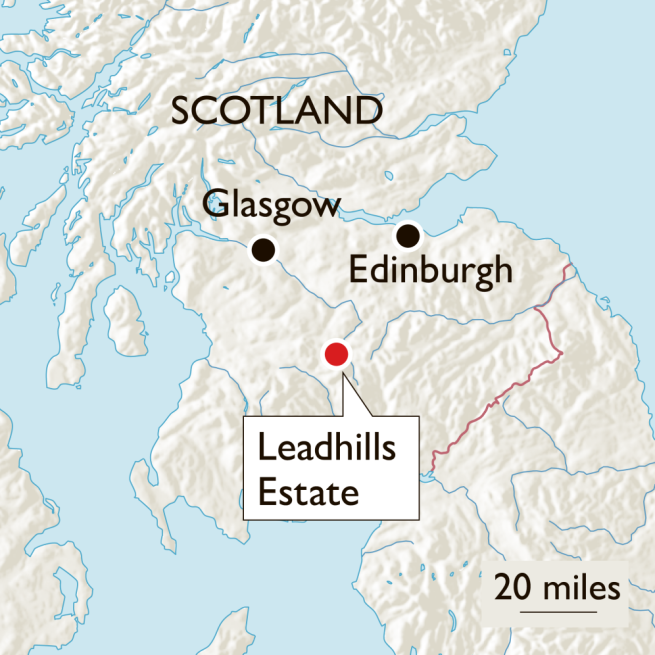
27 May 2020: Hen harrier Silver ‘disappeared’ on a grouse moor on Leadhills Estate, Scotland (here)

9 July 2020: Unnamed female hen harrier (#201118) ‘disappeared’ from an undisclosed site in Northumberland (here).

25 July 2020: Hen harrier Harriet ‘disappeared’ on a grouse moor in the Yorkshire Dales National Park (here)

14 August 2020: Hen harrier Solo ‘disappeared’ in confidential nest area in Lancashire (here)

7 September 2020: Hen harrier Dryad ‘disappeared’ on a grouse moor in the Yorkshire Dales National Park (here)

16 September 2020: Hen harrier Fortune ‘disappeared’ from an undisclosed roost site in Northumberland (here)

19 September 2020: Hen harrier Harold ‘disappeared’ on a grouse moor in the Yorkshire Dales National Park (here)

20 September 2020: Hen harrier (Brood meddled in 2020, #55152) ‘disappeared’ next to a grouse moor in North Yorkshire (here)

To be continued……..

Anybody still wondering why the grouse shooting industry wants conservationists to stop fitting satellite tags?

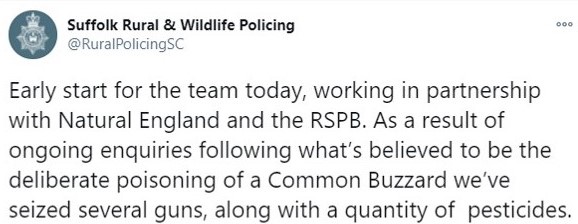
Police investigate illegal poisoning of a buzzard in Suffolk – guns & pesticides seized

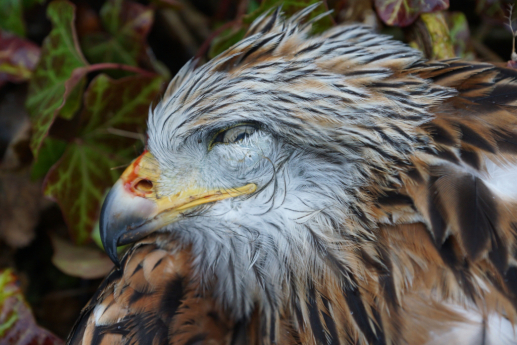
News is emerging of a multi-agency investigation today following the discovery of an illegally poisoned buzzard near Lakenheath in Suffolk.

Suffolk Police, Natural England and the RSPB Investigations Team attended and a number of guns and pesticides were seized. This is excellent partnership working and what a response!

The investigation continues and hopefully charges will be forthcoming.

[Photo from Suffolk Police]

UPDATE 24th August 2021: Another gamekeeper in court for alleged poisoning of buzzard (here)

UPDATE 9th November 2021: Gamekeeper convicted for pesticide and firearms offences but buzzard-poisoning charge is dropped (here)

Poisoned red kite found on Scottish grouse moor

Press release from Police Scotland (16th December 2020)

Appeal for information – poisoned bird of prey – Ruthven, Moy

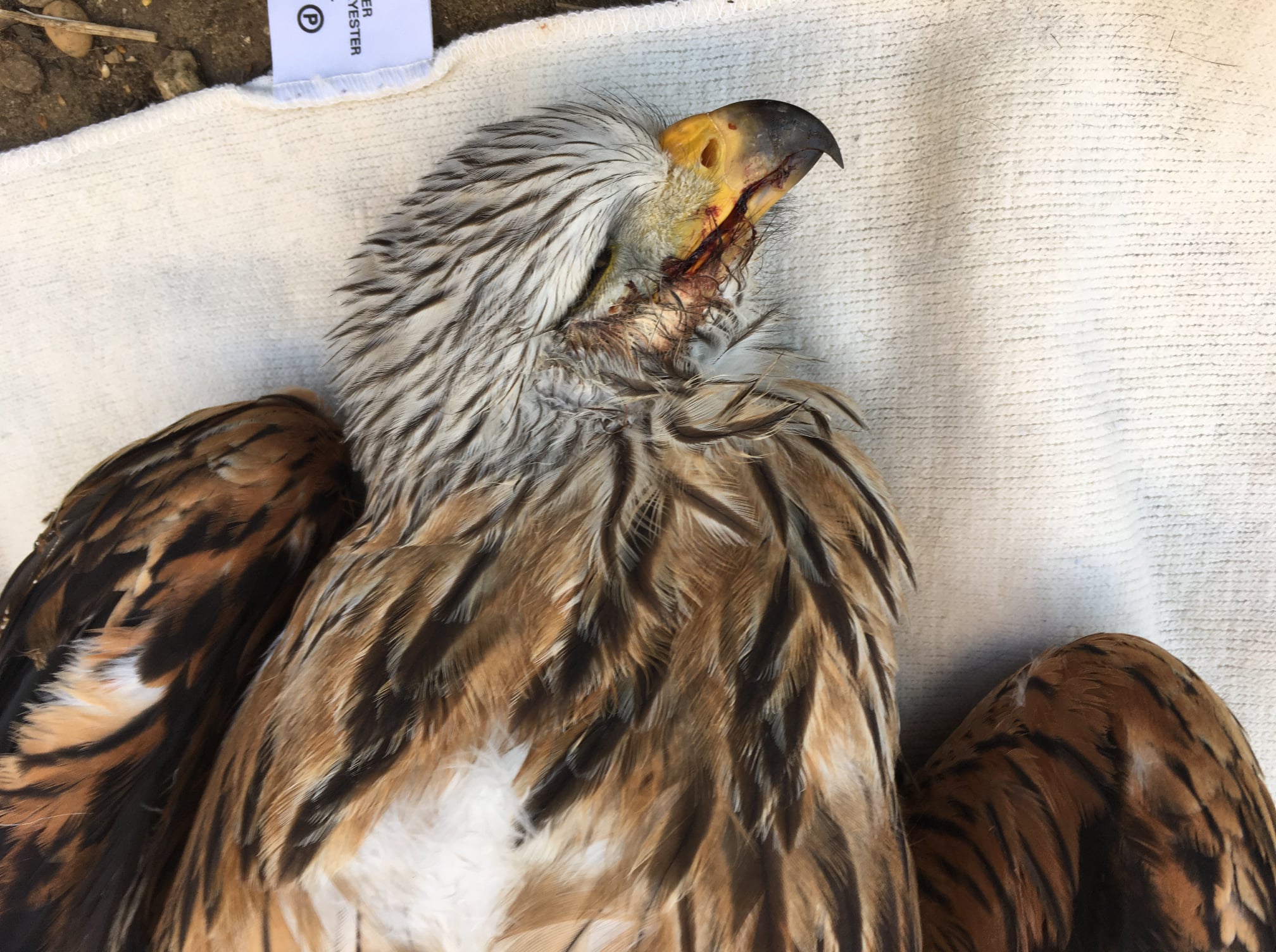
Police Scotland has confirmed that a red kite found dead in the Ruthven area in October, had been poisoned with a banned pesticide.

[A poisoned red kite, photo by Marc Ruddock. NB: Not the poisoned red kite in this particular incident]

Further searches were carried out yesterday (15 December) with partner agency RSPB on hill ground near Meall a’ Bhreacraibh and Ruthven, Moy, in the northern Monadliath mountains.

No further poisoned raprtors or animals were identified.

Police Constable Daniel Sutherland, Highlands and Islands Wildlife crime Liaison officer, said:

Traces of a banned pesticide have been detected in a Red kite found in the area. This incident is sadly another example of where a bird of prey has been killed through ingestion of an illegally held poison.

I strongly urge anyone within the local and wider community to come forward with details on any information about this incident.”

Following consultation with the Scottish Government Rural Payments Directorate and the Science and Advice for Scottish Agriculture (SASA), Police Scotland requests members of the public and any dog walkers to be cautious when walking in the surrounding area and the immediate vicinity. 

Anybody who has information about this incident, banned pesticide possession or misuse, or other information relating to raptor persecution please contact Police Scotland on 101 or pass on information anonymously via Crimestoppers on 0800 555 111.

ENDS

This is a very good response from Police Scotland – a press release out the day after the police search and a clear warning to the public to be cautious in this area, especially if walking with dogs. The name of the banned poison isn’t given, probably for investigative purposes, but by telling the public it’s a banned poison we know it’s one of eight highly toxic pesticides (or perhaps a combination) listed on the Possession of Pesticides (Scotland) Order 2005, which are Aldicarb, Alphachloralose, Aluminium phosphide,  Bendiocarb, Carbofuran, Mevinphos, Sodium cyanide and Strychnine.

Now, about the location. According to Andy Wightman’s excellent Who Owns Scotland website, the area of land mentioned in the police press release is part of the Moy Estate in the northern Monadhliaths. Or at least it was when Andy compiled his data – it’s possible, of course, that there have since been boundary changes.

Regular blog readers will be familiar with the Moy area. Moy Estate was raided by police ten years ago after the discovery of poisoned bait and dead raptors and illegally set traps. A gamekeeper was later convicted of possession of a red kite after its bloodied corpse was found in the back of his vehicle. It had two broken legs and a head injury. A bloodied shinty stick was also found in the back of the vehicle.

The remains of two further red kites were discovered on the moor, including a severed red kite leg and some wing tags that had previously been fitted to a kite, all found buried in holes under some moss. A jar in one of the gamekeeper’s houses contained the leg rings of four young golden eagles – nobody could account for how they had ended up inside that jar. A live hen harrier was found caught by its leg in an illegally-set spring trap. It survived after being rescued by raptor workers.

No further charges were brought against anyone for any of the offences uncovered at Moy.

In 2016 Police Scotland issued an appeal for information following the discovery of disturbed and abandoned buzzard and goshawk nests in the Moy Forest. One goshawk and four buzzard nests were abandoned in suspicious circumstances, with some evidence of illegal disturbance. These nests were being monitored by staff from Forestry Enterprise Scotland. No charges were brought.

For previous blogs on Moy see here.

I would imagine, after this latest discovery, that Ministers in the Scottish Government who recently decided to press on with the introduction of a licensing scheme for grouse shooting estates, despite cries of ‘It’s unnecessary regulation!‘ and ‘It’s all so unfair!‘ from the shooting industry, can today feel vindicated that their decision was the right one.

They now need to get on with it and get it implemented ASAP, because this latest victim is evidence that raptor persecution continues, despite all the denials routinely chuntered out by the so-called leaders in the game shooting industry.

UPDATE 17 December 2020: Poisoned red kite found dead on Scottish grouse moor – an interesting police investigation (here)

Grouse moors – ‘a birdwatchers’ paradise’ according to Chair of Scottish Gamekeepers Association

Don’t laugh.

Actually, do laugh.

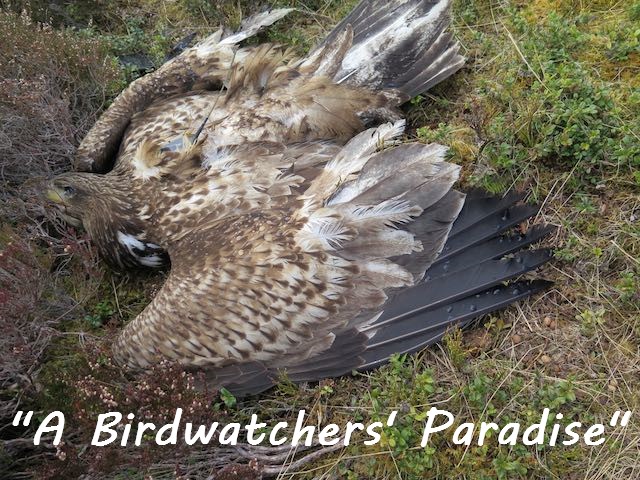
Alex Hogg, Chair of the Scottish Gamekeepers Association, was interviewed last week and he said some pretty baffling things about gamekeeping and grouse moor management, including the fantastic statement, “This is a birdwatchers’ paradise“.

Yep, he really did.

[An illegally poisoned white-tailed eagle, found dead on a grouse moor in the Cairngorms National Park earlier this year – see here and here. What a birdwatchers’ paradise!]

Alex was talking to a presenter on ITV’s regional news programme Representing Border on 2nd December 2020. The programme featured a piece on the Scottish Government’s recent decision to introduce a licensing scheme for driven grouse shooting (here) and it’s well worth five minutes of your time.

The programme is available here (starts at 15.49 mins, ends 22.01).

There was more baffling commentary from Alex, including this unfathomable statement on the effect a licensing scheme would have on gamekeeping:

We’ve done it for 200 years, we’ve kept a balance in the wildlife, and if we, it’s like a three-legged stool, if they take the leg away, we’re gone“.

Eh? I’ve no idea what ‘the leg’ is that he thinks is being ‘taken away’ and why he thinks a licensing scheme means gamekeepers will be ‘gone’. They’ll be gone if they breach the conditions of the licence (assuming it’s effectively enforced) but if they’re not doing anything illegal why would a licence cause them difficulties?

Unfortunately the presenter didn’t follow up on this, or if he did it was edited out. It’s also a shame he didn’t pick up on Alex’s statement about 200 years worth of ‘balancing the wildlife’ and ask him questions about why several species of raptors became extirpated from the UK about 100 years ago? And although some have made a brilliant comeback (with some help), why some populations are still struggling, notably in areas managed for driven grouse shooting? He could also have asked this question of Liz Smith MSP (Scottish Conservatives) who said she didn’t think that “fairly draconian” licensing was needed now!

Other interviewees were much more lucid, including Ian Thomson (RSPB Investigations, Scotland), Claudia Beamish MSP (Scottish Labour) and Mairi Gougeon (Environment Minister), who gave a robust argument for bringing in a licensing scheme now instead of sitting around for another five years doing nothing, including this statement:

There are still persistent problems out there with the illegal persecution of our birds of prey“.

It’s good to see this statement from a Scottish Minister. Can you imagine a similar comment from a Minister at Westminster?

Yet another red kite found poisoned in North Yorkshire

Yet another raptor persecution case from North Yorkshire, and yet another crime committed as part of a reported ‘surge’ of similar crimes recorded during the first period of lockdown (e.g. see here and here).

This time it’s a red kite that was found dying in April 2020 at Scampston, near Malton, to the south of the North York Moors National Park.

[Photos via Jean Thorpe]

Her corpse was sent for toxicology at the Government’s Wildlife Incident Investigation Scheme (WIIS) and the results have apparently just been released (presumably delayed due to Covid19).

She was poisoned by a mix of Brodifacoum and Bendiocarb ‘in quantities that would not be consistent with an accidental incident’, writes Jean Thorpe from Ryedale Wildlife Rehabilitation Centre.

Anybody with information about this crime please contact Police Wildlife Crime Officer Jez Walmsley at Malton Police Station (Tel: 101) and quote incident reference #12200055801.

Werritty review – one year on & still waiting for Scottish Government response

Today marks one year since the Werritty Review on grouse moor management was submitted to the Scottish Government. And still no formal response.

The review itself took two and a half years to complete after Environment Cabinet Secretary Roseanna Cunningham announced its commission in 2017, on the back of the publication of another Government-commissioned review which showed clear evidence of deliberate and sustained illegal raptor persecution on many driven grouse moors. We’ve since seen more evidence pointing towards the inevitable fate of those birds.

And that 2017 review had been commissioned on the back of an RSPB report in 2016 that over a period of five years since 2011, eight satellite-tagged golden eagles had ‘disappeared’ in suspicious circumstances on grouse moors in the Monadhliaths in Highland Scotland.

The longer the Scottish Government delays taking evidence-based action against those criminals in the grouse shooting industry, the more eagles (and other raptors) are going to be illegally killed. There is absolutely no question that these crimes are continuing, despite enormous scrutiny and public condemnation, as demonstrated during lockdown when the poisoned corpse of a white-tailed sea eagle was found, face down, on a grouse moor in the middle of the Cairngorms National Park. Nobody has been charged for this horrendous crime. In fact there has never been a successful prosecution for killing an eagle in Scotland.

[A police officer examines the corpse of the poisoned white-tailed eagle, found dead on a grouse moor in the Cairngorms National Park]

For years the Scottish Government has promised further action if current measures proved to be ineffective. Time and time again, after each crime has been publicised, a succession of Environment Ministers has proclaimed, ‘We will not tolerate illegal raptor persecution’ and ‘We will not hesitate to act‘ (see here for a long list of examples).

And guess what? They’re still tolerating it and they’re still hesitating to act. Why is that?

Police raid property in poisoned peregrine investigation

At the end of October 2020, South Yorkshire Police published an appeal for information in relation to an investigation into the illegal poisoning of a young peregrine that had been found in Barnsley on 4th July 2020. Toxicology tests confirmed it had been killed with the highly toxic poison, Bendiocarb (see here).

[The poisoned peregrine. Photo via South Yorkshire Police]

Today, South Yorkshire Police has raided a property, under warrant, and seized what have been described as ‘a number of suspicious items’.

Here’s the police press release:

Warrant executed in connection to poisoned bird

A warrant has today (17 November) been executed at a property in Barnsley in connection to the poisoning of a protected wild bird.

Last month officers appealed for your help in finding those responsible for poisoning a juvenile peregrine falcon in the Fish Dam area of Barnsley.

Intelligence from the public assisted officers from the Barnsley Central Neighbourhood Team, the force’s Wildlife and Rural Coordinators, Crime Scene Investigation and members of the RSPB to carry out a search of a property on Abbots Road, under the Wildlife and Countryside Act 1981.

[‘Officers briefing before the warrant at Ring Farm, Cudworth’. Photo via South Yorkshire Police]

PC Fran Robbs de la Hoyde explains: “Peregrine Falcons are an important part of our local ecosystems, and are protected under The Wildlife and Countryside Act 1981.

It is a shame that someone would wish to harm these animals in such a deliberate act. The bird is believed to have ingested bait laced with toxic substances.

This morning we executed a warrant and found a number of suspicious items. Enquiries into persons involved in the offence are ongoing.

We are committed to protecting our wildlife and will ensure that those responsible are brought before the courts.”

We are stronger with our communities help and we are always grateful for those who take the time to read, respond and share information in which they have to help officers with their enquiries.

ENDS

NB: As this is a live investigation comments won’t be published until criminal proceedings have ended.

Environment Minister acknowledges potential economic impact of wildlife crime linked to grouse shooting

It’s been another year of shocking wildlife crimes being uncovered on grouse moors in the UK, including the illegal poisoning of this iconic white-tailed eagle, found dead on a grouse moor inside the Cairngorms National Park in the spring (see here).

[The poisoned white-tailed eagle, photo by Police Scotland]

Last week, Scottish Greens MSP Alison Johnstone lodged a Parliamentary question asking what assessment the Scottish Government has made of the impact on the rural economy of wildlife crime linked to grouse moor management (see here).

Her question, and a supplementary one, were ‘answered’ by Environment Minister Mairi Gougeon during Portfolio Question Time yesterday in the Scottish Parliament.

When I say ‘answered’, I use the term loosely. A more fitting word might be ‘sidestepped’.

Here’s how it went:

It’s good that Mairi Gougeon acknowledges the potential economic damage of wildlife crime linked to grouse moor management – it’d be insane to claim that the photograph of that poisoned eagle, laying dead on a grouse moor inside the Cairngorms National Park of all bloody places, would not have an economic impact and, as the Minister pointed out, on Scotland’s international reputation.

But the question Alison asked was ‘What assessment of that economic damage has the Scottish Government undertaken?’

None, it seems.

Still, as the Government’s response to the Werritty Review is imminent, we can all look forward to “decisive action” on wildlife crime linked to grouse moor management, as Environment Cabinet Secretary Roseanna Cunningham assured us all in August after a huge outpouring of public anger about this poisoned sea eagle (see here).