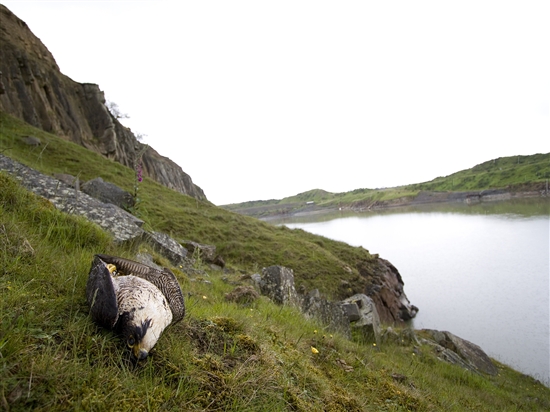
56 hen harriers confirmed illegally killed or ‘missing’ since 2018

For anyone who still wants to pretend that the grouse shooting industry isn’t responsible for the systematic extermination of hen harriers on grouse moors across the UK, here’s the latest catalogue of crime that suggests otherwise.

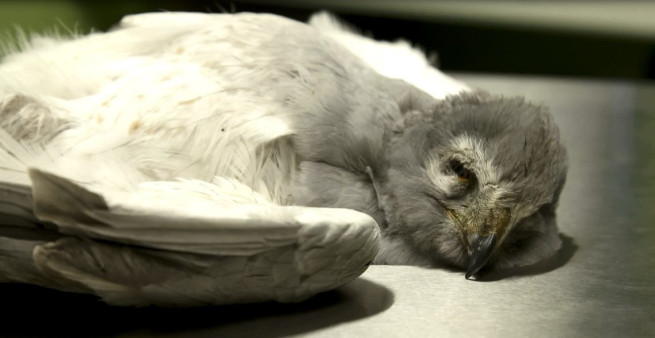
[This male hen harrier died in 2019 after his leg was almost severed in an illegally set trap that had been placed next to his nest on a Scottish grouse moor (see here). Photo by Ruth Tingay]

Just 19 days ago, this list totalled 53 hen harriers, all either confirmed to have been illegally killed or to have ‘disappeared’, most of them on or next to driven grouse moors.

They disappear in the same way political dissidents in authoritarian dictatorships have disappeared” (Stephen Barlow, 22 January 2021).

Today the list has been updated to include the most recently reported three victims: one male hen harrier that vanished from its breeding attempt on the RSPB’s Geltsdale Reserve in 2020 and two more from the same site that yesterday the police reported as ‘missing in suspicious circumstances’ (see here).

The RSPB’s Geltsdale Reserve is located in close proximity to a large area managed for driven grouse shooting and breeding males have disappeared from here prior to 2020 and 2021. In fact, raptor persecution incidents in this area, both on and off the reserve, have been reported by the RSPB since at least the mid 1990s and have included the confirmed shooting of a number of hen harriers (i.e. their corpses were found), witnessed reports of attempted hen harrier shootings, including a gamekeeper from a neighbouring estate filmed with a gun stalking a hen harrier on the reserve, at least one confirmed poisoning of a hen harrier and a wide array of other victims including buzzards, peregrines and ravens either shot or poisoned.

The disgraceful national catalogue of illegally killed and ‘missing’ hen harriers will continue to grow – I know of at least one more on-going police investigation which has yet to be publicised.

I’ve been compiling this list only since 2018 because that is the year that the grouse shooting industry ‘leaders’ would have us believe that the criminal persecution of hen harriers had stopped and that these birds were being welcomed back on to the UK’s grouse moors (see here).

This assertion was made shortly before the publication of a devastating new scientific paper that demonstrated that 72% of satellite-tagged hen harriers were confirmed or considered likely to have been illegally killed, and this was ten times more likely to occur over areas of land managed for grouse shooting relative to other land uses (see here).

2018 was also the year that Natural England issued itself with a licence to begin a hen harrier brood meddling trial on grouse moors in northern England. For new blog readers, hen harrier brood meddling is a conservation sham sanctioned by DEFRA as part of its ludicrous ‘Hen Harrier Action Plan‘ and carried out by Natural England (NE), in cahoots with the very industry responsible for the species’ catastrophic decline in England. For more background see here.

Brood meddling has been described as a sort of ‘gentleman’s agreement’ by commentator Stephen Welch:

I don’t get it, I thought the idea of that scheme was some kind of trade off – a gentleman’s agreement that the birds would be left in peace if they were moved from grouse moors at a certain density. It seems that one party is not keeping their side of the bargain“.

With at least 56 hen harriers gone since 2018, I think it’s fair to say that the grouse shooting industry is simply taking the piss. Meanwhile, Natural England pretends that ‘partnership working’ is the way to go.

‘Partnership working’ appears to include authorising the removal of hen harrier chicks from a grouse moor already under investigation by the police for suspected raptor persecution (here) and accepting a £10K bung from representatives of the grouse shooting industry that prevents Natural England from criticising them (see here).

[Cartoon by Gill Lewis]

So here’s the latest gruesome list:

February 2018: Hen harrier Saorsa ‘disappeared’ in the Angus Glens in Scotland (here). The Scottish Gamekeepers Association later published wholly inaccurate information claiming the bird had been re-sighted. The RSPB dismissed this as “completely false” (here).

5 February 2018: Hen harrier Marc ‘disappeared’ on a grouse moor in Durham (here)

9 February 2018: Hen harrier Aalin ‘disappeared’ on a grouse moor in Wales (here)

March 2018: Hen harrier Blue ‘disappeared’ in the Lake District National Park (here)

March 2018: Hen harrier Finn ‘disappeared’ near Moffat in Scotland (here)

18 April 2018: Hen harrier Lia ‘disappeared’ in Wales and her corpse was retrieved in a field in May 2018. Cause of death was unconfirmed but police treating death as suspicious (here)

8 August 2018: Hen harrier Hilma ‘disappeared’ on a grouse moor in Northumberland (here).

16 August 2018: Hen harrier Athena ‘disappeared’ on a grouse moor in Scotland (here)

26 August 2018: Hen Harrier Octavia ‘disappeared’ on a grouse moor in the Peak District National Park (here)

29 August 2018: Hen harrier Margot ‘disappeared’ on a grouse moor in Scotland (here)

29 August 2018: Hen Harrier Heulwen ‘disappeared’ on a grouse moor in Wales (here)

3 September 2018: Hen harrier Stelmaria ‘disappeared’ on a grouse moor in Scotland (here)

24 September 2018: Hen harrier Heather ‘disappeared’ on a grouse moor in Scotland (here)

2 October 2018: Hen harrier Mabel ‘disappeared’ on a grouse moor on the edge of the Yorkshire Dales National Park (here)

3 October 2018: Hen Harrier Thor ‘disappeared’ next to a grouse moor in Bowland, Lanacashire (here)

23 October 2018: Hen harrier Tom ‘disappeared’ in South Wales (here)

26 October 2018: Hen harrier Arthur ‘disappeared’ on a grouse moor in the North York Moors National Park (here)

1 November 2018: Hen harrier Barney ‘disappeared’ on Bodmin Moor (here)

10 November 2018: Hen harrier Rannoch ‘disappeared’ on a grouse moor in Scotland (here). Her corpse was found nearby in May 2019 – she’d been killed in an illegally-set spring trap (here).

14 November 2018: Hen harrier River ‘disappeared’ on a grouse moor in the Nidderdale AONB (here). Her corpse was found nearby in April 2019 – she’d been illegally shot (here).

16 January 2019: Hen harrier Vulcan ‘disappeared’ in Wiltshire close to Natural England’s proposed reintroduction site (here)

7 February 2019: Hen harrier Skylar ‘disappeared’ next to a grouse moor in South Lanarkshire (here)

22 April 2019: Hen harrier Marci ‘disappeared’ on a grouse moor in the Cairngorms National Park (here)

26 April 2019: Hen harrier Rain ‘disappeared’ on a grouse moor in Nairnshire (here)

11 May 2019: An untagged male hen harrier was caught in an illegally-set trap next to his nest on a grouse moor in South Lanarkshire. He didn’t survive (here)

7 June 2019: An untagged hen harrier was found dead on a grouse moor in Scotland. A post mortem stated the bird had died as a result of ‘penetrating trauma’ injuries and that this bird had previously been shot (here)

5 September 2019: Wildland Hen Harrier 1 ‘disappeared’ on a grouse moor nr Dalnaspidal on the edge of the Cairngorms National Park (here)

11 September 2019: Hen harrier Romario ‘disappeared’ on a grouse moor in the Cairngorms National Park (here)

14 September 2019: Hen harrier (Brood meddled in 2019, #183704) ‘disappeared’ in North Pennines (here)

23 September 2019: Hen harrier (Brood meddled in 2019, #55149) ‘disappeared’ in North Pennines (here)

24 September 2019: Wildland Hen Harrier 2 ‘disappeared’ on a grouse moor at Invercauld in the Cairngorms National Park (here)

24 September 2019: Hen harrier Bronwyn ‘disappeared’ near a grouse moor in North Wales (here)

10 October 2019: Hen harrier Ada ‘disappeared’ on a grouse moor in the North Pennines AONB (here)

12 October 2019: Hen harrier Thistle ‘disappeared’ on a grouse moor in Sutherland (here)

18 October 2019: Member of the public reports the witnessed shooting of an untagged male hen harrier on White Syke Hill in North Yorkshire (here)

November 2019: Hen harrier Mary found illegally poisoned on a pheasant shoot in Ireland (here)

January 2020: Members of the public report the witnessed shooting of a male hen harrier on Threshfield Moor in the Yorkshire Dales National Park (here)

23 March 2020: Hen harrier Rosie ‘disappeared’ at an undisclosed roost site in Northumberland (here)

1 April 2020: Hen harrier (Brood meddled in 2019, #183703) ‘disappeared’ in unnamed location, tag intermittent (here)

5 April 2020: Hen harrier Hoolie ‘disappeared’ on a grouse moor in the Cairngorms National Park (here)

8 April 2020: Hen harrier Marlin ‘disappeared’ on a grouse moor in the Cairngorms National Park (here)

19 May 2020: Hen harrier Fingal ‘disappeared’ on a grouse moor in the Lowther Hills, Scotland (here)

21 May 2020: Hen harrier (Brood meddled in 2019, #183701) ‘disappeared’ on a grouse moor in Cumbria shortly after returning from wintering in France (here)

27 May 2020: Hen harrier Silver ‘disappeared’ on a grouse moor on Leadhills Estate, Scotland (here)

day/month unknown: Unnamed male hen harrier breeding on RSPB Geltsdale Reserve, Cumbria ‘disappears’ while away hunting (here)

9 July 2020: Unnamed female hen harrier (#201118) ‘disappeared’ from an undisclosed site in Northumberland (here).

25 July 2020: Hen harrier Harriet ‘disappeared’ on a grouse moor in the Yorkshire Dales National Park (here)

14 August 2020: Hen harrier Solo ‘disappeared’ in confidential nest area in Lancashire (here)

7 September 2020: Hen harrier Dryad ‘disappeared’ on a grouse moor in the Yorkshire Dales National Park (here)

16 September 2020: Hen harrier Fortune ‘disappeared’ from an undisclosed roost site in Northumberland (here)

19 September 2020: Hen harrier Harold ‘disappeared’ on a grouse moor in the Yorkshire Dales National Park (here)

20 September 2020: Hen harrier (Brood meddled in 2020, #55152) ‘disappeared’ next to a grouse moor in North Yorkshire (here)

24 February 2021: Hen harrier Tarras ‘disappeared’ next to a grouse moor in Northumberland (here)

12th April 2021: Hen harrier Yarrow ‘disappeared’ near Stockton, County Durham (here)

18 May 2021: Adult male hen harrier ‘disappears’ from its breeding attempt on RSPB Geltsdale Reserve, Cumbria whilst away hunting (here)

18 May 2021: Another adult male hen harrier ‘disappears’ from its breeding attempt on RSPB Geltsdale Reserve, Cumbria whilst away hunting (here)

To be continued……..

Poisoned golden eagle: will a General Licence restriction now be imposed on Invercauld Estate?

Earlier this month it was reported that police had conducted a raid, under warrant, on several properties on the Invercauld Estate following the discovery in March of a deliberately poisoned golden eagle and some poisoned bait (see here).

I’ve since blogged about why I think the golden eagle killer will evade criminal prosecution (see here) and a little bit about NatureScot making noises about considering a potential General Licence restriction on this estate (see here). A General Licence restriction is nowhere near as serious as a criminal prosecution but it is, in the words of former Environment Minister Paul Wheelhouse who worked hard to get this apparent sanction introduced, a ‘reputational driver’ (see here).

It’s my view that a General Licence restriction is long overdue here, given the history of alleged wildlife crime offences, and a blog that was published yesterday has further strengthened that view, of which more in a minute.

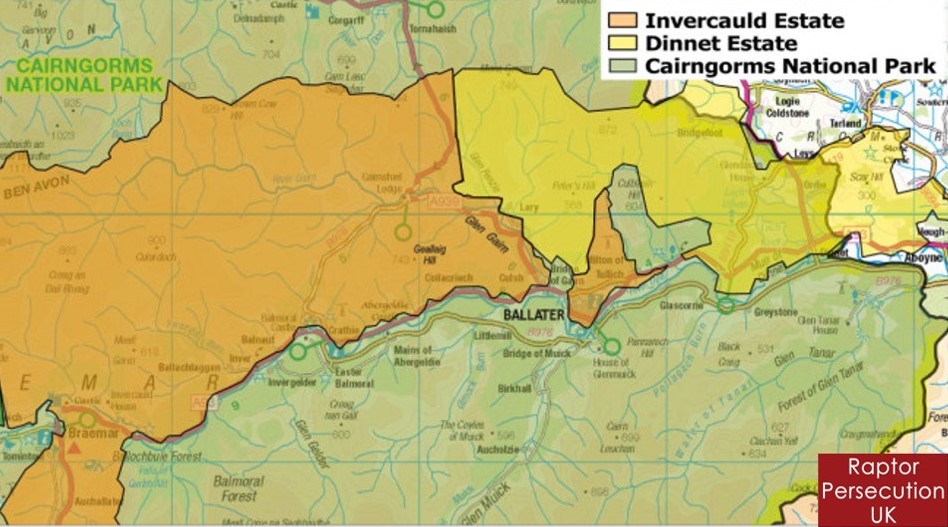
This area around Ballater in the Cairngorms National Park has been at the centre of a number of alleged wildlife crime offences over many years.

[Estate boundaries based on data from Andy Wightman’s Who Owns Scotland website]

There was the discovery of three poisoned buzzards on Invercauld Estate in 2005 (here), the discovery of an illegally shot peregrine at the Pass of Ballater in 2011, the reported coordinated hunt and subsequent shooting of an adult hen harrier at Glen Gairn on the border of Invercauld and Dinnet Estates in 2013, the illegally-set traps that were found near Geallaig Hill on Invercauld Estate in 2016, the suspicious disappearance of satellite-tagged hen harrier Calluna ‘on a grouse moor a few miles north of Ballater’ on 12 August 2017, the opening day of the grouse shooting season (here) although it’s not clear whether this was on Invercauld Estate or neighbouring Dinnet Estate, the suspicious disappearance of satellite-tagged white-tailed eagle ‘Blue T’ on Invercauld Estate in May 2018 (see here), the suspicious disappearance of satellite-tagged hen harrier Stelmaria ‘last recorded on grouse moor a few miles north west of Ballater, Aberdeenshire on 3rd September 2018 (see here), the suspicious disappearance of satellite-tagged hen harrier (Wildland 2) on Invercauld Estate on 24 September 2019 (here) and now the discovery of a deliberately poisoned golden eagle and poisonous baits on a grouse moor on Invercauld Estate in March 2021 (see here).

The suspicious disappearance of three satellite-tagged hen harriers and one white-tailed eagle in one small area managed for driven grouse shooting should raise lots of eyebrows given the unequivocal scientific pattern that has been identified for such occurrences (e.g. see here and here) and especially in an area where the alleged hunting and subsequent shooting of a hen harrier was witnessed and reported several years earlier.

However, according to NatureScot’s current Framework for how it makes decisions on whether to impose a General Licence restriction, the suspicious disappearance of a satellite-tagged raptor is not, in itself, considered sufficient evidence, even when there’s an emerging pattern in one particular area:

Unexplained ‘stopped no-malfunction’ satellite tags may be considered by NatureScot as supporting information in making a decision, particularly where multiple losses have occurred on the same land. However such instances will not be considered as evidence under the terms of this Framework unless recorded as a crime by Police Scotland‘.

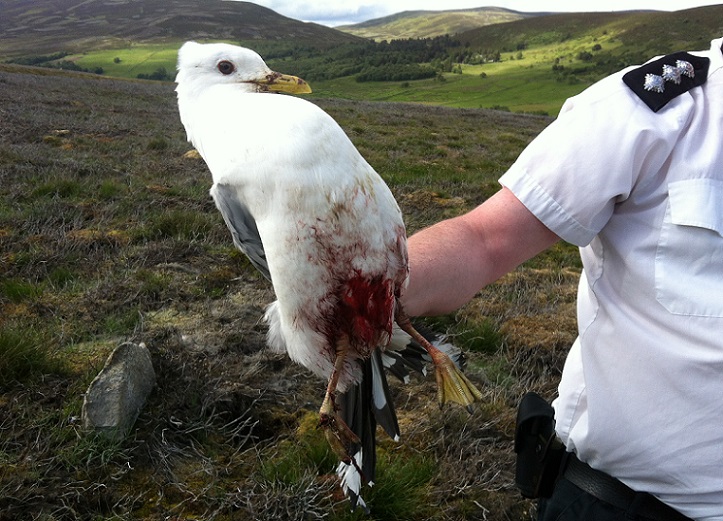
The most significant, and indeed tangible, wildlife crime incident that could be linked to Invercauld Estate was the discovery of illegally-set traps on the estate in 2016, which led to the horrific suffering of a Common Gull whose legs were caught in two of the traps (see here).

[Photo of the Common Gull after being released from the traps. Photo by Graeme Rose]

Long-term blog readers may recall this incident and the farcical non-existent enforcement measures that ensued. The SSPCA attended in the first instance and had to euthanise the gull due to the extent of its injuries but because of their ridiculously restricted investigatory powers, they were not permitted to search the area for more traps – this had to be done by the police, who conducted a search several days later where it was discovered that other traps (i.e. evidence of potential crime) had been recently removed prior to the police search (here).

Then there was an odd statement of denial from Invercauld Estate, bizarrely issued by the GWCT on behalf of the estate (a strange activity for a so-called independent wildlife conservation charity, see here) and incidentally, this denial is not that dissimilar to the one we saw recently from the estate in relation to the deliberately poisoned golden eagle – see here.

I challenged the estate’s claim that Police Scotland had not found any evidence of illegal activity back in 2016 and Police Scotland issued a statement in response (see here).

I then submitted a series of FoIs that revealed what looked like some very odd goings on between the estate, the Cairngorms National Park Authority and the Scottish Government, which resulted in ‘secret action‘ apparently being taken against a gamekeeper but no prosecution followed, and nor did NatureScot impose a General Licence restriction for this incident (and NatureScot has refused to discuss its decision saying ‘it’s not in the public interest‘ to tell us).

I did wonder whether NatureScot had not imposed a General Licence restriction due to a technical issue – the fact that the SSPCA, not the police, attended the scene and found the evidence of the illegally-trapped gull. If you look again at NatureScot’s Framework for decision-making on restrictions, it says that evidence must be provided by the police. It doesn’t say anything about evidence from the SSPCA being acceptable. I hope I’m wrong on that because as a statutory reporting agency, the SSPCA’s evidence should be considered just as robust as any evidence put forward by Police Scotland – I’ll check with NatureScot about it.

However, yesterday a blog was published on the excellent ParksWatchScotland blog, written by Graeme Rose, one of the guys who had actually found the critically-injured gull on Invercauld Estate in 2016. It’s a harrowing tale, but it’s incredibly enlightening in that he pursued the enforcement authorities for several years after the incident and by doing so uncovered all sorts of shenanigans. He says he received a text in July 2020 from the former Convenor of the Cairngorms National Park Authority who told him that a gamekeeper had indeed ‘been let go’ after the gull incident in 2016, despite the estate’s protestations at the time that any offence had even taken place. I believe this is the information that was deliberately redacted by the CNPA and the Scottish Government when I’d asked them about it in those FoIs.

What a pitiful state of affairs.

Will we see anything different in response to the discovery of the deliberately poisoned golden eagle? Well, we’ve already seen that Invercauld Estate has ‘left’ the Eastern Cairngorms Moorland Partnership, although there was absolutely zero indication whether the estate was expelled or left of its own accord (see here) so it looks like the Cairngorms National Park Authority is staying true to form and not wanting to be explicit about any action that may or may not have been taken. Why is that, do you think? Could it be anything to do with who sits on the CNPA’s Board? There are some interesting characters with some interesting connections to the grouse-shooting world, and even to Invercauld Estate itself.

And what about NatureScot and its deliberations about whether there is sufficient justification for a General Licence restriction on Invercauld Estate? That’s going to be VERY interesting and is something I’ll definitely be tracking. Watch this space.

Grouse moor-owning Lord Benyon appointed new DEFRA Minister

DEFRA press release (13 May 2021)

DEFRA welcomes new Minister

Lord Benyon has today been appointed as a Parliamentary Under Secretary of State for Defra. He will replace outgoing Defra minister Lord Gardiner, who will become Senior Deputy Speaker in the House of Lords.

The Environment Secretary today welcomed Lord Benyon, commenting on his passion and dedication to environmental causes.

Environment Secretary George Eustice said:

I am pleased to welcome Richard back to Defra. He brings a wealth of experience, knowledge and passion for the environment, developed during his previous experience as a Defra Minister and during his work as Chair of our review in to Highly Protected Marine Areas.

I look forward to working with him during this truly exciting time for Defra, with the Environment Bill returning to parliament, our agricultural reforms now starting to take root and the government leading the world on protecting nature and tackling climate change. Richard will be invaluable as we continue our ambitious work to ensure we leave our natural environment in a better state for future generations.

I would also like to extend my congratulations to Lord Gardiner on his election as Senior Deputy Speaker in the House of Lords and to thank him for his work as Minister in Defra.”

Defra Minister Lord Benyon said:

It’s both a privilege and a pleasure to be returning to Defra as a Minister in the House of Lords. I have fond memories from my time as Parliamentary Under Secretary of State.

From the flagship Environment Bill and tackling climate change to helping our farmers through the agricultural transition and supporting our fishing industry, Defra is at the heart of this Government’s work to build back greener. It’s an exciting time to be back at Defra.

I look forward to working with everyone as Defra tackles some of the greatest challenges of our time.”

Lord Benyon’s portfolio will be confirmed in due course.

ENDS

Grouse moor and pheasant-shoot – owner Richard Benyon is a former Trustee of GWCT and is no stranger to the pages of this blog.

In 2013, as Wildlife Minister under David Cameron, Richard Benyon refused to make possession of Carbofuran a criminal offence in England, despite other MPs calling for such a move, and despite it being an offence in Scotland, and despite it being well known that Carbofuran is the gamekeepers’ poison of choice for killing birds of prey.

In response, Caroline Lucas MP (Green Party) said:

The minister’s shocking refusal to outlaw the possession of a poison used only by rogue gamekeepers to illegally kill birds of prey would be inexplicable were it not for his own cosy links to the shooting lobby“.

Also while Mr Benyon was in post at DEFRA, the government sanctioned the controversial buzzard ‘management’ trial and committed £375k of taxpayers money to help support it (see here), although they swiftly backtracked after a huge public outcry against the plan (see here). However, the following year Natural England, acting on behalf of DEFRA, decided to go ahead and issue a licence (to a gamekeeper with a past conviction for wildlife crime) to destroy buzzard eggs and nests to protect pheasants (see here).

Mr Benyon also decided there was no need to introduce vicarious liability to England because “there are very good laws in place to punish the illegal killing of any animal. If they are not being effectively enforced, they must be and we will take steps to make sure that happens. However, this is a good opportunity to applaud gamekeepers for the wonderful work they do in providing excellent biodiversity across our countryside” (see here and here).

In 2016 he spoke at the Westminster Hall debate on driven grouse shooting where, along with other grouse-shooting pals and supporters, he claimed that a ban on driven grouse shooting would be ‘a catastrophe for the biodiversity of the uplands‘.

It’s probably safe to assume that this latest appointment to DEFRA’s ministerial team will have significant influence on campaigning efforts to rid the English uplands of the wildlife crime and environmental damage continually associated with driven grouse shooting.

It doesn’t mean we’ll stop trying, though.

“Another poisoned golden eagle? If the SNP are serious about protecting wildlife we need an Environment Secretary who will act” – Jim Crumley

Jim Crumley has written a brilliant opinion piece for the Courier (published 10th May 2021) in response to the discovery of the deliberately poisoned golden eagle found on Invercauld Estate in March.

The article is reproduced below:

THERE is a job of some urgency for the new Environment Secretary at Holyrood.

You may have read about the golden eagle found poisoned at Invercauld estate in the Cairngorms National Park.

The guiding principles for a national park should centre around the wellbeing of the landscape and its ecology. Nothing else. Otherwise, why bother to have a national park at all?

But what Scotland has instead is two national parks obsessed by tourism and the rural economy.

As it happens, I have just been reading a book called “A Life in Nature”, a collection of writings by Peter Scott, founder of the Wildfowl and Wetlands Trust and the Worldwide Fund for Nature. He wrote this:

“For conserving wildlife and wilderness there are three categories of reason: ethical, aesthetic, and economic, with the last one (at belly level) lagging far behind the other two.”

And this:

“Conservationists today are involved in a gigantic holding operation – a modern Noah’s Ark to save what is left of the wildlife and wild places, until the tide of new thinking begins to flow all over the world.”

Long wait for tide to turn

He wrote that 60 years ago.

But because I read it at the same time as Nicola Sturgeon’s astonishing election achievement was playing out, I began to think that there is an opportunity right here, right now.

If we are on a tide of new thinking, it has never been more important that the Scottish Government appoints an Environment Secretary with a radical agenda.

And please don’t let Fergus Ewing anywhere near it, because he is far too chummy with the Scottish Gamekeepers Association.

The golden eagle found poisoned at Invercauld this spring is the latest in a breathtaking catalogue of around 80 crimes against wildlife in the national park’s young life

The first thing I think the new Environment Secretary should do is to familiarise himself or herself with the track record of the Cairngorms National Park in conserving wildness and wildlife, and then to consider how the land within the park is managed.

The result of that familiarising process should be cause for a great deal of concern for the new Environment Secretary.

If it isn’t, the Scottish Government will have appointed the wrong person, because the golden eagle found poisoned at Invercauld this spring is but the latest in a breath-taking catalogue of around 80 crimes against wildlife in the national park’s young life (it was established in 2003).

Twelve golden and white-tailed eagles have been killed in that time along with 24 buzzards; and 10 hen harriers in the last five years alone.

A sea eagle nest tree was deliberately felled and nests of peregrine and goshawk were destroyed.

All that inside the national park, in the last 18 years, and all of these birds have the highest level of legal protection.

Victorian values

That alone should be enough to persuade the new Environment Secretary that the situation calls for new thinking.

The estates’ attitudes towards birds of prey are symptomatic of a far wider contempt for those species of nature which they judge to be inconvenient for what remains a depressingly Victorian attitude to land and wildlife.

The Cairngorms National Park Authority’s response to the eagle-killing was dismal. A statement on its website says: “The CPNA condemns this senseless and irresponsible behaviour and condemns it in the strongest possible terms. Raptor persecution has no place in 21st century Scotland and no place in this national park.”

How can you revere a landscape when the principal management tools of its private owners are fire and guns and poisons, burning the land, killing the wildlife?

No, it doesn’t condemn it in the strongest possible terms.

If it had done, the park authority would be screaming down the phone to the Scottish Parliament that grouse moor and deer forest should have no place in 21st century Scotland or inside the national park.

They are completely incompatible with thoughtful conservation of a landscape that should be revered for its wildlife and wild landscape.

How can you revere a landscape when the principal management tools of its private owners are fire and guns and poisons, burning the land, killing the wildlife. And why aren’t national parks owned by the nation?

That might have amounted to something like the strongest possible terms.

The other problem with the park authority’s statement is that, alas, there IS a place for raptor persecution in 21st century Scotland, in many places, and one is the Cairngorms National Park.

Reality doesn’t match ambition

The first words you read on the home page of the Cairngorms National Park Authority website are these: “An outstanding national park, where people and nature thrive together.”

It is a very worthwhile ambition, but it is a long way from the reality on the ground.

The new Environment Secretary might also like to consider that one of the reasons for such a toll of wildlife is that as things stand, the estates know they will almost certainly get away with it, for there are hardly ever prosecutions.

If our newly-elected government wants to project the image of a forward-thinking independent Scotland on the European stage – and I sincerely hope it does given my lilac and yellow votes for the SNP – then the tide of new thinking should perhaps begin by blowing away that embarrassing Victorian stain from the face of the land.

ENDS

Poisoned golden eagle: statement from NatureScot

NatureScot, formerly known as Scottish Natural Heritage (SNH) has published a statement in response to the discovery of the deliberately poisoned golden eagle found on a grouse moor on Invercauld Estate in the Cairngorms National Park in March.

[Poisoned golden eagle laying next to a poisoned mountain hare bait on Invercauld Estate, March 2021. Photo RSPB]

Here’s what it says:

7 May 2021

NatureScot statement: Poisoned golden eagle found on Invercauld Estate

Robbie Kernahan, NatureScot’s Director of Sustainable Growth, said:

This incident is appalling and, without doubt, is an act of animal cruelty. We encourage anyone with information to report it to the police immediately.  The indiscriminate use of poisons – as this incident demonstrates – is lethal to our iconic Scottish wildlife, but it can also pose a serious health risk to people and domestic animals that come into contact with it. NatureScot will await a full report of the circumstances from Police Scotland and consider this case in line with our framework for restricting the use of General Licences.

We are committed to working with Police Scotland and other members of the Partnership for Action Against Wildlife Crime (PAW Scotland) to tackle continuing raptor persecution and other wildlife crime in Scotland“.

ENDS

It’s unusual to see a formal statement from the statutory conservation agency in response to an individual wildlife crime, but perhaps the audacity and brazenness of this latest atrocity, and the widespread public revulsion that this still goes on with impunity, let alone inside the Cairngorms National Park, has pushed NatureScot to publish a statement.

The concept of NatureScot condemning the poisoning is solid, of course. Why wouldn’t they? Why wouldn’t anyone in their right mind condemn it, vociferously? They should also be highlighting and condemning every single wildlife crime that gets uncovered in Scotland, not just the big high profile cases.

But I wonder, having read their statement, whether NatureScot thought they’d better say something early because the inevitable question is heading their way – the General Licence restriction.

They must know that I, as well as others, will be asking about that and they might also have guessed that I’d be arguing strongly that a General Licence restriction is in fact long overdue on Invercauld Estate, given some of the other alleged offences reported from there.

I’ll be writing a separate blog about that though, because there may well be a technical loophole that has allowed NatureScot to ignore previous grounds to revoke the General Licence on this particular estate – I’ll come back to it because it’s worth it’s own blog and I don’t have the time to write it today.

Why the Invercauld golden eagle killer will evade prosecution

Last week we learned that Police Scotland had conducted a raid, under warrant, of several properties on Invercauld Estate in the Cairngorms National Park following the discovery of a deliberately-poisoned golden eagle and a number of poisoned baits (see here).

This was headline news on social and mainstream media. For some, judging by the responses I read, the news was shocking. Some people were clearly previously unaware that deliberately laying out poisoned baits to kill birds of prey was even a thing in 21st Century Britain, and that a golden eagle had been killed this way, inside the Cairngorms National Park, the supposed jewel of the UK’s protected areas, was incomprehensible to many.

For those of us all-too familiar with the issue of ongoing illegal raptor persecution on driven grouse moors, the news wasn’t shocking at all. Not one tiny bit. Not even the brazen, blatant criminality involved in this case. We’ve seen it over and over and over again.

And the worst thing about that inevitability is the knowledge that the eagle killer will not be brought to justice. Despite the police’s ability to narrow down the likely perpetrator to one of just a handful of individuals, and despite a shiny new law ramping up the sentence for those convicted, the certainty that justice will not prevail is just about as depressing as knowing that yet another eagle was killed before it even reached its first birthday.

The victim this time was a young male golden eagle who hatched on a nearby estate in 2020. We know this because just prior to fledging last June, researchers at the Scottish Raptor Study Group had ringed him and his sister with a leg band each containing a unique identification code.

[The male golden eagle (on the right) with his sister after being ringed on the nest in June 2020. Photo by SRSG]

His poisoned corpse was found by a member of the public on Friday 19th March 2021. Ironically, this is the day that Scottish gamekeepers were holding an online protest about progress and modernisation (see here).

However, the discovery of this eagle’s corpse wasn’t the first indication of someone committing wildlife crime on Invercauld Estate during the third period of lockdown. A few days earlier a member of the public had stumbled across another poisoned bait nearby and, not knowing what it was, posted a photograph on social media asking if anyone knew what it might be. It was a classic image of a bait totally covered in dead insects – an indication of the toxicity of the poison used.

Fortunately the photo was immediately identified as being worthy of a report to the RSPB, who notified the police, and the bait was collected and sent for analysis. A search of the immediate area didn’t reveal any victims of the poisoned bait.

Several days later the eagle’s corpse was discovered, laying face down on the grouse moor close to an obvious poisoned bait (mountain hare).

[Poisoned golden eagle with poisoned mountain hare bait. Photo by RSPB Scotland]

Wildlife crime officers from Police Scotland responded immediately and the eagle’s corpse and the poisoned bait were sent for toxicology tests.

For some reason yet to be explained, Police Scotland did not immediately apply for a warrant to search properties at Invercauld Estate. Given the physical evidence from the scene, and the history of raptor persecution in this area, I would argue that the police had sufficient evidence to apply for a warrant without delay.

But they didn’t.

Instead, they waited for almost seven weeks before conducting a search under warrant, and they conducted this search when there was snow on the ground. It was an utterly pointless exercise because by then the news of this poisoned eagle was out, and had been out for weeks, certainly in game-keepering circles (as evidenced by posts on social media) and shooting industry circles (as evidenced by this post from Scottish Land & Estates, here). The perpetrator(s) had been given all the time in the world to ensure every scrap of evidence was removed before the search party arrived.

Now, it could be that Police Scotland was waiting for the toxicology results to be confirmed prior to applying for a warrant. A positive result would certainly increase the justification for a warrant to be issued, although looking at the crime scene photograph it should have been pretty bloody obvious what had happened and thus sufficiently evidenced to secure a warrant.

Whatever. Hopefully the police’s decision-making process in this case will be reviewed and lessons will be learned because a seven week delay is simply not good enough.

However, we shouldn’t fall in to the trap of believing that had a search been conducted immediately after the discovery of the poisoned eagle, that the perpetrator(s) would have been discovered, charged and prosecuted. It just doesn’t work like that.

Where these crimes are uncovered on massive, privately-owned estates where multiple people are employed, it is virtually impossible for the police to identify the perpetrator with sufficient evidence to charge them. In all the years that golden eagles have been illegally killed in Scotland, there has never once been a successful prosecution. Not one.

Even though large driven grouse shooting estates generally operate with a clear hierarchical structure, where a named person is hired as a ‘beatkeeper’ for a particular part of the estate, and he/she is answerable to the head keeper, when it comes to police interviews we know that ALL the keepers from across the whole estate will either (a) deny that one person has responsibility for a given area or (b) will give ‘no comment’ interviews. This leaves the police with nowhere to go with their investigation.

It’s not the police’s fault – although they suffer the brunt of the public’s frustration when these crimes go unpunished time and time again – it is the fault of ‘the system’, and that is the fault of the politicians for failing to effectively address it. And to some degree, it is our fault for not doing enough to pressurise the politicians to act.

Last November the Scottish Government took its biggest step yet and announced it was to introduce a licensing scheme for grouse shooting, partly to address ongoing environmental concerns about certain aspects of grouse moor management (particularly muirburn and the use of medicated grit) but also to address the issue of the ongoing killing of birds of prey. The discovery of this poisoned golden eagle goes some way to justify the Government’s decision to ignore Werritty’s recommendation to wait for yet another five years before doing anything.

The preparatory work for this licensing scheme should now begin in earnest as the SNP was re-elected last week. It remains to be seen exactly how a licensing scheme will be used to sanction estates where raptor persecution continues – if it’s anything like the Government’s previous attempts to address it (e.g. vicarious liability and General Licence restrictions) then we can expect more of the same atrocities and injustices which will lead campaigners to push for an outright ban on driven grouse shooting as the inevitable next step.

Many of us believe the time for a ban is now, particularly because enforcement of a licensing scheme will be so very difficult unless the Government introduces radical new measures such as unannounced spot checks with specialist detection dogs and the widespread use of covert surveillance equipment by an elite team of specialist investigators, paid for by hefty licence registration fees. It is up to us to push for stringent enforcement powers, increased investigatory powers for the SSPCA and a commitment from Government that if raptor persecution crimes are still evident under the new licensing regime that it will be scrapped and a ban on driven grouse shooting will be introduced with immediate effect. I look forward to seeing who is appointed as the new Environment Cabinet Secretary.

The question is, how any more golden eagles (or white-tailed eagles, buzzards, red kites, hen harriers, goshawks, peregrines, short-eared owls, tawny owls, kestrels, merlins, ospreys, marsh harriers, sparrowhawks etc) will suffer excruciating and savage deaths before the Government finally accepts that enough is enough?

For additional reading, I recommend this latest post from Nick Kempe on the ParkswatchScotland blog (Eagle persecution, land management and the Cairngorms National Park, here).

Police appeal as peregrines believed to have been poisoned again at notorious Shropshire blackspot

Press release from West Mercia Police (6th May 2021)

Appeal following protected bird deaths

On the morning of Saturday 1 May, officers received information that a female peregrine had been found dead on the hillside below the nest near to Clee Hill Quarry.

PC Grant said: “The body was recovered together with a pigeon that had been used as bait. The male bird has not been found, but is also believed to have been killed. The baited pigeon at the scene indicates that poison was used to kill both birds. The incident is currently under investigation by both West Mercia Police and RSPB Investigations.

[This is a photograph of another peregrine found poisoned at this site in 2017 (see here). Photo by RSPB]

Peregrine Falcons are specifically protected under the Wildlife & Countryside Act 1981, and the maximum penalty for killing or deliberately injuring a protected species is a fine of £5,000 and six months imprisonment.

We are asking members of the public walking on Clee Hill common with children and pets to be aware and to take care that poison bait may still be around and not to touch any dead animals that they may come across if they do see any such animals or anything suspicious, to please call police.  

If anyone has any information regarding this incident please contact the police on 101 and quote incident number 258i of 1 May 2021 or contact us via our ‘Tell us about’ section on our website.”

If you do have information but don’t feel comfortable speaking to police, you can speak to the independent charity Crimestoppers. It is 100% anonymous, they never ask your name and they cannot trace your call or I.P address. You can contact them online or by calling 0800 555 111.

ENDS

There is also an article in the Shropshire Star (here) about this latest poisoning crime at Clee Hill. It’s well worth a read and includes commentary from John Turner, Chair of the Shropshire Peregrine Group, about the use of tethered pigeons smeared with poison to lure the peregrines and how this has happened over and over again at this site (2010, 2011, 2015, 2017, 2021)…

We are shocked that it’s happened again. The deadly poison being used is a danger to people walking their dogs and to animals in the area and somehow we are going to have to inform Defra to get the place decontaminated as it should not be scattered in the countryside like it has been and is contaminating the moorland where these pigeons were found.

On Wednesday evening another poisoned pigeon was found along with a dead fox which had eaten it.

We know who is responsible, and local people know who is responsible. I urge local residents of Clee Hill to call out the individuals responsible for these crimes, many of whom are well known in the area, and provide the police with information about their criminal activities which are bringing shame to the village.”

 “It [the female peregrine] was found by the site warden on Saturday morning. There was the body of a poisoned pigeon very near the dead female peregrine. The male will have been killed as well but we have not recovered the body yet.

We think this is a repeat of what happened four years ago in 2017. We thought we had put a stop to it. We have had at least a dozen peregrines poisoned since 2010 – we have lost about a quarter of the Shropshire population of about 40 peregrines.

ENDS

In previous poisoning offences at Clee Hill the toxin Diazinon has been used. Suspicion has been laid at the door of the local pigeon racing community but nobody has ever been prosecuted.

Previous blogs on these poisoning crimes here, here, here, here

Poisoned golden eagle: confirmation it was found dead on a grouse moor at Invercauld Estate

Earlier today I blogged about how Invercauld Estate Manager Angus McNicol had been quoted in the press saying that the area where the poisoned golden eagle had been found on Invercauld Estate near Crathie was “not managed for driven grouse shooting” (see here).

Shurely shome mishtake?

I’d commented that this seemed an odd claim to make given the amount of strip muirburn (a classic indication of grouse moor management) in the area:

This evening, a comment has been posted on this blog from someone directly involved in the investigation, Ian Thomson from RSPB Scotland:

For anyone struggling to read the small print, it says:

For the avoidance of doubt, the eagle was found poisoned next to a mountain hare bait, in an area of strip muirburn within 200m of a line of grouse butts and a landrover track‘.

That’s that, then.

Thanks, Ian.

Poisoned golden eagle: examining the statement from Invercauld Estate

Further to the news that a poisoned golden eagle was found dead on Invercauld Estate in March 2021 and the subsequent police raid that took place on the estate earlier this week (Tues 4th May – see here), I want to examine a statement that subsequently appeared in the press (e.g. here), attributed to Invercauld Estate Manager, Angus McNicol.

[The poisoned golden eagle, lying dead next to a poisoned mountain hare bait, on heather moorland on Invercauld Estate. Photo by RSPB Scotland]

The statement was interesting because it appeared in the late afternoon just a few hours after the raids had taken place and importantly, prior to ANY media output from the Police, even though the estate’s statement alluded to a ‘police appeal’. What police appeal? It could be argued that this was a damage limitation exercise by Invercauld Estate.

The statement went as follows:

Angus McNicol, estate manager at Invercauld, said: “We have been informed by the police that the bird that was found contained pesticide. We are very disturbed indeed to learn that a bird of prey has been found on Invercauld in these circumstances.

We wholeheartedly support the appeal about this bird and anyone with information should contact Police Scotland on 101 urgently. Naturally we are offering our cooperation to the police as they conduct their inquiries and hope they are able to identify anyone who is involved.

The area where the bird was found is on a let farm in an area which is managed for sheep farming and is on the edge of an area of native woodland regeneration. It is not managed for driven grouse shooting. Within the last two weeks, we have had to call the police to report an incident of damage to gamekeeping equipment and another of anti-social behaviour on a wetland habitat and this more recent report is a further serious concern for us.

Given the relative proximity of the location to houses and the A93 main road, we are hopeful that a member of the public may have seen something which might help the investigation.

Mr McNicol continued: “So much of what we do at Invercauld is about conservation so this news is particularly distressing. Staff and contractors are actively involved in activities that help conserve many species in the Estate’s valleys, woodlands, moorland and montane habitats. We pride ourselves in the biodiversity this creates and this news is therefore especially disheartening.

We are committed to our conservation work on the Estate and would like to see this incident investigated as thoroughly and quickly as possible.”

I want to look closely at Mr McNicol’s claim that the area where the poisoned golden eagle was found “Is not managed for driven grouse shooting“.

The precise location on Invercauld Estate where the poisoned eagle (and the poisoned bait that killed it) has not been revealed, but the RSPB photograph of the poisoned eagle clearly shows heather and Mr McNicol does give away some information about the proximity of houses and the A93 main road and an area of native woodland regeneration.

We also know, from the official police statement published the following day, that the area was ‘near to Crathie’. That narrows it down considerably.

Here are a couple of Google Earth maps showing Crathie and an area of Invercauld Estate to the NE of Crathie (north of the A93 main road) that I understand to be a woodland regeneration area, and then oh, look, right next to that is a vast area of muirburn strips. You know, the tell-tale burned scars of a moorland managed for, er, driven grouse shooting:

Or have I got that wrong? Is this not a vast area managed for driven grouse shooting at all, but just a large area of moorland that is routinely set alight to create so-called ‘wildfire breaks’? I’m sure I saw some lines of grouse butts when I zoomed in, too. Probably historical, kept for nostalgic purposes, eh?

You can draw your own conclusions about the accuracy of Mr McNicol’s claim that ‘the area is not managed for driven grouse shooting‘.

I also just want to comment about something I’ve read on social media about the timing of the publicity surrounding this crime, and how ‘convenient’ it is that it coincides with the Scottish Parliamentary elections. The clear accusation has been made that ‘anti-grouse moor campaigners’ have somehow conspired to get this in the news this week.

This is absolute nonsense, of course. It was the statement from Invercauld Estate that triggered news coverage of this crime – at that time (Tuesday afternoon, the day of the police raids), nobody had said anything about it. Not campaigners, not the police, just Invercauld Estate. Had the estate kept quiet, I would bet that this news wouldn’t have seen the light of day until at least next week, well after the elections. Indeed, I’m told by my media contacts that Police Scotland was forced to issue an official statement the day after Invercauld Estate’s statement, simply because of the media interest generated by Invercauld’s statement. The police received so many enquiries their hand was forced early and they had to issue a statement.

I’ll be writing about Police Scotland’s response to the crime in a forthcoming blog. I’ll also be returning to the claimed conservation credentials of Invercauld Estate.

UPDATE 6th May 2021: Poisoned golden eagle: confirmation it was found dead on a grouse moor on Invercauld Estate (here)

Poisoned golden eagle: statement from Cairngorms National Park Authority

Further to the news that a poisoned golden eagle was found dead on Invercauld Estate in March 2021 (see here), the Cairngorms National Park Authority has issued the following statement in response:

GOLDEN EAGLE DEATH

The Cairngorms National Park Authority has issued the following statement in relation to the death of a Golden Eagle in Deeside.

The Cairngorms National Park Authority (CNPA) have been informed by Police Scotland that a golden eagle was found poisoned on Invercauld Estate within the Cairngorms National Park. The CNPA condemns this senseless and irresponsible behaviour in the strongest possible terms. Raptor persecution has no place in 21st century Scotland and no place in this National Park. We are working closely with Police Scotland, NatureScot and a range of other partners on an appropriate, coordinated response to this incident, and will continue to work in partnership to prevent incidents like this occurring in future. We cannot make any further comment on this specific case due to the ongoing police enquiry.”

This statement is issued on behalf of Xander McDade CNPA Board Convener and CNPA Chief Executive Grant Moir.

ENDS

This statement from the CNPA is an improvement on the pathetic effort it made in response to the poisoned white-tailed eagle, found dead on a grouse moor inside the National Park last year (see here), and it’s good that this time the CNPA hasn’t had to be nudged into providing a response, which is what usually happens, but even so, this is nowhere near a strong enough reaction or statement of intent.

I’ll be returning to this subject shortly, but for now readers might want to familiarise themselves with the Eastern Cairngorms Moorland Partnership (ECMP). One of the stated aims of this ‘partnership’, comprising six contiguous estates and the CNPA, is to ‘enhance raptor and other priority species conservation’. Invercauld Estate is one of the member estates.

Things need to change in the Cairngorms National Park. Current policies and so-called ‘partnerships’ are obviously not working when atrocities like poisoning eagles is still going on.

Below is a list of all the known raptor persecution crimes uncovered in the Cairngorms National Park since it was established (it was formally established in Sept 2003 but I’ve included 2002 for context and an indication that National Park status has had zero influence). As far as I’m aware, nobody has been prosecuted, yet alone convicted, for any of these offences, with the exception of one for the attempted shooting of a hen harrier in 2003.

ILLEGAL RAPTOR PERSECUTION INCIDENTS CAIRNGORMS NATIONAL PARK

2002

Feb: 2 x poisoned buzzards (Carbofuran) + rabbit bait. Tomintoul (No prosecution)

Mar: 2 x poisoned buzzards (Carbofuran) + 2 rabbit baits. Cromdale (No prosecution)

2003

Apr: 3 x poisoned buzzards (Carbofuran) + 2 grey partridge baits. Kingussie (No prosecution)

Jun: Attempted shooting of a hen harrier. Crannoch (Successful prosecution)

2004

May: 1 x poisoned buzzard (Carbofuran). Cuaich (No prosecution)

Nov: 1 x poisoned red kite (Carbofuran). Cromdale (No prosecution)

Dec: 1 x poisoned buzzard (Carbofuran). Cromdale (No prosecution)

2005

Feb: 1 x poisoned buzzard (Carbofuran). Cromdale (No prosecution)

Feb: 1 x poisoned buzzard (Carbofuran). Cromdale (No prosecution)

Mar: 3 x poisoned buzzards, 1 x poisoned raven (Carbofuran). Crathie (No prosecution)

2006

Jan: 1 x poisoned raven (Carbofuran). Dulnain Bridge (No prosecution)

May: 1 x poisoned raven (Mevinphos). Grantown-on-Spey (No prosecution)

May: 1 x poisoned golden eagle (Carbofuran). Morven [corbett] (No prosecution)

May: 1 x poisoned raven + 1 x poisoned common gull (Aldicarb) + egg bait. Glenbuchat (No prosecution)

May: egg bait (Aldicarb). Glenbuchat, Strathdon (No prosecution)

Jun: 1 x poisoned golden eagle (Carbofuran). Glenfeshie (No prosecution)

2007

Jan: 1 x poisoned red kite (Carbofuran). Glenshee (No prosecution)

Apr: Illegally set spring trap. Grantown-on-Spey (No prosecution)

May: Pole trap. Grantown-on-Spey (No prosecution)

May: 1 x poisoned red kite (Carbofuran). Tomintoul (No prosecution)

May: Illegally set spring trap. Grantown-on-Spey (No prosecution)

Jun: 1 x poisoned buzzard (Carbofuran) + rabbit & hare baits. Grantown-on-Spey (No prosecution)

Jun: 1 x poisoned buzzard (Carbofuran) + rabbit bait. Grantown-on-Spey (No prosecution)

Jul: 1 x poisoned raven (Carbofuran). Ballater (No prosecution)

Sep: 1 x shot buzzard. Newtonmore (No prosecution)

Sep: 1 x shot buzzard. Grantown-on-Spey (No prosecution)

Dec: 1 x poisoned buzzard (Alphachloralose). Grantown-on-Spey (No prosecution)

Dec: 1 x poisoned buzzard (Carbofuran) + rabbit bait. Grantown-on-Spey (No prosecution)

2008

Jan: 1 x poisoned buzzard (Alphachloralose). Nr Grantown-on-Spey (No prosecution)

Mar: 1 x poisoned buzzard (Carbofuran). Nr Grantown-on-Spey (No prosecution)

Dec: 1 x poisoned buzzard (Alphachloralose). Nr Grantown-on-Spey (No prosecution)

2009

May: 2 x poisoned ravens (Mevinphos). Delnabo (No prosecution)

Jun: rabbit bait (Mevinphos). nr Tomintoul (No prosecution)

Jun: 1 x shot buzzard. Nr Strathdon (No prosecution)

Jun: 1 x illegal crow trap. Nr Tomintoul (No prosecution)

2010

Apr: Pole trap. Nr Dalwhinnie (No prosecution)

Jun: 1 x pole-trapped goshawk. Nr Dalwhinnie (No prosecution)

Jun: Illegally set spring trap on tree stump. Nr Dalwhinnie (No prosecution)

Sep: 2 x poisoned buzzards (Carbofuran) + rabbit bait. Glenlochy (No prosecution)

Oct: 2 x poisoned buzzards (Carbofuran) + rabbit bait. Nr Boat of Garten (No prosecution)

2011

Jan: 1 x shot buzzard. Nr Bridge of Brown (No prosecution)

Mar: 1 x poisoned golden eagle (Carbofuran). Glenbuchat (No prosecution)

Apr: 1 x poisoned buzzard (Carbofuran & Aldicarb). Nr Bridge of Brown (No prosecution)

May:  1 x poisoned buzzard (Carbofuran) + rabbit bait. Glenbuchat, Strathdon (No prosecution)

May: 1 x shot short-eared owl, found stuffed under rock. Glenbuchat, Strathdon (No prosecution)

Jun: 1 x shot peregrine. Pass of Ballater (No prosecution)

Aug: grouse bait (Aldicarb). Glenlochy (No prosecution)

Sep: Satellite-tagged golden eagle ‘disappears’. Nr Strathdon

Nov: Satellite-tagged golden eagle ‘disappears’. Nr Strathdon

2012

Apr: 1 x shot short-eared owl. Nr Grantown-on-Spey (No prosecution)

Apr: Peregrine nest site burnt out. Glenshee (No prosecution)

May: Buzzard nest shot out. Nr Ballater (No prosecution)

2013

Jan: White-tailed eagle nest tree felled. Invermark (No prosecution)

May: 1 x shot hen harrier. Glen Gairn (No prosecution)

May: Satellite-tagged golden eagle ‘disappears’. Glenbuchat, Strathdon

2014

Apr: Satellite-tagged white-tailed eagle ‘disappears’. Glenbuchat, Strathdon

May: Armed masked men shoot out a goshawk nest. Glen Nochty, Nr Strathdon (No prosecution)

2015

Sep: Satellite-tagged hen harrier ‘Lad’ found dead, suspected shot. Newtonmore (No prosecution)

2016

May: 1 x shot goshawk. Strathdon (No prosecution)

Jun: Illegally set spring traps. Invercauld (No prosecution)

Aug: Satellite-tagged hen harrier ‘Brian’ ‘disappears’. Kingussie

2017

Mar: Satellite-tagged golden eagle #338 ‘disappears’. Glenbuchat, Strathdon

Aug: Satellite-tagged hen harrier ‘Calluna’ ‘disappears’. Ballater

2018

May: Satellite-tagged white-tailed eagle Blue T ‘disappears’. Ballater

Aug: Satellite-tagged hen harrier ‘Athena’ ‘disappears’. Nr Grantown on Spey

Aug: Satellite-tagged hen harrier ‘Margot’ ‘disappears’. Nr Strathdon

Sept: Satellite-tagged hen harrier ‘Stelmaria’ ‘disappears’. Ballater

2019

April: Satellite-tagged hen harrier ‘Marci’ ‘disappears’. Nr Strathdon

April: Four geese poisoned and Carbofuran bait found on an estate nr Kingussie (no prosecution)

August: Golden eagle photographed with a spring trap dangling from its foot, nr Crathie, Deeside

September: Satellite-tagged hen harrier Wildland 1 ‘disappears’ on a grouse moor nr Dalnaspidal

September: Satellite-tagged hen harrier Wildland 2 ‘disappears’ on a grouse moor at Invercauld

2020

April: Satellite-tagged hen harrier Hoolie ‘disappears’ on grouse moor nr Newtonmore

April: Satellite-tagged hen harrier Marlin ‘disappears’ on grouse moor nr Strathdon

April: Satellite-tagged white-tailed eagle found illegally poisoned on grouse moor in Strathdon.

2021

March: Poisoned golden eagle found on Invercauld Estate.

In addition to the above list, two recent scientific publications have documented the long-term decline of breeding peregrines on grouse moors in the eastern side of the National Park (see here) and the catastrophic decline of breeding hen harriers, also on grouse moors in the eastern side of the Park (see here).