General Licence restriction imposed on Moy, a grouse-shooting estate, after discovery of poisoned red kite

Press release from NatureScot, 21st June 2022:

General Licence restricted on Highland estate

NatureScot has restricted the use of General Licences on Moy Estate for three years

The decision was made on the basis of evidence provided by Police Scotland of wildlife crime against birds.

This evidence included a poisoned red kite found on the estate in 2020, and incidents in relation to trapping offences.

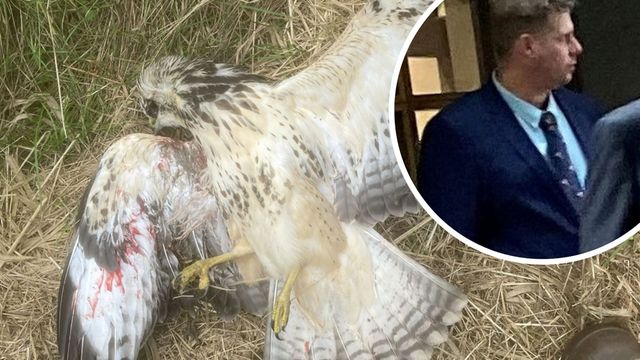
[Red kite. Photographer unknown]

Donald Fraser, NatureScot’s Head of Wildlife Management, said: “We consider the information from Police Scotland provides robust evidence that wild birds have been killed or taken or there has been intention to do so illegally on this land.

“Because of this, and the risk of more wildlife crimes taking place, we have suspended the use of general licences on this property for three years until June 2025. They may still apply for individual licences, but these will be closely monitored.

“NatureScot is committed to using all the tools we have available to tackle wildlife crime. This measure will help to protect wild birds in the area, while still allowing necessary land management activities to take place, although under tighter supervision.

“We believe this is a proportionate response to protect wild birds in the area and prevent further wildlife crime. We will continue to work closely with Police Scotland and consider information they provide on cases which may warrant restricting general licences.”

General licences allow landowners or land managers to carry out control of common species of wild birds, such as crows and magpies, to protect crops or livestock, without the need to apply for an individual licence.

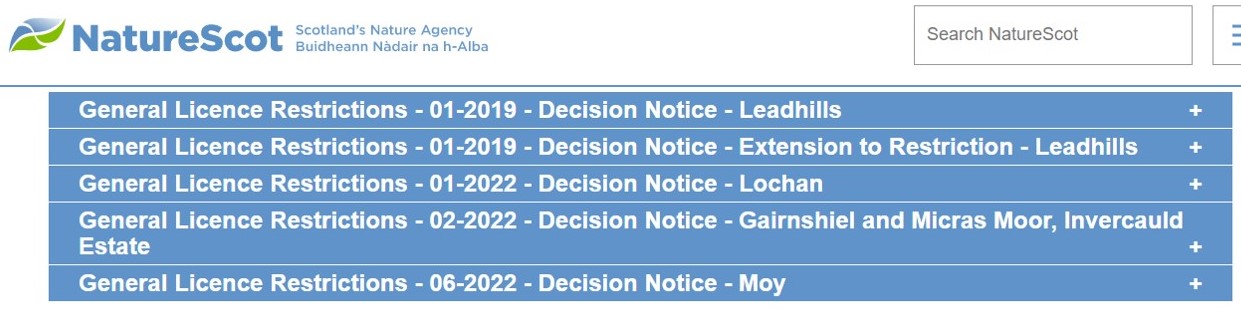
In addition to this restriction, there are currently three other restrictions in place on Invercauld Estate in the Cairngorms National Park, Lochan Estate in Perthshire and Leadhills Estate in South Lanarkshire.

ENDS

The restriction notice reads as follows:

In line with NatureScot’s published General Licence restrictions: Framework for Implementing Restrictions we hereby give notice that a restriction has been applied to the land outlined in red overleaf. This restriction prohibits the use of General Licences 01, 02 and 03 on that land between 21st June 2022 and 21st June 2025.

Please note that this restriction does not imply responsibility for the commission of crimes on any individuals.

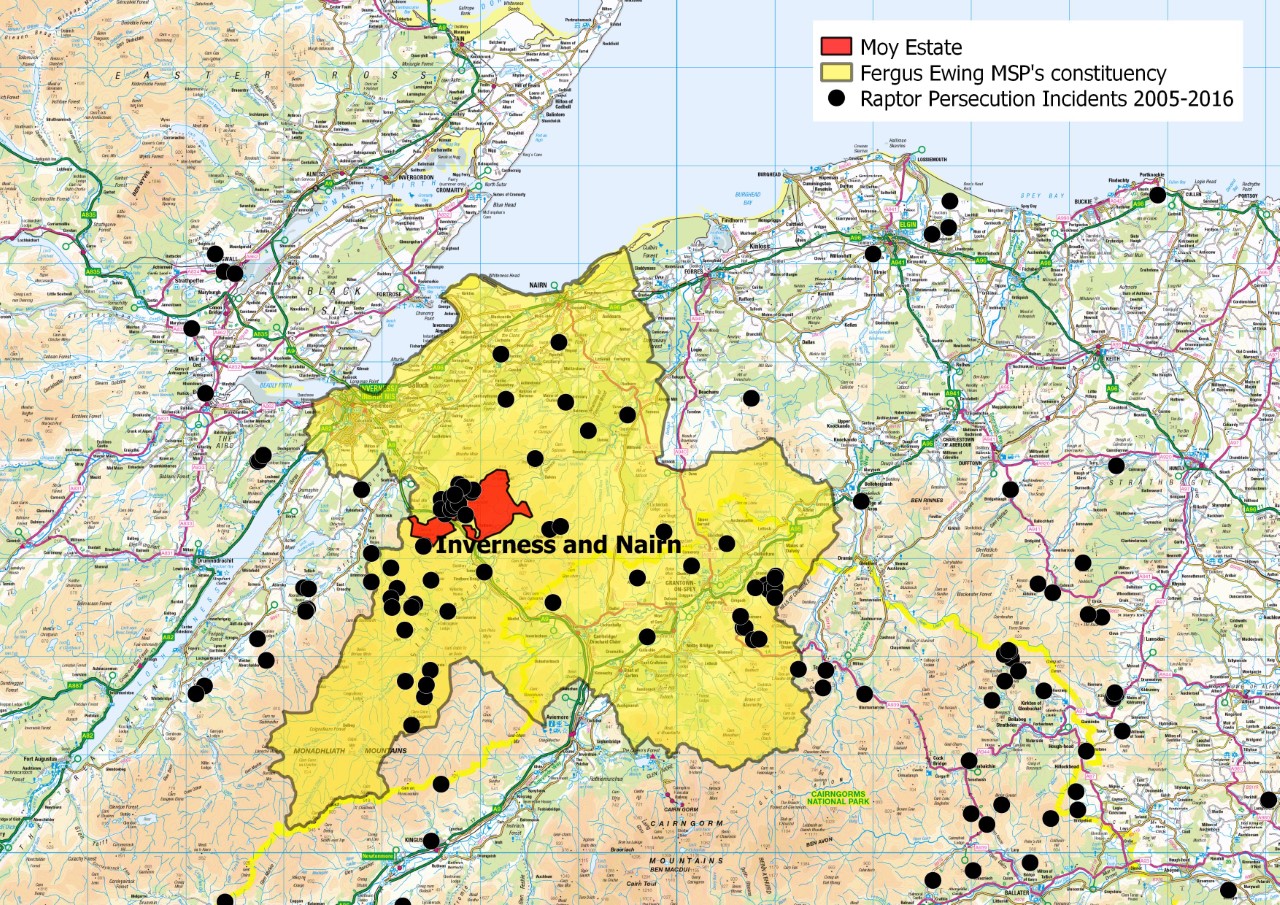
This one has been a long time coming. Moy is one of those estates where if its name comes up in conversation amongst raptor conservationists in Scotland, eyes tend to roll and knowing looks are exchanged. It has been identified as a raptor persecution hotspot for many, many years.

Here is a map we created way back in 2016 to highlight the extent of raptor persecution crimes in former Cabinet Secretary Fergus Ewing’s constituency (given his strong support of the Scottish Gamekeepers Association) and this shows the concentration of incidents on and close to Moy Estate:

Here is a selection of examples, but this is by no means an exhaustive list:

Moy Estate was raided by police in 2010 after the discovery of poisoned bait and dead raptors and illegally set traps. A gamekeeper was later convicted of possession of a red kite after its bloodied corpse was found in the back of his vehicle. It had two broken legs, consistent with being caught in spring traps, and a head injury. A bloodied shinty stick was also found in the back of the vehicle. Notably, the gamekeeper wasn’t convicted for killing the kite, just for having possession of it. Nobody was charged with killing this kite.

These baited traps were discovered on the moor (the illegally-set spring traps were originally disguised under moss, removed here for evidential purposes). No charges were brought.

The remains of two further red kites were discovered on the moor, including a severed red kite leg and some wing tags that had previously been fitted to a kite, all found buried in holes under some moss. No charges were brought.

A jar in one of the gamekeeper’s houses contained the leg rings of four young golden eagles – nobody could account for how they had ended up inside that jar. Perhaps he’d found them whilst ‘metal detecting at his uncle’s farm’ like gamekeeper Archie Watson, who recently gave this implausible explanation to the court for how he’d come to possess BTO leg rings from a buzzard and a red kite attached to his keyring.

This male hen harrier was found caught by its leg in an illegally-set spring trap on Moy Estate in 2010. No charges were brought. It survived after being rescued by raptor workers from the Scottish Raptor Study Group.

In May 2011 a satellite-tracked red kite ‘disappeared’ on Moy, and another one ‘disappeared’ in August 2011.

In 2016 Police Scotland issued an appeal for information following the discovery of disturbed and abandoned buzzard and goshawk nests in the Moy Forest. One goshawk and four buzzard nests were abandoned in suspicious circumstances, with some evidence of illegal disturbance. These nests were being monitored by staff from Forestry Enterprise Scotland (see here). No charges were brought.

In 2017 masked gunmen were caught on camera at a goshawk nest in Moy Forest. A few days later the nest and a clutch of four eggs was found abandoned (see here). No charges were brought.

In 2018 Police Scotland issued an appeal for information after a buzzard was found caught in an illegal pole trap in the Moy area (see here). No charges were brought.

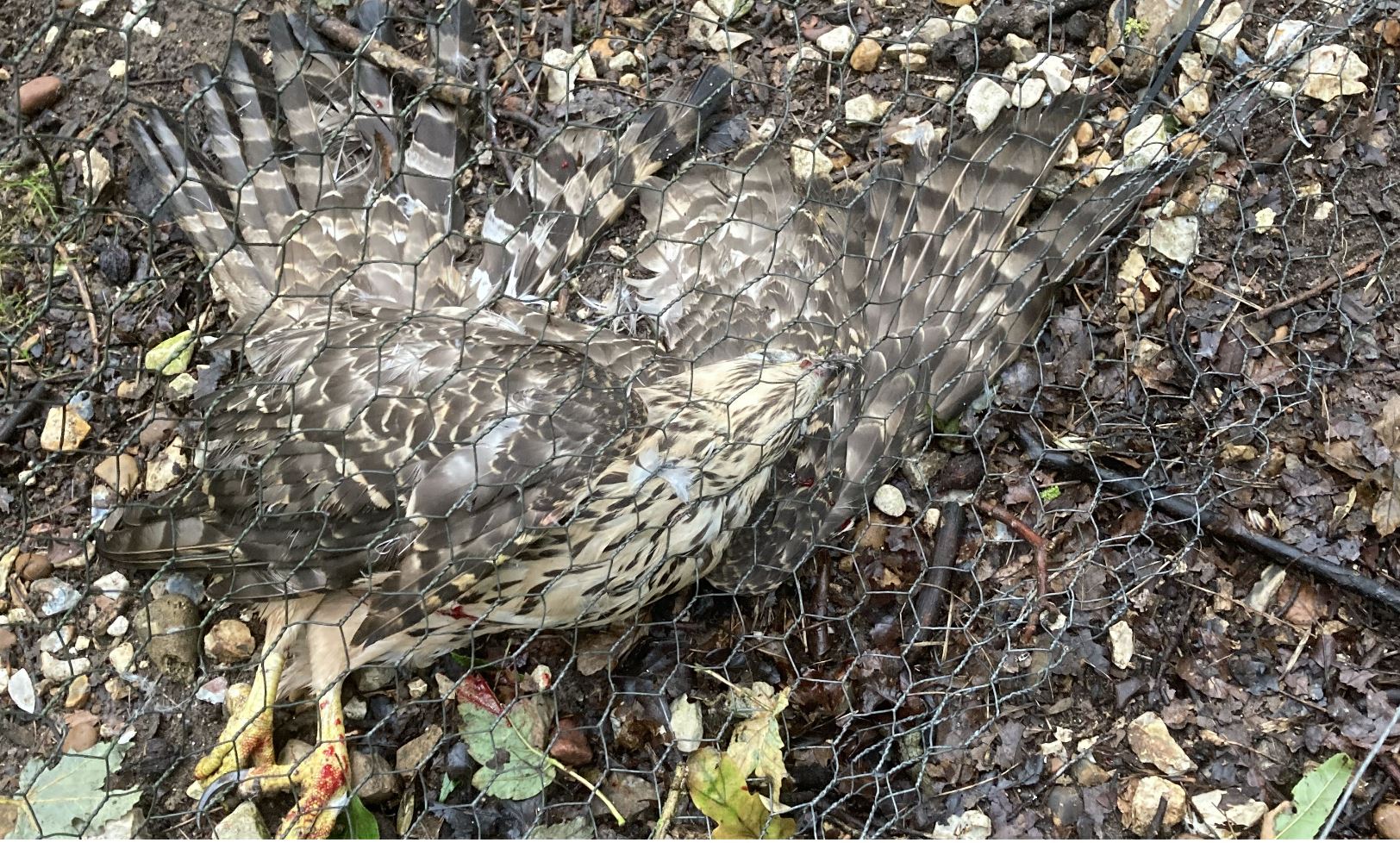
In 2020 a poisoned red kite was found dead, containing traces of a banned pesticide, leading to a police appeal for information (here).

In 2021 an individual was charged with the alleged killing of a bird of prey in this area. This case is believed to be progressing through the courts so I can’t comment further at this stage.

Of course, a General Licence restriction doesn’t amount to much of a sanction in real terms, as I’ve discussed on this blog endless times before (e.g. see here). However, it’s currently the only tool available to the authorities until we finally see the introduction of the promised grouse moor licensing scheme by the Scottish Government. Had that scheme been in place already, we’d hopefully have seen the removal of Moy Estate’s licence to shoot for a number of years, if not permanently.

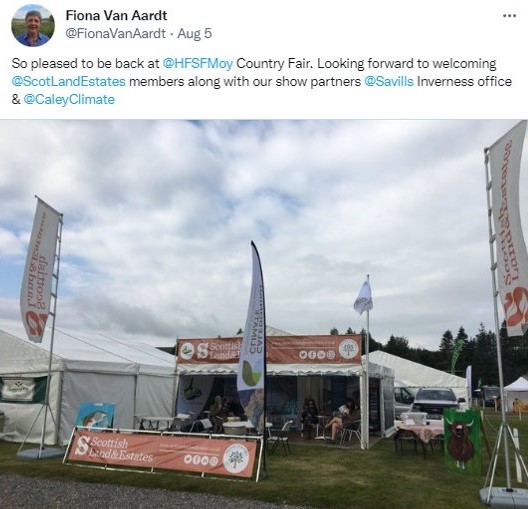
Meanwhile, what will be really interesting to see is whether the Moy Game Fair goes ahead this year, given that the shooting organisations have all claimed to have a ‘zero tolerance’ approach to raptor persecution. I don’t think the likes of Scottish Land & Estates, Fergus Ewing MSP and the Scottish Gamekeepers Association can expect anything other than high-level criticism if they attend this event on an estate that has now been sanctioned for wildlife crimes by the statutory nature conservation advisor, based on evidence provided by Police Scotland. Mind you, the conviction of a gamekeeper on Moy Estate in 2011 didn’t stop them attending (see here and here).

UPDATE 14th July 2022: Scottish Gamekeepers Association plans award ceremony at disgraced Moy Estate (here)

UPDATE 6th August 2022: Fergus Ewing MSP & his shooting industry pals disregard sanctions imposed on Moy Estate for wildlife crime (here)

UPDATE 22nd August 2022: Moy Estate loses appeal against General Licence restriction imposed for wildlife crime (here)

Dorset Police continues its damage limitation exercise re: its botched investigation into the poisoned eagle

Dorset Police is still desperately undertaking a damage limitation exercise in relation to its botched investigation into the poisoning of a white-tailed eagle found dead on an unnamed shooting estate in January.

The following article appeared in the Dorset Echo yesterday, reproduced here:

DORSET Police said it has “never been in any doubt” the poisoning of an “extremely rare” white tailed eagle is a “serious offence”.

An investigation was launched in February after the bird had been found dead in North Dorset.

Despite finding high levels of rat poison brodifacoum in the eagle, named G461, Dorset Police dropped the investigation, a decision which “baffled” the RSPB.

Dorset Police said tests were “inconclusive” and it was not possible to confirm if a criminal offence had been committed.

Now, after large criticism and a Freedom of Information request revealed correspondence between West Dorset MP Chris Loder, who reportedly said the investigation should not be a priority, and Police and Crime Commissioner David Sidwick, a specialist investigator has been brought in by police.

A spokesperson for Dorset Police said: “We understand that concern has been expressed as to whether more could have been done in respect of the investigation into the death of the white-tailed sea eagle.

“Therefore, in the interests of transparency, it was important for a senior detective to review the investigation, seeking expertise from the Wildlife Incident Investigation Scheme and liaising with a specialist prosecutor from the CPS to ascertain if the evidential threshold for prosecution is met. We hope this will give confidence in decisions made.

“It has never been in any doubt for Dorset Police that if poisoned deliberately, this is a serious offence as the sea eagle is protected by the law.

“We have always been keen to secure a prosecution if at all possible and have been working with a range of partners to try and achieve this.

“We have increased the number of officers with knowledge of wildlife crime offences and are working with our partners to ensure we are able to utilise our different powers, expertise and resources to their best effect.

“We will of course reflect on any learning in respect of the initial or future investigations.”

The spokesperson added the force was always open to new information and hoped it could give “further transparency” to future decisions.

Correspondence between Mr Loder and Mr Sidwick showed the latter saying the pair needed to get their “ducks in the row on this one”.

In a statement on the PCC’s website, he said suggestions the investigation was politically impeded were “bizarre and entirely without merit”.

He added: “It is a plain and simple fact that the team continues to do what they have always done, which is to tackle all aspects of rural, wildlife and heritage-related crime in Dorset.”

Answering what was meant by getting “ducks in a row”, Mr Sidwick said: “All this meant was that was there was a need a for a mutual understanding about the independence of Dorset Police to carry out investigations as they see fit.”

The eagle was released as part of a reintroduction project by Forestry England in a bid to bring the breed back to the country after an absence of over 240 years, by releasing up to 60 birds over five years.

ENDS

It’s a nice try by Dorset Police, but, as I’ve said previously, asking a senior officer from the same police force to review the investigation is effectively just Dorset Police marking its own homework. Had it been a review undertaken by a senior officer from another force it might have been more credible, although of course that would depend on the integrity of that force/officer. As regular blog readers will be only too aware, there is huge disparity between how different police forces and different officers tackle wildlife crime investigations. Some are fantastic, some are not.

But anyway, the ‘review’ undertaken by the senior officer from Dorset Police has already been done according to comments made by Dorset Police Chief Scott Chilton in a Facebook live chat almost three weeks ago, and that officer had determined that there was ‘insufficient evidence’ and ‘no outstanding lines of enquiry’ to progress the case. Well of course, if you fail to conduct a search you’re not going to find any evidence, are you? It’s simply bonkers.

And increasing the size of the force’s rural crime team is utterly pointless if investigations are going to be closed down prematurely. Dorset Police could employ 3,000 wildlife crime officers but if they’re not allowed to undertake a search to look for evidence when an eagle has been found poisoned with 7 x the lethal dose, then what’s the point?

Besides, they don’t need 3,000 wildlife crime officers – they had one (Claire Dinsdale) who was brilliantly committed and effective and who was leading on the poisoned eagle investigation until senior officers pulled the plug and Claire left on long-term sick leave. They only need to employ a few like Claire (and Dorset Police does have some good officers in its rural crime team), and then support them in their investigations, and they’d get results.

And as for claiming ‘transparency’, good grief. Dorset Police continues to refuse to respond to Freedom of Information requests and has now been reported to the Information Commissioner for multiple breaches of the Freedom of Information Act.

If it wants to regain public trust and confidence, Dorset Police can start by explaining the real reason the poisoned eagle investigation was dropped (because this fundamental question still hasn’t been answered). And then it could highlight the ongoing investigation (running since 2021) into alleged raptor poisoning, on the very same estate where the poisoned white-tailed eagle was found(!!) and tell us whether anyone is being charged.

It can also provide an update on the toxicology results of the dead buzzard and red kite, picked up on another shooting estate in early March (see here), and the dead buzzard found on another estate in late April (here).

There is clearly a raptor persecution problem in Dorset, and Dorset Police needs the public onside to help detect these incidents, and we need Dorset Police to do its job properly and try and bring these criminals to the courts. Nobody is suggesting this is easy – we’re all well aware of the difficulties involved, but the least we should expect is that the police will take every opportunity to undertake a robust and thorough investigation, and not to drop it when a local MP kicks off on social media with ridiculous and outdated anti-eagle hysteria.

Well done to local Dorset Echo reporter Ben Williets for tracking this case and keeping it in the news.

Watch Dorset’s poisoned eagle fiasco on BBC’s Countryfile

Well done to the BBC’s Countryfile programme last Sunday for doing a 12-minute feature about the poisoning of the white-tailed eagle on an unnamed shooting estate in Dorset in January, and Dorset Police’s fiasco of an investigation which was brought to an abrupt halt when the police decided, astonishingly, that they ‘didn’t have sufficient evidence’ to execute a search warrant on the estate. This decision was made shortly after local MP Chris Loder argued on Twitter that the Police shouldn’t be investigating it and that eagles weren’t welcome in Dorset anyway.

Countryfile isn’t generally renowned for its hard-hitting investigations but I’ve got to say I was pleased with what they produced. Sure, a lot of material was left on the cutting room floor and they studiously removed all the discussion about the scale of illegal raptor persecution in the UK and the ingrained raptor-killing culture amongst some of the game-shooting industry, who still refer to these protected species as ‘vermin’, but I think for millions of viewers, who generally aren’t a specialised audience, this piece would still have been an eye-opener.

I’ve spoken to a few people since it aired who didn’t even know that eagles could now be found in southern England, let alone that they were being poisoned. They do now.

I was also impressed that they managed to get Chris Loder MP in front of a camera and the Assistant Chief Constable of Dorset Police, Rachel Farrell. Remember this is the police force that has repeatedly refused to respond to Freedom of Information requests on this matter. Personally, I don’t think either of them gave convincing explanations that there wasn’t any undue political pressure placed on the police to close down the investigation (asking a senior officer from the same force to effectively ‘mark the Police’s own homework’ doesn’t cut much ice with me), but you can draw your own conclusions.

I think a lot of credit needs to go to Countryfile’s researcher James Agyepong-Parsons, a former journalist from the ENDS Report and the instigator for Countryfile running this piece. He was meticulous in ensuring that the facts of this case were accurately presented, and Charlotte Smith did a brilliant job in pressing for answers.

It’s now available to watch on BBC iPlayer for the next 11 months (here – starts at 09.50 min).

There’s still much more to come out about this case, including the name of the estate where the eagle was found poisoned. It hasn’t yet been made public because there is another, separate, ongoing investigation into alleged raptor persecution that I understand is nearing a charging decision. Nobody wants to name the estate for fear of giving Dorset Police any excuse to drop this other case. We shouldn’t have to be concerned about that but such is the loss of confidence in Dorset Police that nobody is taking any chances.

Another gamekeeper convicted for poison offences on a pheasant shoot, but not charged for poisoned kite & shot buzzard

David Matthews, a gamekeeper with 50 years experience, has been convicted at Wrexham Magistrates Court for poison offences uncovered on the McAlpine Estate in Llanarmon Dyffryn Ceiriog, North Wales, where he has worked for 25 years.

In February 2021 a dead red kite was found on the estate by a member of the public and a later toxicology analysis revealed it had been poisoned with Bendiocarb.

[The poisoned red kite. Photo by RSPB]

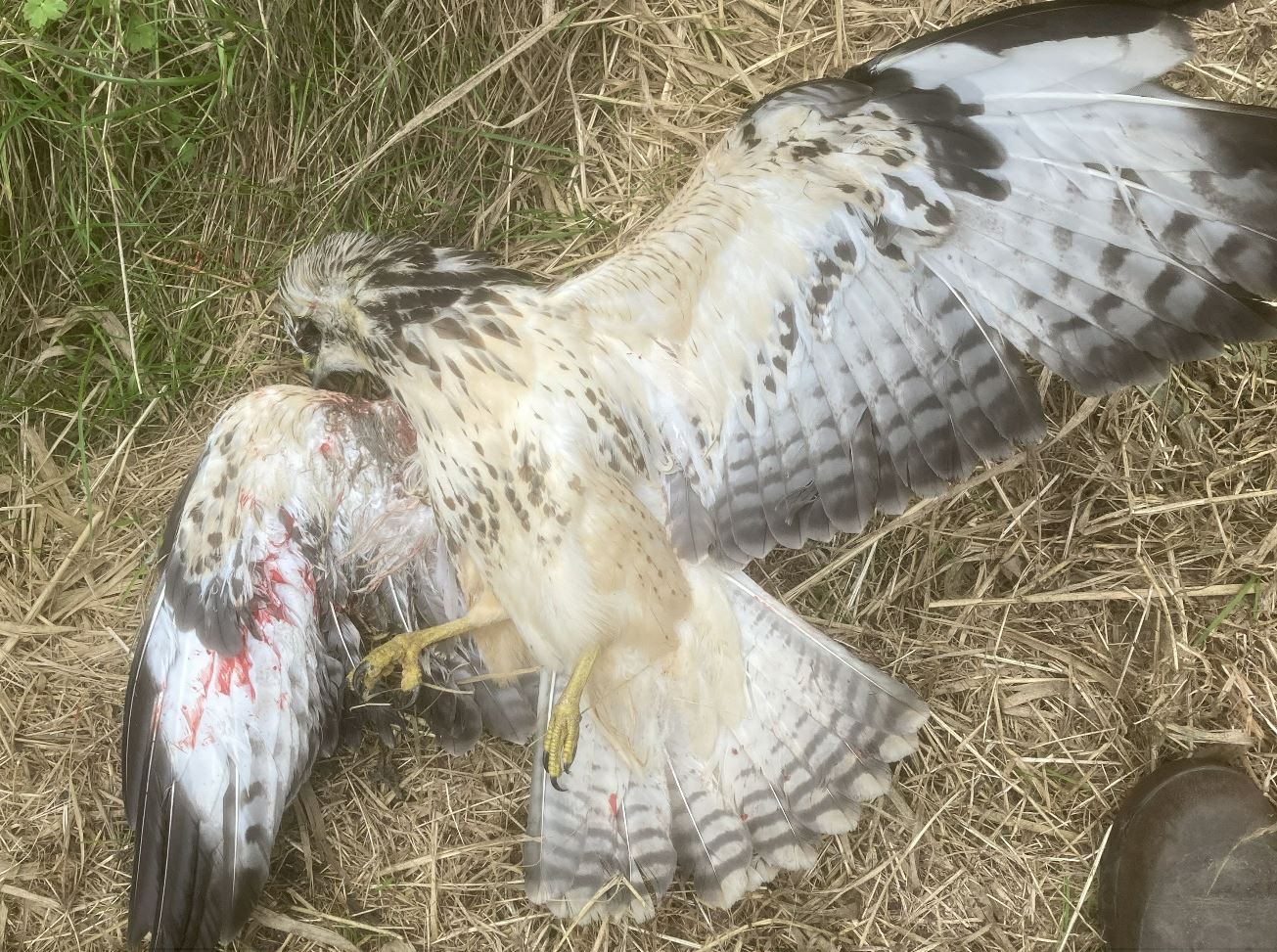
When RSPB Investigations Officers subsequently visited the McAlpine Estate they found a dead buzzard inside a pheasant release pen. When the body was x-rayed, a piece of shot could be seen lodged in the bird’s skull.

[The shot buzzard found inside the pheasant release pen. Photo by RSPB]

A multi-agency search in October 2021 by North Wales Police, the Welsh Government, RSPB and the National Wildlife Crime Unit uncovered an unlocked barn containing 18 highly toxic products, including Cymag which has been banned since 2004. They also found the remains of a pheasant, inside a game bag on a bonfire site inside a pheasant release pen. The pheasant tested positive for Bendiocarb. Another dead buzzard was too badly decomposed to be tested.

Gamekeeper Matthews pleaded guilty to one charge relating to the possession of unauthorised pesticides. He received a total fine of £219.

You can read the full details of this case on the RSPB’s blog here.

In that blog, the RSPB state, ‘It remains unknown who killed the buzzard and the kite‘.

I’m pretty sure that the RSPB investigators, just like the rest of us, have a pretty good idea who might have been responsible but presumably there was insufficient evidence to charge anyone. Such is the nature of this game that it would be libellous to suggest a suspect.

It seems odd to me, though, that a gamekeeper who had worked on the estate for 25 years wouldn’t have noticed someone laying poisoned baits, placing the bait inside a game bag and leaving it on a bonfire site inside a pheasant release pen, and shooting dead a buzzard and leaving its corpse inside a pheasant release pen.

His £219 fine makes a total mockery of the system. Had this case been in Scotland, the fine for possessing an unauthorised poison would now be £40,000. That’s a serious deterrent.

£219 is not.

This is the reality and I’ll be reminding DEFRA Minister Lord Benyon of this the next time he repeats the Westminister Government’s tediously predictable claim that raptor-killing criminals face ‘significant sanctions…including an unlimited fine and/or a six month custodial sentence‘ (e.g. see this from Environment Minister Rebecca Pow in September 2021, and this from Richard Benyon in February 2022, and this from Rebecca Pow in February 2022, and this from Richard Benyon in April 2022).

Matthews is the 7th gamekeeper to be convicted in seven months across England, Scotland and Wales. There are still multiple cases pending court in the coming months. Clear evidence then that the game-shooting industry’s supposed ‘zero tolerance’ policy towards raptor persecution is simply just rhetoric and that the Government’s so-called ‘significant sanctions’ are complete bollocks.

The other convicted gamekeepers in recent months are:

Gamekeeper Shane Leech who was convicted in November 2021 for firearms and pesticides offences after the discovery of a poisoned buzzard found close to pheasant-rearing pens in Lakenheath, Suffolk (here);

Gamekeeper Peter Givens who was convicted in November 2021 for causing the death of a goshawk and a barn owl which starved to death in an illegally-operated trap on the Cathpair Estate in the Scottish Borders (here);

Gamekeeper Hilton Prest who was convicted in December 2021 for causing a sparrowhawk to starve to death in an illegally-operated trap in Cheshire (here);

Gamekeeper John Orrey who was convicted in January 2022 for battering to death two buzzards he’d caught in a cage trap on a pheasant shoot in Nottinghamshire (here);

Gamekeeper Rhys Davies from the Millden Estate in the Angus Glens, Scotland, who was convicted in May 2022 for animal cruelty relating to badger baiting (he’ll be sentenced at the end of June – here);

Gamekeeper Archie Watson who was convicted in June 2022 for raptor persecution and firearms offences after he was filmed throwing 8 dead raptors down a well on a pheasant-shoot in Wiltshire (here).

Well done to the multi-agency search team involved in bringing David Matthews to court.

BBC’s Countryfile to feature #EagleGate

Tomorrow’s edition of Countryfile will include a feature on the continued illegal killing of birds of prey in the UK, focusing on the recent poisonings of at least two white-tailed eagles in southern England (the one in Dorset and the one in West Sussex).

Filming took place last week and lovely presenter Charlotte Smith interviewed a number of people including Paul Morton (representing Birds of Poole Harbour) and me (representing Wild Justice) as we enjoyed a boat trip along the Wareham Channel looking for eagles, ospreys, marsh harriers and peregrines.

They also managed to bag an interview with Chris Loder MP, the local politician who didn’t want Dorset Police to investigate the eagle poisoning and I believe there’ll be contributions (probably denials and abuse) from Tim Bonner (Countryside Alliance) and perhaps statements from Dorset Police and the Dorset Police & Crime Commissioner, David Sidwick.

I’m hoping they asked Chris Loder MP what he thought David Sidwick meant when he told Loder: ‘You and I need to get our ducks in the row on this one‘ while discussing the murky police investigation into the poisoned eagle in Dorset.

I’ve no idea how the final edit will be presented, this is the BBC after all and they’ll want to be seen as being scrupulously impartial, which is fair enough.

I’m just delighted that they’ve chosen to feature the raptor persecution issue at all, and that six million viewers will learn that even though this is the 21st Century, eagles and many other raptor species are still being deliberately poisoned/trapped/shot in this country, predominantly by members of the game-shooting industry. No matter which part of the interviews the editors choose to show in the final cut, that is the message that the viewers will remember and it’s the most important message of all.

Countryfile airs on Sunday 12th June 2022 on BBC 1 at 7pm and will be available on iPlayer for 12 months.

Poisoned eagle investigation: “You and I need to get our ducks in the row on this one” – Dorset PCC tells Chris Loder MP

Regular blog readers will know that I’ve been chasing up correspondence between the Dorset Police & Crime Commissioner (PCC), David Sidwick, and Dorset MP Chris Loder, in relation to the poisoned white-tailed eagle found dead on an unnamed shooting estate in north Dorset in January 2022.

For new blog readers, this is the investigation that Dorset Police chose to close, prematurely, having refused to conduct a search of the estate for any evidence of criminality.

The decision to close the investigation has been described as ‘completely baffling‘ by the RSPB, who up until that point had been helping with the investigation. The decision also coincided with the Force’s award-winning wildlife crime officer going on long-term sick leave with stress, a re-branding of the Force’s wildlife crime team to remove the word ‘wildlife’, and with an astonishing outburst on Twitter by Chris Loder MP, who had criticised Dorset Police for spending time and resources on the investigation and who argued that eagles ‘weren’t welcome’ in Dorset. It’s clear from Loder’s entry on the Westminster Parliamentary Register of Interests that his electoral campaign had received significant financial support from at least one large Dorset estate where the landowners have links to the game-shooting industry and the Countryside Alliance.

Unsurprisingly, there were suspicions that undue political pressure had been put on to Dorset Police, resulting in the Force’s ridiculous decision to halt the investigation in mid-flow, so I submitted a series of Freedom of Information requests to Dorset Police and the Dorset PCC to try and establish exactly who had said what, to whom, and when.

My FoI request to the Dorset PCC was made on 4th March 2022. After a long period of silence (and thus a breach of the Freedom of Information Act), the PCC finally responded and sent me copies of some correspondence between PCC David Sidwick and Chris Loder MP about this poisoned eagle.

However, on examining the correspondence (here) it was obvious to me that some correspondence was ‘missing’, so I wrote back and asked for any ‘missing’ correspondence to be provided.

It turns out that there was indeed some ‘missing’ correspondence, and that has now been provided to me (or at least some of it has – I suspect there’s more, as I’ll explain below).

The PCC has sent me three emails that were ‘missing’ from the first batch.

The first ‘missing’ email was this one, from Chris Loder MP to PCC David Sidwick, dated 15th February 2022 at 06.27hrs:

The first line of this email is significant.

Dave, The Guardian will cover EagleGate tomorrow‘.

Why is this significant? Well, because according to the PCC, this is supposedly the very first piece of correspondence between Loder and Sidwick about this poisoned eagle, and yet Loder describes it as ‘EagleGate‘, which suggests to me that there had been earlier correspondence about it, otherwise Sidwick wouldn’t have known what Loder was on about.

The second ‘missing’ email was sent by Loder to Sidwick on the same day, as a follow-on to his first email. Loder sent this email to Sidwick at 08.19hrs:

The third ‘missing’ email was a response by Sidwick to Loder, sent on the same day at 08.40hrs:

I think you and I need to get our ducks in the row on this one.

I will be in the car from 9.30“.

It couldn’t be clearer to me that there was some level of collusion going on between Sidwick and Loder and that we haven’t been told the full extent of it.

I have written back to the PCC to ask whether that first ‘missing’ email was actually the very first time Loder and Sidwick had corresponded about the poisoned eagle investigation, because starting his email with the phrase ‘EagleGate‘, without offering Sidwick any explanation about what that phrase meant, and Sidwick not asking Loder for an explanation of what he meant by the phrase ‘EagleGate‘, just isn’t credible. They both clearly knew what ‘EagleGate‘ meant, which means they had discussed this topic prior to that first email from Loder on 15th February 2022.

There’s more to come on this.

For previous blogs on this case, please see here

Police lead more multi-agency raids after suspected raptor persecution & poisoning in Durham & Northumbria

Statement from Durham Constabulary (27th May 2022)

Joint operation targets suspected raptor persecution and poisoning of birds of prey

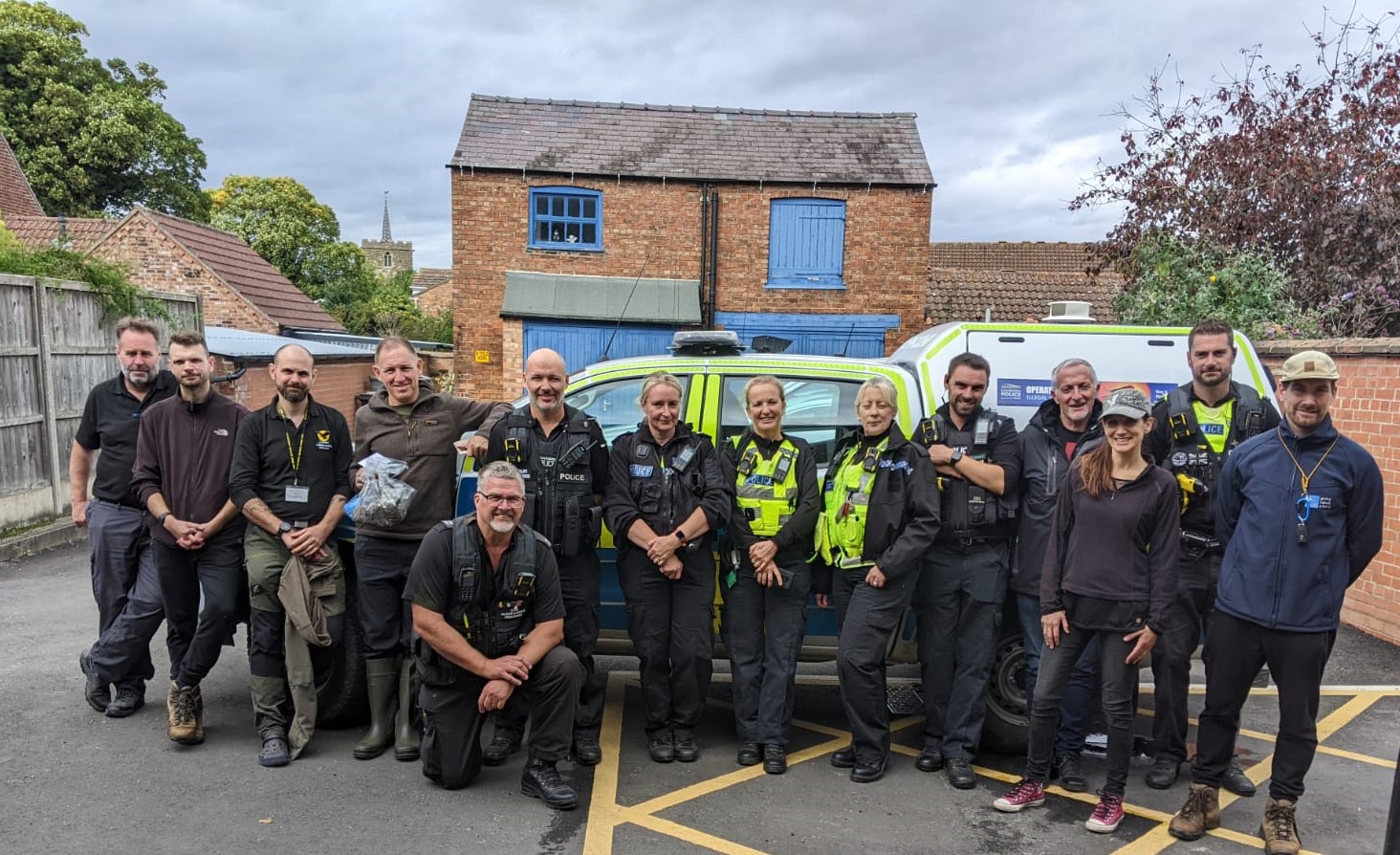
Police have carried out searches at several locations this week in connection with suspected raptor persecution and poisoning of birds of prey. 

Officers from Durham and Northumbria attended the addresses across the two force areas following information received from the public. 

Suspicious substances were seized from some of the locations and taken away for forensic examination. 

[Photo from Durham Constabulary]

The multi-agency operation was carried out with the help and support of Natural England, the Royal Society for the Protection of Birds (RSPB) and the National Wildlife Crime Unit.

It also formed part of Operation Owl, which is a national initiative to increase awareness of bird of prey persecution and to seek support in tackling it head on. 

Raptor persecution is one of the UK Wildlife Crime Priorities, which includes poisoning, shooting, trapping, and habitat and nest destruction. 

PC David Williamson, Durham Constabulary’s Wildlife Crime Officer, said: “In the UK, birds of prey are a protected species and any criminal offences committed against these beautiful creatures are completely unacceptable. 

We have acted on intelligence from the local community to carry out this operation and try and disrupt those involved in these activities

We’d encourage anyone with an information on potential criminal activity in their area to call us on 101 or report it via Crimestoppers anonymously on 0800 555 111.”

ENDS

Well done Durham Constabulary, Northumbria Police, Natural England, RSPB and the National Wildlife Crime Unit.

These latest multi-agency raids are the latest in a surge of similar investigations in response to raptor persecution crimes over the last 18 months, including a raid in Suffolk on 18th January 2021 (here), a raid in January 2021 in Nottinghamshire (here), on 15th March 2021 a raid in Lincolnshire (see here), on 18th March 2021 a raid in Dorset (here), on 26th March 2021 a raid in Devon (see here), on 21st April 2021 a raid in Teesdale (here), on 2nd August 2021 a raid in Shropshire (here), on 12th August 2021 a raid in Herefordshire (here), on 14th September 2021 a raid in Norfolk (here), a raid in Wales in October 2021 (here) a raid in Humberside on 10th December 2021 (here), a raid in North Wales on 8th February 2022 (here) and another raid in Suffolk on 22nd April 2022 (here).

So far, only two of these investigations have concluded. These are the Nottinghamshire case (from January 2021), where gamekeeper John Orrey was sentenced in January 2022 for battering to death two buzzards he’d caught inside a trap (here), and the Suffolk case (also from January 2021) where gamekeeper Shane Leech was convicted of firearms and pesticides offences in November 2021 after the discovery of a poisoned buzzard found close to pheasant-rearing pens in Lakenheath (here).

The conviction yesterday of gamekeeper Archie Watson in Wiltshire (here) was the result of another multi-agency raid undertaken in 2020 (here).

I was at a wildlife crime meeting recently when it was announced that at least 12 raptor persecution cases are pending court hearings, some of them also dating back to 2019. That’s indicative of the hard work of these investigators and they deserve full credit for their efforts. It’s been a long, long time since that number of raptor persecution cases have got anywhere near a court room. Well done all.

Dorset Police’s generic FoI response on poisoned eagle investigation is inaccurate and unsatisfactory

Earlier this morning I mentioned (here) that yesterday, Dorset Police had finally got around to responding to some Freedom of Information requests made to them by members of the public about the premature closing of the investigation into the poisoned white-tailed eagle found on a shooting estate in January 2022.

I said that the responses that I’d seen (the ones that had been forwarded to me by blog readers – thank you) seemed to be a cut and paste job, just repeating the rhetoric that the investigation was ‘full and proportionate’ (no, it was neither of these things) and that the post mortem results were ‘inconclusive’ (no, the pm report revealed the eagle’s liver contained 7 x the lethal dose of the rodenticide Brodifacoum, which can only be a result of (a) mis-use of the rodenticide or (b) deliberate abuse of the rodenticide. Either way, these are both offences).

I thought it’d be useful to publish the generic response so you can see how Dorset Police is dodging specific questions and at one point, denying that political interference was even a prospect (er, even though we all read MP Chris Loder’s tweets, suggesting the police shouldn’t be investigating this crime!). This is highlighted in red below:

I’m looking forward to receiving Dorset Police’s response to my request for a review of their decision to refuse my FoI original request made on 4th March 2022 (that response is now two weeks overdue), and also a response to my most recent FoI request to Dorset Police, which was due yesterday:

Premature closure of poisoned eagle investigation was ‘proportionate’ claims Dorset Chief Constable

Yesterday evening Dorset Police held an hour-long live web chat on Facebook offering the public an opportunity to put questions to Chief Constable Scott Chilton and the Dorset Police & Crime Commissioner (PCC) David Sidwick.

Many thanks to all those who posed questions about Dorset Police’s unfathomable decision to prematurely close the investigation into the death of the white-tailed eagle found poisoned on an unnamed shooting estate in January this year.

To their credit, the Chief Constable and the PCC took two questions on this subject but I’m afraid their answers were unconvincing and simply a repeat of the damage limitation exercise they undertook last month (here).

The Chief Constable maintained that the decision to close the investigation without first conducting a search of the estate to look for evidence of potential criminality was ‘proportionate’. He also said that following complaints, he’d asked a senior detective to review the case and he, too, had determined that there was ‘insufficient evidence’ and ‘no outstanding lines of enquiry’ to progress the case. Well of course, if you fail to conduct a search you’re not going to find any evidence, are you? It’s simply bonkers.

Both the Chief Constable and the PCC were adamant that undue political interference did not take place. “Absolutely not true“, said Chief Constable Chilton, and “No credibility to that whatsoever“, said PCC David Sidwick.

You can watch a recording of the chat here. The two questions about wildlife crime and the poisoned eagle are at 28.35 and 33.17 mins.

[The poisoned white-tailed eagle found dead on an unnamed shooting estate in Dorset in January 2022. Photo by Dorset Police]

Yesterday also saw the release of a number of FoI responses from Dorset Police (although not mine – that’s still way overdue) and the ones that some blog readers have shared with me seem to be a cut and paste job, just repeating this line:

As a result of the sea eagle being found dead on land in the North Dorset area, our team has carried out a full and proportionate investigation under Section 1 of the Wildlife Countryside Act 1981 in conjunction with Natural England, National Wildlife Crime Unit, the RSPB and the Roy Dennis Wildlife Foundation to identify any offences and perpetrators who may be responsible‘.

But that’s just not true. The RSPB has questioned the decision to close the investigation without undertaking the pre-planned investigation, and called the decision ‘completely baffling’ (here).

There’s still much, much more to come out about this case. For reasons that will become clear, I need to wait until the end of the week to publish some of it.

For a full list of previous blogs on this case please see here and scroll to the bottom.

Your opportunity to question Dorset Police Chief Constable on poisoned eagle case & breaches of FoI law

Here’s your opportunity to ask questions of Dorset Police Chief Constable Scott Chilton and the Dorset Police & Crime Commissioner David Sidwick about the Force’s failure to fully investigate the circumstances of a poisoned white-tailed eagle found dead on an unnamed shooting estate in January this year (see here).

The police investigation was closed prematurely, without even a search of the estate. This coincided with the Force’s award-winning wildlife crime officer going on long-term sick leave and, reportedly, being told that if/when she returned she’d no longer be leading the wildlife crime team (now rebranded as the Rural Team).

Both Dorset Police and the Dorset Police & Crime Commissioner are also in breach of the Freedom of Information Act by failing to respond to requests for information about their communication with local Conservative MP Chris ‘eagles aren’t welcome in Dorset’ Loder, who published a series of tweets berating Dorset Police for investigating the poisoning of the eagle.

Many thanks to Miles King (@MilesKing10) for sharing the details of a Facebook Live event, taking place this evening at 6.30pm, where the public is invited to put policing questions to Chief Constable Chilton and Commissioner Sidwick:

Unfortunately I can’t make this evening’s event but here are some questions you might like to ask:

Who took the decision to close the investigation into the poisoned eagle without conducting a search of the estate?

On what basis was that decision made?

Was the decision unduly influenced by political interference?

Why isn’t Dorset Police searching for evidence of poisoned baits?

Why isn’t Dorset Police searching for evidence of unlawful poison storage?

Was this decision unduly influenced by political interference?

How does Dorset Police justify the potential risk to other white-tailed eagles in the area?

Why has the word ‘wildlife’ been removed from Dorset Police’s Rural Wildlife crime team?

Who took the decision to remove it?

On what basis was that decision made?

Was the decision unduly influenced by political interference?

Why has Dorset Police’s award-winning wildlife crime officer, Claire Dinsdale, been told she will no longer lead on wildlife crime when/if she returns from long-term sick leave?

Where are the toxicology results of all the other dead raptors found on estates in north Dorset in recent months, suspected of being poisoned?

Why is Dorset Police refusing to respond to FoI requests, in breach of legislation?

Why is the Dorset Police & Crime Commissioner refusing to respond to FoI requests, in breach of legislation?