Obituary – Patrick Stirling-Aird MBE, Secretary of the Scottish Raptor Study Group

Obituary – Patrick Stirling-Aird MBE

10 August 1943 – 8 November 2025

The Scottish Raptor Study Group (SRSG) is saddened to report the passing last week of its long-term Secretary Patrick Stirling Aird at his home in Dunblane, Perthshire. We are extremely fortunate and proud to have had Patrick as our Secretary for more than 20 years. It is believed that Patrick started in this role on 19th February 2000.  It cannot be overstated how much of a massive role Patrick has played both for the SRSG and more widely for raptor conservation in Scotland.  He will be greatly missed by all of us in the tight-knit Scottish raptor conservation community.

Patrick Stirling-Aird (Photo by Sue Stirling-Aird)

Patrick was an authority on the Peregrine Falcon, his main passion, along with other upland raptor species including Golden Eagles and Ravens. He assiduously monitored these birds in the Central Scotland (CSRSG) and Tayside and Fife Raptor Study Group (TFRSG) areas for decades. Even whilst in his mid-eighties Patrick was out monitoring Peregrines this year, and was still the species coordinator for both Peregrine and Golden Eagle in the Central Scotland Raptor Study Group area.      

In his book “The Peregrine Falcon” (New Holland 2012) Patrick claimed to have seen his first Peregrine more than 40 years ago, so going back to the early 1970s. He said it was these first sightings, and the recognition of the Peregrine as an “ecological barometer”, that got him involved with formal raptor monitoring. At this time, raptor monitoring was pioneering work promoted especially by Derek Ratcliffe, who warmly acknowledged Patrick’s work and influence in his own monographs on the Peregrine and Raven. In the 1970s and when Patrick took up raptor monitoring in west Perthshire, the Peregrine had of course become an extremely rare breeding bird following the pesticide crisis caused by DDT and Dieldrin in the 1960s, and as revealed by those dedicated individuals who monitored Peregrines across the UK at the time.

I first met Patrick in the early 1990s when I became a member of the CSRSG, having moved down from the Highlands.  He was the Chair of CSRSG since its formation in 1983 and only stood down from that role ten years ago.  Patrick was definitely in charge of monitoring Peregrines, Golden Eagles and Ravens!  It amused me at the time that other species including Red Kites, my own passion, were given relatively short attention at meetings! Owls were barely mentioned unless prompted (something that did not change greatly)! The focus was clearly on the three key raptor species – Patrick’s birds!  What was also clear was Patrick had huge attention to detail.  Patrick was trained and worked as a solicitor and brought this attention to detail to his raptor monitoring. His raptor data record keeping was second to none. When discussing particular raptor sites, he could call on an extensive background history of each site, rigorously documented year by year. If anybody was asked to monitor any Peregrine sites for him or to search certain glens for occupancy, you could expect a full documented history of that site, sometimes going back for over 50 years; detailing alternative sites, productivity; and information on how to access to get the best view of nests.   

Patrick’s own study area was along the boundary between the CSRSG and TFRSG areas. He monitored all of the peregrines from Glen Artney up to Glen Almond and across to Stirling for decades. He also monitored the breeding Golden Eagles and Ravens in these areas. However, when discussing other sites for these species in these RSG areas there did not seem to be many that he had missed during his time either!  For SRSG nationally in Scotland, and for CSRSG and TFRSG more locally, he coordinated the national population surveys for Peregrine – in particular in 1981, 1991, 2001 and 2014.   

By Patrick’s own admission he liked to monitor his birds alone. He also waited impatiently for the good weather to go and do his work on the hill. Characteristically he wore his tweed “plus twos” and deerstalker “fore and aft” hat. When he went out in the field, he tended to spend all day on the hill monitoring one or a small number of sites in a day, observing Peregrines and Eagles for many hours from a distance, noting their behaviour carefully. From my own conversations with folk on the ground whilst out doing my own raptor studies in the same general area I noted the respect that he also carried with the landowners, gamekeepers and stalkers. Patrick always made time to speak to estate owners and their employees both before and after his monitoring visits. In my time, I have rarely heard anybody saying a bad word about Patrick, even when he had to have the difficult conversations with estates about the suspicious disappearance of raptors he was monitoring or their apparently criminal breeding failure!   Patrick was calm, forceful and never shied away from conflict.  

Sadly in many parts of Patrick’s study area he monitored a decline in numbers of breeding Peregrines in recent decades in line with national trends for this species in the Scottish uplands, however the Ravens have fared well, and the Eagles that he monitored are now largely free from human interference. I am privileged to be amongst the few who have been out on the hill over many years with Patrick and every trip was a learning experience. Patrick had a huge commitment to raptor monitoring above all else.
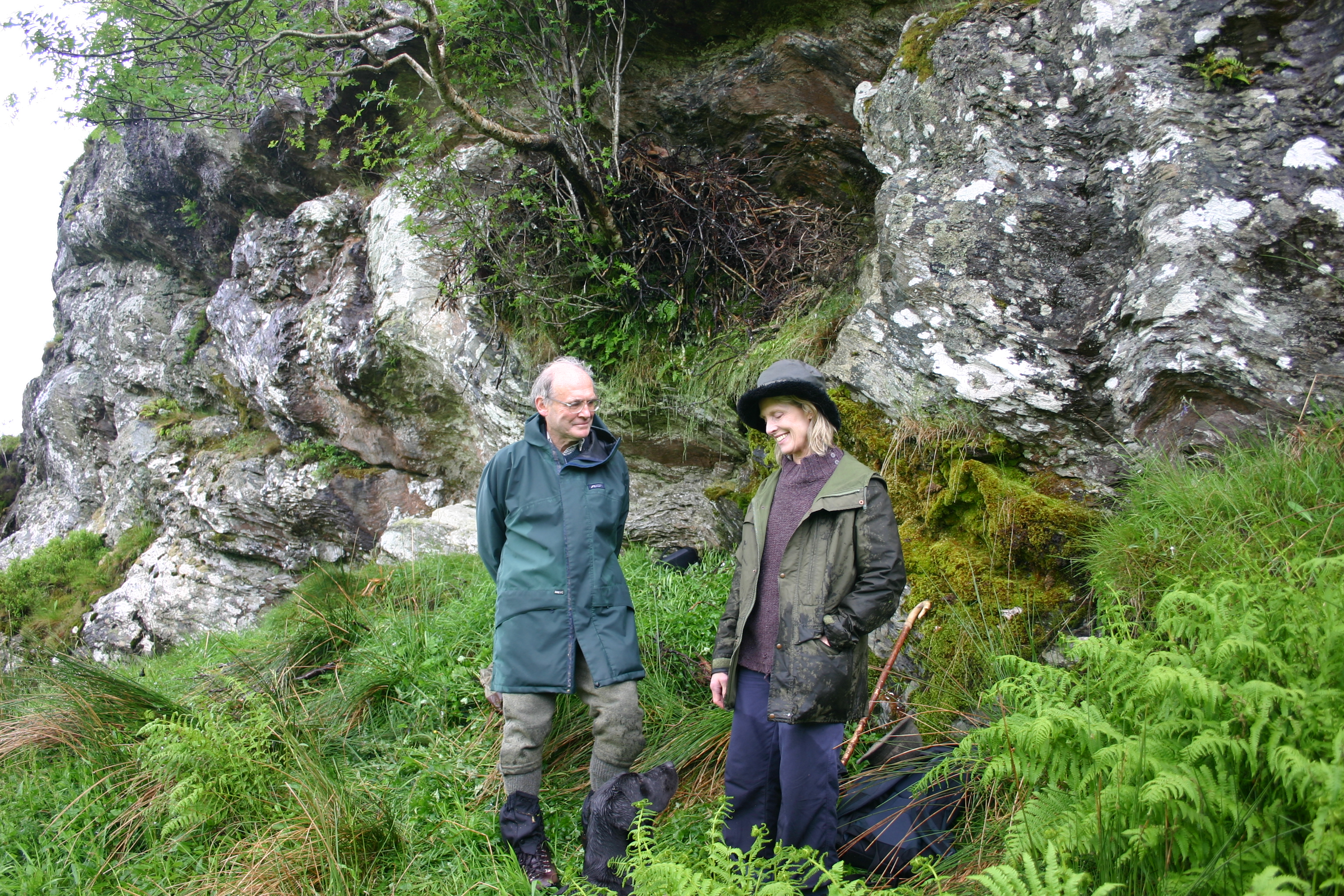
Patrick and Sue Stirling-Aird at a Golden Eagle eyrie (Photo by Duncan Orr-Ewing)

The list of important public roles Patrick undertook over many years as the SRSG Secretary are endless. He was a member of the UK Government’s DETR Raptor Working Group from 1995 to 2000. This initiative was set up originally to tackle what was perceived by the then administration as “the raptor problem”. It ended up meeting 25 times and making 25 recommendations for the enhancement of raptor conservation!   Several officials singled out Patrick for special praise for his unstinting contributions to the group.  The DETR RWG Report was a seismic moment for raptor conservation in the UK and included the production of the SRSG document “Counting the Cost” which used SRSG data to highlight the continuing illegal persecution of raptors in Scotland, including around Patrick’s own long term Peregrine study area in Central Scotland – “Human interference apparently affected about one fifth of the peregrine breeding population in central Scotland, 18% less young produced in the years 1981-1996”.

In my own role at RSPB Scotland, we used these Report recommendations in the early 2000s to tackle the Scottish Government to do more for raptor conservation. The formation of the Scottish Raptor Monitoring Scheme, in which Patrick was also instrumental, is one very good example of the report’s outcome.  Licensing of grouse shooting was secured in Scotland in March 2024 to address systemic illegal persecution of raptors associated with this land use, and this is testament to many decades of hard work by a number of key individuals, who could hold the ring and talk authoritatively about raptors.  Patrick played a totemic role in this.   

In his role as SRSG Secretary, Patrick represented the SRSG on the Moorland Forum and the Police Raptor Persecution Priority Delivery Group. His controlled persistence in defence of raptors, and against criminal persecution was unique, using his background training and professionalism as a solicitor to maximum effect. No matter how discordant the voices of the those in denial of raptor persecution, Patrick calmly and robustly spoke up for raptors and SRSG fieldworkers.  Not a lover of the phrase ‘balance’, he warmed to the closing lines of Derek Ratcliffe in his 2003 foreword to ‘Birds of Prey in a Changing Environment’:  “Raptor enthusiasts will have to speak up, and assert their simple conviction that birds of prey are as important as gamebirds or homing pigeons.”  

Patrick has served time on the UK RSPB Council and was previously a member of the RSPB Scottish Advisory Committee. He was also on the Scottish Wildlife Trust Council and a member of the BTO Research & Surveys Committee. We in the SRSG community and his family were all absolutely delighted when Patrick was awarded an MBE in 2005 in the New Year’s Honours list for his services to wildlife conservation and this award was subsequently presented at a ceremony at Holyrood Palace. This demonstrated the high regard with which he was held throughout the conservation and political world.

Duncan Orr-Ewing, Head of Species and Land Management, RSPB Scotland and Chair, Central Scotland Raptor Study Group

Peregrine Falcon chicks at Worcester Cathedral died from ingesting poison

Three Peregrine chicks that hatched on Worcester Cathedral all died within a few weeks, earlier this spring. Two of the dead chicks were retrieved and sent for post mortem and the results have now shown they died from ingesting poison.

The name of the poison hasn’t been published but a statement by the group who monitor the adult Peregrines at Worcester Cathedral (‘Peregrine Falcons in Worcester’) says, ‘Both birds had internal bleeding consistent with death from poison‘, which suggests the poison was probably a Second Generation Anti-coagulant Rodenticide (SGAR).

The adult breeding pair (known as ‘Peter’ and ‘Peggy’) are fine.

The BBC News website has an article on the news (here) and states that West Mercia Police had received a report but the investigation has closed due to ‘evidential difficulties’.

One of the adult Peregrines at Worcester Cathedral. (Photo from Worcester Cathedral)

A recent report written by Dr Ed Blane and published on the Wildlife Poisoning Research UK website shows that there has been a substantial increase in Peregrine exposure to SGARs, and especially to the poison Brodifacoum. The same issue is affecting Foxes and Otters.

This follows a report published last year ‘Collateral Damage‘ by Wild Justice which reported an alarming increase in SGARs exposure in Buzzards and Red Kites and was heavily critical of the Rodenticide Stewardship Scheme and how the government was ignoring the evidence.

As a result, the Health & Safety Executive, which controls the approval regime in the UK for rodenticides and decides what can and cannot be used, ran a public consultation in September 2025 to look at alternatives to SGARs.

The results of that consultation are awaited.

“Act boldly, without delay and introduce game shoot licensing” – open letter to Defra Ministers from Northern England Raptor Forum Chair

The Northern England Raptor Forum (NERF) is the representative body of voluntary raptor fieldworkers across the north of England, including in many of the raptor persecution hotspots in this region.

NERF is a well-respected organisation in conservation circles and has been at the forefront of the fight against the illegal killing of birds of prey, with its members often the first to raise the alarm to the police when suspected raptor persecution incidents have been uncovered.

NERF has also been involved in the many ‘partnership’ efforts over the last few decades that have tried, but failed, to tackle these pervasive crimes.

The group has standing, experience, and real skin in the game.

Steve Downing, NERF Chair, is a man who doesn’t mince his words. He’s written an open letter to Defra Ministers, including the newly-appointed Secretary of State for the Environment, Emma Reynolds, laying out previous Government failures to get on top of this issue and telling her that enough is enough, the time for talking is over.

It’s well worth a read – here.

If Steve’s letter resonates with you, it wouldn’t hurt for you to write to your own MP in support of NERF’s stance. There’s nothing to lose and everything to gain. Politicians won’t act if they don’t know that illegal raptor persecution is an issue of concern amongst their constituents.

If you haven’t written to your MP before, why not give it a go? If you’re not sure who your MP is, you can find out here.

‘Eyes on the Skies’ – new campaign to raise awareness of raptor persecution in the Yorkshire Dales National Park

Following the recent collapse of the Yorkshire Dales National Park Bird of Prey Partnership (due to its failure to tackle crimes against birds of prey), and the news that since 2015, 29 Hen Harriers have gone ‘missing’ in suspicious circumstances and almost 40 other raptors have been found poisoned, trapped or shot in the Yorkshire Dales National Park since 2015, including Peregrines, Hen Harriers, Red Kites and Buzzards, there’s some welcome news from a local community who has had enough and has decided to do something about it. Bravo!

Press release from Friends of the Dales:

SPEAKING OUT FOR BIRDS OF PREY

Friends of the Dales, the environmental campaigning charity, is launching a powerful new campaign − Eyes on the Skies − calling for an end to criminal killing of birds of prey in the Yorkshire Dales. The campaign kicks off with a high-profile live webinar on Tuesday 21 October at 5.30pm, featuring leading conservation expert Kate Jennings, UK Head of Site Conservation & Species Policy at the RSPB.

Kate will highlight the long history of bird crime in the Yorkshire Dales, drawing on evidence and case studies from the RSPB’s Investigations Team which works in support of the police and statutory agencies to bring criminals before the courts.

We are delighted that Kate is joining us at the Eyes on the Skies launch event,” said Jonathan Riley, Chair of Trustees at Friends of the Dales. “She will shine a spotlight on Bird Crime in the Yorkshire Dales and the illegal and inhumane methods criminals use to trap, shoot and poison birds of prey − crimes that persist despite more than seventy years of legal protection.”

The Yorkshire Dales remains a blackspot for raptor persecution, with species such as hen harriers, short-eared owls, and red kites especially targeted. Just last week the RSPB issued a press release about the disappearance of Sita, a one-year-old female satellite-tagged Hen Harrier. The RSPB said that Sita is the 29th hen harrier “to suspiciously disappear in the national park since 2015” and that the bird “is likely to have been shot”.

It is appalling that the hen harrier, one of the UK’s rarest birds, continues to be shot, trapped, and poisoned in our National Park, which should be a sanctuary for wildlife,” added Jonathan.

Public concern for these crimes is growing. In early 2024, more than 1,000 people responded to the first consultation on the new Management Plan for the Yorkshire Dales National Park, with ending the illegal persecution of birds of prey emerging as one of the top priorities.

David Butterworth, Chief Executive of the Authority also confirmed: “The Yorkshire Dales National Park Authority is unwavering in its commitment to raptor conservation. We will continue to collaborate with landowners, managers and organisations sharing our vision. We applaud those whose efforts have helped some species recover. But we must also confront the grim reality that criminal persecution still occurs.”

Friends of the Dales Eyes on the Skies campaign supports one of the core objectives of the new management plan for the Yorkshire Dales National Park, as well as the vital work of other organisations such as the National Wildlife Crime Unit, RSPB and Hen Harrier Action. The campaign will amplify messages around the scale and nature of these appalling crimes, educate people in how to spot and report any suspicious or illegal activity they might see and also inspire people to learn more about the birds themselves and why they are vital to a healthy, biodiverse ecosystem.

David Butterworth added: “The uplands of the Yorkshire Dales National Park should be a stronghold for a diverse range of raptor species. As apex predators, their presence signals a healthy environment. Their absence, conversely, is a warning.”

Summing up Jonathan Riley said: “Our Eyes on the Skies campaign will incorporate many more events including further webinars from insider experts, outdoor educational events and even some more creatively focussed activities. So, on behalf of the charity, I would encourage anyone who is interested in learning more to register for the free launch event on Tuesday 21 October at 5:30 pm, and sign up to our monthly email newsletter so they can be kept updated.”

Register for the Eyes on the Skies launch event and learn how to take action at: https://friendsofthedales.org.uk/events

ENDS

UPDATE 5 November 2025: Video of launch now available on Friends of the Dales YouTube channel – here.

29 ‘missing’ Hen Harriers & nearly 40 birds of prey poisoned, trapped or shot in Yorkshire Dales National Park since 2015

Media attention has been drawn to the Yorkshire Dales National Park this week, following the RSPB’s press release on the suspicious disappearance of a satellite-tagged Hen Harrier named ‘Sita’.

When it comes to the illegal killing of birds of prey, the Yorkshire Dales National Park is rarely out of the news, and that’s hardly surprising when 29 satellite-tagged Hen Harriers have gone ‘missing’ there and 39 other raptors have been found poisoned, trapped or shot there since 2015, including Peregrines, Hen Harriers, Red Kites and Buzzards.

Yorkshire Dales National Park. Photo by Ruth Tingay

Given these appalling figures, the RSPB has described the Yorkshire Dales National Park as a ‘no-fly zone for birds of prey’.

High profile cases within the National Park have included the conviction of a gamekeeper who was filmed shooting two Short-eared Owls on a grouse moor and then stamping the corpse of one of them into the peat and shoving the other one inside a drystone wall (here); a gamekeeper filmed on a grouse moor using a tethered Eagle Owl to attract Buzzards that he then shot and killed from close range (here); the stamping to death of four Hen Harrier chicks in a nest on a grouse moor (after obscuring the camera pointing at the nest, here); the grisly death of a Hen Harrier caused by his head and leg being pulled off whilst he was still alive (here); and three individuals caught on camera on a grouse moor discussing the shooting and killing of a Buzzard and a Raven before apparently shooting and killing a Hen Harrier (here) – one gamekeeper has been charged with conspiracy to kill a Hen Harrier, he has pleaded not guilty and his case will proceed to trial in January 2026 after his barrister failed in his attempt to have the case thrown out on a legal technicality.

The Yorkshire Dales National Park Authority has also long recognised the extent of this criminal activity and has responded to public concern (e.g. see here and here). Earlier this year the Park Authority terminated its five-year ‘partnership’ with the grouse shooting industry to tackle these crimes, after recognising the futility of this endeavour. Two conservation organisations (the RSPB and the Northern England Raptor Forum) had already walked away from the sham in 2023 and 2024 respectively.

In an article published a couple of days ago by the Craven Herald & Pioneer, Mark Corner, a member of the Yorkshire Dales National Park Authority is quoted saying the continued illegal killing of raptors in the Park was “a crying shame“.

He added: “As the member champion for the natural environment, I’m personally embarrassed that we are the worst spot in the country in terms of the illegal killing of birds.”

In the same article, there’s an hilarious quote from the Yorkshire Dales Moorland Group, which is one of a number of regional groups set up in 2015 to represent local grouse moor owners and their gamekeepers in an attempt to counter the bad publicity about ongoing illegal raptor persecution. I think that members of most of these regional moorland groups have been, or still are, the subject of police investigations into illegal raptor persecution.

A spokesperson for the Yorkshire Dales Moorland Group reportedly told the reporter that ‘hen harrier numbers were at a 200-year high across the uplands’.

That’s simply not true – Hen Harrier breeding attempts on grouse moors across the north of England have been in sharp decline over the last two years – the only areas where they remain stable is on land managed for conservation rather than for Red Grouse shooting.

According to its FaceBook page, the Yorkshire Dales Moorland Group claims to have “around 100,000 acres of managed uplands here in the Dales where the estates are members of this group (virtually all of the moors)“.

Why is it then, there were only two Hen Harrier breeding attempts in 2025 across the whole of the Yorkshire Dales and neighbouring Nidderdale? I’d like the Moorland Group to provide a plausible explanation for these absences.

The Yorkshire Dales Moorland Group also told the Craven Herald reporter:

Our keepers have and will always assist the police in searches for missing persons, lost dogs or missing birds. Tag failure is rare but not unheard of.

The default accusation that persecution is responsible is regrettable. The conservation work undertaken by moor keepers is commendable as can be seen by the abundance of raptors and other rare species in the Dales“.

What “abundance of raptors” are those then? All the dead ones? Or just the ones that are allowed to breed because they don’t pose any threat to Red Grouse stocks?

And if these grouse shooting estates are so keen to help the police, how many of them signed the letter last year agreeing to allow the police to enter the land and use equipment for the purposes of crime prevention and detection? Did any of them sign it?

And if these gamekeepers are so keen to help police investigations, how many of them have given ‘no comment’ responses when interviewed about suspected raptor persecution crimes on these moors? Maybe it’d be quicker to count how many gamekeeper didn’t give a ‘no comment’ interview.

The article also quotes Alex Farrell, Head of Uplands at BASC:

As a committed conservation organisation, we are taking progressive steps with our partners to oversee the continued recovery of hen harriers.

Figures released by Natural England today show that collaborative effort resulted in 106 fledged hen harrier chicks in England this year – up from 80 last year“.

What “progressive steps” is BASC taking?

Oh, and those figures released by Natural England show that the small increase in Hen Harrier fledging rates are in spite of, not because of, any so-called ‘collaborative effort’ from the grouse shooting industry.

The data couldn’t be any clearer (see here).

Peregrine from Charing Cross Hospital found with shotgun pellet in leg

One of London’s resident breeding Peregrines, Tom, from Charing Cross Hospital in Hammersmith, is receiving veterinary care after an x-ray revealed a shotgun pellet lodged in his leg.

According to reports on social media, Tom was found grounded at the weekend and was taken for assessment at the South Essex Wildlife Hospital. It’s not clear from the information published whether the shotgun pellet was the cause of his grounding or whether it is an old injury that he’d survived.

All photos from South Essex Wildlife Hospital

Hopefully Tom will make a speedy recovery and can be returned to his territory ASAP.

The South Essex Wildlife Hospital has featured a few times on this blog, involved in the treatment and often successful rehabilitation of shot raptors from the south-east. It’s a registered charity – if you’d like to make a donation to support its work, please click here.

Three Peregrines fledge successfully at St Albans Cathedral as police investigation continues into trampling of first clutch of eggs

Good news!

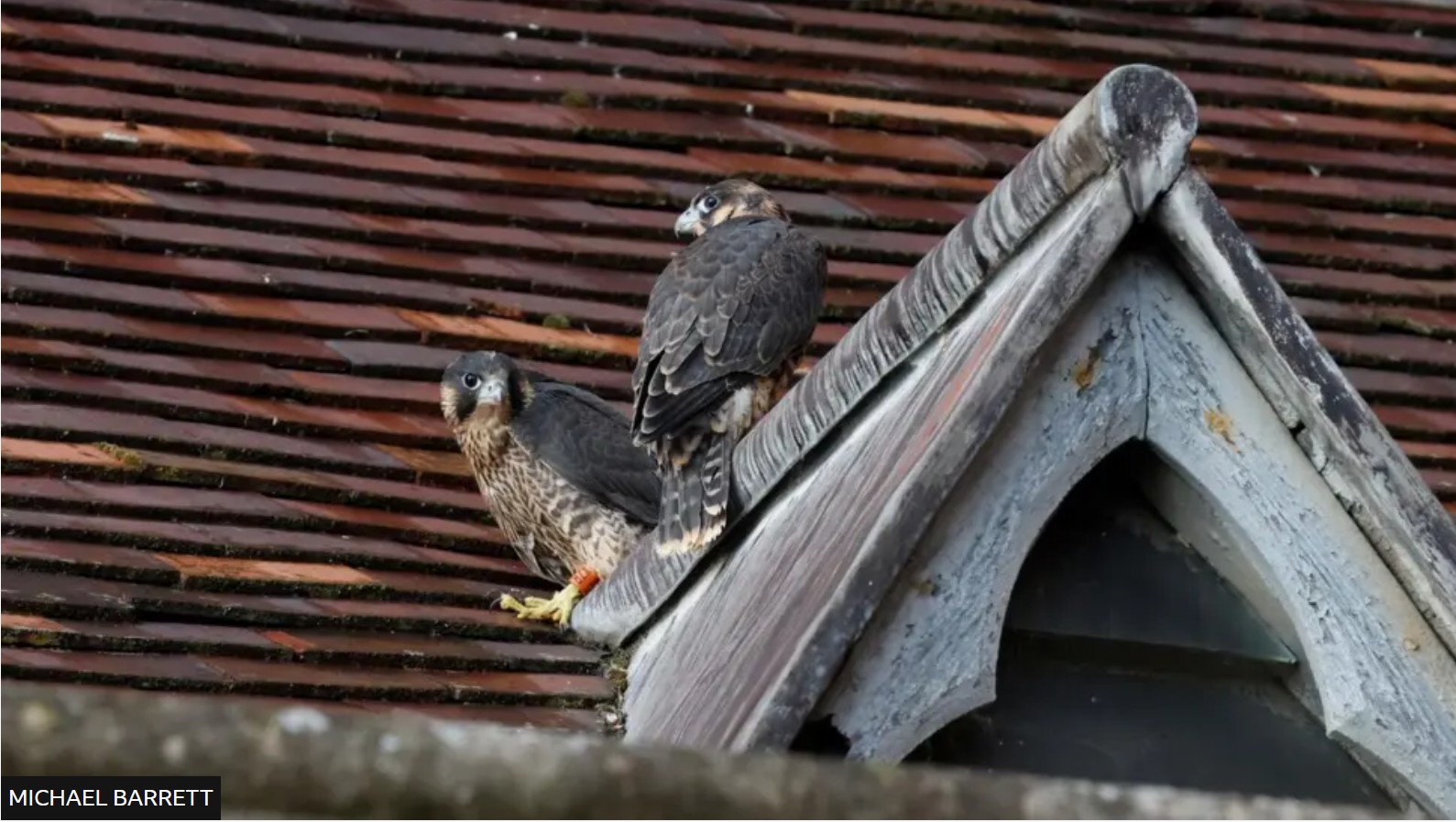
Three young peregrines have successfully fledged from St Albans Cathedral in Hertfordshire.

This is the site where the breeding pair’s first clutch of eggs was trampled on in April 2025, as seen on the Cathedral’s livestream webcam overlooking the peregrine’s nest scrape, leading to a man ‘helping police with enquiries’ (see here, here and here for previous blogs).

Two of the three Peregrine fledglings at the cathedral. Photo by Michael Barrett via BBC website

The police investigation is apparently still ongoing, three months after the trampling incident.

According to the St Albans Cathedral website:

‘Hertfordshire Constabulary have today confirmed (Friday 11 July) that “Our investigation is ongoing, and we are working with the Crown Prosecution Service following further lines of enquiry.”

Peregrines lay second clutch of eggs at St Albans Cathedral as police continue investigation into destruction of first clutch

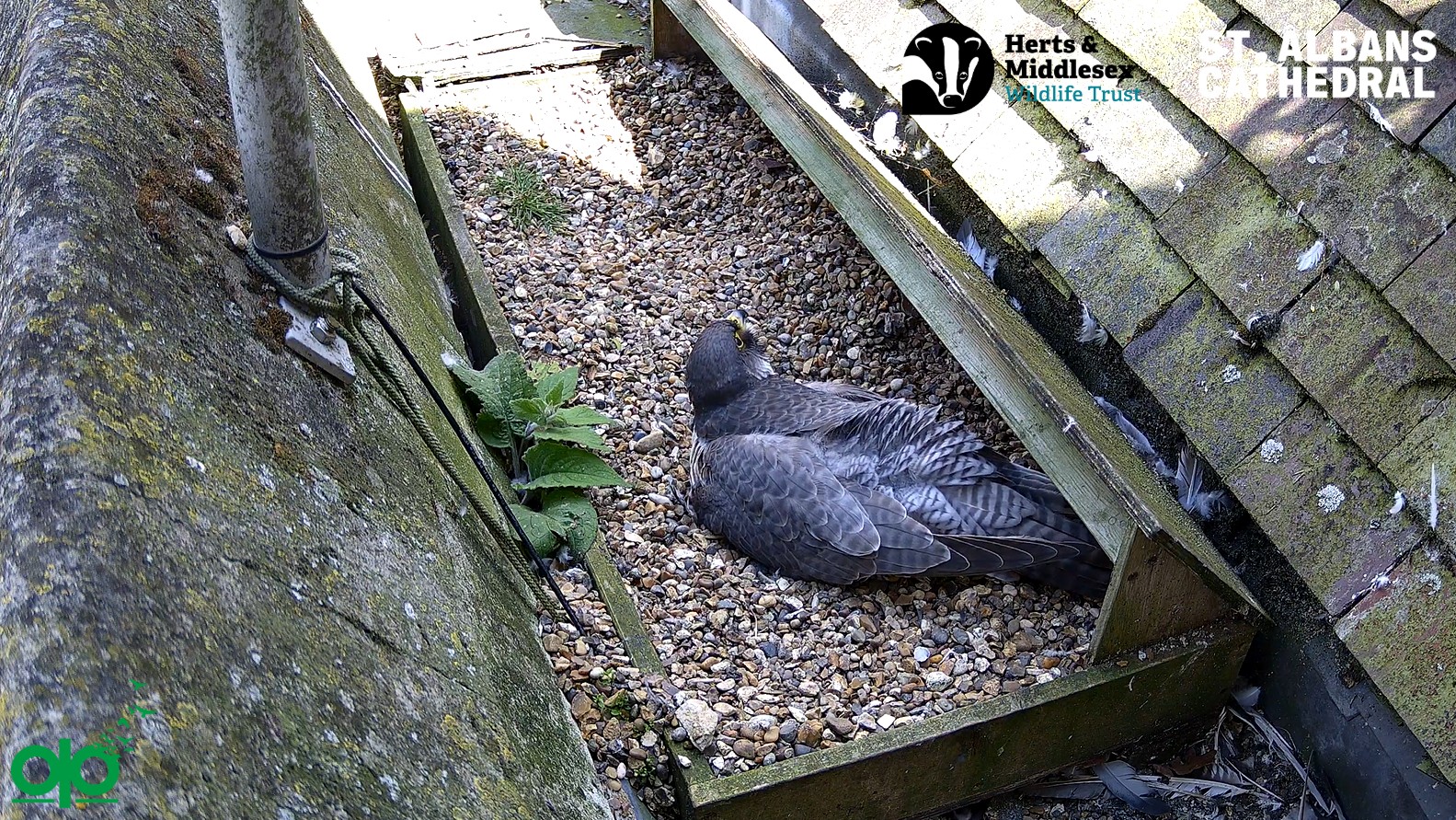
Following on from Monday’s news that Hertfordshire Police and the National Wildlife Crime Unit are continuing to investigate what looked to be the deliberate trampling of Peregrine eggs at St Albans Cathedral on 7th April 2025 (see here), the good news is that the Peregrines have re-laid and are now incubating their second clutch of eggs.

Screengrab from the livestream nest camera this morning showing the female Peregrine incubating three eggs

St Albans Cathedral published a statement earlier this week to say the peregrines had re-laid two eggs (egg 1 on 4th May, egg 2 on 7th May) and this morning there are now three eggs.

The statement also confirms that security has been reviewed and updated at the Cathedral with new protective measures in place to prevent a repeat of the incident on 7th April.

The livestream camera has also been reactivated.

The statement and the link to the nest camera can be found here.

Police Air Support Unit joins in fight against illegal targeting of Peregrines in Northern Ireland

Press release from the Police Service of Northern Ireland (PSNI), 2nd May 2025:

POLICE AIR SUPPORT UNIT JOINS IN FIGHT AGAINST ILLEGAL TARGETING OF PEREGRINE FALCONS

‘Operation Raptor – Peregrine Watch’, an initiative by Police Service of Northern Ireland along with our partners in the Partnership for Action against Wildlife Crime (PAW) Bird of Prey Sub Group, seeks to bring an end to the illegal persecution of birds of prey, will now have ‘eyes in the sky’ as the Police Service of Northern Ireland’s Air Support Unit lends its expertise and cutting edge technology to the cause. 

A special licence granted by the Northern Ireland Environment Agency (NIEA), and specific permissions obtained with the assistance of the Northern Ireland Raptor Study Group (NIRSG), has enabled police to deploy hi-tech drones to carry out checks of various sites around Northern Ireland where Peregrine Falcons are known to nest, breed and live. 

Peregrine falcons in Northern Ireland are a protected species under the Wildlife (Northern Ireland) Order 1985 as amended by the Wildlife and Natural Environment (NI) Act 2011, which safeguards all birds of prey from persecution and disturbance. The penalties for crimes under the Order include, but are not limited to, a fine of up to £5,000 per offence and up to six months imprisonment.

The police drones will be used to view and assess falcon nesting and breeding areas that may otherwise be inaccessible and will allow the various agencies involved in PAW to keep a close check on nests, particularly in ‘at risk’ areas, in the hope of reducing instances of illegal poisoning, shooting, trapping and taking of peregrine falcons and their eggs.

Operation Raptor was promoted at the recent NI Raptor Study Group conference.
L-R: Dr Marc Ruddock (NI Raptor Study Group), Margaret Mee (White-tailed Eagle Project), Dr Ruth Tingay (Raptor Persecution UK), Chief Inspector Tim Flanigan (PSNI), Emma Meredith (PSNI Wildlife & Animal Welfare Officer)

Speaking about Op Raptor – Peregrine Watch, Police Service lead for Rural and Wildlife Crime Superintendent Johnston McDowell said:

This initiative between the PAW Bird of Prey Sub Group and our Air Support Unit, working alongside local officers, is a direct result of birds being targeted with very serious and dangerous substances in a number of areas across Northern Ireland.

Many of the poisons identified in previous cases are deadly not only to our precious wildlife but also to humans, and so the potential impact could go beyond the persecution and destruction of our beautiful native birds of prey.” 

The initiative also encourages people to report any suspicions around birds being targeted. Police work closely with our colleagues in the Health and Safety Executive who are responsible for Biocides, and the Department of Agriculture and Rural Development who are responsible for Rodenticides, to identify poisons being used and take steps to identify and prosecute offenders.

Superintendent McDowell concluded: “The Police Service of Northern Ireland is committed to working with partner agencies to tackle wildlife crime through prevention and education, as well as enforcement, and will continue to work hard to combat wildlife crime.”

Wildlife crime can be reported to police via 101, or online at www.psni.police.uk/makeareport/ or confidentially through crimes stoppers on 0800 555 111 or online at http://www.crimestoppers-uk.org.

ENDS

‘Investigation still ongoing’ into person seen trampling peregrine eggs at St Albans Cathedral

Almost a month ago (7 April 2025) a person was seen to be deliberately walking over three peregrine eggs in a nest tray on the roof of St Albans Cathedral in Hertfordshire, crushing the eggs. The incident was caught on the Cathedral’s livestream nest camera and the following day Hertfordshire Police said a man was ‘helping with enquiries’ (see here).

In an article posted online last week (28 April) by the St Albans Times,

Herts police are working with partners at St Albans Cathedral and the National Wildlife Crime Unit to look into the incident, and officers from the Rural Operational Support Team spoke to a man to assist with their enquiries, but nobody has been charged at this time.

A spokesperson for Herts Constabulary would only confirm today that the investigation is still ongoing‘.

UPDATE 9th May 2025: Peregrines lay second clutch of eggs at St Albans Cathedral as police continue investigation into destruction of first clutch (here)