A community buyout proposal for Leadhills?

RK Leadhills 2013This looks interesting….

There will be a public meeting at 2.30pm next Saturday (January 18th 2014) at Leadhills Village Hall to discuss the possibility of a community land buyout scheme at Leadhills, South Lanarkshire.

The meeting, which is open to everyone, will hear talks from two prominent figures involved with community land buyout schemes as well as presentations by local residents on the community land buyout process and the benefits these schemes can bring.

A brighter future for the wildlife in and around Leadhills? We think so.

Further details of the meeting here

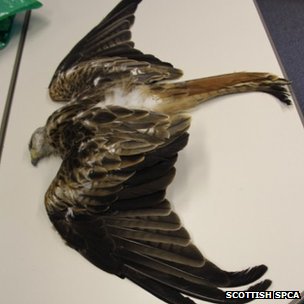
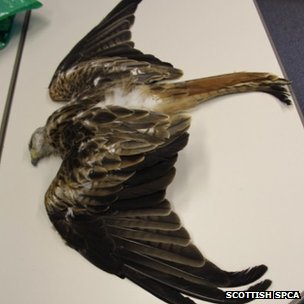
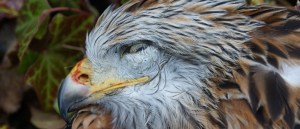
Photo: this red kite was found critically-injured in Leadhills village in August last year. It had been shot. It didn’t survive (see here).

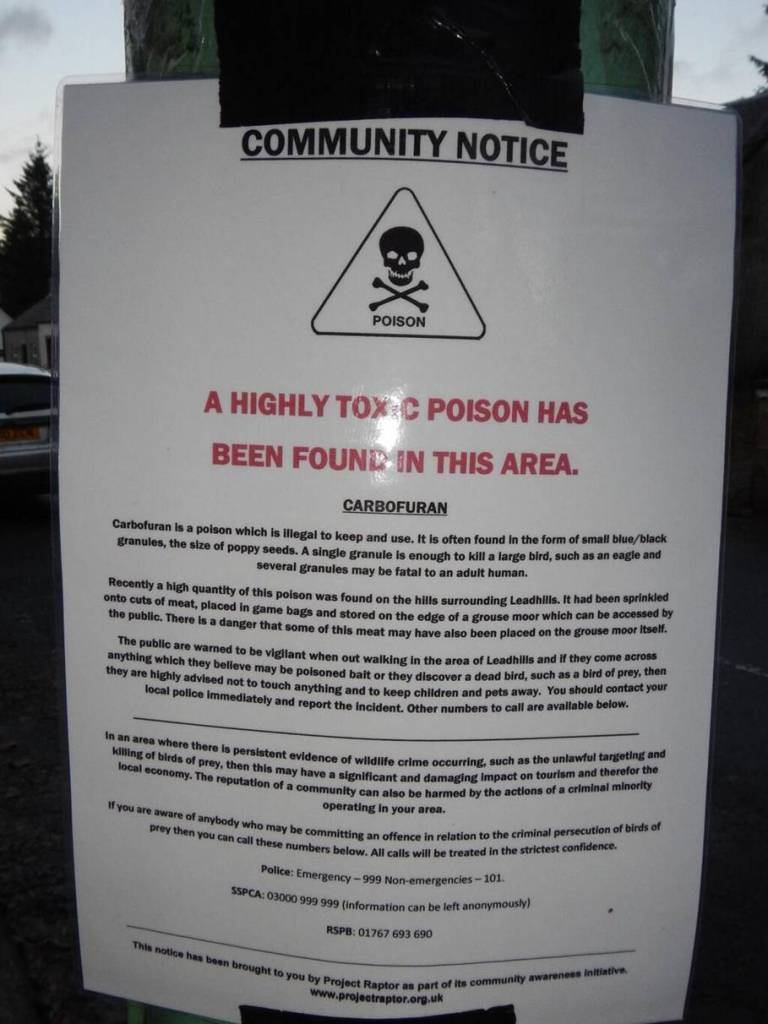
Poison awareness posters appear in Leadhills village

Leadhills village in South Lanarkshire has been saturated with a series of ‘poison awareness’ leaflets and posters, alerting the local community to the discovery of highly toxic (and illegal) poison on the surrounding hills earlier this year (see here). The poster warns the public of the dangers of coming in to contact with this poison (Carbofuran) and also provides contact telephone numbers (police, SSPCA and RSPB) if anyone finds any more or has information about who might be putting out the poison.

Is this community initiative the work of a local estate? Or the local police? Or the local council? Or PAW Scotland? Nope, none of the above. It’s the handiwork of Project Raptor.

It’ll be interesting to see how long the posters and leaflets remain on display. Last year we blogged about the mysterious disappearance of another sign at Leadhills (see here).

PR Leadhills flyer


No prosecution for poisoned baits found on Leadhills Estate?

leadhills estateEight months ago (March), a significant haul of pre-prepared poisoned baits was discovered on Leadhills Estate in South Lanarkshire. The baits comprised chopped up pieces of rabbit, liberally sprinkled with the banned poison Carbofuran, that had been placed inside two gamebags that had been hidden inside a wood next to a grouse moor.

The discovery was made by fieldworkers from Project Raptor and they duly reported their finding to the police. We waited for a press release and an appeal for information from the police but nothing came, so three months later (June) we blogged about it (here) because, unlike the police, we considered it a newsworthy item in the public interest, as apparently did BBC Scotland (here).

Recently, an update on the police investigation appeared on Project Raptor’s website:

24th October 2013. Project Raptor have contacted South Lanarkshire police and they have now informed us that evidence gathered from the two game bags has come back negative. This means that unless further evidence comes their way then this case is just another in a long line of wildlife crimes that have taken place within the Leadhills area over the years that will never be solved”.  See here for full update.

When Project Raptor says that ‘evidence gathered from the two gamebags has come back negative‘ they do not mean that the analysis of the poison came back negative – SASA has already confirmed the poison found on those baits was Carbofuran and they included the incident in their quarterly report on poisoning incidents. Rather, what we think Project Raptor is referring to is that any fingerprint or DNA testing that might have been done on the two gamebags has come back negative.

This means that there is no evidential link between the two gamebags and any individual person and therefore it is not possible to charge anyone for committing an offence in relation to these items.

This case is an excellent example of just how difficult it is to bring illegal poisoners to justice. It’s not the fault of the police that there isn’t enough evidence, although to be frank they are not blameless in this particular situation – had they had the foresight and interest to install a covert camera overlooking the site where the poisoned baits had been found they may well have caught the criminal(s) in the act of retrieving the bait or even adding more bait to the secret stash. They could (should) also have conducted a thorough search of the surrounding area, particularly the adjacent grouse moor, to see whether any of the baits had already been placed out on the hill. Given that one of the bags was full (of bait) and the other bag was only half-full, this would have been a reasonable assumption, especially given the reported history of poisoned baits being found on this estate (see here). Instead, the police decided to arrive on site in two marked police vehicles (thus alerting everybody to their presence and allowing any nearby criminal to hide any other incriminating evidence) and they quickly removed the gamebags and left the site without conducting a wider search. On top of all that, they still have not issued a press release about this case, giving us the impression that they’re just not all that bothered. At the very least they should be alerting the general public to the potential threat of people and their pets stumbling across what is a fatally toxic poison in a publicly-accessible area.

So is that it, then? Will the discovery of these baits (which we believe to be the biggest stash of pre-pared baits found since 32 poisoned baits were found on Glenogil Estate in 2008) just be conveniently ignored and everyone carries on as usual? For certain, these baits will not feature in any ‘official’ raptor persecution statistics because, as we were recently told by the Environment Minister’s office, where poisoned baits have been discovered but ‘no raptors were involved’ they cannot be listed as a raptor persecution incident. We don’t actually know whether ‘no raptors were involved’ at Leadhills because the police didn’t conduct a search to look for poisoned carcasses!

It looks certain that no action will be / can be brought in the criminal courts. But what about other types of action?

There’s the possibility of civil action – we will wait to see whether any single farm payments are withdrawn from Leadhills Estate by the Scottish Executive (as they were from Glenogil Estate in 2008 – see here) although we suspect any such action would be strongly challenged by the estate precisely because there is no evidential link between the baits and any employee of Leadhills Estate.

Great, isn’t it?

Is there any other type of action? Well, yes, there is. What we would really like to see is action taken by Scottish Land and Estates, the representative body of Scottish landowners. The only response we saw from SLE about the discovery of the poisoned baits on Leadhills Estate was a false accusation levelled at this blog for reporting the incident! (see here).

Interestingly, in a comment made on Mark Avery’s blog today, SLE Chief Executive Doug McAdam claims, “…..a range of partners, Scottish Land and Estates included, invest a significant amount of time and resource into working with and through PAW Scotland to help achieve this [eradication of golden eagle persecution], not just for golden eagles though, but all wildlife crime” (see here for his full comment).

So what, exactly, has SLE done about the continuing issue of alleged and confirmed illegal raptor persecution on Leadhills Estate? We’ve asked this time and time again but the question is just met with silence every time.

We’re not sure that Leadhills Estate is a member of SLE, although given that the owner of Leadhills Estate (Lord Hopetoun) also just happens to be a Board member of SLE, it would be quite strange if Leadhills Estate wasn’t an SLE member. Why doesn’t SLE publicly condemn the crimes that are alleged and confirmed at Leadhills Estate? If Leadhills Estate is an SLE member, why hasn’t SLE kicked them out, just as they did with Glasserton Estate earlier this year following the conviction of their gamekeeper (see here). McAdam may argue that nothing has been proven at Leadhills in relation to the latest discovery (in terms of a legal evidential link) and that would be accurate, but there is a long, long, long, long list of alleged and confirmed incidents from this estate, dating back decades (see here), several of which have resulted in criminal convictions.

It seems to us that SLE is repeatedly turning a blind eye to reported activities on this estate that the rest of us can see very clearly. Why would they do that if they’re so keen to eradicate raptor persecution?

The untouchables

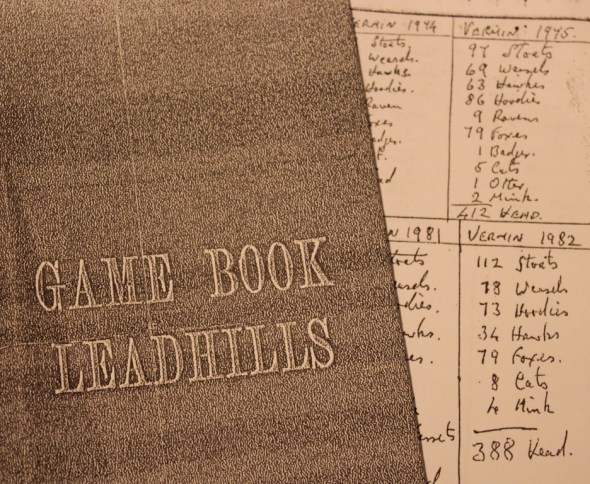
Last month we blogged about getting our hands on the Leadhills Estate Game Book and our interest in the lists of killed ‘vermin’ dating over several decades (see here). These ‘vermin’ lists include the usual species that are typically referred to as ‘vermin’ by the game-shooting industry: species such as foxes, stoats, weasels and crows. However, also included on these ‘vermin’ lists are supposedly protected species such as birds of prey, ravens, otters and badgers. We said we’d blog about the lists in more detail when we had more time.

Leadhills game book vermin lists

Since then an independent academic has contacted us to ask whether we’d consider allowing access to the documents so the data could be analysed, in combination with other data sources, to provide a ~50 year dossier of alleged illegal raptor persecution incidents recorded at Leadhills Estate, stretching from the 1970s right up to the present day. These results would be written up as a peer-reviewed paper in a scientific journal. We think that such a paper would hold much more gravitas than a simple analysis of a sub-set of those data written up for this blog so we have agreed to pass the information to the academic. We look forward to seeing the results in due course.

So as not to steal the academic’s thunder we won’t be writing in detail about the contents, but we did want to share one startling statistic.

We looked at the number of killed ‘hawks’ listed in the Leadhills Estate Game Book, just between the years 1980-1987. The vermin lists in the Game Book stretch well beyond these years but we selected this particular period because we wanted to compare the figures with the RSPB’s published figures for all of Scotland during this period (the RSPB data were published in McMillan’s 2011 paper – here).

Here’s what we found:

RSPB: Number of illegally killed raptors recorded for the whole of Scotland between 1980 and 1987 = 91 birds.

Leadhills Estate Game Book: Number of illegally killed raptors recorded on Leadhills Estate between 1980 and 1987 = 383 birds.

The difference between these two figures gives a very clear illustration of a situation that conservationists have been arguing for decades: that is, the ‘official’ recorded figures of illegally-killed raptors that are published each year by the RSPB are just the tip of a bloody great big massive iceberg. Just on this one estate (Leadhills), more than four times as many raptors were recorded illegally killed during this seven-year period than those officially reported throughout the whole of Scotland. That’s just one estate. Think what these figures would look like if we had access to the vermin lists of other estates across Scotland!

Now, there’ll be some in the game-shooting industry who will argue that raking over historical persecution records dating back 30 years is irrelevant. They’ll claim that although persecution was common practice several decades ago, things have now changed for the better and it’s only the odd ‘rogue’ estate that are still at it. This, of course, is absolute nonsense. Anybody who bothers to read through the pages of this blog will know that that is simply not a true statement. Sure, some estates have since got their acts together and are now supporting healthy raptor populations on their land (e.g. see Atholl Estate in McMillan’s 2011 paper above) but these estates seem to be exceptional: there are many, many other estates that are still, even to this day, systematically and illegally persecuting raptors and many of them seem to have a curious immunity to prosecution.

leadhills estateLeadhills Estate has been at the centre of allegations of wildlife crime for a very long time. The list of confirmed reported incidents dating from 2003 to 2011 makes for shocking reading (see here). Of these 41 confirmed incidents, only a couple have resulted in a prosecution and a conviction.

Earlier this year we reported the discovery of a substantial illegal stash of poisoned baits that was reportedly found on the estate (see here). Unsurprisingly, six months later we’re still waiting for Police Scotland to issue a statement.

What was particularly interesting about this incident was the reaction of the Scottish landowners’ organisation, Scottish Land and Estates. They refused to discuss the incident, citing an ‘on-going police investigation’ (how very convenient – this excuse relieves them of having to comment on any alleged persecution incident that never gets resolved – i.e. most of them). They also wrote to the Environment Minister and posted an article on their website complaining about the alleged incident being reported on this blog (see here). They gave an impression of being more outraged by the reporting of the incident than they were of the alleged discovery of a big stash of deadly poisoned baits on a Scottish sporting estate.

Now, compare that reaction to their response to the conviction of gamekeeper Peter Bell earlier this year. Bell was convicted of four offences including the poisoning of a buzzard on the Glasserton and Physgill Estates. Immediately following his conviction, Scottish Land and Estates issued a statement to say that Glasserton had been booted out of their organisation (see here). So why didn’t SLE issue a similarly strong statement when the poisoned baits had allegedly been found at Leadhills? They could argue that nothing is proven until a conviction has been secured, as in the Glasserton case. But if that is their argument, then why didn’t they distance themselves from Leadhills Estate when a Leadhills Estate gamekeeper (Lewis Whitham) was convicted of laying a poisoned bait in 2010 (see here)? Why is Leadhills Estate, with its long, long, long history of alleged wildlife crime, treated so differently to an estate like Glasserton, which in relative terms barely registers on the persecution radar? Back in June we asked SLE to provide some transparency about their relationship with Leadhills Estate (see here). They still haven’t.

There may be some who will argue that things are about to change at Leadhills Estate with the shooting lease now up for sale; the sales document itself makes for an interesting read – note the reason given for the current tenants’ departure and the fate of the gamekeepers currently employed on Leadhills Estate: Leadhills brochure 2013

Yes, there may well be a change in the tenancy but will that make any difference? There have been numerous shooting tenants at Leadhills Estate over the years and yet, if the available data are to be believed, the background level of alleged persecution has remained constant.

The raptor killers, whoever they are, appear to be untouchable.

Red kite found shot at Leadhills

RK Leadhills 2013A juvenile red kite was found critically injured in the village of Leadhills on 8th August. It’s injuries were so severe the bird had to be euthanised. See here for an SSPCA press release, and well done to them for not only getting this info out in good time but also for saying it how it is – none of this ‘the bird’s death was not by natural causes’ rubbish that we saw Police Scotland put out a few months ago when a shot red kite had been found in Aberdeenshire (see here).

This latest incident will come as no surprise whatsoever to anybody who has been following this blog.

If you’re new to this blog and don’t know what happens to birds of prey at Leadhills, try reading this as a little introduction and for even more info just click on the Leadhills Estate tag and read on.

So, here we are again, reporting yet another crime against a bird of prey at Leadhills. Not to worry though, especially if you happen to be the RSPB Scotland Director – he has recently agreed to hold the 2014 Scottish Birdfair at Hopetoun House, returning for the third consecutive year. For those who don’t know, the Hopetoun family own Leadhills Estate and some of them live in Hopetoun House. The Earl of Hopetoun also happens to serve on the Board of Directors at Scottish Land & Estates.

Needless to say, we’ll be blogging some more in due course about the RSPB’s decision to return to Hopetoun House, and we still need to blog about the Leadhills Estate Game Book that has found its way into our hands. We’ve also got some other stuff about Leadhills to talk about…it’s just a question of finding the time…

More soon….

Peregrine shot, barn owl chick stolen, hen harriers remembered

It’s been quite a day. The so-called ‘Glorious 12th’ has been taken back by the conservationists and re-named Hen Harrier Day, in an inspired move by Alan Tilmouth (read his blog entry here).

Although he only came up with the idea yesterday, Twitter has been alive today with hundreds of people using the #henharrier tag to celebrate these spectacular birds and to express their anger at the virtual extermination of the species on grouse moors across England. Unsurprisingly, the game-shooting organisations were conspicuously absent.

Mark Avery also came up with a plan to help hen harriers. He’s called it BanGS – see here.

Meanwhile, news came through that police in Bolton are appealing for information after an injured and distressed peregrine was found by the side of a road. It had been shot. Full details here.

Elsewhere, the Suffolk Wildlife Trust is appealing for information after a barn owl chick was stolen from the Carlton Marshes Nature Reserve last night. Information here.

In other news, we’ve been having a look at some VERY interesting literature – a copy of the Leadhills Estate gamebook (don’t ask how we got hold of it!!) – which very helpfully documents annual counts of killed ‘vermin’ over a considerable number of decades. ‘Vermin’ in Leadhills-speak includes hawks, badgers, otters, cats and ravens amongst others. It’s fascinating. We’ll be writing more on this in due course…

Leadhills game book vermin lists

Red kite poisoned in Scotland

rk5And so it continues….

Today, the Scottish Government agency responsible for reporting on poisoned animals released the stats for the first quarter of this year (i.e. Jan-March 2013).

You will not be surprised to learn that, yet again, poisoning incidents have taken place and Police Scotland have chosen to suppress the information.

The data confirm that a poisoned red kite was discovered in March in ‘Central Scotland’ – no detailed location information given, naturally. Lab tests show it had been poisoned with Mevinphos. Four months for that information to slip out in a largely un-read government report. The level of secrecy involved in these cases is quite remarkable.

The data also show the poisoned baits that were uncovered at Leadhills in March – interestingly, they confirm the presence of Carbofuran but don’t comment on the number of baits found (which we know was a considerable number – see here) but they do say the baits were found inside gamebags. Four months on from the discovery and we’re still waiting for Police Scotland to make a public statement, not least to warn residents and visitors about the discovery of potentially fatal poison in a publicly-accessible location.

Also included in the data is the discovery of a Carbofuran-laced pigeon bait in Tayside in February 2013. Again, where was/is the public warning from Police Scotland?

It’s just bloody pathetic. Don’t tell us that the information has been suppressed for ‘operational’ reasons – that’s totally ridiculous and isn’t fooling anyone. The suppression of information benefits the landowners and gamekeepers – nobody else.

Compare this suppression of information with the work of Police Wildlife Crime Officers in Devon & Cornwall. Two of their WCOs – PC Josh Marshall and PC Paul Freestone – are so amazingly proactive that as well as having their own personal wildlife crime blogs (here and here), they’ve even set up a Wildlife Crime Group blog for their area (see here). On this blog, you’ll find information providing tips and advice about different types of wildlife crime, as well as information about specific alleged offences. For example, here they report on the recent suspected poisoning of two buzzards, and even provide photographs – all within a few days of the alleged crime being reported. Hats off to those two guys – committed, proactive, helpful and informative (although if you’re reading this Josh & Paul, you might want to revise your information about potential threats to harriers!!).

Back to Scotland….we would like to know why Police Scotland consistently fails to inform the public about alleged raptor persecution incidents, especially those involving the discovery of highly dangerous banned poisons in public areas. The public has a right to be kept informed. Sure, the Police may need a few weeks to conduct their initial investigations without letting on what they’re up to – as we’ve said over and over and over again, nobody in their right mind would want to interfere with that process and jeopardise a potential prosecution – but when it gets to three, four, five months after the incident and its bloody obvious that the investigation is dead in the water, then what possible reason is there for withholding the information, putting the lives of people and animals at risk? Here are some reasons: wanting to appease the landowners and gamekeepers on whose land the poison had been found, and wanting to appease the wider gameshooting industry who just hate to have the truth exposed about poisoning and the other methods of persecution that are being used against raptors on a regular basis.

If you’re also curious about the blanket suppression of information, you could always email the new Police Scotland Wildlife Crime Portfolio Leader, Detective Superintendent Cameron Cavin, and ask him to explain. One question to ask, as a friendly opener, nothing more, might be whether he has ever held membership in a game-shooting organisation, like, ooh, er, let’s say BASC for example, and if so, whether that membership is still held?…. Coincidentally, Det. Super. Cavin also just happens to have strong connections with central Scotland so he might also have information about the progress of the case concerning the poisoned red kite found there in March, or perhaps about the buzzard found there in March that had been caught in an illegal trap and had to be euthanised as a result of its injuries (see here). Bear in mind if you do email him, he’s obliged to reply within 20 working days so he can’t just ignore you, although obviously he can choose to fob you off without providing a satisfactory answer.

Email: Cameron.Cavin@centralscotland.pnn.police.uk

More false allegations about this blog

About two months ago the landowners’ organisation, Scottish Land & Estates, made a series of false allegations about this blog (see here).

It seems they just can’t help themselves. Two days ago (14th June 2013) they published the following on their website, in response to our blog about the discovery of poisoned baits on Leadhills Estate (our original article here) –

Information about police investigation leaked by anonymous website

Confidential information about an active police investigation on a grouse moor has again been leaked to the media.

This relates to an incident in March at Leadhills Estate where according to the police, some items were removed for scientific analysis and a number of people were detained, but no charges have been made. An anonymous website, allegedly with close links to the animal rights movement, found out confidential information that Government science laboratory analysis of the items had tested positive for carbofuran and published this confidential information, resulting in media coverage on 11th June.

Although there were no birds of prey involved, the whole land management and shooting industry is very concerned about a possible attempted poisoning after such a sharp drop in such incidents over the last three years. However, little is known about the detail of this case and it is vital that nothing is done or said which might risk prejudicing the legal process or cause unjustifiable damage to the reputations of anyone connected to the estate. Questions certainly need to be asked about the leaking and publication of material information about the case while this is still under active police investigation.

The media stories included a comment from Scottish Land & Estates which said: “It would be inappropriate to comment while the facts of the matter have still be established. As an organisation, we are actively involved in the Partnership for Action Against Wildlife Crime and our membership undertakes an enormous amount of good work in this area.”  The Scottish Gamekeepers Association also said “Because this appears to be subject of a live investigation, it would not be appropriate to comment other than to reiterate that the Scottish Gamekeepers’ Association does not condone illegal poisoning.”

Here is the link to the article on their website.

Let’s start with their sub-header: “Confidential information about an active police investigation on a grouse moor has again been leaked to the media”. This may well be an active police investigation but in terms of reporting restrictions that is irrelevant. What is important is when the actual criminal case becomes active. Once the criminal case, not the police investigation, becomes active, this then triggers certain reporting restrictions relating to the Contempt of Court Act 1981. Under Scottish law, a criminal case becomes active once an arrest warrant has been issued, or someone has been arrested, or someone has been charged. Thus, in this instance, SL&E’s use of the phrase ‘an active police investigation’ is misleading as it suggests information has been leaked in contempt.

Now let’s look at their first paragraph, and particularly the sentence: “An anonymous website, allegedly with close links to the animal rights movement, found out confidential information that Government science laboratory analysis of the items had tested positive for carbofuran and published this confidential information, resulting in media coverage on 11th June”. They don’t name the ‘anonymous website’, but as we were the only anonymous website to publish the original article then we have to assume they are referring to us. In which case, we would like to know the basis of their claim that we allegedly have close links to the animal rights movement. In our view this is a crudely attempted slur on our credibility. The stereotypical image of the animal rights movement as portrayed in the media has traditionally focused on the illegal activities of those involved in campaigns against animal testing laboratories – the image of a black-clothed, balaclava-wearing extremist intent on breaking the law by fire-bombing business premises, vehicles and homes or digging up human remains, all in the name of ‘defending the rights of animals’, immediately springs to mind. Is that the image that Scottish Land & Estates are trying to attribute to us? If it is, it looks like they have scored another own goal. We would argue that that stereotype is no longer valid – look at the thousands of people who recently protested in London against the badger cull. They could legitimately be portrayed as being members of the animal rights movement and yet that crowd included serving Members of Parliament and even QCs. Law-breaking terrorists marauding through London causing damage & inciting fear, or concerned professionals legitimately and peacefully exercising their right to protest? We wholeheartedly support the lawful badger cull protesters and if that defines us as having ‘close links to the animal rights movement’ then so what? We are happy to have that association, although we’d argue that it doesn’t amount to anything like ‘close links’. But if SL&E are trying to suggest that we are ‘closely linked’ with criminal activities then that is a much more serious allegation that our lawyers would be most interested in examining.

Sticking with their first paragraph, let’s move on to their claim that we published “confidential information” (about the Carbofuran) “resulting in media coverage on 11th June”. This is utter bollocks. We deliberately did not name the type of poison that had been used to lace the poisoned baits in our original article. SL&E should try reading our article again and pay closer attention this time. Carbofuran was actually first mentioned in the BBC’s article, which was published several hours after ours on 10th June, and which we added as an update to our original article later that evening. We’ll be happy to accept an apology from Scottish Land & Estates in relation to their false allegation against us.

But so what if we had mentioned Carbofuran? This isn’t ‘confidential information’ – look at the quarterly poisoning stats published by SASA – they always name the poison(s) they’ve detected in the course of on-going police investigations, and quite rightly so; this is a matter of massive public interest. Look at any other area of crime involving banned substances – the police always publish the name of the banned substances that they’ve seized, e.g heroin, cocaine etc. As an example, here is a news item from just yesterday detailing the seizure of cannabis and the name of the premises where it was reportedly found. This type of reporting is very, very common – if you don’t believe us just take a look at Police Scotland’s website and look at the frequency with which these seizure stories appear. Funny isn’t it, that those investigations are publicised within a matter of days and yet those news reports don’t prejudice the outcome of any subsequent criminal case, do they? So why should the reporting of alleged raptor persecution investigations be treated any differently?

Moving on to their second paragraph and the following sentence: “However, little is known about the detail of this case and it is vital that nothing is done or said which might risk prejudicing the legal process or cause unjustifiable damage to the reputations of anyone connected to the estate. Little is known about the detail of this case precisely because of our restraint in the publication of details! Check out the first sentence of paragraph three in our article:

Because this is an on-going police investigation there is only limited detail that we’re prepared to publish at this stage”.

Are those the words of people intent on prejudicing the legal process? No, they’re not. They’re the words of responsible bloggers who could easily have published a mass of detail, such as the number of poisoned baits found, the specific site location, the way the baits were stored, the specifics of the meat used, and the name of the poison used to lace the baits. We could even have posted photographs from the scene. We deliberately didn’t include any of this material evidence in our article.

Their last sentence in paragraph two reads: “Questions certainly need to be asked about the leaking and publication of material information about the case while this is still under active police investigation”. Questions certainly do need to be asked, but not about the leaking and publication of material information, for all the reasons we’ve stated above. No, other more relevant questions need to be asked, such as:

  • Why didn’t Police Scotland publicise this inquiry when it first started three months ago?
  • What relationship does Scottish Land & Estates have with Leadhills Estate, i.e. is Leadhills (Hopetoun) Estate a member of SL&E and if so, will SL&E be temporarily suspending that membership pending the outcome of the police investigation?
  • Should Scottish Land & Estates be allowed to continue to participate on the PAW Scotland Raptor Persecution Priority Delivery Group without this level of transparency?

SL&E also published a further article two days ago, relating to media coverage (here & here) of the alleged felling of the white-tailed eagle nest tree on Invermark Estate. Read their article here. In this article, SL&E state that the estate has been ‘fully cooperating’ with the police inquiry. You wouldn’t expect anything else from a law-abiding estate. Hopefully that ‘full cooperation’ includes full and complete witness statements from everyone involved with the Estate from the top down. Anything less, such as ‘no comment’ interviews would not, in our opinion, be in the spirit of what we’d call ‘full cooperation’, even though such responses are entirely legal.

Also in this article, SL&E argue that it was inappropriate for information about the case to be released before the outcome is known. This sounds like a philosophy whereby there should be a blanket media ban on publishing any information relating to alleged raptor persecution incidents until the outcome of the police case is known. That would probably suit the game-shooting industry down to the ground: if this ridiculous philosophy was in place, none of us would be any the wiser to the hundreds of illegally-killed raptors found on shooting estates over the last 25+ years because the majority of these cases have not resulted in charges being brought and are, therefore, still technically considered to be ‘on-going’ police investigations. To put it in a broader context, if the philosophy was given a wider application we wouldn’t know anything of, for example, Operation Yewtree or the recent Woolwich murder.

Scottish Land & Estates would do well to put their influence to better use and focus their efforts on ousting the criminal element from within the game-shooting industry instead of wasting time promoting censorship of responsible reports on matters of legitimate public interest.

Significant haul of poisoned baits found on Leadhills Estate

leadhills estateA significant haul of pre-prepared poisoned meat baits has been found on Leadhills Estate, South Lanarkshire. And when we say significant, that’s what we mean. We’re not talking about one or two baits here; we’re talking a considerable number that, if used, would have been part of a comprehensive poisoning campaign.

The poisoned baits were discovered on 8th March 2013. Yes, that’s right, over three months ago. We’ve waited patiently for Police Scotland or NWCU or PAW Scotland to issue a press release about this, but, true to form, they’ve remained silent. During this period they even launched the 2012 poisoning maps, making much of what they called a ‘sharp fall’ in the number of poisoning incidents, even though they were well aware of what had just been uncovered at Leadhills Estate.

Because this is an on-going police investigation there is only limited detail that we’re prepared to publish at this stage. However, in due course, the full story will emerge. It’s worth keeping an eye on a forthcoming website (http://projectraptor.org.uk/) where photographs and film footage will probably appear.

This incident raises many of the usual concerns. Firstly, why has it been kept covered up? Why didn’t Police Scotland (“Keeping People Safe,” according to their website) issue a public safety warning about the discovery of these highly toxic poisoned meat baits that have the potential to kill anyone coming into contact with them? Many people, not just local residents but tourists too, visit the moors around Leadhills for recreational pursuits. Why were they not informed about the risks? That’s not ‘Keeping People Safe’ by any stretch of imagination.

Secondly, why are Police Scotland still making the same fundamental errors that they were making ten years ago in investigations of this type? They sent two marked police vehicles to collect the evidence – thus alerting the would-be poisoners that their stash had been discovered and allowing them an opportunity to hide any other incriminating evidence. This is basic stuff! Did they conduct a search of the surrounding moorland to see if any baits had already been placed? You probably can guess the answer to that.

Why didn’t they attend the scene covertly and install hidden cameras at the site where the poisoned baits were discovered? We all know that without evidence linking a specific person to the baits, a conviction would be virtually impossible to secure. So why not use cameras to film the person(s) coming to the poison storage site and either picking up the baits or replenishing the stash with new baits?

Nobody will be surprised to learn that Leadhills Estate is once again at the centre of another wildlife crime investigation; the latest in a long list dating back at least a decade. The following incidents are known, confirmed persecution incidents (data from RSPB Scotland & Scottish Government) from 2003-2011 (2012 & 2013 data not yet published). This list does not include ‘probable’ or ‘possible’ incidents such as the discovery of buried decomposing carcasses too decayed for analysis:

2003 April: hen harrier shot

2003 April: hen harrier eggs destroyed

2004 May: buzzard shot

2004 May: short-eared owl shot

2004 June: buzzard poisoned (Carbofuran)

2004 June: 4 x poisoned rabbit baits (Carbofuran)

2004 June: crow poisoned (Carbofuran)

2004 July: poisoned rabbit bait (Carbofuran)

2004 July: poisoned rabbit bait (Carbofuran)

2005 February: poisoned rabbit bait (Carbofuran)

2005 April: poisoned buzzard (Carbofuran)

2005 June: poisoned rabbit bait (Carbofuran)

2005 June: poisoned rabbit bait (Carbofuran)

2006 February: poisoned buzzard (Carbofuran)

2006 March: poisoned buzzard (Carbofuran)

2006 March: poisoned pigeon bait (Carbofuran)

2006 April: dead buzzard (persecution method unknown)

2006 May: poisoned rabbit bait (Carbofuran)

2006 May: poisoned rabbit bait (Carbofuran)

2006 May: poisoned egg baits (Carbofuran)

2006 June: poisoned buzzard (Carbofuran)

2006 June: poisoned raven (Carbofuran)

2006 June: 6 x poisoned rabbit baits (Carbofuran)

2006 June: poisoned egg bait (Carbofuran)

2006 September: 5 x poisoned buzzards (Carbofuran)

2006 September: poisoned rabbit bait (Carbofuran)

2006 September: poisoned rabbit bait (Carbofuran)

2007 March: poisoned buzzard (Carbofuran)

2007 April: poisoned red kite (Carbofuran)

2007 May: poisoned buzzard (Carbofuran)

2008 October: poisoned buzzard (Carbofuran) [listed as ‘Nr Leadhills’]

2008 October: poisoned rabbit bait (Carbofuran) [listed as ‘Nr Leadhills’]

2008 November: 3 x poisoned ravens (Carbofuran) [listed as ‘Nr Leadhills’]

2009 March: poisoned rabbit bait (Carbofuran)

2009 March: poisoned raven (Carbofuran)

2009 April: poisoned rabbit bait (Carbofuran)

2009 April: poisoned magpie (Carbofuran)

2009 April: poisoned raven (Carbofuran)

2010 October: short-eared owl shot

2011 March: illegally-set clam trap

2011 December: buzzard shot

2012 October: golden eagle shot (just over boundary with Buccleuch Estate)

The evidence is clear. Poisoning is taking place with virtually total impunity (some would say immunity) on this estate. As far as we can tell, there has only been one successful prosecution for poisoning – a gamekeeper convicted in 2010 for laying out a poisoned rabbit bait (see here).

So why is it that the poisoners, whoever they may be, can keep getting away with it?

Is Leadhills Estate (part of the Hopetoun Estates) a member of the landowners’ organisation, Scottish Land & Estates (SLE)? The Chairman of Hopetoun Estates, the Earl of Hopetoun, is a Director of SLE. If Leadhills Estate is a member, then all of SLE’s talk about condemning illegal raptor persecution and stamping it out is utter hypocrisy. The question of whether Leadhills Estate is an SLE member is one that needs to be raised by the members of the Partnership for Action Against Wildlife Crime (Scotland). SLE plays a prominent role in PAW Scotland and earns considerable kudos for that role (kudos that the organisation is not afraid to use for PR purposes). It is now high time that SLE is asked to provide some transparency about its relationship with Leadhills Estate.

We’d also like to ask Environment Minister Paul Wheelhouse what action he intends to take in light of the latest discovery of poisoned baits at Leadhills Estate? He may well try and dodge the question by saying ‘It’s an on-going police investigation so I can’t comment’. But we’re not asking him to comment on the actual investigation – what we’re asking is whether he’ll keep his earlier promises about introducing new measures to combat raptor persecution if evidence comes to light to demonstrate it is still a problem. Well Paul, here’s your filthy evidence. Now what are you going to do about it? Emails to: ministerforenvironment@scotland.gsi.gov.uk

UPDATE 18.45hrs: BBC journalist David Miller has just posted an article on this incident on the BBC News website (great to see another high profile journalist willing to discuss illegal raptor persecution). You can read his article here.

The article contains the following hilarious quotes:

From Police Scotland: “Police officers, including a wildlife crime liaison officer, were dispatched to the area the same day and following an extensive search, items were found and seized. A number of people were detained by police in connection with this inquiry, which is currently ongoing“.

Hmm, an ‘extensive search’, eh? That’s not what we’d heard!

From Scottish Land and Estates: “It would be inappropriate to comment while the facts of the matter have still to be established. As an organisation, we are actively involved in the Partnership for Action Against Wildlife Crime and our membership undertakes an enormous amount of positive work in this area“.

Er, the facts of the matter have been established. A significant haul of pre-prepared meat baits were found stashed on this estate and government scientists have confirmed the presence of Carbofuran.

Wouldn’t it be ‘inappropriate’ for SLE to remain in the government-led PAW Scotland group, and in the government-led Scottish Raptor Persecution Priority Delivery Group, if it was found that Leadhills Estate was a member of their organisation? Come on PAW Scotland members and SRPPDG members, ask them the bloody question!

From Scottish Gamekeepers’ Association: “Because this appears to be subject of a live investigation, it would not be appropriate to comment other than to reiterate that the Scottish Gamekeepers’ Association does not condone illegal poisoning“.

Perhaps they’ll consider conducting their own investigation again, just as they did with the Deeside eagle case, and let us know what really happened….my money’s on the real culprits being either badgers, buzzards, sparrowhawks, pine martens or goshawks.

 

Scottish birdfair: more revealing details emerge

Last week we blogged about the continuing controversy over RSPB Scotland’s decision to once again hold their Scottish Birdfair at Hopetoun House. In defence of their decision, RSPB Scotland made the following statement:

In essence the Hopetoun House site is owned by an independent charity – and has been for many years“.

We argued that RSPB Scotland were being disingenuous by failing to mention that the Earl of Hopetoun is the Deputy Chairman of this ‘independent’ charity, the Hopetoun House Preservation Trust (HHPT) (see here).

Since then, we decided to look a bit closer at the stated independence of this charity. Thanks to Andy Wightman, we’ve obtained a copy of the HHPT’s most recent Consolidated Report and Accounts (dated 31 December 2011). It’s quite revealing.

The report lists the HHPT trustees. We already knew that the Earl of Hopetoun was the Deputy Chairman, but what we didn’t know is that the Earl, and his father, as well as being ex officio trustees, are also members of the Executive Committee, along with two of the other seven trustees.

So what? Well, according to this report, under the heading ‘Structure, Governance and Management’ (page 3):

The Trust [HHPT] is controlled by a Board of Trustees which meets twice a year. The Executive Committee, which meets regularly, is responsible for the day to day running of the trust“.

It’s funny, but in everday use the term ‘independent’ is usually used to mean unconnected, autonomous, unallied, ‘free from all ties’. Does this term accurately reflect the relationship between the Hopetoun family (who own Leadhills Estate) and the Hopetoun House Preservation Trust (the management body of the Scottish Birdfair venue)?

For the benefit of the decision-makers at RSPB Scotland, a copy of the report is provided here:

HHPT CONS 2011 DRAFT 180412

By the way, at the end of last week’s article we said we’d soon be blogging again about Leadhills Estate and that readers should prepare to be shocked (or not). Just to clarify, today’s blog entry is not the article to which we referred. That one’s coming up soon…