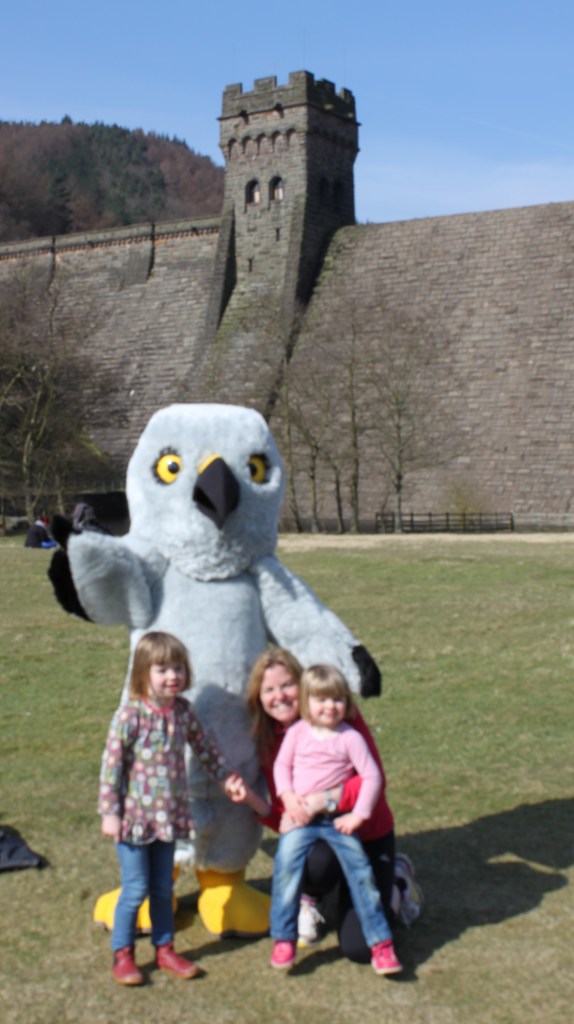
Henry’s tour: day 3

Thurs 26th march sml - Copy

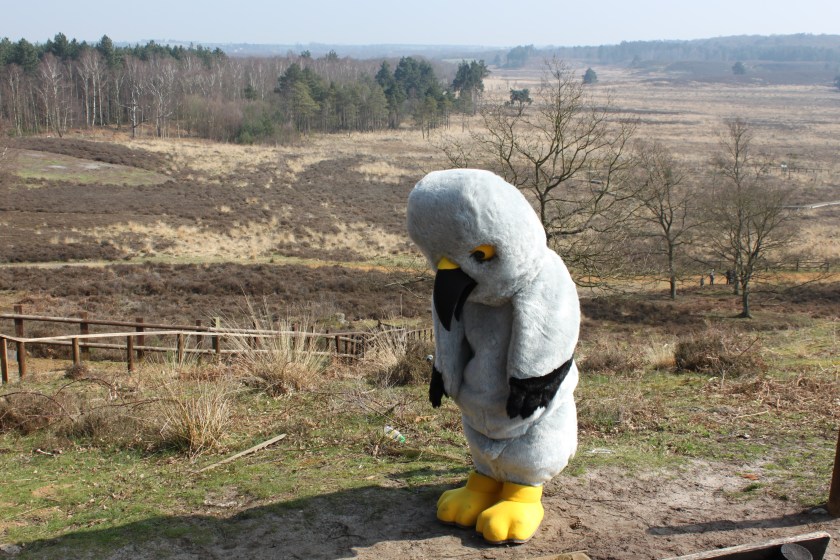
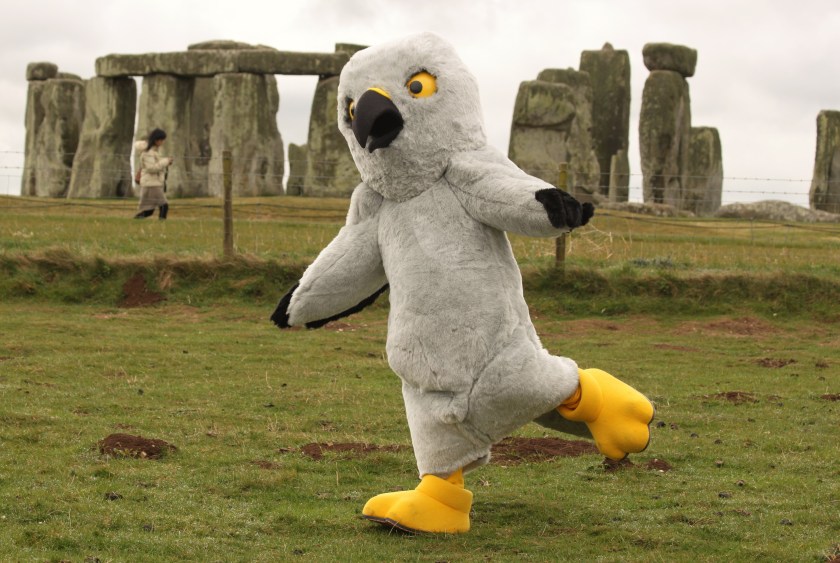
Today Henry is dancing around the National Trust’s High Peak Estate looking for a girl.

And wondering why he doesn’t feature as a ‘Sentinel of the Moors’ on that National Trust sign. Here’s what it says:

The strange cackling call of the red grouse

The mournful wail of the golden plover

The bubbling cry of the curlew

These sounds symbolise the wild mystery of the moors.

If you are lucky you might see a merlin, dashing low over the heather, or a short-eared owl floating ghost-like in the mist.

These birds inspired myths and legends in the past.

Today they tell us how important this fragile landscape is for some of our most threatened wildlife.

The National Trust is managing the habitat so visitors can enjoy forever the sights and sounds of this special place.

Henry’s Tour: Day two

Weds 25th March

What’s that Henry?

What did you say?

Ban what?

Ban driven grouse shooting?

Ok – we’ll ask our mates to sign here for you.

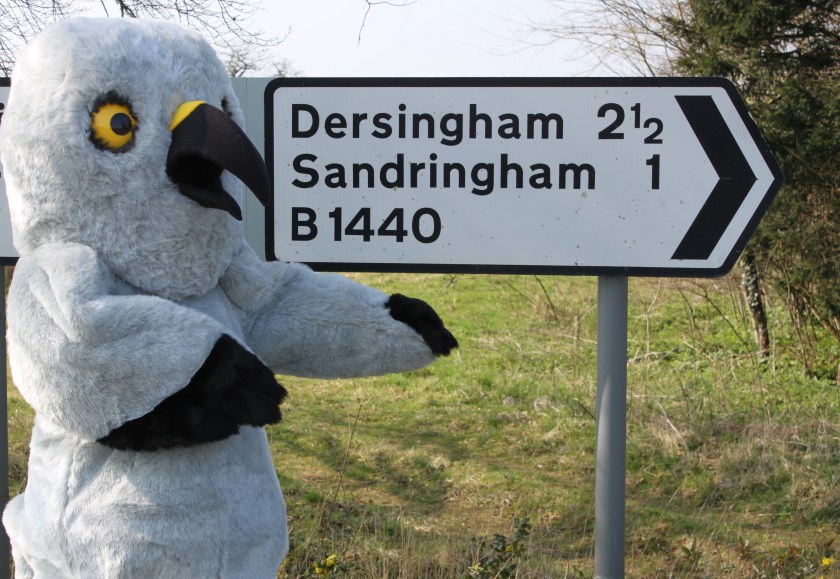
Meet Henry the Hen Harrier

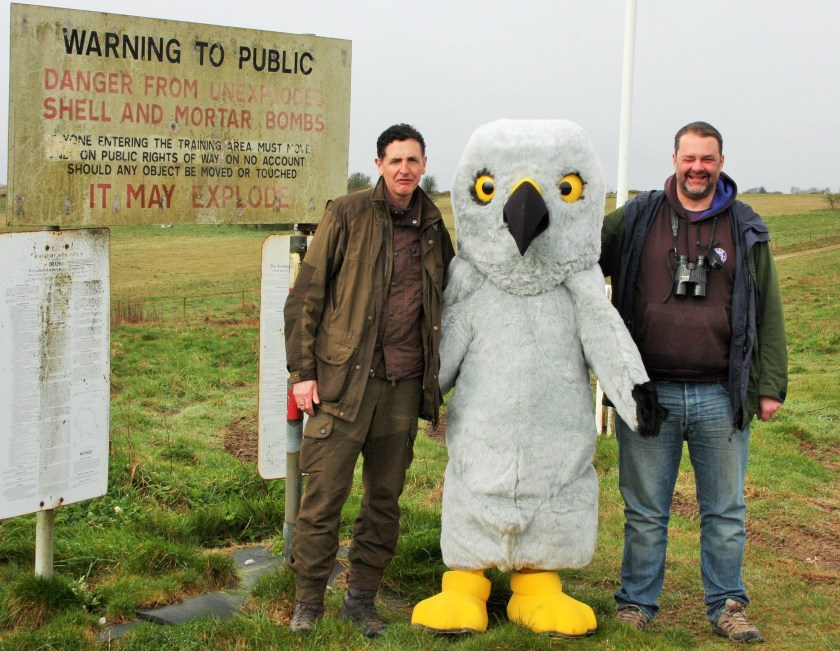
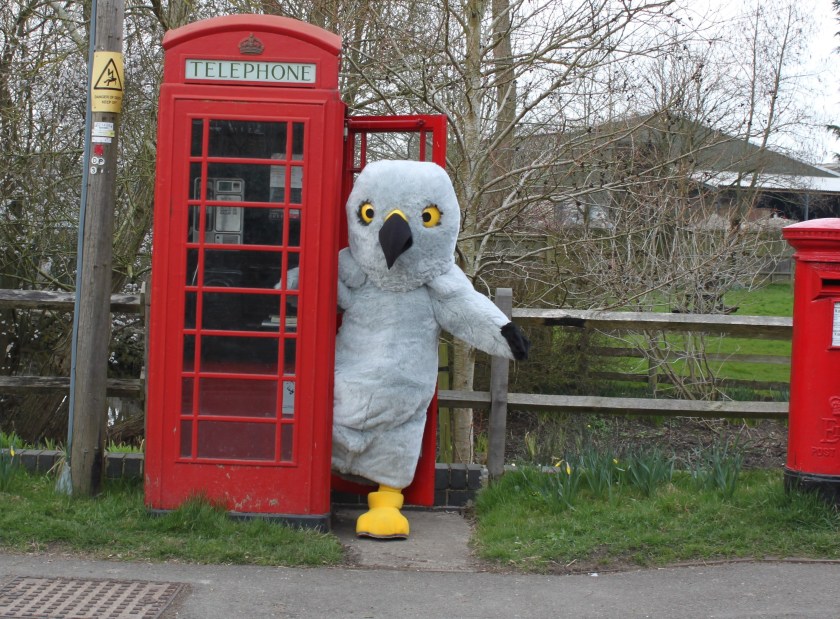
Henry Peak District grouse moor (2) - CopyMeet Henry. Henry is a 6ft-tall Hen Harrier who’s very, very lonely. He’s struggling to find a mate because most of his potential girlfriends have been bumped off on grouse moors. Henry is flying around the British Isles in search of a significant other and you can follow his progress as he posts daily photographs from his travels. He’s being accompanied by several burly minders to protect him from those who’d like to shoot, trap or poison him.

Here he is last Sunday visiting a grouse moor in the Derbyshire Peak District National Park.

Where will he be tomorrow?

You can follow his progress via his Twitter account: @HenryHenHarrier

Regular updates will also appear on this blog, on Mark Avery’s blog (here) and the Birders Against Wildlife Crime website (here).

#HaveYouSeenHenry?

Leadhills Estate confirmed as member of Scottish Land & Estates

The Leadhills (Hopetoun) Estate in south Lanarkshire has featured regularly on this blog (see here).

Since 2003, 46 confirmed incidents of wildlife crime have been discovered either on or near to the estate, but only resulting in two successful convictions (2004 – gamekeeper convicted of shooting a short-eared owl; 2009 – gamekeeper convicted of laying out a poisoned rabbit bait). Here’s the list:

2003 April: hen harrier shot [prosecution failed – inadmissible evidence]

2003 April: hen harrier eggs destroyed [prosecution failed – inadmissible evidence]

2004 May: buzzard shot [no prosecution]

2004 May: short-eared owl shot [gamekeeper convicted]

2004 June: buzzard poisoned (Carbofuran) [no prosecution]

2004 June: 4 x poisoned rabbit baits (Carbofuran) [no prosecution]

2004 June: crow poisoned (Carbofuran) [no prosecution]

2004 July: poisoned rabbit bait (Carbofuran) [no prosecution]

2004 July: poisoned rabbit bait (Carbofuran) [no prosecution]

2005 February: poisoned rabbit bait (Carbofuran) [no prosecution]

2005 April: poisoned buzzard (Carbofuran) [no prosecution]

2005 June: poisoned rabbit bait (Carbofuran) [no prosecution]

2005 June: poisoned rabbit bait (Carbofuran) [no prosecution]

2006 February: poisoned buzzard (Carbofuran) [no prosecution]

2006 March: poisoned buzzard (Carbofuran) [no prosecution]

2006 March: poisoned pigeon bait (Carbofuran) [no prosecution]

2006 April: dead buzzard (persecution method unknown) [no prosecution]

2006 May: poisoned rabbit bait (Carbofuran) [no prosecution]

2006 May: poisoned rabbit bait (Carbofuran) [no prosecution]

2006 May: poisoned egg baits (Carbofuran) [no prosecution]

2006 June: poisoned buzzard (Carbofuran) [no prosecution]

2006 June: poisoned raven (Carbofuran) [no prosecution]

2006 June: 6 x poisoned rabbit baits (Carbofuran) [no prosecution]

2006 June: poisoned egg bait (Carbofuran) [no prosecution]

2006 September: 5 x poisoned buzzards (Carbofuran) [no prosecution]

2006 September: poisoned rabbit bait (Carbofuran) [no prosecution]

2006 September: poisoned rabbit bait (Carbofuran) [no prosecution]

2007 March: poisoned buzzard (Carbofuran) [no prosecution]

2007 April: poisoned red kite (Carbofuran) [no prosecution]

2007 May: poisoned buzzard (Carbofuran) [no prosecution]

2008 October: poisoned buzzard (Carbofuran) [listed as ‘Nr Leadhills’] [no prosecution]

2008 October: poisoned rabbit bait (Carbofuran) [listed as ‘Nr Leadhills’] [no prosecution]

2008 November: 3 x poisoned ravens (Carbofuran) [listed as ‘Nr Leadhills’] [no prosecution]

2009 March: poisoned rabbit bait (Carbofuran) [no prosecution]

2009 March: poisoned raven (Carbofuran) [no prosecution]

2009 April: poisoned rabbit bait (Carbofuran) [gamekeeper convicted]

2009 April: poisoned magpie (Carbofuran) [no prosecution]

2009 April: poisoned raven (Carbofuran) [no prosecution]

2010 October: short-eared owl shot [no prosecution]

2011 March: illegally-set clam trap [no prosecution]

2011 December: buzzard shot [no prosecution]

2012 October: golden eagle shot (just over boundary with Buccleuch Estate) [no prosecution]

2013 May: shot otter found on estate [no prosecution]

2013 June: significant cache of pre-prepared poisoned baits found on estate [no prosecution]

2013 August: red kite found shot and critically-injured in Leadhills village [no prosecution]

2014 February: poisoned peregrine (Carbofuran) [‘Nr Leadhills’] [no prosecution]

For a long time, we’ve been trying to find out whether this estate is a member of the landowners’ organisation Scottish Land and Estates – an organisation that regularly claims to be fighting hard against raptor persecution. All our attempts to find out have been met with a wall of silence. We knew that Lord Hopetoun served on the SLE Board, so it was quite likely that his estate would be a member of SLE, but we weren’t able to find definitive evidence.

Well, we have now. Leadhills Estate has launched its own website (see here). It’s a spectacular example of how to conduct a public relations charm offensive – lots of info about how the estate is supporting the local community: providing a new home for the volunteer fire crew, lending a hand on Gala Day, engaging in a village clean-up for Christmas, and providing support for the Leadhills Miners Library. It brings a tear to the eye. There’s also plenty of encouragement for walkers to keep to the tracks so as not to disturb the wildlife – because Leadhills Estate really cares about wildlife.

Of most interest to us is a statement on the web site’s home page:

‘Leadhills Estate is a member of Scottish Land and Estates – an organisation which promotes the work of landowners and rural businesses undertake [sic] for the benefit of rural Scotland’.

Amazing. We’d love to hear how SLE justifies the membership of Leadhills Estate in their wildlife-crime-fighting organisation.

The Leadhills Estate website also includes a gallery showing images that visitors can expect to see when they visit this most welcoming of estates. Here’s another one for them – taken at one of many stink pits hidden away on Leadhills Estate (far from the tracks that visitors are encouraged to stick to). For those who don’t know, stink pits are used (legally) by gamekeepers in which to dump the rotting carcasses and entrails of dead wildlife. They set snares around the edge of the stink pit to catch (and then kill) any animals that may be attracted to the stench of death (typically foxes). This particular stink pit includes a few fox carcasses oh, and a cat. Nice, eh? Welcome to Leadhills Estate.

Leadhills dead cat stinkpit - Copy


North Yorks Tory candidate thinks grouse shooting is ace

Kevin Hollinrake is the Conservative’s prospective parliamentary candidate, standing in the next general election for the Thirsk & Malton constituency, a Tory ‘safe seat’ in North Yorkshire.

Kevin Hollinrake is an estate agent.

Here are his views on grouse shooting in North Yorkshire, as reported in a local newspaper yesterday:

GROUSE shooting on the North Yorkshire Moors is worth millions of pounds to the local economy, says Kevin Hollinrake, prospective Conservative parliamentary candidate for Thirsk and Malton, much of which covers the moors.

Speaking at a meeting with landowners, managers and gamekeepers at Lastingham, he said that grouse moor management was worth some £67 million and provided some 1,500 jobs, as well as safeguarding 860,000 acres of heather moorland.

He praised a £52.5 million annual spend on conservation on the moors, adding that the Moorland Association had played a key part in DEFRA’S hen harrier recovery plan, and lobbied for a crack down on wildlife crime.

We have in this country, 75 percent of what is left of the world’s heather moorland. Shooting creates the necessary income for its upkeep, along with 42,500 days of work a year.

“It benefits many rural people, from food suppliers to hoteliers and clothing manufacturers to dry stone wallers. When calls are made to ban or licence driven grouse shooting, thought is seldom given to the harmful consequences to rural economies and conservation.”

END

It’s good that he’s lobbying for a crack down on wildlife crime – North Yorkshire is recognised as the worst county in the UK for reported raptor persecution incidents, a title it has held for six of the past seven years (see here), so he’s got his work cut out. It is, of course, purely coincidental that the dominant land-use in North Yorkshire is driven grouse shooting.

In the same article, the following appears:

Robert Benson, chairman of the Moorland Association, said that thanks to careful moorland management and co-operation of gamekeepers, had led to the successful fledgling of 16 hen harrier chicks.

On the North York Moors we have seen notable improvements in a number of other ‘at risk’ species, such as endangered lapwing, curlew and ring ouzel. Breeding records for merlin are four times more abundant where there are game keepers.”

Mr Benson said peatland habitats, damaged by wildfires, bracken, over-grazing and historic drainage, had been restored. “This helps capture carbon and improve water quality,” he added.

Without the work and passion of our gamekeepers and land managers, working in tandem with farmers, many moors would revert to scrub and be lost to all those who depend on them.”

END

Surely Mr Benson isn’t trying to suggest that the fledging of 16 hen harrier chicks last year can be hailed as some sort of success? It’s “thanks to careful moorland management and co-operation of gamekeepers” that only four hen harrier nests in the whole of England managed to produce young last year (none of which were on grouse moors in North Yorkshire) – what happened to the other 300+ pairs? Perhaps Mr Benson needs a new soundbite: “Breeding records for hen harriers are 75 times less abundant where there are gamekeepers”.

If you think Mr Hollinrake and Mr Benson are talking out of their arses, you can join 20,767 others who have signed a petition to ban driven grouse shooting HERE

Hen harrier: ’cause of death withheld’

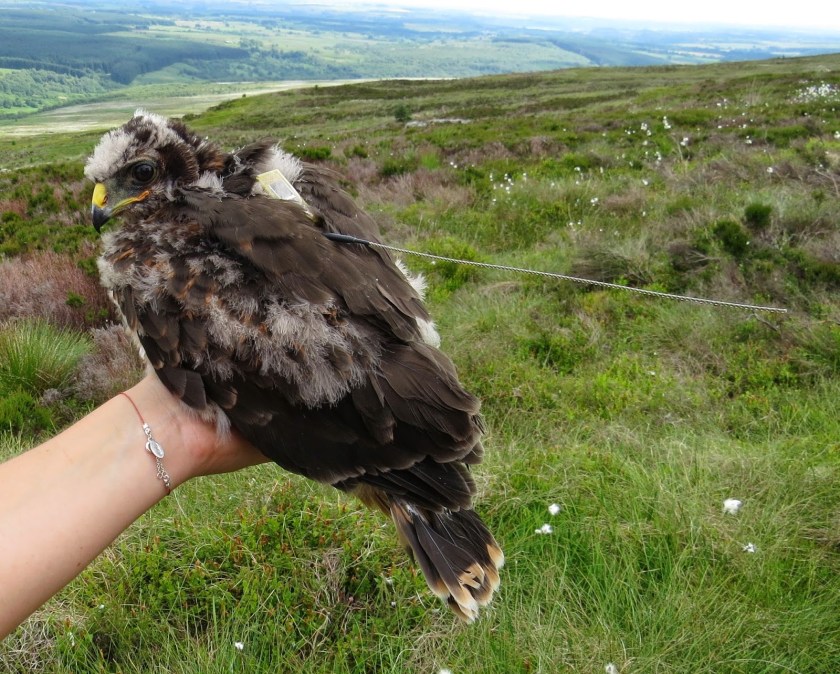
hh LAURIE CAMPBELLLast June we blogged about an illegally-killed hen harrier that had been found dead on moorland near Muirkirk in south west Scotland. The adult female’s corpse was discovered close to a nest containing two live chicks (see here).

At the time, Police Scotland refused to reveal the cause of death. Det. Inspector Graham Duncan of Kilmarnock CID was quoted as follows:

Whilst at this time we cannot divulge how the bird was killed, we do believe it was the result of a criminal act and we need to establish why this has happened“.

Pretty much everyone  in the country will know exactly ‘why this has happened’ – well, everyone it seems except Kilmarnock CID.

We suggested the harrier had probably been shot, although one of our readers commented that it could also have been clubbed to death – as has happened previously to hen harriers at Muirkirk.

Eight months on and the cause of death is still being withheld. Here’s what the latest SASA report says about this case:

Cause of death withheld due to specialist knowledge‘.

Marvellous.

It’s also interesting to note that SNH has not enforced a General Licence restriction on the land where this bird was found. Just as we discussed yesterday with the case of the poisoned red kite (see here), the illegal killing of this harrier seems to meet all the criteria needed for immediate enforcement action:

This hen harrier is not the first to be illegally-killed in the Muirkirk area – it’s one of many in a long, long line – read this article from 2008(!) detailing what was going on in this so-called Hen Harrier Special Protection Area; the conservation impact of killing a hen harrier is obvious; and the evidence [her carcass] was fresh.

So why the delay in enforcement?

Why is it so difficult to get the police (and in this case, SNH) to do their jobs properly?

Chris Packham resigns from Hawk & Owl Trust

chris packham hh day - CopyChris Packham has announced on Twitter that he has resigned his presidency of the Hawk & Owl Trust:

I this week resigned as President of the Hawk & Owl Trust. Very sad, I’d been a member since 1975“.

When asked why, he wrote this:

Personal differences over ideas of policy“.

Whilst not explicitly stating it, it’s more than likely that this relates to the Hawk & Owl Trust’s recent controversial move to push forward with hen harrier brood management. We blogged about our views on this ludicrous policy here.

Chris’s resignation reflects the strength of feeling of many within the conservation community. It seems fair to assume that the Hawk & Owl Trust has no plans to re-think its position (otherwise Chris wouldn’t have resigned) and that is both sad and incredulous.

Another hen harrier shot dead

Heather_dead_(Barry_ODonoghue_NPWS)With depressing familiarity, news has emerged of the illegal killing of yet another hen harrier.

The corpse of the latest victim was found in January at an established roost site in Co. Kerry. The young female, named Heather by local schoolchildren, had been satellite-tracked since 2013 and her progress followed by hundreds of thousands who regularly logged on to the Hen Harrier Ireland blog where movement maps had been posted.

A post mortem has revealed that Heather had been shot.

There’s been plenty of news coverage about this latest crime:

Irish Times here

BBC news here

BirdWatch Ireland here

Irish Independent here

Heather’s fate is really no surprise. Had she been allowed to reach an age to begin her first breeding attempt without being gunned down would have been the real surprise.

For context, it’s worth reading about a disturbing incident from 2003, where a shot hen harrier was mailed to a local newspaper in Co. Kerry as a sinister message for those considering designating Special Protection Areas for hen harriers – see here.

Hen harriers, as you all know, are in serious trouble throughout these isles, whether it be in England, Scotland or the RoI. Those vilifying this species may have different agendas (i.e. in England & Scotland the threat is from the grouse-shooting industry; in the RoI it’s more complex and is based on afforestation and farming issues, not helped by the mysterious disappearance of millions of Euros that should have been given to support farmers working in designated conservation areas e.g. read our recent guest blog here) but the outcome for this species (and certain other raptor species) is always the same – certain death at the hands of those who think they’re above the law. Or, more to the point, at the hands of those who know very well that the chances of them being brought to justice are slim to non-existent.

Heather was an Irish bird. She hatched there, she lived her short life there, and she was killed there. But it’s important to recognise that she was part of a wider population whose range includes England, Wales, Isle of Man, Northern Ireland & Scotland. Some Scottish hen harriers travel to England, Ireland, Northern Ireland etc, just as some Irish harriers travel to England, Scotland, Northern Ireland, just as some English harriers travel to Scotland, RoI, Wales etc etc. If there are persecution issues in any part of the range, the impact will eventually affect the population in every other part of the range. Heather’s pitiful death should be felt just as keenly by those of us in Scotland, England, Northern Ireland etc as it is by those in the Irish Republic who today are mourning her loss. Political boundary lines on a map mean nothing to these hen harriers and they should mean nothing to those of us fighting to protect them.

You might think the campaign to end illegal raptor persecution is futile. You might think it’s too big of an issue and too geographically widespread for any of us to tackle it effectively. You’d be wrong. Over the last few years, thanks to the efforts of many organisations, large and small, as well as the efforts of ‘ordinary’ members of the public using social media, illegal raptor persecution has never had such a high media and political profile. There’s still a long long way to go, and the image of Heather’s wretched corpse is a miserable, poignant reminder of the work ahead of us, but we’ve only just got started.

Hen Harrier Day 2015 (Sunday 9th August) is an opportunity for us all, no matter in which part of the harrier’s range we live, to show our unity and intent. More news on that later this spring.

Heather HH shot Kerry Jan 2015

Guest blog: hen harriers in Ireland

hh LAURIE CAMPBELLOver the last year or so (and especially over the last few months) there has been an increasing amount of media coverage regarding the political and ecological status of hen harriers in the Republic of Ireland. Much of the media coverage has come from one particular Irish newspaper, heavily influenced by political spin doctors (the equivalent of the Telegraph/Daily Mail in the UK). When these newspaper articles are shared with a UK audience on social media, without an accompanying critique or even a vague understanding of the politics behind each story, a one-sided view of the situation can be accepted as being ‘factual’.

To counter this, we’ve invited a guest blog from somebody who understands both the conservation needs of hen harriers in the RoI and the political landscape in which the story is set. The author wishes to remain anonymous, for obvious reasons.

Hen Harriers in the Republic of Ireland: a crash course

Over the past decade, hen harriers have become a bird of controversy in Ireland as the uplands that were once of little interest or use for humans, apart from commonage or small-scale turf (peat) cutting but form the bulk of its breeding grounds, have come into sharp focus as the next property boom. Despite the economic crash brought on in part by widespread land and property speculation it is apparent that Irish hen harriers are sitting on some valuable real estate. See here: http://www.ifa.ie/compensation-or-remove-the-designation-clear-message-from-farmers-at-ifas-hen-harrier-meeting/#.VL5wWixRa18

But first a little historical background. Hen harriers were clearly widespread and quite commonly found across much of the Irish uplands and foothills where classic harrier habitat existed into the 19th century but apparently disappeared from some of its former haunts (Down, Fermanagh, Derry and Wicklow) by the early 20th century (Ussher & Warren 1900). At least some of these declines have been attributed to human persecution of birds of prey on the large landed estates which also resulted in the extinction of golden and white-tailed eagles as well as marsh harriers around this time. Further declines apparently followed in the first half of the 20th century when it was erroneously reported that harriers had become extinct as a breeder in Ireland (Kennedy et al 1954), although birds had continued to breed in the midlands and south-east (Watson 1977). Undoubtedly harriers were under-recorded and likely continued to breed elsewhere at least in small numbers. However, the first Breeding Atlas estimated some 75 pairs breeding in 1964 rising to 200-300 pairs by the early 70’s (Sharrock 1976, Watson 1977). However numbers apparently decline again in the late 70’s in parts of its range (O’Flynn 1983).

The apparent increase in harrier numbers and range beginning in the 1950’s and its subsequent decline in some areas is largely attributed to its adoption of a novel habitat, commercially planted non-native conifers, in the uplands and their subsequent maturation leading to this habitat becoming unattractive to harriers once the forest canopy closes. However much former habitat that remained unplanted was also lost to agricultural reclamation of marginal lands including drainage and reseeding for livestock grazing.

Today hen harriers are Amber listed (medium concern) in the most recent assessment of Birds of Conservation Concern in Ireland (Colhoun & Cummins 2013). Six Special Protection Areas (SPAs) have to date been designated for the species protection in RoI: Stack’s to Mullaghareirk Mountains (Kerry-Cork & Limerick), Mullaghanish to Musheramore (N Cork), Slievefelim to Silvermines Mountains (Tipperary), Slieve Bloom Mountains (Offaly), Slieve Aughty Mountains (Clare-Galway) and Slieve Beagh (Monaghan-N Ireland). Recent semi-decadal national surveys in the RoI have shown the Irish hen harrier population to be apparently stable: 102-129 pairs in 1998-2000; 132-153 pairs in 2005; 128-172 pairs in 2010 (confirmed + possible pairs). However, this apparent overall stability masks a seriously worrying decline (-18%) within the six SPAs. As a whole the hen harrier population is now largely confined to the uplands in the south-west (Munster) with other small populations in the midlands (Slieve Blooms) and the north-north west (Monaghan-Cavan- Leitrim-Donegal). Since 2010 populations in most of the former strongholds in the south-west have declined still further.

Hen Harriers in Ireland: can we see the harriers for the trees?

As alluded to above, hen harriers and hen harrier real estate are under serious pressure from a number of quarters. High on this list is further habitat loss/change resulting from further afforestation in the uplands, increasing numbers of windfarms even within harrier SPAs, further losses in areas outside SPAs within little or no formal protection, and a potentially seriously flawed agri-environment scheme which only covers environmental measures on grassland, a little-known and non-existent habitat for breeding harriers…..heather moorland and other important habitats such as Calluna-Eriophorum bog, scrub etc seem to have not made it onto the radar of the Dept? See P28 here: https://drive.google.com/file/d/0B1U6Mi7IC789TTlmcFVDdmdkTzQ/view?pli=1 . This despite detailed submissions to the Rural Development Programme by the Irish Raptor Study Group (IRSG). Even the advice of its own National Parks & Wildlife Service (NPWS) appears to have been ignored in designing the scheme.

Firstly, most hen harriers in Ireland have now been nesting in young conifer plantation for several decades. Although this habitat was quickly adopted by nesting harriers it has functioned as somewhat of an ecological trap. Harriers like it for nesting, not because they like young trees to nest in, rather the nice thick luxurious growth of scrub vegetation that provides good cover for ground nests. However pairs, especially those now using second-rotation forestry (forest on its second planting) don’t do so well, having reduced breeding success. Of course, forestry is managed to maximise timber production and not harrier numbers and/or nest success, even within SPAs. Despite their designation, in 2007 some 1,188 Ha of new forestry has been planted in the SPAs. The average forest cover in the SPAs is some 53% as opposed to 11% nationally. Predictions are that with further forest maturation the hen harrier population will continue to decline over the next 20 years.

Limerick Leaderlow resBut if that isn’t enough the private forest lobby has been busy winning over the farming organisations with offers of lucrative tax-free grants for private forestry, leading to calls by the Irish Farmers Association for an end to a moratorium on new forestry in the SPAs (see here http://www.ifa.ie/no-planting-policy-and-threat-response-plan-delays-in-hen-harrier-spas-unacceptable-ifa/#.VL5mTyxRa18. Private forestry has also been courting national and local politicians (councillors) and upping the ante against hen harriers. This manifested itself embarrassingly in a call for an “Open season on Hen Harriers” in July 2013 by the then Chairman of Limerick County Council. See here: https://raptorpersecutionscotland.wordpress.com/2013/07/23/council-leader-calls-for-open-season-on-hen-harriers/ .

The unedifying sight of what should be a representative of ‘all the people’ of the county rattling the cage for his forestry chums was a new low and brought an apology of sorts. But the damage was, of course, done. We all knew what you really meant Cllr. Sheahan! See: http://www.limerickleader.ie/news/columns-opinion/letters/august-10-hen-harriers-raptor-group-has-its-say-cllr-sheahan-responds-1-5373262

More recently in a debate in the Dáil (Irish parliament) TDs (MPs) in hen harrier SPAs have supported the lobby for further afforestation in SPAs. The Minister of State at the Dept. of Agriculture, Food & the Marine, Tom Hayes, publicly stated that they can “come up with an arrangement by next September that we can bring to Europe….where we can explain to the officials there that the overall blanket ban (on forestry) should be lifted, that this should apply only to the designated areas in which the hen harrier actually is in place and one should be able to plant in areas other than that specific area” (Dail debate 19/6/14).

The previous Minister for Arts, Heritage & the Gaeltacht (yes, different Dept. I know, you still with me?) instigated a Threat Response Plan (TRP) to identify actions required by public authorities to cease, avoid, reverse, reduce, eliminate or prevent threats to the hen harrier. This report is due in June 2015. Worries are that the actions will be watered down due to pressure from vested interests (see http://www.ifa.ie/sectors/forestry/hen-harrier/ ). No conservation objectives have been set for the harrier SPAs as yet despite a requirement to do so within six years (due 2013). A draft of the TRP is due to be open to consultation with various stakeholders. Word is that the two environmental reps on the consultation are from Birdwatch Ireland and An Taisce (Ireland’s National Trust), the latter with no expertise on harriers or indeed birds, while the Irish Raptor Study Group are not as yet represented.

In yet another but significant development in the harrier SPA tale, a new lobby group, Farmers with Designated Land (IFDL) has been rallying support both regionally, nationally and more recently at EU level for a better deal for farmers within harrier SPAs. See here: http://www.seankelly.eu/news-and-events/277-kelly-government-must-compensate-4-000-landowners-affected-by-hen-harrier-rules . The previous hen harrier farm scheme expired in the last RDP cycle and was opted into by less than 10% of farmers. Although initially pushing for a lifting of the moratorium on private forestry in SPAs, the IFDL have now apparently dropped this from their agenda in favour of increasing the level of supports through the RDP. See here: http://www.independent.ie/business/farming/hen-harrier-designation-is-costing-farmers-up-to-650ac-30751686.html . One thing that became clear following some digging for answers is that during the last RDP, the Dept. of Agriculture had an allocation of €528 million available for NATURA sites but only €93 million was delivered to support farmers and much needed conservation measures for threatened bird species on designated land. So where did the mullah go?

It remains to be seen how this will all play out and what if anything the political machinations mean for hen harriers. Meanwhile one thing is for sure; hen harrier numbers in many of the SPAs are dropping as fast as a sky-dancing male. Since 2010, all the available evidence suggests that populations in the Mullaghareirks and West Limerick hells, a former stronghold, have continued to fall and that raises the prospect of NO breeding hen harriers in some areas while more and more of its former moorland habitat becomes closed canopy conifer forest, yet more windfarms get planning permission in SPAs to add to the hundreds of turbines already there and millions may be spent on an agri-environment scheme that threatens to deliver little or nothing for harrier conservation.

wind turbines eireWindfarms, harrier persecution and those ghost SPAs

Of course, no harriers, or a severely depleted harrier population, is a problem for conservation and NPWS-reporting to the EU on the state of the SPAs. But on the flipside, planning permission and the inconvenient occurrence of breeding harriers in areas targeted for wind development become a hell of a lot less contentious. So this begs the question, are harriers declining in some areas with the help of humans who figure, ‘no harriers, no problem’? Over the past 5-10 years there has been some unequivocal evidence of harrier persecution, coincidentally in areas where planning permission has been, or is subsequently submitted, for windfarm development. Also with that there has been rumour and hints that something untoward is going on. Typically this is harriers displaying in a traditional site but subsequently ‘disappearing’. These reports have emanated mostly from one breeding area with the Stacks & Mullaghareirks SPA in the south-west. In 2010 three dead harriers were handed in by an unknown individual to the local NPWS ranger. To our knowledge, no investigation was ever instigated and these deaths did not appear in the first Irish BOP Poisoning and Persecution Report. See here:  http://www.npws.ie/publications/archive/2011%20Bird%20of%20Prey%20Poison%20and%20Persecution%20Report-July2013.pdf . Our guess is that human persecution has been overlooked as a contributory cause for decline in some areas and is grossly underestimated, largely because little data exists. While hen harriers in Ireland haven’t suffered the high levels of persecution well documented in Scotland (there are no driven grouse shoots in Ireland and no privately owned moors given over to maximising grouse numbers) we cannot be complacent and assume Irish hen harriers aren’t also becoming targets where their presence is thought to conflict with land use.

Meanwhile some important areas for breeding harriers have not been designated although on the original list of none candidate SPAs (cSPAs), most notably the Ballyhouras in North Cork/South Limerick, which held 12-13% of the national population in 2005 and 8-9% in 2010. Why was this site not designated in 2007 along with the other six SPAs, some of which the Ballyhouras have consistently held greater numbers and higher densities? Unlike most of the other sites the Ballyhouras are almost wholly owned by Coillte, the state forestry company. Despite claims that the site wasn’t designated because the population was considered “not to be viable” because of the extent of forestry (so where does that leave all the other heavily afforested SPAs, where’s the viability analyses?) it appears that Coillte didn’t want to be hindered in their forestry activity, and more recently by their involvement in windfarm developments (two windfarms now permitted), by designations and the decision was a political one. Two other cSPAs, the Nagles and the Kilworth & Knockmeldown Hills, have also been ‘delisted’ although all more than meet the criteria for designation.

2015 is going to be an interesting and perhaps defining year. The hen harrier TRP could and should be a watershed for hen harrier conservation but will it deliver for harrier conservation? A national hen harrier survey (different from the proposed 2016 national survey due to take place in the UK) has recently got the go-ahead for 2015. The results of the survey will be timely given the pressures on hen harriers and their habitat.

Hawk and Owl Trust getting it badly wrong

Hen harrierUp until yesterday, we had a lot of respect and admiration for the Hawk & Owl Trust. They’ve got some fantastic staff and volunteers, their conservation work has been exemplary, as has their educational work, and they’ve stood shoulder to shoulder with the rest of us to make a stand against the illegal persecution of raptors. Such was their unity, in 2013 they even walked away from the ridiculous Hen Harrier Dialogue shortly after the RSPB and the Northern England Raptor Forum had walked. They were one of us, with shared ideals and whose patience with the grouse moor owners had been sucked dry. Read their exit statement here.

So it was with an overwhelming sense of shock and disbelief yesterday that we found out the Hawk & Owl Trust’s Board of Trustees had, late last year, “agreed unanimously that a hen harrier brood management scheme trial (NB trial) is the way forward for the recovery of hen harrier populations“.

That is a direct quote from the Hawk & Owl Trust’s Chair, Philip Merricks.

To read more about this staggering statement, read this and this (including the comments) on Mark Avery’s blog.

WTF?

What has changed within the grouse-shooting industry since the Hawk & Owl Trust penned their exit letter from the Hen Harrier Dialogue in 2013? Absolutely nothing. The industry is still deeply in denial that it is involved in any way with the illegal persecution of hen harriers, the English hen harrier population is still on its knees as a direct result of illegal persecution, and the grouse-shooting industry is still firmly based on widespread criminality. The only thing that has changed is that the Hawk & Owl Trust has a new Chair – Mr Merricks.

Later in the day, and in response to the outcry on social media, the Hawk & Owl Trust tried to clarify their position with a further statement from Mr Merricks – see here. It hasn’t inspired much confidence. Apparently, the Trustees have come up with two “immoveable conditions” that would need to be agreed by all parties before the Trust will engage in more detailed talks with DEFRA. Those two conditions are as follows:

1. “All hen harriers fledged within a brood management scheme trial would be satellite tagged so that their movements could be tracked. And the knowledge that they were tagged (and the fear that other HHs might be) would prevent any gamekeepers from shooting them in the sky“.

This is so extraordinarily naive it beggars belief. Surely the Hawk & Owl Trust are aware that 37 of the 47 hen harriers sat tagged between 2007-2014 are listed as ‘missing’? That’s a staggering 78.7%. Only four tagged birds were known to still be alive in Oct 2014 (see here). Fitting a sat tag to a hen harrier does not “prevent gamekeepers shooting them in the sky” (nor catching them in spring traps and clubbing them to death, or stalking them at their night roosts and filling them with lead shot as they huddle on the ground).

2. “Should any Moorland Association, Game & Wildlife Trust, or National Gamekeepers Organisation member be proved to have illegally interfered with a hen harrier nest or to have persecuted a hen harrier on their grouse moors, the Hawk & Owl Trust would pull out its expertise from the brood management scheme trial“.

Again, complete naivety. The key word here is ‘proved’. By ‘proved’, do they mean a conviction? It’s hard to ‘prove’ criminal behaviour when birds, and their sat tags, suddenly ‘disappear’, and the grouse-shooting industry denies any knowledge of, and/or involvement in, any criminal activity. Even if one of them did slip up and leave enough evidence for a subsequent prosecution, the court case would likely take a few years to conclude and in the meantime, the Hawk & Owl Trust would have to continue to remove hen harriers from grouse moors because they wouldn’t yet have the ‘proof’ that one of their partners had been involved with the crime.

There is a tiny glimmer of hope. A further statement on the Hawk & Owl Trust website says this:

Addressing raptor persecution is a pre-requisite of our talking to DEFRA and landowners. Until this issue is addressed in a satisfactory manner, any form of management of hen harrier is impossible“.

The questions is, how will the Hawk & Owl Trust define “addressed in a satisfactory manner“? That could mean anything. And will it apply just to hen harrier persecution or will it include all the other persecuted raptor species that are either found on (or more often ‘disappear’ on) these moors?

Depending on how the Hawk & Owl Trust defines this condition, there’s every chance that the brood management scheme will never see the light of day because, as we all know only too well, the grouse-shooting industry has been reliant on criminal behaviour for more than a century and it shows no sign of changing.

But let’s just suppose for a second that the Hawk & Owl Trust IS satisfied that illegal persecution has been “addressed in a satisfactory manner” and they do decide to go ahead and partner with the grouse-shooting industry to remove hen harriers from grouse moors…

In our view, (and it’s shared by many others if you read the comments on Mark’s blog and on social media), the Hawk & Owl Trust would be heading for hell in a handbasket with this move. The issue is not just about illegal persecution – there are many wider associated issues about the questionable management of intensively managed grouse moors, and there’s also the fundamental ethical issue: why should one of our most treasured and relatively rare (even if it wasn’t being persecuted) species be removed from grouse moors, just so a minority group can farm an artificially-high population of red grouse so they can brag to their mates about how many they’ve shot? By partnering with the grouse-shooting industry on a brood management scheme, the Hawk & Owl Trust would be tacitly supporting these practices.

We think the Hawk & Owl Trust has under-estimated the impact this move may have on their organisation. There is a high risk that (a) they’ll lose their President, Chris Packham (we’ve yet to hear his views but we look forward to them in due course); (b) they’ll lose a lot of members (although they may gain a lot of members from within the grouse-shooting industry) and (c) they’ll lose their hard-earned credibility within the conservation community. That would be a great shame.

Hen harrier photo by Mark Hamblin

UPDATE 7th February 2015: Chris Packham resigns from Hawk & Owl Trust (here).