Henry’s tour days 64-67: Langholm

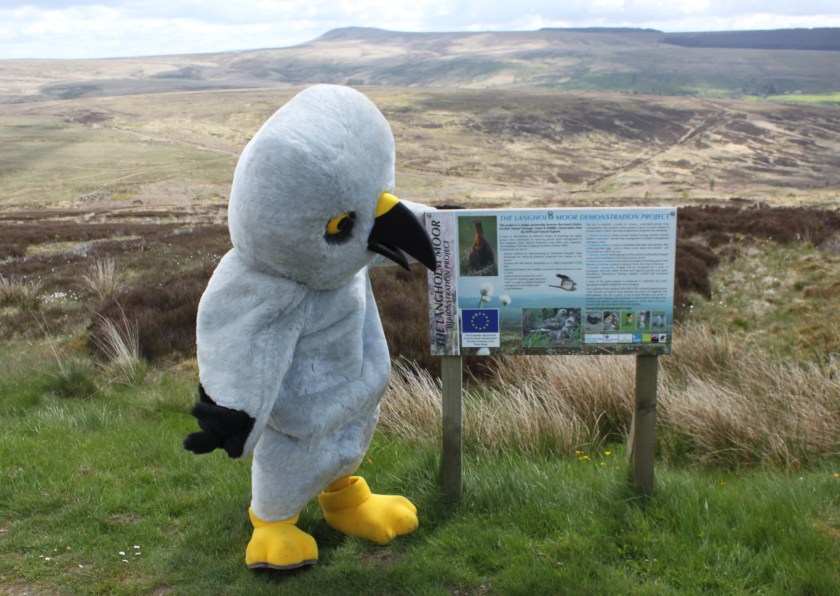
Henry’s been at Langholm all week. To find out what he was doing see here, here, here and here.

There’s a famous monument at Langholm. Some would say the current Langholm Project (‘Langholm 2′) has been a monumental waste of taxpayers’ money. There’s something in that, although it has shown us that when young satellite-tagged hen harriers stay at Langholm they seem to do OK (because they’re not routinely being killed), whereas many of the young sat tagged birds that did decide to disperse away from the moor have mysteriously vanished (e.g. see herehere, here, here, here, here, here). Amazing, eh?

Mon 13 July  Copy

Tues 14 July Copy

Weds 15 July  Copy

Thurs 16 July  Copy

Henry’s tour day 63: 1 month to go until Hen Harrier Day 2015

Fri 10 July Copy

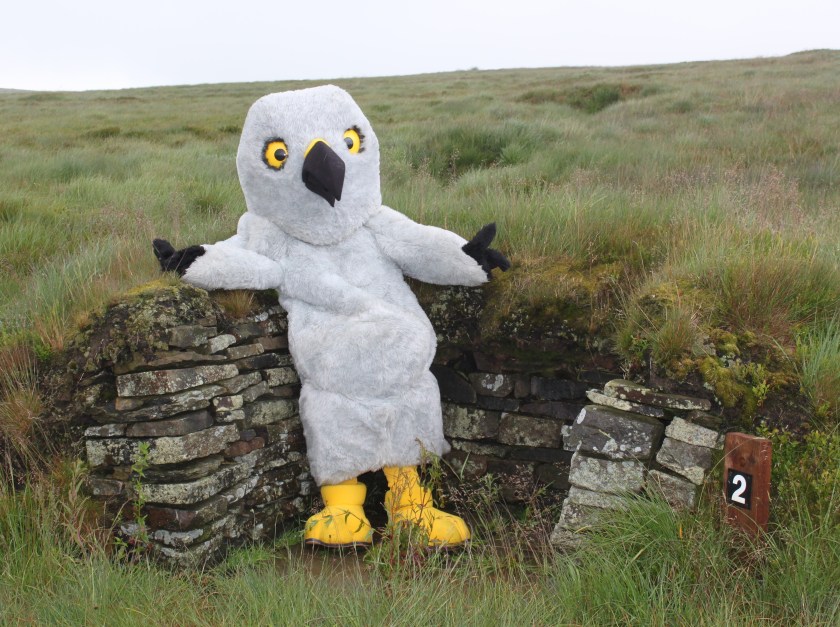
Henry’s found another grouse butt to occupy as he and his friends start the countdown to Hen Harrier Day 2015 – Sunday 9th August – just a month away.

Hen Harrier Day events are popping up all over the place this year, including events in Scotland, Derbyshire’s Peak District, NE England, NW England and southern England. Find out about events near you (or better still, organise your own if there isn’t one close by) by keeping an eye on the Hen Harrier Day Website (HERE).

This year there’ll also be a special event taking place on the eve of Hen Harrier Day – tickets have just got on sale – see HERE for info.

Henry’s tour day 47: badlands

Thurs 18 June  Copy

This is the eastern side of the Cairngorms National Park.

When you read about landscapes that are ‘dominated by driven grouse moors’, this place is as good as any to understand what is meant by that. Ugly burnt rectangular strips of heather for as far as the eye can see are a bit of a giveaway, as are the lines of grouse-shooting butts marching across the hillsides.

This layby, on a public road, might be a good place to pull over for spectacular views of the glen, and perhaps it would provide the perfect opportunity to watch for a hen harrier settling down to roost on the hillside in the fading hours of daylight. Armed with a decent pair of binoculars and a rudimentary understanding of hen harrier ecology, you might expect a special evening enjoying views of the protected wildlife safe within the boundaries of a National Park.

But then you remember. This is the Cairngorms National Park.

Perhaps it was a spot just like this where, in 2013, the alleged coordinated hunting and shooting of a male hen harrier took place on a driven grouse moor on the eastern side of the Cairngorms National Park?

How many pairs of successfully breeding hen harriers do you think there are inside the Cairngorms National Park?

Henry’s tour day 46: Glen Tanar

Weds 17 June  Copy

Henry was happy to visit the Glen Tanar Estate in the Cairngorms National Park – one of very few driven grouse moors that actively welcomes hen harriers, as well as other raptors.

See here, here, here, here and here.

Why can’t all driven grouse moors be managed like this?

Henry’s tour day 45: Dinnet

Tues 16 June  Copy

Henry called in at Dinnet (Deeside) but would only visit in daylight hours – here’s why.

It’s actually not all that safe in the daytime either – here’s why.

Welcome to the Cairngorms National Park.

Best-protected hen harriers in Scotland?

hh LAURIE CAMPBELLThere was a short piece on BBC Landward last Friday (12 June) about hen harriers nesting in a military training area in Garelochhead, Argyll.

Overlooking the controversial Faslane submarine base, this is one of the most heavily protected areas in the country.

Thanks to the hard work and expertise of Sgt. John Simpson (MOD Police) who monitors the wildlife at this site, hen harriers have been doing well here for a number of years.

Watch the video clip on BBCiPlayer here (starts at 05.38) – available for another 28 days.

Hen harrier photo by Laurie Campbell

Henry’s tour day 44: Cairngorms National Park

Mon 15 June Copy

Henry’s arrived in the Cairngorms National Park.

You might think he’d be safe here, what with it being a National Park and all that.

You’d be wrong.

Almost 45% of the CNP is covered by ‘managed moorland’ and raptor persecution here has been so prominent that last year it led to the Convenor of the Cairngorms National Park Authority declaring that “it threatens to undermine the reputation of the National Park as a high quality tourist destination” (see here and then here).

More media coverage of hen harrier persecution

It sounds like an odd thing to say, but something good has stemmed from the ‘disappearance’ of five breeding hen harrier males this year, and that’s the amount of media coverage generated by these incidents.

The national press has been all over these crimes (and yes, we are calling them crimes because you’d have to be either pretty dense and/or wilfully obstructive to claim that these ‘disappearances’ are the result of anything else) with plenty of column inches in the Guardian, Independent, Daily Mail and Express, as well as TV broadcasting on the BBC News and Channel 4 News. Social media has also been busy, with massive coverage on Twitter and Facebook in addition to constant coverage on several well-read personal blogs, all with a wide social reach.

Instrumental to all this media attention was the release of the information in the first place, and for that we have the RSPB to thank. As a result, the RSPB find themselves at the centre of (another) targeted slur campaign, funded by the industry with the most to lose in terms of public perception when news gets out about another ‘missing’ hen harrier in yet another area managed for driven grouse shooting. The funny part is, the more they smear the RSPB, the more that news editors will want to run the story, so the more people are going to hear about what’s going on.

Some may worry about what’s been written in some of the papers – the Daily Mail coverage was, well, pretty much what you’d expect from the Daily Mail (with it’s grouse moor-owning proprietor), but did that matter? Apparently not. The plight of the hen harrier has never been so high profile and never have so many people raised their voices in support of this species – it’s inconceivable that just a couple of years ago the hen harrier would have been voted the nation’s 9th favourite bird (as it was this week) – it would have been lucky to have made the Top 100, let alone the Top Ten. That’s pretty impressive, especially when you consider that the grassroots campaign in support of the hen harrier is still pretty young – it’s only really just got started.

There’s even more media coverage this weekend, with this article in the Independent. It doesn’t really tell us anything new, apart from learning that United Utilities had ‘banned’ the reporter from visiting the one remaining hen harrier nest in Bowland because the issue had become “too political”, whatever that means. But the content of the article isn’t really what’s interesting – what is interesting is that the Independent thought this issue newsworthy enough to send a journalist all the way from London to Cumbria to look at the now abandoned hen harrier nest on the Geltsdale Reserve. The accompanying text is largely irrelevant (although undoubtedly it will have been read by some people who were previously unaware of hen harrier persecution on driven grouse moors, so that’s good); it’s the fact that the story is being published in the mainstream media, again, that’s important.

Not only does extensive media coverage reach an ever-increasing audience, it also helps to build pressure on the authorities who are in a position to do something about these seemingly untouchable raptor killers, but so far have managed to do virtually nothing, or at least anything meaningful.

A few days ago the UK Government’s statutory nature conservation agency, Natural England, published a statement in response to the news that five breeding male hen harriers have ‘disappeared’. You can read it here. It tells us how ‘concerned’ they are, but other than that, it seems to be business as usual. More satellite-tagging to “provide even more detailed information on how birds move around the landscape and the factors currently limiting the population”.

That’ll be the same satellite tag information they’ve been collecting for the last eight years and have yet to publish in any detail.

Henry’s tour day 43: occupy the butts

IMG_5598 (2) - Copy

Another day, another location (Perthshire this time), another grouse butt to occupy!

Check out BAWC’s new Hen Harrier Day website and submit your photos – get involved!

Henry’s Tour day 42: Leadhills

Thurs 11th June Copy

Henry went with an armed escort to visit Leadhills in South Lanarkshire.

He looks a bit distressed. Perhaps he was being deafened by the booming gas guns that have recently been deployed on the grouse moors of the Leadhills (Hopetoun) Estate.

Or perhaps he’d just been told about the long list of wildlife crimes that have been discovered in this corner of South Lanarkshire; 46 confirmed since 2003, but only two resulting in successful convictions (2004 – Leadhills Estate gamekeeper convicted of shooting a short-eared owl; 2009 – Leadhills Estate gamekeeper convicted of placing out a poisoned rabbit bait).

Here’s the list, all from Leadhills unless otherwise stated:

2003 April: hen harrier shot [prosecution failed – inadmissible evidence]

2003 April: hen harrier eggs destroyed [prosecution failed – inadmissible evidence]

2004 May: buzzard shot [no prosecution]

2004 May: short-eared owl shot [gamekeeper convicted]

2004 June: buzzard poisoned (Carbofuran) [no prosecution]

2004 June: 4 x poisoned rabbit baits (Carbofuran) [no prosecution]

2004 June: crow poisoned (Carbofuran) [no prosecution]

2004 July: poisoned rabbit bait (Carbofuran) [no prosecution]

2004 July: poisoned rabbit bait (Carbofuran) [no prosecution]

2005 February: poisoned rabbit bait (Carbofuran) [no prosecution]

2005 April: poisoned buzzard (Carbofuran) [no prosecution]

2005 June: poisoned rabbit bait (Carbofuran) [no prosecution]

2005 June: poisoned rabbit bait (Carbofuran) [no prosecution]

2006 February: poisoned buzzard (Carbofuran) [no prosecution]

2006 March: poisoned buzzard (Carbofuran) [no prosecution]

2006 March: poisoned pigeon bait (Carbofuran) [no prosecution]

2006 April: dead buzzard (persecution method unknown) [no prosecution]

2006 May: poisoned rabbit bait (Carbofuran) [no prosecution]

2006 May: poisoned rabbit bait (Carbofuran) [no prosecution]

2006 May: poisoned egg baits (Carbofuran) [no prosecution]

2006 June: poisoned buzzard (Carbofuran) [no prosecution]

2006 June: poisoned raven (Carbofuran) [no prosecution]

2006 June: 6 x poisoned rabbit baits (Carbofuran) [no prosecution]

2006 June: poisoned egg bait (Carbofuran) [no prosecution]

2006 September: 5 x poisoned buzzards (Carbofuran) [no prosecution]

2006 September: poisoned rabbit bait (Carbofuran) [no prosecution]

2006 September: poisoned rabbit bait (Carbofuran) [no prosecution]

2007 March: poisoned buzzard (Carbofuran) [no prosecution]

2007 April: poisoned red kite (Carbofuran) [no prosecution]

2007 May: poisoned buzzard (Carbofuran) [no prosecution]

2008 October: poisoned buzzard (Carbofuran) [listed as ‘Nr Leadhills’] [no prosecution]

2008 October: poisoned rabbit bait (Carbofuran) [listed as ‘Nr Leadhills’] [no prosecution]

2008 November: 3 x poisoned ravens (Carbofuran) [listed as ‘Nr Leadhills’] [no prosecution]

2009 March: poisoned rabbit bait (Carbofuran) [no prosecution]

2009 March: poisoned raven (Carbofuran) [no prosecution]

2009 April: poisoned rabbit bait (Carbofuran) [gamekeeper convicted]

2009 April: poisoned magpie (Carbofuran) [no prosecution]

2009 April: poisoned raven (Carbofuran) [no prosecution]

2010 October: short-eared owl shot [no prosecution]

2011 March: illegally-set clam trap [no prosecution]

2011 December: buzzard shot [no prosecution]

2012 October: golden eagle shot (just over boundary with Buccleuch Estate) [no prosecution]

2013 May: shot otter found on estate [no prosecution]

2013 June: significant cache of pre-prepared poisoned baits found on estate [no prosecution]

2013 August: red kite found shot and critically-injured in Leadhills village [no prosecution]

2014 February: poisoned peregrine (Carbofuran) [‘Nr Leadhills’] [no prosecution]

Word has it from a local informant that a suspected shot raven was found on Leadhills Estate in May 2015. Post-mortem results are awaited.

Just a few weeks ago, we were sent footage of a young man dressed in camouflage who was lying on the moor holding a firearm, looking over at a plastic decoy peregrine which had been placed on top of a small mound. When he realised he’d been spotted, he removed the decoy and took off back down the hill on a quad bike. Can’t imagine who that was or what his intentions might have been.