A couple of weeks ago we blogged about the Cabinet Secretary for the Environment’s call for a review of golden eagle satellite tag data (see here). This was in response to the news that eight young satellite-tagged golden eagles had ‘disappeared’ on grouse moors in the Monadhliaths over a five year period, with three of them vanishing this year alone (see here). Cabinet Secretary Roseanna Cunningham called for the review “to discover if there is a pattern of suspicious activity“.
Shortly afterwards, the news broke that a young satellite-tagged hen harrier (‘Elwood’) had also ‘disappeared’ on a grouse moor in the Monadhliaths (see here). We wondered how Roseanna Cunningham would react to this news and hoped her response would be more substantial than the usual Ministerial expression of “disappointment“.
It seems she has taken note. Here is her response:
“The news that a juvenile hen harrier has disappeared in the Monadhliaths, complete with its satellite tag, only weeks after it fledged, strengthens my determination to get to the truth about how, where and why raptors with functioning satellite tags seem to be regularly disappearing. I have asked for a review of all the evidence and I intend to ensure that data from hen harriers and red kites, as well as data from golden eagles will be considered as part of this. We are continuing to collect evidence in relation to raptors in Scotland, which will be a significant factor in deciding the next steps for tackling wildlife crime.”
So, the review has been widened from just looking at golden eagle satellite tag data to now including hen harrier and red kite satellite tag data. We are pleased about this (with certain caveats, see below), although we still maintain that the review is superfluous to understanding and acknowledging what’s happening to these species on driven grouse moors. The scientific evidence is already clear, and has been available to the decision makers for many, many years. Let’s not pretend we don’t know what’s going on. Looking for, and finding, ‘patterns of suspicious activity‘ has been done to death and the findings have been conclusive, over and over again.
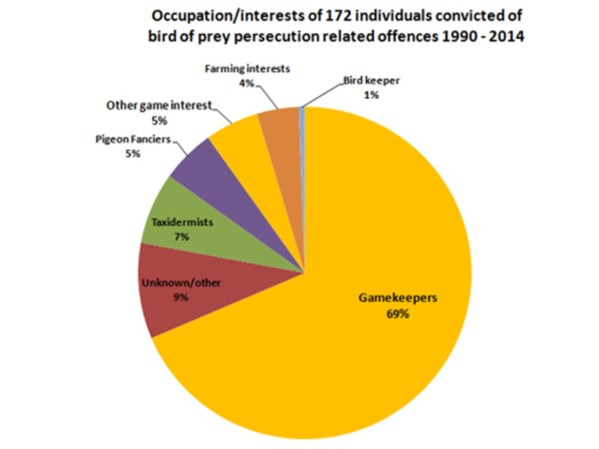
The reason we welcome the widening of this review is because we can already predict the results for each of the three species, and we predict they will all point to the same problem: the majority of young, satellite-tagged golden eagles, hen harriers and red kites that ‘disappear’ do so on driven grouse moors. Seeing the evidence from one species (golden eagles) would be pretty powerful, but having virtually identical results from two further species should be devastatingly compelling.
The caveat to welcoming this widened review is that the Scottish Government MUST push on with this review without delay and then MUST respond to the findings in a timely manner. This Government (and notably its statutory conservation advisory agency, SNH) has a long track record of prevarication when it comes to publishing results and then acting on the evidence provided. Here are some examples:
The Golden Eagle Conservation Framework (an holistic approach to assessing raptor conservation, trying to find out what’s going on regionally and nationally and trying to look at what’s limiting numbers and influencing productivity). This impressive and substantial review was submitted in 2003. It wasn’t published until 2008. The report identified illegal persecution as a significant constraint on the population.
The Hen Harrier Conservation Framework. Another impressive and substantial review that was submitted in 2008. It wasn’t published until 2011. The report identified illegal persecution as a significant constraint on the population.
The Hen Harrier Conservation Framework Update. This update was required after land managers criticised the 2011 report because it excluded results from the 2010 National Hen Harrier Survey. The update report was submitted in 2013. It has still not been published (and is likely to be further criticised because it won’t include results from the 2016 National Hen Harrier Survey!). We know (because we’ve attended several presentations given by one of the authors) that this report identifies illegal persecution as a significant on-going constraint on the population.
The Peregrine Conservation Framework. This review began in 2003 (or thereabouts – we’re not certain of the exact start date). An interm progress report was published in 2007 but nothing further since then.
The consultation on increased investigatory powers for the SSPCA. This consultation was first suggested in 2011. The consultation was finally launched in March 2014. The consultation closed on 1 September 2014. In May 2016, Cabinet Secretary Roseanna Cunningham said a decision “would be announced in due course“. This coming Thursday will mark two years since the consultation period ended.
Population modelling of red kites in northern Scotland. This review aimed to update the findings of a paper published in 2010 which showed illegal persecution was responsible for the slow population growth in this region. The review was submitted in 2015. It has yet to be published. We know (through informal discussions with colleagues) that this report identifies illegal persecution as a significant on-going constraint on this population.
Wildlife Crime Penalties Review. This review was commissioned in July 2013 and it finally reported in November 2015. In February 2016 the then Environment Minister Dr Aileen McLeod accepted the report’s recommendations. We have yet to hear how the Scottish Government intends to progress those recommendations.
Review of gamebird licensing and legislation in other countries. This report was commissioned in January 2016 and the final report was submitted in late spring 2016. The report has yet to be published. Claudia Beamish MSP has lodged a parliamentary question (dated 18 August 2016) to find out when the Government intends to publish.
Decision on the fate of the Tay beavers. In March 2012 the then Environment Minister Stewart Stevenson delayed a decision on the fate of the Tay beavers for three years, until the end of 2015. In May 2016, the current Cabinet Secretary Roseanna Cunningham announced a further delay ‘until later in 2016’. That decision is still pending.
These examples do not inspire great confidence in the Scottish Government’s willingness to act quickly on issues of wildlife conservation, and particularly those issues relating to the illegal persecution of raptors. These long delays only inspire frustration and increasing anger. Let’s hope that with this latest review of raptor satellite tag data, Roseanna Cunningham encourages a fast review process, doesn’t delay the publication of the findings, and acts quickly and robustly to implement measures against those who continue to flout the law.
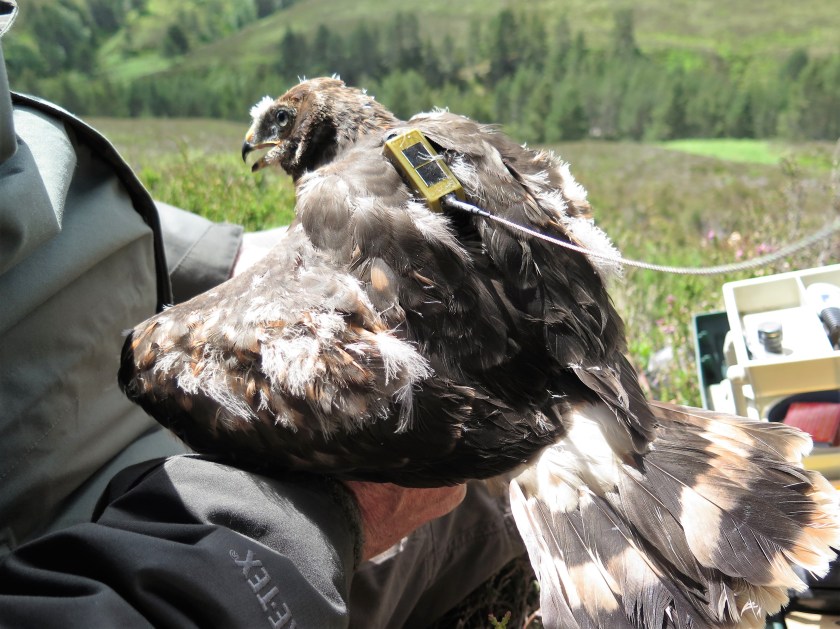
Photograph shows young hen harrier ‘Elwood’ with his satellite tag, just a few weeks before he ‘disappeared’ on a grouse moor in the Monadhliaths. Photo by Adam Fraser.



 With depressing predictability, news has emerged that one of this year’s young satellite-tagged hen harriers (a male called ‘Elwood’) has ‘disappeared’ on a grouse moor in the Monadhliath mountains just a few weeks after he fledged from his nest in Banffshire.

 Hen Harrier Day 2016 was fantastic! Now in its third year, there were more events and more people out in support than ever before.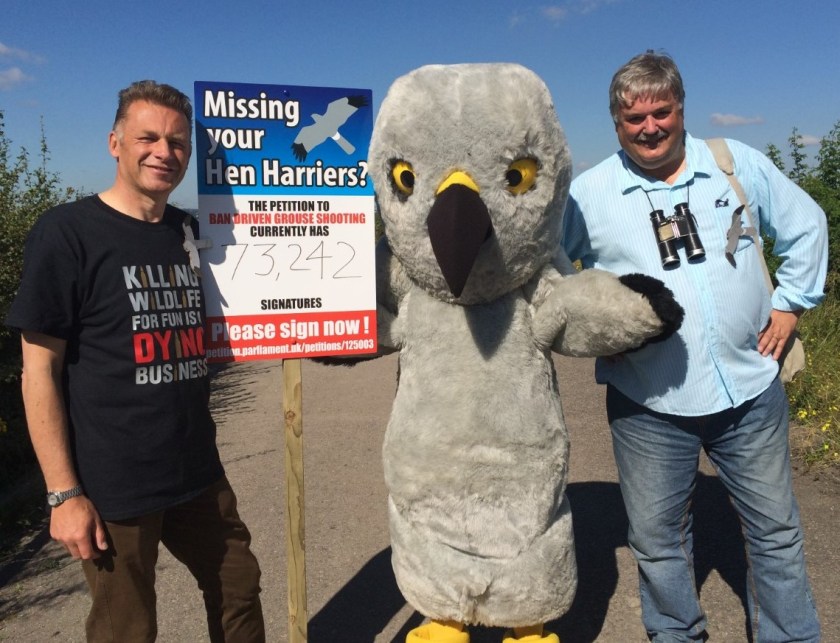
 Raptor Persecution UK