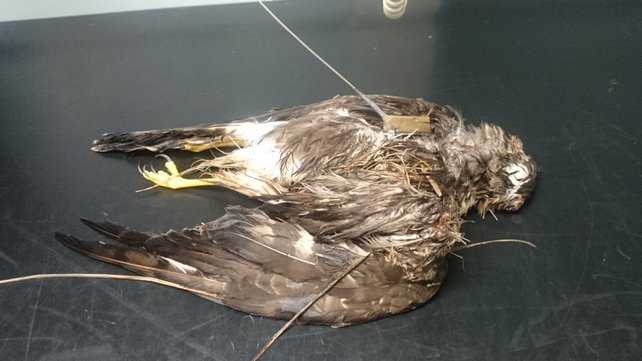
Three more satellite-tagged hen harriers ‘disappear’ in suspicious circumstances

RSPB press release, 22 May 2018:

THREE HEN HARRIERS DISAPPEAR IN SUSPICIOUS CIRCUMSTANCES

Police and the RSPB are appealing for information following the disappearance of three protected, satellite-tagged hen harriers in Scotland and Cumbria.

After monitoring her progress since she fledged last June, a hen harrier named Saorsa suddenly ceased sending transmissions in February 2018 whilst located in the Angus Glens, Scotland. She has not been seen or heard of since.

A male bird, named Blue, then raised concerns in March this year when his tag, which had also been functioning perfectly, suddenly and inexplicably cut out near Longsleddale, Cumbria.

In the same month, a tagged bird named Finn – after young conservationist Findlay Wilde – vanished near Moffat, Scotland. Finn was tagged as a chick in 2016 from a nest in Northumberland, one of only three hen harrier nests to fledge young in the whole of England that year.

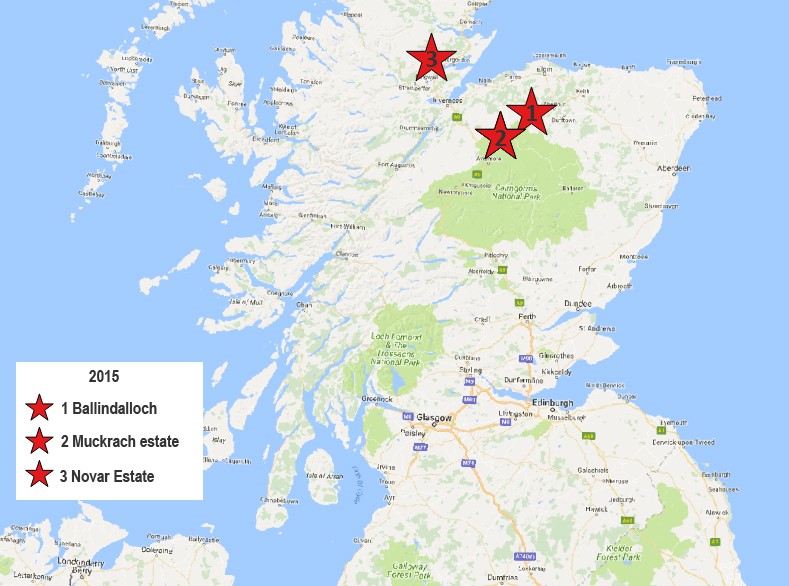
[RPUK map]:

RSPB Investigations staff conducted a search for all three birds, but no tags or bodies were found. Where tagged hen harriers have died of natural causes in the past, the tags and bodies have generally been recovered. Cumbria Police and Police Scotland are making local enquiries.

Hen harriers are one of the UK’s rarest birds of prey with just three successful nests recorded in England in 2017. There is a slightly larger population in Scotland. These slight, agile birds of prey nest on the ground, often on moorland. Like all wild birds, they are protected by law under the Wildlife and Countryside Act 1981. But, despite full legal protection, studies show that their declining population is largely associated with human persecution.

Several birds have been fitted with a lightweight satellite tag as part of the EU-funded Hen Harrier LIFE project to help build a better understanding of hen harriers, their movements and the threats they face. Since the project began in 2014, a number of tagged hen harriers have disappeared in similarly inexplicable circumstances.

Cathleen Thomas, Hen Harrier LIFE Project Manager, said “The UK population of hen harriers is really hanging in the balance and the disappearance of these three birds is extremely troubling. These tags are over 90% reliable and capable of transmitting long after a bird has died. If these birds had died of natural causes we would expect to recover both the tag and the body. But this has not been the case.

Findlay Wilde said “In the short time we followed Finn, we went through every emotion possible; from the excitement of knowing she had safely fledged to the nagging worries that she was settling in high-risk areas; and then of course to the worst news of all. Finn isn’t just another statistic in growing listing of missing hen harriers. Her life mattered, and she mattered to me.”

If you have any information relating to any of these incidents, call police on 101. Or to speak to RSPB investigations in confidence, call the Raptor Crime Hotline on 0300 999 0101.

ENDS

Dr Cathleen Thomas of the RSPB’s Hen Harrier LIFE Project has written a blog which provides more details of each of the missing harriers – here.

Finn Wilde has also written a blog about the loss of ‘his’ hen harrier – here

The news of these three suspicious disappearances will come as absolutely no surprise to anybody. And neither will the responses of the game-shooting industry, as it trots out the usual, well-rehearsed denials and fake concerns. We’ve seen it time and time again, whether it be about vanishing hen harriers or vanishing golden eagles, and we’ll doubtless see it many more times again. That it’s allowed to continue without sanction is a bloody scandal.

The two young hen harriers that disappeared in Scotland are very interesting.

Saorsa hatched on the Balnagown Estate in Sutherland in 2017. She disappeared in the Angus Glens – a well-known blackspot for illegal raptor persecution and, ironically, in the consituency of Mairi Gougeon MSP, the Hen Harrier Species Champion.

[Photo of Saorsa in the nest, by Brian Etheridge]

We believe the Balnagown Estate was one of several participating in the controversial Heads Up for Hen Harriers Project, whereby estates agree to have cameras installed at hen harrier nest sites to identify the cause of nest failure and help understand the species’ on-going population decline. We’ve blogged about this greenwashing scam many times, and we’ll be doing so again in the very near future, but for now, the fate of Hen Harrier Saorsa is a good demonstration of how futile the project is. She was raised on an estate where there are absolutely no concerns about illegal raptor persecution whatsoever (there’s no driven grouse shooting on the Balnagown Estate) but once she dispersed from the relative safety of that estate, she was at risk. Heading for the Angus Glens, where successfully breeding hen harriers have been absent since 2006, was a seemingly fatal mistake.

Hen Harrier Finn, named after young conservationist Findlay Wilde, hatched on protected Forestry Commission land in Northumberland, 2016. Finn’s last tag transmission came from near Moffat, SW Scotland, which is the location of the controversial golden eagle translocation project, due to start this year.

[Photo of Finn by Martin Davison]

Now, let’s assume that DEFRA’s outrageous hen harrier brood meddling plan had been in place in 2016, and that the Forestry Commission had agreed to participate, then Finn and her three siblings would have been removed from the nest, reared in captivity and then released back to the wild in mid-August, close to their natal territory. This brood meddling plan is purported to ‘protect’ young hen harriers, and DEFRA / Natural England / the grouse-shooting industry all claim that this technique will help increase the population of hen harriers. It’s another greenwashing scam.

Would brood meddling have saved Finn? No, of course not, because Finn ‘disappeared’ in suspicious circumstances (presumed to have been illegally killed) in March, several months after she would have been returned to the wild post-brood meddling. So as many of us have been arguing for years, brood meddling will not help hen harriers because it doesn’t address the fundamental issue of illegal raptor persecution, year-round, that has brought this species to its knees.

Brood meddling is due to begin in England this year, but there are two on-going legal challenges, via judicial review, from Mark Avery and the RSPB. We await further news on these cases.

Meanwhile, across the grouse moors of northern England and Scotland, it’s business as usual for the hen harrier killers.

[Cartoon by Mr Carbo]

UPDATE 24 May 2018: Laughable statement from SGA on missing satellite-tagged hen harriers (here)

UPDATE 25 January 2019: SGA fabricates ‘news’ on missing sat-tagged hen harrier Saorsa (here)

Missing sea eagle Blue T: statement from Cairngorms National Park Authority

Following last week’s news that a young satellite-tagged sea eagle (Blue T) had ‘disappeared’ on Invercauld Estate, the Cairngorms National Park Authority’s CEO, Grant Moir, has published a statement:

The frustration is evident and it’s clear that a great deal of thought has gone in to this statement, which is a huge improvement on previous CNPA statements about ‘disappearing’ satellite-tagged raptors in the National Park (e.g. see here), but we wanted to pick up on a few things.

The news that SNH will shortly be launching the next phase of its raptor tracker project is great – any technological developments that might provide more detail about the fate of ‘missing’ satellite-tagged raptors will be warmly welcomed by most (but probably not by the criminals within the grouse-shooting industry).

However, Grant seems to think that knowing exactly where and when a tagged bird was killed will “take the ambiguity away from the situation“. It won’t.

As we’ve blogged before, if the tag/raptor is destroyed on an estate that employs multiple gamekeepers, the issue of identifying the individual culprit(s) will remain, especially if all the staff give the standard ‘no comment’ police interview. There will also be the sometimes plausible argument that the raptor had been shot/poisoned on a neighbouring estate and died just over the boundary of the estate under scrutiny. And as we’ve seen in recent years, even with clear video evidence of an individually identifiable gamekeeper killing a raptor, a successful prosecution is highly unlikely because the Crown Office will declare the evidence inadmissible or will claim it’s not in the public interest to proceed.

Sorry, Grant, but the so-called ‘ambiguity’ will remain – although there’s nothing ambiguous about the robust & statistically significant findings of the golden eagle satellite tag review, which demonstrated a clear relationship between suspicious raptor disappearances and land managed for intensive driven grouse shooting in and around the Cairngorms National Park:

One other thing in Grant’s statement that we wanted to pick up on –

Invercauld Estate is part of the East Cairngorms Moorland Partnership and I genuinely do believe that progress has started to be made across a wide range of subjects with the Estates involved……”

Really? What progress is that, then? Any progress on stopping the illegal persecution of raptors?

The East Cairngorms Moorland Partnership was established in December 2015 and comprises six estates working in ‘partnership’ with the CNPA.

The Partnership’s statement of purpose can be read here.

Here are the estates (boundaries sourced from Andy Wightman’s Who Owns Scotland website):

  1. Glenlivet Estate. 2. Glenavon Estate. 3. Mar Lodge Estate (National Trust for Scotland). 4. Invercauld Estate. 5. Mar Estate. 6. Balmoral & Birkhall Estate.

Last October, almost two years after this Partnership was established, we wanted to find out what progress had been achieved. We submitted an FoI to the CNPA asking for copies of all correspondence relating to the East Cairngorms Moorland Partnership since 1 January 2016.

Here’s the reply we received in November 2017:

We have searched our Corporate Drives for the period as above and we hold no information‘.

Impressive amount of progress, eh?

We do know that in February this year the CNPA was advertising for a part-time East Cairngorms Moorland Partnership Officer, on a decent salary of £28,770 – £34,633 pro rata.

Assuming someone has now been employed in this new position, they’ve certainly got their work cut out in delivering the objectives set out in the Cairngorms National Park Management Plan 2017-2022, which includes improving raptor populations in the National Park. Recent peer-reviewed science has revealed that the local hen harrier population has crashed (here) as has the local peregrine population (here).

Oh, and satellite-tagged hen harriers keep going ‘missing’ in highly suspicious circumstances inside the National Park, just like hen harrier Calluna, as do satellite-tagged eagles such as sea eagle Blue T and golden eagle #338.

National Park or National Disgrace?

Species Champion Mairi Gougeon MSP visits hen harriers

Great to see Hen Harrier Species Champion Mairi Gougeon MSP making time in a busy schedule to accompany licensed fieldworkers from Tayside Raptor Study Group on a monitoring visit to a hen harrier breeding location in Perthshire yesterday.

It looks like she enjoyed herself! Good for her.

Naturally, the news of this visit provoked abusive social media commentary from some members of the Scottish Gamekeepers Association, who not only attacked the integrity of the raptor workers but also included some faux concern about the welfare of the harriers.

Perhaps they’re confusing what happens during a visit by licensed raptor fieldworkers with what happens when armed men dressed as gamekeepers visit a nest site.

Legal challenge against hen harrier brood meddling continues, x2

Two separate High Court applications have been submitted this week, seeking a judicial review of Natural England’s highly controversial decision to issue a hen harrier brood meddling licence.

As a quick re-cap for new blog readers, in January this year, Natural England issued a licence to Jemima Parry-Jones (International Centre for Birds of Prey [ICBP], Newent, Glos) permitting the removal of hen harrier eggs and chicks from some nests on grouse moors in Northern England, to protect artificially-high stocks of red grouse being farmed for shooting. The licence permits the ICBP to rear the young hen harriers in captivity and then release them in August back to the same grouse moor areas from where they were removed, where they will once again be put at risk of being illegally killed.

This licence is fundamental to DEFRA’s hen harrier brood meddling plan, which forms part of its ludicrous Hen Harrier Action Plan. For background reading on hen harrier brood meddling, please see here.

The ICBP is being paid by the Moorland Association to undertake the brood meddling work, and the licence is supported by the members of the Hen Harrier Brood Meddling Project Board, which includes Rob Cooke (Natural England), Adrian Jowitt (Natural England), Steve Redpath (Aberdeen University), Jemima Parry-Jones (ICBP), Adrian Smith (GWCT), Philip Merricks (Hawk & Owl Trust), Amanda Anderson (Moorland Association), Robert Benson (Moorland Association).

In early February, lawyers acting on behalf of Mark Avery decided to challenge the lawfulness of Natural England’s decision to issue this licence by way of a judicial review. The lawyers agreed to work at reduced rates and Mark successfully raised over £26,000 via crowdfunding to support the legal action.

In late February Mark’s lawyers sent a ‘pre-action protocol letter’ to Natural England, outlining the perceived legal inadequacies of the decision to issue the licence. The letter also invited Natural England to revoke the licence and undertake a proper public consultation on the issue of hen harrier brood meddling.

In March the RSPB also sent a pre-action protocol letter to Natural England on the same issue.

Natural England’s response letters have been seen as unsatisfactory by Mark and by the RSPB and so yesterday Mark submitted an application to the High Court seeking permission for a judicial review, because, as Mark’s lawyer says,  “My client believes that the decision to grant this licence is unlawful as it is in breach of EU law – it takes criminal activity as its starting point and looks to ease the path for those who break the law, often for profit, for the purpose of shooting red grouse“.

Today the RSPB has also announced it, too, has submitted an application seeking a judicial review.

Good stuff.

There was an article in The Guardian yesterday about Mark’s application.

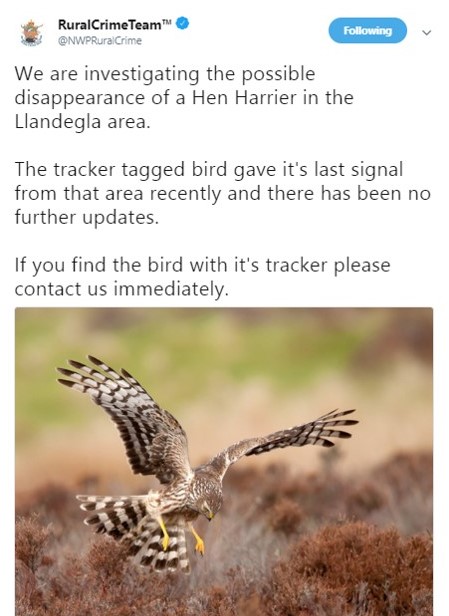
Satellite-tagged hen harrier Aalin ‘disappears’ near Ruabon grouse moor, North Wales

They can hide the tags. They can hide the bodies. But they can’t hide the pattern” (Dr Hugh Webster)

RSPB press release (21/3/18):

RARE HEN HARRIER GOES MISSING IN WALES

North Wales Police and the RSPB are appealing for information following the disappearance of a satellite-tagged hen harrier near Wrexham.

The harrier, named Aalin, was tagged as part of the RSPB’s EU-funded Hen Harrier LIFE+ project in July 2016 from a nest on the Isle of Man, in collaboration with Manx Birdlife. Aalin left the Isle of Man in 2016 and spent her first winter in Shropshire, before heading to Wales in the spring of 2017, where she remained ever since.

Hen harrier Aalin (photo by James Leonard)

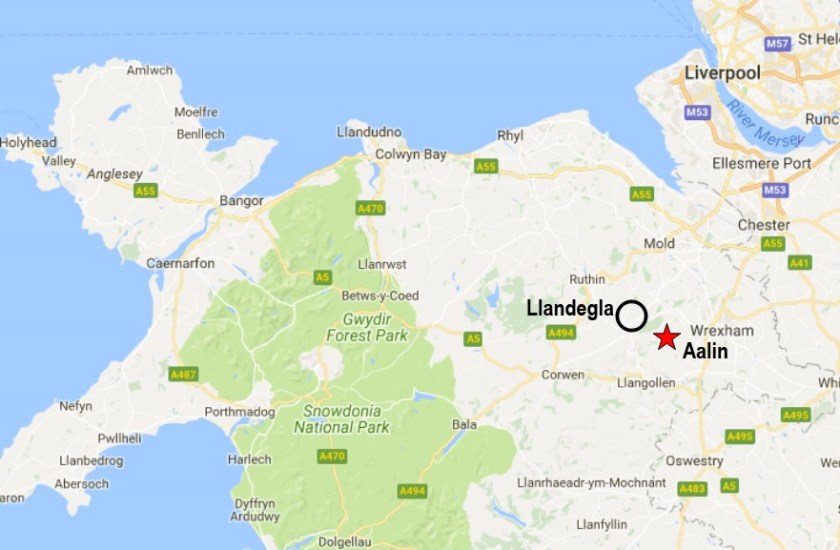
Aalin’s tag had been transmitting regularly, until it suddenly stopped on the morning of 9 February 2018. Data from Aalin’s tag indicated she spent the last few months in the same area of moorland around Ruabon Mountain near Wrexham, from where the tag unexpectedly sent its last signal at 10.34am. A search was conducted by RSPB Investigations staff, but no tag or body was found and she has not been seen or heard of since.

RSPB map:

Dr. Cathleen Thomas, RSPB Hen Harrier LIFE Project Manager, said: “It’s incredibly disappointing to lose yet another hen harrier in these circumstances, especially as this bird is so scarce in the UK. It’s also the first suspicious loss of a bird in Wales for our project, after the elation of tagging our first chicks there in 2017. We were hopeful that heading towards the breeding season Aalin would have nested in Wales and successfully reared chicks this summer, so her loss also affects future generations of this rare and beautiful bird in the area. We believe the loss of Aalin and other recently tagged hen harriers in the UK is having a devastating impact on their conservation status.”

Rob Taylor, Rural Crime Team Manager, North Wales Police, said: “We have been notified by the RSPB of this incident and we are investigating the disappearance, but at this time we have little to go on. We are appealing to the public for any assistance they can give and we hope that foul play hasn’t played a part in the loss of this rare bird.”

Neil Morris, Managing Director of Manx Birdlife, said: “This is heart-breaking news. As well as the sudden unexplained loss of yet another magnificent bird of prey, we still know so little about the behaviour of Manx-born hen harriers. Clearly there is an impulse for young birds to wander soon after fledging. But we don’t really know why or whether any of those that leave the Isle of Man as juveniles make the return journey as mature adults to breed back in their native hills.”

If you have any information relating to this incident, please call North Wales Police on 101 quoting the reference WO28466. Alternatively, you can call the RSPB Raptor Crime Hotline confidentially on 0300 999 0101. All calls are anonymous.

If you find a wild bird that you suspect was illegally killed, contact RSPB investigations on 01767 680551 or fill in the online form:

https://www.rspb.org.uk/our-work/our-positions-and-campaigns/positions/wildbirdslaw/reportform.aspx

ENDS 

Dr Cathleen Thomas, RSPB’s Hen Harrier Life Project Manager has also written a blog – here.

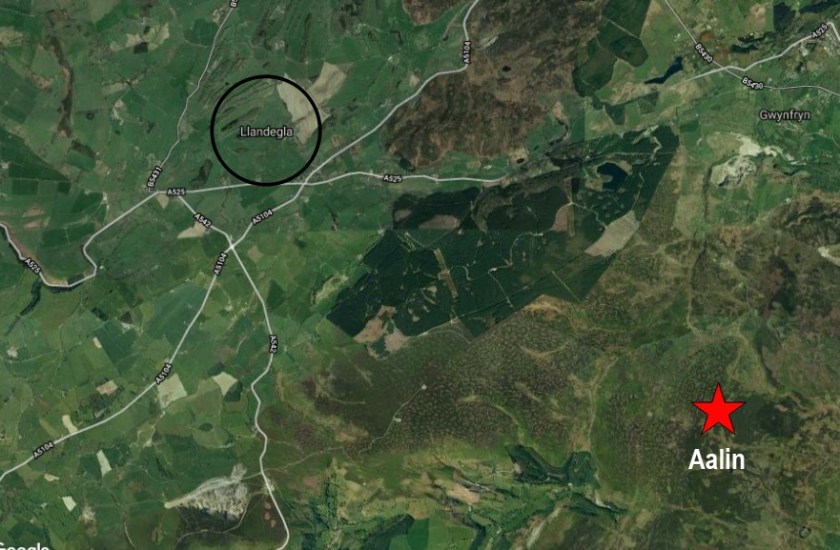
We’ve produced a habitat map covering the area of Aalin’s last known satellite-tag fix. The tell-tale heather strips show this as, surprise surprise, a grouse moor:

Aalin was one of the 2016 cohort of young satellite-tagged hen harriers. Here’s what happened to the others:

Hen harrier Elwood – ‘disappeared’ in the Monadhliaths just a few weeks after fledging, presumed dead (Aug ’16).

Hen harrier Brian – ‘disappeared’ in the Cairngorms National Park just a few weeks after fledging, presumed dead (Aug ’16).

Hen harrier Donald – missing in northern France, presumed dead (Autumn ’16).

Hen harrier Hermione – found dead on Mull, believed to have died from natural causes (Sep ’16).

Hen harrier Rowan – found dead in Yorkshire Dales National Park. He’d been shot (Oct ’16).

Hen harrier Tarras – ‘disappeared’ in the Peak District National Park, presumed dead (Oct ’16).

Hen harrier Beater – ‘disappeared’ in the Scottish Borders, presumed dead (Nov ’16).

Hen harrier Bonny – ‘disappeared’ in the North Pennines, presumed dead (Dec ’16)

Hen harrier Mick – ‘disappeared’ in the Yorkshire Dales National Park, presumed dead (Dec ’16).

Hen harrier Carroll – found dead in Northumberland, PM revealed a parasitic disease & two shotgun pellets (Jan ’17).

Hen harrier John – ‘disappeared’ in the Yorkshire Dales National Park, presumed dead (Oct ’17)

Hen harrier Aalin – ‘disappeared’ in Wales, presumed dead (Feb ’18)

Twelve down, five to go (DeeCee, Finn, Harriet, Wendy, Sorrel).

More evidence then, that DEFRA’s Hen Harrier Action Plan, launched on 16 January 2016 months before these hen harriers even hatched, is a categorical failure. Will DEFRA or any of the other supporters of this pathetic pantomime (Natural England, Moorland Association, GWCT, Hawk & Owl Trust, International Centre for Birds of Prey etc) re-assess and pull the plug? Of course not.

It looks like Mr Carbo needs to update his sketch:


Hen harrier reintroduction to southern England: Has France said “Non”?

As many of you will know, part of DEFRA’s ludicrous Hen Harrier Action Plan is the proposed reintroduction (not really a reintroduction) of hen harriers to southern England.

We know, through a series of FoIs, that Salisbury Plain in Wiltshire is the currently proposed reintroduction site and the proposed start date is 2018.

We also know, via FoIs, that several countries had been approached as potential hen harrier donors, including the Netherlands, Spain, Poland and France (see here). Of these, only France seemed a realistic prospect and the Southern Reintroduction Project Team has been spending a lot of time (and tax-payers’ money) on seeking approval from the French authorities.

However, there is a persistent rumour (and we emphasise that this is nothing more than a rumour at the moment, albeit a frequently spoken one by several different sources) that the French Government has said “Non!” to providing the UK with French hen harriers for relocation to Salisbury Plain. The reason for this refusal, according to rumour, might have something to do with Natural England’s outrageous decision to issue a hen harrier brood meddling licence permitting the removal of hen harrier eggs and chicks from grouse moors across northern England.

That would seem a perfectly legitimate reason for the French authorities to refuse – why on earth would they donate hen harriers if those very same hen harriers (assuming they’re not shot on sight) might end up having their future offspring removed from the wild and taken in to captivity, just so a bunch of grouse shooters can kill more red grouse for fun?

Of course, the French authorities’ decision (if true) may have nothing to do with brood meddling at all – it may simply be based on the UK’s complete and utter failure to protect hen harriers from illegal persecution.

We’ve submitted another FoI to Natural England to try and find out what’s going on, but on past performance we’re not holding our breath.

Meanwhile, where does that leave the proposed reintroduction project? Perhaps the Project Team will now approach Scotland for donor birds? We know, via an FoI to SNH, that as of 6 February 2017 SNH had not received any correspondence about being a potential donor source. SNH wrote:

“We can advise there has been no approach from Natural England or others involved with this project, but that if SNH received such a request we would assess it by our own normal licensing processes and the Scottish Translocation Code, as it would relate to a reintroduction project seeking Scottish involvement / donor stock“.

But then there’s Russia. We know, again via FoI, that Philip Merricks of the Hawk & Owl Trust told a Reintroduction Project Team meeting in October 2016, ‘that Russian counterparts had suggested that sourcing birds there was relatively straight forward provided that proper channels were followed’. The Project team ‘agreed to pursue sources closer to home for now’.

So will they now approach Russia to ask them to donate hen harriers for release on Salisbury Plain? Current political sensitivities suggest this might be a bit, er, awkward.

RSPB joins legal challenge against Hen Harrier brood meddling licence

In January this year, Natural England issued a licence to Jemima Parry-Jones (International Centre for Birds of Prey, Newent, Glos) permitting the controversial removal of hen harrier eggs and chicks from some nests on grouse moors in Northern England, to protect artificially-high stocks of red grouse being farmed for shooting. The licence permits the ICBP to rear the young hen harriers in captivity and then release them in August back to the same grouse moor areas from where they were removed, where they will once again be put at risk of being illegally killed.

This licence is fundamental to DEFRA’s hen harrier brood meddling plan, which forms part of its ludicrous Hen Harrier Action Plan. For background reading on hen harrier brood meddling, please see here. The ICBP is being paid by the Moorland Association to undertake the brood meddling work, and the licence is supported by the members of the Hen Harrier Brood Meddling Project Board, which includes Rob Cooke (Natural England), Adrian Jowitt (Natural England), Steve Redpath (Aberdeen University), Jemima Parry-Jones (ICBP), Adrian Smith (GWCT), Philip Merricks (Hawk & Owl Trust), Amanda Anderson (Moorland Association), Robert Benson (Moorland Association).

In early February, lawyers acting on behalf of Mark Avery decided to challenge the lawfulness of Natural England’s decision to issue this licence by way of a judicial review. The lawyers agreed to work at reduced rates and Mark successfully raised over £26,000 via crowdfunding to support the legal action.

In late February Mark’s lawyers sent a ‘pre-action protocol letter’ to Natural England, outlining the perceived legal inadequacies of the decision to issue the licence. The letter also invited Natural England to revoke the licence and undertake a proper public consultation on the issue of hen harrier brood meddling.

This pre-action protocol letter is the first step in the process of judicial review and Natural England should respond within 14 days (deadline 14 March 2018). If Mark’s lawyers find Natural England’s response inadequate, they will move to begin formal legal proceedings via judicial review.

Today, the RSPB has announced that it, too, has started proceedings and has sent its own pre-action protocol letter to Natural England. We don’t know the details of that letter but we expect the specifics to be very similar to the letter sent by Mark’s lawyers.

We now have to wait for Natural England’s response(s).

Assuming Natural England stands by its decision-making process, and permission is granted by the courts to proceed with a full judicial review, we might expect Natural England to temporarily suspend the brood meddling licence while legal proceedings are underway, much in the way that SNH suspended its General Licence Restriction on Raeshaw Estate while that judicial review was heard.

Interesting times ahead.

UPDATE 17 April 2018: Legal challenge against hen harrier brood meddling continues, x2 (here)

Satellite-tagged hen harrier Marc disappears on grouse moor at Wemmergill

And so it continues.

Joint press release today from RSPB and Durham Police:

YET ANOTHER RARE HEN HARRIER GOES MISSING

Durham Constabulary and the RSPB are appealing for information following the disappearance of a satellite-tagged hen harrier near Middleton-in-Teesdale.

The harrier, named Marc, was one of a nest of two chicks tagged as part of the EU-funded Hen Harrier LIFE+ project in July last year from a nest in the Scottish Borders.

Photo of Hen harrier Marc (right) photographed at the nest last summer with his brother Manu, who also disappeared on a grouse moor in the North Pennines. Photo by Tim Jones.

Marc’s tag had been transmitting regularly, showing no signs of any problems, until it suddenly stopped on the afternoon of 5 February. Data from Marc’s tag indicated he had been in the same area of upland farmland since late November before moving 10km north west on 27 January to an area of driven grouse moor, from here he posted several positions on the 5 February until 2.04pm, after which the tag inexplicably failed to send any further data.

Hen harriers are one of the UK’s rarest raptors with only three successful nests recorded in England in 2017. There have been a number of other hen harriers that have gone missing in similar circumstances both in England and Scotland since the tagging project began in 2015. This includes Marc’s brother, a bird called Manu who was tagged in the same nest but went missing in October 2017 with his last known location being close to a grouse moor in Northumberland.

Mark Thomas, RSPB Principal Specialist, said: “Hen harriers are facing an uncertain future: these spectacular birds should be flourishing in our uplands but studies show that we are down to just a handful of pairs in England with illegal persecution identified as a prime factor. So it’s depressing when yet another hen harrier goes off the radar like this, especially when the supporting tag data is so precise.”

A spokesperson for Durham Constabulary said: “We are very concerned at the disappearance of one of these iconic birds of prey. Hen harriers are fully protected by law and raptor persecution is a national wildlife crime priority. We urge you to come forward if you have any information about the disappearance of this bird.”

If you have any information relating to this incident (ref 163 2022018), call Durham Constabulary on 101 or the confidential Raptor Crime Hotline on 0300 999 0101. All calls are anonymous.

ENDS

The RSPB has also published a blog about Marc’s suspicious disappearance here

The RSPB has published a map showing the last known location of Marc’s tag:

A quick look on Google Earth shows this area is managed for driven grouse shooting:

We’ve done a bit of research and it looks like this area is part of the Wemmergill Estate, a well-known driven grouse shooting location in the North Pennines Area of Outstanding Natural Beauty. It is also part of a Special Protection Area (SPA) designated specifically for hen harriers. There should be at least 11 breeding pairs of hen harriers in this SPA – there are none.

The estate boundary (in red) on our map suggests the estate is divided in to two separate areas, but this could just be a function of the system used to assess rural payments received by the estate, which is the source of the estate boundary we have used above.

This map below, from the North Pennines AONB, suggests Wemmergill is not split in to two separate areas:

This is not the first time that the police have investigated a suspected raptor persecution incident in this location. In 2015, two dead short-eared owls were found shoved inside a pothole – both had been shot (see here).

So, it looks like DEFRA’s outrageous Hen Harrier Action Plan is continuing to fail. Launched in January 2016 and designed to supposedly protect hen harriers from criminal persecution, here we have yet another satellite-tagged hen harrier that has vanished without trace in an area managed for driven grouse shooting.

As Dr Hugh Webster commented recently, “They can hide the bodies. They can hide the tags. But they can’t hide the pattern“.

If you’re sick to the back teeth of hen harrier persecution and you have no faith in DEFRA’s Hen Harrier Action Plan, there’s no better time than now to support this legal challenge to the brood meddling part of that Plan – please support the crowdfunder here.

Legal challenge against Hen harrier brood meddling – crowdfunder launched

Do you want to see justice for Hen harriers?

Do you oppose DEFRA’s outrageous Hen harrier brood meddling scheme?

Do you want to support a legal challenge against the brood meddling licence that Natural England has recently issued?

Here’s how you can help.

#justice4henharriers

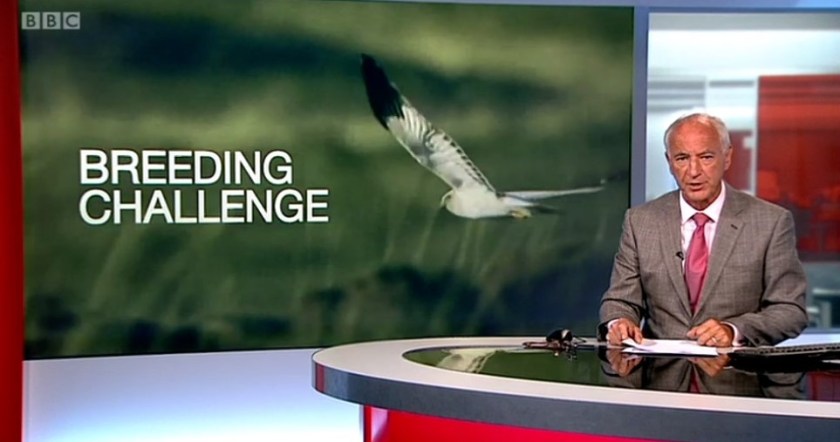
Failed Peak District Bird of Prey Initiative featured on BBC regional news

The Moorland Association’s plan to block publicity about the failed Peak District Bird of Prey Initiative has spectacularly backfired.

Journalists have picked up on the news that the RSPB has terminated its involvement with the project and yesterday evening the failed Initiative, and more importantly, the reasons behind its failure, featured prominently on several BBC regional news programmes including East Midlands Today and Look North.

The videos for both programmes are available on BBC iPlayer but only until 7pm this evening.

BBC East Midlands Today (here) – starts at 4.35

BBC Look North (here) – starts 10.00

Both programmes are worth watching if you get the chance as there are similarities but also differences. For example, David Hunt from the RSPB features in both programmes (and delivers a very strong message, calling out the Moorland Association by name. Well done!) whereas Steve Bloomfield from BASC only appears in the East Midlands programme and Amanda Anderson from the Moorland Association only appears in the Look North version.

For those who missed the archived footage, here are the relevant quotes:

David Hunt (RSPB):Instead of seeing numbers rise of peregrine and goshawk we’ve actually seen the numbers drop over the lifespan of the Initiative, and against all of that there’s been a refusal from one of the partners in the Initiative, the Moorland Association, to acknowledge that one of the leading contributing factors in this drop in numbers is illegal killing of birds of prey“.

Steve Bloomfield (BASC):We share their [the RSPB’s] frustrations and I think this needs to be a wake up call for the shooting community that these issues are going on and causing problems. There are huge amounts of benefits to the shooting interests on these estates to other wildlife. We musn’t lose that“.

Amanda Anderson (Moorland Association):We’re all really disappointed that they’ve [the RSPB] left this really important collaborative Initiative. We all want the same thing, and that’s a sustainable, healthy assemblage of birds of prey across the Peak District National Park. We just differ in our view of how to achieve that“.

In the Look North programme, the BBC reporter Mark Ansell closed with this:

“The Peak District National Park Authority declined to be interviewed but they have said in a recent report that the Bird of Prey Initiative has failed to meet its targets. They go on to say that there is confirmed evidence of raptor persecution, and in a statement they say they’ll be looking for an increase in birds in the breeding season before committing to working with the other organisations in the Initiative beyond 2018”.