Don’t laugh, but gamekeepers claim to “care deeply” about protecting hen harriers!

It’s not quite April Fools’ Day but the National Gamekeepers’ Organisation thought it’d get in there early this year.

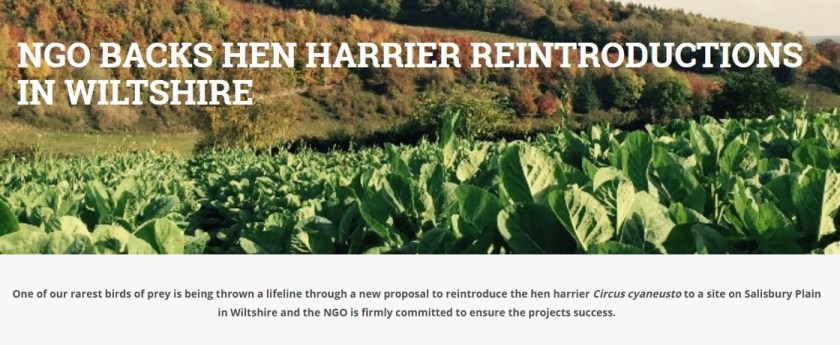
Just a week on from the publication of a scientific paper that demonstrated the catastrophic loss of satellite-tagged hen harriers was undeniably linked to land managed by gamekeepers for grouse shooting (see here), the National Gamekeepers’ Organisation (NGO) published this on its website:

Amazing, eh?

Remind us again, NGO – where was the last known location of the latest hen harrier to ‘disappear’ in suspicious circumstances? Ah yes, in Wiltshire, close to the proposed hen harrier reintroduction site and in an area heavily managed for pheasant and partridge shooting. And what did the NGO say about this bird’s disappearance? Ah yes, that it was “a set up” by the RSPB.

And remind us again, NGO – what examples do you have of the NGO “living in harmony with buzzards“? Ah yes, you supported a gamekeeper (who had a prior poison-related conviction) to get licences to kill buzzards to ‘protect’ his pheasants.

And remind us again, NGO – what was your most recent action on the RPPDG, the group that’s supposed to tackle illegal raptor persecution? Ah yes, it was to resign.

And please could you tell us, NGO, what is “Circus cyaneusto“?! Is this an imaginary harrier species, to match the gamekeepers’ imaginary devotion to hen harriers that we’re supposed to believe?

Not so much April Fools, more like deluded fools.

National Gamekeepers’ rep still in denial about extent of illegal raptor persecution

A couple of weeks ago we blogged about how Tim Weston, a Development Officer for the National Gamekeepers’ Organisation (NGO) had suggested that the suspicious disappearance of satellite-tagged hen harrier ‘Vulcan’ had been a “set-up” by the RSPB (see here).

At the same time, he argued that there was “zero wildlife crime” in the area where Vulcan vanished, even though the RSPB had already recorded 27 confirmed raptor persecution incidents since 2000, including 10 shot, 9 poisoned, 7 trapped and one nest destruction.

Tim’s not great with figures. Nor logic. In a letter he wrote for last week’s Countryman’s Weekly rag he suggests that as there are now fewer convictions for raptor persecution, it follows that there are fewer crimes. Good grief. Perhaps he missed the latest edition (2017) of the RSPB’s annual Birdcrime report, which says:

In 2017, there were 68 confirmed incidents of raptor persecution, but only four prosecutions relating to raptor crime. Of those, only one resulted in a conviction‘.

The main focus of Tim’s letter was on the NGO’s recent resignation (here, here and here) from the Raptor Persecution Priority Delivery Group (RPPDG), a group established to tackle illegal raptor persecution:

Check out that last paragraph:

Although the NGO has left the [RPPDG] group it is still doing the very best of educating and encouraging peer pressure to halt any any raptor persecution and the results speak for themselves”.

Indeed, Tim, “the results do speak for themselves” because two days after your letter was published we were able to read those results in a top quality scientific paper that revealed that 72% of satellite tagged hen harriers were either confirmed as illegally killed or disappeared in circumstances in which illegal killing was the only plausible explanation, most of them on or close to grouse moors. The research results also revealed that the likelihood of an individual hen harrier dying, or disappearing, was ten times higher within areas predominantly covered by grouse moor, compared to areas with no grouse moors.

Sorry Tim, no cigar for you, although you do appear to have won a knife, what with your letter being deemed the ‘star letter’ of last week’s rag (which gives everyone a pretty good idea about the quality of the other letters published in Countryman’s Weekly).

And what of the National Gamekeepers’ Organisation’s formal response to the hen harrier satellite tag paper? Was it any more convincing than Tim’s grasp of the extent of raptor persecution?

Not really. This is from the NGO’s website:

Who ever wrote this response for the National Gamekeepers’ Org didn’t quite manage to include the information that was central to the research findings: that, er, the illegal killing of hen harriers is intrinsically linked to the distribution of grouse moors across northern England, which is, er, where gamekeepers work.

RSPB to appeal hen harrier brood meddling ruling

Excellent news! This morning the RSPB has stated its intention to appeal the hen harrier brood meddling ruling.

This follows on from the news that Mark Avery has already lodged an appeal (see here).

Writing on his blog this morning, the RSPB’s Global Conservation Director Martin Harper said that after an RSPB Council meeting yesterday, the decision was taken to proceed with an appeal.

Read the details of the appeal on Martin’s blog here

Well done, RSPB!

[A breeding hen harrier as she should be – alive and unmeddled. Photo by Laurie Campbell]

Responses to hen harrier satellite tag paper: GWCT

The publication of the hen harrier satellite tag paper on Tuesday (here) that provided compelling evidence to highlight, yet again, the link between grouse moors and the illegal killing of hen harriers, has resulted in a flurry of responses from various individuals and organisations.

We’ve be looking at these responses in turn.

So far we’ve discussed the responses of Supt Nick Lyall (Chair, RPPDG) (here), BASC (here), Dr Therese Coffey (DEFRA Wildlife Minister) (here), Northern England Raptor Forum (here) and the Moorland Association (here).

This time we’re examining the response of the Game and Wildlife Conservation Trust (GWCT), a supposedly ‘independent’ charity that seems to attract a good deal of funding from, er, the grouse shooting industry.

GWCT posted a statement on its website in response to the devastating findings of the hen harrier satellite tag paper. Here it is:

You’ll notice that this GWCT response carefully avoids mentioning the headline figures from the paper – hen harriers are ten times more likely to be killed on grouse moors than any other habitat, and at least 72% of the hen harriers tagged by Natural England between 2006 – 2017 have either been confirmed to have been illegally killed on grouse moors or are highly likely to have been killed on grouse moors, with the researchers saying they can find no alternative, plausible, explanation.

We’re then told by GWCT that the illegal killing of hen harriers on grouse moors is “a diminishing problem” based on last year’s breeding results. Let’s just remind ourselves of those 2018 breeding results – only nine successful nests in England (where there is suitable habitat to support over 300 nests) and not one of those nine nests was situated on a privately-owned grouse moor (see here).

And what happened to the hen harrier chicks that did manage to fledge in 2018? A lot of them ‘disappeared’ in suspicious circumstances on, er, grouse moors:

The final paragraph of GWCT’s statement implies that habitat condition, weather, food supply and disturbance may explain the pattern of hen harriers deaths and disappearances on grouse moors. You’ll note that criminal gamekeepers armed with shotguns and illegal traps are not mentioned.

There was a time, long ago, when the GWCT was a respected, credible, science-based organisation. What happened?

Responses to hen harrier satellite tag paper: Moorland Association

The publication of the hen harrier satellite tag paper on Tuesday (here) that provided compelling evidence to highlight, yet again, the link between grouse moors and the illegal killing of hen harriers, has resulted in a flurry of responses from various individuals and organisations.

We’ll be looking at these responses in turn.

So far we’ve discussed the responses of Supt Nick Lyall (Chair, RPPDG) (here), BASC (here), Dr Therese Coffey (DEFRA Wildlife Minister) (here) and the Northern England Raptor Forum (here).

This time we’re examining the response of the Moorland Association, the lobby group for grouse moor owners in northern England.

The Moorland Association couldn’t be arsed to publish a statement on its website, nor to tweet about this important scientific publication nor to mention it on its Facebook page. Blimey, anyone would think that grouse moor owners aren’t at all bothered that hen harriers are ten times more likely to be killed on a grouse moor than anywhere else, or that 72% of satellite tagged hen harriers had either been confirmed or suspected of being illegally killed on grouse moors.

And let’s not forget, the Moorland Association is supposedly a willing ‘partner’ on the Raptor Persecution Priority Delivery Group (RPPDG), where it’s supposed to be using every opportunity to raise awareness about the illegal killing of birds of prey and stopping these crimes from being committed. Really impressive partnership work, eh?

We did find a quote from the Moorland Association’s Director, Amanda Anderson, in this brilliantly headlined article in The Independent (“Massive wildlife crime scene” is a Mark Avery quote from a couple of years ago).

Here’s Amanda quoted in The Independent article:

Amanda Anderson, director of the Moorland Association, which represents grouse moor owners and managers in England and Wales, said the study data, gathered between 2006 and 2017, was before a management scheme put in place as part of Defra’s hen harrier recovery plan.

She said keepers had engaged with tactics such as reporting and monitoring nests and roost sites, as well as reducing conflicts between the birds via feeding strategies.

Ms Anderson said that 2018, the first year of the brood management scheme, was “the most successful hen harrier breeding season in England for over a decade”, continuing: “We know from evidence gathered on the ground there are many areas on grouse moors where hen harriers – with or without satellite tags – are currently thriving.”

But she added: “We want to see more hen harriers on grouse moors. Persecution should not occur and must cease in order to give hen harriers the best chance of survival. Seventy per cent of hen harriers perish in their first year from natural causes. However, when a satellite tag fails unexpectedly, persecution may be a factor.

END

Wow. What’s that saying? More front than Blackpool?

It’s all ok, folks, no need to worry about the extraordinarily high percentage of ‘missing’ (presumed killed) hen harriers on grouse moors, because all that took place before DEFRA’s Hen Harrier Action Plan was put in place. Er, except that in the year after the paper’s data were gathered and the so-called Action Plan was in place (2018), at least 11 satellite-tagged hen harriers all ‘disappeared’ in suspicious circumstances, most of them either on or near a grouse moor, between the months of August and November. How do you explain that, Amanda?

[RPUK map showing the last known locations of 11 satellite-tagged hen harriers that ‘disappeared’ in suspicious circumstances between August – November 2018]

Also according to Amanda, ‘keepers had engaged with tactics such as reporting and monitoring nests and roost sites’. Ah, would that ‘monitoring’ of nest sites include the tactic of repeatedly driving up towards a nesting attempt on a quad bike, disturbing the birds so much that the nesting attempt was abandoned? There are certainly reports of that happening on one particular grouse moor (which was reported to the police).

And would that ‘monitoring’ of roost sites include the tactic of turning up with a gun and a couple of dogs at dusk, to walk around a roost site where three hen harriers had just gone to ground (see here)?

And where is this “evidence gathered on the ground” that shows “there are many areas on grouse moors where hen harriers – with or without satellite tags – are currently thriving”? Have those sites been reported to raptor fieldworkers from NERF, or the RSPB, or Natural England (all partners in the RPPDG), or is this yet another imaginary scene that Amanda’s viewed through her magical kitchen window?

Unfortunately for the Moorland Association, Amanda’s latest episode of propagandist nonsense is looking a lot like a rapidly disintegrating sand castle crumbling in the face of an overwhelming rising tide of evidence.

Responses to hen harrier satellite tag paper: Northern England Raptor Forum

The publication of the hen harrier satellite tag paper on Tuesday (here) that provided compelling evidence to highlight, yet again, the link between grouse moors and the illegal killing of hen harriers, has resulted in a flurry of responses from various individuals and organisations.

We’ll be looking at these responses in turn.

So far we’ve discussed the responses of Supt Nick Lyall (Chair, RPPDG) (here), BASC (here) and Dr Therese Coffey (DEFRA Wildlife Minister) (here).

This time we’re examining the response of the Northern England Raptor Forum (NERF).

NERF has published a statement on its blog – see here.

It’s a powerful commentary on what has amounted to 15 years of failed partnership working in attempts to get the grouse shooting industry to oust its hen harrier-killing criminals.

The sense of frustration at its failure is palpable.

The NERF statement is a must-read for all those who keep telling us we need to engage with conflict resolution approaches and if only we could all sit down around the same table and sip tea and eat Custard Creams everything will be fine. Read the statement and you’ll understand why it won’t.

The time for more talking with those who represent and shield the criminals has just about run out (for some it already has) but NERF is prepared for one more throw of the dice and is “investing a temendous amount of goodwill” in the apparently rejuvenated RPPDG under the leadership of Supt Nick Lyall.

Hats off to the NERF membership – these are ordinary men and women who voluntarily dedicate huge amounts of time and expertise to study, monitor and try to safeguard birds of prey across the north of England, despite the appalling criminality within the game shooting industry that is allowed to continue year after year after year with devastating impacts on individual and on populations of some raptors. Many would have thrown in the towel a long time ago to avoid the aggravation – thank god the NERF members didn’t.

Responses to hen harrier satellite tag paper: Wildlife Minister Dr Therese Coffey

The publication of the hen harrier satellite tag paper on Tuesday (here) that provided compelling evidence to highlight, yet again, the link between grouse moors and the illegal killing of hen harriers, has resulted in a flurry of responses from various individuals and organisations.

We’ll be looking at these responses in turn.

So far we’ve discussed the responses of Supt Nick Lyall (Chair, RPPDG) (here), and BASC (here).

This time we’re examining the response of the Parliamentary Under Secretary of State at DEFRA, Dr Therese Coffey.

Before anyone gets excited, no, Dr Coffey wasn’t sufficiently embarrassed nor energised by the research findings to make a proactive, stand-alone statement about such devastating results; come on, this is the resolutely wilfully blind Dr Coffey who’s best known to us for her disinterested, apathetic responses whenever the issue of illegal raptor persecution is raised.

However, the paper was mentioned in a Westminster Hall debate on wildlife crime yesterday, at which Dr Coffey attended and spoke. The debate was broad ranging and quite interesting on a number of fronts – no time to go in to those details here but you can watch proceedings on this archived video here or read the transcript here. Well worth your time to see which MPs are not only clued up, but also which ones care about various aspects of wildlife crime. Useful info to have when the current Government implodes and you’re back in the voting booth.

The bit we’re most interested in, obviously, is Dr Coffey’s response to the issue of illegal raptor persecution. Here is the relevant part of the transcript, cut from the link above:

Raptor persecution is one of the UK’s wildlife crime priorities. All wild birds are protected under the Wildlife and Countryside Act 1981, and there are strong penalties for those committing offences. In the five years up to 2017—the latest year for which data is available—there were 107 prosecutions for crimes against wild birds and 75 convictions. The police are leading efforts to prevent the persecution of birds of prey. I praise the work done by North Yorkshire police, particularly on Operation Owl, and I commend police and crime commissioner Julie Milligan in particular. She has been fundamental not only in that work, but in chairing the rural group of police and crime commissioners, she has also made hare coursing a key priority for work across a number of forces.

In addition to activity to disrupt and deter criminality, officers of the North Yorkshire police have worked to raise awareness about raptor persecution among local landowners and members of the public. Only through working in partnership with those living and working in rural communities can raptor persecution be combated. Despite instances of poisoning and killing of birds of prey, populations of many species, such as the peregrine, red kite and buzzard have increased. I fully recognise, however, that some species continue to cause concern.

The Government take the decline in the hen harrier population in England particularly seriously, and we are committed to securing the future of that iconic species. That is why we took the lead on the hen harrier action plan, which sets out what will be done to increase hen harrier numbers in England, including the trialling of brood management. In the recent judicial review into the lawfulness of Natural England’s decision to grant a licence for trials of hen harrier brood management, the claimants’ claims were dismissed. The proposed brood management scheme will continue. It seeks to manage the conflict between the conservation of hen harriers and the grouse shooting industry. That decision means the important work to protect and conserve the hen harrier can continue.

The hon. Member for Workington referred to an article that was published in a journal yesterday; I take that issue very seriously and will be seeking to meet the chair of the raptor persecution group, Superintendent Lyall, to go through it in detail. Although it is not for the Government to tell the police or the Crown Prosecution Service who they should be investigating and charging, we should take a proactive approach, particularly to stamp out the persecution of birds of prey“.

ENDS

It’s good to see Dr Coffey recognising and applauding the recent efforts of North Yorkshire Police and their Operation Owl initiative and it’s very good to hear that she plans to meet Supt Nick Lyall, Chair of the RPPDG.

But hang on a minute, haven’t the devastating results of a peer-reviewed scientific study just been published in a high-ranking journal, detailing one of the most pressing wildlife conservation issues in the UK – the persistent illegal killing of hen harriers on driven grouse moors in northern England? And Dr Coffey, our Wildlife Minister, has nothing specific to say about those results?

That’s shameful.

Yes, the Westminster Government absolutely should be taking a “proactive approach” to stamp out the persecution of birds of prey, but it hasn’t and it isn’t. It’s as simple as that.

Lying in wait: gamekeepers trying to lure raptors to within shotgun range in Peak District National Park?

Some of you may remember the footage of an armed man, believed to be a gamekeeper, lying in wait close to a decoy hen harrier on a grouse moor in the Peak District National Park, back in 2016 (see here).

The footage was so disturbing, and the public reaction so strong, it prompted the National Trust (the landowner) to pull the shooting lease early and replace the shooting tenant with someone else (see here). Incidentally, that new tenant hosted a successful hen harrier breeding attempt last year (see here), even though some of the offspring didn’t survive for very long after leaving the safety of this moor (e.g. Arthur, see here and Octavia, see here).

We’ve also blogged before about what was believed to be the use of a tethered live eagle owl as a decoy on a grouse moor in the Lammermuirs (see here), although the suspected gamekeeper took off pretty sharpish once he realised he’d been spotted.

Well, it seems this method of using to decoys to lure in birds of prey to within close range of a shotgun is more prevalent than we’d thought.

Today the RSPB Investigations Team has published a video of several armed men (identified as gamekeepers by the RSPB) over a period of months spending hours and hours and hours of their time sitting in specially-dug holes in close proximity to a plastic peregrine and a plastic hawk, believed to have been used as decoys to attract other birds of prey. The location? A grouse moor in the Peak District National Park.

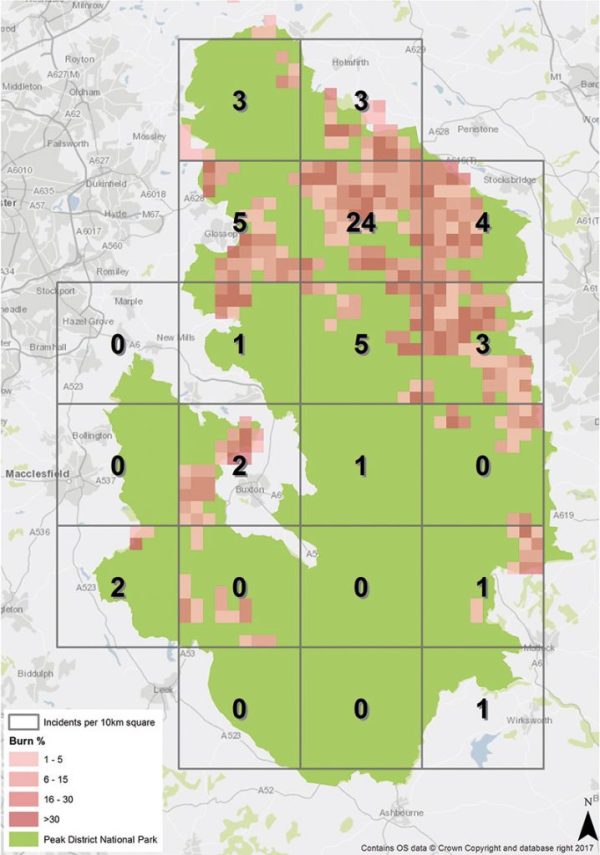
Hmm, it’s really no surprise that the Peak District National Park was identified in the recent scientific analysis of hen harrier sat tag data as one of the grouse moor areas where hen harriers were most likely ‘disappear’ in suspicious circumstances (see here).

The RSPB has also written a blog about this footage, and similar evidence of decoy use that has been recorded on other grouse moors in the north of England. Read the eye-opening blog here.

Fantastic investigative work from the RSPB to get such close and clear footage and there’s a strong chance that these gamekeepers won’t be using those particular decoy sites again in the near future!

Responses to hen harrier satellite tag paper: BASC

The publication of the hen harrier satellite tag paper on Tuesday (here) that provided compelling evidence to highlight, yet again, the link between grouse moors and the illegal killing of hen harriers, has resulted in a flurry of responses from various individuals and organisations.

We’ll be looking at these responses in turn.

Yesterday we looked at the response of Supt Nick Lyall, Chair of the Raptor Persecution Priority Delivery Group (here).

Today we’re examining the response from the British Association for Shooting & Conservation (BASC).

BASC was quick to publish a lengthy statement on its website and at first glance it looks convincing. BASC accepts that raptor persecution is a problem and calls for its members to help stamp it out:

The statement starts off very strongly but the message gets progressively lame as you scroll down the page, with BASC feeling the need to justify the ‘benefits’ of grouse shooting and then make some incredulous claims about the so-called ‘success’ of last year’s hen harrier breeding season, which actually looks like something that’s been cut and pasted from the Moorland Association’s website.

Nevertheless, we could forgive BASC its small piece of propagandist nonsense because hey, the main message (about stamping out illegal raptor persecution) is clear and it looks like it’s based on sincerely held views.

But wait a minute! Some of the phraseology in BASC’s statement looks awfully familiar.

There are criminals among us“, “Terminal damage“, “We must all take personal responsibility“, “Ensuring the criminal minority do not ruin it for the lawful, ethical majority“, “I want my grandchildren to enjoy shooting“.

Haven’t we heard this before? Ah yes, 16 months ago in November 2017 in response to the RSPB’s Birdcrime report, BASC published a strong position statement in The Times (here) (for which BASC earned well-deserved credit) using some of these very same phrases and then a further piece for the BASC website (here) again using some of these very same phrases. For example, here’s what BASC Chairman Peter Glenser wrote for the BASC website at the time:

Sorry, BASC, but it’s just not as convincing when you can’t respond spontaneously to the results of the hen harrier satellite tag paper but instead rely upon regurgitating a previous media statement just because it got you some good press the first time around, and just attribute it to a different member of staff each time.

To be fair to BASC, it is seen by many in the conservation community as the most progressive of the game-shooting organisations although let’s be honest, the bar is set pretty low and some of its individual staff members need to attend a ‘how not to behave in a way that will embarrass your employer and alienate the public on social media and in real life’ course.

But words are just words and they’re easy to churn out (especially if you’re simply cutting and pasting from an earlier piece). What about actions? What action has BASC taken to demonstrate a commitment to rooting out the criminals amongst its membership and wider industry since what it called the “watershed moment” to do exactly that back in November 2017?

Errrrr……boycotting the first meeting of the RPPDG chaired by Nick Lyall in January (see here, here and here)?

Or perhaps appearing to accept a significant donation from a company owned by somebody long-involved with the sporting management of various estates throughout the UK, some of which are notorious for their appalling record of confirmed and alleged raptor persecution crimes?

BASC’s rhetoric might be fooling some, but……

Responses to hen harrier satellite tag paper: Supt Nick Lyall, Chair RPPDG

The publication of the hen harrier satellite tag paper yesterday (here) that provided compelling evidence to highlight, yet again, the link between grouse moors and the illegal killing of hen harriers, has resulted in a flurry of responses from various individuals and organisations.

We’ll be looking at these responses in turn.

To begin with, Police Supt Nick Lyall, the Chair of the Raptor Persecution Priority Delivery Group (RPPDG), a so-called ‘partnership’ tasked with raising awareness of illegal raptor persecution and finding ways to eradicate it.

[Nick Lyall and his infamous rapper coat attending the Scottish Raptor Study Group annual conference in Perthshire in February, photo by Ruth Tingay]

Within hours of the hen harrier sat tag paper being published, Nick posted a statement on his blog last night with the heading ‘Time for change‘….. (see here).

He made four key points.

First, an acknowledgement of the high quality of the research and the journal in which it had been published.

Second, an acknowledgement that the research provided evidence of the extent of the raptor persecution issue, which is a significant change from a comment he made five months ago in his first blog about “rogue gamekeepers” (unsurprisingly, written shortly after spending time with the Moorland Association).

Third, and perhaps of greatest importance, that he intended to act upon the research findings via his newly forming RPPDG Enforcement Group, instead of simply discussing the findings and saying ‘Oh, isn’t it all terrible’. Most encouragingly, he also wrote, “I already have a couple of offenders in my sights….”.

Fourth, and the least convincing (to us), was his statement about continuing to work with ‘partners’: “I still firmly believe that an effective partnership response to this issue is the most sustainable way forward“.

We fundamentally disagree with this statement. These are crimes that are being committed – and in our view, serious organised crimes – the people involved should be treated as criminals, not partners.

Nick thinks an effective partnership would be the most sustainable way forward. But in any partnership, no matter what the topic, it will only work if all the partners share the same objectives. The simple fact of the matter is that in the RPPDG, they don’t, and this particular partnership charade has been allowed to continue for ten years without achieving anything of any significance in the world of raptor conservation. Not one thing. Other ‘partnership’ initiatives to tackle illegal raptor persecution go back much further than ten years and they’ve all failed too.

Nick got a taste of the ‘partnership’ at his first RPPDG meeting in January (see here), which was boycotted by several of the so-called ‘partners’ in an attempt to disrupt proceedings simply because they weren’t getting their own way, as they had for the previous ten years. It remains to be seen what will happen at the next ‘partnership’ meeting in April. Our hope is that they’ll get booted out so that the genuine partners, all working towards the same goal, can get on with it without further disruptions. We’ll see.

Regular blog readers will know that we have a huge amount of time for Nick Lyall and for what he’s trying to achieve. There’s no question that he ‘gets it’ and that he understands the challenges ahead, and that he’s working his socks off to start implementing change, most of which (or all of which?) is done in his own time.

Right now, in just six short months, he’s single-handedly putting to shame many of the others in positions of authority who have had, and still do have, the opportunity to bring about change but who have failed, and continue to fail, to even start trying.