Is this why Natural England doesn’t want to talk about ‘missing’ hen harriers?

Following a Freedom of Information request to Natural England, we now know that three satellite-tagged hen harriers vanished off the face of the earth in September 2020 – one next to a grouse moor in North Yorkshire (here), one on a grouse moor in the Yorkshire Dales National Park (here) and one at an undisclosed location in Northumberland which may or may not have been a grouse moor (here).

These disappearances follow the inevitable and now very familiar pattern of so many before them, which has led scientists to conclude that ‘hen harriers in Britain suffer elevated levels of mortality on grouse moors, which is most likely the result of illegal killing’ (see here).

What seems to have infuriated the public the most about this awful news is Natural England’s silence on the three disappearances. Although yesterday evening NE did manage to put out this vague and utterly unconvincing tweet, presumably in an attempt to save face:

Natural England has known about these three disappearances for four months and has said absolutely nothing about them. Why is that?

Would it have anything to do with the recent financial ‘agreement’ it signed with representatives of the grouse shooting industry? You know, the one where BASC bunged £10K to Natural England to support two NE fieldworkers to undertake hen harrier monitoring at winter roost sites?

The Memorandum of Agreement between the two parties is an extraordinary document. Drafted by lawyers, it’s turgid and seems to focus excessively on the use of BASC’s logo, but it’s also entertaining in parts.

It includes a clause that both parties agree not to slag off one another in public (!) and then a line about not saying anything ‘that is contrary to the principles of the Programme’:

I haven’t been able to find any definition of what the ‘Principles of the Programme’ are, but perhaps publicising the fact that three tagged hen harriers have vanished in suspicious circumstances, at least two of them on or next to grouse moors, would be considered ‘contrary to the principles of the Programme’?

For anyone interested, here’s the Memorandum of Agreement between BASC and Natural England, released under an FoI request:

Perhaps we should donate £10K to Natural England on the understanding that it WILL publicise, in a timely manner, embarrassing details like the loss of yet another hen harrier on yet another grouse moor? Oh but hang on, wouldn’t that be considered a bribe?

To be fair, Natural England’s reluctance to reveal these continued losses is probably absolutely nothing to do with any financial agreement it’s entered in to with representatives from the grouse shooting industry. Let’s face it, NE has been slow to publicise these incidents for years, it’s nothing new.

Satellite-tagged hen harrier Fortune ‘disappears’ at roost site in Northumberland

Another hen harrier has gone ‘missing’, the third to be reported in the last 24hrs.

As with the two most recent reports (see here and here), this information has had to be dragged out of Natural England via a Freedom of Information request.

This time it’s a young female, optimistically named ‘Fortune’, who was tagged (#162150) on 15th June 2020 at a nest site in Northumberland (site 1). In August 2020 she was reportedly in Dumfries & Galloway but on 16th September her tag’s last known fix came from an undisclosed site in Northumberland, listed by Natural England as, ‘Site confidential important hen harrier roost’. She was wearing a tag with known reliability, in contrast to the tag worn by recently-disappeared hen harrier Harold.

There’s no further information.

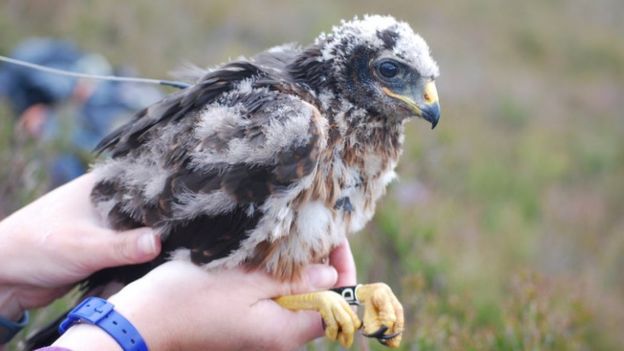
[A random photo of a young hen harrier by RSPB]

The illegal killing of hen harriers at winter roost sites has long been recognised by raptor fieldworkers as being of huge concern. In 2019 an armed man with dogs was filmed by the RSPB Investigations Team at an undisclosed roost site in Yorkshire (see here). The day before, satellite-tagged hen harrier ‘River’ vanished from the same roost site (here). Imagine that!

So that’s three satellite-tagged hen harriers that all vanished in September 2020, one next to a grouse moor in Yorkshire, one on a grouse moor in the Yorkshire Dales National Park, and one at an undisclosed roost site somewhere in Northumberland.

And they’re not the only ones – more details are yet to see the light of day.

Satellite-tagged hen harrier Harold ‘disappears’ on grouse moor in Yorkshire Dales National Park

Following yesterday’s news that one of the brood meddled hen harrier chicks had ‘vanished’ next to a grouse moor just beyond the boundary of the Yorkshire Dales National Park (see here), today I bring you news that another satellite-tagged hen harrier has vanished, this time on a grouse moor inside the Yorkshire Dales National Park.

This information has also come from a Freedom of Information request to Natural England.

Hen harrier ‘Harold’ was tagged (#57272) in the Yorkshire Dales on 4th June 2020. His tag’s last known fix came from a grouse moor at NY830036 on 19th September 2020.

Funnily enough, another young hen harrier called Dryad, tagged by the RSPB, was also reported ‘missing’ from the same place on 7th September 2020. Imagine that! (See here).

[Grouse moors rise above small villages and hamlets inside the Yorkshire Dales National Park. Photo by Ruth Tingay]

[The last known fix from Harold’s satellite tag at grid ref NY830036, surrounded by the burnt strips of the grouse moors]

There is a caveat with Harold’s disappearance. The tag that Natural England fitted was one of the tags that has previously been identified as being unreliable due to its limited functionality (see here for a discussion) and has since been removed from the brood meddling trial at the insistence of the scientific advisory group. So why the hell is Natural England still using this tag on other hen harriers?

You’ll have to draw your own conclusions about the fate of Harold. And why Natural England hasn’t deemed it worthy of any publicity, despite me asking about it in December (here) and despite its own extensive research that demonstrates how often these young hen harriers are suspected to be illegally killed on or close to grouse moors (see here).

Harold’s disappearance will be added to the ever-increasing list of missing or confirmed dead hen harriers since 2018 (currently standing at 46 after yesterday’s news). But it won’t be added just yet because there’s more bad news about satellite-tagged hen harriers still to come.

Standby.

UPDATE 14 January 2021: This blog has been picked up by the Yorkshire Post (here)

Another brood meddled hen harrier ‘disappears’ next to Yorkshire grouse moor

One of last year’s brood meddled hen harriers has ‘disappeared’ next to a Yorkshire grouse moor.

For new blog readers, hen harrier brood meddling is a conservation sham sanctioned by DEFRA as part of its ludicrous ‘Hen Harrier Action Plan‘ and carried out by Natural England (NE), in cahoots with the very industry responsible for the species’ catastrophic decline in England. For more background see here.

[Cartoon by Dr Gerard Hobley]

As you’ll recall, despite all five of the 2019 brood meddling cohort being ‘missing’ presumed dead, four of them in suspicious circumstances (see here), Natural England decided in 2020 that another load of chicks should be brood meddled to appease the grouse shooting lobby (see here). Those chicks, along with other, non-brood meddled chicks, were fitted with satellite tags.

In September we learned that four of the 2020 tagged cohort were already gone – one dead (likely predated) and three ‘missing’ (here), but none of these had been brood meddled.

Since then, Natural England hasn’t provided any updates and, since the autumn is peak hen harrier-killing season on grouse moors, I submitted an FoI to Natural England in December to find out what was going on, especially as there’d been rumours from fieldworkers that at least one tagged harrier had vanished in a notorious grouse shooting area in the Yorkshire Dales National Park.

Natural England has now responded and the news isn’t good, although it’ll come as absolutely no surprise whatsoever.

According to the information released by Natural England under FoI regs, a number of satellite tagged hen harriers have gone ‘missing’ since September 2020 – further blogs on these will follow shortly.

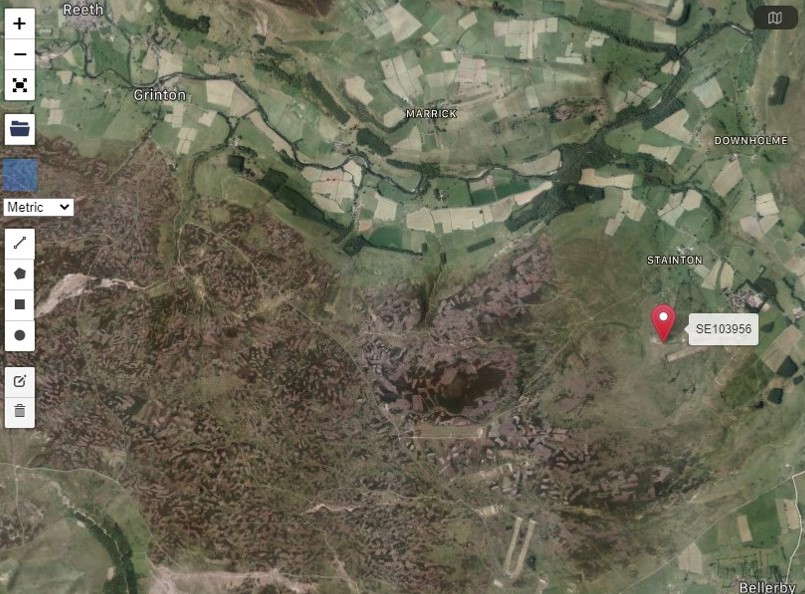
One of those missing is a brood-meddled hen harrier (Tag #55152) originally removed from a nest (BMR1) in North Yorkshire. He was tagged on 11 July 2020 and his tag’s last known fix was on 20th September 2020, right next to a grouse moor in North Yorkshire, grid reference SE103956.

[The last known fix of Tag #55152 on 20th September 2020]

There’s no further information available and I haven’t seen any appeal for information from North Yorkshire Police or Natural England.

The disappearance of this bird means that there are now 46 hen harriers ‘missing’ or confirmed illegally killed since 2018 (see here). I won’t update the victim list just yet because as mentioned above, there are others to add.

Standby.

As for the rest of the nine hen harriers brood meddled in 2020, according to Natural England six are still transmitting (as of December 2020), one died in captivity before release and one died of natural causes in October 2020 (Tag #55154).

The legal basis of hen harrier brood meddling has been challenged in the courts by both Mark Avery and the RSPB. An appeals hearing is due later this month (see here for details).

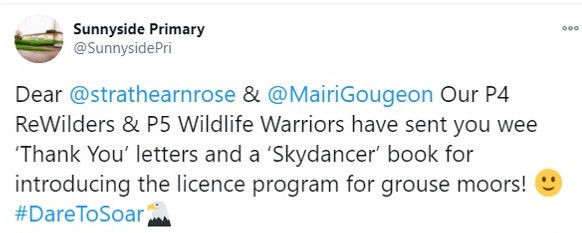
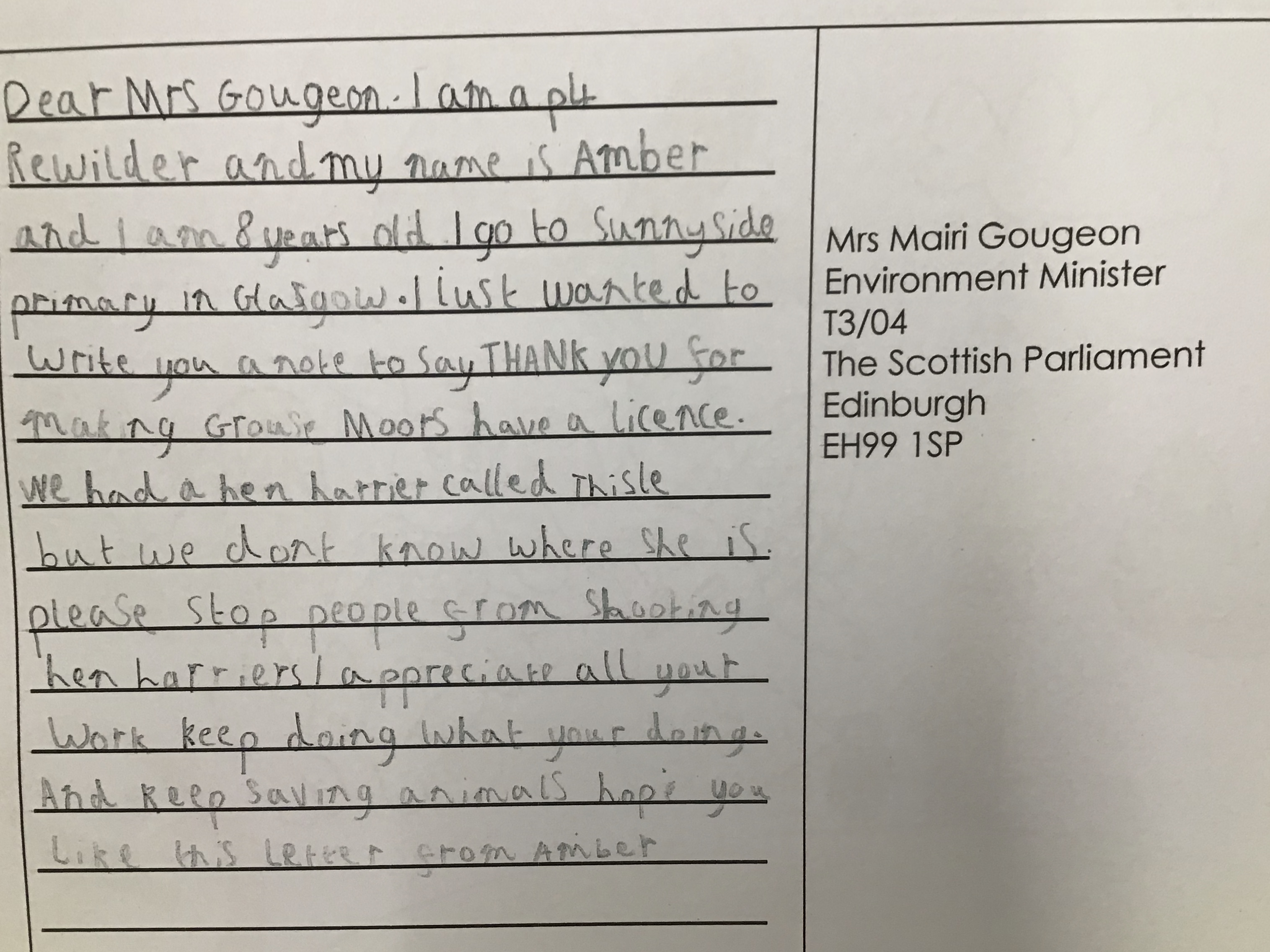
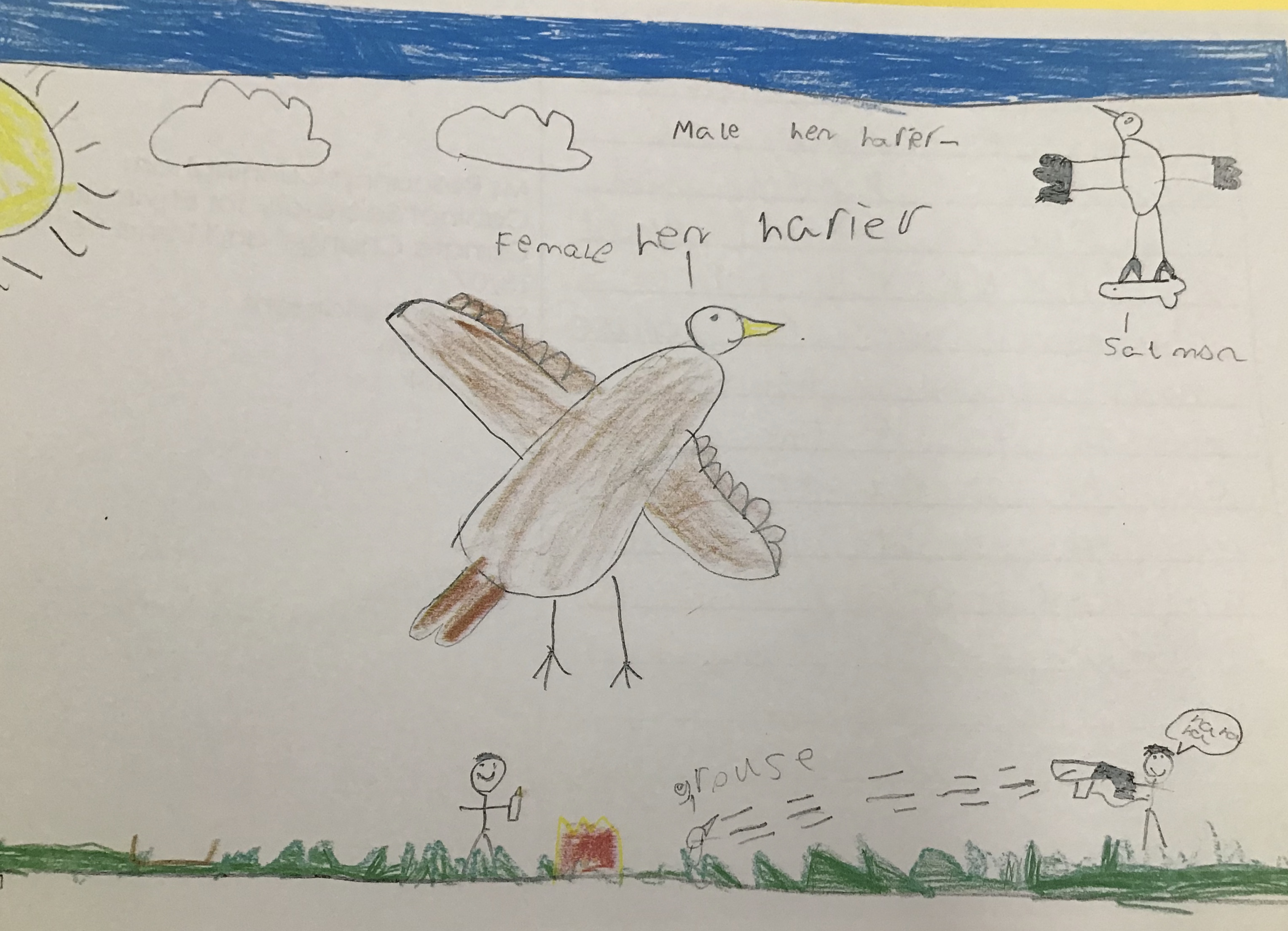
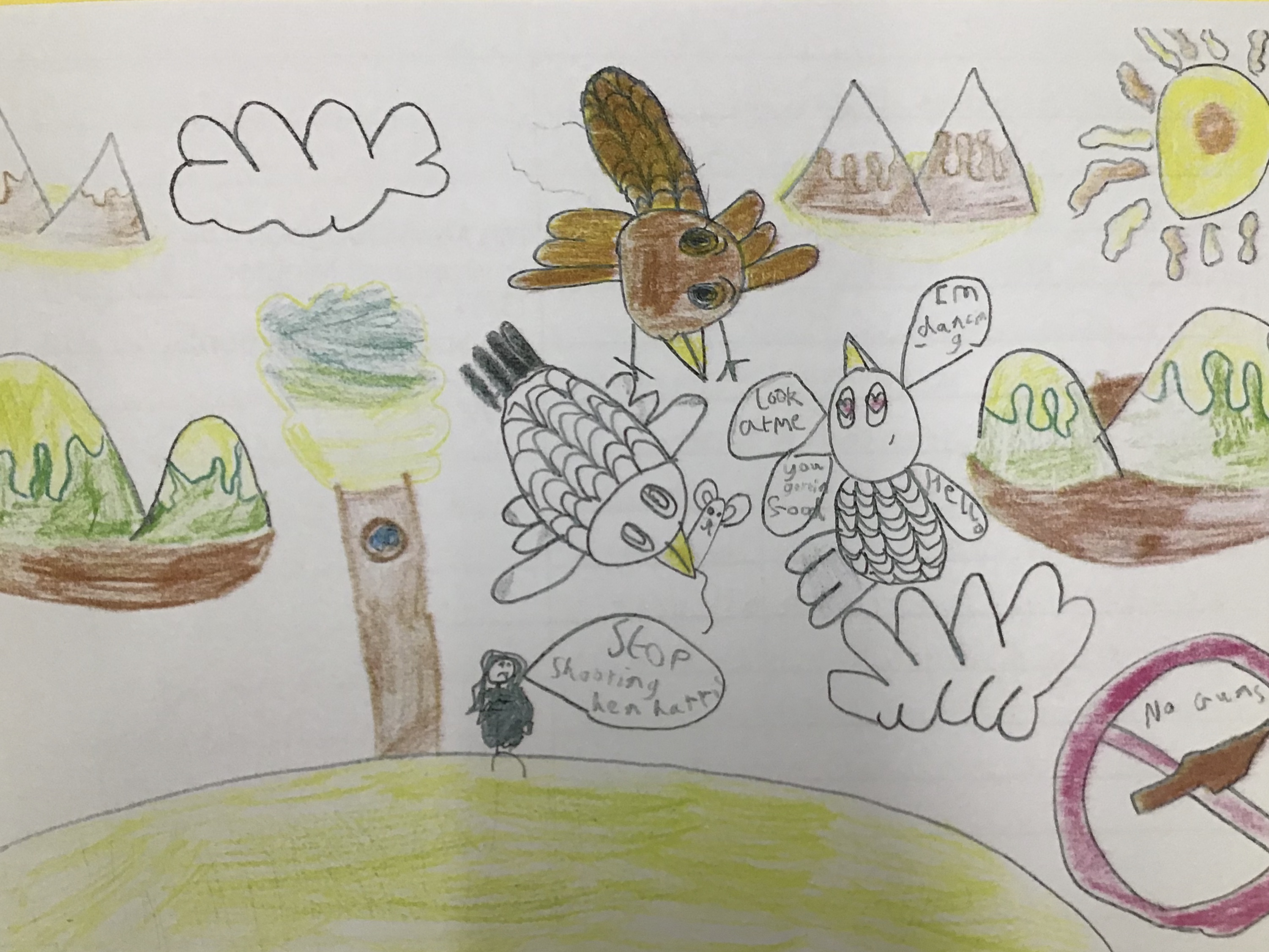
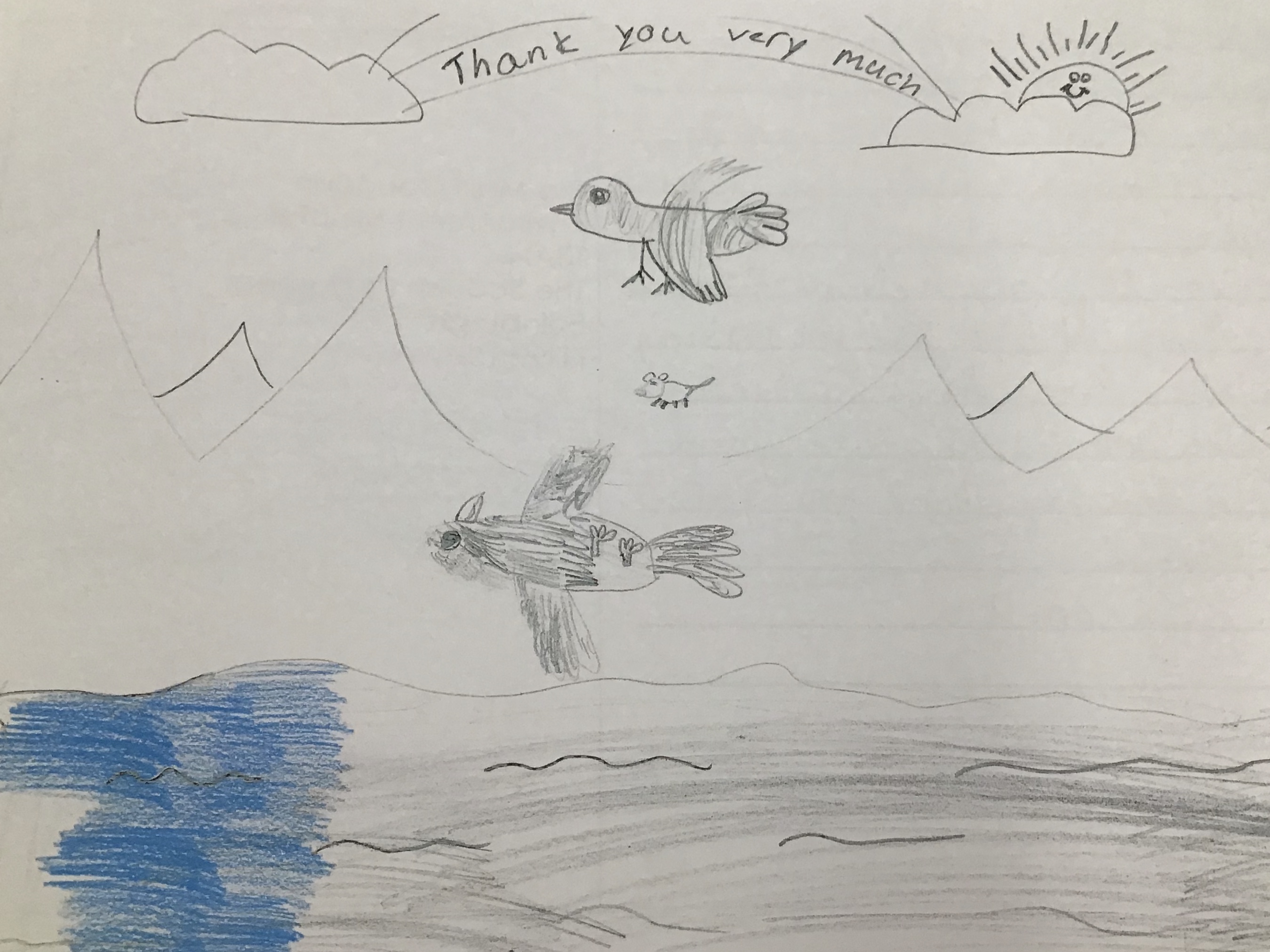
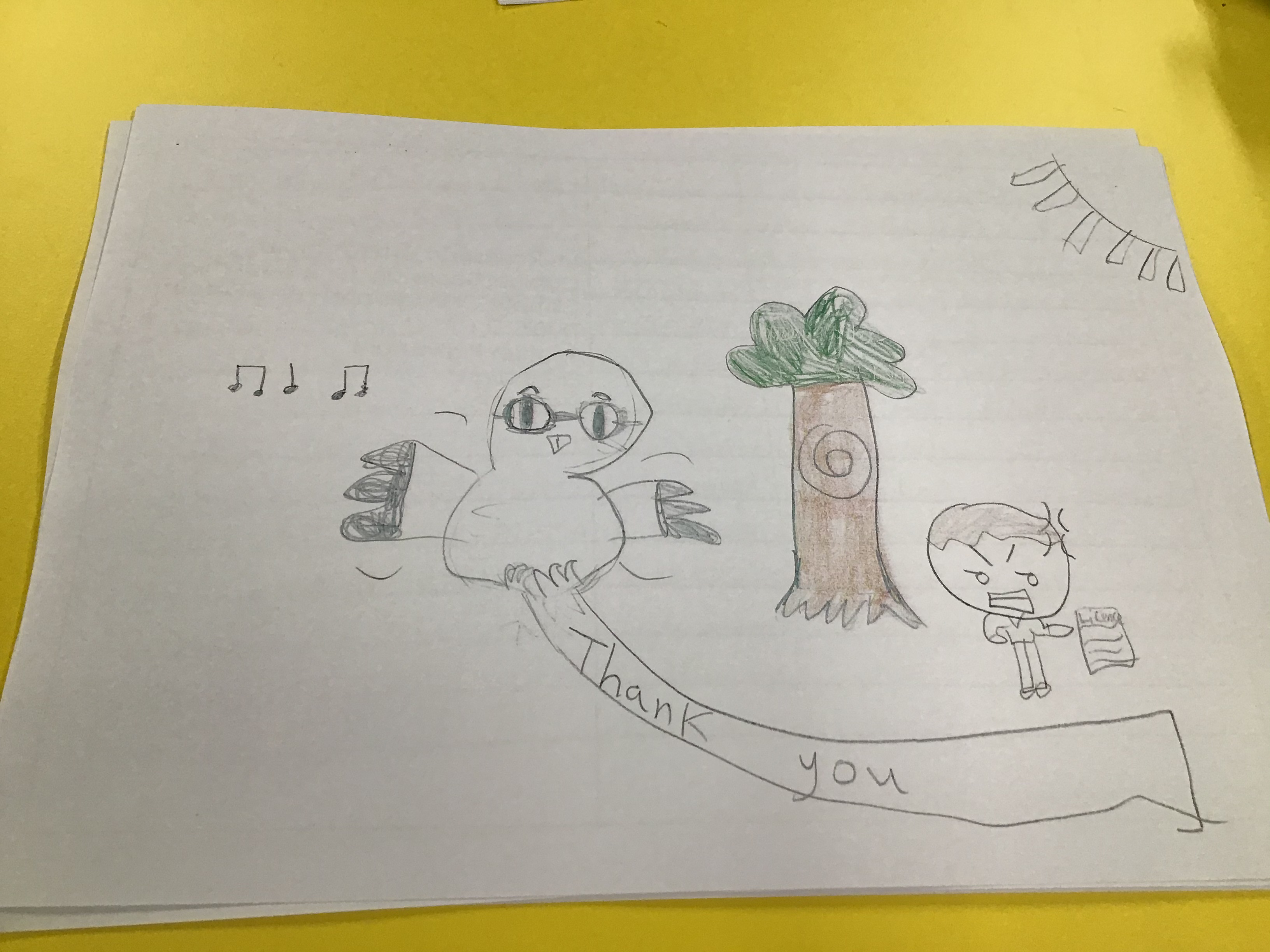
8-year old schoolchildren congratulate Scottish Government on decision to licence grouse shooting

Some of you will no doubt remember / be aware of Sunnyside Primary School in Glasgow and its pupils’ involvement in conservation activities (e.g. see here for a previous blog on their response to the suspicious disappearance of golden eagle Fred in 2018).

These school kids are only too well aware of what happens to raptors on some driven grouse moors, as they had named and were following an RSPB satellite-tagged hen harrier (‘Thistle’) in 2019 that later disappeared in suspicious circumstances on a grouse moor in Sutherland (see here).

Well here they are again, just before Xmas, responding to the Scottish Government’s commitment to establishing a licensing scheme for grouse shooting after many, many years of procrastination.

Here are few of those drawings and letters:

If you want to find out more about Sunnyside Primary School and its brilliant kids, have a watch of this video that they made for Hen Harrier Day 2020:

Hen harriers doing well on Mar Lodge Estate but what happens when they leave?

Back in 2016, the National Trust for Scotland (NTS) was celebrating the rare success of a hen harrier breeding attempt on the Mar Lodge Estate, the first such success for decades (see here).

[A young hen harrier fitted with a satellite tag on Mar Lodge Estate in 2016. Photo by Shaila Rao]

The NTS has just published an update on the return of hen harriers to Mar Lodge Estate, detailing further breeding successes in each year since (see here).

This is really, really encouraging news, but it’s only half of the story. Breeding success is meaningless if survival rates are low, and they are low, very low. The most recent national survey of hen harriers in Scotland, conducted in 2016, documented a 9% decline since the previous survey in 2010. It was the second successive decline in the Scottish hen harrier population revealed by national surveys, signalling a worrying trend. In the longer term, over a period of just 12 years, the number of breeding pairs had dropped by 27% in Scotland (see here). Illegal persecution connected to driven grouse moor management is widely acknowledged as being the most significant threat to this species’ conservation, not just in Scotland but across the UK (e.g. see here).

The NTS blog recognises this and states:

However, it’s not all good news. The success of hen harrier breeding at Mar Lodge Estate led to us being involved in the RSPB Hen Harrier Life Project and through this 14 harrier chicks from Mar Lodge Estate were satellite-tagged between 2016 and 2020. But of these 14 chicks, only one still survives in 2020 – a female named Tamara, who spends much of her time in Perthshire. Eight of the satellite tags stopped suddenly, with no trace of a bird or body found, raising suspicions of possible foul play‘.

Some of those young birds satellite-tagged at Mar Lodge didn’t even make it out of the Cairngorms National Park, ‘disappearing’ in suspicious circumstances on driven grouse moors – e.g. see here, here, here, here, here, joining a growing list of other sat-tagged hen harriers that have vanished or been found dead there (e.g. see here, here, here, here). Such is the extent of this issue, the Cairngorms National Park Authority has had to publish statements that illegal persecution continues to be a problem (e.g. see here).

Some of those young birds from the Mar Lodge Estate feature on the grim list of 45 hen harriers ‘missing’ or confirmed illegally killed in the UK since 2018 – see here. I’m led to believe that this list is now out of date (see here).

Fundraiser for hen harrier satellite tags

The Nidderdale Raptor Study Group, in conjunction with the Northern England Raptor Forum (NERF) is hosting a fundraiser to support the RSPB Investigations Team to buy satellite tags for hen harriers.

In recent years satellite tags have revealed the extent of hen harrier persecution across the UK. In 2019 a damning scientific research paper demonstrated that at least 72% of tagged hen harriers were presumed illegally killed on or close to driven grouse moors (see here).

And a tally of incidents kept by this blog demonstrates that over the last two years alone at least 45 hen harriers, many of them satellite-tagged, are either ‘missing’ in suspicious circumstances or confirmed illegally killed, many on driven grouse moors (see here). It’s my understanding that this number has since risen but official notification is still pending. More on that shortly.

So, in essence, satellite-tagging has proven to be incredibly important in helping to detect a crime that is otherwise too easily hidden (and which explains the grouse shooting industry’s desperate attempts to undermine the science and the integrity of those who fit and monitor the tags).

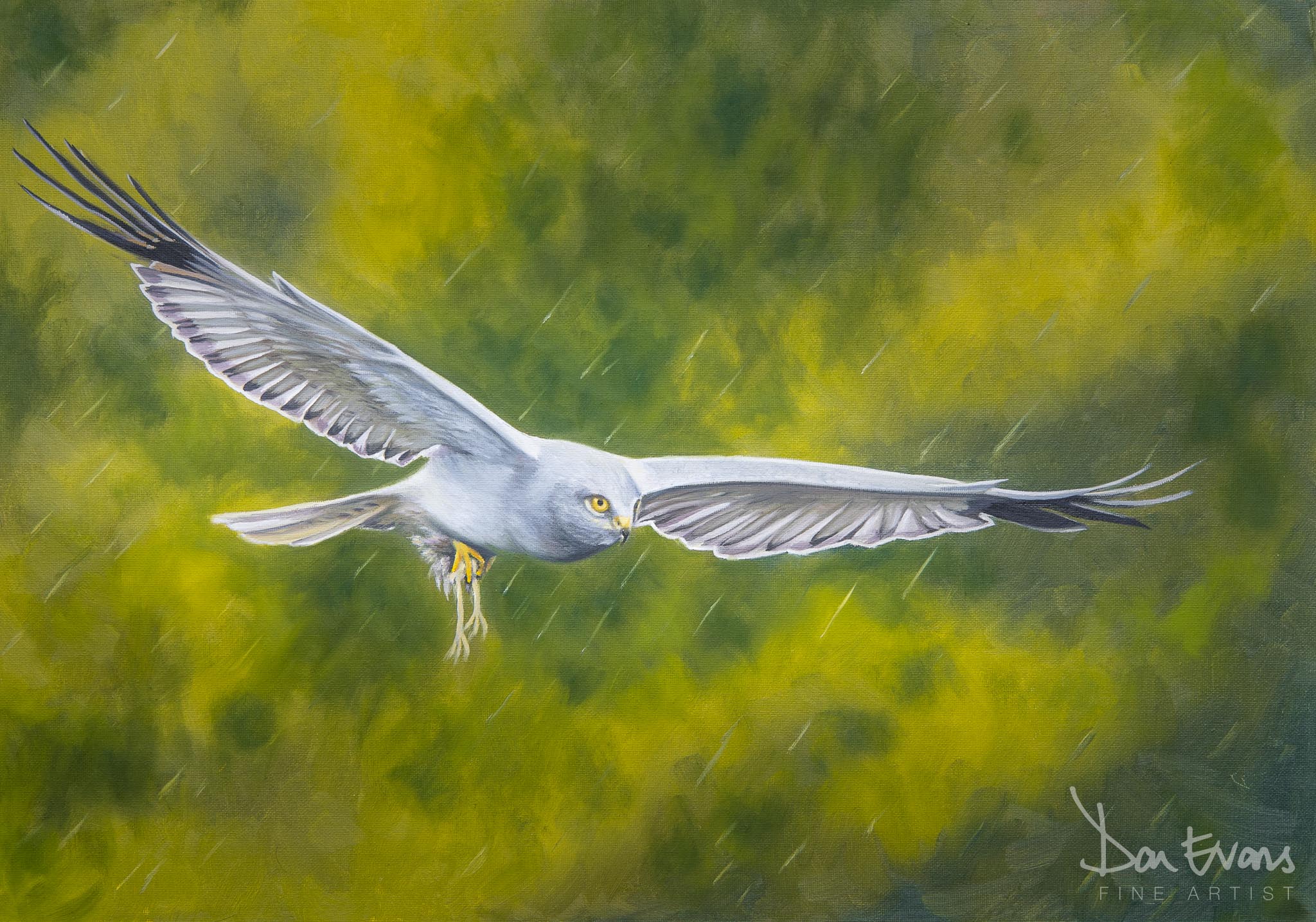
Yorkshire-based artist Dan Evans has donated this A2-sized oil painting for an online auction to help support the purchase of more satellite tags:

If you’d like to bid on this artwork please visit the auction page here. The auction will close on 23 December 2020. There is also an opportunity to buy signed limited edition prints, with all profits being donated to the sat tag fund.

There is also a fundraising page for those who may not want to buy the artwork but who may still be interested in supporting the effort to buy more satellite tags – you can visit the fundraiser page here

Guns up for hen harriers – new report confirms what’s been known for decades

Scottish Natural Heritage (now re-branded as NatureScot) has published a new report today from it’s controversial ‘Heads up for Hen Harriers’ project.

It’s findings confirm what’s been known for decades – breeding hen harriers aren’t very successful on driven grouse moors but are more successful on moors where there’s little or no gamebird shooting. Gosh, who knew?

[This hen harrier was critically injured in an illegally-set trap next to a nest on Leadhills Estate in 2019. He was rescued by members of the Scottish Raptor Study Group, with an almost severed leg. A specialist vet at the SSPCA did all he could to save him but eventually the extent of his injuries were too much and he had to be euthanised. Photo by Ruth Tingay]

But before we get in to this latest report of the bleedin’ obvious, here’s some background for new readers.

The Heads up for Hen Harriers Project is a Scottish Government-funded initiative, led by Scottish Natural Heritage (SNH, now NatureScot) in partnership with the grouse moor owners’ lobby group Scottish Land & Estates (SLE), RSPB Scotland and the National Wildlife Crime Unit.

The idea behind this project, which began in 2015, is that sporting estates agree to have cameras installed at hen harrier nests to identify the causes of nest failure. This is a flawed idea right from the off. We all know the main reason behind the declining hen harrier population – illegal persecution on intensively managed driven grouse moors – it has been documented time and time and time again, in scientific papers and government-funded reports. So, if you put an ‘official Project camera’ on a hen harrier nest situated on a driven grouse moor, the gamekeepers will know about it and won’t touch that nest (although they’re quite likely to try and bump off the young once they’ve left the nest but are hanging around the grouse drives, away from the nest camera). So if the nest then fails for natural reasons (e.g. poor weather, predation), the Project will only identify those issues as the cause of failure, and not the illegal persecution issue. The grouse-shooting industry will then use those (biased) results to shout about illegal persecution not being an issue. We’ve seen this many times already.

I’ve blogged about this project many times over the last five years and have been highly critical of its claims, particularly about the so-called ‘partnership working’. Basically it looks like a massive greenwashing exercise (e.g. see hereherehereherehereherehereherehere, here and here). Andy Wightman MSP also condemned the project in a Parliamentary debate in 2017. You can read the transcript here and watch the video here (and note the stony silence after Andy’s speech!).

The estates involved in this project have insisted on remaining anonymous, and this has allowed both SNH and SLE to publish some pretty outrageous claims without anybody else being able to scrutinise the taxpayer-funded data (e.g. see here and here). This is astonishing, and a preliminary look at the results presented in today’s report do not support some of the earlier claims made about ‘successful’ hen harrier nests on driven grouse moors. I’ll be looking at this more closely in due course.

So, back to today’s report. It’s a short-ish summary, presenting an analysis of a proportion of the camera images captured during the project. You can download it here:

The most important result is written on page 6, and there’s an accompanying table on page 7. It goes like this:

Fourteen (56%) of the 25 estates involved in the scheme had driven grouse moors employing full time keepers. Despite their involvement for 46 estate years only four nests were found. Just one was successful (25%) and produced four young‘.

If that isn’t damning evidence then I don’t know what is.

NatureScot has published a press release to accompany the publication of today’s report, as follows:

The success of one of Scotland’s rarest birds of prey, hen harriers, is closely linked to the age of the parent birds, prey availability and land use, concludes a report published by NatureScot today.

The report, based on five years of camera evidence on 28 estates participating in the Heads Up for Harriers partnership project, found the age of the adult male bird is a key factor in breeding. There was a 91% success rate when males were older than one year, irrespective of the age of the adult female bird. 

Not surprisingly, the report also found that nesting attempts and fledging success were higher during warm, dry spring weather, with wetter weather having a negative impact on both the harriers and availability of prey.

The research also found that hen harriers prey were birds 89% of the time with mammals making up the final 10%. However, the report concludes that hen harriers rarely prey on grouse. Meadow pipits were by far the most abundant prey at 77% of birds, with red grouse accounting for only 5.6% of prey.

Over 2 million hen harrier nest camera images were meticulously studied to reveal harrier behaviour and factors impacting their survival. While the majority of estates have some game shooting interest, analysis indicated that harriers fare best on those estates with no shooting interests, with more breeding attempts, nesting success and higher productivity recorded on the majority of non-sporting estates.

Hen harriers have a low survival rate for young birds, and the project showed that where the reasons for failure could be determined, all the nest failures were due to natural factors or predation by foxes and other birds.

Chair of the Heads Up for Harriers Group, Professor Des Thompson of NatureScot, said:

“Hen harriers continue to struggle in Scotland and they remain a rare species, although Scotland holds by far the majority of the UK population with 505 territorial pairs. This report shows that almost half of breeding adult female birds are four years or older and 87% of male birds are older than one year, despite the females being capable of breeding much earlier. This indicates a high turnover of young birds, and while the report does not speculate as to the reasons, this is a worrying statistic.”

Report author, Brian Etheridge, said:

“Some fascinating patterns in hen harrier breeding habits have been identified, such as a tendency for nesting on westerly facing slopes, with an increasing preference for nests in higher areas, and the low occurrence of grouse within the sampled 500 prey items.  This information should help land managers better cater for nesting harriers, while providing reassurance of the limited impact on game birds.”

Professor Thompson added: “The report is testimony to the work of the Heads Up for Harriers project group, particularly RSPB and Scottish Land & Estates, the project staff and those estates that have actively participated in the project.”

Information in the report was gleaned by analysing images from 52 hen harrier nests (37 of which had cameras installed), between them fledging 120 young birds.

Heads Up for Harriers is a Partnership for Action Against Wildlife Crime Scotland (PAW) Scotland project, led by NatureScot. From the project start in 2015, 52 hen harrier nests were located. 35 of these were successful in fledging a total of 120 young. Trail cameras were installed at 37 nests and over two million images recorded.

The Heads Up for Harriers Group are considering a shift in focus to concentrate on areas which can benefit most from intervention. The group will be discussing how best to achieve this with the PAW Scotland Raptor Group in the future.

ENDS

That penultimate sentence in the press release is telling. Reading between the lines, it looks like the plug is finally being pulled on this ridiculous scheme. ‘….Considering a shift in focus to concentrate on areas which can benefit most from intervention‘ – FFS, why not just say it? Why not just acknowledge, in full, that ongoing illegal persecution of hen harriers on many driven grouse moors is what’s causing the catastrophic population decline of the hen harrier?

Look – 45 hen harriers ‘missing’ or confirmed illegally killed since 2018 (see here).

By the way, tomorrow marks the one year anniversary of the Werritty Review on grouse moor management being submitted to the Scottish Government. We are still waiting for the Government’s response.

SNH grants licence to Leadhills Estate for out-of-season muirburn

Leadhills Estate, which has been at the centre of over 50 police wildlife crime investigations in the last two decades, has had two gamekeepers convicted for committing wildlife crime offences during that time, and is currently the subject of a three-year General Licence restriction, imposed after Police Scotland found ‘clear evidence’ of wildlife crimes having being committed by persons unknown in recent years, and is under further police investigation since more allegations have been made this year, was granted a licence by SNH to undertake out-of-season muirburn on estate grouse moors in September.

There have been some jaw-dropping revelations on this blog over the years but this one is right up there.

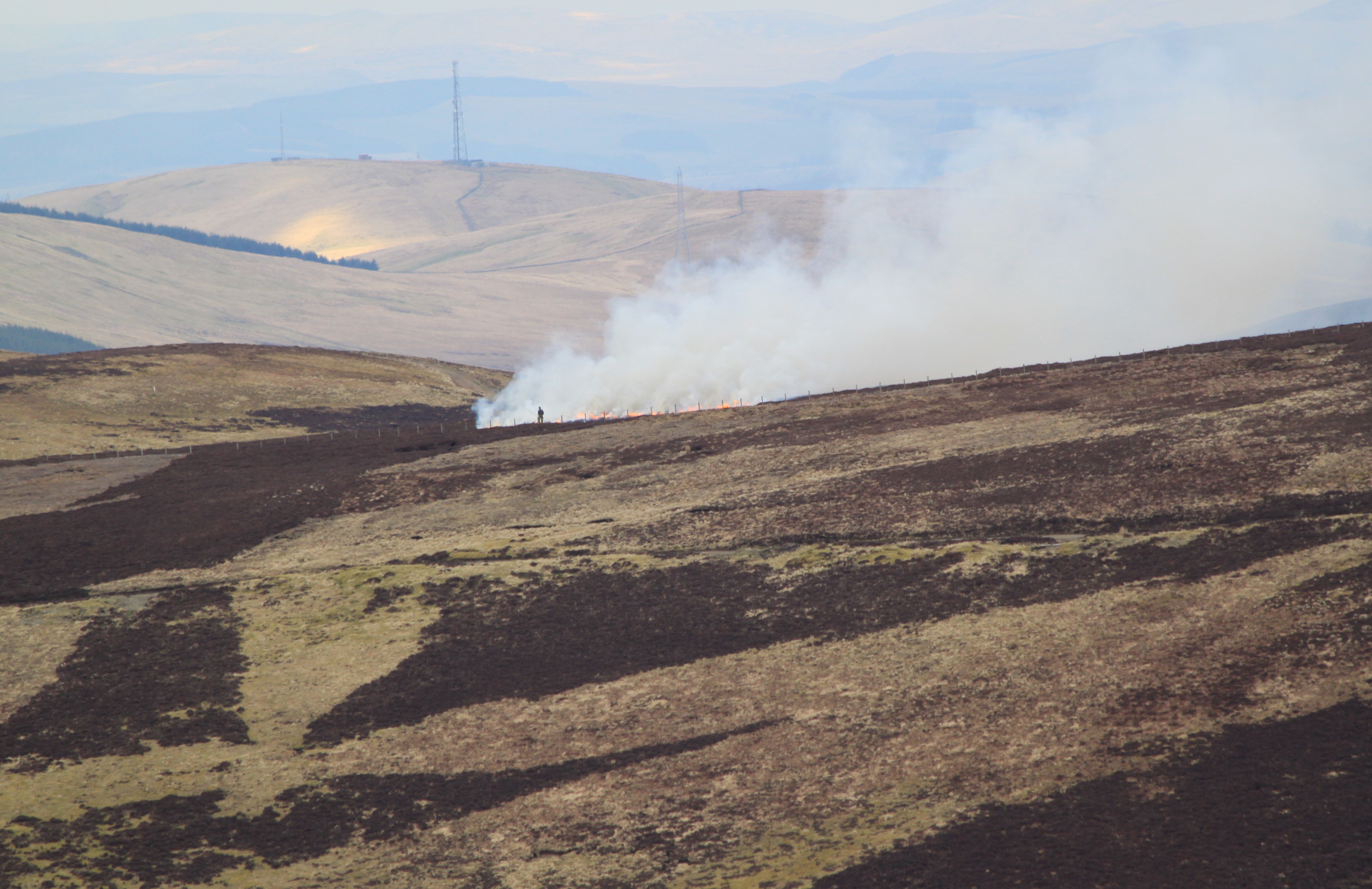
[Muirburn on Leadhills Estate, South Lanarkshire. Photo by Ruth Tingay]

A quick recap of the situation (for those who want more detail please see the links to previous blog posts below).

In April 2020 the Scottish Government temporarily banned all muirburn in Scotland under emergency Coronavirus legislation (see here).

Despite being in the middle of a pandemic, in July 2020 Mark Osborne, acting on behalf of Leadhills Estate, applied to Scottish Natural Heritage for an out-of-season licence to conduct muirburn on the estate in September after spraying some areas with glyphosate (see here).

Scottish Natural Heritage (now rebranded as NatureScot but that’s irrelevant) refused the licence application in August (here) and Osborne immediately appealed the decision (see here).

That’s where we left the saga last time. Here’s what happened next…..

SNH was obliged to consider Osborne’s appeal, although it wasn’t obliged to overturn it’s previous decision to refuse permission.

Here’s how SNH’s reconsideration went:

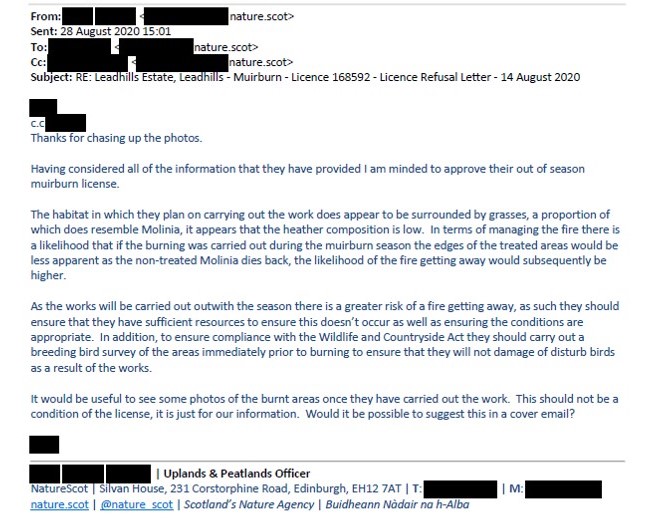
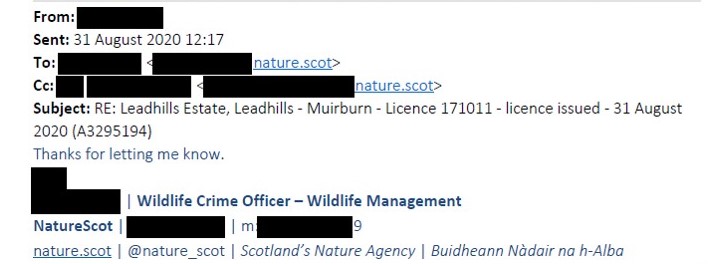
According to the Freedom of Information documents that have been released, that’s it. That’s the extent of the discussion at SNH about whether Leadhills Estate should be given permission to set fire to its grouse moors out of season and in the middle of a global pandemic.

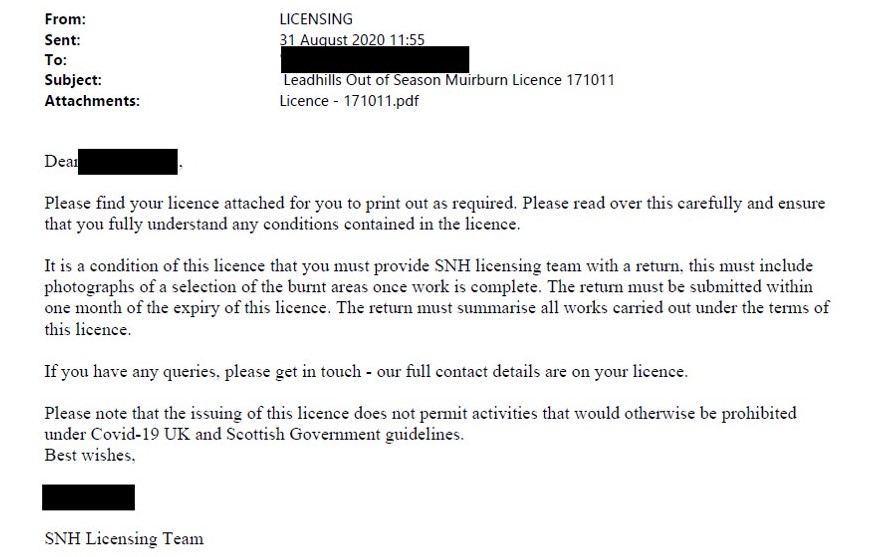
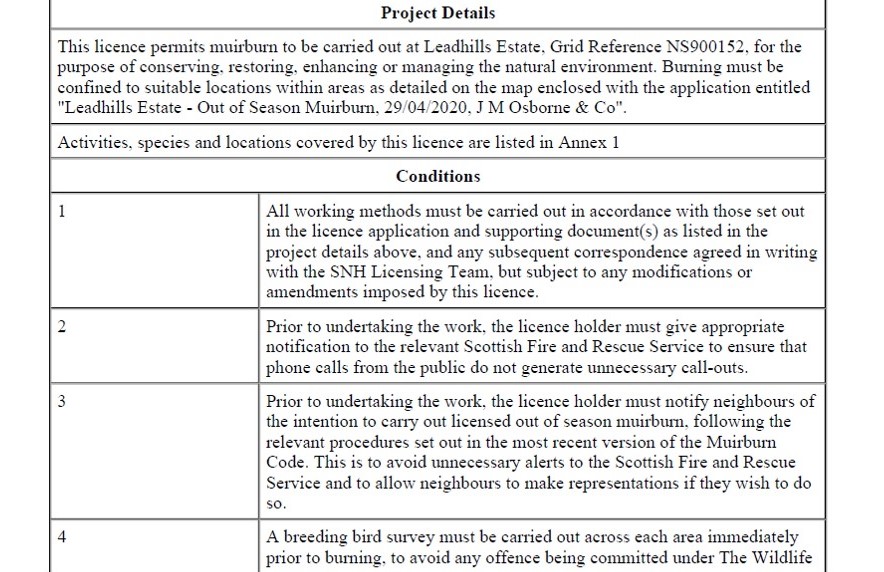
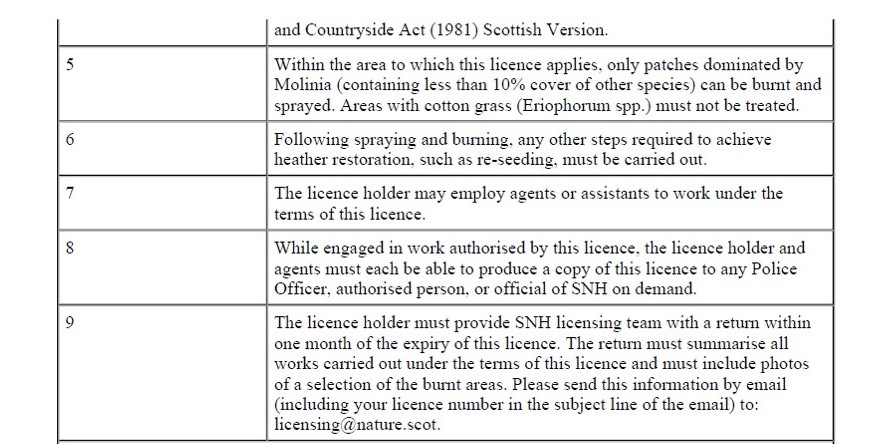
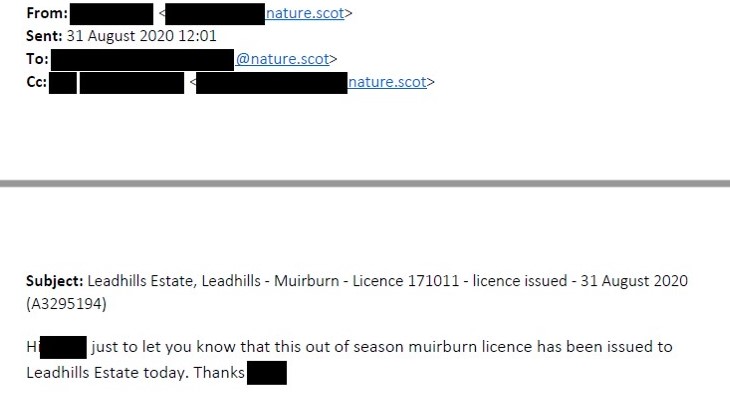
A couple of days later SNH wrote to advise Osborne of its U-turn decision and sent him the licence, as follows:

There has been some discussion amongst RPUK colleagues and associates about whether SNH’s decision to issue this licence was a breach of the Government’s emergency Coronavirus legislation which had temporarily banned muirburn until the official season opened on 1 October 2020. I might return to that topic.

However, of greater interest, to me, is how SNH’s decision-making on whether to issue an out-of-season muirburn licence apparently failed to consider the wider picture of what’s been going on at Leadhills, and especially the current three-year General Licence restriction placed on the estate, by, er, SNH. Didn’t anybody think about that?

Ah, well somebody did, but unfortunately it seems this person’s expert input wasn’t invited as part of the decision-making process:

There’s quite a lot to take in about this case, and the details and circumstances of this particular licence. An FoI has been submitted to SNH to see the licence return which, as detailed in condition #9, should have now been submitted to SNH by Osborne.

And it turns out that this isn’t the first year that SNH has granted an out-of-season muirburn licence to Leadhills Estate. More on that shortly.

For some reason, the phrases ‘taking the piss’ and ‘impotent licensing authority’ are uppermost in my mind.

Natural England ‘unable to protect wildlife’ say beleaguered staff

Press release from Prospect, Natural England’s staff trade union (10th November 2020):

Prospect launches second State of Natural England Report

A decade of austerity with pay cuts, budget cuts, cuts to grants and a decline in staff numbers is putting England’s natural heritage at risk.

That is the finding of the second report by Prospect into the State of Natural England which shows that the agency does not have the resources it needs to continue to adequately fulfil its responsibilities. The first report was published in 2019.

Over the past two years Prospect, the main union for workers in Natural England, has spoken to its members about their experiences at work, analysed budgets and grants, and assessed programmes. What we have found is an agency getting beyond crisis point.

Natural England is the body responsible for maintaining and protecting England’s natural environment. It is responsible for: protected sites such as national parks and Sites of Special Scientific Interest; countryside stewardship, helping farmers and landowners enhance the biodiversity of their lands; planning and development policy; the marine environment; ramblers’  favourites like the England Coast Path, and many more things which make our natural heritage what it is.

Natural England is at risk because its funding has been slashed and its workforce reduced. Natural England’s government-funded Grant in Aid budget has declined by 49% in six years and almost two-thirds over a decade. Over that time the agency has gone from more than 2,500 staff in 2010 to, we estimate, around 1,900 staff now.

Workers in Natural England were subject to a 1% pay cap for eight years. This has improved this year but the increase comes nowhere close making up for the real-terms losses of the past decade. There is also an 8.4% gender pay gap which shows little sign of being reduced.

This is the reality of government austerity and its effect on agency staff – highly qualified workers facing financial hardship, increased workloads, loss of pension accrual, terrible morale and looking to move elsewhere for a better deal. Successive ministers have made things worse by undermining and attacking the independence of the work of agency experts.

Prospect is calling for:

  • Natural England’s wide and important remit for people, nature and the green recovery, to be properly recognised and funded.
  • It’s autonomy as a non-departmental public body to be meaningfully restored.
  • The damage caused by the pay cap to be reversed and pay progression and pay equality, to be restored.
  • To achieve pay parity with the rest of Defra, particularly for pay scale minima and maxima.
  • To no longer be covered by the civil service pay guidance and be subject to an independent pay review body.

Download the full report.

Mike Clancy, Prospect general secretary, said:

There is a yawning gap between the government’s rhetoric on climate change, the environment and biodiversity and the reality of years of underfunding our environmental agencies.

Protecting nature means investing in the people who do that work. Natural England is at the heart of this agenda but it can only be effective if it is properly funded and the importance of its staff properly recognised.

The disproportionate cuts, out-dated and unfit pay framework, and significant pay inequality all need to be addressed. The UK has a world-class natural environment which is treasured by the public, but this natural heritage will suffer if the expert custodians of our natural heritage continue to be treated as second class public servants.

ENDS

There’s also an article on this in today’s Guardian (here).

It might help a little bit if Natural England bosses stopped defending the pouring of money in to the insane Hen Harrier brood meddling trial, a conservation sham sanctioned by DEFRA and carried out by Natural England, in cahoots with the very industry responsible for the species’ catastrophic decline in England.

Although the actual ‘meddling’ bit is apparently being funded in a secret financial arrangement between the Moorland Association (grouse moor owners’ lobby group) and the National Birds of Prey Centre in Newent – the cost of this has not been made public, which you’d think would be quite crucial when it comes to assessing the viability of this ‘trial’ – there is still considerable cost in terms of NE project staff time.

And then there’s the equally ridiculous NE project to ‘reintroduce’ hen harriers to southern England, another conservation sham aimed at drawing attention away from the criminal onslaught in the uplands, and for which NE is forking out thousands of pounds to send staff over to Europe, along with satellite tags bought by British tax payers, to fit to harriers in Europe in what looks like a way of ‘persuading’ the European authorities to send young harriers to the UK for the ‘reintroduction’. More details on this shortly.

The question of Natural England’s ability to conduct effective monitoring and enforcement of the new General Licences was raised in a Zoom call between Wild Justice and DEFRA officials yesterday. Judging by today’s report from Prospect, there’s very little indication that NE will be up to the task.