
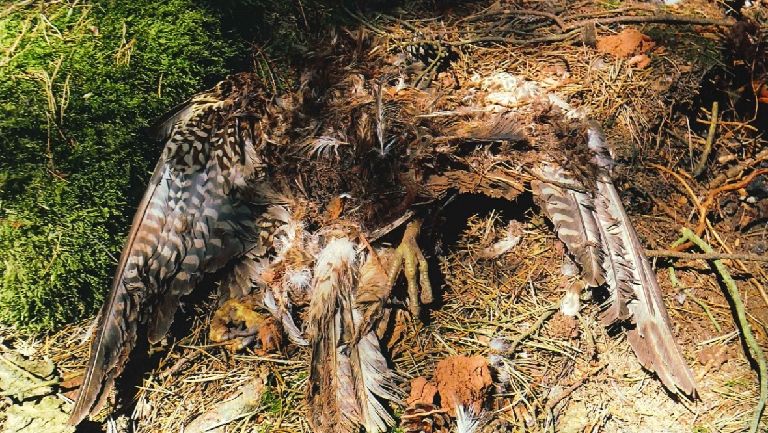
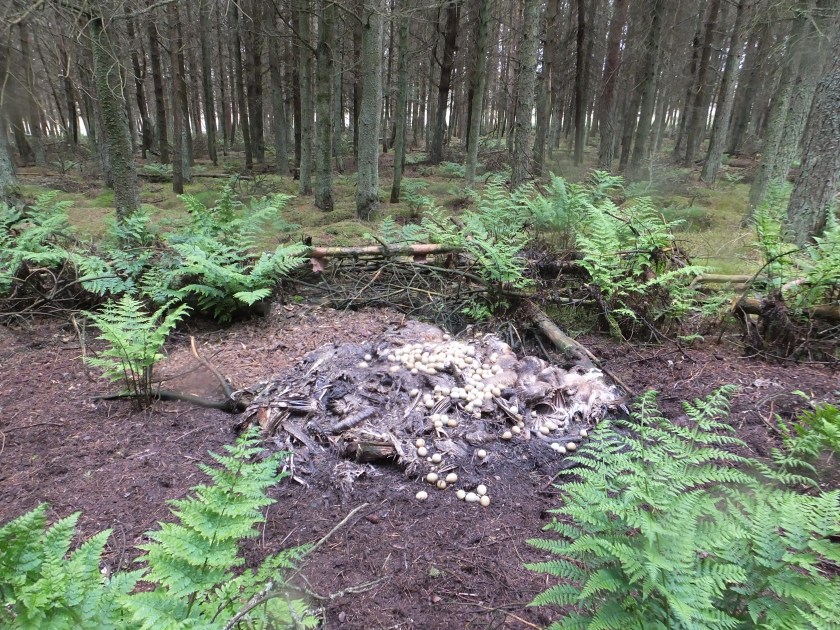
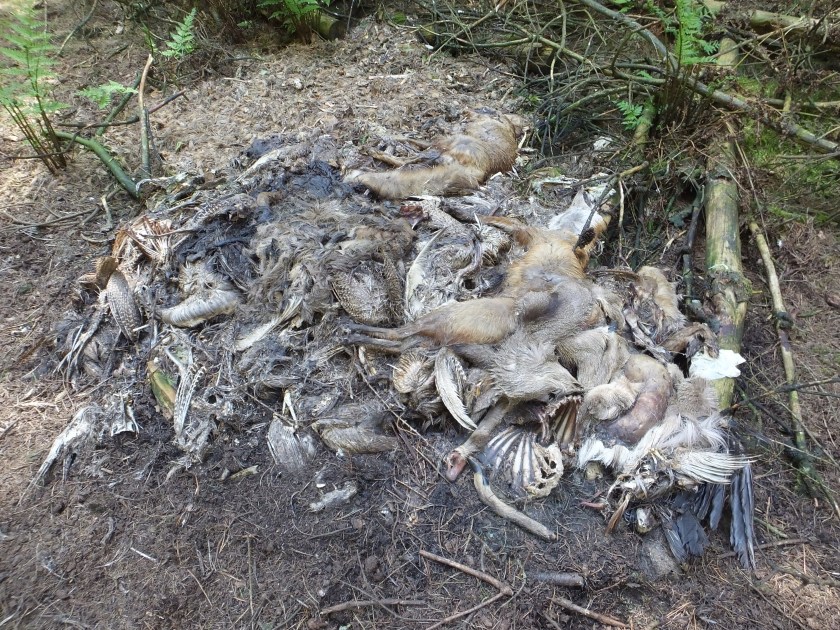
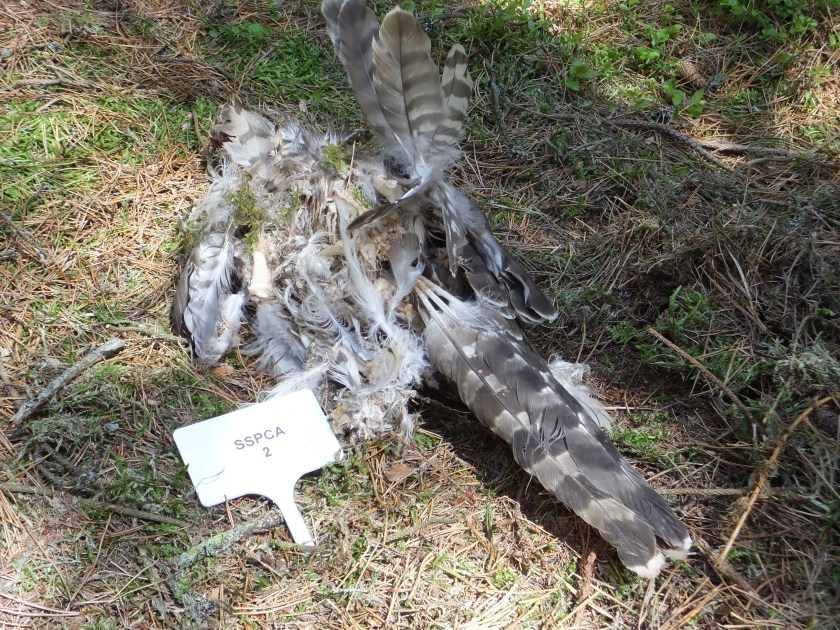
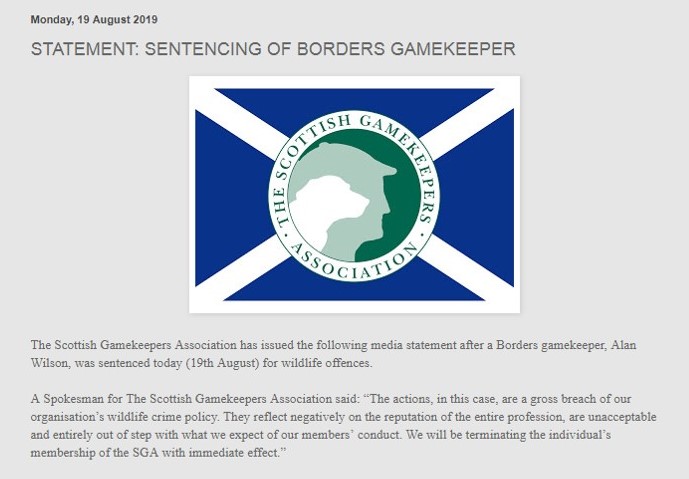
Ten days ago Scottish gamekeeper Alan Wilson was sentenced for a catalogue of wildlife crime offences, including possession of the banned poison Carbofuran and the shooting of protected raptors, badgers and an otter on the Longformacus Estate in the Scottish Borders (see here).
[Criminal gamekeeper Alan Wilson, photo by Daily Record]

Very early on in this case we were aware that two individuals had been charged in relation to the crimes uncovered at Longformacus Estate (see here) and it was rumoured that the second man was facing a charge of alleged vicarious liability for Wilson’s crimes, although we were unable to verify this.
As a quick re-cap, vicarious liability was a measure introduced by the Scottish Government on 1 January 2012 as a direct and specific response to ongoing illegal raptor persecution, whereby somebody (e.g. a landowner or a sporting agent) may be held responsible for the criminal actions of an employee – see here for a more detailed explanation.
Following Wilson’s conviction and then subsequent sentencing earlier this month, we were keen to find out whether the Crown Office was now pursuing a charge of alleged vicarious liability against any individual associated with the management of Longformacus Estate. Last week we wrote to the Crown Office for clarification and this is the response received yesterday:

So, here we are yet again.
No prosecution for anyone associated with the management of Longformacus Estate where gamekeeper Alan Wilson was able to commit crime after crime after crime after crime, apparently without his boss(es) noticing.
For a defence of a charge of alleged vicarious liability, the gamekeeper’s boss(es) would need to show that (a) s/he/they did not know the offence was being committed; AND (b) that s/he/they took all reasonable steps AND exercised all due diligence to prevent the offence(s) being committed. Without knowing the full facts and circumstances of this case it is impossible for us to judge whether the Crown Office’s decision not to pursue a charge was sensible, but it has to be said that given the extent and duration of Wilson’s criminal activities, it would have been very interesting indeed to have heard his bosses’ interpretation and explanation of ‘all due diligence’.
We’ll probably never know why the Crown Office chose not to proceed – it is under no obligation to offer any explanation to the public. However, this latest decision really shouldn’t come as any surprise to anybody – remember, this is the same Crown Office that dropped five prosecutions for alleged raptor persecution in quick succession in 2017 (see here), even including several cases where RSPB video footage had captured the crimes on camera! Those decisions not to proceed with prosecutions hailed the start of what has now become complete exasperation at the authorities’ failure to take on many cases linked to wildlife crime on game-shooting estates.
The Crown’s decision not to pursue criminal proceedings in relation to the crimes committed at Longformacus Estate also further entrenches the view that vicarious liability as a measure for tackling ongoing raptor persecution is a resounding failure. Introduced seven and a half years ago on 1 Jan 2012, only two successful prosecutions have been secured: one in Dec 2014 (here) and one in Dec 2015 (here). A third case in Oct 2015 was dropped because the authorities couldn’t identify the estate’s management structure (here) and a fourth case was abandoned in April 2017 because the Crown said ‘it wasn’t in the public interest to continue’ (here).
Who thinks that two successful cases in 7.5 years is a measure of success? Perhaps if raptor persecution crimes weren’t still being committed then vicarious liability might have been viewed as a success in terms of its deterrent value but it’s quite clear, given the ongoing reports of persecution, that landowners and sporting agents are probably increasingly confident of evading prosecution and the Crown’s decision on the Longformacus Estate will only strengthen that view.
The question now is, for how many more years do we have to sit and watch the pathetic failure of vicarious liability as a measure to combat raptor persecution? The Scottish Government can no longer rely on this as an indication of its commitment to tackling these crimes. Sure, when introduced in 2012 it was done in good faith and with the best of intentions but it is quite clear for all to see that, for whatever reason, it isn’t working, and the Scottish Government needs to acknowledge this failure and find out why it’s failing and get it fixed.
It’s not just convicted gamekeeper Alan Wilson sticking up two fingers to our law-abiding society.
The topic of vicarious liability was raised at the recent SNP Conference Fringe meeting on grouse moor reform (here) as well as the Revive Coalition’s conference in Perth (here) and caused quite a stir amongst delegates and panellists at both events. It’s an issue we’re likely to follow up with several interested MSPs.
Meanwhile, Chris Packham’s petition calling for a ban on driven grouse shooting is doing exceptionally well, just two weeks after launching. It has now attracted over 81,000 signatures but is likely to fall if it doesn’t reach 100,000 signatures by Sept 9th, thanks to the current shenanigans at Westminster (if Parliament is suspended all unfinished business, including live petitions, will fall). If you haven’t yet signed, please do so HERE. Thank you.







 Raptor Persecution UK