Gloucestershire Constabulary has issued a bizarre press release today about the felling of a tree that held an active goshawk nest and how the man who admitted to felling it with a chainsaw ‘had completed a successful restorative justice outcome’ by paying £100 to the RSPB.
Eh? Since when has ‘restorative justice’ been considered an appropriate sanction for felling an active raptor nest? This is supposed to be a national wildlife crime priority! Why wasn’t he charged? In my opinion restorative justice in this case is a massive let off for the offender and the estate – it’s informal, unenforceable and fails to recognise the seriousness of this offence.
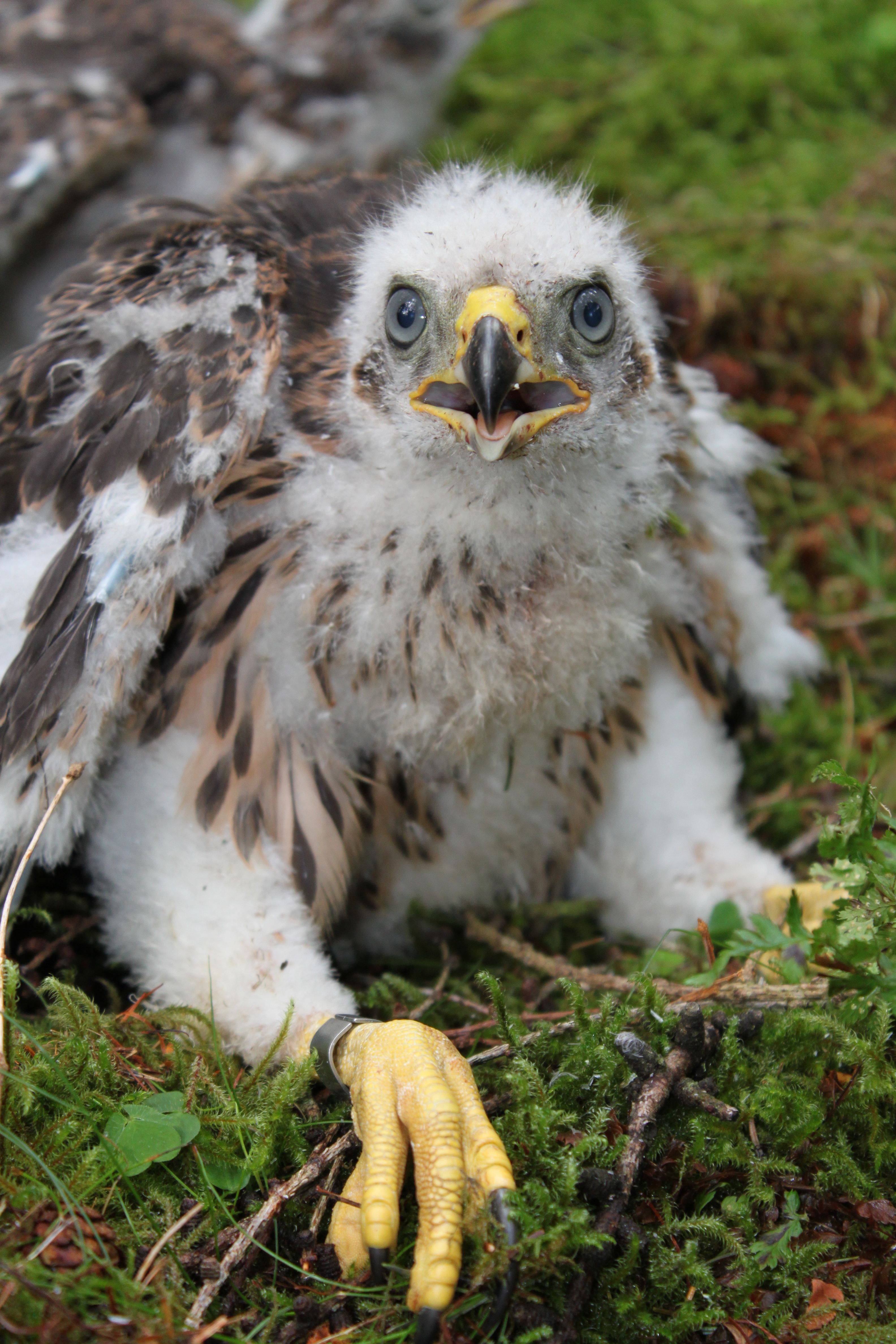
[A young goshawk chick in the nest. Photo taken under licence by Ruth Tingay]
Here is the police press release – my commentary on it is below that:
Restorative justice used following tree felling incident which led to destruction of bird nest
A man who unknowingly destroyed a bird of prey nest after cutting down trees has completed a successful restorative justice outcome.
Officers from Gloucestershire Constabulary’s Rural Crime Team were called to an estate on the outskirts of Gloucester on Saturday 5 June where it was reported that a tree had been felled causing an active Goshawk Nest to be destroyed.
The man, who is an agricultural labourer, was identified after admitting that he had felled the tree without checking for any bird’s nests.
He attended for a voluntary interview and was ordered to pay a £100 donation to the Royal Society for the Protection of Birds (RSPB).
A condition was also put into place which allowed Glos Raptors Monitoring Group to access the site so that they can monitor the existing birds of prey, monitor active nests and put cameras up to protect bird of prey habitats.
PC Phil Mawdsley oversaw this saying: “Bird nesting season generally takes place from March to August, however can fall outside of this period and during this time you shouldn’t cut down trees or trim hedges without checking for the presence of birds and it is an offence under Section 1 of the Wildlife and Countryside Act of 1981 to disturb birds or damage their nests and unfortunately this happened after an act of recklessness.
Advice around cutting hedges or trees at this time of year can be found here“.
A spokesperson for the RSPB said: “It appears that this was the only tree in the wood to be felled and then completely removed at a time when it contained an active goshawk nest. Goshawk nests are huge structures and the contents of the nest would be equally obvious.
“Goshawks are rare breeding birds and have been subjected to regular persecution through the years, which sadly continues today. To intentionally damage or destroy the active nest of a goshawk, or any wild bird, is against the law. Raptor Persecution is a National Wildlife Crime priority, and the goshawk is a priority species.”
More information on restorative justice in the county can be found here.
ENDS
The press release states that the man claimed to be unaware that the tree held an active goshawk nest. I’m sorry but that is just not credible. This guy is a forester. Anyone who’s spent any time in a wood with an active goshawk nest in the breeding season cannot fail to notice it, and if you’re a forester that spends most days out amongst the trees, there should be absolutely no way you’d miss it. They are huge structures, the ground underneath is littered with white splash and prey remains, and the breeding adults are very, very, very vocal when they alarm call. This is not a cryptic species that cowers down and maintains silence by playing dead when under threat. I would argue that it would be virtually impossible to stand next to the nest tree, fell it with a chainsaw and remove the trunk and all the branches without noticing there was an active goshawk nest in it.
Here is a classic example of a goshawk nest [Photo taken under licence by Ruth Tingay]
I think it’s also interesting to compare Gloucestershire Constabulary’s approach to this crime with that of North Wales Police earlier this year when an active osprey nest was felled with a chainsaw on a nature reserve. The police in that case were, quite rightly, all over the press saying ‘Ospreys are a very rare, highly protected schedule 1 bird – the greatest protection in the UK. We’re pulling all the stops out to try and catch the person or persons responsible for this. Believe me they will receive the full force of the law if we do catch them‘ (see here).
Well, the goshawk is also a very rare, highly protected schedule 1 bird – the greatest protection in the UK. So why this inconsistent approach between police forces to dealing with an offender, especially when in the goshawk case the man who felled the tree has been identified? Is it because goshawks aren’t viewed as being as ‘popular’ as ospreys? Is it because the goshawk nest tree was felled on a private estate (I’m guessing an estate that shoots gamebirds and doesn’t want a pesky goshawk hanging out near the poult release pens)?
The RSPB’s quote in the police press release is quite damning. It is clear that the RSPB Investigations Team doesn’t accept the ridiculous explanation that the forester was ‘unaware’ of the goshawk nest in the tree and they also highlight that this tree was apparently the only one felled in the wood. It’s reminiscent of the felling of the white-tailed eagle nest on Invermark Estate in the Angus Glens a few years ago (here).
The only positive thing about this case is that Gloucestershire Raptor Monitoring Group now have access to the estate to monitor any other raptors that may be present. From the wording of the police press release, this access seems to be ‘a condition’ of the restorative justice process, although whether that’s enforceable if the estate decides to be uncooperative, who knows.


 Raptor Persecution UK