Wild Justice partners with RSPB to offer £10,000 reward for info on five shot goshawks

Further to the news that Suffolk Police have found five shot goshawks, dumped at the edge of the King’s Forest near Thetford (see here), conservation campaign group Wild Justice has partnered with the RSPB to increase the reward for information from £5,000 (here) to £10,000 (see here).

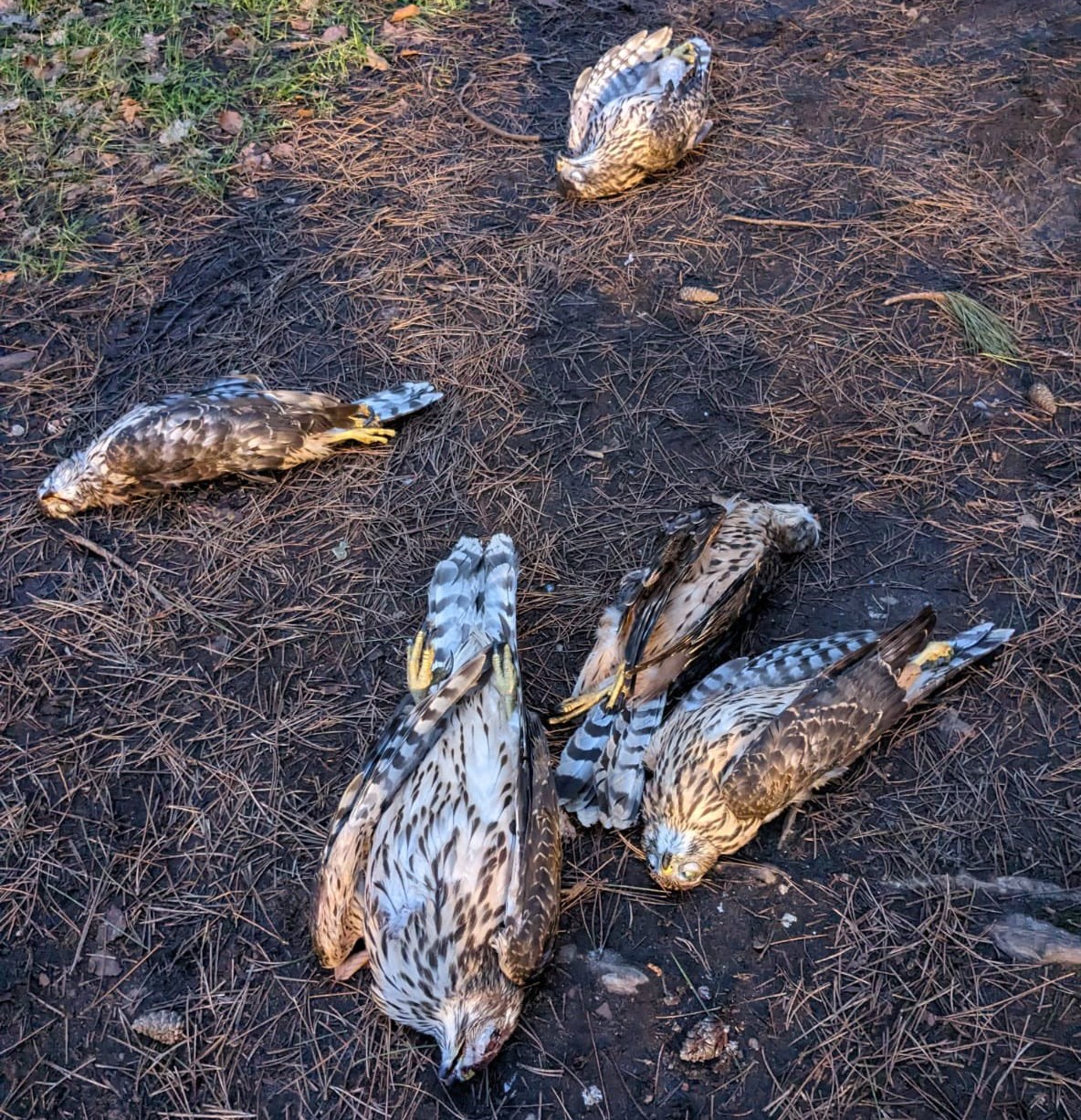
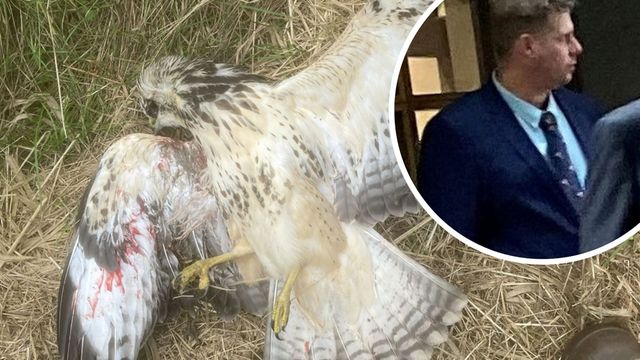
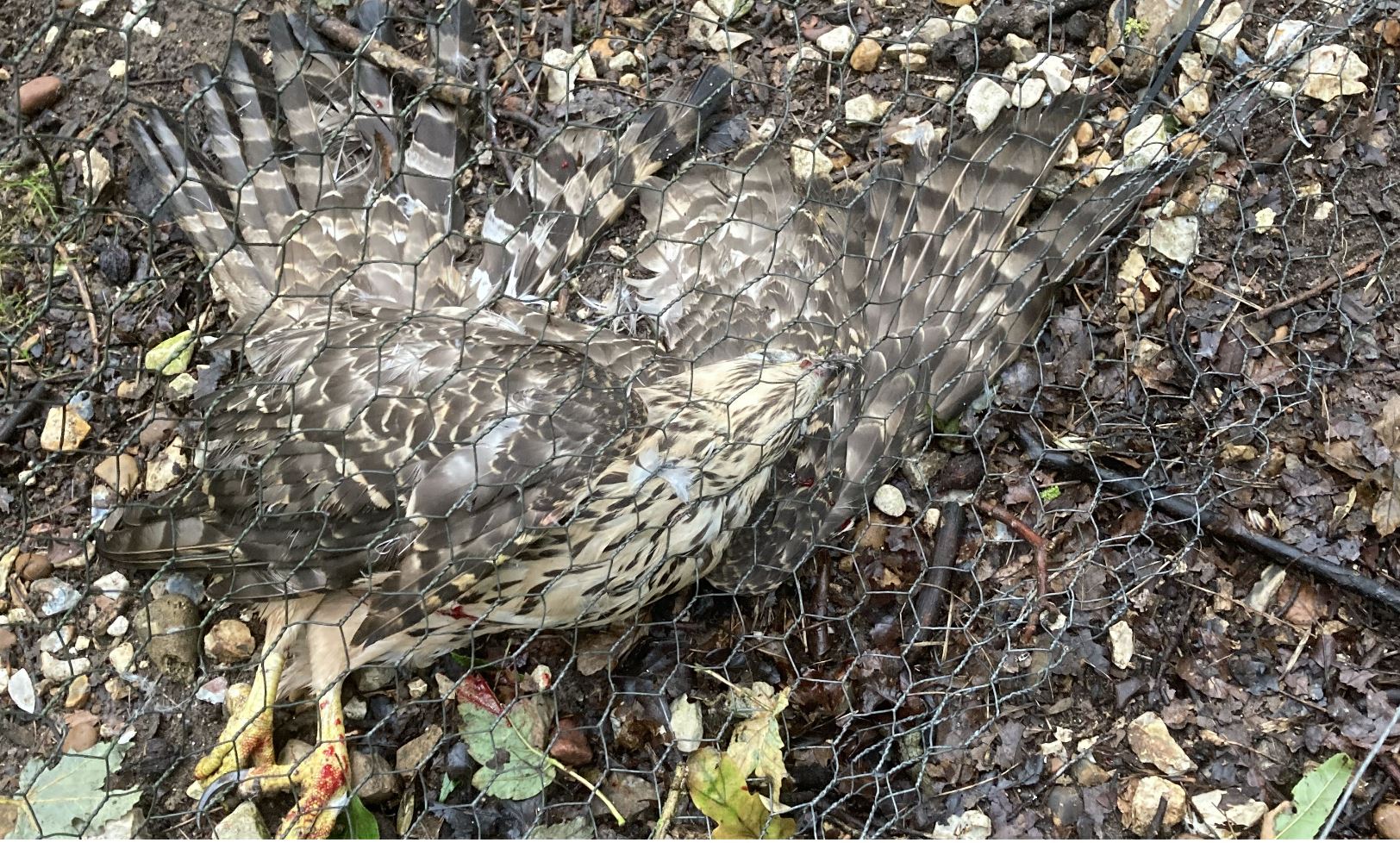
The five shot goshawks found by Suffolk Police on Monday 16th January 2023

In a statement, Wild Justice said:

We are sick to the back teeth of the relentless illegal persecution of birds of prey in the UK, which is mostly associated with land managed for gamebird shooting, be that red grouse, pheasants or partridges. Indeed, it was our strength of feeling about raptor persecution, and our frustration at the failure of the Westminster and the devolved governments to tackle it effectively, that led to us founding Wild Justice in 2018. In partnership with the RSPB, we hope this substantial reward will encourage someone to come forward with information about whoever was responsible for this heinous crime, and that that information leads to a successful conviction“.

If you have any information, please call Suffolk Police on 101 and quote crime reference 37/3027/23. Alternatively, to get in touch anonymously, call the RSPB’s dedicated Raptor Crime Hotline on 0300 999 0101.

The BBC News website has picked up the news of this increased reward here and the Suffolk Live website has written about it here.

UPDATE 19th January 2023: Crowdfunder launched to increase reward for information on five shot goshawks found in Suffolk (here)

Five shot goshawks in Suffolk – RSPB offers £5K reward for information

Further to this morning’s blog about Suffolk Police finding five shot goshawks on Monday, that had been dumped at the edge of the King’s Forest near Thetford (see here), the RSPB has issued an appeal for information and is offering a £5K reward, it’s highest ever.

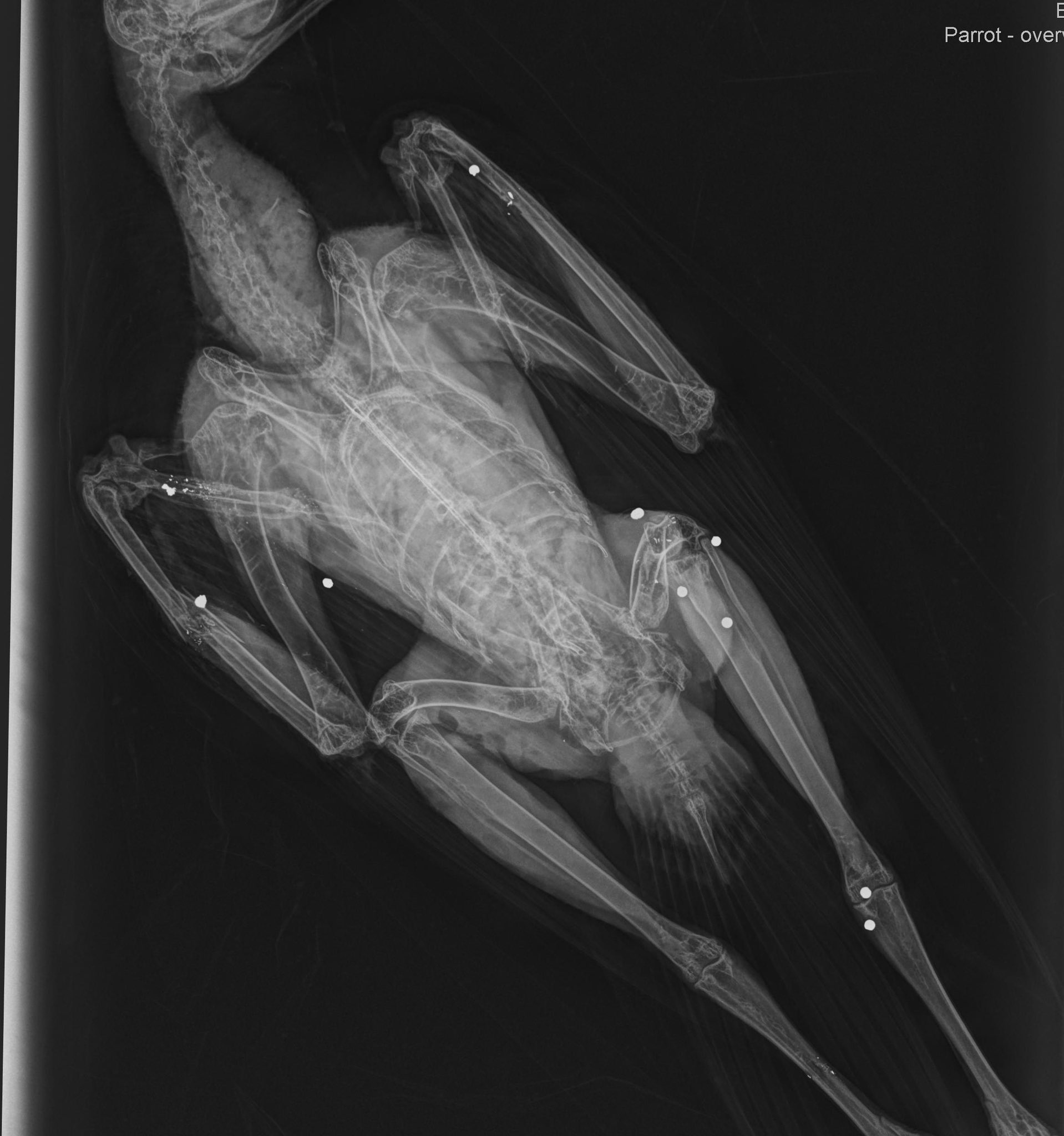
The five juvenile goshawks. X-rays revealed all had been shot.

Here is the joint statement from the RSPB and Suffolk Police:

Five young birds of prey, identified as rare Goshawks, have been found dead in suspicious circumstances in a Suffolk Forest.

The birds were discovered on Monday 16 January at the edge of Kings Forest and reported to Suffolk Police, who x-rayed the birds as part of their investigation and found all five birds to contain multiple pieces of shot.

All birds of prey are protected by law, and to kill or injure one could result in jail and/or an unlimited fine.

The RSPB is working with Suffolk Police to help identify the culprit and has offered a reward of £5,000 to anyone who comes forward with information which leads to a conviction. This is the highest amount ever offered by the conservation charity, which has described the incident as ‘Utterly despicable.’

Goshawks are elusive birds of prey, around the size of a Buzzard, with yellow eyes and streaked undersides. They live quietly in forests in a handful of locations in the UK including Thetford Forest where these birds were found.

Mark Thomas, the RSPB’s Head of Investigations UK, said: “Anyone who values the natural world and abhors those who actively and criminally look to destroy it will feel as outraged as we do about this utterly despicable incident. We are calling on anyone who has information to come forward to the police.”

The RSPB and other specialists are assisting the police with their ongoing investigation.

The illegal killing of birds of prey remains a widespread national problem. The RSPB’s annual Birdcrime report for 2021, published in November 2022, revealed 108 confirmed incidents of birds of prey being shot, trapped or poisoned. However, the true number is likely to be far higher. 

The report also found that Norfolk had the highest number of confirmed raptor persecution incidents than any other county in 2021.

Sergeant Brian Calver from Suffolk Police said: “This is a serious wildlife crime against an amazing schedule one bird of prey that was once driven to extinction in Britain. There is no place for such activity in modern times. Whoever is responsible for this needs to be brought to justice and I’d urge anybody with any information whatsoever to let us know.”

If you have any information, please call Suffolk Police on 101 and quote crime reference 37/3027/23. Alternatively, to get in touch anonymously, call the RSPB’s dedicated Raptor Crime Hotline on 0300 999 0101.

ENDS

UPDATE 5pm: Wild Justice also offers £5,000 reward (here)

UPDATE 19th January 2023: Crowdfunder launched to increase reward for information on five shot goshawks found in Suffolk (here)

Five goshawks shot & dumped in King’s Forest, Suffolk: Police appeal for information

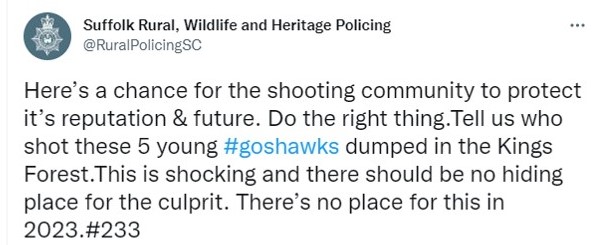
Yesterday evening, Suffolk Police’s Rural, Wildlife & Heritage Unit posted an appeal on Twitter asking for information about the discovery of five young goshawks, reportedly shot and dumped in the King’s Forest, Suffolk.

The corpses were found on Monday (16th Jan 2023) at the Brandon end of the large car park area off the B1106, North Stow. Police say all five birds were x-rayed and all were found to contain shotgun pellets.

Some idiots from the shooting industry have been complaining on Twitter about what they perceive to be an ‘anti-shooting’ tweet from the police – anything to distract attention away from this disturbing crime, I guess.

One genius is even convinced that the x-ray image provided by the police is actually of a shot parrot and not one of the shot goshawks, despite it being explained to him in very simple terms by a qualified vet (@ThatVetSean) that the word ‘parrot’ appears in the corner of the x-ray image “because it’s a digital x-ray machine & veterinary software with handy preloaded settings enabling the operator to get a quality image in a single go. They’ll have chosen parrot as it’s comparable in size/anatomy, there isn’t a Goshawk setting“.

Well done to Suffolk Police’s Rural, Wildlife & Heritage Unit for issuing an impressively quick appeal for information.

If anyone has any information about who shot and dumped these goshawks, please contact Suffolk Police.

UPDATE 16.o5hrs: Five shot goshawks in Suffolk: RSPB offers £5,ooo reward for information (here)

UPDATE 5pm: Wild Justice also offers £5,000 reward (here)

UPDATE 19th January 2023: Crowdfunder launched to increase reward for information on five shot goshawks found in Suffolk (here)

UPDATE 20th January 2023: Shooting industry ‘offended’ about being asked to help identify the person who shot five goshawks (here)

UPDATE 28th March 2023: Suffolk Police arrest a man in connection with five shot goshawks found in Kings Forest in January (here)

UPDATE 7th June 2023: Man charged in relation to 5 shot goshawks found dumped in a forest carpark in January (here)

RSPB Investigations Officer reflects on conviction of Norfolk raptor-killing gamekeeper Matthew Stroud

Last month, Norfolk gamekeeper Matthew Stroud, 46, of Fengate in Weeting was convicted of multiple offences including:

  • Three counts of using poisoned bait on or before 19 August 2021 and 14 September 2021.
  • Six counts of killing a Common Buzzard (a non-Schedule 1 wild bird) at Weeting between 10 August and 14 September 2021.
  • One count of intentionally killing a Northern Goshawk (a Schedule 1 wild bird) at Weeting on or about 10 August 2021.
  • One count of possessing a regulated substance – Strychnine Hydrochloride – without a licence on 14 September 2021.
  • One count of possessing 4 shotguns to kill a Schedule 1 wild bird on 14 September 2021.
  • One count of releasing 3,400 Common Pheasants into the wild between 1 June and 14 September 2021 contrary to the Wildlife and Countryside Act 1981.
  • One count of incorrectly storing a biocidal product – Rentokil Phostoxin – on 14 September 2021 contrary to the Health and Safety at Work Act 1974.

Even though Stroud’s crimes easily passed the threshold for a custodial sentence, he received a 12-month Community Order and was ordered to do 200 hours of unpaid work, fined £692 and ordered to pay costs of £145, compensation of £288.72 and a victim surcharge of £95. The court also ordered the forfeiture and destruction of all Stroud’s firearms, mobile phones and any chemicals (see here and here for previous blogs on this).

Stroud’s prosecution and conviction was the result of a well-run multi-agency investigation involving Norfolk Constabulary, Natural England, National Wildlife Crime Unit, Crown Prosecution Service and the RSPB Investigations Team.

Today, the RSPB has published a blog written by RSPB Investigations Officer Tom Grose, reflecting on the investigation and the subsequent sentence. You can read it here. [UPDATE: This link has since broken – the RSPB blog has been copied and pasted at the foot of this blog]

UPDATE 29th June 2023: Another Weeting gamekeeper convicted – Gamekeeper Francis Addison receives suspended jail sentence in relation to five shot goshawks (here)

COPY AND PASTE OF RSPB BLOG:

Reflections on a poisoning, by Tom Grose, RSPB Investigations Officer

On 5 October 2022 gamekeeper Matthew Stroud was convicted of a litany of offences at Norwich Magistrates Court. He pleaded guilty to the killing six buzzards and a goshawk, placing poisoned baits, possession of the banned poison strychnine hydrochloride and the illegal release of gamebirds onto a Special Protection Area (SPA), along with sundry other offences.

Previous cases of this nature have been acknowledged to have crossed the custody threshold by the court (see John Orrey and Allen Lambert). So it was expected that Stroud was facing at the least a suspended prison sentence. The 200-hour community work order and financial penalties totalling £1220 he was given were accompanied by a sense of frustration by those involved in the case, and by shock and outrage by those who learned about it in the media or on social media. Not for the first time….

The long-running investigation that led to Stroud’s prosecution was a shining example of partnership working in action. Initial painstaking fieldwork by RSPB Investigations Officers sparked swift and decisive action by Norfolk Police upon the discovery of a suspected poisoned bait. A combined operation involving the National Wildlife Crime Unit and Natural England alongside the RSPB ensued. A warrant was executed and vital evidence recovered. Then came months of meticulous work involving a long list of dedicated professionals. X-rays, post-mortems, poison testing, feather analysis and police interviews all had to be carried out before the case file could be passed to the Crown Prosecution Service (CPS) and the charges laid. The CPS themselves provided guidance and were of enormous help in the run up to court.

On the day of the hearing itself, the prosecution was able to lay the stark facts of the case before the magistrates. In 2022 a man was jailed for 16 weeks for killing two gulls. So why did Stroud receive far less?

Unfortunately, it seems that the lack of sentencing guidelines available to the courts is at the heart of the matter. We’ve encountered this issue before, with magistrates and judges left without clear principles to follow when deciding how to sentence these relatively rare and complex cases. Each time a raptor killer is in court, it turns into a sentencing lottery. Clearly these guidelines must be put in place to deal with wildlife offences. The killing of so many protected birds, including a Schedule 1 species (the goshawk), and the deliberate use of a banned poison as dangerous as strychnine surely warranted a heavier punishment. This is hardly a deterrent to other wildlife criminals.

Another issue that keeps rearing its head is the lack of any consequences for Stroud’s employers. When a gamekeeper is found to be killing birds of prey it is normally due to pressure to produce enough gamebirds to shoot, and indeed Stroud admitted his motivation was to protect the pheasants in his care. In most other sectors the employer would face repercussions for the actions of staff. This isn’t the case in the English and Welsh shooting industries. Whilst vicarious liability has been introduced into Scotland, we need to see it implemented across the UK. 

More positively, Stroud was the first person convicted of illegal gamebird release. The impact of non-native pheasants is poorly understood but of increasing concern. To illegally release them on the Breckland SPA, supposedly an area of international conservation importance, showed a callous disregard for the environment. Alongside the potentially harmful effects of over 60 million gamebirds released into our countryside annually, it’s clear that raptor persecution is a serious issue for lowland shooting. 

It’s certainly not the case that raptor persecution is an issue confined to upland grouse moors. Cases like this one (and there are others ongoing), coupled with concerns over the release of non-native gamebirds, are why the RSPB is now calling for greater regulation of large-scale pheasant and partridge shoots. Clearly, self-regulation is not working, and current legislation is not enough. We also call on the courts to make full use of the sentences available to them.

We would like to thank all of those involved in securing this conviction, and particularly PC Chris Shelley of Norfolk Police for his hard work in leading the investigation. Although we are disappointed by the outcome, it has been heartening to work alongside officers and organisations who remain committed to stopping raptor persecution.

ENDS

Conviction of gamekeeper Matthew Stroud: statement from Norfolk Constabulary

Following yesterday’s news that 46-year-old gamekeeper Matthew Stroud had been convicted, amongst other things, of shooting and poisoning at least five buzzards and a goshawk on a pheasant shoot in Norfolk (see here), Norfolk Constabulary has issued a press statement which provides a bit more detail about the case.

[One the buzzards that gamekeeper Matthew Stroud shot dead]

Press release from Norfolk Constabulary:

Gamekeeper admits killing birds of prey

A Weeting gamekeeper appeared in court today (Wednesday 5 October 2022) and admitted shooting and poisoning several birds of prey.

  • Three counts of using poisoned bait on or before 19 August 2021 and 14 September 2021.
  • Six counts of killing a Common Buzzard (a non-Schedule 1 wild bird) at Weeting between 10 August and 14 September 2021.
  • One count of intentionally killing a Northern Goshawk (a Schedule 1 wild bird) at Weeting on or about 10 August 2021.
  • One count of possessing a regulated substance – Strychnine Hydrochloride – without a licence on 14 September 2021.
  • One count of possessing 4 shotguns to kill a Schedule 1 wild bird on 14 September 2021.
  • One count of releasing 3,400 Common Pheasants into the wild between 1 June and 14 September 2021 contrary to the Wildlife and Countryside Act 1981.
  • One count of incorrectly storing a biocidal product – Rentokil Phostoxin – on 14 September 2021 contrary to the Health and Safety at Work Act 1974.

He received a 12-month Community Order and was ordered to do 200 hours of unpaid work, fined £692 and ordered to pay costs of £145, compensation of £288.72 and a victim surcharge of £95. The court also ordered the forfeiture and destruction of all Stroud’s firearms, mobile phones and any chemicals.

The court heard how the investigation started when RSPB officers found a young pheasant dead in Belvedere Wood, Weeting, on 19 August 2021. Tests later confirmed the pheasant had been poisoned with Strychnine Hydrochloride.

Further intelligence led Norfolk Police to execute a warrant at Stroud’s home, Belvedere Wood and Oisier Carr Wood on 14 September 2021 where the following discoveries were made:

  • Three dead buzzards were found at two release pens in Oisier Carr Wood. Tests later confirmed they had been shot.
  • Two pheasant carcasses with extremely high levels of Strychnine Hydrochloride and a poisoned Common Buzzard were found in Belvedere Wood – a Site of Special Scientific Interest because of its internationally important population of Stone Curlews
  • Two bottles of Strychnine Chloride were found in the glovebox of Stroud’s all-terrain vehicle, and a bottle of Phostoxin discovered by officers in a lean-too style shed attached to his house.

In addition, Stroud’s mobile phone contained photos of a dead Goshawk and five dead Common Buzzards. He later confessed to officers that all the photos were of birds he had killed.

PC Chris Shelley, Norfolk Constabulary’s Rural Crime Officer, said: “This investigation is one of the biggest cases of its kind that we have dealt with in Norfolk.

Stroud actions were dangerous and inhumane – he shot and poisoned birds of prey as he saw fit, and at will, because it suited him to do so. He also used a highly dangerous poison – one that has been banned in the UK for the last 15 years – indiscriminately, which could have had a disastrous effect on other local wildlife and showed a scant disregard for the safety of others.

We’re committed to working with all partners to tackle rural crime and have worked closely with colleagues from the RSPB, the National Wildlife Crime Unit and Natural England throughout this investigation. It is because of this close collaboration with them that we have been able to bring this case to court.

Tom Grose, RSPB Investigations Officer, said: “Laying poison baits out in the open is not only illegal but extremely dangerous and irresponsible. Baits like those being used present a deadly risk to any animal or person that might come across it.

It is particularly troubling that this was happening on an SPA, a designated area where wildlife and nature should have the highest legal protection.

We would like to thank Norfolk Police for leading such a thorough investigation, and to Natural England, the National Wildlife Crime Unit and Crown Prosecution Service for their support.”

Ashley Petchey of the Crown Prosecution Service said: “This was a case where Mr Stroud has, whilst in his position as a gamekeeper, killed wild birds by shooting and poisoning. He has also released non-native species into a SSSI.  

The scale of the offences in this case demonstrates the lengths people will go to in order to persecute raptors.   

The Crown take all cases of raptor persecution seriously and where the full code test is met, bring offenders to justice.”

ENDS

UPDATE 4th November 2022: RSPB Investigations Officer reflects on conviction of Norfolk raptor-killing gamekeeper Matthew Stroud (here)

Norfolk gamekeeper convicted after shooting & poisoning multiple birds of prey

Press release from the RSPB today (5th October 2022):

Gamekeeper escapes jail after killing birds of prey

*Six buzzards and a goshawk were found illegally killed on a gamebird shoot near Thetford, along with lethal poison baits.

*Gamekeeper Matthew Stroud pleads guilty to multiple offences

*The RSPB is increasingly concerned about raptor persecution linked to pheasant and partridge shoots, and the impact of large-scale gamebirds releases.

Today (5 October 2022) at Norwich Magistrates’ court, gamekeeper Matthew Stroud received a 200 hour community order and was fined £692 for offences connected with raptor persecution. Stroud was ordered to pay £145 costs, £288.72 compensation and a £95 victim surcharge.

[Convicted criminal gamekeeper Matthew Stroud and one of his victims, a shot buzzard. Photos via RSPB and Eastern Daily Press]

Offences included shooting five buzzards and one goshawk, the poisoning of another buzzard, the laying of poison baits and illegal possession of poisons including strychnine.

Stroud also became the first person convicted for the unauthorised release of gamebirds on a Special Protection Area (SPA) – an internationally important site for conservation under the Habitats Regulations.

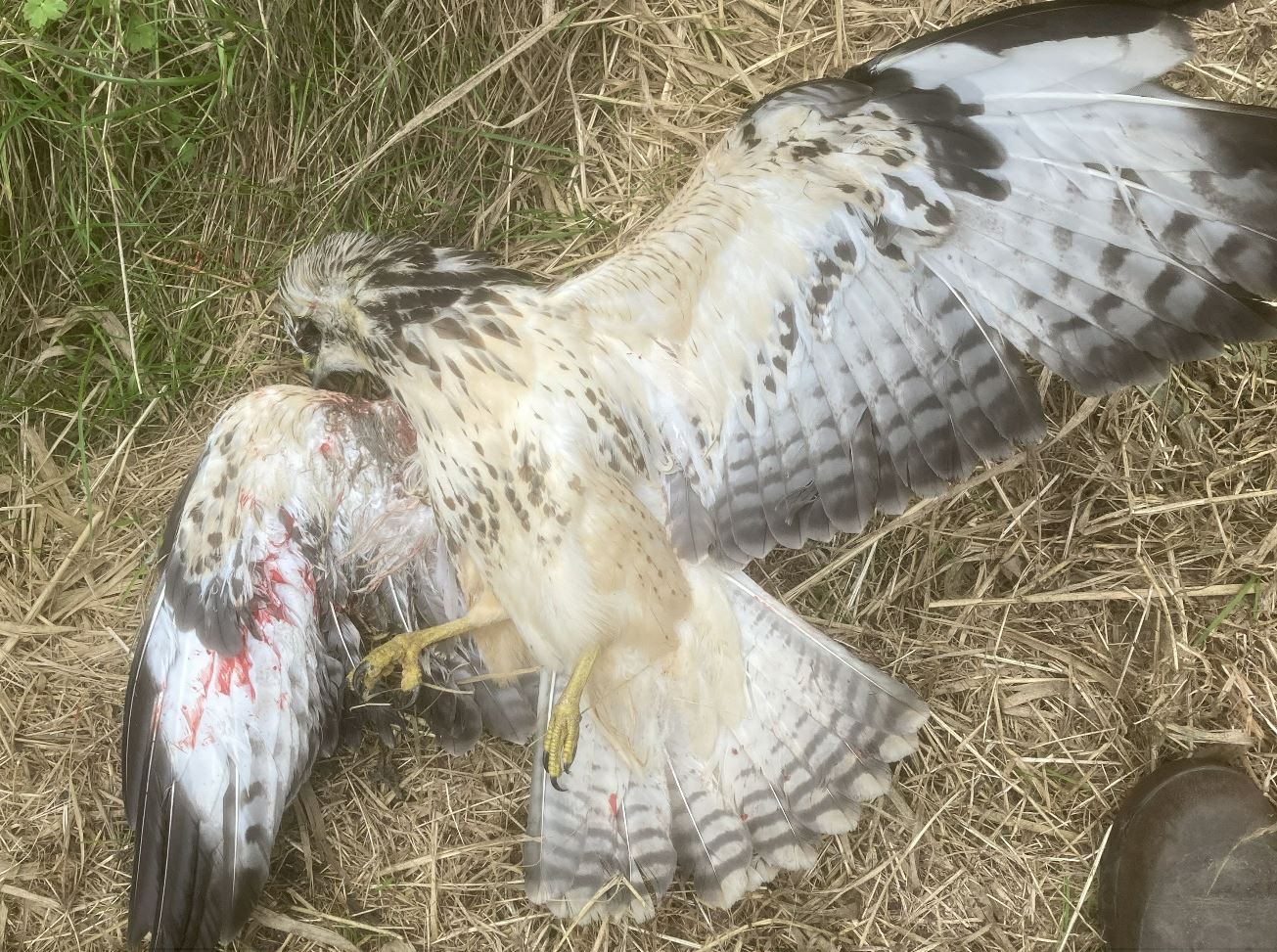
[Another of Stroud’s victims – he shot this goshawk. Photo via RSPB]

[Two containers of the banned poison strychnine found in the glovebox of Stroud’s all-terrain vehicle]

Sentencing Stroud, Magistrates said that he was lucky to escape jail today.

The court heard from the defence that Stroud was under pressure to produce game birds for the shoot after two poor years, that he had taken no pleasure in killing the buzzards and that he should have been informed that the law had changed around pheasant releases.

This is one of many incidents of raptor persecution identified on lowland pheasant and partridge shoots, which the RSPB says is an area of increasing concern. There is also evidence that large-scale releases of pheasant and partridge for shooting is having a detrimental impact on native wildlife.

The RSPB Investigations team conducted lengthy enquiries on an area of land managed by Stroud for pheasant shooting at Fengate Farm in Weeting, within the Breckland SPA. Following a number of visits, on 19 August 2021 they discovered a pheasant carcass – later found to contain the banned toxic chemical strychnine. The use of a poison bait such as a pheasant, laced with pesticides, is one of the most common methods of illegally killing birds of prey.

A subsequent search with Norfolk Police and partners uncovered further poison baits plus shot and poisoned raptors. Stroud’s phone also contained the photo of a goshawk and several buzzards which he admitted to shooting. They also found the deadly banned poison strychnine and phostoxin, a dangerous fumigant which was stored improperly.

In 2021 it became illegal to release gamebirds on or adjacent to an SPA without a licence, which Stroud had not sought, making him the first person to be prosecuted and convicted for this offence.

In 2020, Wild Justice issued proceedings in the High Court challenging the annual release of millions of non-native pheasants and red-legged partridges into the countryside and their potential impact on sites designated for nature conservation. DEFRA conceded the case and introduced General Licence 43 in an attempt to ensure that the impacts of those birds on those sites would be regulated.

Mark Thomas Head of RSPB Investigations UK, said:

It is difficult not to be disappointed with the outcome today considering the significance of the offences and combined efforts of the agencies involved. Laying poison baits out in the open is not only illegal but extremely dangerous and irresponsible. Baits like those being used at Fengate Farm present a deadly risk to any animal or person that might come across it. It is particularly troubling that this was happening on an SPA, a designated area where wildlife and nature should have the highest legal protection.

The RSPB’s most recent Birdcrime report in 2020 made clear that raptor persecution is not just an issue confined to grouse shooting estates: it is increasingly correlated with pheasant and partridge shoots.”

Mark added: “We would like to thank Norfolk Police for leading such a thorough investigation, and to Natural England, the National Wildlife Crime Unit and Crown Prosecution Service for their support”.

Guilty pleas were entered to the following charges:

· Six charges in relation to killing of six different buzzards (five by shooting and one poisoned) during August and September 2021

· One charge in relation to killing a goshawk listed under schedule 1 of the Wildlife and Countryside act 1981 in August 2021

· Three charges in relation to laying poison baits in August and September 2021

· One charges in relation to the possession of the banned pesticide, strychnine in September 2021

· A charge in relation to a firearm being an item capable of committing an offence in September 2021

· A charge in relation to the usage of the chemical phostoxin in September 2021

· One charge in relation to releasing pheasants illegally during 2022

ENDS

UPDATE 6th October 2022: Conviction of gamekeeper Matthew Stroud – statement from Norfolk Constabulary (here)

UPDATE 4th November 2022: RSPB Investigations Officer reflects on conviction of Norfolk raptor-killing gamekeeper, Matthew Stroud (here)

Goshawk monitoring in Scottish highlands features on BBC Landward

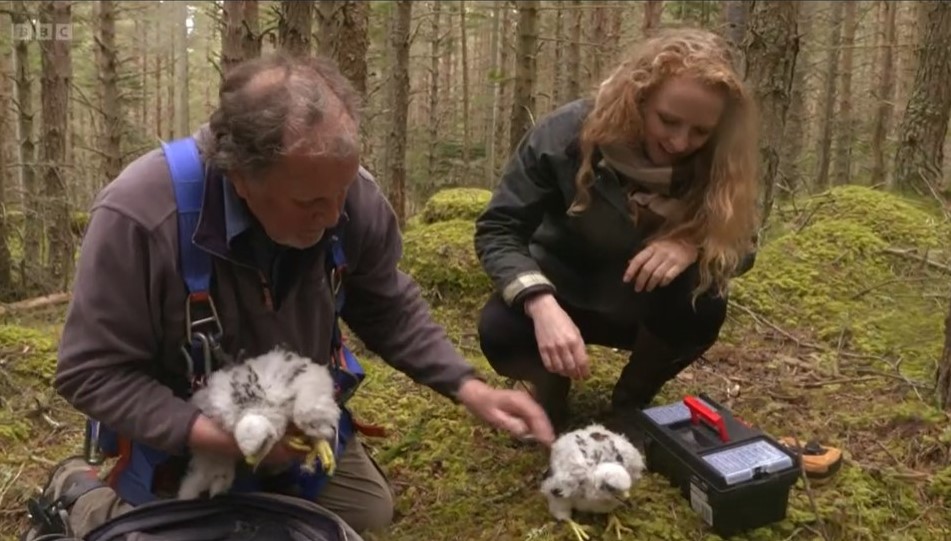
The BBC’s Landward programme last week included a six minute feature on goshawk monitoring in the Scottish highlands.

Presenter Rosie Morton accompanied Dave Pierce and Brian Etheridge, two long-standing members of the Highland Raptor Study Group, to a goshawk nest to ring three chicks.

The programme is available on the BBC iPlayer (here) for 11 months. Starts at 1.27 min and ends at 7.00 min.

Goshawk nest attacked in Peak District National Park – Derbyshire Police appeal for information

An appeal for information by Derbyshire Police’s Rural Crime Team (21st August 2022):

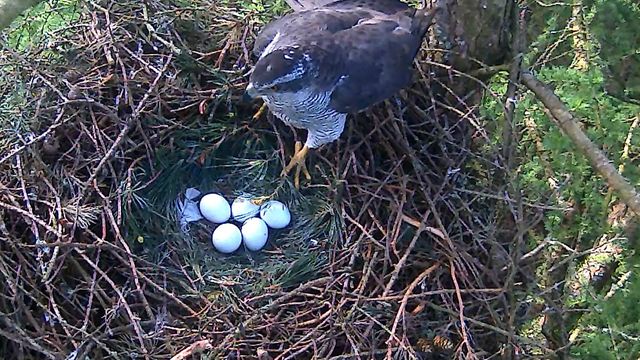
‘Back in June this year a larch tree at Westend in the Upper Derwent Valley which was home to a pair of goshawks was found to have been interfered with. Sadly, the birds abandoned the site and it was discovered that the tree had drilled holes and bolts all the way up it which we believe to be evidence of how the nest had been accessed. A local ornithologist had confirmed the presence of eggs in the nest prior to all this but had then found the be no longer there.

[A goshawk nest, photo by Archant]

With help from Forestry England staff a forensic examination was carried out on the tree and items were submitted to the lab.

We are appealing to anyone who may be able to provide information to help with this enquiry.

Thank you‘.

ENDS

[Photo of the forensic examination of the goshawk’s nest tree. Photo by Derbyshire Police]

Goshawks in the Dark Peak area of the Peak District National Park have been the target of relentless illegal persecution for decades, along with a number of other raptor species including peregrine and hen harrier (the most recent incident reported earlier this summer – here).

The majority of these crimes have been linked to driven grouse shooting. For new blog readers, the following reports and scientific papers provide good background evidence:

GWCT disregards police investigation into alleged wildlife crime on Van Cutsem’s Norfolk estate

Last week I wrote about how former Cabinet Secretary Fergus Ewing MSP, the Scottish Gamekeepers Association, and landowners’ lobby group Scottish Land & Estates had shown complete disregard for the sanction imposed on Moy Estate after raptor persecution crimes had been recorded there (see here).

This week it’s the turn of the Game & Wildlife Conservation Trust (GWCT) to seemingly turn a blind eye.

Have a look at this event currently being promoted on GWCT’s website:

Regular readers will know that Hilborough House is the home of William van Cutsem. In May this year, police raided the estate after video footage emerged of alleged raptor persecution.

The footage, captured on a secret camera installed by the Hunt Investigation Team, appeared to show a crow cage trap in woodland alleged to be on the Hilborough Estate. The trap had been baited with live pigeons (this is an offence) and a young goshawk was attracted to the bait, entered the trap and then couldn’t escape. A masked man is then recorded entering the trap, pinning the goshawk to the side netting with a stick so he could grab the bird, and then removing it from the trap and walking away with it (also an offence). The goshawk’s fate is not shown.

As far as I’m aware, the police investigation is ongoing.

Mr Van Cutsem hasn’t commented publicly about this investigation although in a classic attempt at diversion, the Mail on Sunday ran a piece quoting ‘an unnamed source close to Mr van Cutsem’ who questioned the relationship between the Hunt Investigation Team and the RSPB:

What also is interesting is how close HIT works with the RSPB. It would be good to understand how a mainstream charity is working with a shady group’. 

Oh the irony!

General Licence restriction imposed on Moy, a grouse-shooting estate, after discovery of poisoned red kite

Press release from NatureScot, 21st June 2022:

General Licence restricted on Highland estate

NatureScot has restricted the use of General Licences on Moy Estate for three years

The decision was made on the basis of evidence provided by Police Scotland of wildlife crime against birds.

This evidence included a poisoned red kite found on the estate in 2020, and incidents in relation to trapping offences.

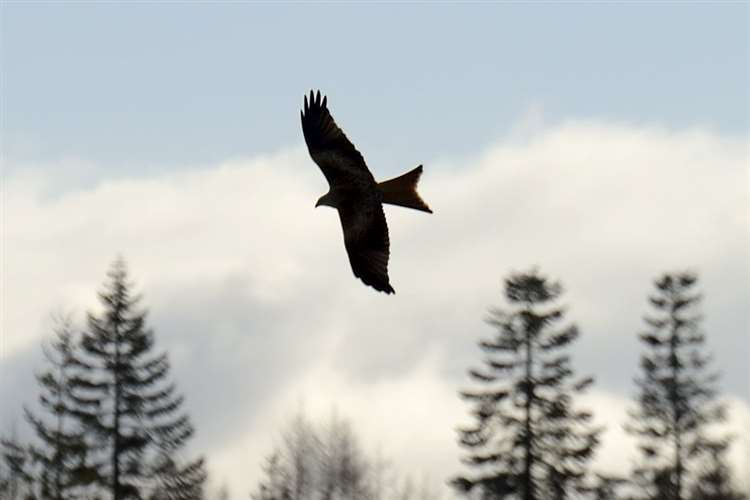
[Red kite. Photographer unknown]

Donald Fraser, NatureScot’s Head of Wildlife Management, said: “We consider the information from Police Scotland provides robust evidence that wild birds have been killed or taken or there has been intention to do so illegally on this land.

“Because of this, and the risk of more wildlife crimes taking place, we have suspended the use of general licences on this property for three years until June 2025. They may still apply for individual licences, but these will be closely monitored.

“NatureScot is committed to using all the tools we have available to tackle wildlife crime. This measure will help to protect wild birds in the area, while still allowing necessary land management activities to take place, although under tighter supervision.

“We believe this is a proportionate response to protect wild birds in the area and prevent further wildlife crime. We will continue to work closely with Police Scotland and consider information they provide on cases which may warrant restricting general licences.”

General licences allow landowners or land managers to carry out control of common species of wild birds, such as crows and magpies, to protect crops or livestock, without the need to apply for an individual licence.

In addition to this restriction, there are currently three other restrictions in place on Invercauld Estate in the Cairngorms National Park, Lochan Estate in Perthshire and Leadhills Estate in South Lanarkshire.

ENDS

The restriction notice reads as follows:

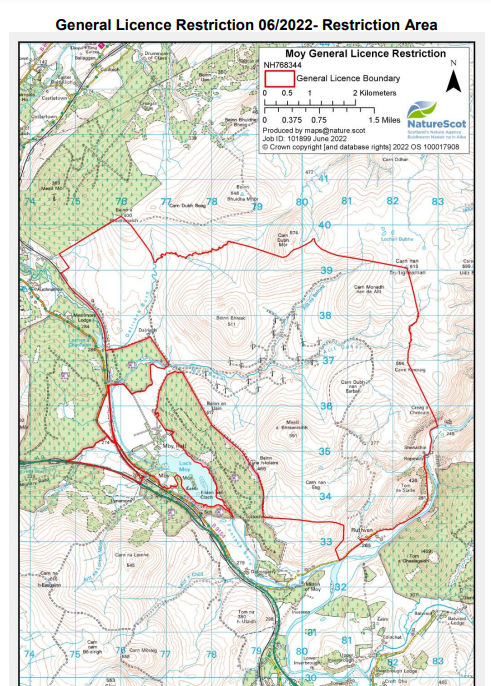
In line with NatureScot’s published General Licence restrictions: Framework for Implementing Restrictions we hereby give notice that a restriction has been applied to the land outlined in red overleaf. This restriction prohibits the use of General Licences 01, 02 and 03 on that land between 21st June 2022 and 21st June 2025.

Please note that this restriction does not imply responsibility for the commission of crimes on any individuals.

This one has been a long time coming. Moy is one of those estates where if its name comes up in conversation amongst raptor conservationists in Scotland, eyes tend to roll and knowing looks are exchanged. It has been identified as a raptor persecution hotspot for many, many years.

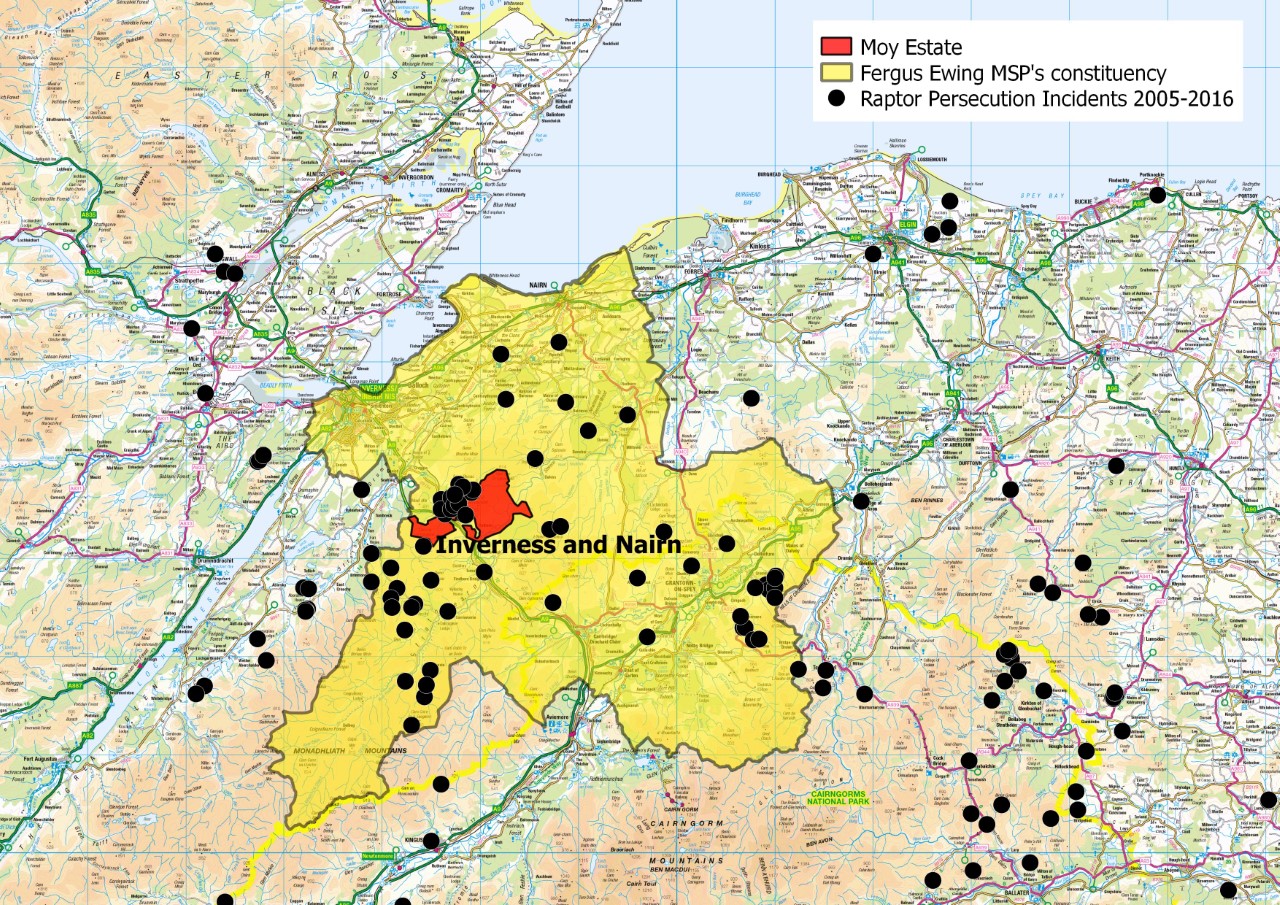
Here is a map we created way back in 2016 to highlight the extent of raptor persecution crimes in former Cabinet Secretary Fergus Ewing’s constituency (given his strong support of the Scottish Gamekeepers Association) and this shows the concentration of incidents on and close to Moy Estate:

Here is a selection of examples, but this is by no means an exhaustive list:

Moy Estate was raided by police in 2010 after the discovery of poisoned bait and dead raptors and illegally set traps. A gamekeeper was later convicted of possession of a red kite after its bloodied corpse was found in the back of his vehicle. It had two broken legs, consistent with being caught in spring traps, and a head injury. A bloodied shinty stick was also found in the back of the vehicle. Notably, the gamekeeper wasn’t convicted for killing the kite, just for having possession of it. Nobody was charged with killing this kite.

These baited traps were discovered on the moor (the illegally-set spring traps were originally disguised under moss, removed here for evidential purposes). No charges were brought.

The remains of two further red kites were discovered on the moor, including a severed red kite leg and some wing tags that had previously been fitted to a kite, all found buried in holes under some moss. No charges were brought.

A jar in one of the gamekeeper’s houses contained the leg rings of four young golden eagles – nobody could account for how they had ended up inside that jar. Perhaps he’d found them whilst ‘metal detecting at his uncle’s farm’ like gamekeeper Archie Watson, who recently gave this implausible explanation to the court for how he’d come to possess BTO leg rings from a buzzard and a red kite attached to his keyring.

This male hen harrier was found caught by its leg in an illegally-set spring trap on Moy Estate in 2010. No charges were brought. It survived after being rescued by raptor workers from the Scottish Raptor Study Group.

In May 2011 a satellite-tracked red kite ‘disappeared’ on Moy, and another one ‘disappeared’ in August 2011.

In 2016 Police Scotland issued an appeal for information following the discovery of disturbed and abandoned buzzard and goshawk nests in the Moy Forest. One goshawk and four buzzard nests were abandoned in suspicious circumstances, with some evidence of illegal disturbance. These nests were being monitored by staff from Forestry Enterprise Scotland (see here). No charges were brought.

In 2017 masked gunmen were caught on camera at a goshawk nest in Moy Forest. A few days later the nest and a clutch of four eggs was found abandoned (see here). No charges were brought.

In 2018 Police Scotland issued an appeal for information after a buzzard was found caught in an illegal pole trap in the Moy area (see here). No charges were brought.

In 2020 a poisoned red kite was found dead, containing traces of a banned pesticide, leading to a police appeal for information (here).

In 2021 an individual was charged with the alleged killing of a bird of prey in this area. This case is believed to be progressing through the courts so I can’t comment further at this stage.

Of course, a General Licence restriction doesn’t amount to much of a sanction in real terms, as I’ve discussed on this blog endless times before (e.g. see here). However, it’s currently the only tool available to the authorities until we finally see the introduction of the promised grouse moor licensing scheme by the Scottish Government. Had that scheme been in place already, we’d hopefully have seen the removal of Moy Estate’s licence to shoot for a number of years, if not permanently.

Meanwhile, what will be really interesting to see is whether the Moy Game Fair goes ahead this year, given that the shooting organisations have all claimed to have a ‘zero tolerance’ approach to raptor persecution. I don’t think the likes of Scottish Land & Estates, Fergus Ewing MSP and the Scottish Gamekeepers Association can expect anything other than high-level criticism if they attend this event on an estate that has now been sanctioned for wildlife crimes by the statutory nature conservation advisor, based on evidence provided by Police Scotland. Mind you, the conviction of a gamekeeper on Moy Estate in 2011 didn’t stop them attending (see here and here).

UPDATE 14th July 2022: Scottish Gamekeepers Association plans award ceremony at disgraced Moy Estate (here)

UPDATE 6th August 2022: Fergus Ewing MSP & his shooting industry pals disregard sanctions imposed on Moy Estate for wildlife crime (here)

UPDATE 22nd August 2022: Moy Estate loses appeal against General Licence restriction imposed for wildlife crime (here)