One of the most significant barriers to ‘sorting out’ the widespread illegal persecution of raptors in Scotland is getting anyone to accept responsibility for these crimes. Previous analyses by the RSPB have shown an irrefutable link between illegally-killed raptors and the game-shooting industry (e.g. see here). Time and time again, scientific peer-reviewed studies have also shown the incontrovertible relationship between areas that are ‘missing’ breeding raptors such as golden eagles and hen harriers, and areas managed as sporting grouse moors (e.g. take a look at the government-funded Conservation Framework Reports for the golden eagle and hen harrier as a starter).
Despite the long-standing and highly-regarded body of evidence, the game-shooting industry continues to refuse responsibility. The latest article in the Scotsman (see here) provides a perfect example of this.
It’s a handful of “rogue estates” carrying out poisonings, say the gamekeepers. It’s a “handful of estates” says David Hendry of the Cardney Estate. It’s “a minority” says Susan Davies of Scottish Natural Heritage. It’s a “tiny minority” according to the SGA response to the article on their Facebook page.
It’s an interesting choice of words isn’t it? The term ‘rogue’ is often used in a jocular sense in today’s society – “Oh, he’s just a loveable rogue”, meaning yes an individual is bending the rules but he’s not doing any real harm, he’s alright really. The term ‘rogue’ is also used to infer just one or two individuals (e.g. it was a rogue crocodile, or it was a rogue tiger that attacked the man), as is the term ‘a handful’. What is a handful? One or two? Not more than five? Not more than ten? The term ‘minority’ (depending on the context) refers to less than the majority.
Do any of these words adequately describe the extent of illegal raptor persecution on Scottish sporting estates, or are they just words used to deflect the increasingly obvious conclusion that illegal raptor persecution is endemic across many sporting estates? Let’s look at the stats.
This blog has been accused of using out-of-date information to create the false illusion of widespread raptor persecution. It’s a valid criticism in some ways as our Named Estates page dates back to incidents that were recorded in 1979. Actually it only includes one record from 1979 but to be fair the list does include a lot of reported incidents from the 1980s and 1990s. These early reported incidents were only used to illustrate the historical nature of illegal raptor persecution – i.e. it’s been going on for decades, but to be completely upfront we have since indicated which of those estates are known to have since changed hands (and thus potentially changed their ‘management’ practices). So, let’s just look at reported incidents from the last two years – that is, from January 2009 to March 2011, the most up-to-date figures available in the public domain.
During this period, twenty-six named locations have been identified as places where dead raptors have been reportedly found in suspicious circumstances. Most were poisoned but ‘a handful’ were shot or trapped and one (on Logie Estate) was found dead but the cause of death remains unknown. Of these 26 locations, 14 were on named estates: Auch Estate, Edradynate Estate, Farr and Kyllachy Estate, Glenbuchat Estate, Glenogil Estate, Invercauld Estate, *Leadhills Estate, Logie Estate, Millden Estate, Mountquhanie Estate, *Moy Estate, *Redmyre Estate, *Skibo Estate, Strathspey Estate. The remaining 12 locations were un-named and may or may not involve estates: eight in 2010 and four between Jan/Mar 2011. Of course, just because an illegally poisoned, shot or trapped dead raptor is discovered at a location doesn’t necessarily implicate the estate owner, shooting tenant or gamekeeper. It could just be a series of unfortunate coincidences, even though in the Scotsman article David Hendry of Cardney Estate admits that “there are a number of estates using poison still.” On only four of the above estates have gamekeepers been convicted for related crimes (Leadhills, Moy, Redmyre and Skibo).
If we expand the search to the previous five years (2006-2011 – as this is still relatively recent), then obviously the list grows:
*Birthwood Farm, *BlythFarm, *Cabrach Estate, Clova Estate, Dawyck Estate, Dinnet & Kinord Estate, Dunecht Estate, *Frogden Farm, *Glenbuchat Estate, Glenfeshie Estate, Glenogil Estate, Glen Turret Estate, *Innes House Estate. (The ones with an asterisk indicate a conviction during this period). In addition, a further six un-named locations are reported.
If we remove from this expanded list those estates that were already included in the two-year analysis (i.e. Glenbuchat, Glenogil) then we are left with a total of 25 different estates where dead raptors have been reportedly discovered in suspicious circumstances in the last five years. Add to these the 18 un-named locations and you get a running total of 43 different locations, assuming that all of the un-named locations were different to the named locations.
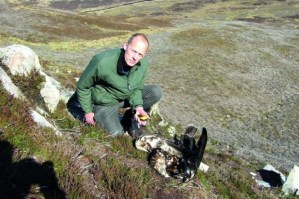 Forty-three. Is that ‘a minority’? Well yes, in the strictest sense it is because there are hundreds of shooting estates in Scotland. The exact number seems hard to pinpoint but it’s certainly at least in the low hundreds, which means that 43 is a minority in this context. But is it a ‘tiny minority’? Is it ‘a few rogues’? Is it ‘a handful’? No it isn’t. It’s a lot more than that and the game-shooting industry is being disingenuous if it continues to peddle this rural myth. But of course they’ll continue to peddle it because they want us to believe that they’re a law-abiding industry who just happen to want licences to be allowed to legally kill ‘just a few rogue’ raptors.
And what of the locations that haven’t been reported but can be implied by the ‘missing’ breeding raptors reported in the scientific papers? How many of these locations are there? Who knows. One thing is for sure – if the landowners and gamekeepers won’t admit responsibility for the incidents we do know about, they sure as hell aren’t going to admit to the ones we don’t know about! The representative bodies all say they’re working hard behind the scenes to get the ‘rogues’ to stop, but they’ve been saying that for a long, long time and here we are in 2011 and the killing continues up and down the country, with the exception of ‘a handful’ of decent estates who proactively welcome breeding raptors. Why does it continue? Because the majority know they can get away with it, just as they have been doing for the past 50+ years.

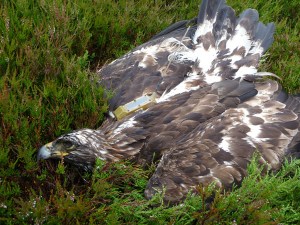 Millden Estate near Brechin, Angus has been put up for sale with a whopping £17.5 million price tag. If the estate is sold as a whole (as opposed to up to 13 Lots), it will become the most expensive Scottish country estate ever sold on the open market, according to Scotland on Sunday.
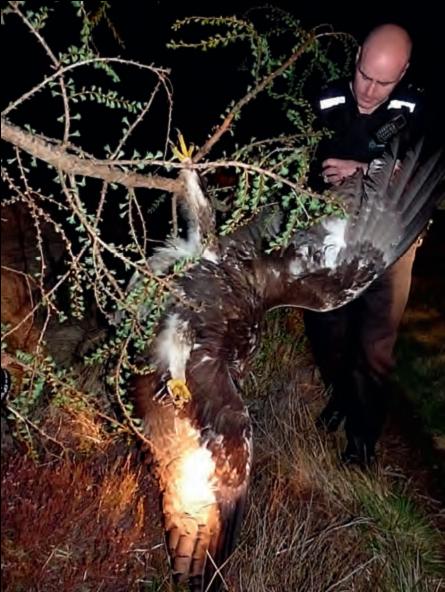 The RSPB has just published its annual report on raptor persecution in Scotland. The report, ‘The Illegal Killing of Birds of Prey in Scotland 2010‘ is the only known published record of all known persecution incidents including poisoning, shooting and trapping, in contrast to the PAW Scotland annual report which only details poisoning incidents. As well as the confirmed incidents of persecution, the report also provides information about ‘probable’ incidents (those where the available evidence points to illegality as by far the most likely explanation but where the proof of an offence is not categorical) and ‘possible’ incidents (where an illegal act is a possible explanation but where another explanation would also fit the known facts).
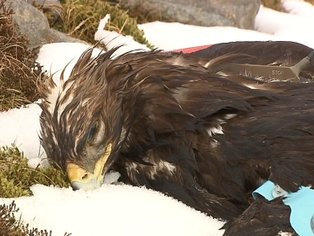 Today the Scottish government has published its latest report on animal poisoning in Scotland. The figures relate to recorded incidents in 2010 and demonstrate a sharp rise in the number of wildlife poisonings, including the widespread illegal poisoning of raptors. The report shows that 69% of all ‘abuse’ cases involved the poisoning of birds of prey, covering a wide area including Borders, Dumfries & Galloway, Highland, Lothian, Strathclyde and Tayside. The illegal pesticide Carbofuran was detected in half of these incidents. The raptors that tested positive for poisons included 40 buzzards, 4 golden eagles, 1 sea eagle, 1 kestrel, 5 barn owls, 2 tawny owls, 2 peregrines, 21 red kites and 11 sparrowhawks.
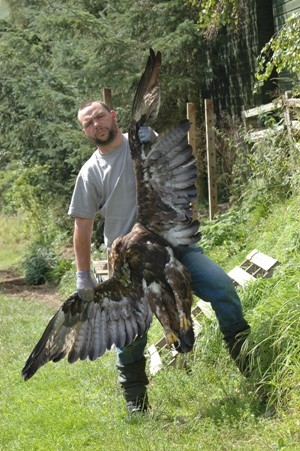 Today is the inglorious 12th, the start of the four-month grouse shooting season in the uplands of northern England and Scotland. Today, and for many days to come, ridiculously rich people will dress up in clownish outfits and head for the moors in the hope of shooting dead some birds. Many will pay an estimated average of £15,000 for the experience. I wonder how many of them will enjoy the sight of a hunting hen harrier or a golden eagle quartering across the moor? Very few, infact probably none of them because scientific evidence shows that hen harriers and golden eagles have been exterminated on most grouse moors in the UK, with just a few notable exceptions. Has anyone been convicted? One person was once convicted for killing a hen harrier, and that’s it. Nobody has ever been convicted for killing a golden eagle (someone was once taken to court a few years back but the case was dropped). Even though several dead eagles and the UK’s biggest stash of the poison they died from were all found on a sporting estate last year, still nobody has ever been convicted.
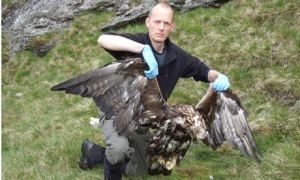 In an article published in today’s Scotsman newspaper, RSPB Scotland has told estates and landowners it is time they “sorted out” the problem of birds of prey being killed.
 Raptor Persecution UK