Some comments on last night’s ‘Inside Out’ programme on hen harrier persecution

So, what did we learn from last night’s Inside Out programme on the illegal persecution of hen harriers?

According to Martin Gillibrand, the Moorland Association’s secretary, there is ‘no evidence’ that gamekeepers have been involved in hen harrier persecution, and the cause of their near extinction as a breeding species in England is “as a result of some very bad springs, breeding productivity has fallen off and the numbers have gone down“. Ah, so climate change is the real problem then. So if we all turn down our central heating and get our lofts insulated the hen harriers will be ok. It’s the same old story – give any explanation for the demise of the hen harrier except for the most obvious one.

Funny that he didn’t mention an earlier Moorland Association statement, given as written evidence during the recent parliamentary audit on wildlife crime (see here) –

“Until a full set of special rules allowing the positive management of hen harriers breeding on grouse moors is forthcoming from the Environment Council’s Hen Harrier Dialogue, moorland owners are within their rights and the law to deter the birds from settling on their moors to breed.”

Nor did he mention previous correspondence between the Moorland Association and DEFRA minister [grouse moor owner] Richard Benyon, discussing the possibility of derogations from international law that would allow for the legal ‘management’ of hen harriers (see here).

What else did we learn? Well, as predicted, the recent introduction of vicarious liability legislation in Scotland was touted as the solution to end raptor persecution. Unsurprisingly, this view was presented by Des Thompson of SNH – an organisation with a vested interest in making everyone believe that they’re dealing with the on-going (59 years and counting) problem of illegal raptor persecution. According to Des Thompson:

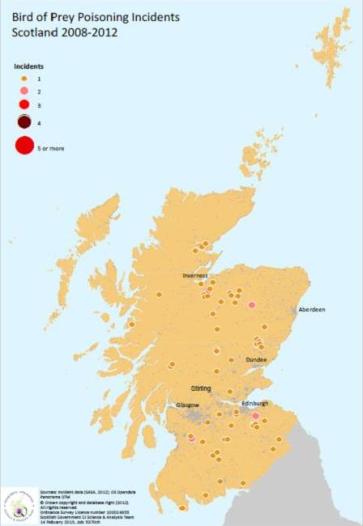
We are seeing some real signs of success. There are indications now that the recorded incidents of poisoned birds of prey is declining“.

He went on: “We were despairing in Scotland a couple of years ago but things have got a lot better“.

Have they? Yes, the number of recorded poisoning incidents has dropped, but does that mean poisoning has dropped, or poisoning is still going on but it’s now better hidden, or that recorded poisoning incidents have dropped because other methods of persecution are now being employed? Here are three examples that suggest things have not ‘got better’ (see here, here and here).

It’s interesting that SNH should interpret the drop in recorded poisoning incidents as a ‘success’, when the only true measure of success will be if raptor populations (especially hen harrier and golden eagle) recover. If they do recover, it will take several years to see it. Sorry, but to suggest at this early stage that vicarious liability has been a ‘success’ is utter rubbish – it’s a statement with more spin than a Zanussi.

Yesterday we blogged about how vicarious liability isn’t the solution to solving the issue of illegal raptor persecution, mainly because the crux of the vicarious liability concept is that the individual criminal first has to be identified before his/her employer can be charged under the new legislation. However, this was written from a Scottish perspective, where evidence such as covert video surveillance (identifying an individual actually committing the crime) is so often banned as admissable evidence in court. However, in England, this type of evidence is frequently accepted in court and has been used very successfully to convict criminal gamekeepers. So, in this context, vicarious liability, if it was to be introduced in England, might just work.

If you missed last night’s programme you can watch it on iPlayer (here) for a limited period.

We’ll be blogging later today about the latest development from the Hen Harrier Dialogue…

For anagram fans: A SAD MORONS COALITION / MOORLAND ASSOCIATION

Eagle persecution featured on the One Show

One-Show-smallYesterday evening, the BBC’s One Show ran a feature on golden eagle satellite-tracking in Scotland, featuring two legendary raptor fieldworkers from the RSPB, Stuart Benn and Brian Etheridge.

Thanks to these two, the message about illegal raptor persecution was heard by a mainstream tv audience (an estimated 5 million viewers) both during the film (when they were sat-tagging an eaglet) and then again when Stuart was interviewed in the studio.

Two top blokes doing a top, top job. Well done!

For anyone who missed it, catch it on BBC iPlayer here (20.37 min – 28.41 min) for a limited period.

Here is a link to Stuart’s blog about the filming day last summer.

Another poisoned buzzard in Scotland

SASA (the Government’s Science & Advice for Scottish Agriculture) have just published their latest ‘Summary of Incidents’ where they report on the number of animals that have been submitted for poisoning analysis, dating from January – September 2012 (see here).

It’s an interesting read. The results from the first three-quarters of 2012 suggest a decline in the number of reported raptor poisoning incidents. Does this reflect an actual decline in poisonings, or does it mask something more cynical, such as a change of tactics in the method of persecution used? Nobody can tell for sure at this stage, although you’d have to be pretty naive to believe the first explanation, especially after the recent shocking non-poisoning incidents such as the dead golden eagle found in a lay-by with two broken legs, believed to have been illegally trapped on an Angus grouse moor and then moved by vehicle in the dead of night and dumped by the side of the road, barely alive and left to suffer an horrific death. Then there was the golden eagle that was found shot and critically injured on a grouse moor in Dumfrieshire, now making a slow recovery. And then the shot hen harrier found dead on another grouse moor in Grampian. And these are just the ones we know about.

The latest SASA results show that a buzzard was found dead in Grampian in September 2012, confirmed to have been poisoned by the illegal pesticide Carbofuran. We don’t remember seeing any police reports about this incident. Perhaps they kept it quiet so as not to hinder their investigation? Fair enough, but it’s now four months later…Perhaps Grampian Police will report where was it found, and whether anyone is being charged. They probably won’t though; yet another incident being quietly swept under the carpet? We blogged about these poisoning incidents going unreported the last time SASA published their stats (see here).

There were a number of dead buzzards that were submitted to SASA for testing between Jan-Sept 2012, including the satellite-tagged ‘Buzz’, believed to be the first sat-tracked buzzard in Scotland (see here). His last signal came from near Brechin, Angus in late September. His corpse was picked up by the side of the road. Given the location and the on-going history of raptor persecution in the nearby area, his body was submitted for a post-mortem. He hadn’t been poisoned though – SASA concluded that his probable cause of death was starvation. It would have been nice if Tayside Police had provided information about this result, given so many were following his movements on Roy Dennis’ website…

Buzz wasn’t the only buzzard to starve to death. There are four other buzzards listed in the report with the same probable cause of death; strange really, when there are some people who maintain that buzzards are gorging themselves silly on gamebirds.

Interestingly, the dead golden eagle found in suspicious circumstances on Harris in June did not not appear in the SASA results, even though the press reported at the time that poisoning was suspected (see here). Perhaps Northern Constabulary will provide an update on the outcome of this one? Yeah, you’re right, of course they won’t.

Misleading guff from Scottish Land and Estates

scotsman_logo_200The following letter has appeared in The Scotsman in the continuing ‘debate’ on grouse moor management (see here to read the earlier articles).

“Logan Steele’s letter (14 Jan) which alleges that driven grouse shooting is only viable with the persecution of birds of prey, particularly the hen harrier, is misleading.

First, official statistics demonstrate a clear decline in the number of incidents of raptor persecution.

Second land management for driven grouse shooting delivers a huge benefit for other protected wildlife, especially waders, and sustains employment and communities in remote rural areas. This is something the suggested alternative of walked-up grouse-shooting would not do.

Of particular significance is clear evidence that where grouse and hen habitat and vermin management have declined in some hen harrier “special protection areas”, this has actually resulted in lower harrier populations, as well as declines in other species such as waders.

This is a more complex situation than some make out.

The Langholm Moor Demonstration Project, set up in partnership with the government to bring back driven grouse shooting in the presence of sustainable numbers of hen harriers, is where the best hopes of progress on this issue lie.

Results at Langholm so far are that neither harriers nor grouse have recovered – not what anyone expected, but each year scientific understanding improves and practical solution gets closer.

Making progress will involve compromise on all sides.

Organisations representing grouse moor managers such as SLE are fully behind this process and it is unfortunate that RSPB has pulled out of the mediation process in England. Perhaps Scotland provides the best opportunity to make progress now.  Douglas McAdam, Scottish Land & Estates, Musselburgh”

[Link to the letter here].

And he accuses Logan Steele’s letter as being misleading!

First, which “official statistics demonstrate a clear decline in the number of incidents of raptor persecution” is Doug McAdam referring to? The ones we know of only relate to known poisoning incidents, although they are limited to poisoned birds; they do not include the discovery of poisoned baits and nor do they include suspected poisoning incidents or unreported poisoning incidents. More to the point, they do not relate to other types of raptor persecution, such as shooting, trapping, nest destruction, ‘disappearing’ birds etc. The only statistics that account for all types of raptor persecution incidents are those compiled annually by the RSPB; statistics that have never been accepted by SLE or any other game-shooting organisation.

Second, McAdam says “land management for driven grouse shooting delivers a huge benefit for other protected wildlife, especially waders, and sustains employment and communities in remote rural areas“. Another misleading statement. Land managed for driven grouse shooting is not only bad for protected wildlife (golden eagles, white-tailed eagles, hen harriers, goshawks, red kites, buzzards, peregrines, ravens, pine martens, mountain hares etc etc) but it is catastrophic for other species too (foxes, weasels, stoats, crows etc etc). And that’s without even touching on the landscape-level environmental damage.

McAdam goes on to suggest that “making progress will involve compromise on all sides“. No it won’t. Making progress will depend entirely on whether the grouse-shooting industry will accept that they have to work within the law and put an end to illegal persecution. If they do, all well and good. If they won’t, then they face a direct action campaign to ban driven grouse shooting by those of us who are sick of waiting for the government to act on our behalf. Hollow promises just don’t wash anymore. Time’s up.

McAdam’s penultimate sentence is laughable. He’s trying to suggest that the RSPB are the unreasonable ones in this 20+ year saga, for walking away from the six-year long Hen Harrier Dialogue process (see here). They are definitely not the unreasonable ones – they recognised a sham process and got out. Until SLE start to publicly expel their member estates where raptor persecution is rife (and we all know who they are, and so should McAdam – if he doesn’t, he’s in the wrong job), then the credibility of SLE’s involvement in ‘making progress’ will be viewed with as much contempt as it deserves.

Here comes 2013….the year of natural scotland

imagesHappy Hogmanay!

Tomorrow marks the start of another Scottish government themed year: The Year of Natural Scotland, in which we’re encouraged to celebrate Scotland’s stunning natural beauty and biodiversity. Good job it wasn’t this year’s theme as there might have been some red faces in the government:

  • SGA gamekeeper Whitefield sentenced for poisoning four buzzards (he already had an earlier wildlife crime conviction). His sentence this time? 100 hours community service.
  • Scottish gamekeeper McLachlan, convicted for possession of the banned poison Carbofuran. Fined £635.
  • Scottish gamekeeper Barrie lost an appeal for his sentence of £520 for illegal possession and control of a wild bird.
  • COPFS choosing not to prosecute a Scottish gamekeeper who had been filmed beating birds to death with a stick inside a crow cage trap.
  • Scottish gamekeeper Christie convicted for wildlife crimes relating to the illegal use of a crow cage trap. His sentence? An admonishment (a telling off).
  • Scottish gamekeeper Graham convicted for allowing a buzzard to starve to death inside a crow cage trap. Fined £450.
  • Scottish gamekeeper McKellar convicted for possession of banned poison. Fined £1,200.
  • Scottish gamekeeper Scobie convicted for using banned poison. Fined £270.
  • A satellite-tagged golden eagle mysteriously ‘disappeared’ in the Angus glens.
  • A satellite-tagged golden eagle mysteriously ‘disappeared’ to the North East of the Cairngorms National Park.
  • Peregrine chicks mysteriously ‘disappeared’ from a nest site in Dumfries & Galloway.
  • A golden eagle was found dead, poisoned in Lochaber.
  • A golden eagle was found dead in suspicious circumstances on the Isle of Harris. Still awaiting results.
  • A satellite-tagged golden eagle mysteriously ‘disappeared’ in the Monadhliaths.
  • A poisoned raven, crow, and three poisoned baits were found in the Borders.
  • A satellite-tagged golden eagle was found dead near a lay-by in Aberdeenshire. Its injuries and its sat tag data suggested it had been illegally trapped on an Angus grouse moor and then dumped during the night and left to die.
  • A golden eagle was found shot and critically injured on a grouse moor in Dumfries & Galloway.
  • Barry, the sat-tagged hen harrier from Langholm mysteriously ‘disappeared’.
  • Buzz, the sat-tagged buzzard mysteriously ‘disappeared’ in the Angus glens. (More on this case in the New Year).
  • Willow, a sat-tagged marsh harrier mysteriously ‘disappeared’ in Galloway.
  • A hen harrier was found shot dead on an Aberdeenshire grouse moor.

These are just a few of the ‘highlights’ from Scotland this year – there are a few more that we can’t yet report but we will in the New Year. And of course this list doesn’t include other confirmed incidents from other parts of these fair isles such as England, Wales, Northern Ireland and the Irish Republic; a list that includes shot and poisoned sea eagles, buzzards, kites, harriers, peregrines and sparrowhawks. Nor does it include the incidents that went undiscovered.

We’ll be blogging quite a lot about the Year of Natural Scotland, which hopefully won’t be just a banner-waving exercise by the government but an opportunity for them to put their money where their mouths are. You don’t think so? No, neither do we. Why should 2013 be any different from the previous three decades of ineffective action?

A hint of what’s to come is the revelation that the theme will be highlighted during several events throughout the year. Two particular locations caught our attention: the Scone Game Fair and the Moy Game Fair.

The Scone Game Fair is of course organised by the GWCT. That’s the same GWCT that has recently asked for the addition of buzzards and sparrowhawks to the General Licences (that means they want permission to kill them…we’ll be blogging about that shortly). It’s also the same Game Fair that has previously attracted sponsorship from some very, how shall we put it, ‘surprising’ sources.

The Moy Game Fair is held on the Moy Estate near Inverness. If you’re unaware of this place, try googling it.

Thanks for all your interest and support in 2012…we’ll see you soon. Sláinte!

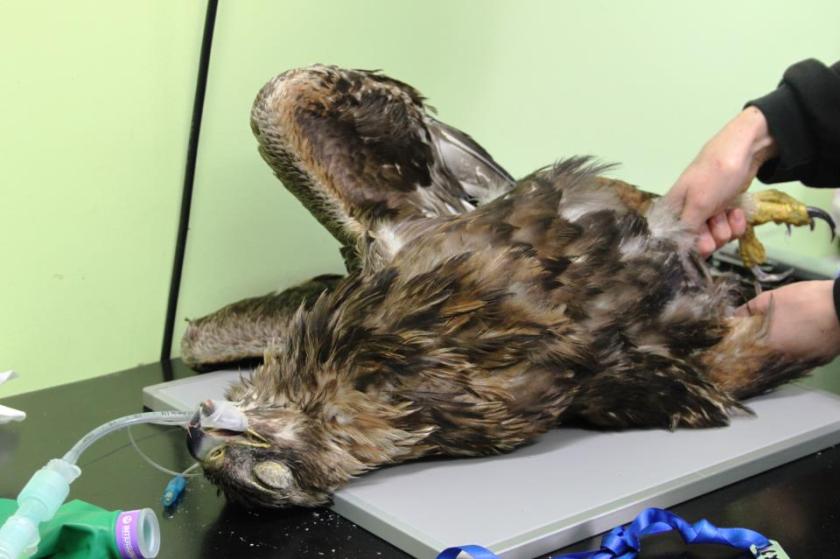
This golden eagle was found shot, critically injured &left to die on a Scottish grouse moor. Photo SSPCA
This golden eagle was found shot, critically injured and left to die on a Scottish grouse moor. Photo SSPCA

Eagles demand lighter children

Modern children are simply too fat to lift, according to eagles.

After faked footage of an eagle attempting to carry off a child went viral, the birds commented that they wished this were still possible.

Golden eagle Roy Hobbs said: “These days you simply can’t get human infants off the ground. Honestly, the average toddler weighs more than a sheep. What the hell are you feeding them?

For the gullible, not mentioning any names, this story is fake. We nicked it from The Daily Mash (a satirical website, here).

Sorry to disappoint you, Bert….

Ah Bert, sorry mate – try again next year?

http://blogue.centrenad.com/2012/12/19/centre-nad-reassures-montrealers-no-danger-of-being-snatched-by-a-royal-eagle/?lang=en

Fake video stokes anti-eagle rhetoric

article-2250416-1693BE92000005DC-649_634x423A YouTube video that purports to show a golden eagle attempting to carry off a small child in a semi-urban park in Montreal has gone viral on social media networks. Unfortunately, for the eagle-haters, the video is clearly a fake. It’s not even a golden eagle! Watch the video here.

Unsurprisingly, the Daily Mail pounced on the story, with the headline: “Kidnapper from the skies”  and described the golden eagle as “the feathered beast, one of the world’s deadliest birds of prey” (see here). They later updated their story, perhaps realising it was all an elaborate hoax.

Bert Burnett of the Scottish Gamekeepers’ Association was also on hand to offer his customary insightful analysis. Here’s what he posted on the SGA’s Facebook page:

I have no doubt that the usual idiots will brand this video as a fake but then again they probably don’t believe the holocaust took place either“.

No surprises there – last year the SGA wrote to the Scottish Government about the threat of reintroduced sea eagles eating children in Scotland (see here and here).

Another YouTube video of equal authenticity, showing a baby being carried to an eagle’s nest, can be watched here.

UPDATE ON THE HOAX VIDEO here

RSPB walks out of hen harrier ‘dialogue’

tec_logo_16271This isn’t especially new news, as it happened in the summer, but we were reminded of it today after reading something on Mark Avery’s blog – more on that later – and it does seem pertinent to blog about it now.

So, most readers will be aware of the Environment Council’s ‘Hen Harrier Dialogue’ – a process that started in 2006 that aimed to bring ‘stakeholders’ together to try and work out a way of resolving the hen harrier / grouse moor conflict in England (see here for website). Those stakeholders involved in these dialogue meetings included the usual suspects such as BASC, Countryside Alliance, Country Land and Business Association, GWCT, Moorland Association, National Gamekeepers’ Organisation, RSPB, Hawk & Owl Trust, Northern England Raptor Groups etc.

The ‘dialogue’ process has produced an awful lot of documents (and a lot of awful documents, see here) and meeting reports (see here), and a strong interest in pursuing a trial on a ‘quota system’ for hen harriers – a controversial idea spawned by Steve Redpath several years ago. In simplistic terms, this quota system would mean that grouse moor owners would ‘allow’ a certain number of breeding pairs (number yet to be established) and once a ‘ceiling’ had been reached, then they would be ‘allowed’ to remove harrier broods (non-lethally) to other parts of the UK away from grouse moors. This idea is still being discussed, although it brings with it obvious ethical and legal debates.

Hen harrier being removed from illegal trap on Moy EstateSome argue that conservation groups shouldn’t be sitting at the table with representatives from an industry that has been responsible for killing off England’s breeding hen harrier population. Others argue that the quota scheme may be the best way forward because at least there’d be some harriers, which is a better proposition than having none. Others have suggested that the quota system would never get off the ground anyway because the grouse moor owners would have to ‘allow’ a certain number of breeding hen harriers on their estates and they’ve shown themselves incapable of tolerating any.

Whatever your point of view, the bottom line is that six years on from the start of the dialogue process, and after all that talking over egg sandwiches and coffee, the English hen harrier breeding population has been reduced to one known pair. That’s it. Just the one pair. In a country that has suitable habitat to support over 300 breeding pairs.

This summer, the RSPB made a bold move and decided to walk away from the dialogue process. They said that as hen harriers have been systematically eradicated from English grouse moors then there was no longer any conflict and therefore no point in spending any more time talking about it. Instead, they intended to get on with their own plans for hen harrier recovery.

It’s not yet known what will happen to the Environment Council dialogue process now a major player has walked away. As far as we’re aware, there are still many questions about the lawfulness of the proposed trial quota scheme so it’s unclear whether attempts will still be made to push that through.

So what next for English hen harriers? After the recent sad story of the illegal shooting of Bowland Betty (see here), in addition to all the other horror stories we keep reading about from English and Scottish grouse moors (e.g. see here, here, here, herehere), is it time for a different approach? It’s obvious that the authorities can’t, or won’t deal with illegal persecution, and the grouse-shooting industry can’t, or won’t put a stop to it either. An alternative suggestion has been put forward by Mark Avery – unless things miraculously improve for breeding hen harriers in Northern England in 2013 then it will be time to start the campaign, on 12 August 2013, to end grouse shooting (see here for Mark’s blog).

Up until now we’d been supporters of the idea of estate-licensing schemes rather than an outright ban. Licensing seemed a fair and reasonable approach to regulate an industry so clearly incapable of expelling its criminal elements. But now?  The time for being reasonable has long since passed. Count us in, Mark.

For our anagram fans: Grouse moor – morgue or so

Tayside Police respond to questions about dead eagle investigation

The dead golden eagleLast month we encouraged blog readers to contact Tayside Police Chief Constable Justine Curran to ask for further clarification about the way Tayside Police had handled the investigation into the death of a golden eagle. This young eagle was believed to have been illegally trapped on an Angus grouse moor and then moved, in the dead of the night, to a lay-by in Aberdeenshire where it was left, with horrific injuries, to die a slow and undoubtedly agonising death. See here and here for earlier blog posts about this case.

Once again our blog readers stepped up and contacted Tayside Police and once again this has paid off; Tayside Police have responded. We’ll come to that in a minute, but first of all a big thank you to everyone who tweeted, facebooked and shared the story on their own blogs and websites – people power in action. We’re convinced that it was the sheer volume of emails that prompted the response from Tayside Police, so well done to all involved.

Tayside Police also deserve credit for responding. This is the second time they’ve posted a comment on this blog and to be honest, we didn’t expect them to do it twice. However, although they deserve credit for responding, the content of their response still leaves a lot to be desired.

As a quick re-cap, here is a summary of the questions that were asked of Tayside Police:

  • Is the death of this golden eagle being treated as a CRIME?
  • Were attempts made to recover evidence from a wide search area?
  • Were attempts made to recover evidence from vehicles and buildings?
  • Why hasn’t Tayside Police publicised the death of this eagle?
  • Did Tayside Police provide details of the post-mortem to any defence agent?
  • Did Tayside Police advise the Minister’s office that the eagle’s injuries could have been caused by anything other than a spring-type trap? If so, what did they say could have been the cause of the injuries?

We’ll come back to each question once you’ve read the full police response. As before, their response was made via the comments section of the blog and we’re reproducing it here in case anyobody missed it:

TaysidePolice-logoComment from Wildlife and Environmental Crime Officer Tayside Police

Thank you for bringing these matters to my attention and by way of assurance, on behalf of Tayside Police, I am now in a position to provide an update in regard to many questions asked through the Blog. In order to deal with this effectively in the future, I would ask that any further correspondence be directed to this email address in order that they can be dealt with appropriately – mail@tayside.pnn.police.uk

You will appreciate that it has taken some time to consider the issues raised. The following comments take into account the on-going investigation into the death of the Golden Eagle in May 2012, as we continue to attempt to establish the exact cause of the eagle’s death.

This reported incident was recorded as a crime in Tayside area and has been investigated as such. Along with our partners in Grampian Police and the RSPB Investigations Unit, I have carried out a full and comprehensive enquiry into this incident. The enquiry remains ongoing and we have unfortunately yet to identify those responsible.

In every investigation, Police and other partner agencies consider the use of the media. In this case utilising the media was indeed considered by the enquiry team and after discussion with partners, it was decided not to publish the incident. Be assured that the media are considered in every investigation by Police and other agencies but I am content that the correct decision was made in this case.

As per Karen Hunter’s (Scottish Government) letter of the 24th October 2012 “It is extremely frustrating (for all involved in the investigation of wildlife crime) that it is so difficult to detect, and in some cases to prosecute and convict those responsible for wildlife crimes. However while it easy to make suppositions about circumstances of an apparent offence as reported in the media, wildlife crime must be subject to the same standard of proof as any other crime. Police and prosecutors also apply the same stringent procedure for dealing with wildlife crime as for any other sort of crime.”

In Scotland, in all cases, sufficient and admissible evidence is required to report a case to the Procurator Fiscal.

A charge may be proved by purely circumstantial evidence, by accounts from two or more credible witnesses or a combination of the two types of evidence but, in order to be sufficient, the material facts and circumstances must point only to one conclusion, and that is, the guilt of the accused. It is not necessary to have corroboration of every fact and circumstance in a chain of circumstantial evidence but the more important circumstances should be corroborated.

Evidence must also be legally admissible which means it has to have been obtained by legal means. Only competent evidence will be admitted by the courts. The court alone decides what evidence in a particular set of circumstances is admissible.

To clarify Police procedures, there can often be sufficient evidence to suggest a crime has been committed to allow for further investigation, but this does not automatically infer there is enough evidence to report the matter to the Procurator Fiscal or indeed secure a conviction. This is the current situation.

Please be advised that in relation to some of the more specific questions, asked regarding the on-going investigation, we can not disclose information due to the risk of compromising the investigation. However we can confirm that Tayside Police did not allow any access to the Golden Eagle carcass to any defence agent.

Be assured that Tayside Police are eager to bring the perpetrators to justice and in conjunction with the other agencies referred, Tayside Police will continue to investigate all circumstances surrounding this incident with a view to identifying those responsible. Police and other agencies will apply appropriate and proportionate resources to this type of crime on every occasion and diligent enquiry will be carried out.

Tayside Police will also continue to support and develop all preventative measures available to us and our partners to minimise the threat of any further such incidents occurring in the future.

I trust my comments will be of use to all those who have contacted Tayside Police regarding this incident.

In regard to other general questions, I can advise that this information can be accessed via your own website, the SASA website and RSPB website.

For any further comments or information that can assist us in this investigation please contact: mail@ tayside.pnn.police.uk , call 0300 111 2222 or speak to any Police Officer.

So, let’s go back to each question in turn.

Q1. Is the death of this golden eagle being treated as a crime? A. Yes.

Q2. Were attempts made to recover evidence from a wide search area? A. We can not disclose information due to the risk of compromising the investigation.

Q3. Were attempts made to recover evidence from vehicles and buildings? A. We can not disclose information due to the risk of compromising the investigation.

Q4. Why hasn’t Tayside Police publicised the death of this eagle? A. In every investigation, Police and other partner agencies consider the use of the media. In this case utilising the media was indeed considered by the enquiry team and after discussion with partners, it was decided not to publish the incident. Be assured that the media are considered in every investigation by Police and other agencies but I am content that the correct decision was made in this case.

Q5. Did Tayside Police provide details of the post-mortem to any defence agent? A. We can confirm that Tayside Police did not allow any access to the golden eagle carcass to any defence agent.

Q6. Did Tayside Police advise the Minister’s office that the eagle’s injuries could have been caused by anything other than a spring-type trap? If so, what did they say could have been the cause of the injuries? A. No response.

So what have we learned?

That Tayside Police won’t provide detailed information about the nature of their search. We didn’t really expect them to and in any case we already know (from other sources) that a search warrant was not requested for this investigation. It’s hard to understand why not but we’re unlikely to get an explanation.

We’ve learned that Tayside Police considered using the media to publicise this case but chose not too. Actually we didn’t just learn that, we already knew they hadn’t publicised it – what we asked was why they hadn’t publicised it. No satisfactory answer was received.

We’ve learned that Tayside Police didn’t allow any defence agent access to the eagle carcass. What we specifically asked though was whether they allowed a defence agent access to the post-mortem results. No satisfactory answer was received. Our sources suggest that a defence agent did have access to the post-mortem results, although who gave him that access remains a ‘mystery’.

Environment Minister Paul WheelhouseThe most important thing we learned was that this incident IS being treated as a crime by Tayside Police. That is reassuring, but begs the question then, who advised the Minister’s office to put out this statement:

The reports may suggest that the circumstances of this incident were suggestive of an offence however there is no hard evidence and it remains possible that there is an alternative explanation“.

Tayside Police didn’t answer this question directly but we can infer that, as they were treating the incident as a crime, the advice to the Minister probably didn’t come from them. It’s also fair to assume that the advice didn’t come from the Police’s partner agency in this investigation, the RSPB, as they were the ones to put out a press release stating that they believed the eagle had been caught in an illegally-set trap. So who did advise the Minister? This is an important question; we need to be reassured that the Minister is not taking advice from anybody who has a vested interest in covering up this crime. Let’s ask him: “From whom did the Environment Minister’s office take advice that suggested this eagle’s death was anything other than a crime?” Email to: ministerforenvironment@scotland.gsi.gov.uk