Gamekeepers and golden eagles: the facts

The Scottish Gamekeepers’ Association issued a press release this morning about how great gamekeepers are for golden eagle conservation.

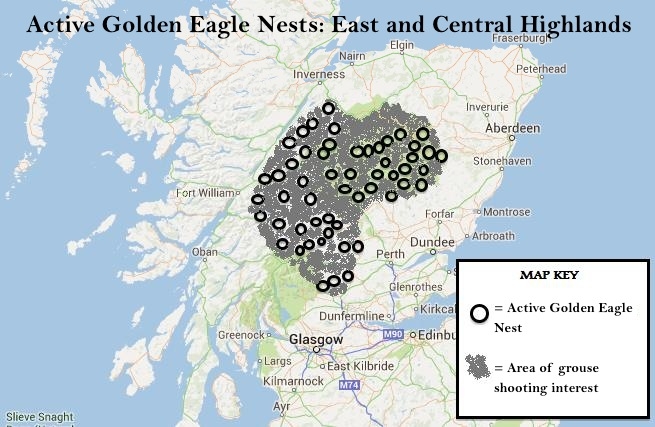
They produced the following map in an attempt to suggest that golden eagles are doing well on grouse moors in central and eastern Scotland:

SGA eagle bollocks

They claim that there are at least 55 active golden eagle nests in the keepered grouse areas of East and Central Scotland, based on the results of a ‘survey’ they did, presumably of gamekeepers.

To the uninformed, this map suggests that golden eagles are breeding at a relatively high density on grouse moors in this region. But don’t be fooled! What this map doesn’t show, because of the ridiculous scale at which it has been produced, is the number of vacant golden eagle territories on grouse moors in East and Central Scotland. (It also ignores the grouse moors of Southern Scotland, probably because breeding golden eagles in that area are virtually non-existent, with just a couple of exceptions, but let’s just brush over that shall we?).

There is no disputing that golden eagles do breed successfully on some Scottish grouse moors. That is a fact. There are a number of enlightened land owners who welcome golden eagles on their grouse moors and do an excellent job in providing them with a home and a good supply of food. We’ve blogged about a few of them before and we applaud their efforts. The problem is, there aren’t enough of them. That is also a fact. The best way to demonstrate this is to look at the level of occupancy of golden eagle territories in different parts of Scotland. The following data are from the 2008 Golden Eagle Conservation Framework – a government-funded comprehensive scientific review of golden eagle ecology and conservation in Scotland:

Golden Eagle Territory Occupancy:

Western Isles = 91%

Western Highlands = 89.5%

Argyll West & Islands = 81.5%

Central Highlands = 48%

Cairngorms Massif = 42.4%

North East Glens = 17.6%

That’s pretty stark. Golden eagles in areas of western Scotland (with little if any grouse shooting interests) occupied over 80% of the available territories; golden eagles in the central and eastern Highlands (grouse moor hell) had an occupancy rate of below 50%, and in one region (North East Glens) it was a shocking 17.6%. Why is it that all those available golden eagle territories in the East and Central uplands are vacant? What’s stopping them from breeding there? Hmmm, whatever could it be?

The SGA press release also talks about the ‘stability’ of the golden eagle population over the last 20 years, presumably to make you think that golden eagles are doing ok so what’s all the fuss about? What they fail to say is that that ‘stability’ of approx 430 pairs masks some very big differences in regional abundance. For example, there has been a substantial increase of golden eagles in the Western Isles over the last ~20 years, largely thanks to a reduction in illegal persecution in that region. In contrast, there has been a significant decrease in the number of golden eagles in the central, eastern and southern uplands (hence all those vacant territories), thanks largely to illegal persecution on driven grouse moors. That is a fact, backed up by a suite of scientific peer-reviewed studies. That’s why the population appears to be ‘stable’ – because all the losses in the east are being counterbalanced by the gains in the west.

What the SGA also fail to mention is that the ‘stable’ population of ~430 pairs is nowhere near what the population could be. It’s been estimated that there is enough habitat for at least 700 golden eagle territories in Scotland – the population of ~430 pairs is being suppressed at an unnaturally low level and failing to expand into some areas of its former range. Why? Illegal persecution. Read the Conservation Framework (below) if you want to examine the details. The facts are all there.

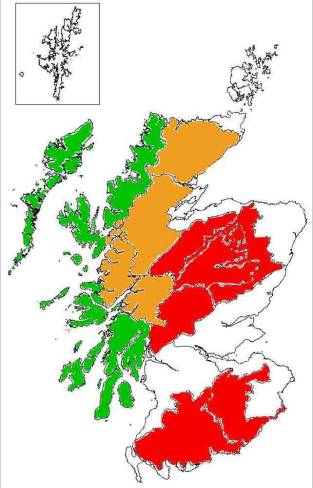
Here is a map from the Framework report, showing the conservation status of golden eagles in 2003. Green areas = region in favourable conservation status; Amber areas = region in unfavourable conservation status but failed in only 1 test (i.e. a marginal failure); Red areas = region in unfavourable conservation status, with failure in more than one test. It’s pretty bloody obvious in which areas golden eagles are in trouble – yep, that’s right, areas managed for driven grouse shooting. Another fact.

GE conservation status 2003

There was another element to the SGA’s press statement this morning. They claimed they had recently expelled four (unidentified) members from the SGA club for wildlife offences. If they have done this then it is very welcome news and we applaud them for booting out those criminals. It has been something we’ve been asking them to do for a very long time and hopefully this will be the start of a growing trend.

BBC News article here

Scotsman article here

RSPB response here

Golden Eagle Conservation Framework here

UPDATE 24 January 2014: See here for details of the VACANT golden eagle sites on upland grouse moors.

27 eagles, 7 years, 0 prosecutions

Last September we wrote an article called ’26 eagles, 6 years, 0 prosecutions’ (see here). We thought it was time to update it and it’s now called: ’27 eagles, 7 years, 0 prosecutions’.

Why update it now? Well mostly in response to Paul Wheelhouse’s comment yesterday that the Scottish Government “has achieved much since 2007” in relation to tackling illegal raptor persecution. Yes, ‘much’ has been achieved in terms of forming new committees and partnerships and having meetings and publishing soundbites, but what has actually been achieved on the ground, where it matters? According to the following list, absolutely bloody nothing.

As previously stated, some of these eagles on this list are just ‘missing’ and may not be dead, although the frequency with which these sat-tagged eagles are going ‘missing’ is indicative of something more sinister, of that there’s no more doubt. It’s also reasonable to point out that there may be (probably will be) a hell of a lot of other eagles that we haven’t included in this list because we just don’t know about them. We only see the tip of a very very large iceberg, as is becoming clearer to everyone by the day.

It’s also worth pointing out that if Scottish Land & Estates and the Scottish Gamekeepers Association had their way, we wouldn’t be able to report on any of these cases because presumably the police are still investigating them all. I can’t for the life of me think why those two organisations would prefer this information was kept secret.
_41773232_goldeneagle203MAY 2006: A dead adult golden eagle was found on the Dinnet & Kinord Estate, near Ballater, Aberdeenshire. Tests revealed it had been poisoned by the illegal pesticide Carbofuran. Grampian Police launched an investigation. Seven years and 2 months later, nobody has been prosecuted.
 

Dead GE_DaveDickJUNE 2006: A dead golden eagle was found on Glen Feshie Estate in the Cairngorms. Tests revealed it had been poisoned by the illegal pesticide Carbofuran. Northern Constabulary launched an investigation. Seven years and 1 month later, nobody has been prosecuted.


eagle-poisonedAUGUST 2007: A dead adult female golden eagle was found on an estate near Peebles in the Borders. She was half of the last known breeding pair of golden eagles in the region. Tests revealed she had been poisoned by the illegal pesticide Carbofuran. Lothian & Borders Police launched an investigation. Five years and 11 months later, nobody has been prosecuted.


bird-nAUTUMN 2007: Tayside Police received a detailed tip-off that a young male white-tailed eagle (known as ‘Bird N’) had allegedly been shot on an estate in Angus. The timing and location included in the tip-off coincided with the timing and location of the last-known radio signal of this bird. Five and a half years later, the bird has not been seen again. With no body, an investigation isn’t possible.
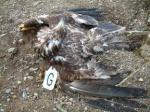
white_tailed_eagle_dead_rspb@body2MAY 2008: A one year old male white-tailed eagle hatched on Mull in 2007 and known as ‘White G’ was found dead on the Glenquoich Estate, Angus. Tests revealed he had been poisoned by an unusual concoction of pesticides that included Carbofuran, Bendiocarb and Isofenphos. A police search in the area also revealed a poisoned buzzard, a baited mountain hare and 32 pieces of poisoned venison baits placed on top of fenceposts on the neighbouring Glenogil Estate. Laboratory tests revealed the baited mountain hare and the 32 poisoned venison baits contained the same unusual concoction of highly toxic chemicals that had killed the white-tailed eagle, ‘White G’. Five years and 2 months later, nobody has been prosecuted.

glen orchyJUNE 2009: An adult golden eagle was found dead at Glen Orchy, Argyll, close to the West Highland Way. Tests revealed it had been poisoned by the illegal pesticide Carbofuran. Strathclyde Police launched a multi-agency investigation. Three years and 3 months later, estate employee Tom McKellar pled guilty to possession of Carbofuran stored in premises at Auch Estate, Bridge of Orchy and he was fined £1,200. Nobody has been prosecuted for poisoning the golden eagle.

Alma Millden 2009JULY 2009: A two year old female golden eagle known as ‘Alma’ was found dead on the Millden Estate, Angus. Tests revealed she had been poisoned by the illegal pesticide Carbofuran. Alma was a well-known eagle  – born on the Glen Feshie Estate in 2007, she was being satellite-tracked and her movements followed by the general public on the internet. Tayside Police launched an investigation. Four years later, nobody has been prosecuted.
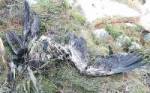
TH1_17220118eagle glen ogilAUGUST 2009: A young white-tailed eagle was found dead on Glenogil Estate, Angus. Tests revealed it had been poisoned by the illegal pesticide Carbofuran. Tayside Police were criticized in the national press for not releasing a press statement about this incident until January 2010. Three years and 11 months later, nobody has been prosecuted.
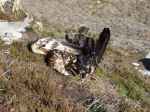
Skibo eagle 2010MAY 2010: Three dead golden eagles were found on or close to Skibo Estate, Sutherland. Tests revealed they had been poisoned; two with Carbofuran and one with Aldicarb. Northern Constabulary launched a multi-agency investigation. One year later (May 2011), Sporting Manager Dean Barr pled guilty to possession of 10.5 kg of Carbofuran stored in premises at Skibo Estate. Three years and 2 months later, nobody has been prosecuted for poisoning the three golden eagles.
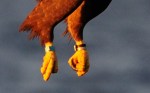
244JUNE 2010: Leg rings with unique identification numbers that had previously been fitted to the legs of four young golden eagles in nests across Scotland were found in the possession of gamekeeper James Rolfe, during a multi-agency investigation into alleged raptor persecution at Moy Estate, near Inverness. It is not clear how he came to be in possession of the rings. The bodies of the eagles from which the rings had been removed were not found. No further action was taken in relation to the discovery.

wtefarr2010JUNE 2010: A golden eagle and a white-tailed eagle were found dead on Farr & Kyllachy Estate, Inverness-shire. Tests revealed they had been poisoned by the illegal pesticide Carbofuran. Northern Constabulary apparently did not search the property until July 2011. Three years and 1 month later, nobody has been prosecuted.

LochindorbDECEMBER 2010: A decomposing carcass of a white-tailed eagle was found and photographed on Logie (Lochindorb) Estate, Morayshire. It was reported to Northern Constabulary. By the time the police arrived to collect it, the carcass had disappeared. The police said they couldn’t investigate further without the body.
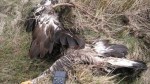
247135-police-operation-after-golden-eagle-poisoned-with-illegal-pesticide-410x230MARCH 2011: The body of a young golden eagle was discovered on North Glenbuchat Estate, Aberdeenshire. Tests revealed it had been poisoned by the illegal pesticide Carbofuran. Grampian Police launched an investigation and raided the property in May 2011. Two years and 4 months later, we are not aware of any pending prosecutions.

wtseAPRIL 2011: The body of a white-tailed eagle was found at the base of cliffs on Skye. The person who discovered it (a professional medic) considered it to have been freshly shot with a rifle, decapitated with a sharp implement and thrown from the cliff top. He took photographs and alerted Northern Constabulary and RSPB. There was a delay of two weeks before the now probably decomposed carcass was collected. A post-mortem was inconclusive. This incident was not made public until one year later after a tip off to this blog. Two years and 3 months later, we are not aware of any pending prosecutions.

ge headNOVEMBER 2011: The signal from a satellite-tracked young golden eagle (hatched in 2010) stopped functioning when she was at a location in the Monadhliaths, a well-known raptor persecution black spot in the Highlands. Her last known location was checked by researchers but there was no sign of the bird. Another technical malfunction of a satellite transmitter or another ‘disappearance’ in suspicious circumstances?

Lochaber poisoned ge March 2012MARCH 2012: The body of a young golden eagle being tracked by satellite was discovered in Lochaber. Tests revealed it had been poisoned with the banned pesticides Aldicarb and Bendiocarb. Information about this incident was not made public until three months later. One year and 4 months later,  we are not aware of any prosecutions for poisoning this bird.


ge headMARCH 2012: The signal from a satellite-tracked young golden eagle (hatched in 2011) stopped functioning when the bird was in the eastern glens, a well-known raptor persecution blackspot. Another technical malfunction of a satellite transmitter or another ‘disappearance’ in suspicious circumstances?
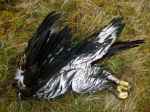
 

May2012 GE tayside grampianMAY 2012: The dead body of a young satellite-tracked golden eagle (hatched in 2011) was discovered near a lay-by in Aboyne, Aberdeenshire. The data from its satellite tag & the injuries the bird had when found (2 broken legs) suggested it had been caught in an illegal trap in the Angus glens and then removed, under cover of darkness, to be dumped in another area where it was left to die, probably a slow and agonising death. Information on this incident was not released until almost five months later, by the RSPB. It appears the police failed to properly investigate this incident as we understand that no search warrants were issued. One year and 2 months later, we are not aware of any pending prosecutions for killing this bird.

ge headMAY/JUNE 2012: The signal from a young satellite-tracked golden eagle stopped functioning when the bird was north-east of the Cairngorms National Park. Another technical malfunction of a satellite transmitter or another ‘disappearance’ in suspicious circumstances?
 

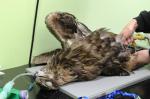
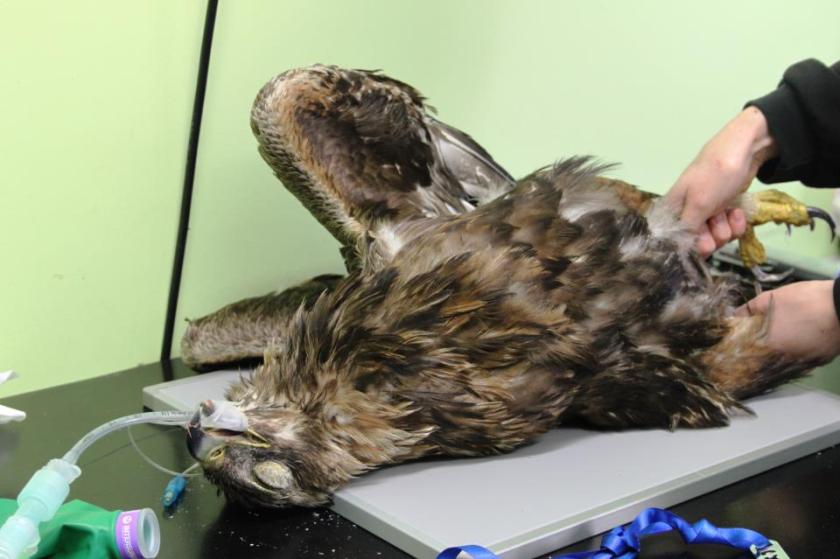
optableOCTOBER 2012: An adult golden eagle was found shot and critically injured on grouse moor at Buccleuch Estate, near Wanlockhead, South Lanarkshire. The bird was rescued by the SSPCA and underwent surgery but it eventually succumbed to its injuries in April 2013. Nine months later, we’re not aware of any pending prosecutions for shooting this bird.


ge headMAY 2013: The signal from a two-year-old satellite tracked golden eagle stopped functioning after it’s last signal from North Glenbuchat Estate in Aberdeenshire. Another technical malfunction of a satellite transmitter or another ‘disappearance’ in suspicious circumstances?
Another sat-tagged golden eagle ‘disappears’ in Aberdeenshire

Well would you believe it. Another young satellite-tagged golden eagle has mysteriously ‘disappeared’.

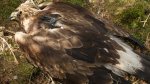
This time it’s a two-year-old bird called ‘Angus 33’, being sat-tracked by Roy Dennis (see here). The bird’s last known signal came from the North Glenbuchat Estate on 13th May 2013. A search was undertaken but nothing was found.

Naturally, there’s no evidence to demonstrate the eagle has been illegally killed, it’s just vanished into thin air in the same area that several other sat-tagged golden eagles have ‘disappeared’ in recent years. What a bloody mystery, eh?

Further mysteries from here include who used Carbofuran to poison a young golden eagle found in March 2011 (here), who used Carbofuran to poison a buzzard found in May 2011 (here, p.9) and who shot the short-eared owl that was found stuffed under a rock in May 2011 (here, p.6 & p.14)?

The Headkeeper of this estate was convicted of poisoning offences in 2006 (see here).

Who’s fooling who?

Spinoculars at the ready, folks….

According to a new website, ‘Cairngorms Nature is a new partnership where people and organisations come together, regardless of sector or background, with one thing in common – a desire to safeguard and enhance the outstanding nature in the Cairngorms National Park’ (see here). An admirable project with an ambitious five-year action plan (see here) to be overseen and delivered by a ‘strategy group’ (see here for members).

Look closely at the detail of this action plan and you’ll find some barely believable action points that include:

Page 60 – Action: Restore the full community of raptor species. Key Partners:

(a) SGA and SLE to trial innovative techniques to increase raptor populations;

(b) Police Service, SLE, SGA, BASC to raise awareness and understanding, provide advice and training on wildlife legislation;

(c) Police Service to monitor wildlife crime in the national park;

(d) CNPA, SNH, SLE, SGA, RSPB to support collaboration to reduce conflicts in species and wildlife management.

Page 62 – Key species for focused action: Golden eagle. Key Actions:

(a) RSPB, CNPA, HFW and SNH to continue and expand Raptor Track project to gather data, raise awareness and understanding, and provide advice and guidance for land managers;

(b) SLE, SGA and SNH to work with moorland managers to manage mountain hare populations for the benefit of golden eagles.

In other unbelievable news, the latest SNH magazine has been published (#17, see here) and includes two contributed articles: one written by an employee of Scottish Land and Estates (page 34) and one by an employee of the Scottish Gamekeepers’ Association (page 54). Both articles, as well as a gushing editorial from SNH Chief Executive Ian Jardine (page 3) would have us believe that these two organisations are dedicated to protecting Scotland’s wildlife.

This magazine also includes an article about Scotland’s so-called Big Five, including the golden eagle (page 13). This is a carefully worded piece that totally ignores the species’ unfavourable conservation status and the reasons for that. The best line has to be: “There are reckoned to be around 440 pairs in Scotland, located mainly in the Highlands and Islands but with a presence in the Borders and Southern Uplands too“. I suppose “a presence” is one way of describing the golden eagle’s precarious status in southern Scotland, where they are barely hanging on by the tip of their talons thanks to the effect of illegal persecution (e.g. see here).

And finally, if you haven’t read enough guff,  the SGA’s Bert Burnett treats us to his thoughts on climate change [since deleted from SGA website] – a worthy contender for a scholarship at the Sarah Palin Institute of Scientific Understanding.

Environment Minister’s response to continuing raptor persecution

On October 10th 2012, one month into his job, Environment Minister Paul Wheelhouse made the following statement in response to the huge public uproar about the death of the Deeside eagle (see here) –

The unlawful killing of any raptors has no place in today’s Scotland and we will continue to work hard to eradicate this criminal activity. We believe that the partnership approach with the Partnership for Action Against Wildlife Crime (PAW) Scotland, is bringing the reduction in bird of prey poisoning that can be seen in the statistics in recent years. However we are not complacent and if there is evidence of a switch to other methods of persecution we will take action to bear down on those methods“.

He made a further statement on 28th November 2012 following the discovery on an Aberdeenshire estate of a hen harrier that had been shot dead (see here) –

We will not tolerate the illegal persecution of protected species such as the hen harrier and, as I have said recently in relation to another shooting [presumably the shot golden eagle found critically injured on an estate in south west Scotland – see here] I am prepared to look at further measures to strengthen and assist enforcement if we continue to see this flouting of the law in respect of protected species“.

Since then a number of further persecution incidents have taken place, some of which have made it into the public domain, whereas others are still being treated as closely-guarded secrets by Police Scotland (why is that, several months after the crimes were discovered?). The ones that have been publicised include:

1. A dead buzzard at Glasserton Estate, Whithorn that was discovered in December 2012 but not reported in the media until 6 March (see here). The press release was vague but we assume this buzzard had been poisoned judging by the location of known poisoning incidents that were included in the PAW Scotland 2012 poisoning maps.

2. A dead buzzard that had been found by the side of a road in Stirlingshire in early February 2013 – later tests showed it had been shot (see here).

3. A dead buzzard that had been found near St Mary’s Loch in the Borders in early March – it had been shot (see here). Following this incident, we tweeted Paul Wheelhouse and asked him if he was ready to take the action he’d promised (see here). He replied: “I will say more when I have a full briefing but my first reaction is instinctive – I’m both disgusted and very much angered“. Seven weeks later we’re still waiting for his statement.

In early April it was reported that the shot golden eagle that had been found on a grouse moor in south west Scotland had finally succumbed to its injuries (see here). This news prompted us to encourage readers to write to Paul Wheelhouse, again, and ask him whether he was now ready to take the action he’d promised. We know that over 100 of you sent emails to him. In early May he responded. The following email is an example of one of the generic responses that were sent out by his aide:

Thank you for your letter to the Minister for Environment and Climate Change, Mr Paul Wheelhouse. I have been asked to respond.

The Minister was saddened to hear that the golden eagle in the care of the SSPCA had to be put to sleep on veterinary advice, due to underlying health conditions as it had been hoped initially that the eagle would make a full recovery. This case involves an ongoing Police and SSPCA investigation, so further comment on that incident is inappropriate.

The Minister welcomed a reduction in confirmed poisoning figures for raptors in March 2013, however he did recognise that other forms of persecution do exist and he has already committed to looking at the development of further measures to end raptor persecution if other methods of persecution prove to be on the increase. Vicarious Liability provisions which came into force in 2012 are still to be tested in court and it is critical to assess the impact of the legislation by this means.

The difficulties in prosecuting wildlife crimes are well documented. Recognising the specialist nature of the investigations required, and legislation covering such criminality, the Crown Office and Procurator Fiscal Service created specialist wildlife and environmental fiscals in 2011. Police reform has also implemented changes with regard to the structure and coordination of wildlife crime officers with a net increase in officers with relevant responsibilities. These changes combined will continue to shape improvements in wildlife crime detection, investigations and prosecutions.

Tackling wildlife crime is a priority for the Minister and he stands by previous comments that he is not prepared to allow these crimes to continue unabated, and without consequence. Partnership working via the Partnership for Action Against Wildlife Crime (PAW) Scotland, which is chaired by the Minister, is key to progress and this path will also continue to be used to deliver a reduction in wildlife crime.

Yours faithfully,

Karen Hunter

Wildlife Crime Policy Officer

It seems to us that Paul Wheelhouse is good on rhetoric but not so good on action. Very disappointing but not at all surprising. It’ll be interesting to see how he responds when he hears about the other examples of ‘continued flouting of the law’, that have happened right under his nose. He might want to have a chat with Police Scotland and ask them what they’re keeping from public view, and why……

Sea eagle chicks hatched in Ireland – first for over 100 years!

An historic conservation success has been achieved in Ireland as two pairs of white-tailed eagles have produced chicks in the last week – the first for over 100 years!

The chicks are the result of a long-term project to reintroduce sea eagles to Ireland after they were ruthlessly persecuted to extinction in the early 20th century. Beginning in 2007, the Golden Eagle Trust, an Irish conservation charity, in collaboration with the National Parks and Wildlife Service, began to release young sea eagles that had been donated by the Norwegian government. One hundred sea eagles were released in Killarney National Park, County Kerry, between 2007-2011 (see photo).

Last year one pair successfully laid eggs but unfortunately they failed to hatch. This is quite common for young, inexperienced eagles and this year, along with another pair, they’ve managed to produce chicks.

The project has not been without problems – many of the birds were wing-tagged and radio-tagged to follow their movements from the release site and this revealed that a number of them became victims of poisoning, shooting and windfarm collision. Others fared better though and a number have been reported in Northern Ireland and further afield in Scotland.

Many many congratulations to Project Manager Dr Allan Mee and his colleagues at the Golden Eagle Trust. These people are making history, not just with the sea eagle reintroduction but with similar projects for golden eagles and red kites too; species that also became extinct in Ireland as a direct result of persecution.

Golden Eagle Trust press release here

Golden eagle protection discussed in parliament

Great to see more MSPs raising questions about golden eagles in the Scottish Parliament….

Joan McAlpine (South Scotland) (SNP): To ask the Scottish Government what steps it is taking to protect golden eagles. (S4O-02010).

The Minister for Environment and Climate Change (Paul Wheelhouse): All wild birds are protected in Scotland under the Wildlife and Countryside Act 1981. Golden eagles are listed in schedule 1 to the 1981 act, which provides further protection measures to prevent disturbance to nesting birds. Last month, we added golden eagles to schedules A1 and 1A to the 1981 act, to provide year-round protection for nest sites and protect birds from harassment.

Since 2008, we have broadened and developed the partnership for action against wildlife crime in Scotland—PAW Scotland; strengthened the legal framework by introducing vicarious liability; provided funding for the national wildlife crime unit; and supported initiatives to tag and satellite track golden eagles. Recent police reform has increased the number of specialist wildlife crime officers.

We have been active in the fight against raptor persecution, and poisoning has reduced significantly. However, we are in no way complacent and we are actively considering whether other methods of persecution are being deployed. Some of the new wildlife crime measures that we have put in place are yet to be tested, but we know that there is still a problem in some parts of Scotland, and I reiterate to people outside the Parliament that we stand ready to introduce further measures, should that be necessary.

May2012 GE tayside grampianJoan McAlpine: As the minister acknowledged, there have been a number of shocking incidents across Scotland during the past year. Earlier this month, a golden eagle was shot on the southern upland way. In light of that, will the minister reassure the Parliament that investigations into the illegal killing of eagles are carried out quickly and effectively? Is he willing to update the Parliament on the investigation into the killing of the golden eagle that was found on Deeside in May 2012?

Paul Wheelhouse: As I said, police reform has resulted in a revised structure for wildlife crime, which will improve co-ordination and support for wildlife crime officers. I have every confidence in Assistant Chief Constable Graham, who has been appointed to lead the work. We also have a specialist unit in the Crown Office, which ensures that there is greater understanding of the complexities of this area of the law, in and out of the courtroom. That is a major development, which should not be underestimated and which will increase the focus on wildlife crime.

I assure the member and the Parliament that such measures, along with robust working in the partnership for action against wildlife crime in Scotland, will ensure that investigations are carried out as quickly and effectively as possible. PAW Scotland is looking at making the evidential trail on issues such as raptor persecution more robust, if it is possible to do so, which involves working closely with the Scottish raptor persecution priority delivery group.

I am not in a position to update the Parliament on the 2012 Deeside eagle case. There is an on-going police investigation and it would be entirely inappropriate for me to comment at this point.

[Ed: this issue about when is a case still ‘live’ is of great interest to us. How do you define when a case is still live/on-going? We would expect the definition to mean that active leads are still being followed up and/or a court case is pending. However, we are suspicious that the regularly-heard phrase ‘it’s an on-going police investigation and therefore can’t be discussed’ is a convenient excuse for the police/government to avoid answering serious questions about the effectiveness of these investigations. Take the Deeside eagle case as an example. That golden eagle was found dead almost one year ago. Are we expected to believe that the police are still following up active leads? Come on, let’s be realistic here. How about some of the other 26 cases of either dead or ‘missing’ eagles in the past seven years (see here), for which no-one has been prosecuted? Are they still ‘on-going’ investigations as well? Are the police still investigating the death of Alma, the golden eagle found poisoned on Millden Estate in 2009? How about the poisoning of the last remaining breeding golden eagle in the Borders in 2007? We would like to see much more transparency about these cases – obviously not while they’re genuinely on-going – but when a case is clearly going nowhere shouldn’t there be a point when questions can be asked, and answered, no? We would be very interested to hear from anyone who can tell us the official definition of how an ‘active case’ is defined and at what point, if any, can the police/government be questioned about an incident?]

Graeme Pearson (South Scotland) (Lab): I am sure that members welcome the drop in reported poisonings of birds of prey, but I am concerned that there has been no decline in other forms of raptor persecution. The Wildlife and Natural Environment (Scotland) Act 2011 introduced vicarious liability, to combat raptor persecution. Will the minister indicate what the next steps will be? Now that Police Scotland has been established, what new approaches will be introduced?

Paul Wheelhouse: Graeme Pearson is right to say that vicarious liability is a significant development in the law on wildlife crime. The provisions came into force on 1 January 2012 and the legislation has not yet been tested in court, as he is aware. I believe, however, that the legislation has had the welcome effect of encouraging responsible land managers to examine the training of and procedures for their staff. I have no doubt that, if a land manager or owner is prosecuted under the provisions, it will have a salutary effect on others who have been content to turn a blind eye to unlawful practices that are carried out on their land.

More generally, the Government is doing everything that it can to encourage good practice. Recently, Scottish Land & Estates launched the wildlife estates Scotland initiative, which I hope will gather arms and legs and cover an ever-greater share of landowners. In theory, that will enable the promotion of the most proactive and progressive conservation measures by land managers. However, I reassure the member that, if the measures under vicarious liability prove to be ineffective, I will take further action.

Jamie McGrigor (Highlands and Islands) (Con): The RSPB states that one of the key problems for the survival of golden eagles is the lack of live prey that is available to the species. Does the minister agree that a healthy supply of food species in golden eagle areas, such as rabbits and mountain hares, is a factor in the maintenance of healthy numbers of golden eagles? Is he, through the appropriate agencies, doing something about the decline of those species in some areas?

Paul Wheelhouse: The member raises an important point about the need for golden eagles to have adequate food supplies. It is not as simple as saying that it is all about raptor persecution; we know that there are multiple influences on the sad decline in the populations of a number of our key, iconic species of birds. Clearly, mountain hares are a species that we want to protect. If there was any persecution of those animals by land managers, we would be concerned about it. If the member has constructive proposals that he would like me to consider, I would be happy to meet him to discuss the issues.

Zanussi engineers called in to help SGA stuck on spin cycle

spin2There’s an article in the Scotsman today about Scottish gamekeepers offering to help the fire service put out fires, started by, er,…well it depends on whose opinion you accept.

According to the Scottish Gamekeepers’ Association, the fires weren’t caused by gamekeepers involved in muirburning activities. Oh no, apparently they were caused by ‘camp fires getting out of control’ and ‘garden fires’.

However, last week the Scottish Fire and Rescue Service clearly thought that landowners were at least partly responsible as they issued a threat to prosecute those involved with muirburning activities in unsuitable conditions (see here). Why issue such a warning if they believed the fires were caused by careless campers and gung-ho gardeners?

Is the point of the SGA’s press release an attempt to portray a ‘caring sharing’ attitude, impressing us all by riding to the rescue as the fourth emergency service to put right the misdeeds of others? Dream on.

Later in the article the SGA accuses the RSPB of ‘scaremongering’ after they predicted the wildfires could potentially have a huge impact on golden eagle breeding success this year. This is quite an amusing accusation considering the content of the SGA’s Hogg Blog this week (see here), which includes this statement:

Many interesting subjects have been spoken about [with his chums at various meetings], not least the huge numbers of badgers, ravens and buzzards which are having a detrimental effect on our wildlife and livestock“.

Er, and the evidence for this ‘detrimental effect’ is what, exactly? And they call the RSPB the scaremongerers!

SGA chairman Hogg is further quoted in the Scotsman article talking about the golden eagle population and he implies that there’s no need for concern about its conservation status. He trots out the usual line about the population’s ‘stability’ at around 420-440 pairs but fails to acknowledge that this ‘stability’ is wholly misleading, given the accepted scientific evidence shows that the species only has favourable conservation status in 3 of 16 regions, the population is being kept suppressed by illegal persecution, and there should be a minimum of 716 pairs overall (we blogged about this the other day (here) and we’ll keep blogging about it for as long as the spin cycle lasts).

Scotsman article here

Golden eagle population in south Scotland close to collapse

Poisoned golden eagle Borders 2007An article in the Scotsman today suggests that the recent death of the shot golden eagle (see here) signals ‘disaster’ for the species in this region.

We would agree with that, although we disagree with the figures used to support the statement.

RSPB Scotland has warned that the latest death puts the future of the species in the area at risk, with the number of breeding pairs in the south at “less than half of what it should be”, down from around ten to just three or fewer.

Actually, based on the extent of suitable habitat, the target number of breeding territories (for the species to achieve a favourable conservation status in the region) has been estimated at 17 (see the Golden Eagle Conservation Framework below).

We know of only four currently occupied territories in southern Scotland. Of these, two are occupied by single adults and two by breeding pairs. Of the two breeding pairs, only one pair has been productive in recent years.

We understand the shot golden eagle was an adult male. Was he part of the one remaining  productive breeding pair in the whole of southern Scotland? We’re hearing unconfirmed reports that only one adult has been seen this spring in the one occupied (productive) breeding territory. We’ll have to wait a while longer for this to be verified.

The article also suggests that the national golden eagle population has remained stable in recent decades, around 420-440 known breeding pairs. This is actually quite misleading. Yes, the figures suggest a stable population but what they don’t reveal is that this is a suppressed population, being held at a level well below what it should be, largely prevented from growth by illegal persecution. A conservative estimate of known or potential golden eagle territories throughout Scotland has been estimated at 716 (see the Golden Eagle Conservation Framework below).

The article includes a facile quote from Scottish Land and Estates, who seem to ignore the unfolding disaster in southern Scotland and instead talk about the work their members are doing in the north. Sure, there are some enlightened landowners helping golden eagles in the north, but the evidence suggests they are heavily outnumbered by those who are not.

It’s been five years since the Golden Eagle Conservation Framework was published. That government-funded study demonstrated that golden eagles were in favourable conservation status in only 3 of 16 regions nationwide. The report concluded that the highest national priority for the conservation and management of golden eagles in Scotland was to tackle persecution in the areas where it still persists.

Last Friday, when we reported on the death of the shot golden eagle, we encouraged readers to contact the Environment Minister to urge him to take the action he promised last year if persecution incidents continued. According to our site stats, we know that over 70 of you have now used the direct email link to send him a message. We also know that many more have contacted him without using the direct email link. If you haven’t already done so, please consider contacting him: ministerforenvironment@scotland.gsi.gov.uk. This surge of messages should let him know our strength of feeling on this issue. We’ve had enough and we expect our elected representatives to respond.

Article in the Scotsman here

Golden Eagle Conservation Framework here

Shot golden eagle finally succumbs to its injuries

The golden eagle that was found shot and critically injured on a grouse moor last autumn has finally succumbed to its injuries. The bird apparently died last week, although as far as we can tell there’s been no publicity, which seems a bit surprising given the public interest in this incident. We understand the Environment Minister Paul Wheelhouse was informed.

This eagle was discovered ‘barely alive’ last October, on a grouse moor belonging to Buccleuch Estate, close to the boundary with Leadhills Estate (see here). Its death now completes a grisly trilogy of golden eagle killings in Scotland in 2012: one poisoned, one trapped and one shot. And these are just the ones that were discovered.

It’s highly unlikely anyone will be prosecuted for killing these eagles if past incidents are anything to go by. We’ve been keeping a list of known dead or ‘missing’ eagles and any subsequent prosecutions. At last count it was 26 eagles, 6 years, 0 prosecutions (see here).

It’s now 27 eagles, 7 years, 0 prosecutions.

If you want to express your disgust to the Environment Minister and ask him when he’s going to make good on the promise he made last year to consider further measures to bring the raptor killers to justice, please email him at: ministerforenvironment@scotland.gsi.gov.uk

The shot golden eagle ungergoing surgery