Satellite-tagged hen harrier ‘disappears’ in Cairngorms National Park

Another of this year’s hen harrier chicks has ‘disappeared’ just a few weeks after fledging, this time in the Cairngorms National Park.

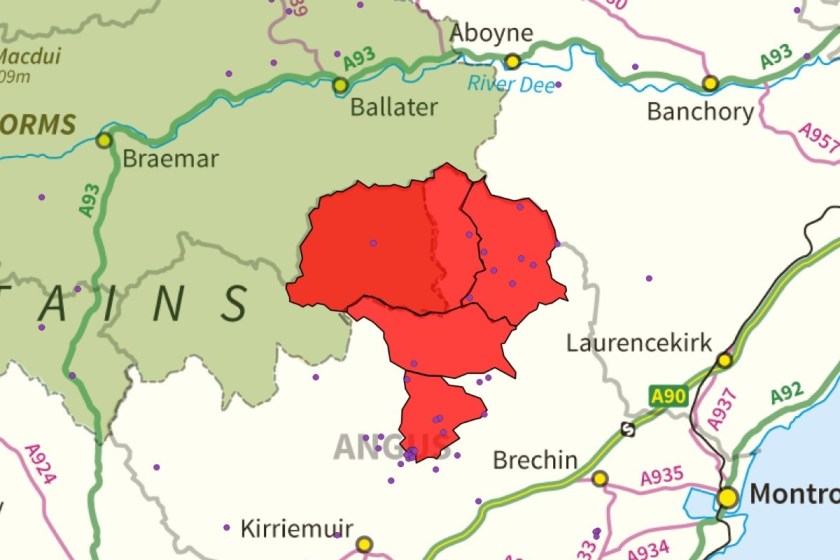
This one was called Brian, after raptor worker Brian Etheridge, and he had hatched in a nest in Perthshire, within the National Park. After fledging, he stayed within the Park boundary until his signal, ‘suddenly and without warning‘, stopped abruptly on 22 August 2016 a few miles from Kingussie. Searches for his body and tag proved fruitless. The details of Brian’s short life can be read here on the RSPB Skydancer blog.

kingussie

brian-july16_jennyweston

This is a photo of Brian taken at the nest in July with his newly-fitted satellite tag (photo by Jenny Weston).

Brian is the second of this year’s cohort to suddenly ‘disappear’ – in early August, hen harrier Elwood also vanished, in the grouse moor ridden Monadhliath mountains just to the NW of the Park (see here).

The area around Kingussie is also ridden with driven grouse moors. In fact, it wasn’t far from here where hen harrier Lad’s corpse was found in September 2015, suspected shot (see here).

So what now? A few weeks ago, following the ‘disappearance’ of eight satellite-tagged golden eagles, as well as hen harrier Elwood, in the Monadhliaths, Environment Secretary Roseanna Cunningham announced a review of the sat tag data of three raptor species – golden eagle, hen harrier, red kite – to ‘look for patterns of suspicious activity‘ (see here). That review is very welcome but the team working on the analysis is not expected to report until March 2017 at the earliest. That’s six months away. And then there’ll be further delays as the Government digests the review’s findings and thinks about how to respond, or not.

And to be frank, we don’t need to wait for the review to detect ‘patterns of suspicious activity’ – the pattern of illegal persecution has been known for years. The cause of these raptor disappearances is not unreliable sat tags (94% reliability in a recent study of Montagu’s harriers – see here), nor is it non-existent wind farms (see here), nor is it ‘bird activists’ killing the birds to smear the grouse shooting industry (see here).

We’ve said this before and we’ll say it again. Endless peer-reviewed scientific papers and government reports on golden eagles, hen harriers, red kites and peregrines have unequivocally linked the illegal killing of these raptors with intensively-managed driven grouse moors. Why pretend nobody knows what’s going on?

The ‘disappearance’ of Brian is bad enough, but for this ‘disappearance’ to take place in the Cairngorms National Park just adds to the ever-increasing catalogue of shame that the Park Authority needs to address. Cue expressions of ‘disappointment’ and more stalling tactics (futile partnership-working and discussions) from the CNPA.

Here’s that catalogue of shame, in full:

2003

Apr: 3 x poisoned buzzards (Carbofuran) + 2 grey partridge baits. Kingussie, CNP

Jun: Attempted shooting of a hen harrier. Crannoch, CNP

2004

May: 1 x poisoned buzzard (Carbofuran). Cuaich, CNP

Nov: 1 x poisoned red kite (Carbofuran). Cromdale, CNP

Dec: 1 x poisoned buzzard (Carbofuran). Cromdale, CNP

2005

Feb: 1 x poisoned buzzard (Carbofuran). Cromdale, CNP

Feb: 1 x poisoned buzzard (Carbofuran). Cromdale, CNP

Mar: 3 x poisoned buzzards, 1 x poisoned raven (Carbofuran). Crathie, CNP

2006

Jan: 1 x poisoned raven (Carbofuran). Dulnain Bridge, CNP

May: 1 x poisoned raven (Mevinphos). Grantown-on-Spey, CNP

May: 1 x poisoned golden eagle (Carbofuran). Morven [corbett], CNP

May: 1 x poisoned raven + 1 x poisoned common gull (Aldicarb) + egg bait. Glenbuchat, CNP

May: egg bait (Aldicarb). Glenbuchat, CNP

Jun: 1 x poisoned golden eagle (Carbofuran). Glenfeshie, CNP

2007

Jan: 1 x poisoned red kite (Carbofuran). Glenshee, CNP

Apr: Illegally set spring trap. Grantown-on-Spey, CNP

May: Pole trap. Grantown-on-Spey, CNP

May: 1 x poisoned red kite (Carbofuran). Tomintoul, CNP

May: Illegally set spring trap. Grantown-on-Spey, CNP

Jun: 1 x poisoned buzzard (Carbofuran) + rabbit & hare baits. Grantown-on-Spey, CNP

Jun: 1 x poisoned buzzard (Carbofuran) + rabbit bait. Grantown-on-Spey, CNP

Jul: 1 x poisoned raven (Carbofuran). Ballater, CNP

Sep: 1 x shot buzzard. Newtonmore, CNP

Sep: 1 x shot buzzard. Grantown-on-Spey, CNP

Dec: 1 x poisoned buzzard (Alphachloralose). Grantown-on-Spey, CNP

Dec: 1 x poisoned buzzard (Carbofuran) + rabbit bait. Grantown-on-Spey, CNP

2008

Jan: 1 x poisoned buzzard (Alphachloralose). Nr Grantown-on-Spey, CNP

Mar: 1 x poisoned buzzard (Carbofuran). Nr Grantown-on-Spey, CNP

Dec: 1 x poisoned buzzard (Alphachloralose). Nr Grantown-on-Spey, CNP

2009

May: 2 x poisoned ravens (Mevinphos). Delnabo, CNP

Jun: rabbit bait (Mevinphos). nr Tomintoul, CNP

Jun: 1 x shot buzzard. Nr Strathdon, CNP

Jun: 1 x illegal crow trap. Nr Tomintoul, CNP

2010

Apr: Pole trap. Nr Dalwhinnie, CNP

Jun: 1 x pole-trapped goshawk. Nr Dalwhinnie, CNP

Jun: Illegally set spring trap on tree stump. Nr Dalwhinnie, CNP

Sep: 2 x poisoned buzzards (Carbofuran) + rabbit bait. Glenlochy, CNP

Oct: 2 x poisoned buzzards (Carbofuran) + rabbit bait. Nr Boat of Garten, CNP

2011

Jan: 1 x shot buzzard. Nr Bridge of Brown, CNP

Mar: 1 x poisoned golden eagle (Carbofuran). Glenbuchat, CNP

Apr: 1 x poisoned buzzard (Carbofuran & Aldicarb). Nr Bridge of Brown, CNP

May:  1 x poisoned buzzard (Carbofuran) + rabbit bait. Glenbuchat, CNP

May: 1 x shot short-eared owl, found stuffed under rock. Glenbuchat, CNP

Jun: 1 x shot peregrine. Pass of Ballater, CNP

Aug: grouse bait (Aldicarb). Glenlochy, CNP

Sep: Satellite-tagged golden eagle ‘disappears’. Nr Strathdon, CNP

Nov: Satellite-tagged golden eagle ‘disappears’. Nr Strathdon, CNP

2012

Apr: 1 x shot short-eared owl. Nr Grantown-on-Spey, CNP

Apr: Peregrine nest site burnt out. Glenshee, CNP

May: Buzzard nest shot out. Nr Ballater, CNP

2013

Jan: White-tailed eagle nest tree felled. Invermark, CNP

May: 1 x shot hen harrier. Glen Gairn, CNP

May: Satellite-tagged golden eagle ‘disappears’. Glenbuchat, CNP

2014

Apr: Satellite-tagged white-tailed eagle ‘disappears’. Glenbuchat, CNP

May: Armed masked men shoot out a goshawk nest. Glen Nochty, CNP

2015

Sep: Satellite-tagged hen harrier ‘Lad’ found dead, suspected shot. Newtonmore, CNP.

2016

May: 1 x shot goshawk. Strathdon, CNP

Jun: Illegally set spring traps. Invercauld, CNP

Aug: Satellite-tagged hen harrier ‘Brian’ ‘disappears’, near Kingussie, CNP

In addition to the above list, two recent scientific publications have documented the long-term decline of breeding peregrines on grouse moors in the eastern side of the National Park (see here) and the catastrophic decline of breeding hen harriers, also on grouse moors in the eastern side of the Park (see here).

And let’s not forget the on-going massacre of mountain hares, taking place annually within the boundary of the National Park (e.g. see here, here).

Let’s see how the Environment Secretary and the Cairngorms National Park Authority respond this time. We’ll add links to any statements if/when they appear throughout the day.

UPDATE 18.40 hrs: Too embarrassing for words (here)

UPDATE 29 September 2016: Official responses from Environment Secretary and Cairngorms National Park Authority (here)

Satellite tag reliability: compelling evidence from Montagu’s Harrier study

Satellite-tagged hen harriers regularly ‘disappear’ in the UK uplands, mostly in areas managed as driven grouse moors. Indeed, according to data from Natural England, of 47 hen harriers that were satellite-tagged between 2007-2014, a staggering 78.7% were listed as ‘missing’ (see here). That means a significant and suspiciously high proportion (37 tagged hen harriers) vanished without trace.

And of course it’s not just hen harriers. Last month we learned that eight satellite-tagged golden eagles had ‘disappeared’ on grouse moors in the Monadhliath mountains (see here).

Various unsubstantiated ‘explanations’ for these ‘disappearances’ are routinely trotted out by the persecution apologists, including claims that ‘bird activists’ are killing the birds to smear the grouse shooting industry (here) or that the birds have been killed at windfarms and their bodies removed to avert bad publicity….quite plausible until we discovered that the majority of the windfarms blamed for the disappearance of eight golden eagles hadn’t actually been built (see here).

And then we get the old familiar excuse that it must have been a technical failure with the satellite tag. Again, quite plausible if it happened every so often, but not if it’s happening with the frequency with which the grouse-shooting industry claims. Last month, the credibility of this excuse was blown apart when the Scottish Countryside Alliance published the following statement in response to the news about the eight ‘missing’ sat tagged golden eagles:

Contrary to claims that transmitters are reliable, research papers published in 2013 studied three decades of wildlife radio telemetry and concluded that failure rates could be as high as 49%“.

It turned out that the SCA was disingenuously using data from satellite-tagged Olive Ridley turtles in India where problems with a saltwater switch on the tag is a known and on-going issue and so the SCA’s claim of a 49% failure rate was actually based on a totally irrelevant study and as such was highly misleading (see here). You can make up your own minds about whether this was a case of the SCA’s inability to interpret simple scientific data or whether it was deliberate propaganda pushed out to divert attention from illegal killing in the hope that nobody would check the details.

Wouldn’t it be great if, instead of relying on misrepresentative data from marine turtles in the Indian Ocean, there was a relatively comparative study of satellite tag reliability on, say, a harrier species in western Europe.

Oh, hang on, there is!

Have a look at this blog that has just been published on the RSPB’s website. It’s written by Dr Raymond Klaassen of the Dutch Montagu’s Harrier Foundation. Raymond and his colleagues have been satellite-tagging Montagu’s harriers (67 of them since 2006), using the same make and model as the sat tags being fitted to hen harriers in the UK.

raymond-klaassen-monty-by-mark-thomas

So what does Raymond say about satellite tag reliability in his study? Amongst other things, he says this:

Technical failures generally are rare. We have recorded a few throughout the years (6% of all cases), however failures have always been preceded by irregular transmission periods and, most importantly, a drop in battery voltage (another parameter monitored by the transmitter). This makes it relatively straightforward to distinguish between a likely mortality event and a likely transmitter failure“.

Wow. A six per cent technical failure rate over a ten year period. It turns out that these harrier satellite tags are actually highly reliable. Who knew? Compare that six per cent failure rate with the 78.7% rate of ‘disappearing’ hen harriers over a seven year period, supposedly the victims of satellite tag ‘technical failures’.

We trust this compelling evidence of satellite tag reliability will be included in the Scottish Government’s review of satellite tag data from three raptor species that routinely ‘disappear’ on grouse moors across Scotland (see here).

Photo of Raymond with a satellite-tagged Montagu’s harrier by Mark Thomas.

PAW Scotland rejects gamekeeper’s claims as ridiculous

Further to the claims of Scottish gamekeeper Donald McBeath that ‘bird activists’ are killing golden eagles and hen harriers as part of a smear campaign against grouse shooting (see here and here), the Partnership for Action against Wildlife Crime (PAW Scotland) has dismissed his claims as ridiculous.

PAW Scotland statement:

The Partnership for Action Against Wildlife Crime (PAW) Scotland is calling for a cool-headed discussion about the disappearance of birds of prey in the Scottish highlands.

The call comes following unsubstantiated claims by a gamekeeper who believes ‘bird activists’ might be to blame. Louise Batchelor, a spokesperson for PAW Scotland, says that there appeared to be no evidence to back the claims. There were reports that the gamekeeper said: “I certainly would imagine that there would be a few activists who would take a chance of doing something and I wouldn’t put it past them.’’

Reports also said that some pressure groups had called for grouse shooting to be outlawed and they reported the gamekeeper as saying that call ‘might give activists a motive for sacrificing a few birds of prey’. Louise Batchelor said: “The idea that ‘bird activists’ were responsible for the disappearance of golden eagles and hen harriers as part of some conspiracy theory, to smear gamekeepers, is ridiculous. This kind of claim, made without foundation, cannot go unchallenged and PAW Scotland will continue to take the lead in any serious debate about what is happening to Scotland’s birds of prey. ”

It’s understood that the gamekeeper behind the claims does not belong to the Scottish Gamekeepers Association, who are members of PAW Scotland. A spokesman for the SGA said: “As has always been the case since these reports have emerged, our sole focus is the investigation.  The SGA will do anything we can to assist Police Scotland and the Scottish Government in their investigations and we do not comment on the opinion of private individuals.”

END

Well done, PAW Scotland!

Gamekeeper accusing ‘bird activists’ of killing raptors was on TV last night

Following yesterday’s blog about that Scottish gamekeeper who was interviewed on BBC Scotland radio, accusing “bird activists” of killing satellite-tagged golden eagles and hen harriers (see here), he was also on the telly last night.

The TV piece was a shortened version of the radio interview. Here’s the transcript they left out:

I now have very strong reason to believe that we’ve got some bird activists in the area. I now have strong suspicions it’s a bird activist. They’re so close to winning this case against the grouse moors. I don’t know if any of the gamekeeper lads over this side of the hill would like to be responsible for going down in history for getting the grouse shooting banned but I certainly would imagine there’d be a few activists who’d take a chance of doing something and I wouldn’t put it past them“.

The TV version focuses on him denying any gamekeeper involvement because there’s ‘no evidence’. Unfortunately, the presenter didn’t do a very good job as he failed to challenge Mr McBeath’s views. He could have discussed the 30+ years worth of overwhelming evidence that all points to the grouse shooting industry, but he didn’t. Or if he did it was edited out.

Ah well, the video is still very funny. Here’s the clip from BBC Reporting Scotland (evening news, 30 Aug 2016).

Enjoy!

“Bird activists” killing satellite-tagged raptors, says gamekeeper

It’s ok everybody, the mystery of the vanishing satellite-tagged raptors has finally been solved. It wasn’t the (non-existent) wind farms (see here). And it wasn’t the unreliable satellite tags with a dodgy salt water switch attached to Olive Ridley Turtles off the coast of India (see here).

No, the real reason, according to a Scottish gamekeeper, is that “bird activists” have been killing off the raptors as part of a smear campaign against those who manage grouse moors.

Phew. Glad that’s all been cleared up.

Have a listen to gamekeeper Donald McBeath, interviewed on Good Morning Scotland earlier today (here – starts at 02:51:37, available for 29 days).

gamekeepers prosecuted - Copy

UPDATE 31 Aug 2016: The name of this gamekeeper is Donald McBeath, not Donald Macbeth.

UPDATE 31 Aug 2016: Mr McBeath was on the telly last night. Watch the video here

UPDATE 1 September 2016: PAW Scotland dismisses gamekeeper’s claims as ridiculous here

Review of Scottish raptor satellite-tag data widened to three species

A couple of weeks ago we blogged about the Cabinet Secretary for the Environment’s call for a review of golden eagle satellite tag data (see here). This was in response to the news that eight young satellite-tagged golden eagles had ‘disappeared’ on grouse moors in the Monadhliaths over a five year period, with three of them vanishing this year alone (see here). Cabinet Secretary Roseanna Cunningham called for the review “to discover if there is a pattern of suspicious activity“.

Shortly afterwards, the news broke that a young satellite-tagged hen harrier (‘Elwood’) had also ‘disappeared’ on a grouse moor in the Monadhliaths (see here). We wondered how Roseanna Cunningham would react to this news and hoped her response would be more substantial than the usual Ministerial expression of “disappointment“.

It seems she has taken note. Here is her response:

The news that a juvenile hen harrier has disappeared in the Monadhliaths, complete with its satellite tag, only weeks after it fledged, strengthens my determination to get to the truth about how, where and why raptors with functioning satellite tags seem to be regularly disappearing. I have asked for a review of all the evidence and I intend to ensure that data from hen harriers and red kites, as well as data from golden eagles will be considered as part of this. We are continuing to collect evidence in relation to raptors in Scotland, which will be a significant factor in deciding the next steps for tackling wildlife crime.”

So, the review has been widened from just looking at golden eagle satellite tag data to now including hen harrier and red kite satellite tag data. We are pleased about this (with certain caveats, see below), although we still maintain that the review is superfluous to understanding and acknowledging what’s happening to these species on driven grouse moors. The scientific evidence is already clear, and has been available to the decision makers for many, many years. Let’s not pretend we don’t know what’s going on. Looking for, and finding, ‘patterns of suspicious activity‘ has been done to death and the findings have been conclusive, over and over again.

Elwood 2 - Adam Fraser

The reason we welcome the widening of this review is because we can already predict the results for each of the three species, and we predict they will all point to the same problem: the majority of young, satellite-tagged golden eagles, hen harriers and red kites that ‘disappear’ do so on driven grouse moors. Seeing the evidence from one species (golden eagles) would be pretty powerful, but having virtually identical results from two further species should be devastatingly compelling.

The caveat to welcoming this widened review is that the Scottish Government MUST push on with this review without delay and then MUST respond to the findings in a timely manner. This Government (and notably its statutory conservation advisory agency, SNH) has a long track record of prevarication when it comes to publishing results and then acting on the evidence provided. Here are some examples:

The Golden Eagle Conservation Framework (an holistic approach to assessing raptor conservation, trying to find out what’s going on regionally and nationally and trying to look at what’s limiting numbers and influencing productivity). This impressive and substantial review was submitted in 2003. It wasn’t published until 2008. The report identified illegal persecution as a significant constraint on the population.

The Hen Harrier Conservation Framework. Another impressive and substantial review that was submitted in 2008. It wasn’t published until 2011. The report identified illegal persecution as a significant constraint on the population.

The Hen Harrier Conservation Framework Update. This update was required after land managers criticised the 2011 report because it excluded results from the 2010 National Hen Harrier Survey. The update report was submitted in 2013. It has still not been published (and is likely to be further criticised because it won’t include results from the 2016 National Hen Harrier Survey!). We know (because we’ve attended several presentations given by one of the authors) that this report identifies illegal persecution as a significant on-going constraint on the population.

The Peregrine Conservation Framework. This review began in 2003 (or thereabouts – we’re not certain of the exact start date). An interm progress report was published in 2007 but nothing further since then.

The consultation on increased investigatory powers for the SSPCA. This consultation was first suggested in 2011. The consultation was finally launched in March 2014. The consultation closed on 1 September 2014. In May 2016, Cabinet Secretary Roseanna Cunningham said a decision “would be announced in due course“. This coming Thursday will mark two years since the consultation period ended.

Population modelling of red kites in northern Scotland. This review aimed to update the findings of a paper published in 2010 which showed illegal persecution was responsible for the slow population growth in this region. The review was submitted in 2015. It has yet to be published. We know (through informal discussions with colleagues) that this report identifies illegal persecution as a significant on-going constraint on this population.

Wildlife Crime Penalties Review. This review was commissioned in July 2013 and it finally reported in November 2015. In February 2016 the then Environment Minister Dr Aileen McLeod accepted the report’s recommendations. We have yet to hear how the Scottish Government intends to progress those recommendations.

Review of gamebird licensing and legislation in other countries. This report was commissioned in January 2016 and the final report was submitted in late spring 2016. The report has yet to be published. Claudia Beamish MSP has lodged a parliamentary question (dated 18 August 2016) to find out when the Government intends to publish.

Decision on the fate of the Tay beavers. In March 2012 the then Environment Minister Stewart Stevenson delayed a decision on the fate of the Tay beavers for three years, until the end of 2015. In May 2016, the current Cabinet Secretary Roseanna Cunningham announced a further delay ‘until later in 2016’. That decision is still pending.

These examples do not inspire great confidence in the Scottish Government’s willingness to act quickly on issues of wildlife conservation, and particularly those issues relating to the illegal persecution of raptors. These long delays only inspire frustration and increasing anger. Let’s hope that with this latest review of raptor satellite tag data, Roseanna Cunningham encourages a fast review process, doesn’t delay the publication of the findings, and acts quickly and robustly to implement measures against those who continue to flout the law.

Photograph shows young hen harrier ‘Elwood’ with his satellite tag, just a few weeks before he ‘disappeared’ on a grouse moor in the Monadhliaths. Photo by Adam Fraser.

Obscure sea turtle tracking data from India used to explain ‘disappearing’ eagles in Monadhliaths

SCAlogoA couple of weeks ago we blogged about the ‘disappearance’ of eight young satellite-tagged golden eagles on grouse moors in the Monadhliath Mountains of Highland Scotland (see here).

Keen to deflect attention away from the most likely suspects, the grouse-shooting industry claimed that windfarms were probably to blame – a claim that was easily debunked when it became apparent those windfarms didn’t actually exist (see here). Still, it made a change from them suggesting that trees are the biggest threat to golden eagles in Scotland (see here).

Now they’ve come up with another excuse but once again, it’s poorly researched and relies upon their assumption that nobody will bother checking their claimed ‘facts’.

Have a read of this press statement from the Scottish Countryside Alliance (SCA). Hilariously, the SCA suggests that ‘finger pointing at the shooting community, based on no evidence, must be resisted‘.

UPDATE: Here’s a screen grab of the SCA’s statement as it seems to have ‘disappeared’ from the SCA website:

scottish countryside alliance morons

No evidence? Good grief. Try this, thisthis, this, and, particularly pertinent to the Monadhliaths, try this (where a young gamekeeper on Moy Estate was found to have a jar containing four eagle leg rings that had previously been attached to young golden eagles)!

However, that’s not what this blog is about. What particularly interested us about this SCA statement was the following:

Contrary to claims that transmitters are reliable, research papers published in 2013 studied three decades of wildlife radio telemetry and concluded that failure rates could be as high as 49%“.

Gosh! A failure rate of 49% does seem high! That MUST be the most plausible explanation for the ‘disappearance’ of these eight golden eagles (and all the other satellite-tagged raptors that have ‘disappeared’ over grouse moors during the last ten years), right? These tags are failing left, right and centre and it’s nothing more sinister than that, right?

Naturally, we wanted to read these recently published research papers but tellingly, the SCA hadn’t provided any references. After a bit of digging, it becomes apparent why they were so reluctant to reveal their source. Fortunately (for us), those scientific heavyweights at Countryman’s Weekly helped us out and pointed us to this:

Three decades of wildlife radio telemetry in India A Review_2014

As the paper’s title suggests, this is a review of wildlife radio telemetry studies that have been undertaken in India between 1983-2013.

It’s an interesting paper (if you’re planning to use telemetry to study animal taxa in India) but what relevance it has to satellite-tag reliability on golden eagles in Highland Scotland is a bit of a mystery to us, especially when you realise that many of the studies refer to radio-tagging (as opposed to satellite-tagging) of mammals (including Asiatic elephants, Asiatic lions, tigers) and reptiles (gharials, turtles). Of 82 studies reviewed, only 14 involve birds.

If you look at Table 8 (showing the known cause of tag failures), of 72 (radio & satellite) tags (across all taxa) where ‘contact was lost’ or there was an ‘unknown failure’, the vast majority (68) appear to relate to tags that had been attached to Olive Ridley Turtles. If you then have a look at this paper (‘Why do Argos satellite tags deployed on marine animals stop transmitting?‘), you’ll see that the failure of the salt-water switch is an on-going issue. Quite how this issue can be the cause of ‘failing’ satellite tags on golden eagles in the Monadhliaths is beyond our comprehension. Perhaps the Scottish Government’s planned review of golden eagle satellite data will shed some light. But perhaps not.

Non existent windfarms blamed for ‘disappearing’ eagles in Monadhliaths

Soon after the recent news broke about the ‘disappearance’ of eight young satellite-tagged golden eagles in the Monadhliath mountains (see here), the following map started doing the rounds on social media. Raptor persecution deniers purported the map showed a landscape littered with eagle-slicing windfarms and suggested that it was turbine strikes, not criminal activity on grouse moors, that was responsible for the demise of these eagles.

windfarms not - Copy

At first glance, it looks quite plausible, doesn’t it? The last known locations of those ‘missing’ golden eagles (shown as red dots on this map) seem to be surrounded by windfarms. And some windfarms are notorious for slicing eagles in two (e.g. the Altamont Pass windfarm in California and the Smola windfarm in Norway are two extreme examples of the damage that can be caused by poorly-sited constructions). If you’re somebody with only a superficial knowledge of this subject, you could be forgiven for thinking, ‘Yeah, those eagles in the Monadhliaths have been killed by wind turbine blades & the windfarm companies have covered this up (by burying the corpses and the sat tags) because they don’t want the bad publicity’.

But when you start scratching at the surface of the above map, you find that not all is as it seems.

The original source map (showing just the windfarms, not the last known locations of those ‘missing’ eagles) comes from this site, dated 2011. Here it is in its original form:

windfarms wideangle - Copy

It looks pretty bad, doesn’t it? Well, it does if you assume that all these depicted windfarms have been built and are operational. And there’s the problem. You see, this map DOESN’T show operational windfarms at all, and nor did the original author intend that. Rather, this map depicts a number of windfarms that were, in 2011, at various stages of either proposal, scoping, application, construction, or operation.

The persecution denier who overlaid the last known locations of those eight golden eagles on to this map was hoping that nobody would look further than the image of some red dots surrounded by what they would think were a whole load of eagle-killing wind turbines. The hope was that this image would be enough to deflect the blame from the grouse moor estates and cause the unassuming general public to think the windfarms were to blame for the ‘disappearance’ of these eagles.

Well, sorry, persecution apologists, it just doesn’t wash. If you look at our map based on SNH data (below), this shows just how many of those windfarms are actually operational in 2016. Er, we make it one (on Farr Estate). The others have either been rejected or are at the early scoping or application stage, or have been approved but have yet to be installed. Oops!

Windfarm Monadhliath copy

Nice try, but given the long history of illegal eagle killing in the Monadhliaths (see here), as well as the long history of illegal eagle killing on driven grouse moors across Scotland (see here), you’d have to be pretty thick, or complicit, (not mutually exclusive, natch) to deny the bleedin’ obvious.

For those who are neither thick or complicit, please consider signing this petition, raised by the Scottish Raptor Study Group, calling for the Scottish Government to introduce a licensing scheme for all gamebird hunting, including grouse-shooting estates in the Monadhliaths. Petition closes 22 August 2016.

Ministerial reaction to ‘missing’ golden eagles

Following yesterday’s news that eight young satellite-tagged golden eagles have ‘disappeared’ in the Monadhliaths in the last five years (see here), we were interested to read the response from Roseanna Cunningham MSP, the Cabinet Secretary for the Environment.

Here’s the statement that appeared on the Scottish Government’s website:

The Scottish Government has ordered a review of satellite tracking data, following reports from RSPB Scotland that a number of golden eagles have disappeared in the Monadhliath mountains.

Roseanna Cunningham, Cabinet Secretary for Environment, Climate Change and Land Reform, said: “The latest reports of satellite-tagged golden eagles disappearing on or near grouse moors are very disturbing and disappointing. That is why I have instructed officials to analyse the evidence from around 90 surviving and missing satellite-tagged eagles, to discover if there is a pattern of suspicious activity.

Grouse moor management does help species such as curlew and golden plover as well as generating much needed rural employment and income but this cannot be at any price. The public rightly expects all businesses in Scotland to obey the law. Let me be clear: grouse shooting is no exception.

As previously stated, the Scottish Government is prepared to introduce further regulation of shooting businesses if necessary. It will be unfortunate if the activities of a few bring further regulation on the whole sector, but that is the risk those why defy the law and defy public opinion are running“.

END

Yesterday we described her call for a review of satellite-tag data as ‘fatuous’ (see here). Not because such a review is unwelcome; it isn’t. But because the reason given for the review – ‘to discover if there is a pattern of suspicious activity’ – suggests that the pattern of activity is currently unknown. That’s as ridiculous as it gets. Of course the pattern of illegal persecution is already known, and has been for decades. Endless peer-reviewed scientific papers and government reports on golden eagles, hen harriers, red kites and peregrines have unequivocally linked the illegal killing of these raptors with intensively-managed driven grouse moors. Why pretend that this is all news? Why pretend nobody knows what’s been going on?

Taking the example of the Monadhliaths, this area has been a known eagle persecution blackspot since the 1970s! Have a look at this article that was published in the Scotsman on 11 March 1993 (we blogged about it here):

the_mountains_where_eagles_die_map-compressed2

To be fair, in recent years a number of more enlightened landowners in this area have been working closely with conservationists, resulting in a small increase in golden eagle survival on a few local estates, but as clearly seen from yesterday’s news, there are still other estates in the Monadhliaths that have yet to drag their sorry backsides away from the (now illegal) ‘management’ practices of the 19th Century.

Nevertheless, we do welcome the news that the Cabinet Secretary is actually doing something this time, instead of just churning out the same tired old Government rhetoric of ‘We will not hesitate to take further action if necessary’. It is necessary and we do expect to see ‘further action’ without any more stalling or prevarication. If you hear hooves, Cabinet Secretary, look for horses, not zebras.

But it’s not just the reaction of the Environment Cabinet Secretary that interests us. It turns out that another Cabinet Secretary should be taking more of an interest than most. Fergus Ewing MSP is the Cabinet Secretary for Rural Economy and Connectivity. He also happens to be the Member of the Scottish Parliament representing the constituency of Inverness and Nairn.

If you look at the map of Fergus’s constituency, and then look at the map showing the last known locations of those eight satellite-tagged golden eagles, you’ll see that a good few of the points where the eagles were last recorded lie within Fergus’s constituency boundary.

Inverness Nairn constituency map

FergusEwing Constituency Monadhliaths

ge disappeared

Now, we know that Fergus’s job is to represent the interests of ALL his constituents (estimated at 66,619 voters, according to his website). We know he does a good job of representing the interests of a tiny fraction of those constituents who are involved with the game-shooting industry – there’s a picture floating around of him attending the Moy Game Fair last weekend – wearing a Scottish Gamekeepers’ Association tie.

But what about the interests of the tens of thousands of his other constituents? We’re pretty sure that most, if not all, will be appalled to discover what’s still going on in their area. What will Fergus be doing about that?

Will he be encouraging his constituents to sign this petition calling for the Scottish Government to introduce a licensing scheme for all gamebird hunting?

A good many of his constituents have already signed this other petition, calling for an outright ban on driven grouse shooting (which has just smashed through 90,000 signatures, on it’s way to 100,000 and a parliamentary debate in Westminster).

We’ll watch with interest to see what both these Cabinet Secretaries do next.

40 eagles, 10 years, 0 prosecutions

In April 2012, we wrote an article called ’21 eagles, 6 years, 0 prosecutions’ (see here).

In September 2012, we updated it and called it ’26 eagles, 6 years, 0 prosecutions’ (see here).

In July 2013 we updated it again. This time, ’27 eagles, 7 years, 0 prosecutions’ (see here).

In December 2013 we had to do another update: ‘31 eagles, 7 years, 0 prosecutions’ (see here).

In April 2014 we had to do another update: ’32 eagles, 8 years, 0 prosecutions’ (see here).

Fearnan Angus Glens Dec 2013 - Copy

After this morning’s news (here) that eight young satellite-tagged golden eagles have ‘disappeared’ on grouse moors in the Monadhliath Mountains over the last five years, we thought it was time for another update. This time it’s called: ’40 eagles, 10 years, 0 prosecutions’.

36 of these 40 eagles have either been found dead on, or have ‘disappeared’ on, Scottish grouse moors. (The other 4 have either died or have ‘disappeared’ in other habitat types).

Three of these 40 eagles have ‘disappeared’ in 2016. So much for the grouse-shooting industry claiming that they’ve cleaned up their act and that persecution is a thing of the past. The tactics of how to kill an eagle have clearly changed (see here) but the persecution continues.

As before, a number of eagles included in this list (16 of them, to be precise) may not be dead. However, they are included here because their satellite tags unexpectedly stopped functioning (i.e. they’d been transmitting perfectly well up until the eagles’ last known location, often a known persecution hotspot). Two further satellite-tagged eagles (‘Angus’ and ‘Tom’) are not included in this list as although their transmitters stopped functioning, there had been recognisable problems with their tags prior to the final transmissions and so the benefit of the doubt has been applied.

Many of these listed eagles from recent years have only been discovered because the eagles were being satellite-tracked. Much kudos to the dedicated teams of fieldworkers who have put in hours and hours of skilled hard work to allow this to happen. Obviously there are many other eagles out there that have not been sat-tagged and on the balance of probability will have been killed at the hands of the game-shooting industry. 40 eagles in the last 10 years is the bare minimum. The number of prosecutions (zero) is indisputable.

MAY 2006: A dead adult golden eagle was found on the Dinnet & Kinord Estate, near Ballater, Aberdeenshire. Tests revealed it had been poisoned by the illegal pesticide Carbofuran. Grampian Police launched an investigation. No prosecution.

JUNE 2006: A dead golden eagle was found on Glen Feshie Estate in the Cairngorms. Tests revealed it had been poisoned by the illegal pesticide Carbofuran. Northern Constabulary launched an investigation. No prosecution.

AUGUST 2007: A dead adult female golden eagle was found on an estate near Peebles in the Borders. She was half of the last known breeding pair of golden eagles in the region. Tests revealed she had been poisoned by the illegal pesticide Carbofuran. Lothian & Borders Police launched an investigation. No prosecution.

NOVEMBER 2007: Tayside Police received a detailed tip-off that a young male white-tailed eagle (known as ‘Bird N’) had allegedly been shot on a grouse moor estate in the Angus Glens. The timing and location included in the tip-off coincided with the timing and location of the last-known radio signal of this bird. The eagle has not been seen again. With no carcass, an investigation isn’t possible.

MAY 2008: A one year old male white-tailed eagle hatched on Mull in 2007 and known as ‘White G’ was found dead on the Glenquoich Estate in the Angus Glens. Tests revealed he had been poisoned by an unusual concoction of pesticides that included Carbofuran, Bendiocarb and Isofenphos. A police search in the area also revealed a poisoned buzzard, a baited mountain hare and 32 pieces of poisoned venison baits placed on top of fence posts on the neighbouring Glenogil Estate. Laboratory tests revealed the baited mountain hare and the 32 poisoned venison baits contained the same unusual concoction of highly toxic chemicals that had killed the white-tailed eagle, ‘White G’. No prosecution.

JUNE 2009: An adult golden eagle was found dead at Glen Orchy, Argyll, close to the West Highland Way. Tests revealed it had been poisoned by the illegal pesticide Carbofuran. Strathclyde Police launched a multi-agency investigation. Three years and 3 months later, estate employee Tom McKellar pled guilty to possession of Carbofuran stored in premises at Auch Estate, Bridge of Orchy and he was fined £1,200. No prosecution for poisoning the golden eagle.

JULY 2009: A two year old female golden eagle known as ‘Alma’ was found dead on the Millden Estate in the Angus Glens. Tests revealed she had been poisoned by the illegal pesticide Carbofuran. Alma was a well-known eagle  – born on the Glen Feshie Estate in 2007, she was being satellite-tracked and her movements followed by the general public on the internet. Tayside Police launched an investigation. No prosecution.

AUGUST 2009: A young white-tailed eagle was found dead on Glenogil Estate in the Angus Glens. Tests revealed it had been poisoned by the illegal pesticide Carbofuran. Tayside Police was criticized in the national press for not releasing a press statement about this incident until January 2010. No prosecution.

MAY 2010: #1 of three dead golden eagles found on or close to Skibo Estate, Sutherland. Tests revealed they had been poisoned; two with Carbofuran and one with Aldicarb. Northern Constabulary launched a multi-agency investigation. One year later (May 2011), Sporting Manager Dean Barr pled guilty to possession of 10.5 kg of Carbofuran stored in premises at Skibo Estate. No prosecution for poisoning the golden eagle.

MAY 2010: #2 of three dead golden eagles found on or close to Skibo Estate, Sutherland. Tests revealed they had been poisoned; two with Carbofuran and one with Aldicarb. Northern Constabulary launched a multi-agency investigation. One year later (May 2011), Sporting Manager Dean Barr pled guilty to possession of 10.5 kg of Carbofuran stored in premises at Skibo Estate. No prosecution for poisoning the golden eagle.

MAY 2010: #3 of three dead golden eagles found on or close to Skibo Estate, Sutherland. Tests revealed they had been poisoned; two with Carbofuran and one with Aldicarb. Northern Constabulary launched a multi-agency investigation. One year later (May 2011), Sporting Manager Dean Barr pled guilty to possession of 10.5 kg of Carbofuran stored in premises at Skibo Estate. No prosecution for poisoning the golden eagle.

JUNE 2010: #1: Leg rings with unique identification numbers that had previously been fitted to the legs of four young golden eagles in nests across Scotland were found in the possession of gamekeeper James Rolfe, during a multi-agency investigation into alleged raptor persecution at Moy Estate, near Inverness. It is not clear how he came to be in possession of the rings. The bodies of the eagles from which the rings had been removed were not found. No further action was taken in relation to the discovery.

JUNE 2010: #2: Leg rings with unique identification numbers that had previously been fitted to the legs of four young golden eagles in nests across Scotland were found in the possession of gamekeeper James Rolfe, during a multi-agency investigation into alleged raptor persecution at Moy Estate, near Inverness. It is not clear how he came to be in possession of the rings. The bodies of the eagles from which the rings had been removed were not found. No further action was taken in relation to the discovery.

JUNE 2010: #3: Leg rings with unique identification numbers that had previously been fitted to the legs of four young golden eagles in nests across Scotland were found in the possession of gamekeeper James Rolfe, during a multi-agency investigation into alleged raptor persecution at Moy Estate, near Inverness. It is not clear how he came to be in possession of the rings. The bodies of the eagles from which the rings had been removed were not found. No further action was taken in relation to the discovery.

JUNE 2010: #4: Leg rings with unique identification numbers that had previously been fitted to the legs of four young golden eagles in nests across Scotland were found in the possession of gamekeeper James Rolfe, during a multi-agency investigation into alleged raptor persecution at Moy Estate, near Inverness. It is not clear how he came to be in possession of the rings. The bodies of the eagles from which the rings had been removed were not found. No further action was taken in relation to the discovery.

JUNE 2010: A golden eagle was found dead on Farr & Kyllachy Estate, Inverness-shire. Tests revealed it had been poisoned by the illegal pesticide Carbofuran. Northern Constabulary apparently did not search the property until July 2011. No prosecution.

JUNE 2010: A white-tailed eagle was found dead on Farr & Kyllachy Estate, Inverness-shire. Tests revealed it had been poisoned by the illegal pesticide Carbofuran. Northern Constabulary apparently did not search the property until July 2011. No prosecution.

DECEMBER 2010: A decomposing carcass of a white-tailed eagle was found and photographed on Logie (Lochindorb) Estate, Morayshire. It was reported to Northern Constabulary. By the time the police arrived to collect it, the carcass had disappeared. The police said they couldn’t investigate further without the body.

FEBRUARY 2011: The signal from a young satellite-tracked golden eagle ( ‘Lee’, hatched in 2010) unexpectedly stopped transmitting after a final signal from the North Angus Glens. A technical malfunction or another mysterious ‘disappearance’?

MARCH 2011: The body of a young golden eagle was discovered on North Glenbuchat Estate, Aberdeenshire. Tests revealed it had been poisoned by the illegal pesticide Carbofuran. Grampian Police launched an investigation and raided the property in May 2011. A poisoned buzzard, a poisoned bait and a shot short-eared owl were found. No prosecution.

APRIL 2011: The body of a white-tailed eagle was found at the base of cliffs on Skye. The person who discovered it (a professional medic) considered it to have been freshly shot with a rifle, decapitated with a sharp implement and thrown from the cliff top. He took photographs and alerted Northern Constabulary and RSPB. There was a delay of two weeks before the now probably decomposed carcass was collected. A post-mortem was inconclusive. This incident was not made public until one year later after a tip off to this blog. No prosecution.

SEPTEMBER 2011: The signal from a satellite-tracked young golden eagle (‘Strathy’, hatched in 2010) unexpectedly stopped transmitting after a final signal from an Aberdeenshire grouse moor. A technical malfunction or another mysterious ‘disappearance’?

NOVEMBER 2011: The signal from a one-year-old satellite-tracked golden eagle (#57124) unexpectedly stopped transmitting after a final signal from a grouse moor in the Monadhliaths. A technical malfunction or another mysterious ‘disappearance’?

MARCH 2012: The body of a young golden eagle being tracked by satellite was discovered in Lochaber. Tests revealed it had been poisoned with the banned pesticides Aldicarb and Bendiocarb. Information about this incident was not made public until three months later. No prosecution.

MARCH 2012: The signal from a satellite-tracked young golden eagle (‘Angus 26′, hatched in 2011) unexpectedly stopped transmitting after a final signal from a grouse moor in the Angus Glens. This bird’s suspiciously damaged sat tag was found in the area. No prosecution.

MAY 2012: The signal from a young satellite-tracked golden eagle (#32857) unexpectedly stopped transmitting when the bird was north-east of the Cairngorms National Park. A technical malfunction or another mysterious ‘disappearance’?

MAY 2012: The dead body of a young satellite-tracked golden eagle (hatched in 2011) was discovered near a lay-by in Aboyne, Aberdeenshire. The data from its satellite tag & the injuries the bird had when found (2 broken legs) suggested it had been caught in an illegal trap on a grouse moor in the Angus Glens and then removed, under cover of darkness, to be dumped in another area where it was left to die, probably a slow and agonising death. Information on this incident was not released until almost five months later, by the RSPB. It appears the police failed to properly investigate this incident as we understand that no search warrants were issued and no vehicles were searched. No prosecution.

JULY 2012: The signal from a one-year-old satellite-tracked golden eagle (‘Foinaven’) unexpectedly stopped transmitting after a final signal from a grouse moor in the Monadhliaths. A technical malfunction or another mysterious ‘disappearance’?

OCTOBER 2012: An adult golden eagle was found shot and critically injured on grouse moor at Buccleuch Estate, near Wanlockhead, South Lanarkshire. The bird was rescued by the SSPCA and underwent surgery but it eventually succumbed to its injuries in April 2013. No prosecution.

MAY 2013: The signal from a two-year-old satellite tracked golden eagle (‘Angus 33′, hatched in 2011) unexpectedly stopped transmitting after its last signal from North Glenbuchat Estate in Aberdeenshire. A technical malfunction or another mysterious ‘disappearance’?

JUNE 2013: A dead golden eagle was found under power lines on an RSPB reserve on Oronsay. This bird had been shot although it is not known whether this was the cause of death or an historical injury.

JULY 2013: The signal from a young satellite tracked golden eagle (‘Cullen’, hatched 2010) unexpectedly stopped transmitting after its last signal in Aberdeenshire. A technical malfunction or another mysterious ‘disappearance’?

DECEMBER 2013: A two year old satellite tracked golden eagle (‘Fearnan’) was found dead on a grouse moor in the Angus Glens. Tests revealed he had been poisoned with the banned pesticide Carbofuran. No prosecution.

MARCH 2014: The signal from a one-year-old satellite-tagged golden eagle (#129002) unexpectedly stopped transmitting after a final signal from a grouse moor in the Monadhliaths. A technical malfunction or another mysterious ‘disappearance’?

APRIL 2014: The signal from a young satellite tracked white-tailed eagle (the first fledged sea eagle chick in East Scotland in ~200 years) unexpectedly stopped transmitting after its last signal from the North Glenbuchat Estate in Aberdeenshire. Police raided the property a couple of weeks later. No prosecution.

OCTOBER 2014: The signal from a one-year-old satellite-tagged golden eagle (#107133) unexpectedly stopped transmitting after a final signal from a grouse moor in the Monadhliaths. A technical malfunction or another mysterious ‘disappearance’?

OCTOBER 2014: The signal from a two-year-old satellite-tagged golden eagle (#119886) unexpectedly stopped transmitting after a final signal from a grouse moor in the Monadhliaths. A technical malfunction or another mysterious ‘disappearance’?

MAY 2016: The signal from a less-than-one-year-old satellite-tagged golden eagle (#00000583) unexpectedly stopped transmitting after a final signal from a grouse moor in the Monadhliaths. A technical malfunction or another mysterious ‘disappearance’?

JUNE 2016: The signal from a two-year-old satellite-tagged golden eagle (#129010) unexpectedly stopped transmitting after a final signal from a grouse moor in the Monadhliaths. A technical malfunction or another mysterious ‘disappearance’?

JULY 2016: The signal from a two-year-old satellite-tagged golden eagle (#129015 ‘Brodie’) unexpectedly stopped transmitting after a final signal from a grouse moor in the Monadhliaths. A technical malfunction or another mysterious ‘disappearance’?

THE UNTOUCHABLES: 40; JUSTICE: 0

Cabinet Secretary for the Environment Roseanna Cunningham has responded to this morning’s news (read her statement here) by calling for an analysis of the satellite tag data from around 90 surviving and missing eagles “to discover if there is a pattern of suspicious activity“. It just beggars belief. We’ll shortly be blogging in more detail about her response and that of the Scottish Moorland Group, which is equally as fatuous.

In the meantime, please sign this petition (here) calling on the Scottish Government to introduce a licensing scheme for gamebird shooting.

And then please sign this petition (here) calling on the Westminster Government to ban driven grouse shooting.

ALMD