Benyon given the boot

Some good news! Richard Benyon MP, the DEFRA minister, has been booted out in today’s Government reshuffle. He now returns to the back benches, presumably with more time to pursue his ‘sporting’ interests on his grouse moor in Scotland and his pheasant shoot estate in Berkshire.

Benyon had been in post at DEFRA for just over three years, with special responsibility for biodiversity and the natural environment, amongst other things (see here).

He is best known to us for being in office when a buzzard ‘management’ trial was sanctioned in 2012 (see here) which DEFRA almost got away with until public opinion forced a speedy government u-turn (see here).

Benyon also refused to criminalise the possession of the banned poison Carbofuran in England (see here) and didn’t see the need to introduce vicarious liability in England, but instead applauded gamekeepers “for the wonderful work they do in providing excellent biodiversity across our countryside” (see here).

Good riddance.

Vicarious liability prosecution?

wane1On July 1st this year, Environment Minister Paul Wheelhouse set out his proposed ‘further measures’ to tackle the continuing problem of illegal raptor persecution (see here).

In response to his announcement, on July 2nd we asked him (see here) for clarification on some of these ‘further measures’ and also for updates on some previously promised measures, including prosecutions under the new vicarious liability legislation.

On August 4th we blogged about the Minister’s responses to our questions (see here).

One of the questions we’d asked him was this:

Question 3:

Please can you advise whether there will be a prosecution under the new vicarious liability legislation following the recent conviction of gamekeeper Peter Bell, found guilty of poisoning offences on the Glasserton and Physgill Estates? If you don’t know the answer (which would be surprising, given that you said in March 2013 that you would be “keeping an eye on this particular area [i.e. vicarious liability] with interest”, please can you provide the contact details of someone who can answer the question?

The Minister’s response was this:

It would be inappropriate to comment further on this case as police enquiries have not yet concluded.

At the time we said we weren’t too impressed with this response, seeing as though 8 months had already elapsed since the original crimes were committed (in December 2012). However, as this was the first time a potential prosecution had been considered under the new legislation, we didn’t have a benchmark for how long these cases might take. We also said we would ask, periodically, for updates on this case so that it couldn’t be quietly swept under the carpet.

It’s now October, ten months after the original crimes were committed, and there’s still no official word. We thought it was time to ask the Minister for another update.

Dear Paul Wheelhouse,

Please could you provide an update on whether there will be a prosecution under the new vicarious liability legislation following the recent conviction of gamekeeper Peter Bell, found guilty of poisoning offences on the Glasserton and Physgill Estates?

Thanks.

Emails to: ministerforenvironment@scotland.gsi.gov.uk

Case against gamekeeper George Mutch: part 2

Criminal proceedings against Scottish gamekeeper George Mutch continued today at Aberdeen Sheriff Court.

Mutch, from Kildrummy Estate in Aberdeenshire, is understood to have been charged with six alleged offences under Sections 1 and 5 of the Wildlife & Countryside Act.

Section 1 of the Act is concerned with the protection of wild birds, their nests and eggs.

Section 5 of the Act is concerned with the prohibition of certain methods of killing and taking wild birds.

This case opened last month (see here) for a pleading diet, but was continued without plea until today’s hearing. The case was adjourned again today, still without plea, until 30th October.

As we wrote last time, this case is of particular interest on several levels and is expected to attract a great deal of interest. Watch this space…

Why we don’t trust the National Gamekeepers’ Organisation

A few days ago, Charles Nodder, Political Advisor to the National Gamekeepers’ Organisation (NGO), wrote on this blog:

You should regard us [the NGO] as a key part of the solution [to stamping out illegal raptor persecution], not part of the problem. An organisation to be supported, not attacked”.

The thing is, in order to support an organisation there first needs to be a level of trust. It’s very hard for us to trust the NGO, and here’s why…

Until recently, we were under the impression (mistakenly, as it turns out) that the NGO wouldn’t tolerate any illegal gamekeeping activity and if any of their members were convicted of such an offence, they would be expelled from the organisation. This is what the NGO wants us all to believe, as outlined in their own Disciplinary Code, as published on their website.

However, it would now appear that the NGO does, in our opinion, tolerate some illegal gamekeeping activity. This has only come to light because we discovered that the NGO member who has been applying for licences to kill buzzards (and now sparrowhawks too) was recently convicted for being in possession of several banned poisons, including Carbofuran, the most common poison used to illegally kill birds of prey. We have now discovered that the NGO member, who we have called Mr Buzzard Licence Applicant, was not booted out of the NGO following his conviction for a wildlife crime that is closely linked with the illegal poisoning of birds of prey. Not only was he not booted out, but the NGO then actively supported this member by helping him to apply for his buzzard and sparrowhawk-killing licences.

When challenged about this, Mr Nodder provided some fascinating responses on this blog (see here). Before we take a closer look at those responses, we would first like to acknowledge Mr Nodder’s willingness to engage in conversation on this blog. That’s to his credit; there are many others within the game-shooting industry who have repeatedly refused to engage with us, citing excuses such as, “We don’t communicate with anonymous individuals” but who then go on to complain that we publish articles without giving them the right to reply!! Quite an astonishing response given today’s world of multi-media and social networking communications. A missed opportunity for them, but not really that surprising when you consider that many of them are still hanging on to other 19th Century ideals.

Anyway, back to that NGO policy of supposedly not tolerating any illegal gamekeeping activity.

To begin with, Mr Nodder tried to claim that “The possession of a banned substance [and remember we’re talking here about banned poisons that are routinely used to illegally poison wildlife] is quite clearly a possession offence and not an offence against wildlife”. We were astounded by this comment. There are many, many examples of ‘possession’ offences that are inextricably linked to wildlife crime. Here are just a few examples:

  • Possession of a dead red kite (see James Rolfe case).
  • Possession of 10.5kg of the banned poison Carbofuran (see Dean Barr case).
  • Possession of the banned poison Carbofuran (see Cyril McLachlan case).
  • Possession of wild birds eggs (see Matthew Gonshaw cases).
  • Possession of an illegal pole trap (see Ivan Crane case).
  • Possession of a wild bird (see Craig Barrie case).
  • Possession of live & dead birds for trade/taxidermy (see Gary McPhail case).
  • Possession of the banned poison Alphachloralose (see David Whitefield case).
  • Possession of the banned poison Carbofuran (see Tom McKellar case).
  • Possession of wild birds (see Cogoo Sherman Bowen case).
  • Possession of the banned poisons Carbofuran, Strychnine and Alphachloralose (see Peter Bell case).
  • Possession of wild birds eggs (see Keith Liddell case).
  • Possession of the banned poison Sodium Cyanide (see William Scobie case).
  • Possession of dead wild birds (see Luke Byrne case).
  • Possession of the banned poisons Carbofuran and Alphachloralose (see Graham Kerr case).

In many of these example cases, poisoned and/or other illegally killed raptors were also discovered. Indeed, in many cases it is the discovery of these poisoned animals that then leads on to a police investigation and search that then leads to the discovery of a stash of banned poisons. Quite often, as we all know, the subsequent charges that are brought do not often include charges for actually poisoning the wildlife, but instead the charges relate to the ‘lesser’ (in legal terms) offence of ‘possession’, either due to plea bargaining or due to lack of evidence needed to secure a conviction for the actual poisoning of a wild animal. It stands to reason that the actual poisoning of wildlife is inextricably linked to the possession of banned poisons; in order to poison wildlife, the criminal obviously first has to be in possession of the poison to carry out the act of poisoning.

The National Wildlife Crime Unit defines the possession of a banned poison as a wildlife crime – the Unit often publicises convictions for the possession of banned poisons in its reports. The Scottish Government also defines convictions for possession of banned poisons as wildlife crime – indeed, this is one of the offences that can trigger a prosecution under the new vicarious liability legislation, brought in specifically to address the continuing illegal persecution of raptors. The Crown Office considers possession of banned poisons as a wildlife crime because its specialist wildlife prosecutors take on these cases. The Partnership for Action against Wildlife Crime (PAW, of which the NGO boasts membership) also considers possession of banned poisons a wildlife crime – they, too, publicise ‘possession’ convictions in their newsletters.

So why is it that the National Gamekeepers’ Organisation doesn’t accept possession of banned poisons as a wildlife crime? And if they don’t, why the hell are they allowed to participate in the Raptor Persecution Wildlife Crime Priority Group? Surely that group has been established to find ways of stamping out illegal raptor persecution, but how can it achieve that if one organisational member refuses to expel members who have been convicted of a serious wildlife crime? It makes a mockery of the whole group and does absolutely nothing to instill public confidence in the sincerity of the process.

Mr Nodder’s next explanation for why Mr Buzzard Licence Applicant wasn’t booted out of the NGO was to suggest that possession of a banned poison was not a ‘gamekeeping activity’. On the contrary, if Mr Nodder took the time to look at the conviction statistics (publicly available to those who want to look) he would notice that the significant majority of those convicted for possession of banned poisons are gamekeepers, and that trend has continued for many years. In the case of Mr Buzzard Licence Applicant, his stashes of banned poisons were found in his work vehicle and inside one of his pheasant pens. There’s simply no denying it, unless of course you happen to be the NGO, trying to justify why you haven’t stuck to your stated Disciplinary Code and expelled a member for his criminal conviction.

And what sort of message does this policy send to other NGO members? ‘Don’t worry if you get caught in possession of banned poisons, we won’t kick you out of the club’. It makes you wonder what the law-abiding members of the NGO feel about this policy. If you were a law-abiding member (and there must be some, surely), would you want to be a member of a group that welcomed those with a criminal conviction related to banned poisons? If the NGO doesn’t distinguish between criminal and law-abiding members, why should we?

The third argument Mr Nodder used to try and get us to drop what must be quite embarrassing questions was to pull out the old ‘It’s a spent conviction so we can’t discuss it’ routine. Nice try, but in this case, wholly inapplicable. The legislation that prevents publication of so-called ‘spent convictions’ is the Rehabilitation of Offenders Act 1974 (see here for a good explanation). Its basic premise is that after a period of x years of rehabilitation (depending on the type of crime committed – in this case, five years), the conviction can be ignored and need not be divulged (with one or two exceptions). If somebody does then publish information about the conviction, they may be subject to libel damages, but only if the primary motive of publishing the information was malicious. In this case, seeing as though we haven’t named Mr Buzzard Licence Applicant, even though we’ve had lots of opportunity to do so (and indeed our own received legal advice was that we could name him), it would be extremely difficult, if not impossible, to demonstrate that we are acting in malice (against him as an individual) by discussing his spent conviction because he hasn’t been identified as a named individual. Our primary motive for discussing this case has been to (a) examine the Natural England/DEFRA policy that allows convicted wildlife criminals to apply for licences to kill protected species (see earlier blogs on this), and (b) to examine the sincerity of the NGO’s claims that they won’t tolerate any illegal gamekeeping activity and will expel any member with such a conviction.

And while we’re on the subject of the Rehab of Offenders Act, we’ve made a very interesting observation. Certain professions are exempt from the Act, so that individuals are not allowed to withhold details of previous convictions in relation to job applications. These professions include teachers, social workers, doctors, dentists, vets, accountants etc. But interestingly, also included are “Employees of the RSPCA or SSPCA whose duties extend to the humane killing of animals”. Now then, it is beyond question that the duties of gamekeepers ‘extend to the humane killing of animals’. They probably kill (legitimately) more animals on a daily basis than all the RSPCA and SSPCA employees put together. So why are gamekeepers not included in this list of exemptions? Why should a gamekeeper be able to hide past wildlife crime convictions but an RSPCA/SSPCA employee cannot? That’s a question for the policy makers…

In summary then, in our opinion the NGO’s stated claim that they don’t tolerate any illegal gamekeeping activity is not convincing. They don’t view the possession of a banned poison as a wildlife crime and a conviction for possession of a banned poison is not enough to warrant expulsion from the NGO, even when that poison just happens to be the most commonly used substance to illegally kill birds of prey. It doesn’t matter to us how many wildlife crime groups the NGO has joined – in our view this is just a convenient shield for hiding true intentions – we don’t trust them and will continue to view them with suspicion until they start to back up their stated claims with convincing actions.

SGA Chairman’s ignorance could fuel goshawk persecution

The Scottish Gamekeepers’ Association has recently published its autumn magazine. It’s full of quite remarkable material, as you might expect. We’ll be blogging about some of the articles in due course but thought we’d start with the ‘Chairman’s Column’, written by Alex Hogg.

He writes about a few issues but of particular concern to us is what he wrote about goshawks. Here’s an excerpt:

My local newspaper has just published an article on ringing chicks at a goshawk nest on forestry commission ground. In the article, gamekeepers are criticised for persecuting goshawks, without any attempts at providing proof, journalistic balance or an attempt to look at the history of the goshawk in Scotland. For the past 35 years I have lived with goshawks on my doorstep. I strongly believe the goshawk never was indigenous to the United Kingdom and there is absolutely no hard evidence to suggest otherwise. Those that illegally released this species into the British Isles could legitimately be charged, therefore, with a wildlife crime. These nests in the article are in commercial forestry where there is nothing whatsoever for the poor chicks to eat. What happens then? The young make their way out onto keepered ground, managed at significant cost and time to create a richness in biodiversity. Our local red squirrel population is now under severe threat and much of this can be put down to predation by the goshawk. Most raptors will eat what they kill. The goshawk will kill over and over again. The largest number of pheasant poults I lost on a stubble in one strike was 35. God knows what this could mean for our poor Curlews and Lapwings, teetering on the brink. Balance must surely be considered before we lose more precious species“.

Hogg’s display of ignorance about this species is quite staggering. The history of the goshawk in the British Isles, including its indigenous status, has been very well documented in many scientific papers and books, as have the effects of the relentless persecution it has suffered and continues to suffer, as well as its varied diet which changes according to latitude and habitat (he should try reading this and the references listed as a basic introduction).

Such is the concern about ongoing goshawk persecution that the species is listed by the National Wildlife Crime Unit as one of the ‘priority species’ to focus on, along with golden eagle, hen harrier, peregrine, red kite and white-tailed eagle. Every single one of these species is suffering population-level effects thanks to the illegal persecution carried out by those with game-shooting interests. As a participating member of PAW Scotland and PAW Scotland’s Raptor Persecution Group, Hogg should be very well aware of the pressures already facing this species.

For somebody in his position to be writing such unsubstantiated nonsense about an already significantly-threatened raptor is completely unacceptable. There will be some readers of the SGA magazine who will assume that Hogg’s information is reliable and credible and could use it as justification to persecute the goshawk.

Hogg should be hauled over the coals by the PAW Scotland group for such ignorance and irresponsibility.

We’ll be returning to the issue of goshawk persecution by gamekeepers in the very near future…..watch this space.

Gos1


Gamekeeper convicted for theft & massive illegal stash of ammunition & pesticides

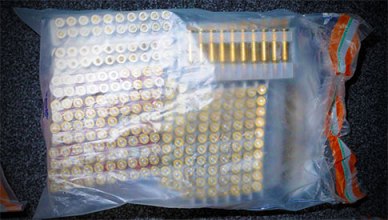
Knights ammoGamekeeper Andrew Knights, 47, of Sandy Lane, Dereham, in Norfolk has been convicted for stealing over 7,500 rounds of ammunition and cartridges from his former employer, and for possessing 5,200 rounds illegally, and for illegally storing 36 canisters of the pesticide Talunex in his bedroom.
The offences were so serious (read the details in the news links below) that his case was heard at Norwich Crown Court as opposed to a Magistrates Court. On Monday he was given a 15-month prison sentence, suspended for 18 months, and a £1,000 fine. One report suggests he also received a 200-hour community service order. Essentially then, as long as he doesn’t commit any offences for the next 18 months, all he got for these offences was a £1,000 fine, and possibly a few weeks of unpaid work. Quite incredible, considering the scale of his criminal activities and the very high risk of danger to his family, neighbours and visitors to his home.

Excellent work by Norfolk Constabulary, Natural England, and the Health & Safety Executive who worked together to bring this case to court. As usual, the sentencing was a major disappointment; it was just a fraction of what could have been imposed.

Wonder if Mr Knights was/is a member of the National Gamekeepers’ Organisation? So far there’s been no comment about it on their website (here). Let’s ask them! Emails to: info@nationalgamekeepers.org.uk

Norfolk Constabulary press release here

BBC news here


Criminal case opens against Scottish gamekeeper

According to local sources, a criminal case against a Scottish gamekeeper opened today in the sheriff’s court. He faces six charges under Sections 1 and 5 of the Wildlife and Countryside Act.

Section 1 of the Act is concerned with the protection of wild birds, their nests and eggs.

Section 5 of the Act is concerned with the prohibition of certain methods of killing and taking wild birds.

The case today was continued, without plea, until 2nd October.

This case looks set to be of VERY significant interest. Without going in to detail, there are four aspects in which we’re particularly interested:

1. The nature of the alleged offences.

2. The type of evidence that could be presented by the prosecution.

3. The length of time it has taken for this case to reach court.

4. The relationship of the defendant with a particular organisation.

Watch this space…

The untouchables

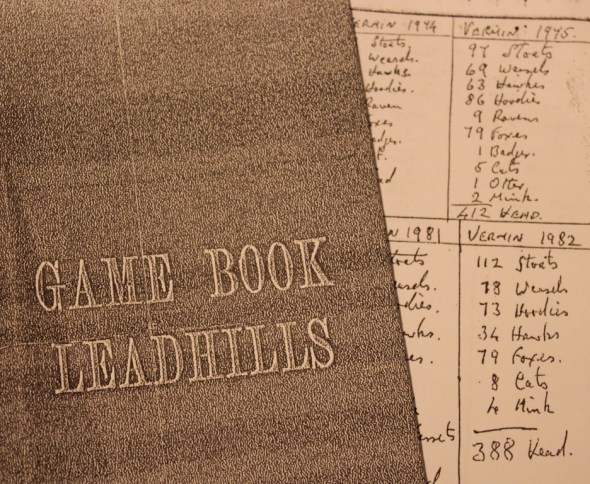
Last month we blogged about getting our hands on the Leadhills Estate Game Book and our interest in the lists of killed ‘vermin’ dating over several decades (see here). These ‘vermin’ lists include the usual species that are typically referred to as ‘vermin’ by the game-shooting industry: species such as foxes, stoats, weasels and crows. However, also included on these ‘vermin’ lists are supposedly protected species such as birds of prey, ravens, otters and badgers. We said we’d blog about the lists in more detail when we had more time.

Leadhills game book vermin lists

Since then an independent academic has contacted us to ask whether we’d consider allowing access to the documents so the data could be analysed, in combination with other data sources, to provide a ~50 year dossier of alleged illegal raptor persecution incidents recorded at Leadhills Estate, stretching from the 1970s right up to the present day. These results would be written up as a peer-reviewed paper in a scientific journal. We think that such a paper would hold much more gravitas than a simple analysis of a sub-set of those data written up for this blog so we have agreed to pass the information to the academic. We look forward to seeing the results in due course.

So as not to steal the academic’s thunder we won’t be writing in detail about the contents, but we did want to share one startling statistic.

We looked at the number of killed ‘hawks’ listed in the Leadhills Estate Game Book, just between the years 1980-1987. The vermin lists in the Game Book stretch well beyond these years but we selected this particular period because we wanted to compare the figures with the RSPB’s published figures for all of Scotland during this period (the RSPB data were published in McMillan’s 2011 paper – here).

Here’s what we found:

RSPB: Number of illegally killed raptors recorded for the whole of Scotland between 1980 and 1987 = 91 birds.

Leadhills Estate Game Book: Number of illegally killed raptors recorded on Leadhills Estate between 1980 and 1987 = 383 birds.

The difference between these two figures gives a very clear illustration of a situation that conservationists have been arguing for decades: that is, the ‘official’ recorded figures of illegally-killed raptors that are published each year by the RSPB are just the tip of a bloody great big massive iceberg. Just on this one estate (Leadhills), more than four times as many raptors were recorded illegally killed during this seven-year period than those officially reported throughout the whole of Scotland. That’s just one estate. Think what these figures would look like if we had access to the vermin lists of other estates across Scotland!

Now, there’ll be some in the game-shooting industry who will argue that raking over historical persecution records dating back 30 years is irrelevant. They’ll claim that although persecution was common practice several decades ago, things have now changed for the better and it’s only the odd ‘rogue’ estate that are still at it. This, of course, is absolute nonsense. Anybody who bothers to read through the pages of this blog will know that that is simply not a true statement. Sure, some estates have since got their acts together and are now supporting healthy raptor populations on their land (e.g. see Atholl Estate in McMillan’s 2011 paper above) but these estates seem to be exceptional: there are many, many other estates that are still, even to this day, systematically and illegally persecuting raptors and many of them seem to have a curious immunity to prosecution.

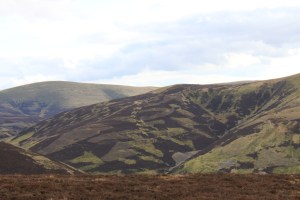
leadhills estateLeadhills Estate has been at the centre of allegations of wildlife crime for a very long time. The list of confirmed reported incidents dating from 2003 to 2011 makes for shocking reading (see here). Of these 41 confirmed incidents, only a couple have resulted in a prosecution and a conviction.
Earlier this year we reported the discovery of a substantial illegal stash of poisoned baits that was reportedly found on the estate (see here). Unsurprisingly, six months later we’re still waiting for Police Scotland to issue a statement.

What was particularly interesting about this incident was the reaction of the Scottish landowners’ organisation, Scottish Land and Estates. They refused to discuss the incident, citing an ‘on-going police investigation’ (how very convenient – this excuse relieves them of having to comment on any alleged persecution incident that never gets resolved – i.e. most of them). They also wrote to the Environment Minister and posted an article on their website complaining about the alleged incident being reported on this blog (see here). They gave an impression of being more outraged by the reporting of the incident than they were of the alleged discovery of a big stash of deadly poisoned baits on a Scottish sporting estate.

Now, compare that reaction to their response to the conviction of gamekeeper Peter Bell earlier this year. Bell was convicted of four offences including the poisoning of a buzzard on the Glasserton and Physgill Estates. Immediately following his conviction, Scottish Land and Estates issued a statement to say that Glasserton had been booted out of their organisation (see here). So why didn’t SLE issue a similarly strong statement when the poisoned baits had allegedly been found at Leadhills? They could argue that nothing is proven until a conviction has been secured, as in the Glasserton case. But if that is their argument, then why didn’t they distance themselves from Leadhills Estate when a Leadhills Estate gamekeeper (Lewis Whitham) was convicted of laying a poisoned bait in 2010 (see here)? Why is Leadhills Estate, with its long, long, long history of alleged wildlife crime, treated so differently to an estate like Glasserton, which in relative terms barely registers on the persecution radar? Back in June we asked SLE to provide some transparency about their relationship with Leadhills Estate (see here). They still haven’t.

There may be some who will argue that things are about to change at Leadhills Estate with the shooting lease now up for sale; the sales document itself makes for an interesting read – note the reason given for the current tenants’ departure and the fate of the gamekeepers currently employed on Leadhills Estate: Leadhills brochure 2013

Yes, there may well be a change in the tenancy but will that make any difference? There have been numerous shooting tenants at Leadhills Estate over the years and yet, if the available data are to be believed, the background level of alleged persecution has remained constant.

The raptor killers, whoever they are, appear to be untouchable.

Natural England claims release of buzzard licence info ‘not in public interest’

buzzard 3Today, Natural England announced that they’d won a ‘Customer Service Excellence Standard Accreditation’ (see here). The independent assessors apparently spoke with NE staff as well as ‘a range of Natural England’s key customers and stakeholders’ and decided that NE was ‘excellent’ at providing ‘delivery’ and ‘information’ to their customers, amongst other things.

That’s not been our experience.

On 23rd May, an article in the Guardian revealed that Natural England had licensed the secret destruction of buzzard nests and eggs in order to protect a pheasant shoot. The licences in question had been issued to an un-named gamekeeper, whose licence application had been supported by the National Gamekeepers Organisation. We blogged about it here. There was widespread public condemnation, as expected.

On 30th May, we blogged about whether the licence applicant had a previous criminal conviction for wildlife crime (because we had good reason to ask – see here) and we wrote to Natural England to ask them about it (see here). Incidentally, we also asked the National Gamekeepers Organisation whether the gamekeeper they were supporting had a criminal conviction for wildlife crime and if so, had he ever been expelled from their membership, as per their club rules about not tolerating wildlife crime – they still haven’t answered!

On June 3rd, Natural England responded to our request for information (a very quick response, to give them due credit) by issuing a refusal notice. In other words, they refused to either confirm or deny that they held any details about previous convictions because, they claimed, this was ‘personal information’ as defined in the Data Protection Act. We strongly disagreed and wrote a second letter to NE (see here), asking for an internal review of their decision. We argued that the information requested could not be defined as ‘personal information’ because the information would not lead to the identification of the buzzard licence applicant; what we were asking was whether the applicant had a wildlife crime conviction, which could have been answered with a simple ‘yes’ or ‘no’.

On 29th July, Natural England responded to our request for an internal review by issuing a second refusal notice. Once again, they claimed the information we had asked for was ‘personal information’ and they also claimed the release of that information was ‘not in the public interest’. Here is a copy of the generic letter they sent out to quite a number of blog readers: RFI 2020 Int_Review Response_RD

Next stop? The Information Commissioner, to ask for a review of Natural England’s decisions. Watch this space…

On a related subject, Alan Tilmouth has written a(nother) good blog this evening, this time about the GWCT’s position on buzzard licensing – see here.

Environment Minister responds to our questions about his ‘further measures’ to tackle raptor persecution

On July 1st, Environment Minister Paul Wheelhouse laid out his ‘further measures’ to tackle the on-going problem of raptor persecution (here).

Whilst we welcomed his intentions, we wanted further clarification about these ‘further measures’ as well as some updates on previously-promised measures, so on July 2nd we posed five clear questions to him (see here).

This week, one of our blog readers received the following response from Wheelhouse’s wildlife crime policy officer:

Question 1:

Please can you clarify whether the Lord Advocate has instructed COPFS to accept covert video footage as admissible evidence in prosecutions for alleged raptor persecution incidents?

Answer:

The Lord Advocate has instructed the specialist prosecutors in the Wildlife and Environmental Crime Unit to work with Police Scotland to ensure that law enforcement utilises all investigative tools at their disposal in the fight against wildlife crime including tools such as video surveillance equipment where justified and appropriate.

Before instituting any prosecution, the Procurator Fiscal must be satisfied that there is sufficient admissible evidence to justify doing so. Established rules of evidence determine whether a court can take into account certain types of evidence including third party video evidence. If evidence does not comply with these rules, it is inadmissible and the court may not take it into account. In considering any case for prosecution, the Procurator Fiscal will assess, having regard to the particular facts and circumstances of any evidence and the manner in which it was obtained, whether the court will allow it to be considered. For example, the court may refuse to take account of evidence that has been obtained improperly, irregularly or unlawfully.

Our assessment:

It’s hard to know if the Lord Advocate’s instruction will make a blind bit of difference. Covert video evidence is routinely accepted as admissible evidence in England. It has, also, been previously accepted in Scotland, albeit rarely. More often than not, COPFS rejects it and we’re never provided with a transparent answer about why it was rejected. We’ve struggled to understand the legal reasoning behind these repeat rejections, especially when, as we understand it, the decision to accept or reject evidence should be made by the court (the Sheriff), not COPFS. We’ll just have to wait and see how covert video surveillance is treated in any future cases….and it’s quite likely we won’t have long to wait.

Question 2:

Please can you clarify the timescale for SNH’s review for introducing potential restrictions on the use of General Licences in areas where they have good reason to believe crimes against wild birds have been committed? In other words, when can we expect the review to be completed? Also, will their review be made publicly available?

Answer:

Officials are currently discussing with Scottish Natural Heritage how they will carry out the work to examine how and in what circumstances they can restrict the use of General Licences to trap and shoot wild birds on land where they have good reason to believe that crimes against wild birds have taken place. Timescales for completing the work are still to be concluded, but we would expect any new arrangements to be in place for next year and will ensure that we keep stakeholders in PAW Scotland informed of progress. SNH will be clear to all users of General Licences when and in what circumstances their use will be restricted or prohibited.

Our assessment:

This seems a perfectly reasonable explanation. We look forward to watching the developments.

Question 3:

Please can you advise whether there will be a prosecution under the new vicarious liability legislation following the recent conviction of gamekeeper Peter Bell, found guilty of poisoning offences on the Glasserton and Physgill Estates? If you don’t know the answer (which would be surprising, given that you said in March 2013 that you would be “keeping an eye on this particular area [i.e. vicarious liability] with interest”, please can you provide the contact details of someone who can answer the question?

Answer:

It would be inappropriate to comment further on this case as police enquiries have not yet concluded.

Our assessment:

Not very impressed, but as this case is probably the first of its kind to be considered under the new vicarious liability legislation, we don’t have any benchmark to be able to compare the timescales involved. It’s been 8 months since the crimes were committed (December 2012). Is it reasonable to expect Police Scotland to still be conducting enquiries or is this another fob-off to delay telling us that no charges will be brought under VL legislation? If they are still making enquiries, let’s hope they’re making a better job on this case than they did on this one! We’ll keep asking questions about this case every so often so it can’t just be swept quietly under the carpet.

Question 4:

Please can you tell us the status of the Scottish Government’s first annual report (2012) into wildlife crime? As you know, under the Wildlife and Natural Environment (Scotland) Act 2011, there is now a requirement (under section 26B) that ‘Scottish Ministers must, after the end of each calendar year, lay before the Scottish Parliament a report on offences relating to wildlife’. You mentioned in March 2013 that your policy officials ‘are currently working on’ this report. When can we expect this report to be available?

Answer:

Section 26B of the Wildlife and Countryside Act 1981 requires Scottish Ministers, after the end of each calendar year, to lay before the Scottish Parliament an annual report on wildlife crime. We will of course comply with that requirement and it is in preparation. Details about the laying of the report, including the timing, will be given to the Parliament in the first instance in accordance with established parliamentary protocol. We will, of course, ensure that the report publication is communicated to stakeholders and Parliament.

Our assessment:

It’s taking a very long time for this report to be published. We’ll keep asking about it.

Question 5:

Please can you tell us when, exactly, will you open the consultation regarding the increase of SSPCA powers to broaden the range of their work investigating wildlife crime? As you know, this consultation was first suggested by former MSP Peter Peacock as an amendment during the WANE Act debates, way back in February 2011. The then Environment Minister Roseanna Cunningham rejected it as an amendment but suggested a consultation was in order. Seven months later in September 2011, MSP Elaine Murray lodged a motion that further powers for the SSPCA should be considered. In November 2011, Elaine Murray MSP formalised the question in a P&Q session and the next Environment Minister, Stewart Stevenson, then promised that the consultation would happen in the first half of 2012. Nothing happened so in September 2012 we asked you, as the new Environment Minister, when the consultation would take place. In response to one of our blog readers in October 2012 your policy officer said: “The consultation has been delayed by resource pressures but will be brought forward in the near future”. Nine months later and we’re in July 2013 – almost 2.5 years after Scottish Ministers committed to undertaking the consultation. Where is it?

Answer:

We regret that resource pressures did further delay the public consultation on the extension of SSPCA powers. However, I can confirm that the consultation document will be published later this year.

Our assessment:

As far as we’re concerned, this consultation, if it does actually appear this year, could be a game-changer. Forget bringing in new legislation to tackle raptor persecution – we don’t need it. The legislation is all there – it just needs to be enforced. The enforcement process begins with a criminal investigation. Do we have complete confidence in Police Scotland to effectively and efficiently undertake these investigations? Based on their past performance, that has to be a resounding NO, with just a handful of exceptions. Do we have confidence in the SSPCA to undertake these investigations? If we judge them on their track record for successful prosecutions under animal welfare legislation, then YES, we do. We also know that certain organisations associated with the game-shooting industry do not support these extended powers for the SSPCA – they argue that criminal investigations should be carried out by the police. Funny that, because they support extended powers for water bailiffs – is that because the water bailiffs are often acting in the interests of landowners and gamekeepers (e.g. when tackling poachers)? Do they not support extended powers for the SSPCA because they know that with an extra 75+ highly-trained officers on the ground then the chances of raptor persecution crimes being uncovered become greater? You’d think, given that the game-shooting industry claims to be all for stamping out raptor crime, that they’d welcome the SSPCA with open arms.  We’ll be watching closely for this consultation to finally emerge and you can expect a great deal of blogging about it when it is published.