More half-baked half-truths from Shooting Times

Here’s the third distorted news item from the current edition of Shooting Times (we blogged about the first one here and the second one here).

This article is about the coordinated boycotting of last month’s Raptor Persecution Priority Delivery Group (RPPDG) meeting by the Moorland Association, National Gamekeepers Organisation, BASC and Countryside Alliance. Mark Avery blogged about it (here) and so did we (here, here, here and here) when the gamekeepers formally resigned from the group with the jaw-dropping suggestion that Supt Nick Lyall (the new RPPDG Chair) lacked integrity. The supreme irony of that claim kept us amused for days.

Anyway, back to the Shooting Times and its selective portrayal of events:

Gosh, where to start.

It’s fair enough to include the quote from the Countryside Alliance, although the shooting lobby’s claims about the workings of the RPPDG have previously been found to be misleading, at best:

The RPPDG meetings are not confidential; meeting minutes are subject to disclosure via FoI requests (we have copies of every meeting report except one, so far) and those member organisations supposedly “condemning outcomes to which they agreed in meetings” presumably refers to comments made by RSPB and NERF about the discredited RPPDG raptor persecution maps that were published in 2017. However, NERF has argued that it consistently objected during meetings to how the map data were being presented but that those concerns were consistently ignored by other RPPDG ‘partners’ (e.g. see here) while the RSPB has stated that changes to the pre-agreed press releases were made without the RSPB’s knowledge or consent (see here).

The Shooting Times then goes on to discuss the ‘dispute’ about whether the Moorland Association asked, during an RPPDG meeting, about licenses to kill Marsh harriers (which, incidentally, wasn’t “leaked” at all but became known when RPPDG members were reporting to their members, quite legitimately, on the RPPDG meeting). The Shooting Times article includes Amanda Anderson’s (Moorland Assoc) response of “complete nonsense” but then completely fails to mention that further scrutiny of wider RPPDG correspondence, via a series of FoIs, has revealed that yes, this topic was indeed raised during that RPPDG meeting but every member except two (RSPB & NERF) had apparently ‘forgotten’ about it and subsequent meeting minutes, inaccurate and contested, were still approved by the RPPDG (see here)!!

Half-truths won’t do, Shooting Times, and they certainly don’t fit with the editor’s recent emphasis on “communicating the truth and demanding high standards”.

Still on the subject of alleged ‘leaks’, Shooting Times then suggests that news of the recent boycotted meeting had ‘appeared to have been leaked to a prominent anti-shooting blogger [that’ll be Mark Avery] before being picked up by The Times’. This allegation of leaking is again clearly aimed at the non-shooting RPPDG members, but had the Shooting Times done its homework it would have known that actually, a journalist from The Times knew about this boycott story and was on the phone to lots of people about it BEFORE Mark Avery blogged! Also, it’s worth noting that a copy of the National Gamekeepers Organisation’s formal resignation letter made its way in to the hands of The Times journalist. Now, who do you think sent (‘leaked’) that?!!

This Shooting Times article is looking more and more like an attempted hatchet job but the claims, when scrutinised, simply don’t stack up.

The final part of the Shooting Times article is perhaps the funniest, and is associated with the editor’s bizarre decision to use a photo of Charlie Moores to illustate this piece. Obviously being used as a poster child to represent ‘animal rights activists’ (and all the associated negative imagery of that terminology) and thus to somehow justify the game shooting lobby’s decision to boycott the meeting (or in the NGO’s case, resign), the Shooting Times couldn’t have picked a more inappropriate subject or photo.

Mild-mannered, softly-spoken, considerately thoughtful, naturally reserved and always a gentleman, Charlie Moores is about as far away as possible from being the stereotypical ‘animal rights activist’ many in the shooting lobby like to portray (i.e. ‘masked, violent thugs willing to break the law’)! NB, for the record, this isn’t our definition of an animal rights activist!

Not only that, but the photograph they’ve used was taken at BAWC’s Hen Harrier Day in 2015, shortly after Amanda Anderson (Moorland Assoc) and Andrew Gilruth (GWCT) were warmly welcomed to the event by Chris Packham who encouraged the audience to give them both a round of applause, which we did. Not quite the image of BAWC that would help justify the NGO’s decision to resign from the RPPDG, eh?!

But best and funniest of all, Charlie hasn’t been involved with BAWC since spring 2016 and so had absolutely nothing to do with the RPPDG meeting that was boycotted last month!

The Shooting Times was accurate to state that Charlie had helped set up BAWC way back in the day, but BAWC was NEVER an animal rights campaigning group – it’s mission was then, and still is now, to campaign against wildlife crime. The clue’s in the name, really.

Piss-taking of the Shooting Times’ crap journalism aside, you do have to wonder then, why the game shooting lobby really objects so strongly to BAWC’s involvement with the RPPDG (whose objective is also to, er, tackle illegal raptor persecution) as well as the other newly-added RPPDG members (Wildlife Trusts and the North Pennines Area of Outstanding Natural Beauty).

Trial continues for (now ex) head gamekeeper of Edradynate Estate

The trial of Edradynate Estate’s former head gamekeeper, David Campbell, continued at Perth Sheriff Court in late January.

David Campbell, 69, denies that between 14 and 16 April 2017 at Edradynate Estate he maliciously damaged game crops by spraying them with an unknown substance which caused them to rot and perish.

At the time of the alleged offences, Campbell was no longer an employee of the estate, having worked there since 1983 but after falling out with the landowner, millionaire city financier Michael Campbell (no relation), his employment was terminated in February 2017. Michael Campbell told the court in November 2018 that he believed his former employee had caused the damage ‘in revenge’ (see here).

[Photo by RPUK]

A write-up of the latest court hearing appeared in the Courier & Advertiser as follows:

A disgruntled gamekeeper made sinister threats about what would happen on a millionaire’s shooting estate after he was replaced, a court has been told.

A witness described how David Campbell made the remarks to him at a drinks party some time before game crops were sabotaged on the estate.

Donnie Calder, 44, said: “The new gamekeeper had been appointed. He had stated that he was going to be putting in a lot of new game crops in various places. To the best I can remember, David said ‘as long as he had breath in his body, game crops would not be grown at Edradynaye Estate’. I didn’t really think much of it. David was bitter. He didn’t want to leave his employment as he enjoyed his job. I just assumed he decided there wasn’t going to be game crops. I don’t know why. He was quite calm. It was a matter of fact thing“.

Mr Calder told the trial at Perth Sheriff Court that he was called to the estate some time later to look at damage which had been done to a section of game crop. He said: “The game crops looked like they had been sprayed with a weed killer of some description. I was asked to look at them with the new keeper. The crops were dead. They didn’t die of natural causes – something had been used to kill them“.

Covert CCTV footage taken at the scene of the damaged crops showed a mystery person making a series of 2am raids to spray them. Estate owner Michael Campbell, 76, said he was sure the man in the video was David Campbell, owing to his “mutton chop” sideburns.

Farmer Andrew Kennedy, 62, said he was aware that the accused was “upset” about having to leave his job. “He had worked there for a long, long time and he was aware it was coming to an end, probably a career end“, he said.

The estate’s new head gamekeeper, Ian Smith, told the trial that the area was one of the best on the estate. He said that the damage would have cost “thousands”.

He told the court that the covert CCTV footage showed a “small” person in a white boiler suit spraying the crops with a backpack sprayer. He said the person, who was filmed during the early hours on two days, appeared to be wearing a head torch and a hood or mask.

ENDS

The trial will continue in March.

It might seem odd that we’re reporting on this case, and although we can’t explain that decision while this trial is on-going, all will become clear in due course.

PLEASE NOTE: We’re not accepting comments on this case until the trial concludes. Thanks.

Seriously? Supt Nick Lyall’s integrity challenged by pro-game shooting groups!

This is quite spectacular.

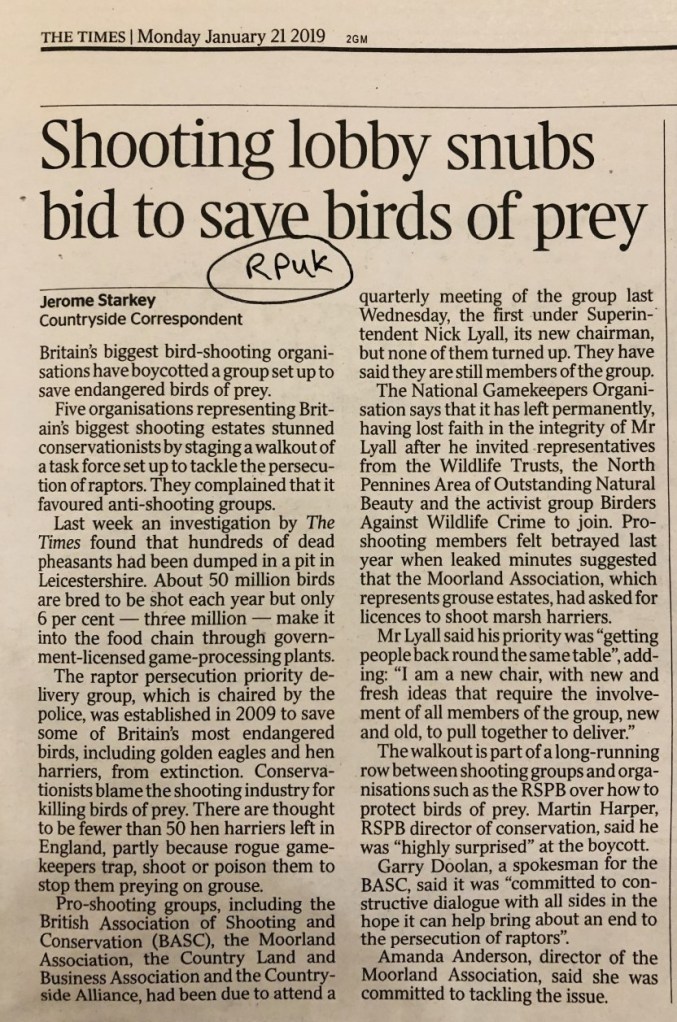
Further to yesterday’s blog (here) where it was revealed the National Gamekeepers’ Organisation had formally resigned from the DEFRA group established to tackle illegal raptor persecution (the RPPDG – Raptor Persecution Priority Delivery Group), there’s a piece in today’s edition of The Times explaining the gamekeepers’ decision, and also explaining why some of the other game-shooting organisations had boycotted last Wednesday’s RPPDG meeting. It has to be read to be believed:

Let’s start with the resignation of the National Gamekeepers’ Organisation first. It says it resigned from the RPPDG because it has “lost faith in the integrity” of the new Chair, Police Supt Nick Lyall.

Oh god, the irony.

And what had Nick Lyall done to earn such a slur?

Had he ignored the NGO? Nope.

Had he excluded them from RPPDG planning discussions? Nope.

Had he dismissed the NGO’s ideas without a second thought? Nope.

Had he slagged off the NGO in public? Nope.

It turns out Nick’s integrity was apparently compromised (according to the gamekeepers) when he invited representatives from the Wildlife Trusts, the North Pennines Area of Outstanding Natural Beauty, and Birders Against Wildlife Crime to join the RPPDG! Seriously, that’s it!

And what of the Moorland Association, BASC and the Countryside Alliance (and apparently the Country Land and Business Association)? Why did these pro-game shooting groups boycott last week’s RPPDG meeting? According to this article they complained that the RPPDG “favoured anti-shooting groups”. That’s bloody hilarious. The RPPDG has been top heavy with pro-game shooting representatives ever since the group started (hence no progress on tackling wildlife crime after all these years) but now that a few conservation organisations have been invited to the table to join the discussions, the shooting groups feel it’s all a bit unfair and unbalanced? You couldn’t make this up.

Oh, and they’re also a bit upset (“betrayed”?!) because my research revealed that the Moorland Association had been asking about licences to kill Marsh harriers at a previous RPPDG meeting, even though the majority of RPPDG attendees ‘couldn’t remember’ this discussion (see here).

The quotes at the end of the article are indicative of just how easily these organisations can churn out meaningless soundbites. BASC says it is “committed to constructive dialogue with all sides…..” and Amanda Anderson of the Moorland Association says she was ‘committed to tackling the issue’.

Er, how does that work if you’ve boycotted a meeting where discussions took place on how to tackle illegal raptor persecution?

Nick Lyall’s quote demonstrates his intentions: “I am a new chair, with new and fresh ideas that require the involvement of all members of the group, new and old, to pull together to deliver”.

I’m looking forward to finding out what happens at the next RPPDG meeting, scheduled for April. As I said yesterday, this will be a real test of Nick’s leadership skills. If those raptor-hating groups are still boycotting the RPPDG on such spurious grounds and are still intent on disrupting the progress of the RPPDG, they need to be booted off with immediate effect, no more messing about.

UPDATE 21 January 2019: Back-pedalling BASC? (here)

UPDATE 21 January 2019: National Gamekeepers’ Organisation resignation letter in full (here)

Gamekeepers resign from DEFRA group established to tackle illegal raptor persecution

The National Gamekeepers’ Organisation (NGO) has formally resigned from the Raptor Persecution Priority Delivery Group (RPPDG) because it ‘doesn’t like the direction of travel’ of the group.

Regular blog readers will be familiar with the RPPDG but for the benefit of new readers, here’s a quick recap. The RPPDG was established in 2011, a so-called ‘partnership’ between the police, representatives from the game-shooting industry (e.g. National Gamekeepers Organisation, Moorland Association, BASC, Countryside Alliance etc), and representatives from the raptor conservation community (RSPB, Northern England Raptor Forum), along with some government agency reps from Natural England, DEFRA, Yorkshire Dales National Park Authority and the Welsh Government. It was tasked with the ‘delivery’ of action against the raptor killers in England & Wales (in Scotland the ‘delivery’ group is the PAW Raptor Group).

It would be fair to say we’ve been highly critical of the RPPDG over the years, and justifiably so. Until recently, this has been a partnership in name only, which has been useful for certain organisations and DEFRA Ministers to hide behind on the pretence of tackling illegal raptor persecution but the stark reality is that the RPPDG has contributed absolutely nothing of value towards the conservation of UK raptors in all the years it’s been operating, largely because the group’s membership has been dominated by representatives of the game-shooting industry (i.e. the industry most responsible for the continued illegal killing of birds of prey).

The RPPDG has been secretive, unaccountable and has suffered from a chronic lack of leadership, as evidenced recently when we blogged about how the group had deliberately produced apparently inaccurate and contested minutes relating to the Moorland Association’s interest in obtaining licences to kill Marsh harriers to stop these birds allegedly ‘disrupting’ shoot days on driven grouse moors.

In September 2018 Police Superintendent Nick Lyall took over the role of the RPPDG Chair and this led to cautious optimism amongst conservationists. Open, inclusive, hard-working, transparent and willing to be held to account, Nick Lyall brings everything to the RPPDG table that has previously been missing. Last month he blogged in more detail about his plans (here) and the first RPPDG meeting with Nick as Chair took place last Wednesday (16 Jan 2019).

This was an important agenda-setting meeting, as for the first time, at Nick’s invitation, it included representatives from the wider conservation community. However, interestingly, four long-standing RPPDG members didn’t turn up for that meeting – the Moorland Association, National Gamekeepers’ Organisation, Countryside Alliance and BASC – as reported by Mark Avery (here), and there was much speculation on social media about why those four members chose to boycott the meeting.

Well now we know why at least one of them made that decision. The National Gamekeepers’ Organisation has since formally resigned from the RPPDG, and, interestingly, a copy of its resignation letter has been leaked to The Times and we believe this is due to be published tomorrow, quite possibly in an attempt to undermine Nick Lyall’s integrity and credibility.

It’s our understanding that the gamekeepers are ‘unhappy with the direction of travel’ of the RPPDG under Nick Lyall’s leadership. That would be an interesting position, given that all Nick Lyall has done is focus his efforts on getting the RPPDG in to a position where it can actually tackle illegal raptor persecution, which is, after all, er, the purpose of the RPPDG. If you’re representing an organisation that is purportedly dedicated to tackling the illegal killing of birds of prey, what’s to dislike about that?!

As for the other three groups who chose not to attend Wednesday’s meeting, we’re waiting to hear what they’ll do in the longer term. We understand they are ‘considering their positions’. Will they behave like the Scottish Gamekeepers Association and boycott future meetings but still maintain their membership of the PAW Raptor Group, picking and choosing their own terms of engagement? Hopefully Nick Lyall won’t permit that to happen. Group members should either be committed to participating in full or they should be booted off;  they must not be allowed to disrupt progress from a distance. Strong leadership will be required and it’ll be Nick Lyall’s first real test if that’s the scenario presented to him.

But surely the Moorland Association, with its recent statements about “working together constructively” and its support of “widespread collaboration” (see here) won’t walk away from an opportunity to tackle the rampant criminality within the grouse shooting industry, right?

UPDATE 21 January 2019: Seriously? Supt Nick Lyall’s integrity challenged by pro-game shooting groups! (here).

UPDATE 21 January 2019: Back-pedalling, BASC? (here).

UPDATE 21 January 2019: National Gamekeepers’ Organisation resignation letter in full (here)

Are raptor-killing licences on the cards for gamekeepers in Scotland?

Rumours are circulating that licences to kill raptors (in order to protect ‘livestock’, i.e. pheasants & partridge poults) are being considered in Scotland.

It must be stressed that these are only rumours, but based on the sources, we’re treating them seriously.

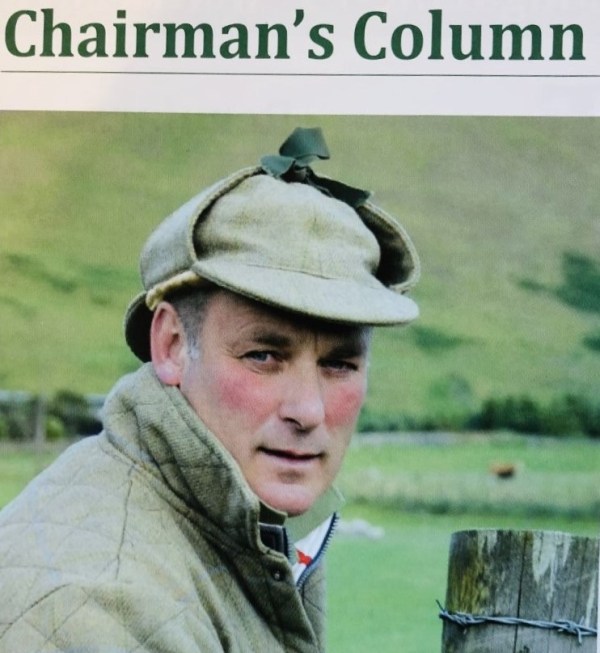
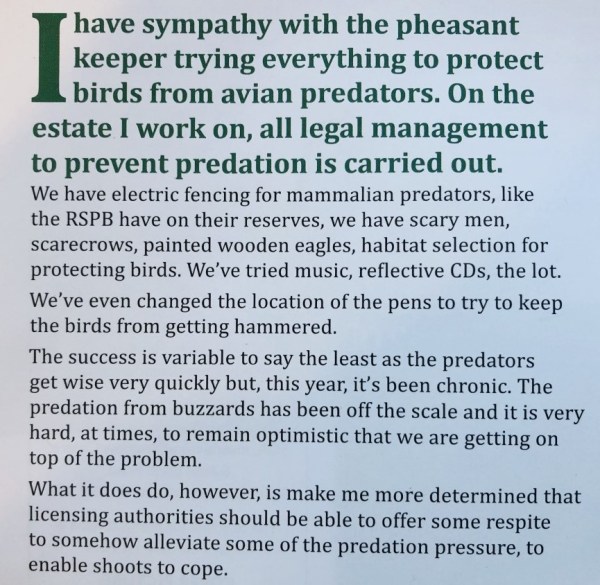
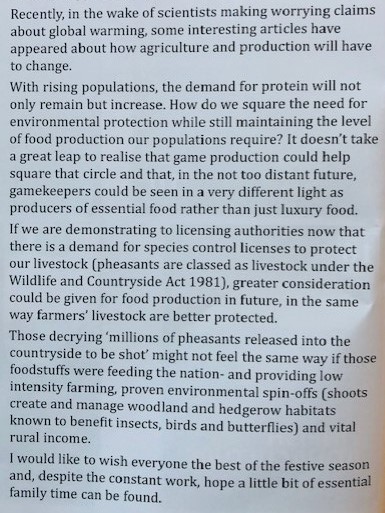
Separate to these rumours, and perhaps more than coincidentally, Alex Hogg’s editorial piece in the latest edition (Dec 2018) of the Scottish Gamekeepers Association’s quarterly rag for its members focuses strongly on raptor-killing licences – something he claims would lessen the likelihood of gamekeepers “making bad decisions when it comes to raptors” (he means committing wildlife crimes).

Here’s the article – see what you think:

The timing and content of his editorial may well just be coincidental; it’s not like he and his sorry-arsed organisation haven’t been lobbying to be allowed to kill raptors for years. For example, here he is in 2010 bemoaning the impact of buzzards on his pheasant shoot, although he goes further and makes the totally unsubstantiated claim that “biodiversity is seriously threatened in Scotland by buzzards” but then later contradicts this claim when he argues that licences would only be needed to kill “a few rogue buzzards“.

But it’s not just Alex’s editorial that has raised our antennae. In December, licensing authority SNH sent around the following email about the 2019 General Licences, saying that a consultation is planned this spring, in readiness for its 2020 General Licences:

Hmm. Another coincidence? Perhaps, or could this be a planned ‘sweetner’ for the gamekeepers in anticipation that the Werritty Review will recommend licensing for grouse shooting estates when it reports later this spring?

We wouldn’t put it past the Scottish Government to try something like this – it pulled a similar trick when the Werritty Review was first announced in May 2017 by revealing that it would not consider giving additional investigative powers to the SSPCA to help tackle illegal raptor persecution (see here).

If issuing gamekeepers with licences to kill raptors is planned, it’s going to be pretty hard for the Scottish Government to defend such an action in this context. The Werritty Review was set up to examine grouse moor management precisely because of the ongoing issue of illegal raptor persecution; evidence of which Professor Werritty himself concluded was “compelling and shocking“. If the Scottish Government decides to address these crimes by simply legalising the killing of raptors by gamekeepers, it will undoubtedly face a serious backlash from the public and potentially a number of legal challenges.

Watch this space.

UPDATE 10.30hrs: SNH emailed us today and requested we post the following statement –

This is not true – we are not changing our policy towards licensing raptor control. We consult on General Licences on a regular basis; this is not new“.

We’ll be revisiting this statement, and this issue, in the very near future.

Trial begins for (now ex) Head Gamekeeper of Edradynate Estate

The long-awaited trial of Edradynate Estate’s now former Head Gamekeeper began today at Perth Sheriff Court.

David Campbell, 69, denies that between 14 and 16 April 2017 at Edradynate Estate he maliciously damaged game crops by spraying them with an unknown substance which caused them to rot and perish.

At the time of the alleged offences, Campbell was no longer an employee of the estate, having worked there since 1983 but after falling out with the landowner, millionaire city financier Michael Campbell (no relation), his employment was terminated in February 2017. Michael Campbell told the court today that he believed his former employee had caused the damage ‘in revenge’.

There’s an interesting write-up of today’s proceedings here, revealing an exceptionally close working relationship between David and Michael Campbell over the years.

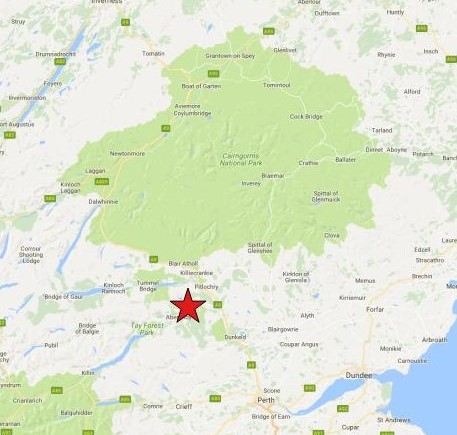
[RPUK map showing location of Edradynate Estate in Highland Perthshire]

[RPUK photo of the entrance to the estate]

It might seem odd that we’re reporting on this case, and although we can’t explain that decision while this trial is on-going, all will become clear in due course.

We understand the current trial against David Campbell is due to continue on 22 January 2019.

PLEASE NOTE: We’re not accepting comments on this case until the trial concludes. Thanks.

Has this convicted gamekeeper had his shotgun/firearms certs revoked yet?

You’ll remember Timothy Cowin. He’s the gamekeeper who was convicted this summer for the illegal killing of two short-eared owls on the Whernside Estate in the Yorkshire Dales National Park (see here).

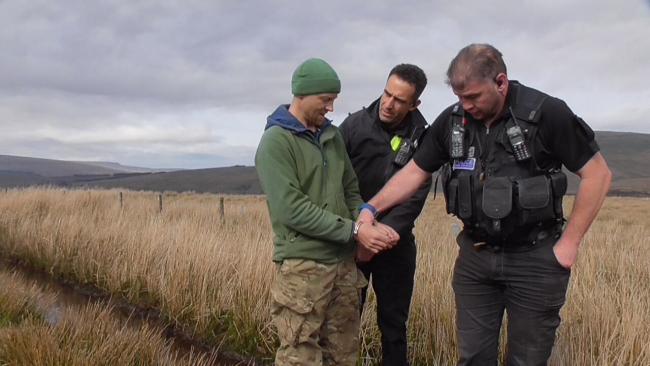
Cowin’s criminal activities were captured on camera by the RSPB Investigations Team, whose extraordinary footage also included a chase across the moor, his dramatic arrest, and then the meticulous police search to find the corpses of the owls (they’d been shot and stamped on before one was hidden in a drystone wall and the other stamped in to the peat).

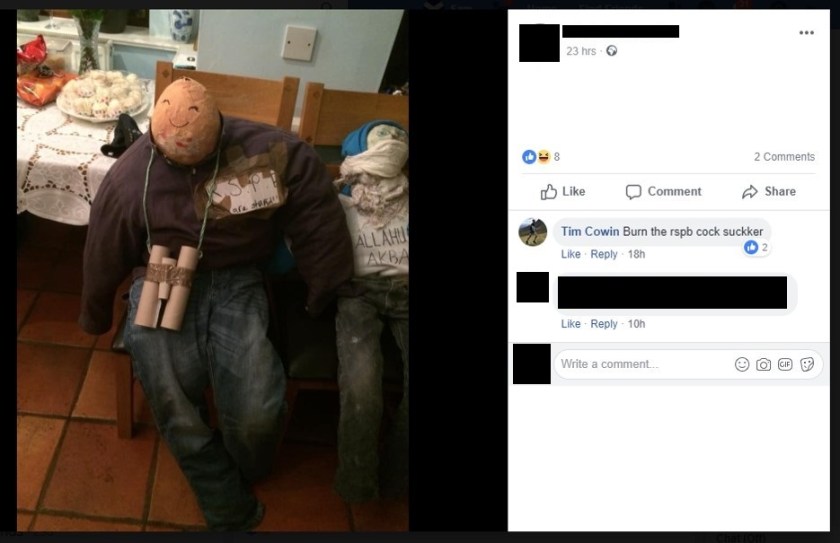
One of our blog readers sent us this screengrab from Facebook earlier this week, showing Cowin’s Bonfire Night effigies, including one that appears to represent an RSPB Investigator and another one revealing some racist xenophobic tendencies judging by the text on the guy’s t-shirt. Note the comment made by Mr Cowin to the right of the photo:

We’re wondering whether Cumbria Constabulary has revoked Mr Cowin’s shotgun and firearms certificates yet? And if not, why not? Somebody already convicted of a sadistic violent crime against two defenceless owls, showing no sign of remorse, is hardly someone of ‘sound mind and temperate habits’.

If you read the Home Office guidelines on how the police should assess the suitability of a person to be entrusted with a firearm, it seems pretty clear: Guide-on-Firearms-Licensing-Law-2012-13-Suitability

It’s even clearer when you look at this infographic produced by Firearms UK, an organisation dedicated to promoting and protecting firearms ownership:

We haven’t heard whether Cumbria Constabulary has made a decision on Mr Cowin’s suitability to own shotgun and firearms certificates but we’ll certainly be asking them about it….

RSPB’s 2017 Birdcrime report documents ongoing illegal raptor persecution

The RSPB published its 2017 Birdcrime Report yesterday. It didn’t contain any surprises – we all know that crimes against birds of prey continued in 2017, and that these were largely associated with game-shooting estates.

The online report can be read here

The very useful appendices (actual data) can be accessed here

The RSPB’s interactive map hub (showing the spatial pattern of raptor crime) can be accessed here

We were particularly interested in the Scotland data, which amounted to just five confirmed, detected raptor persecution crimes. Quite obviously, this is just the tip of a large iceberg and is an indication of just how good the raptor killers have become at hiding the evidence of their crimes rather than an accurate reflection of the extent of ongoing raptor persecution – a fact recently acknowledged by Police Scotland (see here).

We know from the recent national survey results for three iconic species (golden eagle, hen harrier, peregrine) that illegal persecution continues to suppress the populations of all three species in areas where the land is dominated for driven grouse shooting. We also know from the ongoing studies of satellite-tagged golden eagles, white-tailed eagles and hen harriers that these birds continue to ‘vanish’ in the same grouse moor areas. Unfortunately these cases don’t make it in to the official wildlife crime stats although both the police and the Scottish Government have acknowledged that they are indicative of criminality, hence the current Government-commissioned Werritty review in to grouse moor management.

Of the five confirmed cases of illegal raptor persecution in Scotland last year, two were linked to the Leadhills (Hopetoun) Estate in South Lanarkshire – the witnessed shooting of a hen harrier in May 2017 (here) and then a few weeks later the witnessed shooting of a short-eared owl (here). The crumpled body of the shot short-eared owl was retrieved from a ditch the following day and the RSPB sent it off for post mortem, which confirmed it had been shot, causing multiple fractures to its wing, leg, foot, ribs and skull.

[The short-eared owl shot on Leadhills Estate, photo by RSPB]

The police investigated both cases but no prosecutions followed. Earlier this year, a dead buzzard was found at Leadhills and it too had been shot but yet again, nobody was prosecuted (here).

For those familiar with the Leadhills (Hopetoun) Estate this will come as no surprise – there have been over 50 reported cases of raptor persecution crimes on or close to this estate since 2003 and of those, only two have resulted in a conviction (gamekeeper convicted in 2004 for shooting a short-eared owl; gamekeeper convicted in 2009 for laying out a poisoned bait).

This appalling failure to enforce the law was addressed by the then Environment Minister Paul Wheelhouse MSP, who instructed SNH to withdraw the use of the General Licence on estates where there was sufficient evidence to demonstrate raptor persecution crimes had occurred but insufficient evidence to progress a prosecution against a named individual. We’ve waited and waited and waited for SNH to impose a General Licence restriction on the Leadhills (Hopetoun) Estate for these recent shootings but so far, nothing. When we’ve asked SNH for an explanation, it has refused to comment, saying it’s not in the public interest for SNH to explain its decisions.

Meanwhile, Lord Hopetoun continues to serve as the Chair of the Scottish Moorland Group (a sub-group of Scottish Land & Estates) and whose Director, Tim (Kim) Baynes continues to serve on the PAW Scotland Raptor Group – you know the one – the pretend ‘partnership’, chaired by the Scottish Government, set up to tackle the illegal persecution of raptors on driven grouse moors.

Police caution ’employee’ for illegally-set trap on Chargot Estate, Exmoor National Park

There was an interesting article published in the Somerset County Gazette at the end of August (here), announcing that the police had cautioned an ’employee’ of the Chargot Estate (in the Exmoor National Park) for animal welfare offences.

This case involved an illegally-set crow cage trap that had been covertly filmed by investigators from Animal Aid in May and June this year. During a period of 44.5hrs of continuous filming, the trap was visted four times by an unnamed individual. However, the trap was illegally-set because although it was baited with food, there was no provision for water, shelter or perches for the trapped birds, and it was also being operated unlawfully because the trapped pheasant (a non-target species) should have been immediately released when discovered – these are all breaches of the General Licence.

[Photo of the illegally-set trap, by Animal Aid]

The Animal Aid investigators gave the footage to the police who then cautioned an estate employee. According to Animal Aid’s version of events (here), this individual was a gamekeeper. But according to a quote in the Somerset County Gazette from the Chargot Estate Managing Director Gwyn Evans:

I do not condone what the employee has done; he has been disciplined. The employee in question is not a gamekeeper, he is a farm worker, and was acting in his own time without the knowledge of the estate.

Hmm. That’s hard to believe. But let’s assume for a minute that the person operating this trap during that period was an unauthorised farmworker. Are we honestly expected to believe that none of the estate’s gamekeepers (and according to this sales briefing from Oct 2017 the estate employs five of them full time) or any other estate employee didn’t notice this trap being used? It’s not exactly inconspicuous, is it? And even if the trap was the responsibility of one of those gamekeepers but it wasn’t supposed to be in use, that gamekeeper has also breached the conditions of the General Licence because when a trap isn’t in use it is supposed to be rendered incapable of holding or catching birds or other animals by either securing the door fully open or removing it all together.

Apart from the all too familiar question ‘Why did the police decide to caution, not prosecute?’ for blatant trap misuse, there are wider implications from this case.

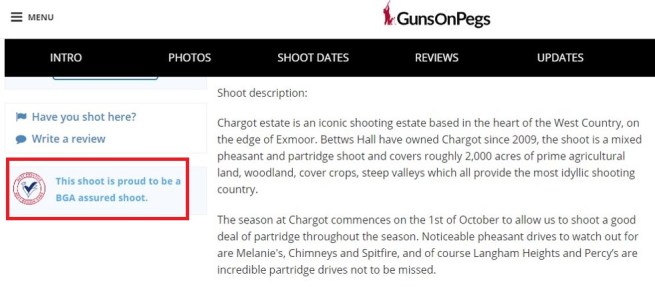
The Chargot Estate, often referred to as ‘iconic’ and ‘prestigious’, is listed on the Guns on Pegs website (a ‘shoot-finding’ service) as being ‘proud to be a ‘BGA assured shoot’:

The BGA is the recently-established British Game Alliance, a desperate attempt by the game shooting industry to be seen to be self-regulating and demonstrating best practice. We’ve blogged about it recently as it hasn’t got off to the best start (see here and here).

We checked to see whether Chargot was actually listed as a BGA member, and yes, it is:

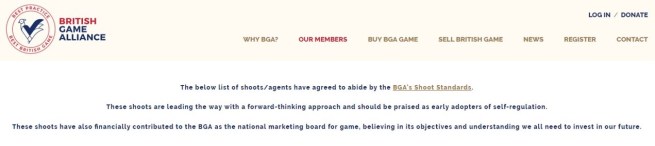
And here’s what the BGA says about its criteria for accepting shoots as a BGA member:

So according to the BGA, all its members have agreed to abide by the BGA’s Shoot Standards and ‘are leading the way with a forward-thinking approach and should be praised as early adopters of self-regulation‘.

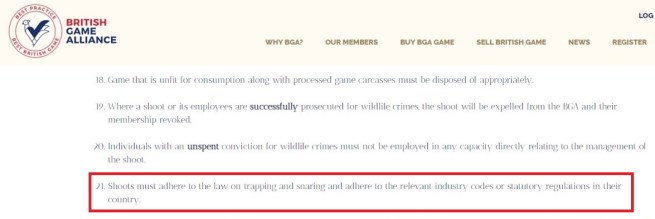
Here’s what those BGA shoot standards say about the use of traps:

So according to the BGA’s own terms and conditions, the Chargot shoot has not adhered to the law on trapping. Does that mean Chargot’s membership of the BGA will now be revoked? Probably not, because if you look at #19 of the BGA’s shoot standards, it says shoots will be expelled and their membership revoked ‘where a shoot or its employees are successfully prosecuted for wildlife crimes‘.

In this case, not only could the estate argue that the individual who received the police caution was not a ‘shoot employee’ (because they claim he was a farmworker), but also the employee was not prosecuted – the police chose to issue a caution instead.

Loopholes, eh? If there’s one to be found, you can always rely upon the game-shooting industry to exploit it.

It remains to be seen whether the British Game Alliance will take any action against the Chargot shoot or whether it’ll just turn a blind eye and allow Chargot to continue to enjoy the benefits of being listed as a member.

Along with several other questionable BGA member shoots, Chargot is feted as ‘having demonstrated high standards through best practice in all areas from animal welfare to game handling’ even though it’s been at the centre of a police investigation for wildlife crime / animal welfare offences resulting in an employee receiving a police caution.

Is this a ‘credible assurance scheme‘, as the British Game Alliance claims? Clearly not.

UPDATE 7th June 2022: Chargot Estate in Exmoor National Park under police investigation, again, for alleged illegal trapping and killing of birds (here)

Whernside Estate: more reaction to gamekeeper’s conviction for shooting owls

On Tuesday gamekeeper Tim Cowin was convicted for shooting, and then stamping on, two short-eared owls before then hiding the corpses on a grouse moor on the Whernside Estate in the Yorkshire Dales National Park (see here).

[Gamekeeper Cowin being arrested on the Whernside Estate shortly after shooting and then stamping on two short-eared owls and hiding their corpses on the moor. Photo by Guy Shorrock, RSPB]

Cowin’s conviction was widely welcomed by the public, and there was also comprehensive revulsion at his criminal and sadistic behaviour after people were able to watch the extraordinary video footage captured on scene by the RSPB’s Investigations Team.

Several organisations involved in the Raptor Persecution Priority Delivery Group (RPPDG – the PAW Raptor Group) have since published statements on their respective websites:

North Yorkshire Police Rural Task Force’s statement can be read here, and it mentions how this conviction ‘should serve as a warning’ to others committing wildlife crime in North Yorkshire.

North Yorkshire Police Crime Commissioner Julia Muligan, who had the foresight to establish the Rural Task Force in response to N Yorkshire’s reputation as a wildlife crime hotspot, has also issued a statement, here. Julia’s statement focuses on the value of the police working in partnership with the RSPB to catch the raptor killers.

The Northern England Raptor Forum (NERF) has also published a long statement (here), also praising the efforts of the RSPB and North Yorkshire Police (and the CPS) and takes a justified side swipe at fellow RPPDG member, the Moorland Association, for its failure to do likewise.

And what about the other members of the RPPDG ‘partnership’? Three days on, what statements have been issued by the game-shooting industry’s RPPDG representatives about this successful conviction and the outstanding efforts of the RSPB, North Yorkshire Police and the CPS to expose yet another criminal gamekeeper? (Don’t forget, part of the RPPDG’s role is to provide publicity about illegal raptor persecution to ‘build trust and transparency’).

Moorland Association – we blogged about the Moorland Association’s statement on Wednesday (here) which was fully supportive of the Whernside Estate (allowing it to retain its membership of the MA) and didn’t mention the RSPB, Police or CPS at all.

National Gamekeepers Organisation – no statement

British Association for Shooting & Conservation – no statement

Country Land & Business Association – no statement

Countryside Alliance – no statement

Game and Wildlife Conservation Trust – no statement (GWCT isn’t a member of the RPPDG but we include them here because they have a prominent role in the game-shooting world).

This deafening silence comes as no surprise. We’ve seen it time and time again from these so-called ‘partners’ – we either get silence, or a demented attack on the RSPB.

For example, not one of them issued a statement after a gamekeeper was filmed with a poisons cache on the East ArkengarthDale Estate (here), nor after men dressed as gamekeepers were filmed shooting at nesting marsh harriers and then removing their eggs on Denton Moor (here).

We did get statements from the Moorland Association, BASC and the Countryside Alliance after the collapse of a prosecution against a gamekeeper who was alleged to have been filmed trapping a peregrine on its nest ledge on the Bleasdale Estate (here). BASC’s statement was pretty good (here) but the statements from the Moorland Association and Countryside Alliance were appalling.

We blogged about the Moorland Association’s statement on the Bleasdale case (here), which focused on trying to undermine the integrity and credibility of the RSPB.

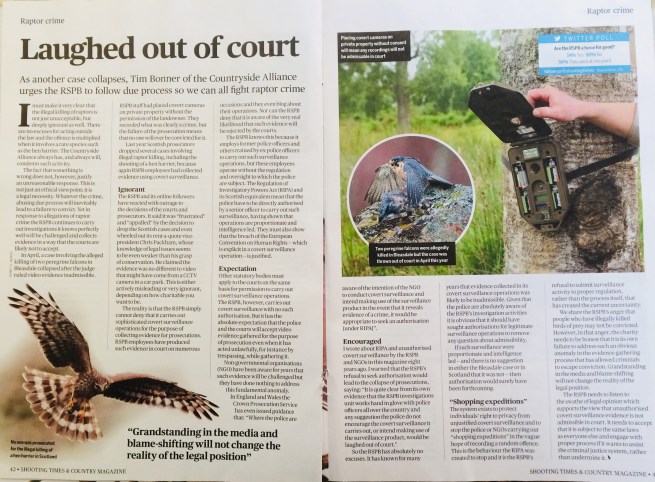
The Countryside Alliance didn’t issue a statement on its website when the RSPB eventually published its Bleasdale video nasty, but what it did do was have an article published in the Shooting Times earlier in the year, when the Bleasdale prosecution case had collapsed. The article, attributed to Countryside Alliance CEO Tim Bonner, was basically a re-hash of an article the CA had published on its website the previous year, attacking the RSPB for its use of covert filming in Scotland (and incorrectly asserting that the RSPB and police should seek authorisation under the RIPA legislation for such filming, even though RIPA authorisation will not be approved as raptor persecution is not considered ‘serious crime’ by the Sentencing Council).

The title of Bonner’s re-hashed article published by the Shooting Times (June 2018) tells its own story of the game-shooting industry’s attitude to tackling illegal raptor persecution – smug, sniggering and sneering:

These aren’t ‘partners’, genuinely interested in stopping raptor crimes on land managed for game shooting. If they were, they’d all be falling over themselves to heap praise on the actions of the RSPB and North Yorkshire Police that resulted in Cowin’s conviction. None of them have.

They’d all have promoted the RSPB’s raptor crime hotline which allows people to report suspected raptor killers in confidence (here). None of them have.

They’d all be publicly blacklisting the estates and sporting agents known to be involved with the illegal killing of raptors. None of them have.

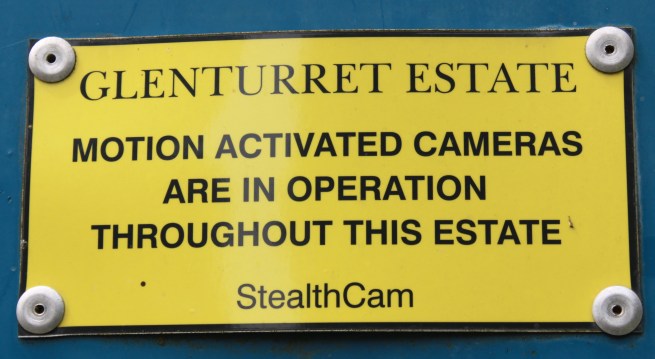
And they’d all be queuing up to ask the police and RSPB to install covert cameras to monitor the security of any Schedule 1 raptor species nesting on their land. None of them have, although they’re quite happy to install stealth cameras to film the visiting public.

[Photo by Ruth Tingay]