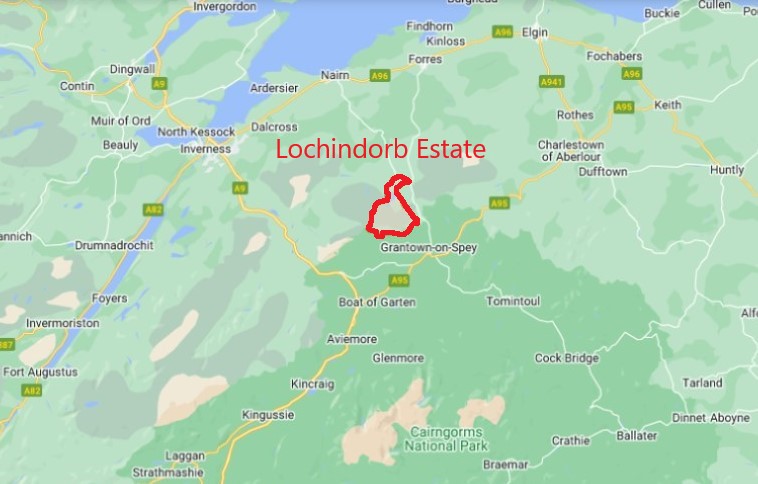
NatureScot has restricted the use of general licences on Lochindorb Estate, near Grantown-on-Spey, for three years.
An RPUK map showing the general boundary of Lochindorb Estate – details provided by Andy Wightman’s Who Owns Scotland website
The decision was made on the basis of evidence provided by Police Scotland of wildlife crime against birds.
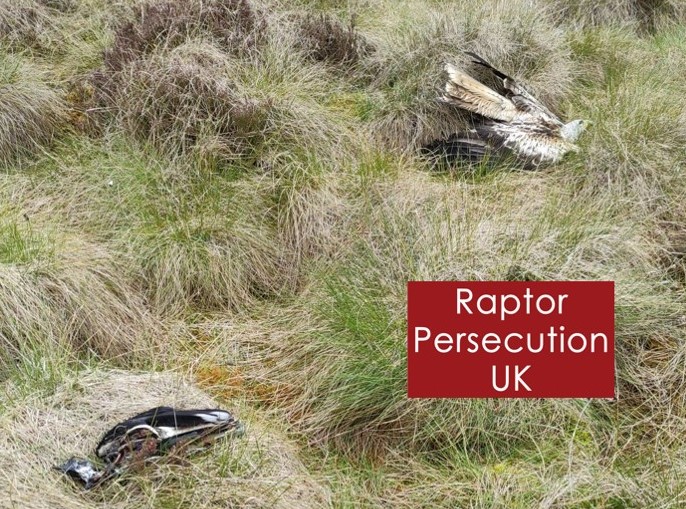
This evidence included a red kite found poisoned with an insecticide in 2021 near to a lapwing bait on land managed at the time by the estate [Ed: here], and a red kite shot on Lochindorb estate in 2023 [Ed: here].
The poisoned red kite and the lapwing used as poisoned bait. Photo by RPUK blog reader
Donald Fraser, NatureScot’s Head of Wildlife Management, said: “We have decided, in discussion with Police Scotland, to suspend the use of general licences on this property for three years until March 2027, given the persecution of red kites which has taken place on Lochindorb Estate and on neighbouring land managed by them at the time of the incident.
“NatureScot is committed to using all the tools we have available to tackle wildlife crime. This measure will help to protect wild birds in the area, while still allowing necessary land management activities to take place.
“We believe this is a proportionate response to protect wild birds in the area and prevent further wildlife crime. We will continue to work closely with Police Scotland and consider information they provide on cases which may warrant restricting general licences.
“The estate may still apply for individual licences; however, these will be subject to enhanced record-keeping and reporting requirements and will be closely monitored to ensure adherence with licence conditions.”
General licences allow landowners or land managers to carry out control of common species of wild birds, such as crows and magpies, to protect crops or livestock, without the need to apply for an individual licence.
In addition to this restriction, there are currently four other restrictions in place in Scotland: on Moy Estate in Highland, Invercauld Estate in the Cairngorms National Park, Lochan Estate in Perthshire and Millden Estate in Angus.
ENDS
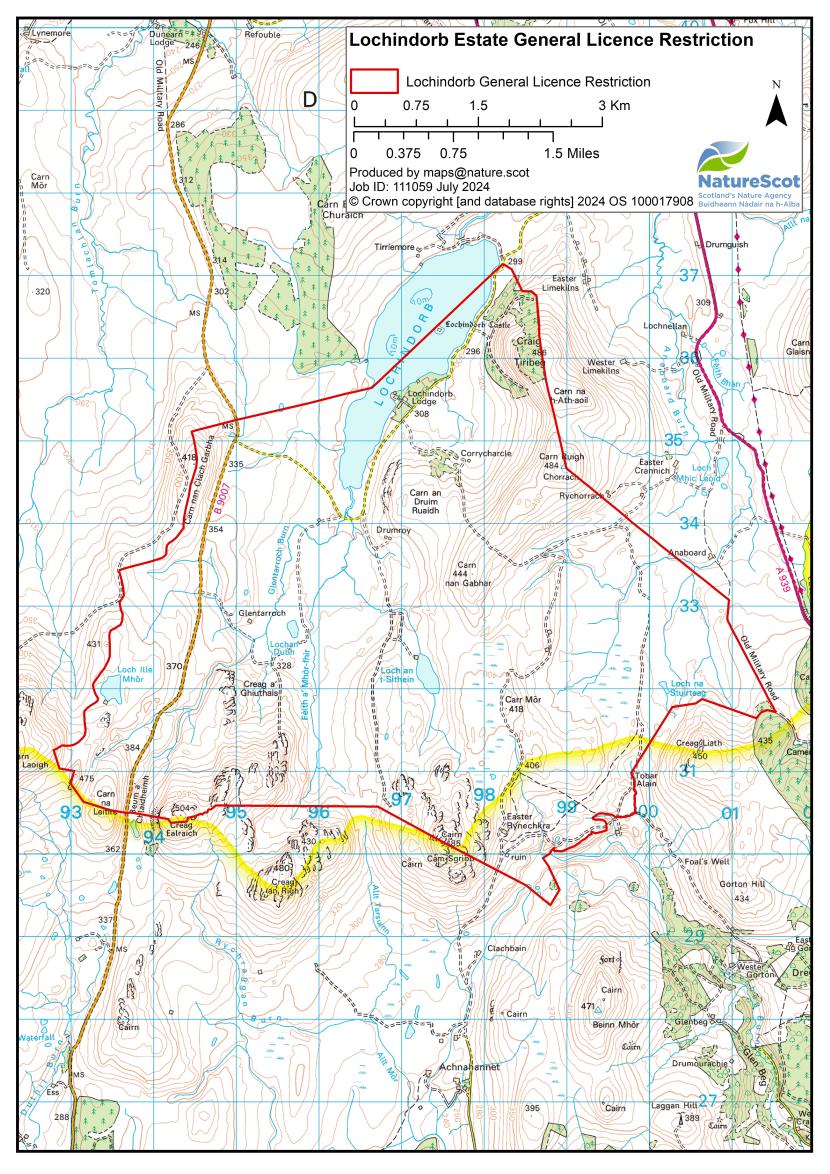
Here is a map from NatureScot showing the area of Lochindorb Estate where the General Licence restriction applies. This restriction prohibits the use of General Licences 01, 02 and 03 on that land from 16th July 2024 up to and including 15th July 2027.
I presume then, that the 56 year old gamekeeper arrested last year as part of the investigation into the shooting of the red kite on Lochindorb Estate has not been charged. If he had, this General Licence restriction would have been delayed until court proceedings had finished.
It’ll also be interesting to see whether this General Licence restriction affects Lochindorb Estate’s ability to apply for a section 16AA grouse shooting licence under the new Wildlife Management & Muirburn Act 2024.
For new readers, this Act was introduced as the Scottish Government’s response to the continued widespread illegal killing of birds of prey on grouse moors. It will work on the basis that all red grouse shooting must now be licensed in Scotland under a section 16AA licence and if, on the civil burden of proof (i.e. the balance of probability) sufficient evidence is found that the licence has been breached (including evidence of illegal raptor persecution), the licence can be withdrawn as a sanction, preventing the shooting of red grouse on a particular estate for a given period.
My guess is that Lochindorb will still be able to apply for a section 16AA grouse shooting licence, even though the estate is now under a 3-year General Licence restriction, because these offences were committed before the new legislation was enacted, so it will be deemed ‘unfair’ to apply the legislation retrospectively.
That will also mean that the other four grouse-shooting estates currently serving a general Licence restriction after evidence of raptor persecution was uncovered on their land (Moy Estate in the Monadhliaths, Invercauld Estate in the Cairngorms National Park, Lochan Estate in Strathbraan and Millden Estate in the Angus Glens) will also be able to apply for a section 16AA licence to shoot red grouse this year.
A couple of weeks ago I blogged about the new National Hen Harrier Taskforce – a police-led initiative to tackle the ongoing persecution of hen harriers on driven grouse moors (see here).
This hen harrier was euthanised after suffering catastrophic injuries in an illegal trap set next to its nest on a grouse moor in 2019. Photo by Ruth Tingay
The Taskforce’s proposed strategy for tackling hen harrier persecution on grouse moors is based on a new framework designed to tackle all types of Serious Organised Crime that was launched by the Home Office last year (see here). It’s based on a three-step plan of ‘Clear, Hold, Build‘.
Step one (‘Clear‘) involves police officers relentlessly pursuing organised crime members within a community (or in this case, an industry), using all available powers to ‘clear’ the offenders from specific locations.
Step two (‘Hold‘) sees officers undertake continued high visibility activity to ensure other serious organised criminals can’t move in and operate in the vacuum created by step one.
Step three (‘Build‘) relates to building local community resilience and trust, through partnership-working, to ensure that Serious Organised Crime doesn’t reoccur at that location.
When I wrote about the Taskforce a few weeks ago (here) I mentioned a similar police initiative, called Operation Artemis, that was launched to tackle hen harrier persecution on grouse moors in 2004, some twenty years ago. That initiative crashed and burned within three years because grouse moor owners refused to cooperate with the police. The new Taskforce has a more sophisticated theoretical approach and stronger enforcement support, but the basic premise is the same: establish a partnership between landowners and the police to target the hen harrier killers.
However, as we’ve come to learn, partnership-working is only successful if all partners have the same objective and there are no conflicts of interest.
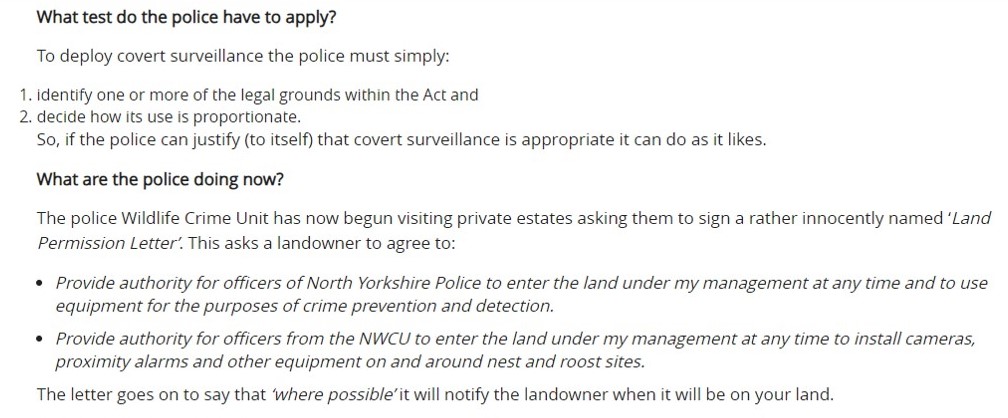
In an extraordinary blog posted on the Moorland Association’s website on 8 July 2024, (the Moorland Association is the lobby group representing grouse moor owners in England), it is suggested that the police are ‘bypassing regulation’ by asking grouse moor owners to sign a letter giving permission for the police to enter land at any time and use equipment for the prevention and detection of crime. This includes the installation of cameras, proximity alarms and other equipment on and around hen harrier nest and roost sites.
The Moorland Association is advising its members not to sign any letters authorising police access without first taking legal advice because, it suggests, this is an attempt to ‘bypass regulation on surveillance’.
I don’t see any issue with the Moorland Association advising its members to seek legal advice – that’s standard due diligence – but to state that the police are ‘bypassing regulation on surveillance‘ seems to me to be incendiary.
Here is a copy of the Moorland Association’s blog, screen grabbed here because it has already been altered from its original version (more on that below).
I’m not sure who wrote the Moorland Association’s blog because there’s no name attached to it but my money would be on the author being the Moorland Association’s CEO, Andrew Gilruth. Why do I think that? Well Mr Gilruth built an impressive reputation for presenting distorted information when he worked as Director for Communications for the GWCT (e.g. see here, here and especially here) and the Moorland Association’s blog has all the familiar hallmarks.
For example, the opening paragraph of the Moorland Association’s blog goes like this:
‘Most will remember the irony of RSPB staff falling foul of the courts in order to try and catch others breaking the law – and then expressing outrage when their evidence was thrown out of court here. In short, judges felt the police could not use others to circumvent the law on covert surveillance‘.
I’m not sure of the relevance of including this statement about the RSPB’s video evidence in the context of the Moorland Association’s blog about police surveillance, other than to (a) try yet again to undermine the credibility of the RSPB and (b) contrive an image that the police have previously ‘used others’ to ‘circumvent the law on covert surveillance‘.
It is accurate for the Moorland Association to point to the court case in 2015 where the judge ruled the RSPB’s video evidence as inadmissible. As regular blog readers will know, there have been a number of court cases where the RSPB’s evidence has been ruled inadmissible (e.g. here and here) but what the Moorland Association’s blog conveniently fails to point out is that there have also been a number of cases where the RSPB’s video evidence has been accepted by the courts and has, in fact, been crucial to the conviction of criminal gamekeepers, including these recent cases in 2022 here, again in 2022 here, and in 2023 here.
Far from the police ‘using others to circumvent the law‘, the police have worked legitimately and lawfully in partnership with the RSPB many times to convict criminal gamekeepers, both with and without the use of covert surveillance.
This successful partnership really agitates many in the game-shooting industry and I’d argue that’s the reason the Moorland Association’s blog opens with that paragraph – to infer that the police have a track record of ‘circumventing the law on covert surveillance‘ and to place this thought firmly in their members’ minds before moving on to discuss why the Moorland Association believes the police’s latest tactics on the Hen Harrier Taskforce are of ‘concern‘.
The rest of the blog appears to be a distortion of what the police are asking landowners to do. It’s surely obvious that the police aren’t asking landowners for permission to undertake covert surveillance – it would hardly be ‘covert’ if they’re telling the landowner that’s what they intend to do!
Rather, what it seems the police are actually asking for is permission to visit the moor at any time (Step one of the three-step strategy) and to install equipment (including proximity alarms and cameras) ‘on and around nest and roost sites‘, to catch the criminals that are killing hen harriers. You know, the criminals that the landowners and their gamekeepers claim to have no knowledge of, but who are repeatedly turning up on their estates, armed, to commit serious crime.
This isn’t covert surveillance in the sense of spying on people who live and work on that estate – hen harriers don’t tend to nest close to people’s houses and, as hen harriers are a Schedule 1 protected species, nobody should be anywhere near their nest sites without a disturbance licence anyway, so the likelihood of a landowner or their employees being ‘covertly surveyed’ by a nest camera is pretty implausible, assuming they’re not involved in the crimes being committed at those sites.
I note that the Moorland Association blog appears to have been edited since it first appeared on 8th July – it now includes a ‘note’ (under the sub-header ‘Should I sign oneofthese letters?‘) to clarify the police’s position that what they are asking for does not amount to covert surveillance. That’s an interesting edit. I wonder if it’s been added on legal advice to try and soften the Moorland Association’s accusations against the police? I imagine the police’s reaction to the Moorland Association’s original blog would not be favourable, given that it’s not conducive to partnership working and also seems to be verging on defamation.
The wider context of this Moorland Association blog is of most interest to me. Here is an organisation that repeatedly claims to have a ‘zero tolerance’ policy against raptor persecution, and yet here it is giving a pretty good impression of an organisation intent on sabotaging the police’s attempts to tackle raptor persecution (as well as other Serious Organised Crime) on grouse moors.
If I was a landowner, and armed criminals were repeatedly coming on to my estate to kill protected wildlife, I’d be on the phone to the police without hesitation, asking them to respond. Not just for the sake of the wildlife but for the safety of my family, my employees, my neighbours and the visiting public. I’d be asking for an armed response unit and would give them permission to do whatever they thought necessary, for however long it took to catch the gunmen. Wouldn’t this be the response of any reasonable, law-abiding citizen who had nothing to hide?
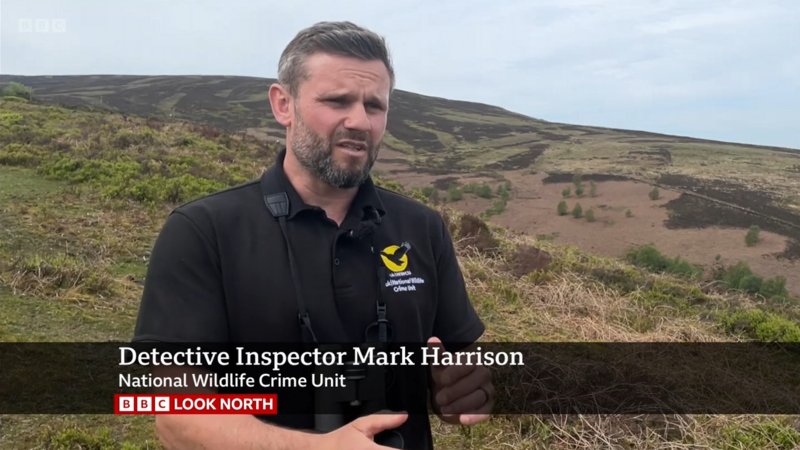
It’ll be fascinating to see what the police’s response is to the Moorland Association’s blog, assuming they’ve seen it. From the presentations I’ve heard from DI Mark Harrison, the officer from the National Wildlife Crime Unit (NWCU) leading the National Hen Harrier Taskforce, he’s playing strictly by the rules, being transparent, and initially taking a softly, softly approach with landowners, refusing to embarrass estates by naming them publicly as hen harrier persecution hotspots because he wants to work in partnership with them.
Hen Harrier Taskforce approach, presented by DI Harrison at a recent seminar. Photo: Ruth Tingay
I’ve been cynical of his ‘partnership’ approach and have suggested that all he’s doing is shielding the criminals. However, DI Harrison has been very clear that his tactics are part of a longer-term strategy and that if landowners refuse to cooperate, it makes it easier for him to take the next step and upgrade the tactics to something far more serious.
The Taskforce isn’t just looking at wildlife crime. It is also intent on tackling offences such as theft (of satellite tags), criminal damage (of satellite tags), fraud offences, criminal use of firearms, and potential conspiracy offences relating to encouraging or assisting crime. Some of these are very serious offences, triable either way (i.e. can be heard in a higher court that has greater sentencing powers than a magistrates court) and thus there are more serious consequences for anyone convicted of these offences than being convicted for a wildlife crime offence.
The tactics that he’ll be empowered to use are far more intrusive than anything these grouse moor estates will have faced before, he won’t need their permission to deploy them and they won’t know what’s happening until it’s too late.
Let’s see if the Moorland Association’s inflammatory blog will trigger a response from DI Harrison and the NWCU, resulting in the Taskforce ramping up its tactics on any grouse shooting estates where a landowner refuses to sign up.
UPDATE 23 July 2024: Moorland Association booted off the Raptor Persecution Priority Delivery Group (RPPDG) here
UPDATE 22 November 2024: Revealed: letter of expulsion to Andrew Gilruth (CEO, Moorland Association) from Head of National Wildlife Crime Unit (here)
The Scotsman has published my opinion piece today about the potential impact of the new licensing scheme for grouse shooting in Scotland.
You can read it on The Scotsman website (here) and it’s reproduced below:
I call them ‘The Untouchables’. Those within the grouse-shooting industry who have been getting away with illegally killing golden eagles, and other raptor species such as hen harriers, buzzards and red kites, for decades.
They don’t fear prosecution because there are few people around those remote, privately owned glens to witness the ruthless and systematic poisoning, trapping and shooting of these iconic birds. If the police do come looking, more often than not they’re met with an Omertá-esque wall of silence from those who, with an archaic Victorian mindset, still perceive birds of prey to be a threat to their lucrative red grouse shooting interests.
For a successful prosecution, Police Scotland and the Crown Office must be able to demonstrate “beyond reasonable doubt” that a named individual committed the crime. As an example of how difficult this is, in 2010 a jar full of golden eagle leg rings was found on a mantelpiece during a police raid of a gamekeeper’s house in the Highlands. Each of those unique leg ring numbers could be traced back to an individual eagle.
The gamekeeper couldn’t account for how he came to be in possession of those rings, but the police couldn’t prove that he had killed those eagles and cut off their legs to remove the rings as trophies.
Despite the remains of two red kites, six illegal traps, an illegally trapped hen harrier and poisoned bait also being found on the estate, the gamekeeper was fined a mere £1,500 for being in possession of one dead red kite, that was found mutilated in the back of his estate vehicle.
In another case in 2010, three golden eagles were found poisoned on a grouse-shooting estate in the Highlands over just a few weeks. Even though the police found an enormous cache of the lethal poison – carbofuran – locked in a shed to which the head gamekeeper held a key, they couldn’t demonstrate that he was the person who had laid the poisoned baits that had killed the eagles. This meant he was fined £3,300 for the possession of the banned poison, but wasn’t prosecuted for killing the eagles.
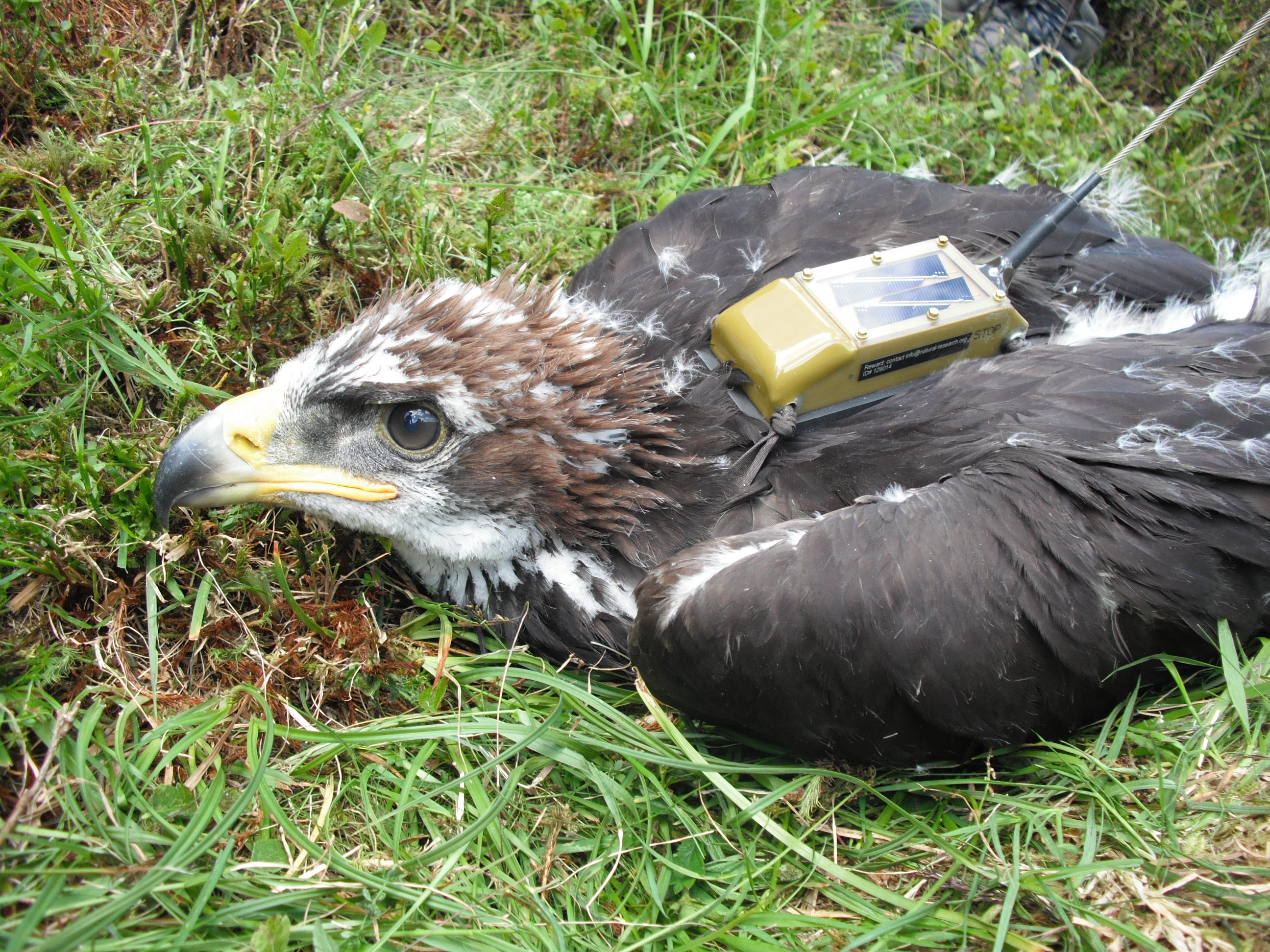
In recent years, researchers have been fitting small satellite tags to young golden eagles which allows us to track their movements across Scotland, minute by minute. Analysis has shown that between 2004 and 2016, almost one third of tagged eagles (41 of 131 birds) ‘disappeared’ in suspicious circumstances, mostly on or next to grouse moors.
Satellite-tagged golden eagle prior to fledging. This eagle was tagged in 2014, ‘disappeared’ on a Strathbraan grouse moor in 2016 and it’s satellite tag was found wrapped in heavy lead sheeting in the River Braan in 2020. Photo by Duncan Orr-Ewing
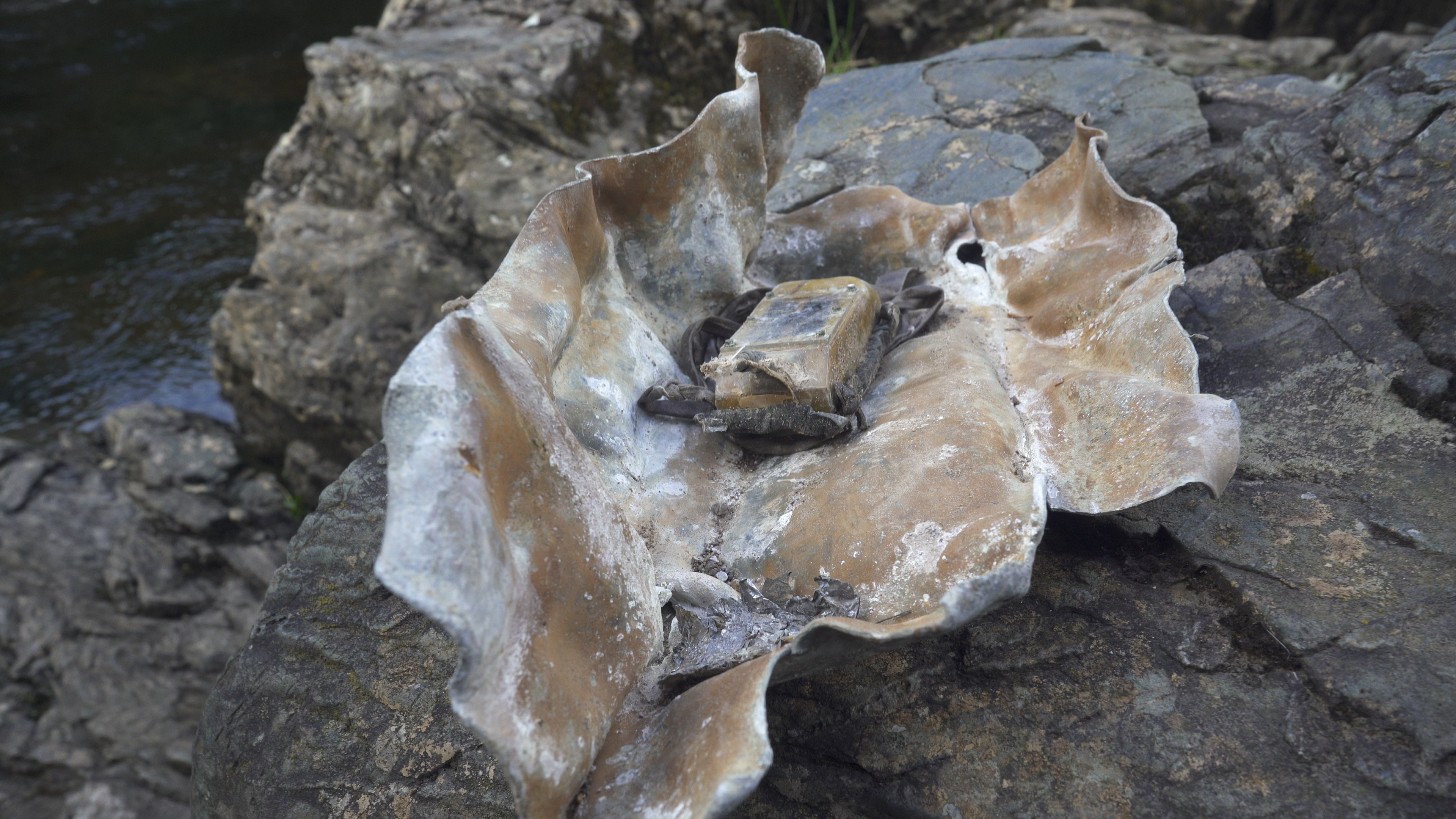
The lengths the criminals will go to avoid detection were exposed in 2020 when a walker found a satellite tag that had been cut off an eagle, wrapped in heavy lead sheeting – presumably to block the signal – and dumped in the River Braan. The tag’s unique identification number told us it belonged to a young eagle tagged in the Trossachs in 2014. This eagle had disappeared without trace from a Perthshire grouse moor in 2016, in an area where eight other tagged eagles had vanished in similar suspicious circumstances. Nobody has been prosecuted.
The remains of the satellite tag that had been cut off the eagle, wrapped in lead sheeting and dumped in a river. Photo by Ian Thomson, RSPB Scotland
The most recent disappearance of a tagged eagle happened just before Christmas 2023, close to the boundary of a grouse moor in the Moorfoot Hills. ‘Merrick’ was translocated to the area in 2022 as part of the South of Scotland Golden Eagle Project. Her tag data told us she was asleep in a tree immediately before she disappeared. Police found her blood and a few feathers at the scene and concluded she’d been shot. Who shoots a sleeping eagle? Again, no one has been prosecuted.
This situation has persisted for decades because although golden eagles have been afforded legal protection for the last 70 years, to date there hasn’t been a single successful prosecution for killing one. The chances of getting caught and prosecuted have been so low that the risk of committing the crime has been worth taking, over and over again. Until now.
Earlier this year, the Scottish Parliament passed new legislation, the Wildlife Management and Muirburn (Scotland) Act 2024, which introduces a licensing scheme for grouse shooting. For the first time in 170 years, red grouse shooting can now only take place on estates that have been granted a licence to shoot.
How will this stop the slaughtering of golden eagles and other birds of prey on Scotland’s grouse moors? Well, the licence can be revoked for up to five years if there is evidence of wildlife crime on the estate. Significantly, this will be based on the civil burden of proof which has a lower evidential threshold than the criminal burden of proof.
This means that instead of the police having to prove ‘beyond reasonable doubt’ that a named individual was responsible, they now have to prove that it’s based only on the ‘balance of probability’. This is a real game-changer because instead of being perpetually ‘untouchable’, now there are real, tangible consequences for the grouse shooting industry if these crimes continue. Estates will no longer be able to rely on the implausible protestation that ‘a big boy did it and ran away’.
As with any legislation, it will only be effective if it is strongly enforced. The jury’s out on that and we’ll be keeping a close eye on performance, but as the licensing scheme is based on a policy of mistrust, the Scottish Government has sent an unequivocal message to the grouse shooting industry. We all know what’s been going on and the public will no longer tolerate it.
Blog readers may recall a press release in April 2024 from North Yorkshire Police detailing the execution of a search warrant on an unnamed grouse moor in the Yorkshire Dales National Park, in relation to the illegal persecution of hen harriers (see here).
This hen harrier was euthanised after suffering catastrophic injuries in an illegal trap set next to its nest on a grouse moor in Scotland in 2019. Photo by Ruth Tingay
The very first line of that press release said this:
“On Wednesday, (17 April 2024), a National Harrier Task Force operation was held at an undisclosed location in the Yorkshire Dales“.
That was the first time I’d heard of the ‘National Harrier Task Force’ but I’ve since learned much more about it.
I’ll begin this blog with the reproduction of a press article about the new Taskforce that appeared on a relatively obscure website (CandoFM) in May 2024, then I’ll provide some of my own commentary on this new initiative.
Here’s the press article:
Hen Harrier Task Force Launched To Tackle Illegal Persecution
A new task force has been launched to tackle the illegal persecution of hen harriers, one of the rarest bird of prey species in the UK.
The National Wildlife Crime Unit (NWCU) will use innovative technology and strategic partnerships to detect, deter and disrupt offenders.
Given the rarity of hen harriers, significant resource is invested in their conservation. Satellite tags are fitted to the birds to research their ecology, but these tags have also revealed a concerning amount of illegal killing.
Criminals are intent on targeting this vulnerable species and operate with impunity. There have been no successful prosecutions in recent years despite the efforts of the police and partners.
In response, the launch of the Hen Harrier Task Force, led by Detective Inspector Mark Harrison of the NWCU, represents a pivotal shift in combating wildlife crime.
“The persecution of birds of prey is not just a wildlife issue; it’s serious crime blighting our countryside,” said DI Harrison. “With the launch of the Hen Harrier Task Force, we are determined to disrupt illegal activity and protect this vulnerable species.”
Central to the bird of prey task force’s approach is standardising reporting practices and improving the police response to incidents. Police and partners will work together to ensure resources are deployed swiftly and investigative opportunities are maximised. The task force will also bring together partners to engage with local communities and raise the profile of hen harrier persecution in a unified effort against wildlife crime.
“We cannot tackle this problem alone,” emphasised DI Harrison. “Through proactive partnerships and community engagement, we can strengthen our response and hold perpetrators to account.”
The task force will tackle crimes involving satellite tagged birds of prey. It is data-led, relying on analysis of police data and hotspot mapping. The NWCU has identified crime hot spots where they can focus enforcement efforts, as well as other areas of historic vulnerabilities where they will be seeking to revisit and raise their presence with landowners and land users. These meetings are an opportunity to highlight the issues/risks and identify ways to prevent further incidents from occurring.
Rather than purely focusing on the wildlife aspect of the crime, DI Harrison has tasked his team with taking a holistic view of the criminality and considering all types of offences. Criminals will often steal and destroy the satellite tags to conceal their offending. This could constitute criminal damage, theft and fraud. In the last few years alone, £100,000 worth of satellite tags have been lost in circumstances suspected to be criminal. The apparent use of firearms adds a further level of seriousness to these cases.
Recent examples of this include Anu, a hen harrier in South Yorkshire, which had its satellite tag deliberately cut off by someone possibly using scissors or a knife. Asta, a hen harrier in North Yorkshire, is another example. Although the dead bird was not found, its tag was recovered from a dead crow. The NWCU suspect that fitting the tag to a crow was an attempt to make it look like the hen harrier was still alive and hide the fact that it had been illegally killed. Unfortunately, the crow also died from unknown causes.
The task force’s multifaceted approach includes:
Improved incident response: Standardised reporting processes enable rapid response to suspicious incidents, ensuring investigative opportunities are maximised.
Innovative technology: From tracking drones to specialised detection dogs, the task force uses innovative tools to overcome logistical challenges and enhance evidence collection in remote areas.
Strategic partnerships: The taskforce brings together law enforcement, government agencies, non-governmental organisations, landowners and communities to tackle crime in hotspot areas.
Community awareness Initiatives: Building on successful models like Operation Owl, the task force seeks to boost public support and encourage vigilance against wildlife crime.
As the task force gains momentum, the team will be dedicated to protecting the UK’s hen harriers. Through collaboration and innovation, it is set to make a lasting impact in the fight against wildlife crime.
About the Hen Harrier Task Force
The Hen Harrier Task Force is an initiative led by the UK National Wildlife Crime Unit and supported by seven police forces (Cumbria, Derbyshire, Durham, Northumbria, North Yorkshire, South Yorkshire and West Yorkshire), DEFRA, the RSPB, National Gamekeepers’ Organisation, British Association for Shooting and Conservation (BASC), The Wildlife Trusts, GWCT, national parks, Country Land and Business Association (CLA), Natural England and The Moorland Association to combat the persecution of hen harriers in the UK. The taskforce aims to detect, deter, and disrupt offenders involved in wildlife crime by using technology and improving partnership working.
ENDS
My initial reaction to this new Taskforce was one of deep cynicism. Given some of the organisations involved, it just looks like yet another pseudo-‘partnership’ that will achieve nothing other than providing a convenient vehicle for DEFRA and its raptor-killing mates within the grouse shooting industry to be able to pretend that they have a zero tolerance approach to the illegal killing of hen harriers because they are all ‘cooperating’ on this Taskforce.
It’s a ploy that’s been utilised many times before and has simply facilitated the continued illegal killing of hen harriers (and other raptor species) without anyone being held to account. The RPPDG (Raptor Persecution Priority Delivery Group) is a prime example – established thirteen years ago in 2011 and has served no useful purpose in terms of tackling raptor persecution, but has provided numerous Government Ministers with an opportunity to appear to be dealing with it. Utter greenwashing.
Those of you with long memories will remember Operation Artemis, another police-led initiative launched twenty years ago in 2004 designed to work in ‘partnership’ with grouse moor owners to tackle the illegal killing of hen harriers. Here’s some info about it from the RSPB’s 2004 Birdcrime Report:
As described by the RSPB, Op Artemis was not well-received by the shooting industry, even resulting in an article published in The Times where the then Chief Executive of the Countryside Alliance, Simon Hart (who later became Chief Whip for the Conservatives) said the police operation was “part of a wider witch-hunt against gamekeepers“.
Operation Artemis stumbled along until 2007 when it was closed down after achieving nothing at all. Here are two more write-ups about it from the RSPB’s Birdcrime Reports in 2006 and 2007 respectively:
Given the complete failure of Operation Artemis to effectively tackle the illegal killing of hen harriers on driven grouse moors, how will this latest initiative, the National Hen Harrier Taskforce, rolled out some 20 years later, be any different?
Well, there are some positive differences.
This time around, the police have the benefit of access to hen harrier satellite-tracking data (provided by Natural England and the RSPB) which has allowed the National Wildlife Crime Unit (NWCU) to identify clear persecution hotspots, i.e. the estates where a disproportionate number of hen harriers are killed / ‘go missing’ in comparison to the rest of the species’ range.
These wildlife crime hotspots have been known for years but this time the NWCU has done its own analysis on the tag data and, even though it has drawn the same conclusions as the RSPB previously, because the hotspots have been identified by the Police it cuts off any opportunity for estate owners to claim that the data are ‘biased’ or ‘fabricated’ simply because the data belonged to the RSPB. In other words, the estate owners/managers can’t so easily dismiss the data as not being credible.
Another major difference this time around is that the police officer leading the Taskforce, Detective Inspector Mark Harrison, is taking a much more strategic approach. He’s not only looking at the offence of killing a hen harrier – he’s looking at the wider, associated offences such as theft (of very expensive satellite tags) and firearms offences. In combination, these crimes amount to a considerable and serious level of offending and can open the door to the police receiving permission to undertake covert tactics, including surveillance and communications monitoring.
To reach that stage, certain steps have be taken first as part of a longer-term strategy. These include police visits to the known hotspot estates (and I understand that there have now been several of these visits in addition to the one in the Yorkshire Dales National Park that was reported in April). If, after these visits, hen harrier persecution continues to be suspected at those hotspots, the police will then be in a position to demonstrate to senior officers that the ‘nicely nicely’ approach has been tried but hasn’t worked and so permission to begin more covert tactics is more likely to be granted.
Permission should be granted just on the basis of suspected firearms offences taking place. If the estate owners / managers / gamekeepers are denying any knowledge of the offences (which is what they’ve been doing for 30+ years) then the police can legitimately conclude that ‘someone’ [apparently unidentified] is running around an estate committing firearms offences and is clearly a threat to the public. As the fundamental role of the police is a duty to protect the public then I can’t see how permission to deploy more covert tactics can legitimately be withheld under these circumstances.
Of course none of these ideas are anything new – we’ve all been saying for years that if estate owners / managers / gamekeepers claim not to know who’s committing firearms offences on their land then there’s a serious concern that armed individuals are running amok and those estate owners / managers / gamekeepers should be fully supportive of the police doing everything they can to find them, just as any of us would if armed criminals were operating on our property.
However, the difference this time is that here we have a senior police officer, with a background specialism in covert surveillance (and thus a deep understanding of what hoops need to be jumped through to get permission for covert ops), prepared to push the envelope and take a more radical approach and actually implement this strategy instead of just talking about it, and I applaud him for that. Whether he’ll be allowed to stay in post for long enough to carry through with this strategy remains to be seen.
Another new initiative with this Hen Harrier Taskforce is a ‘mutual aid agreement’ between a number of police forces. One of the big issues in tackling wildlife crime, and particularly raptor persecution, has always been the availability of a wildlife crime officer to attend the scene promptly to secure evidence. We all know that the police are stretched, budgets are stretched, and it’s not always possible to get an officer on scene quickly – sometimes delays run into days and weeks, which is ridiculous. The mutual aid agreement means that a number of regional police forces have committed to making officers available at short notice for cross-border searches if the local officers can’t attend in time. If that works in practice, it should be good.
Once on scene, the Taskforce is also utilising a wide array of new techniques and equipment to aid any searches. These include the use of drones working within the range of satellite tag signals and the use of specialised detection dogs trained to search for bird corpses, amongst other things.
This all sounds very promising, on paper. Although to be fair, the Taskforce has already started the strategic plan by paying visits to those known persecution hotspots and has given fair warning to the estates about what they can expect if the persecution continues.
The only issue I have with that approach at the moment is that those crime hotspot estates have not been publicly named. The police say this is because they’re trying to build relationships of trust. I say they’re shielding the criminals. I have been told that the decision not to name hotspot estates is ‘not set in stone’ and may be revisited.
Let’s see.
I wish the Taskforce well and, given the current rate of ongoing hen harrier persecution on grouse moors, I’ll expect to see results in the not-too distant future.
UPDATE 17 July 2024: Is the Moorland Association already trying to sabotage the police’s new National Hen Harrier Taskforce? (here)
Two mainstream BBC TV programmes, Landward and Countryfile, last week included features on raptor conservation projects in south Scotland – both worth watching on BBC iPlayer if you missed them.
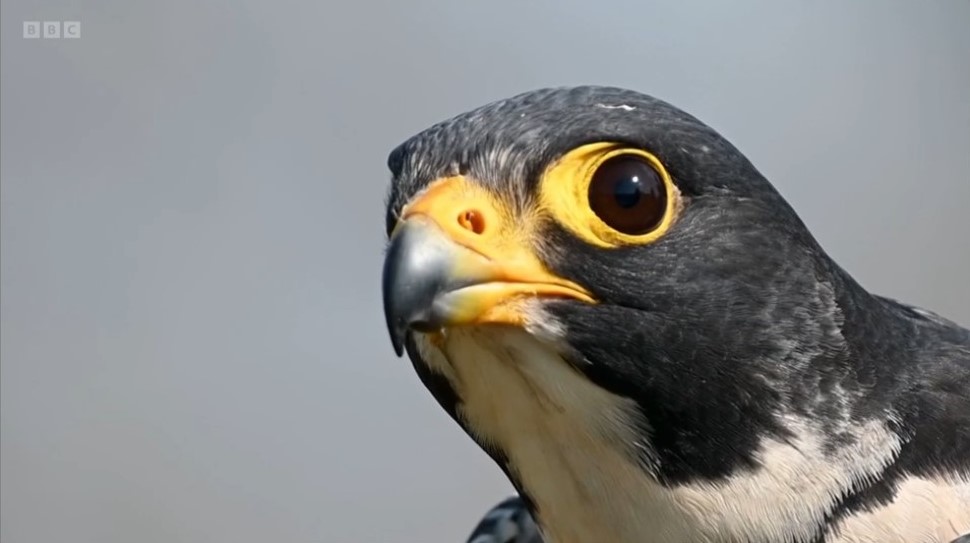
Landward featured the brilliant George Smith, a volunteer from the Scottish Raptor Study Group, who has been monitoring peregrines across south Scotland for almost 40 years. He’s filmed visiting peregrine nest sites to ring chicks (under licence) and to collect DNA samples (also under licence).
It was a direct result of George’s dedicated and meticulous research that led to the recent conviction of part-time gamekeeper Timothy Hall and his son, Lewis Hall, for the illegal laundering of wild peregrines that were stolen from nests in south Scotland and then sold on to falconers in the Middle East, allegedly for enormous profit according to the Crown.
Worryingly, some more peregrine nests that George is monitoring this year have failed in suspicious circumstances and Police Scotland are currently investigating.
This episode of Landward is available on BBC iPlayer here (peregrine segment starts at 7 min 48 sec) and is available for the next 11 months.
Countryfile had two features of interest to readers of this blog. First was an overview of the conservation restoration work going on at the Tarras Valley Nature Reserve, the former Langholm grouse moor that was bought out from Buccleuch Estates by the Langholm community in 2022. Tarras Valley NR Estate Manager Jenny Barlow provides a commentary on the significance of the reserve and describes some of the projects underway.
Then Dr Cat Barlow from the South Scotland Golden Eagle Project took a presenter out into the hills in search of one of the satellite-tagged golden eagles that had previously been translocated to south Scotland to boost the formerly tiny remnant population. Cat discusses the project’s successes as well as the ongoing threat of illegal persecution, highlighted by what Police believe was the illegal shooting and killing of golden eagle ‘Merrick‘ last October, very close to the boundary of the Raeshaw Estate in south Scotland. Unfortunately Cat didn’t discuss the suspicious disappearances of a number of the translocated sub-adult eagles from the Western Isles that are rumoured to have ‘vanished’ when they dispersed north from southern Scotland. The piece also includes some of the important educational work the project is undertaking with local school children in south Scotland in an attempt to improve the future protection of eagles in this region.
This episode of Countryfile is available on BBC iPlayer here (Tarras Valley segment starts at 39 min 10 sec and South Scotland Golden Eagle Project segment starts at 46 min 30 sec). This episode is only available for another 26 days.
Retired Edradynate Estate gamekeeper David Campbell has been refused bail as he awaits trial for allegedly murdering his former colleague, retired groundsman Brian Low.
Both the accused and victim were formerly employed on Edradynate Estate. Photo by Ruth Tingay
Mr Low, 65, was found dead with shotgun injuries to his neck and chest on Leafy Lane, Pitilie, near Aberfeldy in Perthshire where he’d been walking his dog on the morning of 17 February 2024.
Prosecutors claim Campbell killed former Edradynate Estate worker Mr Low, having ‘previouslyshown ill-will and malice towards him‘.
In addition to being charged with murder, Campbell, 75, of Crieff Road, Aberfeldy, was also accused of attempting to defeat the ends of justice between 17 February and 24 May 2024 by hiding the alleged murder weapon.
Campbell has so far made two court appearances (here and here) but has not yet entered a plea.
At his second court appearance on Tuesday 4 June 2024 where Campbell’s case was fully committed for trial, Sheriff Clair McLachlan granted Campbell bail. However, the Crown Office immediately opposed this decision and Campbell was returned to custody until the appeal against bail was heard on Friday morning:
Court listing for bail appeal, 7 June 2024
During a virtual hearing yesterday, Sheriff Gregor Murray upheld the Crown’s appeal and Campbell will now remain in custody.
A date for his next court appearance has not yet been scheduled.
As this case is live, comments are turned off until criminal proceedings conclude.
UPDATE 21 March 2025: Murder trial date set for Edradynate Estate ex-gamekeeper David Campbell, accused of shooting former colleague Brian Low in Aberfeldy (here)
Retired Edradynate Estate gamekeeper David Campbell, 75, made his second court appearance today, accused of the shotgun murder of retired groundsman Brian Low, 65, who was killed whilst walking his dog near Aberfeldy, Perthshire in February 2024.
Campbell’s first court appearance was at Dundee Sheriff Court on 27 May 2024 after being charged with murder and of attempting to defeat the ends of justice between 17 February and 24 May 2024 by hiding the alleged murder weapon.
Edradynate Estate where the accused and the victim had previously worked. Photo by Ruth Tingay
Appearing in private at Perth Sheriff Court on Tuesday 4th June 2024 for a full committal hearing, prosecutors allege that Campbell, of Crieff Road, Aberfeldy, murdered Brian Low by shooting him in the head and body on Leafy Lane, Pitilie, on 16 February 2024. Prosecutors claim he killed former Edradynate Estate worker Mr Low, having ‘previouslyshown ill-will and malice towards him‘.
Campbell made no plea during the hour-long hearing and was fully committed for trial.
Campbell’s defence solicitor David Holmes argued successfully for bail, which was granted by Sheriff Clair McLachlan. However, the Crown Office has appealed this decision and Campbell remains on remand until the appeal has been heard. Bail appeals can take up to 72 hours.
For those interested in the early court and bail procedure for those charged with serious offences in Scotland such as murder, this useful blog by Scottish advocate Andrew Crosbie and this useful blog by Douglas Thomson from the Society of Solicitors in the Supreme Courts of Scotland will be of interest.
As this case is live, comments are turned off until criminal proceedings conclude.
UPDATE 8 June 2024: Former Edradynate Estate gamekeeper & murder suspect David Campbell refused bail (here)
UPDATE 21 March 2025: Murder trial date set for Edradynate Estate ex-gamekeeper David Campbell, accused of shooting former colleague Brian Low in Aberfeldy (here)
Retired Edradynate Estate head gamekeeper David Campbell, 75, appeared at Dundee Sheriff Court yesterday accused of the shotgun murder of Brian Low, 65, a retired groundsman also from Edradynate Estate.
Edradynate Estate driveway. Photo by Ruth Tingay
Campbell is accused of murdering Brian Low by shooting him in the neck and body with a shotgun as Mr Low walked his dog on Leafy Lane, Pitilie, on 17 February 2024. According to an article in The Courier (paywalled), prosecutors claim Campbell had ‘previously shown ill-will and malice‘ towards Mr Low.
Campbell is further accused of attempting to defeat the ends of justice between 17 February and 24 May 2024 by hiding the alleged murder weapon.
Campbell made no plea during the court hearing and was remanded in custody. He is due to appear in court again within eight days (this useful blog by Scottish advocate Andrew Crosbie outlines the court procedure for those facing allegations of serious crime such as murder).
As this case is live, comments are turned off until criminal proceedings conclude.
UPDATE 4 June 2024: Retired gamekeeper David Campbell accused of shotgun murder is granted bail – Crown Office appeals Sheriff’s decision (here)
UPDATE 8 June 2024: Former Edradynate Estate gamekeeper & murder suspect David Campbell refused bail (here)
UPDATE 21 March 2025: Murder trial date set for Edradynate Estate ex-gamekeeper David Campbell, accused of shooting former colleague Brian Low in Aberfeldy (here)
The case against Ruabon Moor gamekeeper Stuart Hart has been discontinued.
Hart, 47, had faced two charges – Using a trap to kill or take a wild bird (in this case, a Goshawk) and possession of an article capable of being used to commit a summary offence (see here and here for earlier blogs).
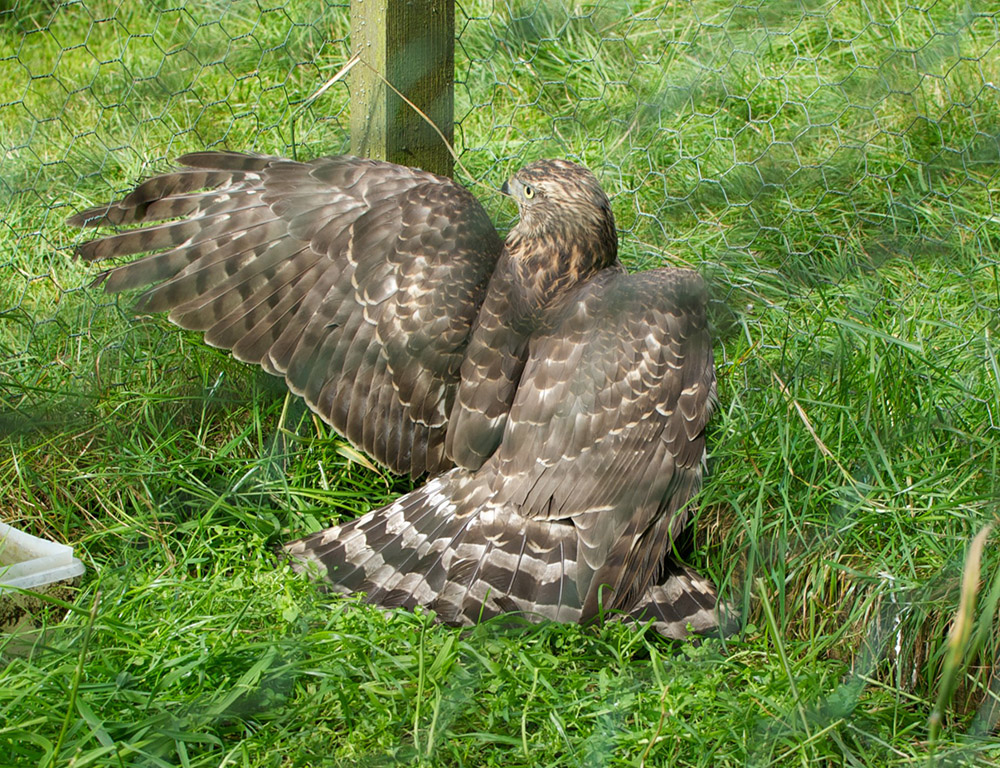
Young goshawk in a cage trap. Photo by RSPB (file photo, not linked to this case)
The first hearing in this case was held at Wrexham Magistrates on 28 March 2024. Hart had not entered a plea as his defence solicitor told the court he considered there had been procedural errors in the way the case had been brought. He also told the court that he wanted to challenge the admissibility of the RSPB’s video evidence (here).
The case was adjourned and was due to be heard again today (30 April 2024). However, according to the court, the case has now been discontinued.
Interesting. More to come on this…
UPDATE 26 November 2024: Ruabon Moor gamekeeper prosecution – why the case was discontinued (here)
The first hearing in the case against gamekeeper Stuart Hart was heard at Wrexham Magistrates, North Wales last Thursday (28 March 2024).
Hart, 47, faces two charges – Using a trap to kill or take a wild bird (in this case, a Goshawk) and possession of an article capable of being used to commit a summary offence (see here for earlier blog).
Young goshawk in a cage trap. Photo by RSPB (file photo, not linked to this case)
Hart’s defence solicitor, Michael Kenyon, told the court there were procedural errors in the way the case had been brought, and in addition he wanted to challenge the admissibility of the RSPB’s video evidence, so the case was adjourned to be heard by a District Judge. (A District Judge is legally-qualified, usually a former solicitor or barrister, whereas magistrates are non-legally-qualified volunteers who depend on a qualified legal advisor in the court to direct them on the relevant law).
Hart has not yet entered a plea.
Michael Kenyon will be a familiar name to those who follow raptor persecution prosecutions. He represented gamekeeper Timothy Cowin in 2018 who was accused of shooting dead two short-eared owls on Whernside, Cumbria after being caught on camera by RSPB Investigations staff. Kenyon challenged the procedural basis of that case (e.g. see here), resulting in an extraordinary series of hearings at five different courts across NW England (here). Eventually Cowin was convicted (here).
Hart’s case will next be heard on 30 April 2024.
NB: Comments are turned off for legal reasons until criminal proceedings have concluded.
UPDATE 30 April 2024: Case discontinued against Ruabon Moor gamekeeper Stuart Hart (here)
UPDATE 26 November 2024: Ruabon Moor gamekeeper prosecution – why the case was discontinued (here)










 Raptor Persecution UK