
Pesticide disposal scheme reveals massive stash of banned poisons

In February this year the Scottish Government launched the latest ‘pesticide disposal scheme’ – a free service allowing those who are still in possession of certain banned poisons an opportunity to get rid of them without fear of consequence.

We had mixed feelings about this scheme (see here), not least a sense of frustration that ten years after many of these poisons were banned, the criminals still in possession would have yet another opportunity to escape justice. However, this feeling was outweighed by the importance of removing these substances so they could no longer be (illegally) held / used.

Two and a half months in to the scheme, the Scottish Government has today announced that the scheme will end on 29th May 2015 – press release here.

According to this press release, so far the scheme has received requests for 99 poisons to be collected. These are as follows:

Sodium Cyanide (44)

Strychnine (30)

Aluminium Phosphide (8)

Mevinphos (5)

Carbofuran (5)

(Alpha)Chloralose (4)

Unknown (2)

Aldicarb (1)

We were particularly interested in the amount of Carbofuran that had been handed in – apparently more than 80kg from just five sites.

80kg of the gamekeepers’ ‘poison of choice’! That’s an incredibly large stash. To put it in context, the largest stash found to date was 10.5kg – recovered during a raid on Skibo Estate in 2010 after the discovery of three poisoned golden eagles. The RSPB calculated that that was enough to kill every single raptor in Scotland six times over (see here). Bear in mind that Carbofuran is so highly toxic that it only takes a couple of grains to kill; imagine how much damage 80kg of the stuff could do – imagine the equivalent of 80 bags of 1kg sugar and the hundreds of thousands of granules inside each of those bags!

It’s frightening to think how much more Carbofuran has been stockpiled on estates and farms across Scotland. If 80kg has been recovered from land users who have no intention of using it, imagine how much is being kept hidden by those who have no intention of handing it in but every intention of continuing to use it.

It’ll be interesting to see just how much more is handed in before the end of the disposal scheme, and even more interesting to see what sort of sentence the next inevitable poisoning case will bring.

The release of today’s information is interesting to us for another reason, too. On 27th March, one of our blog readers submitted an FoI to the Scottish Government to ask for the following information relating to the pesticide disposal scheme:

1. The type and number of poisons handed in since the scheme began on 23 February 2015 to date.

2. The cost of the scheme to date.

3. The first three letters of postcodes from where the poisons had been collected.

Our blog reader knew that all this information was being collated by the Scottish Government and he also knew that the scheme was on-going, so he qualified his questions by adding ‘to date’ at the end.

Here’s the reply he received last week:

Dear XXXXX

REQUEST UNDER THE ENVIRONMENTAL INFORMATION (SCOTLAND) REGULATIONS 2004 (EIRs)

Thank you for your request dated 27 March 2015 under the Environmental Information (Scotland) Regulations 2004 (EIRs).

Your request

You asked to be provided with the following information:

  1. The type and number of poisons handed in since the scheme began on 23 Feb 2015 to date.
  2. The cost of the scheme to date.
  3. The first three letters of postcodes from where the poisons have been collected.

As the information you have requested is ‘environmental information’ for the purposes of the Environmental Information (Scotland) Regulations 2004 (EIRs), we are required to deal with your request under those Regulations.  We are applying the exemption at section 39(2) of the Freedom of Information (Scotland) Act 2002 (FOISA), so that we do not also have to deal with your request under FOISA.

This exemption is subject to the ‘public interest test’.  Therefore, taking account of all the circumstances of this case, we have considered if the public interest in disclosing the information outweighs the public interest in applying the exemption.  We have found that, on balance, the public interest lies in favour of upholding the exemption, because there is no public interest in dealing with the same request under two different regimes.  This is essentially a technical point and has no material effect on the outcome of your request.

Response to your request

While our aim is to provide information whenever possible, in this instance an exception under regulation 10(4)(d) (unfinished or incomplete information) of the EIRs applies to all of the information you have requested. This exemption applies because that information is still in the course of completion.  We are unable to provide the information you have requested because the scheme has not been concluded. As the scheme has not yet closed the data you have requested is still being collated, some of this work is being undertaken by an external administrator. We intend to publish some details in respect of your points 1 and 3 in a press release ahead of the closure of the scheme; this is likely to be issued before the end of May 2015.  When the scheme is formally closed and a final report is given to the Minister for Environment, Climate Change and Land Reform, further information, including costs related to the scheme will be published.

This exception is subject to the ‘public interest test’. Therefore, taking account of all the circumstances of this case, we have considered if the public interest in disclosing the information outweighs the public interest in applying the exception. We have found that, on balance, the public interest lies in favour of upholding the exception. We recognise that there is some public interest in release as part of open, transparent and accountable government, and this will be met by our planned publication. However, this is outweighed by the public interest in ensuring that unfinished or incomplete information which is still in being worked on is not disclosed when it might misinform the public.

END

That’s a fascinating response. They refused to release ‘unfinished or incomplete information’ to an individual member of the public, and yet a week later they publish, er, ‘unfinished or incomplete information’ in an official government press release!

It’s also interesting to note that Scottish Land & Estates published a news article on their website, dated 9th April 2015, stating that more than 80 calls had been taken by the scheme (see here). The question is, how did SLE get that privileged information and did they get it from the Scottish Government?

One rule for one and one rule for another? Surely not.

Henry’s Tour: Day 19

Fri 24 April Copy

Henry went for a skydance across the lawns of Holkham Hall in north Norfolk.

This place is home to Viscount Coke, Vice Chairman of the Board of Trustees of that well-known raptor-loving organisation Songbird Survival.

In 2000, a Holkham Estate gamekeeper was prosecuted for 17 offences including the shooting of two kestrels and the poisoning of a third. He kept his job on the estate. Case write-up here.

In 2009, a dead buzzard was found at Holkham. It had been shot. The Holkham Estate put up a £500 reward for information leading to a conviction, as did the RSPB. Nobody was ever prosecuted.

Henry didn’t see any female hen harriers during his visit but he did watch a buzzard and three red kites. One kite had what some would call the ‘Malta Moult’ – a large hole blown through the feathers of one wing.

Henry thought it was time to get out of Norfolk but not before he called in for tea and cake with the legendary Richard Porter, author of the 1974 classic Flight Identification of European Raptors. More recently, Richard’s studies on the local buzzard population helped to convict Stody Estate gamekeeper Allen Lambert. Lambert had claimed that the ten poisoned buzzards found on the Stody Estate had been killed elsewhere and then ‘dumped’ on his estate in an attempt to set him up. His defence was to claim that they couldn’t possibly have been poisoned at Stody because there weren’t that many local buzzards to start with. He hadn’t banked on the evidence of one of the world’s leading raptor ID experts, who had recorded 233 buzzard sightings and had counted 73 pairs. Oops.

Thurs 23 April  Copy


Number of poisoned raptors in Scotland more than quadrupled in 2014

Persecution map 2010 to 2014 - CopyThe Scottish Government has today released the annual poisoning and persecution maps relating to crimes against raptors in 2014.

The accompanying press release is a careful study in damage limitation. We can’t blame them – it must be a constant source of embarrassment for them that raptor persecution continues with virtual impunity so of course they’re going to put out a statement that showcases the positives (there aren’t that many) and plays down the negatives (there are many).

The basic premise of their press release is that reported raptor crimes (incidents) have dropped from 23 in 2013 to 19 in 2014. Sounds like progress, eh? But wait – what if you look at the actual number of persecuted raptors – that tells a completely different story!

Let’s ignore the different types of persecution crimes (e.g. shooting, trapping, disturbance) for a minute and just start with poisoning. Here are the Government’s official number of reported poisoning incidents for the last three years:

2014: 6

2013: 6

2012: 3

So on the face of it, no change from last year and still double the number of reported incidents in 2012. But now let’s look at the number of reported individual raptors that were poisoned over those three years:

2014: 27 (17 x red kite; 7 x buzzard; 1 x peregrine; 2 x unknown because Police Scotland hasn’t released the data)

2013: 6 (1 x red kite; 4 x buzzard; 1 x golden eagle – data from Scot Gov annual report on wildlife crime)

2012: 3 (2 x buzzard; 1 x golden eagle – data from Scot Gov annual report on wildlife crime)

That’s quite an increase, isn’t it? Three reported in 2012, 6 in 2013 and a whopping 27 reported in 2014. Does that sound like raptor poisoning in Scotland is in decline? Nope, it shows that the number of poisoned raptors actually quadrupled in 2014.

However, the Government doesn’t agree that 27 raptors were poisoned in 2014. According to their data, only 16 raptors were poisoned in the Ross-shire Massacre (12 red kites + 4 buzzards). They seem to have conveniently forgotten that 22 dead birds were found, not 16. Even Environment Minister Aileen McLeod ignores the ‘missing six’ and just refers to the poisoned 16 in today’s press release! Sure, there may only be toxicology reports for 16 of those victims – we don’t know the cause of death for the remaining six victims because Police Scotland hasn’t bothered to tell us. But surely they and the Scottish Government aren’t trying to convince us that the remaining six victims (four red kites + two buzzards) weren’t poisoned at all, but that they all just happened to die of natural causes at the same time and in the same fields as the other 16 poisoned birds? Come on. Why try and diminish the extent of such an appalling crime?

And, once again, the poisoning maps exclude other crimes where bait was discovered but with no apparent raptor victim. We know of at least one of these incidents that occurred in 2014 – a poisoned rook found in January close to a poisoned rabbit bait and a poisoned hare bait (Carbofuran & Chloralose) (here). Why doesn’t this count?

Now let’s have a look at the other types of raptor persecution crimes reported in 2014. These include shooting, trapping and disturbance. According to the Government’s data released today, there were 8 reported shootings, 2 reported trapping offences, 1 reported disturbance incident and 2 listed as ‘other’.

Interestingly, they’ve excluded incidents where satellite-tagged raptors have (un)mysteriously disappeared in known persecution hotspot areas, such as the young white-tailed eagle (see here) and several others that Police Scotland has so far chosen to keep under wraps.

They’ve also excluded incidents where illegally-set traps have been found but without an apparent raptor victim. Again, the police have chosen to keep these under wraps. Why don’t those count?

So let’s now look at the Government’s ‘official’ three-year figures for all types of raptor persecution incidents in Scotland (including poisoning, shooting, trapping, disturbance, and ‘other’):

2014: 19

2013: 23

2012: 13

As we said at the beginning, on a superficial level it appears that reported raptor persecution incidents have declined since 2013, although we now know that the Government has excluded several known incidents, and we also know that these are only the reported crimes – many more will have occurred but weren’t detected. But let’s have a look at the number of known raptor victims during that three-year period:

2014: 40

2013: 23

2012: 13

That’s pretty clear then. Illegal raptor persecution continued in 2014 and the number of (known) victims rose considerably from the previous year and the year before that.

What an utter disgrace.

Scottish Government press release here

Scottish Government’s persecution maps and background data can be downloaded here:

Scottish Gov background raptor persecution data (released 31 Mar 2015)

Ross-shire Massacre: one year on

RK7It’s been one year since the corpses of 22 birds of prey (16 red kites and 6 buzzards) were found in a small area around Conon Bridge in the Highlands.
We know that 16 of these birds were illegally poisoned (12 red kites & 4 buzzards). Still no word on the other six victims.

Still no word on the type of poison used, although Police Scotland did eventually admit that it was an “illegally-held poisonous substance” (see here). Carbofuran is suspected by many of us (see here).

The details of this illegal mass poisoning have still been deliberately excluded from the quarterly SASA reports – the Government reports that are supposed to inform us about recent illegal poisoning crimes in Scotland.

Police Scotland still maintains that the birds “were most likely not targeted deliberately but instead were the victims of pest control measures” – even though they can’t possibly know this unless they have a suspect who has given a full confession.

We’re still waiting to hear whether MSP Dave Thompson’s request, back in November 2014, for a review of Police Scotland’s handling of this investigation will be undertaken (see here).

We’re still waiting for the thousands of pounds worth of funds, that many of us donated, to be released by Police Scotland so that RSPB Scotland can redistribute them to support the work of their investigations team (see here).

Twelve months on and still no arrests.

Twelve months on and still no charges.

Twelve months on and still no prosecution.

Twelve months on and still no conviction.

Twelve months on and still no justice.

Twelve months on and still no confidence in Police Scotland’s ability to solve this appalling crime.

Previous posts on the Ross-shire Massacre here.

Leadhills Estate confirmed as member of Scottish Land & Estates

The Leadhills (Hopetoun) Estate in south Lanarkshire has featured regularly on this blog (see here).

Since 2003, 46 confirmed incidents of wildlife crime have been discovered either on or near to the estate, but only resulting in two successful convictions (2004 – gamekeeper convicted of shooting a short-eared owl; 2009 – gamekeeper convicted of laying out a poisoned rabbit bait). Here’s the list:

2003 April: hen harrier shot [prosecution failed – inadmissible evidence]

2003 April: hen harrier eggs destroyed [prosecution failed – inadmissible evidence]

2004 May: buzzard shot [no prosecution]

2004 May: short-eared owl shot [gamekeeper convicted]

2004 June: buzzard poisoned (Carbofuran) [no prosecution]

2004 June: 4 x poisoned rabbit baits (Carbofuran) [no prosecution]

2004 June: crow poisoned (Carbofuran) [no prosecution]

2004 July: poisoned rabbit bait (Carbofuran) [no prosecution]

2004 July: poisoned rabbit bait (Carbofuran) [no prosecution]

2005 February: poisoned rabbit bait (Carbofuran) [no prosecution]

2005 April: poisoned buzzard (Carbofuran) [no prosecution]

2005 June: poisoned rabbit bait (Carbofuran) [no prosecution]

2005 June: poisoned rabbit bait (Carbofuran) [no prosecution]

2006 February: poisoned buzzard (Carbofuran) [no prosecution]

2006 March: poisoned buzzard (Carbofuran) [no prosecution]

2006 March: poisoned pigeon bait (Carbofuran) [no prosecution]

2006 April: dead buzzard (persecution method unknown) [no prosecution]

2006 May: poisoned rabbit bait (Carbofuran) [no prosecution]

2006 May: poisoned rabbit bait (Carbofuran) [no prosecution]

2006 May: poisoned egg baits (Carbofuran) [no prosecution]

2006 June: poisoned buzzard (Carbofuran) [no prosecution]

2006 June: poisoned raven (Carbofuran) [no prosecution]

2006 June: 6 x poisoned rabbit baits (Carbofuran) [no prosecution]

2006 June: poisoned egg bait (Carbofuran) [no prosecution]

2006 September: 5 x poisoned buzzards (Carbofuran) [no prosecution]

2006 September: poisoned rabbit bait (Carbofuran) [no prosecution]

2006 September: poisoned rabbit bait (Carbofuran) [no prosecution]

2007 March: poisoned buzzard (Carbofuran) [no prosecution]

2007 April: poisoned red kite (Carbofuran) [no prosecution]

2007 May: poisoned buzzard (Carbofuran) [no prosecution]

2008 October: poisoned buzzard (Carbofuran) [listed as ‘Nr Leadhills’] [no prosecution]

2008 October: poisoned rabbit bait (Carbofuran) [listed as ‘Nr Leadhills’] [no prosecution]

2008 November: 3 x poisoned ravens (Carbofuran) [listed as ‘Nr Leadhills’] [no prosecution]

2009 March: poisoned rabbit bait (Carbofuran) [no prosecution]

2009 March: poisoned raven (Carbofuran) [no prosecution]

2009 April: poisoned rabbit bait (Carbofuran) [gamekeeper convicted]

2009 April: poisoned magpie (Carbofuran) [no prosecution]

2009 April: poisoned raven (Carbofuran) [no prosecution]

2010 October: short-eared owl shot [no prosecution]

2011 March: illegally-set clam trap [no prosecution]

2011 December: buzzard shot [no prosecution]

2012 October: golden eagle shot (just over boundary with Buccleuch Estate) [no prosecution]

2013 May: shot otter found on estate [no prosecution]

2013 June: significant cache of pre-prepared poisoned baits found on estate [no prosecution]

2013 August: red kite found shot and critically-injured in Leadhills village [no prosecution]

2014 February: poisoned peregrine (Carbofuran) [‘Nr Leadhills’] [no prosecution]

For a long time, we’ve been trying to find out whether this estate is a member of the landowners’ organisation Scottish Land and Estates – an organisation that regularly claims to be fighting hard against raptor persecution. All our attempts to find out have been met with a wall of silence. We knew that Lord Hopetoun served on the SLE Board, so it was quite likely that his estate would be a member of SLE, but we weren’t able to find definitive evidence.

Well, we have now. Leadhills Estate has launched its own website (see here). It’s a spectacular example of how to conduct a public relations charm offensive – lots of info about how the estate is supporting the local community: providing a new home for the volunteer fire crew, lending a hand on Gala Day, engaging in a village clean-up for Christmas, and providing support for the Leadhills Miners Library. It brings a tear to the eye. There’s also plenty of encouragement for walkers to keep to the tracks so as not to disturb the wildlife – because Leadhills Estate really cares about wildlife.

Of most interest to us is a statement on the web site’s home page:

‘Leadhills Estate is a member of Scottish Land and Estates – an organisation which promotes the work of landowners and rural businesses undertake [sic] for the benefit of rural Scotland’.

Amazing. We’d love to hear how SLE justifies the membership of Leadhills Estate in their wildlife-crime-fighting organisation.

The Leadhills Estate website also includes a gallery showing images that visitors can expect to see when they visit this most welcoming of estates. Here’s another one for them – taken at one of many stink pits hidden away on Leadhills Estate (far from the tracks that visitors are encouraged to stick to). For those who don’t know, stink pits are used (legally) by gamekeepers in which to dump the rotting carcasses and entrails of dead wildlife. They set snares around the edge of the stink pit to catch (and then kill) any animals that may be attracted to the stench of death (typically foxes). This particular stink pit includes a few fox carcasses oh, and a cat. Nice, eh? Welcome to Leadhills Estate.

Leadhills dead cat stinkpit - Copy


Kitten dies from Carbofuran poisoning in Midlothian

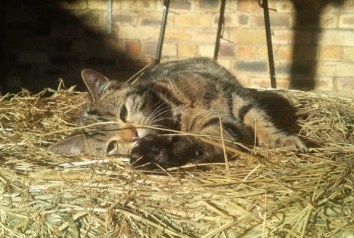
Cat poisoned Midlothian Dec 2014 Bootes - CopyAn eight-month old kitten has died after ingesting the banned poison Carbofuran.
The cat, Bootes, was found alive but fitting by the owner of Edgelaw Farm Livery near Gorebridge, Midlothian. Bootes died shortly afterwards.

Toxicology results identified Carbofuran and the SSPCA is now warning the public that this highly toxic poison is in use in the area (even though it’s been banned for 14 years and even possessing it constitutes an offence).

Carbofuran is, of course, the gamekeepers’ ‘poison of choice’ – you only need a small amount, it’s fast acting and it’s deadly. It’s the most commonly-used poison in illegal raptor persecution cases in Scotland and has been for some years.

Nobody will be at all surprised to learn that pheasant shooting is popular in the area where Bootes was poisoned.

Full article on SSPCA website here

Scottish Government launches poisons disposal scheme

PoisonThe Scottish Government has today launched it’s promised ‘pesticides disposal scheme’ – a free service allowing those who are still in possession of these banned substances an opportunity to get rid of them without fear of consequence.

This scheme was initiated by former Environment Minister Paul Wheelhouse whilst he was still in office.

We have mixed views about the scheme.

On the one hand, it’s a proactive approach to rid Scotland of highly toxic substances that are still being used, illegally, with devastating effect on some of our raptor species, notably golden eagles, red kites, peregrines and buzzards. Only yesterday we blogged about the latest victim  -a poisoned peregrine found on a grouse moor (see here).

On the other hand, many of these poisons have been banned for years, and even being in possession of them has been an offence since 2005 (Possession of Pesticides (Scotland) Order 2005), so why, ten years later, are the criminals who are still in possession of these poisons being given yet another opportunity to escape justice?

The bigger concern of these two views undoubtedly has to be that these poisons need to be removed, and that concern outweighs the lesser concern that the criminals won’t be punished, so from that perspective we welcome the new scheme.

However, what we want (expect) to see as a result of the scheme is that anybody caught with these poisons after the scheme has ended MUST be given a more serious sentence for their crime. We fully expect that even after this scheme has ended, there will still be substantial amounts of these poisons being held illegally. Why? Because the criminals who hold and use these poisons have been doing so for a long, long time, despite the legislation and despite previous amnesties, because they know there’s a good chance that they’ll get away with it. And for those who do get caught, the penalty is usually so ineffectual that the risk was worth taking anyway. Those people, when caught, must feel the full force of the law and not some pathetic fine or community service order – nothing less than a mandatory custodial sentence will do.

It’s not clear for how long the free disposal scheme will run, other than a quote from the current Environment Minister, Dr Aileen McLeod, that the scheme will be “short-lived”.

Those wishing to dispose of their banned poisons via this scheme can do so without fear of prosecution, and without their personal details being given to the authorities. The Government will be collecting data about the uptake of the scheme, but these data will be limited to the type and number of poisons handed in, the cost of the scheme, and only the first three letters of the postcode from where the poisons have been collected.

As this is a free and confidential service, there is absolutely NO EXCUSE WHATSOEVER for anyone to still be in possession of these poisons by the time the scheme ends. Mind you, it’s been that way for the past decade and yet….

Scottish Government press release here

Details about how to use the free disposal service here

Frequently Asked Questions about the scheme here

A list of the poisons that will be accepted by the scheme and a description of what they look like and some common generic names here

Poisoned peregrine found on Scottish grouse moor

A poisoned peregrine has been found on a grouse moor in Stirlingshire, resulting in a police raid last Friday (20th Feb).

Incredibly, Police Scotland issued a press statement immediately after the raid. The speed of this publicity and their willingness to inform the public about this crime is warmly welcomed.

Here’s what the press release said:

Today Police Scotland executed search warrants on a shooting estate in the Stirling area after a Peregrine Falcon was found to have been poisoned by the banned pesticide Carbofuran.

A Police Scotland spokesperson said:

“In July 2014, a member of the public contacted police to report a dead Red Kite on the same estate. Subsequent investigation revealed this bird was also poisoned with the same banned pesticide. There was no release of information to the general public at this time for operational reasons”.

“It is evident that an ongoing and intentional effort to poison wildlife is occurring at this location and we will be working closely with the relevant partners and using all investigative techniques at our disposal to identify the offender(s) and bring them to justice”.

“We would appeal to anyone who has knowledge of these incidents, or this type of criminality, to contact us and give any information that would assist us. We all have a duty to protect the environment and it is imperative these criminals are caught”.

“Information can be given by contacting 101 or by calling crimestoppers on 0800 555 111. Information will be treated in the strictest confidence if required”.

END

All quite interesting, especially as they have now revealed this poisoned peregrine was found on the same estate where a poisoned red kite was found dead last July. We blogged about that kite here and here, as we wondered why Police Scotland hadn’t publicised this crime and why SNH hadn’t yet enforced a General Licence restriction on this estate. With the discovery of this latest poisoning victim, we’ll be looking closely to see if, and how quickly, SNH now responds.

Peregrine photo: Martin Eager

Red kite poisoned in Central Scotland – police decide not to publicise

Police Scotland has failed to publicise the illegal poisoning of a red kite which was found dead in central Scotland last July. That’s July 2014 – six months ago!

The only reason this crime has come to our attention is because it is included in the recently-updated quarterly reports by SASA – the Government agency whose job is to analyse carcasses for poisons.

This kite was killed by ingesting the banned pesticide Carbofuran. There are no other details, other than the carcass was recovered in central Scotland and the case is subject to an on-going police investigation.

Why didn’t Police Scotland issue a press statement? Sure, they might have chosen to delay it for a few weeks for operational purposes, e.g. if they were planning a raid on the premises then they wouldn’t want to alert the potential suspects in advance. But six months on and still silent? That’s pathetic.

It’s this kind of cover-up that plays directly into the hands of those who seek to diminish the extent of raptor persecution. If the public is unaware that these crimes are continuing, they’ll be more likely to believe the lies of certain organisations who keep saying that raptor persecution crimes are occurring with less frequency, and that landowners and gamekeepers have cleaned up their acts. If the public believes that, they are less likely to join in calls for greater enforcement/tougher penalties etc. If MSPs don’t hear about this issue from their constituents, they’ll be less likely to push forward any legislative changes. The end result? The raptor-killing will continue with impunity and the raptor-killing criminals will continue to escape justice.

Police Scotland’s silence does absolutely nothing to inspire public confidence in their ability and willingness to tackle wildlife crime. Perhaps they did investigate and perhaps they’ve charged someone who is now awaiting prosecution. Perhaps they did investigate but didn’t find any evidence to link the crime to an individual. Perhaps they did nothing and the file is gathering dust on someone’s desk. Whatever response they did or didn’t make, given the high level of public interest in these crimes and, in this case especially, the dangerously-high toxicity of the poison (fatal to humans), they should have publicised this incident months ago.

We are also interested in whether any General Licence restrictions have been imposed on the land where the kite was found poisoned. We don’t know whether this land is used for game-shooting but we’d make an educated guess that it is, especially given the type of poison involved – Carbofuran is still the gamekeepers’ ‘poison of choice’.

If you remember, SNH now has the power to restrict the use of General Licences, based on a civil burden of proof (i.e. so not reliant on a criminal conviction) ‘where there is evidence to suggest that a wild bird or birds have been either killed, injured or taken or where there has been an attempt to do so other than in accordance with a licence, or where General Licences are being misused‘ [this is a direct quote from the SNH 2015 General Licences].

This new measure was rolled out in October 2014 (see here) and can be back-dated to any offences that have occurred since 1st January 2014.

During the Scottish Parliament’s RACCE committee hearing on 29th October 2014 (see here), Detective Chief Superintendent Robbie Allan of Police Scotland talked about the implementation of this new measure:

We have set up a structure whereby we will meet SNH on a monthly basis. At that meeting, Police Scotland will inform and notify SNH of any crimes that fit the proposed criteria. SNH will take that information and make an assessment based on it. The first meeting will take place in the first week of November [2014], and it will apply retrospectively to all offences since 1st January [2014].”

So, the first monthly meeting between Police Scotland & SNH was due to take place in early Nov 2014. That’s almost three months ago. This red kite was poisoned in July 2014. It is reasonable to expect, then, that this case has been assessed by SNH and they’ve made a decision whether or not to impose a General Licence restriction.

We just had a look on the SNH website, where it says: ‘Any decision to implement a restriction will be posted on this webpage‘ (see here). Surprise surprise, there isn’t any information about any General Licence restrictions that have been imposed. Does that mean they are not going to impose a restriction for the poisoning of this red kite? Or does it mean they haven’t yet got around to looking at it? Or something else?

Trying to get information from these enforcement bodies is like pulling teeth. Why is it so bloody difficult? Where’s all the ‘accountability’ that they’re so keen on telling us they have but the SSPCA doesn’t have?

Let’s go directly to the Director of Operations at SNH (who makes the ultimate decision on whether a restriction is imposed) and ask him what’s going on with this case and specifically, whether a General Licence restriction has been imposed and if not, why not? Emails to Andrew Bachell: Andrew.Bachell@snh.gov.uk

Red kite photograph by David Tomlinson

Police search premises in another poisoning blackspot in Northern Ireland

A few days ago we blogged about a multi-agency raid on premises in the Drumbanagher area of Co Armagh, a notorious buzzard-poisoning blackspot (see here).

It looks like the PSNI is taking raptor persecution very seriously, because on the same day, another search in another poisoning blackspot was also carried out, this time in Co Derry.

The team went to targeted locations in the Magherafelt area where a number of raptor persecution incidents are reported to have taken place, including the Carbofuran-poisoning of a peregrine last July (see here).

Great to see a coordinated, proactive response from the police and partner agencies, and how refreshing to see this response publicised.

Details on the Co Derry search here.

Peregrine photo by Steve Waterhouse