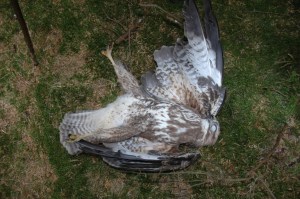
Buzzard shot in Ireland

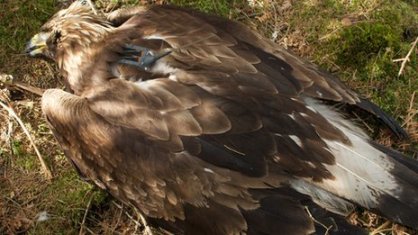
Less than two weeks after BirdWatch Ireland reported the illegal shooting of a hen harrier in  Co. Wexford (see here), they are today reporting the illegal shooting of a buzzard in County Meath.

The buzzard was found alive near the Rossnaree area but had to be euthanised due to the extent of its gunshot injuries.

The press release from BirdWatch Ireland is critical of the lack of strategy, resources and enforcement of wildlife crime in Ireland. Sound familiar?

Read their press release here

Hen harrier found shot dead on Yorkshire grouse moor

A young hen harrier has been found shot dead on a Yorkshire grouse moor. Regular blog readers will not be surprised to learn that it has taken over 5 months for an appeal for information to be made by North Yorks police.

The harrier was raised in a nest in Bowland, Lancashire in 2011. She was nick-named ‘Bowland Betty’ and was fitted with a satellite tag as part of Natural England’s so-called ‘Hen Harrier Recovery Project’. During her first year of life she was tracked through the uplands of Northern England and as far north as Caithness in northern Scotland. In June 2012 she was back in the Yorkshire Dales. Predictably, by late June her sat tag data suggested she was stationary and her dead body was found on 5 July on Thorny Grain Moor in Colsterdale in the Yorkshire Dales. Post-mortem results confirmed she had been shot.

This area is dominated by moorland managed for grouse shooting. We understand her body was found on Swinton Estate, although it is not known where she was actually shot as she could have flown for several miles before succumbing to her injuries.

RSPB and government data show the Yorkshire Dales as a hot spot for illegal raptor persecution, with at least 20 birds of prey illegally poisoned, trapped or shot between 2007-2011. This figure includes 10 poisoned red kites, 4 poisoned buzzards, 2 shot red kites, 2 shot buzzards, 1 shot kestrel and 1 trapped sparrowhawk. In addition there were at least 4 incidents of poisoned baits and a number of dogs were also poisoned.

Hen harriers have been tracked from Bowland since 1999. Wing tags were used to monitor hen harrier dispersal and survival between 1999-2002 (data from at least 42 birds). From 2002-2010, 118 hen harriers have been tracked either via radio transmitter or satellite tag. Astonishingly, Natural England have released very little detail about the results of this project, ten years on. They did produce a report in 2008 (see here) although this related to hen harriers over a broad geographic area and didn’t include specific detail about individual birds. What happened to all those birds? Where are their data? Why, when a satellite tag suggests that a harrier’s movements are suspicious (i.e. it’s been stationary on a grouse moor for several hours), do NE researchers have to seek the estate owner’s permission before they can go and search for the (presumably dead) bird? We’ve used an analogy before but it’s worth repeating – would you expect a police officer to call ahead to a suspected drug dealer to ask permission to go and search his house?

We all know only too well what will happen now. The death of this harrier will be added to the never-ending list of illegally-persecuted raptors found dead on UK grouse moors. Nobody will be prosecuted for shooting it. The public will express outrage for a few days but it’ll soon be forgotten, just like all the others that have been illegally killed before and all the others that undoubtedly will be killed in the future. The people who hold the positions of power that could bring this disgraceful practice to an end will continue to show wilful blindness and downplay the extent of the problem. The police will continue to form ‘partnerships’ with organisations who harbour the criminals responsible for this systematic killing. Nothing will change. Tune in next month to read about the latest victim. (Actually, tune in later this month….)

What can we do? The only thing we can do is to keep publicising these incidents. We can all play a part; don’t leave it to someone else. Tweet it, Facebook it, blog it, talk about it, email your MP about it. Do it.

RSPB Scotland: 2011 persecution report published

RSPB Scotland has just published its latest report, The Illegal Killing of Birds of Prey in Scotland in 2011. You probably won’t be surprised or shocked by the content, especially if you’ve read the previous 17 annual reviews. In fact, when you read this 18th review, you might get a strong sense of déjà vu.

It opens with a Foreword by Stuart Housden, Director of RSPB Scotland. Apart from the new photo, this foreword looks like a cut and paste job from the 2010 report, with a few words or sentences added or adjusted. To be fair, not much has changed since the 2010 report was published so perhaps he felt justified in repeating what he’d written the previous year.

Then there are RSPB Scotland’s strategic recommendations for addressing raptor persecution. Again, these show a remarkable similarity to the recommendations made in the 2010 report, and also in the 2009 report. The recommendations were / are still good and to see them repeated again is a useful indicator of how little progress has been made by those with the power to push them forward.

Next come the tables showing the confirmed and probable persecution incidents recorded by the RSPB during 2011. It’s these tables that the game-shooting lobby usually object too – they’re especially reluctant to accept the ‘probable’ incidents although to date, they’ve failed to provide a convincing argument to account for any of them.

The data in the 2011 tables demonstrate once again that illegal raptor persecution is widespread, with incidents reported in Perthshire, Angus, South Lanarkshire, Aberdeenshire, Dumfries-shire, East Ayrshire, Borders and Inverness-shire. We counted 15 very familiar-sounding locations within these regions, although there are a few notable absentees this time. Have they stopped their criminal activities or have they just got better at covering up? Time will tell.

Just focusing on the confirmed incidents, in total 17 incidents of deliberate poison abuse were confirmed during 2011, involving 20 victims: 7 buzzards, 4 red kites, 1 golden eagle, 2 peregrines, 2 ravens and 4 other bird species. Sixteen other illegal incidents relating to shooting, nest destruction, and the use of uncovered spring traps or cage traps were confirmed. The victims included 8 buzzards, 2 peregrines, 1 goshawk, 1 sparrowhawk, 2 kestrels and 1 short-eared owl. As in previous years, not all of these incidents were publicised at the time they occurred. It’s a continual disappointment that several years have to pass before the public learns of these appalling crimes.

Once again the occupations and interests of those convicted for illegal raptor persecution crime have been analysed (data from 2003-2011 inclusive). 87% of them were gamekeepers (7% pigeon racers, 3% pest controllers, 3% farmers).

The report includes an interesting case study of poisoned raptors that have been found in recent years on the Glen Kyllachy and Farr Estate near Inverness. Very little of this information has been previously published and certainly this is the first time these photographs have been published. It’s a shame it’s taken several years for the info and images to reach the public domain but nevertheless it’s very encouraging to see RSPB Scotland highlight these cases, especially as Northern Constabulary hasn’t bothered.

All in all the report makes for grim reading, but nobody should be surprised by that. We all owe a large debt of gratitude to the RSPB’s Investigations Team for meticulously collecting these data and especially for making them publically available.

TO DOWNLOAD A COPY OF THE REPORT CLICK HERE

Here’s some media coverage:

RSPB Scotland press release here

BBC news article here

STV news article here

Herald Scotland article here

Scottish Gamekeepers Association: statement here

Scottish Land and Estates: nothing yet

@SNHMedia: “SNH report finds vast majority of gamekeepers highly qualified”. Link to this.

PAW Scotland: nothing yet

Raptor Persecution: still a national disgrace

The following article has been published in the autumn edition of Wild Land News, the magazine of the Scottish Wild Lands Group (visit their website here). The magazine should be posted online in the near future and we’ll provide a link when it’s available. Congratulations to the SWLG’s magazine editor, Calum Brown, for providing a platform for this subject. UPDATE: Magazine now published online. Link here.

Raptor Persecution: Still A National Disgrace. By Bob McMillan.

Bob McMillan has had a lifelong interest in birds of prey. He retired as Assistant Chief Constable in Tayside Police in 1998 at which time he was the ‘lead officer’ on wildlife crime in Scotland on behalf of ACPOS. He represented Scottish Raptor Study Groups on PAW Scotland and the Raptor Priority Persecution Group until 2011. He now lives on Skye and runs the website www.skye-birds.com

My childhood in the 1950s had been spent in a rural village near Dunblane in south Perthshire surrounded by sporting estates. To see a Buzzard or a Kestrel was a rarity, let alone a Hen Harrier. An early interest in birds was cultivated by older friends, one of whom had found breeding Harriers on a moor on the nearby Cromlix estate. He subsequently studied and photographed the birds, much to the consternation of the local estate which eventually took out a civil action and interdicted him from the ground. Twice prosecuted for breach of interdict, the case remains unique amongst individuals who have put themselves on the line to protect birds of prey from the illegal actions of gamekeepers and sporting estates.

Eddie Blake from Dunblane died recently. Somewhat eccentric, he received little support for his actions from the ornithological establishment who shunned him. In 1952 Blake had recorded the first breeding record of Montagu’s Harrier in Scotland on Braco Moor. Though the pair returned the following year, the female was shot. There have only been five recorded breeding attempts in Scotland and the last of these was in 1955. Montagu’s Harriers might still be breeding in Scotland today were it not for persecution, but rarely merit a mention alongside formerly extinct species such as Osprey, Red Kite and White-tailed Eagle.

When I joined the police service in 1963 my final interview was by the Chief Constable at Callander Police Station. Bedecked in tweeds and with two spaniels at his heels, George Glendinning was every inch the country squire. Any discussion about Blake’s interdict was strictly off limits but I later learned that Glendinning was a regular shooting guest on Cromlix estate. The influence of landowners on local policing was profound in the 1960/70s and vestiges of it remain today. Rural police officers had access to free fishing and shooting, which invariably meant an immediate response to suspected poachers, or for that matter, to ‘suspicious trespassers’ who were simply enjoying their Scottish right to roam. Many gamekeepers were Special Constables. Rural shoots in Perthshire would have been unsustainable had it not been for the many police officers who acted as ‘beaters’ at pheasant shoots on their days off. Though trained and aware of wildlife crime, such cultural influences would make them strongly anti-poaching, and more likely than not to turn a blind eye if an occasional Sparrowhawk was accidentally ‘taken out’ during a Pheasant drive. The police response to reports of illegal trapping or poisoning of birds of prey, up until the end of the 1980s, was likely to be ambivalent. Some raptor enthusiasts would argue it remains fairly unpredictable to this day.

Despite most raptors having legal protection since 1954, persecution by gamekeepers and those with sporting interests in grouse moors and lowland estates remains a major problem. In 1998 Scottish Raptor Study Groups carried out an assessment of the extent of the illegal killing of raptors in Scotland. Published by the Scottish Office, it was launched at the Scottish Wildlife and Countryside Fair at Kinross, where the late Donald Dewar, then Secretary of State for Scotland, expounded the view that persecution of birds of prey was a national disgrace. As a retiring Assistant Chief Constable in Tayside Police, who took the lead on wildlife crime in Scotland, my last public duty was to meet Donald Dewar at the event. In the context of the persecution of raptors, this was a major political statement, and the expression “a national disgrace” was used by many others subsequently. The reality was that the expression had been conjured up by a senior civil servant and Donald Dewar posed the question as to whether he could actually say it. The fact that he decided to say it represented a major politicisation of the issue, though not necessarily a turning point.

Having found my first poisoned Golden Eagle at an eyrie in Perthshire 40 years ago these problems were not new to me, as was the case for other raptor enthusiasts. What was new, however, was that senior politicians and officials of agencies such as Scottish Natural Heritage were, for the first time, prepared to speak out against the problem. Raptor persecution was by no means rare, and the killing of adult birds and destruction of nests continued or even increased during the 1990s. Donald Dewar also said that the Government, and the soon to be Scottish Parliament, “will take all possible steps to eliminate persecution.” Fifteen years on from this statement, perhaps finally, some progress is being made.

The Partnership for Action on Wildlife Crime (PAW) brings together the Police, HM Revenue and Customs, and representatives of Government Departments and voluntary bodies with an interest in wildlife law enforcement. It provides a strategic overview of enforcement activity, considers and develops responses to strategic problems, and looks at issues of strategic concern. Its main objective is to support the networks of Police Wildlife Crime Officers (PWCO). As part of the overall UK-wide structure, PAW Scotland has existed for at least 20 years. Although it has been responsible for many preventive initiatives post-devolution, and despite Donald Dewar’s commitment, it lacked strategic support from a number of the key agencies.
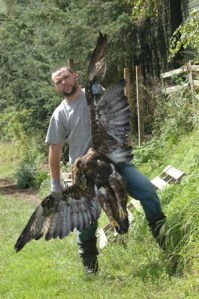
Since the SNP administration came to power that has significantly changed, initially under the leadership of the then Minister for Environment Michael Russell and, since then, through subsequent ministers. A major turning point was the Borders Golden Eagle poisoning incident in 2007 which led to two parliamentary debates on Wildlife Crime and the police thematic inspection ‘Natural Justice’. This led to the publication in September 2008 of the Scottish Wildlife Crime Reduction Strategy which is being implemented through a PAW Scotland plenary and executive group, and a number of sub-groups.

The persecution of raptors had been a major factor in influencing this new strategic commitment, and although a Raptor Persecution Priority Group was established, it has been slow to make progress and is still to report. The pro-shooting lobby has been extremely influential within PAW Scotland and within this group. In terms of the protection of raptors, much of this has muddied the waters and not been particularly constructive. Whilst it is important to have a partnership approach to deal with these problems, some question whether it is appropriate that the perpetrators, in the main gamekeepers and the sporting estates which condone these crimes, should be part of it. (More details of the work of PAW Scotland can be found at http://www.scotland.gov.uk/Topics/Environment/Wildlife-Habitats/paw-scotland/).
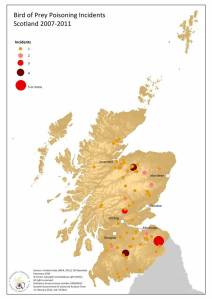
The accurate recording of wildlife crime incidents involving raptors is a major challenge and most will be aware that the RSPB in Scotland produce an annual report. Annual maps of incidents (‘maps of shame’) can also be found on the website above. A major challenge is to make sure that all wildlife crime incidents are reported to the police, preferably to Wildlife Crime Officers who are known locally. It is equally important to make sure that RSPB Investigations staff are also aware of any incidents reported to the police. Wildlife crimes such as suspected shooting or poisoning of birds, destruction of nests or eggs, or reckless disturbance should be reported at the time and without delay. The remains of dead birds of prey, irrespective of age or condition, may be important evidence and require forensic examination. Advice on what to do if you find a suspected incident is available on the PAW Scotland website.

Recently-published research showed that illegal persecution remained particularly prevalent on grouse moors, and for raptor workers and those who visit wild land this is perhaps nothing new. The recent recovery of a poisoned Golden Eagle in Morar and a shot White-tailed Eagle on Skye confirms that birds are at risk throughout the Highlands, not just on sporting estates. Some local populations face the prospect of significant decline unless action is taken. In areas of Scotland such as the Black Isle the re-establishment of the Red Kite continues to be jeopardised by illegal persecution, and each year brings further reports of the destruction of Hen Harriers and Peregrines.

Satellite telemetry is now being used extensively on several species of birds of prey, primarily intended to trace the movements of young birds to gather information which assists their long-term conservation. An unintended outcome from this new science is that when signals indicate a bird has stopped moving, follow-ups have established that birds have been trapped, shot and poisoned. Without satellite telemetry these crimes would never be known about. The Golden Eagle ‘Alma’, poisoned in 2009, is one such example. Unfortunately a significant number of recent persecution casualties involving our large raptors have been found in this way, supporting the argument that reported incidents represent the tip of the iceberg.

The ‘Natural Justice’ thematic inspection recommended dedicated Wildlife Crime Officers in every force. The reality is there are now fewer WCOs than existed when the inspection was carried out. Strathclyde, the largest force in Scotland, have had no full-time post for some years. With a single national police force just months away there is little evidence that there is any genuine commitment on the part of the police service to meet many of the earlier recommendations. Whilst we can work in partnership, increase awareness, improve legislation and ensure landowners and employers accept vicarious responsibility, we can achieve nothing without a properly trained and professional police service which can rise to the challenge. Regrettably, the number of successful prosecutions remains extremely low, and there is a need to ensure that, in terms of enforcement and investigation, the limited resources dedicated to this field of work are properly supported so that much of the political and public relations rhetoric can be converted into tangible results.

I was part of a delegation from Scottish Raptor Study Groups which met Roseanna Cunningham when she was Minister for Environment in November 2010, and we recommended that a dedicated investigative unit be established, comprising trained WCOs and specialists from the RSPB, SSPCA and SNH, with a remit to cover the whole of Scotland, untrammelled by force boundaries. Many will argue, politicians amongst them, that only a few rogue estates and gamekeepers are involved, but any review of the so-called ‘maps of shame’ and the RSPB maps which preceded them, would find that hundreds of estates have been involved in incidents during the last ten years. Uniquely, there are also several estates with histories of persecution going back 30 years. As long as the police have responsibility to investigate such crimes, there is a need for them to develop a cutting edge and target the perpetrators. There would never be a better time to establish a specialist unit than now.

Some fifty years on from my childhood days in south Perthshire I will certainly be able to see Buzzards, Kestrels, Sparrowhawks and even Red Kites when I visit. Unfortunately Hen Harriers remain absent from the moors of Cromlix and Braco. Golden Eagles show little sign of expanding their range, and there is a real risk that fifteen years on from the branding of the problem ‘a national disgrace’, the fate of some of the iconic species which occupy our wild land remains in the balance.

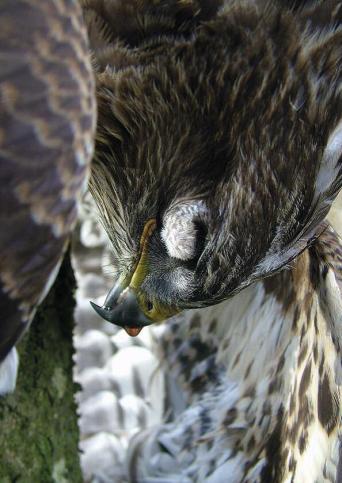
Police wco earns well-deserved recognition

For the benefit of those not on Twitter…

Devon & Cornwall Police Wildlife Crime Officer P.C. Josh Marshall has received a Commander’s Commendation at the South Devon Police Awards for his work on Operation Wilderness.

According to the RSPB’s recently published 2011 Birdcrime report, Devon had the worst record for bird of prey persecution in England last year, when fifteen goshawks, peregrines and buzzards were found poisoned or shot.

We’ve previously blogged about Josh’s innovative and successful Operation Wildnerness (see here, here, here, here and here) and it’s fantastic that his efforts have been recognised at the top police level. The word we’ve most often used to describe his work is ‘pro-active’, and his approach is even more impressive when you realise his role as a Police Wildlife Crime Officer is only part-time; something he has to fit in alongside his other policing duties.

Congratulations, Josh, on your very well-earned award! Hope you don’t mind that we’ve nicked your photo from Twitter!

Josh’s blog here

Update on ‘missing’ or dead satellite-tagged raptors: buzzard, Angus Glens

In June 2012, Roy Dennis and friends attached a satellite tag to a young buzzard near Nethybridge. Named ‘Buzz’, he was thought to be the first sat-tagged buzzard in Scotland.

In August he set off on his travels and we were able to follow his movements via Roy’s Raptor Track website (see here).

Buzz didn’t last long. The last entry on the tracking website shows us that Buzz was on the NW side of Brechin in Angus (hmm, sound familiar?) on 19th September 2012. There are no further updates on his movements. Is that because he’s not moving anymore?

North Yorks gamekeeper arrested over alleged misuse of bird trap

A news article in today’s York Press reports that an un-named gamekeeper has been arrested over the alleged illegal use of cage traps.

North Yorks Police said a live buzzard was found caught inside a trap, which apparently was inside a pheasant pen (?!) in the Pickering area. The buzzard was released unharmed, and a second trap containing a live pigeon was found nearby.

The article can be read here. There’s no mention of who the gamekeeper is, nor the name of the estate/farm/land which was searched under a police warrant. There’s also no information about when these alleged incidents took place. No information is available on the North Yorks police website either.

A statement attributed to investigating police officer PC Stewart Ashton appears in the newspaper article:

Police are receiving a growing amount of evidence that raptors are being routinely shot, trapped and poisoned by gamekeepers throughout the Ryedale area. This is just the latest incident in what appears to be a persistent breaking of the law by a significant number of gamekeepers. This is a hidden crime which usually goes unreported. Sadly, what we are seeing is just the tip of a very big iceberg“.

An earlier blog entry from March 2012 about a poisoned red kite found in this area can be read here. Again the story was published in the York Press but precious few details were released.

In May 2011, a gamekeeper from Ryedale was convicted of shooting a badger. David Stephen Welford pleaded guilty at Scarborough Magistrates Court and was fined £385 and ordered to pay £100 court costs. York Press news article here.

How many licences have been issued to kill so-called ‘protected’ ravens?

‘How many licences have been issued to kill ravens?’ This was one of a series of raven-killing questions asked recently of the Scottish Government by Alison Johnstone MSP (Lothian, Scottish Green Party).

Here’s the full suite of her written questions lodged on 18th September 2012:

S4W-09688 Alison Johnstone: To ask the Scottish Government how many licences to kill ravens were granted by (a) it and (b) Scottish Natural Heritage in (i) 2011 and (ii) 2012 and what the grounds were for granting such licences, broken down by local authority.

S4W-09689 Alison Johnstone: To ask the Scottish Government how many multi-annual licences to kill ravens have been granted since 2011, broken down by local authority.

S4W-09690 Alison Johnstone: To ask the Scottish Government what proportion of holders of licences to kill ravens indicated that they had made kills in 2011 and how many birds were killed.

S4W-09691 Alison Johnstone: To ask the Scottish Government how many licences to kill ravens have not been renewed by Scottish Natural Heritage because of non-compliance with conditions in each year since 2011.

S4W-09692 Alison Johnstone: To ask the Scottish Government whether Scottish Natural Heritage will publish details annually of the number of ravens killed under licence.

S4W-09693 Alison Johnstone: To ask the Scottish Government what factors are considered when considering granting a licence to kill ravens.

S4W-09694 Alison Johnstone: To ask the Scottish Government whether there are licensing restrictions to control the killing of ravens in nests during the breeding season.

S4W-09695 Alison Johnstone: To ask the Scottish Government what checks are made to ensure that livestock protection licences to kill ravens are not used for game management.

The answers provided by Environment Minister Paul Wheelhouse are quite interesting (see here for full script). SNH took over the responsibility of issuing licences from 1st July 2011 – previously the Scottish Government had issued them.

It’s fascinating to learn what factors are considered by SNH when considering whether to grant one of these licences. Apparently, “SNH relies on expert advice from site visits made by Scottish Government Rural Payments and Inspections Directorate (SGRPID) staff to inform licensing decisions“. Interesting. I wonder how many ornithologists and/or ecologists work for SGRPID?
It’s also fascinating to learn that SNH also relies upon SGRPID to make site visit checks to ensure that livestock protection licences (which is how these raven-killing licences are defined) to kill ravens are not used for game management. Apparently if allegations were made in this respect, then SNH would rely upon the police to investigate. Perhaps that’s why, in answer to Alison’s question about how many licences to kill ravens have not been renewed by SNH (since 2011) because of non-compliance with the conditions of the licence, Mr Wheelhouse replied: “To date, no such cases have occurred“. Really?

Another interesting piece of information to emerge from these written questions and answers is the confirmation that a raven-killing licence was issued in the Scottish Borders for 2012. Now, according to our sources, a raven-killing licence was issued at Langholm this year. Hopefully more detailed information about this will appear on the Langholm project website in due course. Is this a fore-runner to the issuing of a buzzard-killing licence at Langholm? We are aware that, unofficially at least, there is great interest in ‘controlling’ buzzards at Langholm amongst some of the project partners. Thankfully, so far, there has also been strong opposition to this move by some of the other project partners. You don’t need to be Einstein to work out which partners are for and which are against.

Finally, Mr Wheelhouse assures us that “SNH is considering how to publish statistics [of the annual number of ravens killed under licence] in the future“.

Well done Alison Johnstone MSP for asking some probing questions.

Environment Minister’s response to dead eagle found in Grampian

Un-fucking-believable. Yes, it’s a swear word but that’s the least of our concerns. Read what follows and you’ll be swearing in anger too…

The Environment Minister has responded to a letter sent to him by one of our readers (Dave Adam) concerning the appalling death of that golden eagle back in May (see here for details of that bird’s demise). This is the eagle whose satellite transmitter showed the bird went down on a grouse moor in Glen Esk, Angus for 15 hours (an area where another golden eagle had previously been found poisoned in 2009, oh, and a buzzard was also found poisoned there in 2008 although that wasn’t publicised at the time) and then this eagle miraculously moved to a layby in Aberdeen, in the middle of the night, where it was found dead several days later with two broken legs – injuries consistent with being caught in a leg-hold trap. Yes, THAT eagle. According to the Minister, this scenario may not have been the result of criminal activity.

Dave Adam has posted the Minister’s response letter in the comments section of the original post (thank you) but it’s far too important for it to remain there, hence the decision to publish it here.

Here it is in full:

Thank you for your letter of the 25 September 2012 to the Minister for Environment and Climate Change, Mr Paul Wheelhouse. I have been asked to respond.

I agree that the media reports were a terrible story of the suffering of a young golden eagle. The reports may suggest that the circumstances of this incident were suggestive of an offence however there is no hard evidence and it remains possible that there is an alternative explanation. It is therefore inappropriate for me to comment.

The unlawful killing of any raptors has no place in today’s Scotland and we will continue to work hard to eradicate this criminal activity. We believe that the partnership approach with the Partnership for Action Against Wildlife Crime (PAW) Scotland, is bringing the reduction in bird of prey poisoning that can be seen in the statistics in recent years. However we are not complacent and if there is evidence of a switch to other methods of persecution we will take action to bear down on those methods.

The Scottish Government recognises that game shooting generates significant income and employment in our rural economy, often in areas where there are few alternative opportunities. However it is important that these businesses operate within the law, and the Scottish Government recognises that most such businesses do so. However where there appear to be conflicts for example between raptors and highly-intensive grouse moor management, we believe that an approach of seeking to improve the effectiveness of law enforcement while working with partner organisations to isolate those persisting with illegal practices is the best way forward.

Scottish police have a clear focus on tackling wildlife crime cases. Law enforcement’s role in tackling wildlife crime was reviewed by Her Majesty’s Inspectorate of Constabulary Scotland in 2008, and there was a follow-up review in 2009. As a result there are officers with wildlife crime duties in every police force area and a consistent and professional approach from senior officers.

It is frustrating that it is difficult to detect, prosecute and convict those responsible for wildlife crimes. However while it easy to make suppositions about circumstances of an apparent offence as reported in the media, wildlife crime must be subject to the same standard of proof as any other crime. Police and prosecutors also apply the same stringent procedure for dealing with wildlife crime as for any other sort of crime.

You say that the golden eagle population is threatened by illegal persecution. The Golden Eagle Conservation Framework published by SNH in 2008 did identify persecution in eastern Scotland and food shortages in the west as threats to the birds’ conservation status. It is difficult to estimate the amount of illegal persecution, but we recognise that in the longer term the best measure of success in dealing with raptor persecution will be when vacant golden eagle territories, as identified in the Framework document, are re-occupied.

K. Hunter, Policy Officer, Scottish Government.

Like we said at the top, un-fucking-believable. Especially coming a day after we learn that another golden eagle was the target of criminal activity on a grouse moor, this time being found shot and critically injured and left to die.

What did we say yesterday about needing a strong response from government, and not the usual platitudes about ‘partnership working’?

The question is, what are we going to do about it? And by ‘we’, that means all of us. Angry? You’d better believe it.

If you want to tell him how angry you are, and why (because it obviously needs spelling out) here’s his email address again: ministerforenvironment@scotland.gsi.gov.uk

When you’ve done that, send a copy to Alex Salmond: FirstMinister@scotland.gsi.gov.uk

These politicians HAVE to understand that we’re not tolerating this any longer.

Dear Diary…

Here’s a rare opportunity to look into the world of  the ‘modern’ gamekeeper. These are extracts taken from a Scottish gamekeeper’s diary. We were shown these diaries by someone from within the keepering world who wishes to remain anonymous, for obvious reasons. Worryingly, the diary-writer is still currently employed as a full-time gamekeeper. We’ve split the entries into different years – the following is from 2008. See how many wildlife crime offences you can spot:

Thurs 3rd January: set baits in Glen S & right hill

Sat 5th January: John P came for rabbits & Alpha

Weds 16th January: Gassed fox at Black Brae Lower

Fri 25th January: Eggs out on Top Moor + rabbit for crows by Big Wood

Fri 1st February: Lifted eggs Top M & set out at edge of Middle.

Tues 5th February: Shot dog Glen S.

Mon 11th February: Lifted eggs Top M. Shot kestrel.

Tues 19th February: Baits out at Harry’s, rabbits & hares

Thurs 21st February: Pick up gins from Glen side. Got female peregrine.

Fri 29th February: Done traps at S Corner and more eggs out. Saw pair peregrines at Millers.

Sat 1st March: baits out with Jim at Middle. Missed a cock harrier. Staked pigeon at Millers.

Sun 2nd March: Got peregrines at Millers. Eggs out on Broadfield.

Tues 4th March: Got 2 buzzards, 2 rooks + 9 crows. Rabbit out for others.

Fri 7th March: Got a vixen at T Moor. Put out birds by low fence.

Sun 9th March: Eggs at Glen side again.

Weds 12th March: Eggs up, tracks seen. Done baits at Gordon’s. Sheep shot for midden 3.

Thurs 13th March: Got buzzard at Becks. More rabbits out. Alpha.

Sat 15th March: Picked ups crows & eggs Langsmere. Saw 2 harriers.

Tues 18th March: Set eggs JB & baits southside.

Weds 19th March: Got a cat on Red moor.

Thurs 20th March: Got SE owl & set 59 eggs Lower bank.

Sat 22nd March: 1 harrier at Langsmere. Merlins at Merv’s.

Mon 24th March: Snares at Glen side. 26 foxes so far.

Tues 25th March: Missed harrier at Langsmere. Baited Broadfield again.

Thurs 27th March: Got a badger with John S. He heard gos behind Big Wood.

Fri 28th March: Lifted eggs Lower bank. More set at Harry’s.

Mon 31st March: Crow cages out Big Wood.

Wed 2nd April: Harrier trap empty.

Thurs 3rd April: Pair eagles seen southside.

Fri 4th April: Put eggs T Moor. Shot rabbits for baits.

Sun 6th April: Crow cages done. Eggs checked.

Weds 9th April: Baits out Glen side. Tom collected pigeons.

Fri 11th April: Got buzzards at JB.

Tues 15th April: Gos in crow cage. Gave it to PL.

Fri 18th April: Baited traps & re-did snares.

Tues 22nd April: Eggs & hares out in the Sloughs.

Sun 27th April: Eggs lifted Sloughs.

Fri 2nd May: Put out more baits.

Sat 3rd May: Pigeons staked upper side. Got tiercel.

Weds 7th May: Set eggs.

Thurs 15th May: Put baits out at Bothy.

Sat 17th May: 3 buzzards in crow cage. Re-set.

Thurs 22nd May: Two Peres at Glen side. Got one.

Weds 28th May: Eggs lifted more baits out. Rabbit gone at Bothy.

Mon 2nd June: Set pheasant eggs at Big Wood. Did crow traps.

Sun 8th June: Litter of foxes gassed behind GateBridge.

Fri 13th June: Partridges into pen.

Mon 23rd June: Put eggs out Broadfield.

Weds 2nd July: Gassed another litter with Paul at Stebb’s.

Fri 1st August: Got a short eared owl. Lifted eggs Broadfield.

Tues 5th August: Moved crow cages to RT.

Sun 10th August: Spar caught. Trap re-set.

Fri 12th Sept: 42 brace at Sam’s but harrier seen.

Fri 26th Sept: New snares out.

Thurs 2nd Oct: Two eagles seen Glen S. 1 buzzard in crow trap at T Moor.

Tues 7th Oct: Hare baits out Langsmere.

Thurs 16th Oct: Shot sheep for midden 3.

Mon 20th Oct: Pigeons 5pm

Weds 22nd Oct: Shot a kestrel at Sam’s.

Fri 31st Oct: Merlin pair done North Bothy.

Sat 8th Nov: 6 pigeons put out Big Wood.

Tues 25th Nov: Baits out with Paul.

Fri 19th Dec: Put grouse on T Moor.