 Last week we mentioned that further information had emerged about the licences to control buzzards recently issued by Natural England. We said we were seeking legal advice about what information we could and couldn’t publish. That legal consultation has resulted in a decision to publish the following information.
We discovered the name of the buzzard licence applicant last week. Interestingly, someone with the same name, from the same region, and working in the same industry (gamekeeping) was previously convicted for offences relating to banned poisons. It must be just another one of those freak coincidences that seem to pop up with unequal probablity within the world of gamekeeping.
According to legal advice we are at liberty to publish the name of the licence applicant under certain conditions. However, we have chosen not to identify him or to publish any detail that might lead to his subsequent identification. His identity is not important here; there is a wider issue of concern and revealing his identity would not add anything of importance to the debate. Besides, in the context of his licence application he hasn’t done anything illegal; it is not an offence to apply for a licence to control protected species.
So, his identity doesn’t interest us. What does interest us a great deal is a government policy that might enable someone with recent and relevant criminal convictions to be considered as a suitable recipient for a licence to control a protected species.
Natural England’s species licensing role is governed and authorised by DEFRA policy. Within DEFRA’s species licensing policy statement are a number of criteria that should be met by the licensing agency (in this case, Natural England) when assessing a licence application. One of them is that ‘the suitability of the applicant to carry out licensed activities’ must be assessed. That this criterion even exists indicates that DEFRA recognises that unsuitable candidates may apply for a licence and they provide an option (to the licensing agency) for refusing a licence on that basis.
So, just how is ‘the suitability of an applicant’ assessed? It seems to be a subjective test as we couldn’t find any guidelines on the subject. Would someone with recent and relevant convictions be considered a ‘suitable applicant’? What would be the justification for that?
Natural England has already confirmed that relevant past convictions are assessed during the licensing process. Last week, many of you (thank you!) wrote to Natural England to ask for clarification about whether the buzzard licence applicant had an un-spent work-related conviction at the time of his application. On Monday (June 3rd), Natural England responded by issuing a refusal notice, saying they weren’t prepared to divulge that information. In that refusal notice is the following statement:
“You may find it helpful to know that it is part of Natural England’s standard procedures to ask all licence applicants for information on relevant past convictions. This information is taken into consideration in the assessment of the application. For example, this may lead to a more in-depth assessment of the application or additional monitoring of licensed actions. However the fact that a person has a previous wildlife related conviction (whether spent or not) does not automatically bar them for obtaining a licence and each licence application is judged on its merits”.
So, did Natural England consider relevant past convictions when assessing this licence application? They certainly mention previous convictions in their Technical Assessment of Application report (see the FoI documents), although the detail of those convictions has been redacted. However, there is no mention anywhere else in this assessment report about an assessment of those convictions or their relevance to this particular licence application, so either Natural England didn’t formally assess them, or they did and just redacted their assessment. There’s so much blacked out text throughout the whole document that it’s impossible to tell.
An interesting aspect in all this is the considerable weight that Natural England placed on the evidence (of supposed raptor predation of poults) provided by the applicant. Indeed, Natural England wrote the following in their technical assessment report:
“Conclusions & Justification [of the application]: The quantity and quality of information and evidence provided for this case by the applicant appears to be thorough, systematic and accurate for this type of case”.
Put yourself in the shoes of a Natural England employee charged with assessing licensing applications to control protected species. Would you consider the evidence of a recently convicted criminal as being trustworthy and reliable?
One final point, and equally as interesting. The National Gamekeepers Organisation has repeatedly and publicly stated that illegal gamekeeping activity will not be tolerated within their organisation. We know from the FoI documents that the buzzard licence applicant is a member of the NGO. Last week we (and many of you, thank you) asked them to answer the following question:
“Bearing in mind the NGO’s published Disciplinary Procedure, did this gamekeeper [i.e. the buzzard licence applicant] have an un-spent work-related conviction at the time of his application and has he ever been suspended or expelled as a member of the National Gamekeepers Organisation?”
They still haven’t answered.

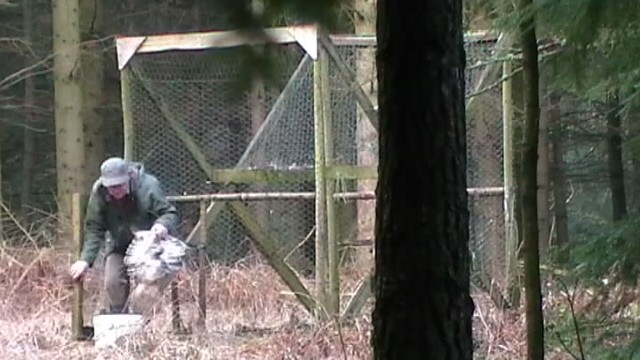

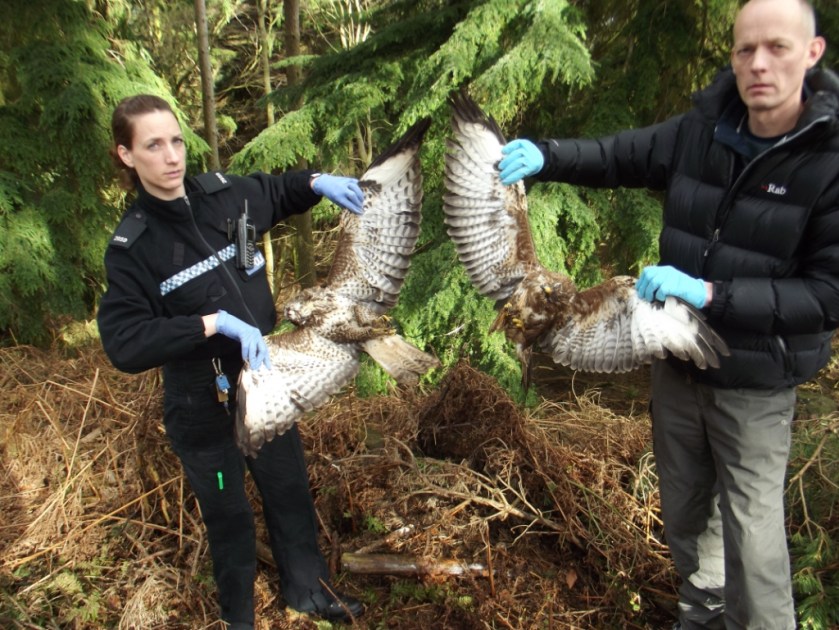
 A Scottish gamekeeper has today been convicted for a number of wildlife crime offences, including the poisoning of a buzzard.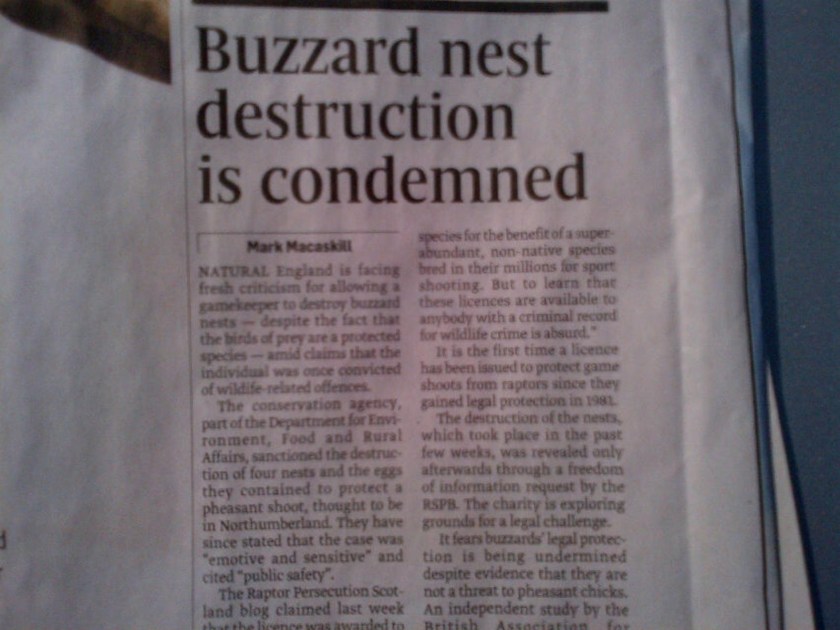
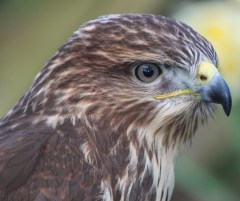 Last Thursday we blogged about the buzzard licensing scandal and how new information had come to light (see
  Raptor Persecution UK