Irish Game Council condemns latest red kite poisoning

NARGC,%20logoFollowing on from Thursday’s news that yet another red kite has been illegally poisoned in the Irish Republic (see here), the country’s largest game shooting organisation, the National Association of Regional Game Councils (NARGC) has once again issued a strong statement of condemnation.

NARGC Director Des Crofton’s statement can be read in full here.

This isn’t the first time that Des Crofton has spoken out against the illegal persecution of raptors. Back in January, the NARGC issued an unequivocal condemnation of the illegal shooting of a buzzard (see here).

We’re still waiting to see the same consistent level of leadership and zero tolerance of illegal persecution from Scottish and English game shooting groups.

For example, we note with interest the comments earlier this week from the National Gamekeepers’ Organisation in England regarding the potential criminal background of this year’s buzzard licence applicant. We strongly suspect that the applicant had a very recent conviction for possession of illegal pesticides, including the gamekeepers’ poison of choice, Carbofuran. NGO spokesman Charles Nodder commented on this blog (see here) to say that the NGO “strongly condemns illegal acts“. When asked to clarify whether the buzzard licence applicant had a conviction for possession of banned poisons, Mr Nodder went strangely quiet. Would you expect an organisation that claims to ‘strongly condemn illegal acts’  to support someone with a conviction for the illegal possession of banned poisons?

Dead buzzard in Scottish Borders shot AND poisoned

Back in mid-July we blogged about a dead buzzard that had been found near Heriot in the Scottish Borders – it had been shot, but the precise cause of death was not known (see here).

Fast forward to August and it has now been revealed the buzzard had also been poisoned and that this was the cause of death, according to the BBC (see here). The poison used has not been named.

Enormous credit, once again, to the local Police Wildlife Crime Officer Hannah Medley for pursuing this case and also for publicising the findings in the media. Credit also to the lab folk at SASA for managing to detect poison in what had previously been described as a badly decomposed carcass.

This confirmed poisoning now takes the number of known (reported) poisonings in Scotland this year above the published figure from last year, so hopefully we will no longer have to read the ridiculous claims from the usual suspects that ‘poisoning cases are significantly declining’. The facts show that they are doing nothing of the sort. How ironic in this, the so-called Year of Natural Scotland.

Unfortunately the public haven’t been allowed to see this year’s on-going tally as yet – we know of several poisoned birds that have not yet been reported in the media, even though the birds were poisoned much earlier in the year. We’ll have more to say about these cases later in September and we’ll be asking the usual questions of a particular Police Scotland division about why they’ve kept these poisonings a secret for so long.

Natural England claims release of buzzard licence info ‘not in public interest’

buzzard 3Today, Natural England announced that they’d won a ‘Customer Service Excellence Standard Accreditation’ (see here). The independent assessors apparently spoke with NE staff as well as ‘a range of Natural England’s key customers and stakeholders’ and decided that NE was ‘excellent’ at providing ‘delivery’ and ‘information’ to their customers, amongst other things.

That’s not been our experience.

On 23rd May, an article in the Guardian revealed that Natural England had licensed the secret destruction of buzzard nests and eggs in order to protect a pheasant shoot. The licences in question had been issued to an un-named gamekeeper, whose licence application had been supported by the National Gamekeepers Organisation. We blogged about it here. There was widespread public condemnation, as expected.

On 30th May, we blogged about whether the licence applicant had a previous criminal conviction for wildlife crime (because we had good reason to ask – see here) and we wrote to Natural England to ask them about it (see here). Incidentally, we also asked the National Gamekeepers Organisation whether the gamekeeper they were supporting had a criminal conviction for wildlife crime and if so, had he ever been expelled from their membership, as per their club rules about not tolerating wildlife crime – they still haven’t answered!

On June 3rd, Natural England responded to our request for information (a very quick response, to give them due credit) by issuing a refusal notice. In other words, they refused to either confirm or deny that they held any details about previous convictions because, they claimed, this was ‘personal information’ as defined in the Data Protection Act. We strongly disagreed and wrote a second letter to NE (see here), asking for an internal review of their decision. We argued that the information requested could not be defined as ‘personal information’ because the information would not lead to the identification of the buzzard licence applicant; what we were asking was whether the applicant had a wildlife crime conviction, which could have been answered with a simple ‘yes’ or ‘no’.

On 29th July, Natural England responded to our request for an internal review by issuing a second refusal notice. Once again, they claimed the information we had asked for was ‘personal information’ and they also claimed the release of that information was ‘not in the public interest’. Here is a copy of the generic letter they sent out to quite a number of blog readers: RFI 2020 Int_Review Response_RD

Next stop? The Information Commissioner, to ask for a review of Natural England’s decisions. Watch this space…

On a related subject, Alan Tilmouth has written a(nother) good blog this evening, this time about the GWCT’s position on buzzard licensing – see here.

Buzzard shot in the throat in North Ayrshire

shot buzzard hessilheadAnd so it continues….

An injured buzzard was delivered to a wildlife resecue centre near Beith, North Ayrshire on Sunday. It had been shot in the throat.

Hessilhead Wildlife Rescue Centre had this to say:

Today a buzzard was delivered to us, and we were disappointed to see it had been shot. A pellet had punctured the buzzard’s crop, and some of its last meal was oozing out. We cleaned it up, stitched up the wound, and hope that the pellet hasn’t gone right through the crop. The bird will need antibiotics, and we are hopeful of a full recovery“.

Another raptor persecution incident, another victim, another wildlife crime for which no-one will be brought to justice. This case is just the latest in a string of incidents in Scotland this year: there has been at least one (recorded) raptor persecution incident every single month so far this year.

Ireland publishes its first persecution report, with interesting results

94f6f996ec3a866ce6d587d28bd5b809_LThe Irish National Parks and Wildlife Service (NPWS) has published its first national raptor persecution report, relating to reported incidents in 2011.

The NPWS issued the following press release:

“33 poisoning or persecution incidents affecting birds of prey were recorded in Ireland in 2011, according to a report published today by the Department of Arts, Heritage and the Gaeltacht. 

15 birds of prey were confirmed poisoned, and four more suspected cases were recorded. 8 birds of prey were shot.

Some of the deaths were accidental, but many were deliberate. The most frequent casualty was the red kite, a native species that was recently re-introduced to Ireland. It is believed that seven of the ten kites found dead were poisoned by eating rats that had themselves been poisoned. As well as red kite, other raptor species that were deliberately targeted included peregrine falcon, buzzard, sparrowhawk, and kestrel.

The report is the result of cooperation between the National Parks and Wildlife Service, the Department of Agriculture, Food & the Marine’s Regional Veterinary Laboratories and the State Laboratory, and also involves An Garda Síochána, the Golden Eagle Trust and BirdWatch Ireland. 

The report notes that the use of tracking devices on birds has enabled dead birds to be found, but this also means that the true levels of mortality are likely to be significantly higher.

The use of poison has been greatly restricted under EU law in recent years. It is illegal to poison any animal or birds other than rats, mice or rabbits in Ireland and only then using certain registered products. The Campaign for Responsible Rodenticide Use has recently been set up with funding from industry. This campaign aims to promote best practice so that rat poison in particular should not get into the wildlife food chain where it harms owls, kites and other birds of prey.

The poisoning of golden and white-tailed sea eagles has been a particular problem in recent years, but fortunately in 2011, no poisonings were recorded. Records of poisoning and persecution in 2012 are currently being analysed and the second annual report is due for release shortly.

The Minister for Arts, Heritage and the Gaeltacht, Mr Jimmy Deenihan, T.D., welcomed the report. ”This gives us at least a partial view of the scale of the problem in Ireland”, he said. ”It is simply not acceptable for majestic birds of prey and other wildlife to be persecuted or poisoned. First it is illegal, but just as important it harms our reputation as a clean, green country. I would urge anyone to report such incidents to the National Parks and Wildlife Service in my Department. There are alternatives to poison which can be successfully used when control is essential ” he said.”

Here is a copy of the report: Persecution Report Ireland 2011

The publication of this report, and the anticipated future annual reports, demonstrates a basic but very important step forward, allowing the authorities and NGOs to monitor and record raptor persecution incidents in a coordinated effort, to help tackle the issue as well as to improve public awareness and education.

The report includes the usual list of victims and the substances that were used to kill them (Alphachloralose, Carbofuran etc) although we did notice one particular substance that was less familiar – Nitroxynil (also called Nitroxinil). As far as we understand, Nitroxynil is an active ingredient in the veterinary treatment of cattle and sheep, for example in sheep dips. According to this report, Nitroxynil  was detected in the carcases of three poisoned white-tailed eagles and one golden eagle, as well as in several recovered baits, including an egg and two lagomorphs (rabbit or hare).

It would appear, given that it was detected in different baits, that Nitroxynil has been used deliberately in Ireland to target any animal that might scavenge from a bait. It’s also possible that some of the deaths were from accidental poisoning, although fallen stock should not be left out on the hill.

We’re not certain, but we don’t recall seeing Nitroxynil listed in any recent toxicology reports published in Scotland by SASA. We don’t know if SASA tests for this substance when they’re presented with a potentially poisoned animal – it would be fair to say that SASA can’t test for every known poison due to resource constraints, and it’s reasonable for them just to test for the more commonly-used poisons. However, we have noticed in recent SASA reports that there are quite a number of birds for which SASA have been unable to establish the cause of death (i.e. the poisons they regularly screen for have not been detected) even though the circumstances of the bird’s death may have been suspicious. If SASA are not already testing for Nitroxynil, we hope that they pay attention to the frequency of detection in Irish cases and consider including it in the list of poisons for which they routinely screen.

Well done to the Irish NPWS and their project partners for getting this report published.

In Scotland we’re still waiting for the promised 2012 wildlife crime report from the Scottish Government. Environment Minister Paul Wheelhouse told the Police Wildlife Crime Conference in March 2013 that his staff were working on the report. Earlier this month, we asked him if he could tell us when we might expect to see it published (see here). According to our calendar (he has to respond within 20 working days), Mr Wheelhouse is due to provide a response to that question, and the other questions we posed, by this coming Wednesday…..

UPDATE 29th July: SASA are on the ball – they’ve recently started to test for Nitroxynil – see here.

Police appeal after 2 buzzards found poisoned in April

buzzardpoisonedchittlehamptonThe police are appealing for information after the discovery of two poisoned buzzards in Chittlehampton, North Devon. The birds were found in April.

More information here, but very little detail given.

Buzzards eat stuff, it has emerged

no eatingShocking new footage has emerged that shows that buzzards eat stuff.
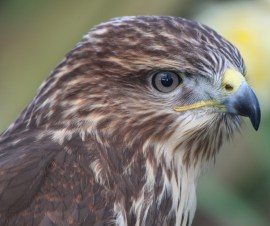
This is outrageous“, said Don McMoron of We Own Scotland. “Not only does this prove that buzzards eat stuff, which is bad enough, but they think they’ve got the right to eat anything that takes their fancy. That’s totally unacceptable and we’re calling on the government to convene an urgent summit to decide what buzzards can and can’t eat”.

Albert Hogburn of the Modern Poisoners Society said: “Aye, I watched the video last night. Did you see that bird in the tweed hot pants with the fantastic tits? Oh…it’s not that video you’re talking about? Er, sorry, got to go, I’ve left some milk on the boil…Er, #TeamPoison all the way, lads”.

In case there’s any doubt, the above is a parody. This, however, is not.

Another shot buzzard found in the Scottish Borders

A dead buzzard found in the Heriot area of the Scottish Borders had been shot, according to the BBC.

Police Scotland are appealing for information after the bird’s decomposed body was discovered close to Carcant Hill on 30th June. A forensic analysis revealed the bird had been shot although it’s not known whether this was the cause of death.

Well done to the new Police Scotland WCO in the Borders, PC Hannah Medley, for publicising this incident within a couple of weeks of the bird being found (her second one this year, following the discovery of a shot buzzard at St Mary’s Loch in March, which she also publicised pretty quickly – see here).

BBC article on latest shot buzzard in Heriot here.

Buzzard shot in the head: police appeal for info

buzzard 3Police in Greater Manchester are appealing for information after a dead buzzard was found in a field in Bolton. X-rays revealed the bird had been shot in the head.
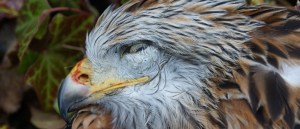
The bird was found by a dog walker on 25th June in a field close to Salford Road and St. Helens Road.

PC Randolph Lyle makes some frankly bizarre statements in the police appeal, e.g. “shooting and killing one [buzzard] can have a devastating impact on their habitat and biodiversity“. Eh? He also seems quite keen to put across an argument that this buzzard wasn’t killed by someone from the game-shooting industry…

Nevertheless, Greater Manchester Police should be credited for at least putting out a press statement, so well done to them for that.

Anyone with information can call GMP on 0161-856-5578 or can make an anonymous call to Crimestoppers on 0800-555-111.

Greater Manchester Police press release here.

Red kite poisoned in Scotland

rk5And so it continues….

Today, the Scottish Government agency responsible for reporting on poisoned animals released the stats for the first quarter of this year (i.e. Jan-March 2013).

You will not be surprised to learn that, yet again, poisoning incidents have taken place and Police Scotland have chosen to suppress the information.

The data confirm that a poisoned red kite was discovered in March in ‘Central Scotland’ – no detailed location information given, naturally. Lab tests show it had been poisoned with Mevinphos. Four months for that information to slip out in a largely un-read government report. The level of secrecy involved in these cases is quite remarkable.

The data also show the poisoned baits that were uncovered at Leadhills in March – interestingly, they confirm the presence of Carbofuran but don’t comment on the number of baits found (which we know was a considerable number – see here) but they do say the baits were found inside gamebags. Four months on from the discovery and we’re still waiting for Police Scotland to make a public statement, not least to warn residents and visitors about the discovery of potentially fatal poison in a publicly-accessible location.

Also included in the data is the discovery of a Carbofuran-laced pigeon bait in Tayside in February 2013. Again, where was/is the public warning from Police Scotland?

It’s just bloody pathetic. Don’t tell us that the information has been suppressed for ‘operational’ reasons – that’s totally ridiculous and isn’t fooling anyone. The suppression of information benefits the landowners and gamekeepers – nobody else.

Compare this suppression of information with the work of Police Wildlife Crime Officers in Devon & Cornwall. Two of their WCOs – PC Josh Marshall and PC Paul Freestone – are so amazingly proactive that as well as having their own personal wildlife crime blogs (here and here), they’ve even set up a Wildlife Crime Group blog for their area (see here). On this blog, you’ll find information providing tips and advice about different types of wildlife crime, as well as information about specific alleged offences. For example, here they report on the recent suspected poisoning of two buzzards, and even provide photographs – all within a few days of the alleged crime being reported. Hats off to those two guys – committed, proactive, helpful and informative (although if you’re reading this Josh & Paul, you might want to revise your information about potential threats to harriers!!).

Back to Scotland….we would like to know why Police Scotland consistently fails to inform the public about alleged raptor persecution incidents, especially those involving the discovery of highly dangerous banned poisons in public areas. The public has a right to be kept informed. Sure, the Police may need a few weeks to conduct their initial investigations without letting on what they’re up to – as we’ve said over and over and over again, nobody in their right mind would want to interfere with that process and jeopardise a potential prosecution – but when it gets to three, four, five months after the incident and its bloody obvious that the investigation is dead in the water, then what possible reason is there for withholding the information, putting the lives of people and animals at risk? Here are some reasons: wanting to appease the landowners and gamekeepers on whose land the poison had been found, and wanting to appease the wider gameshooting industry who just hate to have the truth exposed about poisoning and the other methods of persecution that are being used against raptors on a regular basis.

If you’re also curious about the blanket suppression of information, you could always email the new Police Scotland Wildlife Crime Portfolio Leader, Detective Superintendent Cameron Cavin, and ask him to explain. One question to ask, as a friendly opener, nothing more, might be whether he has ever held membership in a game-shooting organisation, like, ooh, er, let’s say BASC for example, and if so, whether that membership is still held?…. Coincidentally, Det. Super. Cavin also just happens to have strong connections with central Scotland so he might also have information about the progress of the case concerning the poisoned red kite found there in March, or perhaps about the buzzard found there in March that had been caught in an illegal trap and had to be euthanised as a result of its injuries (see here). Bear in mind if you do email him, he’s obliged to reply within 20 working days so he can’t just ignore you, although obviously he can choose to fob you off without providing a satisfactory answer.

Email: Cameron.Cavin@centralscotland.pnn.police.uk