Increase in raptor persecution crimes in 2015

The Partnership for Action against Wildlife Crime (PAW Scotland) has just published the ‘official’ 2015 raptor persecution data, including their annual persecution hotspot maps.

The PAW Scotland press release can be read here and the hotspot maps can be accessed here.

20 crimes against birds of prey were recorded in 2015, which is an increase on the 18 recorded in 2014. The 2015 crimes included six poisoning incidents, five shootings, five disturbance incidents, three trapping or attempted trapping offences and one case of chick theft. The victims included red kite, peregrine, buzzard, goshawk, osprey and hen harrier. Surprisingly, golden eagle isn’t included in the list. We’ll discuss that below.

Having read the press release and looked at the hotspot maps, four things jumped out at us.

First is the increase in recorded raptor persecution incidents in 2015. It’s only a slight increase, from 18 to 20 recorded crimes, but nevertheless it is still an increase. This is important to note, especially in light of a recent statement made by Tim (Kim) Baynes of the Scottish Moorland Group (funded by the landowners’ lobby group Scottish Land & Estates). In December 2015, in response to the publication of the RSPB’s 20-year raptor persecution review, Kim said this:

Bird of prey deaths……have fallen dramatically over the last five years in particular“.

At the time, Kim didn’t back up this claim with any evidence and as the 2015 data have now been published, it’s clear why he didn’t. Basically, the evidence wasn’t there. As Head of RSPB Scotland’s Investigation team Ian Thomson says in the latest PAW Scotland press release:

These latest figures make it readily apparent that claims of a decline in the illegal killing of raptors are wholly without foundation“.

This time, Kim isn’t claiming that there has been a decline but he still tries to diminish the problem by saying “annual variations [in the number of reported persecution crimes] are now very small“. Another way of putting it, Kim, would be to say that no progress has been made!

The second thing to jump out at us is perhaps the most concerning of all, and that’s the withholding of data relating to a quarter of the recorded 2015 crimes. If you read the PAW Scotland press release, you’ll notice the following caveat written in the ‘Notes to Editors’ section:

Further details of 5 of the 20 bird of prey crimes recorded in 2015 are currently withheld for police operational reasons. It has therefore not been possible to include the locations of these incidents on the hotspot maps‘.

So here’s one of the maps purporting to show all types of raptor persecution crimes recorded over a three-year period in Scotland (2013-2015). Only it doesn’t show them all, as 25% are missing. Not only are 25% missing, but also missing are details of poisoned baits (no victims present) that were recorded during this period – for some reason they’ve been placed on a separate map. So when you look at this map, ignore the misleading title. It isn’t a map of ‘All Recorded Bird of Prey Crimes Scotland – 2013-2015’, it’s a map of SOME Recorded Bird of Prey Crimes 2013-2015, just the ones we’re allowed to know about.

ALL Raptor crimes 2013 to 2015

The purpose of publishing these annual hotspot maps and their associated data is, according to the PAW Scotland website, ‘to allow all the partner organisations to enter into meaningful discussions and work together to eradicate bad or illegal practices in Scotland‘. Presumably, because the maps and data are also placed in the public domain, the purpose is also to increase transparency and thus public confidence. What is the point of publishing a proportion of the data and withholding the rest? It just makes a mockery of the whole process. Why bother publishing at all?

The caveat in the ‘Notes to Editors’ section goes on to say:

The [withheld] incidents are, however, included in the figures provided in the summary tables accompanying the maps. The maps and background data will be updated, where possible, in future publications‘.

Sounds promising, but when you actually look at the summary tables you find large sections still marked as ‘withheld’:

Confirmed poisonings 2015

ALL raptor crimes 2015

These ‘withheld’ incidents, shrouded in secrecy, make it virtually impossible to cross reference known reported persecution crimes with those being touted as the ‘officially recorded’ crimes, which closes off any opportunity to scrutinise these ‘official’ data to ensure that incidents have not been ‘missed’ or ‘forgotten’ (we’re being kind). In other words, we are expected to accept and trust the ‘official’ data from Police Scotland as being accurate. Sorry, but having seen Police Scotland’s shambolic handling of some wildlife crime incidents we have limited confidence in their ability, either intentionally or unintentionally, to get this right.

This leads us nicely on to the third thing to jump out at us. As mentioned above, we were surprised not to see golden eagle listed as one of the 2015 victims. According to our sources, a traditional golden eagle eyrie was burnt out in 2015 – we blogged about it here. Why wasn’t this incident included in the 2015 PAW data? Or was it included and it was categorised in the ‘withheld’ category? Who knows. Do you see what we mean about the difficulty of cross-referencing known incidents?

The fourth thing to jump out was an entry in Table 5c (see above). The second line down tells us that a red kite was poisoned in Tayside in January 2015. That’s news to us. Does anybody remember seeing anything in the media about this crime? Any appeal for information? Any warning to the public that deadly poison was being used in the area? No, thought not.

The reticence of the police to publicise some of these crimes is deeply concerning, and especially when that suppression extends to details of crimes in ‘official’ reports that are supposed to demonstrate openness and transparency. Ask yourselves, in whose interest is it to keep these crimes under wraps?

Ross-shire Massacre: two years on

nothingSo, it’s been two years since 22 dead birds of prey were discovered in a small area around Conon Bridge in the Highlands. It was one of the most significant illegal raptor persecution crimes ever uncovered in the UK.

Are we any closer to finding the culprit(s)? Of course not. Here’s what we do know:

  1. 22 dead raptors (16 red kites + 6 buzzards) were found in the same small area over a period of weeks in March/April 2014.
  2. Sixteen of those raptors were later confirmed poisoned: 12 red kites + 4 buzzards.
  3. No cause of death has been given for the other six victims.
  4. The poison used was a banned substance.
  5. Nobody has been arrested.
  6. Nobody has been charged.
  7. Nobody has been convicted.

According to a ridiculous Police Scotland press statement, these birds “were most likely not targeted deliberately but instead were the victims of pest control measures“. Quite how they’d know this without having spoken to a known culprit is anybody’s guess (see here) and until they do, that’s all their conclusion can be, a guess.

The police are still withholding the name of the poison used – we’re told this is ‘for operational purposes’. We’re also told that this is still ‘a live investigation’.

What it actually is is a shambles and it has been from the start.

The first six dead birds were discovered between 18-24 March 2014 and poisoning was immediately suspected. The police put out a press statement on 25th March (here) but at that stage they hadn’t conducted a proper search, so by telling the world about this suspected crime they gave the culprit(s) every opportunity to hide any remaining evidence. A thorough police search didn’t take place until 9th April (see here) – three weeks after the discovery of the first dead birds. Unsurprisingly, no evidence to link the crime to a suspect was found.

Two years on and we’re no closer to seeing justice prevail. It’s just another unsolved raptor-killing crime amongst hundreds of others.

Previous blogs on the Ross-shire Massacre here

Crown Office drops prosecution against Glenogil Estate gamekeeper

Snared fox dead alt, Glenogil Estate, Credit OneKindRegular blog readers will know we’ve been following the case of Scottish gamekeeper William Curr, who had been charged last year with alleged snaring offences on Glenogil Estate in the Angus Glens, said to have occurred in September 2014 (see here, here, here and here).

The charges related to allegations that several snares had not been checked (as they are required to be) within a 24-hour period of being set, after a field officer from the charity OneKind had discovered a dead snared deer, a dead snared fox and another snared fox that was still alive but had to be euthanised at the scene due to the extent of its horrific injuries (see OneKind photo).

For a harrowing description of what was found on Glenogil Estate, including a confrontation with the Head Gamekeeper, read this blog on the OneKind website.

Curr’s trial was due to start on 9th May but last week (10 March) the Crown Office informed the court that it was not going to proceed. OneKind has not yet been able to ascertain the reason for this decision, and in fact may never find out because the Crown Office is under no obligation to explain.

Accountability and transparency, anybody?

To quote from the OneKind blog:

OneKind is mystified by the dropping of this case, given the eye witness evidence, the horrific video footage and the detailed follow-up investigation carried out by the Scottish SPCA. This was a shocking incident where at least six people, including gamekeepers, witnessed the terror and pain of a live fox as the wire noose of a snare sliced into its abdomen. Had our research officer not been on the estate on that particular day, who knows how much longer the fox would have continued to suffer?

To put this dreadful story in the wider context: snares are still legal in Scotland and the rest of the UK. It is simply intolerable that the suffering this fox endured should be considered legally acceptable. The video footage is utterly harrowing and illustrates an animal which is clearly distressed, both physically and mentally. OneKind has long called for an outright ban on all snares and sadly we feel these calls have been justified by this case.

OneKind will seek an explanation for the failure of the Scottish justice system to bring this animal welfare case to court“.

The reason we’ve been so interested in this case is because the alleged offences occurred on the Glenogil Estate, one of several grouse shooting estates in the Angus Glens where wildlife crime incidents keep cropping up but have never resulted in a successful prosecution. For example, here are some incidents reported from in and around Glenogil over the last ten years:

2006 March: poisoned rabbit bait (Carbofuran). Listed as ‘Glenogil’ in RSPB annual report. No prosecution.

2006 April: poisoned buzzard (Alphachloralose). Listed as ‘Glenogil’ in RSPB annual report. No prosecution.

2006 April: poisoned tawny owl (Alphachloralose). Listed as ‘Glenogil’ in RSPB annual report. No prosecution.

2006 May: poisoned rabbit bait (Carbofuran). Listed as ‘Glenogil’ in RSPB annual report. No prosecution.

2006 June: poisoned woodpigeon bait (Carbofuran). Listed as ‘Glenogil’ in RSPB annual report. No prosecution.

2006 June: Traces of Carbofuran found in estate vehicles & on equipment during police search. Not listed in 2006 RSPB annual report but reported here. (Now former) estate owner John Dodd had £107k withdrawn from his farm subsidy payments as a result. This was being appealed but it is not known how this was resolved. Also a write up in RSPB 2007 annual report. No prosecution.

2007 November, Glenogil Estate: Disappearance of radio-tagged white-tailed eagle ‘Bird N’ coincides with tip off to police that bird been shot. No further transmissions or sightings of the bird. Not listed in RSPB annual report but reported here. No prosecution.

2008 May: poisoned white-tailed eagle ‘White G’ (Carbofuran, Isophenfos, Bendiocarb). Listed as ‘Nr Noranside’ in RSPB annual report. No prosecution.

2008 May: poisoned buzzard (Bendiocarb). Listed as ‘Nr Noranside’ in RSPB annual report. No prosecution.

2008 May: poisoned mountain hare bait (Carbofuran, Isophenfos, Bendiocarb). Listed as ‘Nr Noranside’ in RSPB annual report. No prosecution.

2008 May: 32 x poisoned meat baits on fenceposts (Carbofuran, Isophenfos, Bendiocarb). Listed as ‘Nr Noranside’ in RSPB annual report. No prosecution.

2008 October: poisoned meat bait on fencepost (Carbofuran). Listed as ‘Nr Noranside’ in RSPB annual report. No prosecution.

2009 March: poisoned buzzard (Carbofuran). Listed as ‘Glenogil’ in RSPB annual report. No prosecution.

2009 March: poisoned buzzard (Carbofuran). Listed as ‘Glenogil’ in RSPB annual report. No prosecution.

2009 August: poisoned white-tailed eagle “89” (Carbofuran). Listed as ‘Glenogil’ in RSPB annual report. No prosecution.

2010 May: poisoned red kite (Carbofuran). Listed as ‘Nr Noranside’ in RSPB annual report. No prosecution.

2010 September: poisoned buzzard (Chloralose). Listed as ‘Glenogil’ in RSPB annual report. No prosecution.

2010 October: poisoned buzzard (Carbofuran). Listed as ‘Glenogil’ in RSPB annual report. No prosecution.

2010 October: poisoned pigeon bait (Carbofuran). Listed as ‘Glenogil’ in RSPB annual report. No prosecution.

2010 October: poisoned pigeon bait (Carbofuran). Listed as ‘Glenogil’ in RSPB annual report. No prosecution.

2012 April: Remains of buzzard found beside pheasant pen. Listed as ‘Nr Noranside’ in RSPB annual report. No prosecution.

2014 June: shot buzzard. Listed as ‘Glenogil’ in RSPB annual report. No prosecution.

Vicarious liability prosecution: Andrew Duncan (Newlands Estate) part 4

Criminal proceedings continued last week against Andrew Walter Bryce Duncan, who is alleged to be vicariously liable for the crimes committed by gamekeeper William (Billy) Dick in April 2014.

Gamekeeper Dick was convicted in August 2015 of killing a buzzard on the Newlands Estate, Dumfriesshire by striking it with rocks and repeatedly stamping on it (see here). Dick was sentenced in September 2015 and was given a £2000 fine (see here), although he is appealing his conviction.

Proceedings against Andrew Duncan, 71, who is believed to be responsible for the pheasant shoot on Newlands Estate, began in August 2015 and a provisional trial date was set for 23rd November 2015 (see here). However, at an intermediate diet hearing in October, the November trial date was dumped and a notional diet hearing (where a trial date may be set) was set for 18th January 2016 (see here). At the January hearing, proceedings were adjourned again for another notional diet and a debate to take place on 11th March 2016.

At last week’s hearing the case was continued again, pending the result of William (Billy) Dick’s appeal.

The next installment of Andrew Duncan’s case will be heard on 4th April 2016.

Vicarious liability in relation to the persecution of raptors in Scotland (where one person may potentially be legally responsible for the criminal actions of another person working under their supervision) came in to force four years ago on 1st January 2012. To date there have been two successful convictions: one in December 2014 (see here) and one in December 2015 (see here).  One further case did not reach the prosecution stage due, we believe, to the difficulties associated with identifying the management structure on the estate where the crimes were committed (see here).

Previous blogs on the Andrew Duncan case here, here and here.

Mass raptor poisoning in Wales: police respond but questions remain

Following on from yesterday’s blog (see here) about the illegal mass poisoning of raptors in the Powys region of Wales and our question about whether Dyfed-Powys Police had covered up this atrocity…..

Poisoned RK Powys

Chief Constable Simon Prince (head of Dyfed-Powys Police, Chair of the PAW UK Steering Group and ACPO lead on wildlife crime) sent us a tweet yesterday saying he would investigate our report and provide an update. He was as good as his word as this evening he sent us another tweet directing us to a statement that has just been added to the police website. In case it disappears, we’ve reproduced it here:

In response to blog by Raptor Persecution Scotland

Dyfed Powys Police take allegations of wildlife crime very seriously and investigates all incidents reported to us. Following information received in 2012 and 2013, relating to the deaths of raptors in Powys, a full investigation was carried out in partnership with the RSPB, the National Wildlife Crime Unit and the Wildlife Management Team in the Welsh Government.   During the investigation a number of search warrants under the Wildlife and Countryside Act were executed and two people were arrested in connection with the incidents. A file of evidence was subsequently submitted to the Crown Prosecution Service who advised that there was insufficient evidence to proceed with a prosecution.

END

We’re grateful to Chief Constable Prince for replying so promptly but this police statement leaves a lot to be desired and a lot of questions still unanswered.

The statement tells us that an investigation was undertaken, and this is further verified by a detailed blog written by one of the RSPB investigations team that has just appeared on the RSPB website (here). Good, we shouldn’t expect anything less. But, as is common in so many of these raptor persecution cases, the evidence was insufficient to proceed to a prosecution. That doesn’t mean that the mass poisoning didn’t occur – it clearly did – but it was not possible to identify a named suspect to face charges. We’re not going to criticise the police for that, especially after reading how pleased the RSPB investigator was with the police’s efforts during the investigation.

However, the focus of yesterday’s blog was whether Dyfed-Powys Police had embarked on a ‘cover-up’ of this mass raptor poisoning and that question still remains open. This crime has been described by the RSPB investigator as “the most significant wildlife poisoning case ever recorded from Wales, and the second highest recovery of poisoned birds of prey in any UK investigation during the last 40 years“. So why has Dyfed-Powys Police not made any public statement about it until we started asking questions yesterday? Surely it’s in the public interest to know about this?

In the recent past it has been standard practice for this police force, and other Welsh police forces, to make public statements about other (much smaller and thus less significant) poisoning/persecution incidents – e.g. see here, here, here, here and here. These statements can include an appeal for information and/or a warning to members of the public to be aware of dangerous toxic poisons in the local vicinity.

So just what is it about this mass poisoning crime that Dyfed-Powys Police has kept quiet about it for so long, even after the investigation had concluded?

You’ll note in the above police statement that the location has not been revealed. You’ll also note in the RSPB investigations blog that the location is given as a sporting (pheasant shooting) estate in the Brecon Beacons National Park, although the estate is still not named.

We think we’ve got a pretty good idea why this mass poisoning crime has not previously been made public (we’d call that covering it up). Since we published yesterday’s blog, several people have contacted us privately and each has named the same estate as being at the centre of the investigation. We’re not yet in a position to publish that estate name because we need to verify a few things first. But OH MY GOD. If it does turn out to be this estate, you’ll not struggle to put two and two together.

Photo of one of the poisoned red kites found on a pheasant shooting estate in the Brecon Beacons National Park, by Guy Shorrock (RSPB).

Ross-shire Massacre discussed at RACCE meeting

RK5Back to the Rural Affairs, Climate Change & Environment (RACCE) committee meeting in January….

The topic of the Ross-shire Massacre was raised again. For new readers, the Ross-shire Massacre refers to the discovery of 22 dead raptors in a small area of Conon Bridge in the Highlands in March 2014. Sixteen red kites and six buzzards were found dead: 12 red kites and 4 buzzards have since been confirmed to have been poisoned by a ‘banned substance’. There have been no arrests to date. Our last update was on the 18 month anniversary (here) and we’ll be writing more when the two-year anniversary rolls around in March.

In the meantime, here’s the discussion from the RACCE committee meeting in January. In a nutshell, 22 months on from one of the biggest mass raptor poisonings uncovered in Scotland, the police have no progress to report:

Dave Thompson MSP (Skye, Lochaber and Badenoch) (SNP): This concerns the cases involving raptors up in Ross-shire. I have a couple of letters from Police Scotland in that regard, and I want to tease out one or two little points. One of the letters refers to the “consequence of a … use of a banned substance” and to the belief “that the raptors may not have been the specific target”. The second letter makes it very clear regarding one case that “there are limited opportunities to progress unless someone comes forward with information.”

You are probably aware that I have asked for some kind of interim report into the initial handling of that case. I was told in that letter that “Police Scotland does not produce ‘interim reports’ during a live investigation”. Given that the case in question could be live for the next 20 years, we are never going to get an opportunity to consider how things were initially handled in relation to the matter. There are concerns in the community and elsewhere that there was perhaps some unnecessary delay and so on. Given that there will be “limited opportunities to progress unless someone comes forward” with evidence, have you carried out, or do you plan to carry out, any internal investigation as to how the investigation itself was initially carried out? If so, have you learned any lessons from that? Will you able to make any of that public at any point?

Assistant Chief Constable Graham: We had a fairly lengthy discussion last year about the current state of the case at that stage. Some similar points were raised about the handling of the matter in the media—that was about press statements, if I remember correctly. There was a desire to review our approach.

At the heart of the letter to which you have referred is the point that having the police produce a report is not necessarily the best way to address the issues. However, I would be very happy to be involved in something in future with a range of organisations and interested parties, including yourself, whereby we are able to sit down and gather what the concerns are. We are aware of most of them. We could work through how we could do things differently in future, and we could achieve that even within the scope of a live investigation, which would not require the police to produce a report as such. As I say, producing a report might not be the most effective approach.

As I reported last year, we have done a number of things internally to review the investigation at senior detective level, which is unprecedented in a wildlife crime investigation. We had what we call a major investigation advisory group meeting, with a process around that. That has been subject to both peer and senior officer review, assessment and support. Notwithstanding all that, we have not arrived at a position where we have been able to solve the crimes, as it were, although that is not to say that we will not in the future.

Therefore, I would still be cautious in ensuring that we do not do anything to prejudice any potential future cases. A lot of information is still being received about the case. Much of that is statements or reports along the lines of, “Everybody knows who’s done it”, “We all know what’s gone on”, or “Everybody knows where the police should be looking.” I can assure the committee that we have followed up every statement in which we can identify the individuals involved. That includes people coming to us or people whom we have been made aware of who have made such statements publicly or privately.

The committee might have had feedback indicating that people are surprised when we have taken a statement from them after quite some time has passed. Unfortunately, in every single case, the statement has turned out to be without substance. We have spoken to everybody we possibly could and, although there is a general perception that everybody knows who did it, no one has been able to give us their names. Given the huge effort that has gone into—and continues to go into—the inquiry, we should have a caveat here because of public concern about perceived police inaction. The case is still sitting with the detective superintendent in Inverness, who is the lead investigator. I have been assured by him, as recently as last week, that there is still an active review and engagement on any potential lines of inquiry that come to light.

A short documentary was recently aired on the internet that interviewed a number of people. We picked up a number of lines from that, which were similar to previous statements in which people asserted that everybody knew who had done it. However, no one in the documentary knew who had done it, because we have spoken to them all.

Dave Thompson: You suggested a meeting between a range of bodies and parties, perhaps including myself. It would have to be before 23 March, because I am not standing again, although I am sure that my successor—whoever that is— would be happy to take part. Such a meeting would reassure people. Although the public accept that the police continue to look into the case and that they would dearly like to get any evidence that would allow them to conclude it, there are questions about how the police went about things at the beginning. Such a meeting would be really useful because frank discussions could take place and the issue could be talked through, without you having to divulge things that might prejudice the case. I would welcome such a meeting, if you are offering one.

Assistant Chief Constable Graham: I am, and I offer to do it before 23 March.

Head gamekeeper Simon Lester resigns from Langholm Moor Demonstration Project

Langholm moorThere had been rumours for a few days and now it’s confirmed: Simon Lester, the head gamekeeper at the Langholm Moor Demonstration Project has resigned.

A statement has appeared on the Langholm Project website and is reproduced as follows:

Simon Lester, the LMDP’s headkeeper, has resigned from the project and will be leaving at the end of March 2016. Simon has provided tireless leadership to the five-man keepering team which has undertaken the key management actions for the project. These have resulted in significant improvement of the heather habitat, the effective use of fiversionary feeding of hen harriers each summer and the management of parasites and predators. These measures have increased the numbers of red and black grouse, and breeding raptors, notably hen harriers. This mixture of traditional and novel management has been successfully demonstrated to hundreds of project visitors by Simon in collaboration with the project’s science team.

Despite a larger grouse population than at the start, the project has not been able to produce a sustainably large, harvestable surplus of driven grouse to economically underpin the management. LMDP is now close to its formal end point and the board is reviewing what can and should be achieved in the remaining term of the project. The project board would like to thank Simon for his exceptional contribution.

It’s an interesting time for him to go, eight years in to a ten-year project. The official statement doesn’t explain his reasons, and nor should it as they’re personal, but it will inevitably lead to speculation.

Perhaps it’s because there (supposedly) hasn’t been an opportunity to begin driven grouse shooting on the moor, which is one of the fundamental aims of this project, although it has been argued that the decision not to shoot has been a political one. Grouse densities at Langholm in 2014 had recovered to the same densities that had allowed driven grouse shooting to take place there in the early 1990s, so why the decision not to shoot now? Many of us think it’s so the grouse-shooting industry can claim that the Langholm Project has ‘failed’, in order for them to persist with their argument that driven grouse shooting can’t function with all those pesky raptors around, even though years of research at Langholm have not produced a scrap of scientific evidence to show raptor predation has a large impact on the red grouse population. According to Langholm Project director Mark Oddy (of Buccleuch Estates), what is required now is lethal raptor control at Langholm (see here). Ah, there’s that ‘local knowledge is just as important as scientific evidence’ piece of guff theory.

Given Simon Lester’s view on raptor culling (he thinks it should happen – see here and here), we thought he might have stuck around at Langholm to see his dreams fulfilled. Although perhaps he realises that the chances of licences being issued to kill buzzards, based on no scientific justification whatsoever, are limited.

Scrolling down the Langholm Project website, it’s fascinating to see what else has been mentioned, or more interestingly, what hasn’t been mentioned.

There’s a bit about one of the guest blogs that appeared on Mark Avery’s website (here) that reported on a presentation given at a GWCT seminar about the Langholm Project, but strangely, there’s no mention of the second guest blog (here) where Mark Oddy (Buccleuch Estates) proclaimed lethal raptor control as the next step forward in the Langholm Project. How odd!

Scroll down a bit further on the Langholm Project website and you’ll find a statement about the illegal shooting of hen harrier ‘Annie’, one of the Langholm-hatched birds. Strangely, there’s no mention of where Annie’s corpse was discovered other than “an area over 40km to the north west of Langholm Moor”. The statement is strangely quiet about the fact that Annie’s corpse was found on a grouse moor on, er, Buccleuch Estates, part of the same estate where the Langholm Project is based. Why so coy? Just because her corpse was found there doesn’t mean that’s where she’d been shot, so why exclude this important detail?

All very odd.

It’ll be interesting to see what happens next at Langholm. Will they employ a replacement head keeper and continue for the final two years, or will they decide to close the project early and declare it a failure?

More raptors illegally killed in Peak District National Park: police appeal 5 months later

Derbyshire Constabulary has today issued a press release appealing for information following the illegal killing of an Osprey (caught in a spring trap) and a buzzard (shot) that were discovered in the Peak District National Park last September. The RSPB is offering a £1,000 reward for information that leads to a conviction.

Here’s the press release:

Derbyshire Police and the RSPB are appealing for information following the illegal killing of two birds of prey near to Glossop, Derbyshire. A £1000 reward has been offered by the RSPB for information leading to a conviction.

On September 09, 2015, a dead osprey was found to the west of Derbyshire Level. A post mortem on the bird revealed that both its legs had been recently broken, injuries which were consistent with it being caught in a spring trap prior to its death. Ospreys are rare visitors to the Peak District and this one would have been on migration to West Africa.

On September 30, a buzzard was found shot dead close to Hurst Reservoir, only a short distance from where the osprey was found. This follows the shooting of another buzzard in the same area in March 2014.

Sergeant Darren Belfield from Derbyshire police said: “I would appeal to anyone who might have any information as to who may be responsible for these cruel acts to contact the police on 101. The continued persecution of birds of prey in the Peak District is totally unacceptable. If you suspect someone of committing any crimes against wildlife, act now. Your call will be dealt with in confidence. If you don’t feel you can talk to the police, pass the information to us through Crimestoppers by ringing 0800 555 111.”

RSPB Investigations Officer Alan Firth said: “Yet again, we are seeing the senseless killing of fantastic birds of prey in the National Park.”

Last year, the RSPB published its annual Birdcrime Report 2014, which revealed Derbyshire as one of the worst places in the UK for bird of prey persecution. In 2014, the RSPB received 16 reports of bird of prey incidents in the county including a shot buzzard, a shot sparrowhawk and an illegally trapped goshawk.

END

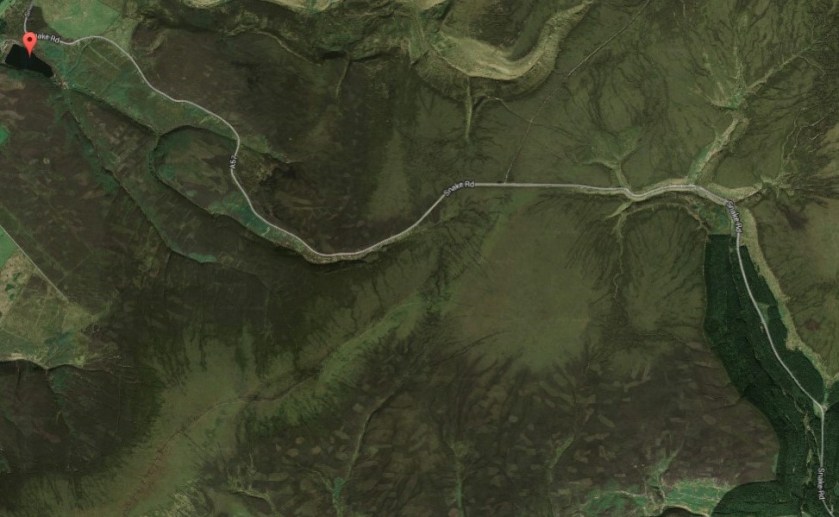
So these birds were found “close to Hurst Reservoir”. Have a look at this map and see what else is “close to Hurst Reservoir” (reservoir marked with the red pin). See those tell-tale rectangular strips of burnt heather to the south and south-east of the marker? Quelle surprise, it’s driven grouse moor country.
Hurst Reservoir - Copy

You may remember back in November we blogged about the failed ‘Bird of Prey Initiative’ in the Dark Peak region of this National Park. It was a five-year project aimed at restoring the populations of several raptor species in the area and involved various organisations: The Moorland Association, The National Trust, Natural England, Peak District National Park Authority, and the RSPB. None of the targets were met (see here). In response, the Moorland Association and the Peak District National Park Authority said they’d make ‘renewed commitment’ to protect raptors in the National Park (see here). Riiiiiight, that’s working well then.

Interestingly, the failed initiative was widely reported in the local press, including the Derbyshire Times, whose article on 26th November was entitled ‘Birds of prey killed and abused in Derbyshire’. In reponse to that article, Robert Benson, Chairman of the Moorland Association, penned the following letter:

I would like to emphatically state in response to your story, ‘Birds of prey killed and abused in Derbyshire’, on November 26th, that one single bird of prey killed illegally is one too many.

However, the Moorland Association was heartened to see RSPB’s latest bird crime figures show a dramatic cut across the UK. Significant reductions in the illegal trapping of birds of prey represent a 78 per cent drop since 2013, with just four confirmed incidents last year.

Of the 19 prosecutions for wild bird offences, three involved gamekeepers, but none were employed on moorland managed for grouse shooting.

Our members spend £52.5 million a year maintaining and conserving habitats which benefit all moorland wildlife. This year, grouse moor managers in England were praised for their part in the most successful hen harrier breeding season for five years.

Many other threatened species, such as lapwing, curlew, and golden plover – in serious decline elsewhere – are doing well on managed moorland. Not birds of prey, but wild, endangered and important nonetheless.

Wildlife crime is being successfully tackled. We already have a robust wildlife licensing system which needs to be used fairly to manage conflict between rapidly increasing bird of prey populations and legitimate and beneficial land use“. Robert Benson, Chairman, Moorland Association.

END

So there we have it. According to Robert, everything’s just rosy, grouse moors are great, and there are too many raptors so gamekeepers should be given licences to kill them legally.

The thing is, Robert Benson is not telling the whole story. He’s right to say that there were four confirmed illegal trapping incidents recorded in 2014, but what he ‘forgot’ to mention was that those four incidents were just a fraction of the 478 incidents of illegal raptor persecution recorded in 2014, including 179 reports of illegal shooting and destruction (of which 46 raptors were confirmed victims) and a further 53 confirmed victims of illegal poisoning. Doesn’t sound quite so rosy now, does it, Robert? He also ‘forgot’ to mention that Derbyshire was the 4th worst region in the UK for raptor persecution crimes in 2014. Oh, and he also ‘forgot’ to mention the quote from the National Wildlife Crime Unit:

Intelligence continues to indicate a strong association between raptor persecution and grouse moor management“.

One for you anagram fans: Moorland Association = A sad morons’ coalition.

Here are some photos of the latest victims (photos by RSPB)

An x-ray of the shot buzzard:

shot BZ PDNP Sep 2015 - Copy

The osprey alive, with two smashed up legs:

osprey springtrapped PDNP Sep 2015 - Copy

The osprey dead, with two smashed up legs:
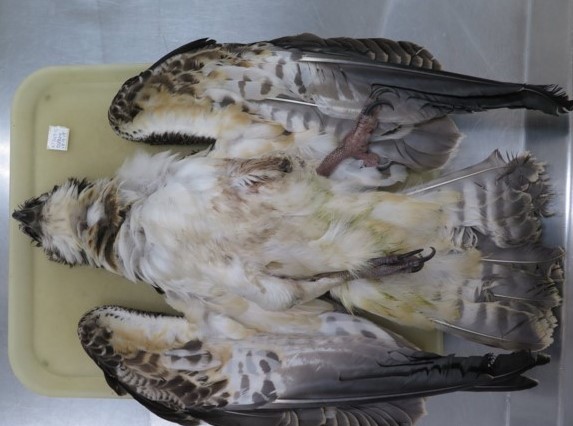
osprey springtrapped 2 - Copy

The osprey’s smashed up right leg:

osprey right leg - Copy

Vicarious liability prosecution: Andrew Duncan (Newlands Estate) part 3

Criminal proceedings continued yesterday against Andrew Walter Bryce Duncan, who is alleged to be vicariously liable for the crimes committed by gamekeeper William (Billy) Dick in April 2014.

Gamekeeper Dick was convicted in August 2015 of killing a buzzard on the Newlands Estate, Dumfriesshire by striking it with rocks and repeatedly stamping on it (see here). Dick was sentenced in September 2015 and was given a £2000 fine (see here), although we understand he may be appealing his conviction.

Proceedings against Andrew Duncan, 71, who is believed to be responsible for the pheasant shoot on Newlands Estate, began in August 2015 and a provisional trial date was set for 23rd November 2015 (see here). However, at an intermediate diet hearing in October, the November trial date was dumped and a notional diet hearing was set for 18th January 2016 (see here).

A notional diet hearing is where an actual trial date may be set.

However, at yesterday’s hearing proceedings were adjourned again for another notional diet and a debate, to take place on 11th March 2016.

Vicarious liability in relation to the persecution of raptors in Scotland (where one person may potentially be legally responsible for the criminal actions of another person working under their supervision) came in to force four years ago, on 1st January 2012. To date there have been two successful convictions: one in December 2014 (see here) and one in December 2015 (see here).  One further case did not reach the prosecution stage due, we believe, to the difficulties associated with identifying the management structure on the estate where the crimes were committed (see here).

Appalling Police Scotland response to two suspected raptor crimes

BOPwildlifecrimeposter2015 - CopyRegular blog readers will know that we’ve frequently had cause to criticise Police Scotland’s response to suspected wildlife crimes that have been reported to them. Well, we’re about to do it again over their mishandling of two recently reported suspected wildlife crime incidents, one in Dumfries & Galloway and one in South Lanarkshire.

Before we get to the details of the latest fiascos, have a read of the following text that appeared in on page 32 of RSPB Scotland’s recently published 20-year review of raptor persecution:

After the initial finding or reporting of a potential wildlife crime incident, a rapid and properly-directed follow-up is essential to prevent any evidence being removed by the perpetrator, further wildlife falling victim to illegal poisons or traps, removal of victims by scavengers or decomposition of victims. Any of these factors can render obtaining forensic evidence or an accurate post-mortem impossible. In our experience, however, the speed and effectiveness of follow-up investigations and securing of evidence has been highly variable‘.

It is apparent, from the following two incidents, that Police Scotland is still failing to get the basics right.

Incident 1

A member of the public found a decomposing dead buzzard on a grouse moor in an area well-known for its history of raptor persecution. The corpse was found on Saturday 19th December 2015. It was reported to members of the local Raptor Study Group who went to the grid reference provided (just 150 yards from a main road) and confirmed it was indeed a dead buzzard. They reported it to Police Scotland on the morning of Monday 21st December and were told that an officer would attend to collect the corpse and send it for post mortem. Raptor workers went back to the site the next day (Tuesday 22nd) and the corpse was still there. They returned on Wednesday 23rd and the corpse was still there. They returned on Thursday 24th and the corpse was still there. They returned on Saturday 26th and the corpse was still there. They returned on Sunday 27th and the corpse was still there. They returned on Monday 28th December, one week after reporting it to the police, and the corpse had gone. Whether it had finally been collected by Police Scotland or whether it had been scavenged by an animal or removed by a gamekeeper, nobody knows.

Incident 2

On 28th December 2015 a member of the public found a freshly-dead buzzard in a wood, with no obvious cause of death. Previously, snares placed over the entrance of a badger sett had been found in this wood. The nearest grouse moor is approx 1.5 miles away. Because of the history of the location, the member of the public was suspicious and took the buzzard home and called Police Scotland on 101. The member of the public was told by the Police Scotland call operator that the police were unable to help. “In fact at one point he suggested that I take it to a vet or call the ‘RS bird people’. He said that the police could only help if they actually caught the offenders at the scene in which case they would be prosecuted for poaching“. Undeterred, the member of the public found an email address for the local police wildlife crime officer but got an out-of-office reply saying nobody was available until 17th January 2016. Fortunately, a local raptor worker was able to collect the corpse and got in touch with RSPB Scotland who organised for the bird to be sent for post mortem.

The Police Scotland response to both of these incidents was appalling. Now, it may well turn out that in both cases the birds died of natural causes and no crimes had been committed. However, it’s equally plausible, especially given the incident locations, that these birds had been killed illegally. The point is, it’s Police Scotland’s job to investigate these incidents and determine whether a crime has been committed. Their action (and inaction) in these two cases could have severely compromised the outcome.

You may remember a similar incident, not a million miles from these two locations, that happened in 2014. In that case, a dead peregrine had been found by a member of the public but Police Scotland again failed to attend the scene, saying it wasn’t a police matter (see here). The peregrine was collected by RSPB Scotland and the post mortem revealed it had been poisoned with the banned pesticide Carbofuran. Police Scotland’s failure to attend that incident caused quite a stir, with the story being covered in a national newspaper (here) and it also led to questions being asked in Parliament about Police Scotland’s failed response (see here). Police Scotland denied they’d done anything wrong!

In March last year, following the publication of a damning report on the police’s response to various types of wildlife crime incidents over several years, Police Scotland launched an all-singing-all-dancing Wildlife Crime Awareness Campaign, endorsed by the Environment Minister (see here). This campaign (which we welcomed – see here) focused on the six national wildlife crime priorities, including raptor persecution, and included the production of all sorts of campaign material (posters etc) designed to encourage members of the public to report suspected wildlife crimes. That’s all good, but what’s the point if Police Scotland then can’t get their act together to provide a professional response when members of the public report suspicious incidents?

Is it really so hard?

If they’re under-resourced, fine, then they should say so and should be supporting the move to increase the investigatory powers of the SSPCA, not trying to block it. Talking of which, when will Environment Minister Dr Aileen McLeod make a decision on the SSPCA’s powers? It’s now been 16 months since the public consultation closed. Getting to grips with wildlife crime is supposed to be a ‘key priority’ for the Scottish Government. In February, it’ll be five years since the consultation was first proposed!