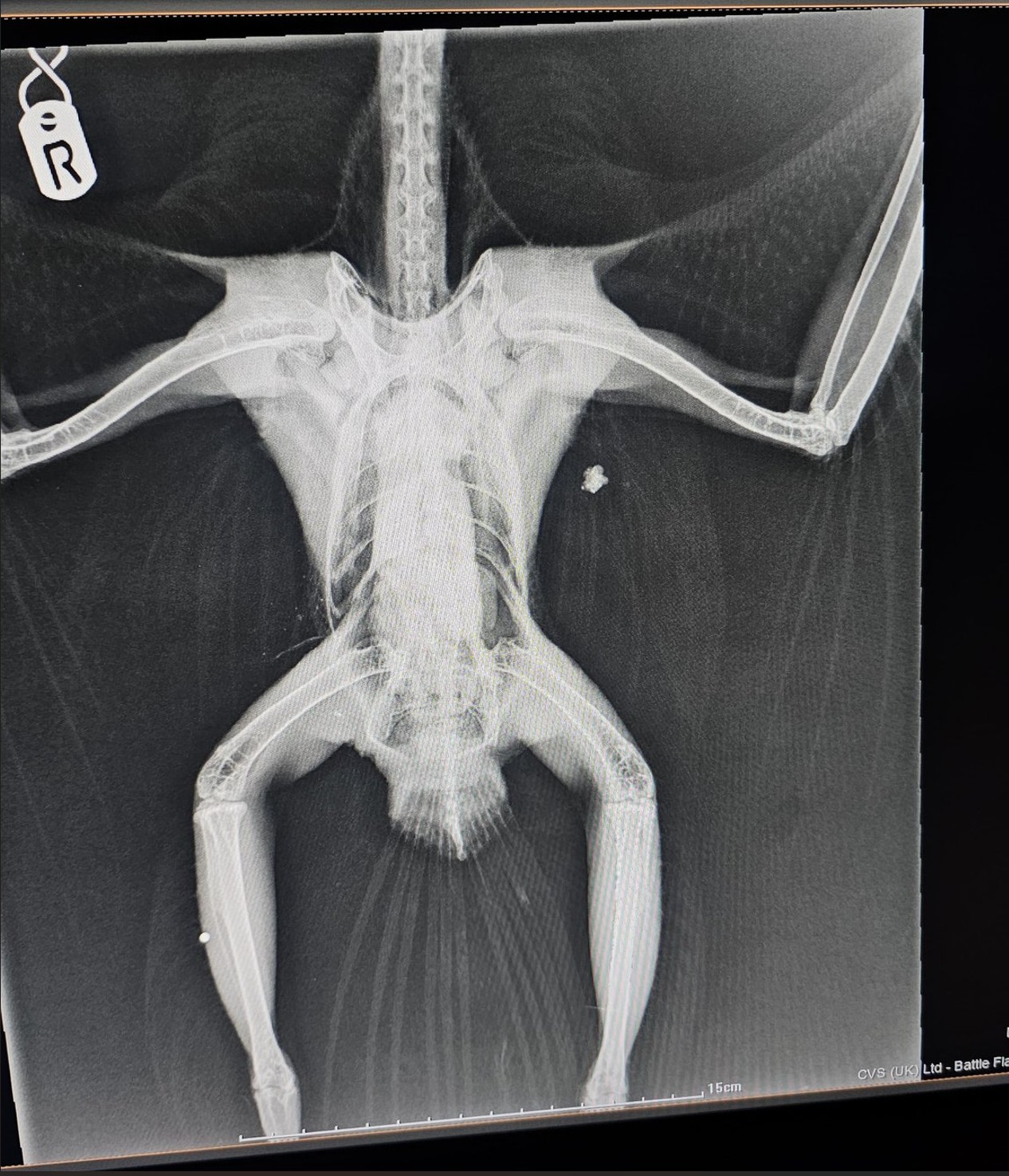
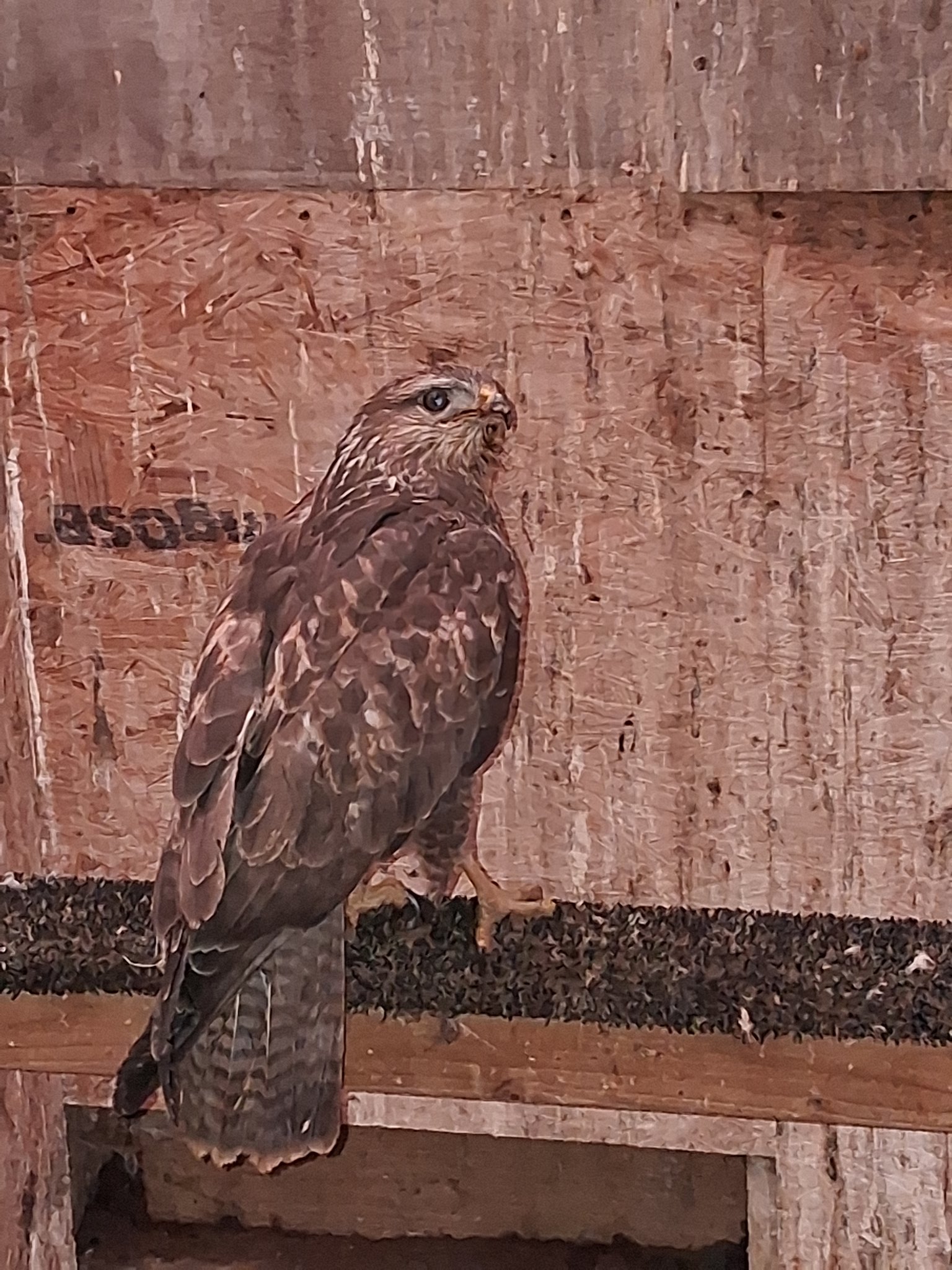
Raptor rehabilitation expert Jean Thorpe posted on social media yesterday about an injured Buzzard that was found grounded near Wigginton, York.
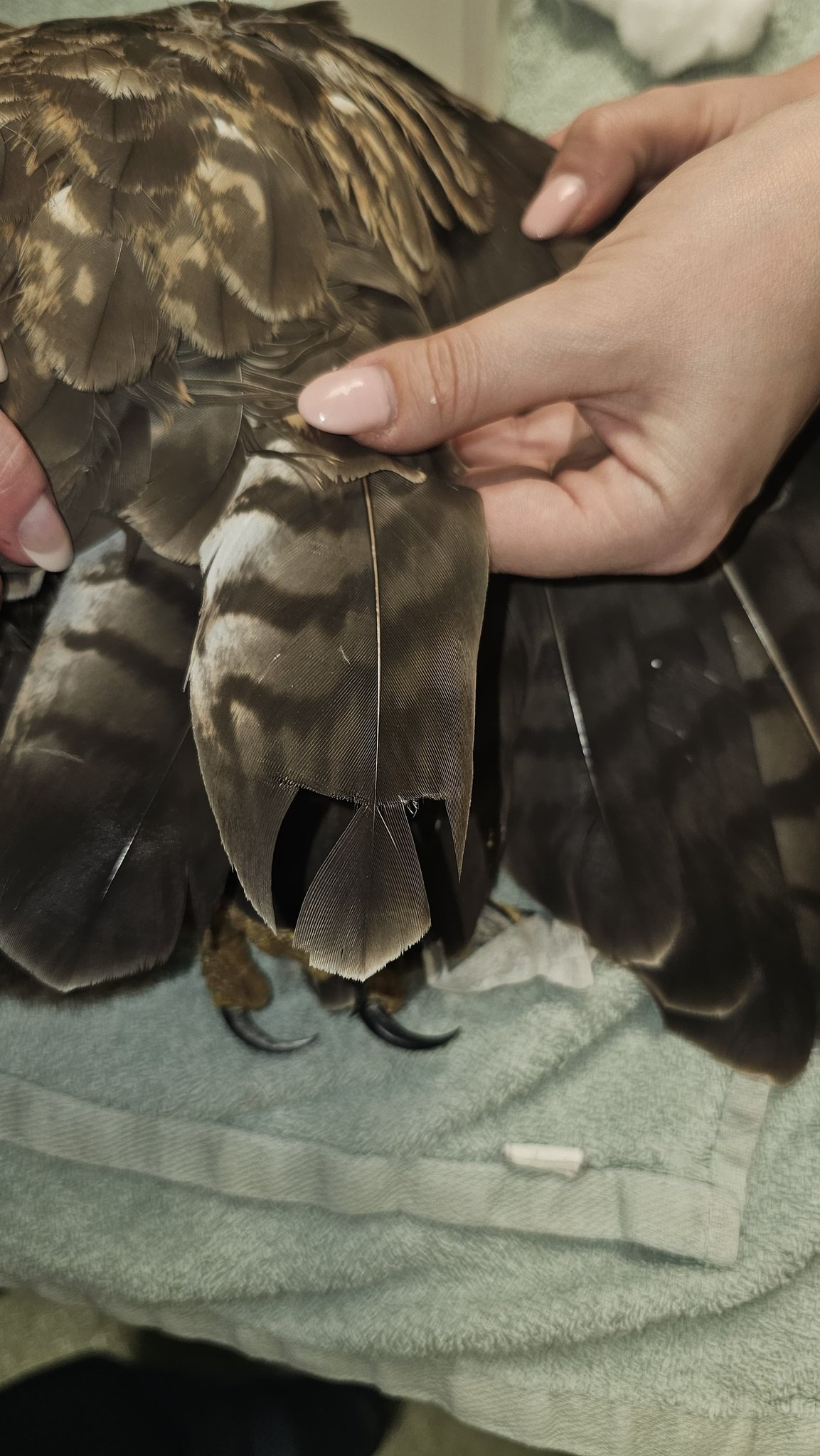
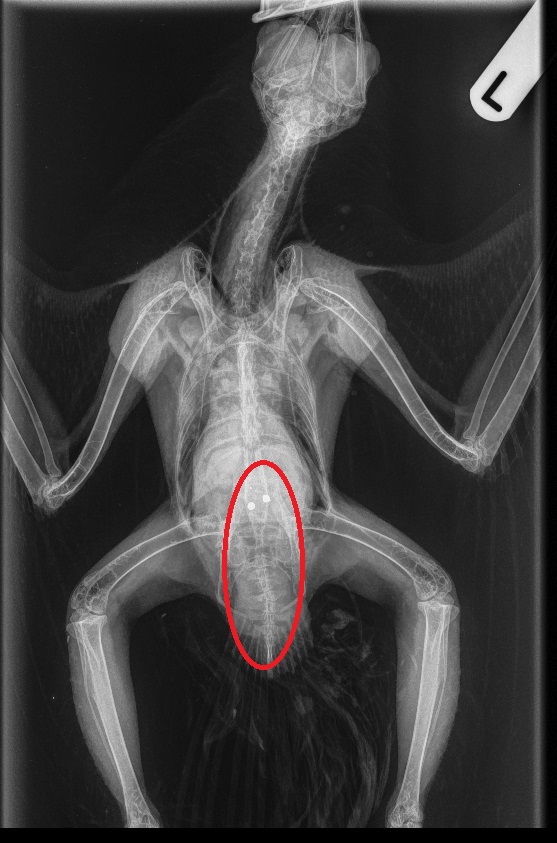
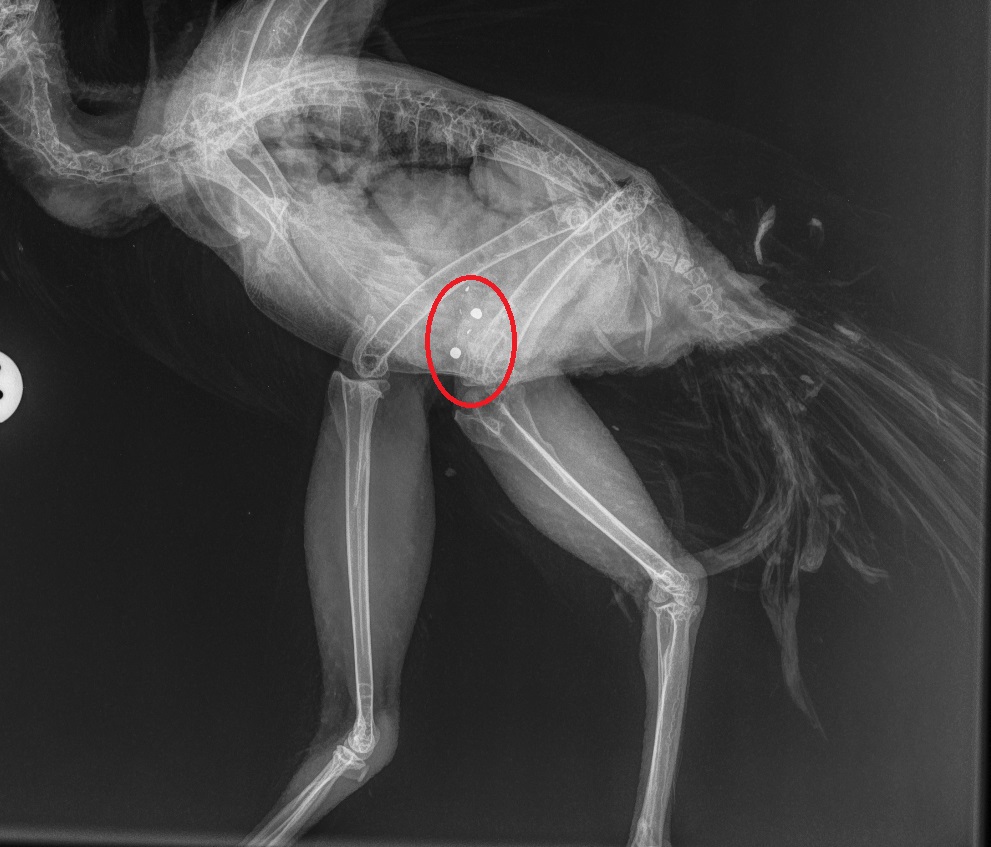
The Buzzard was taken to Battle Flatts Veterinary Clinic where an x-ray revealed a shotgun pellet lodged in her leg and associated feather damage.
The Buzzard is currently undergoing rehabilitation with Jean.
The Buzzard was found on 26 January 2026. If you have any information about this, or any other raptor persecution incidents in North Yorkshire, please contact the police and the RSPB Investigations Team.
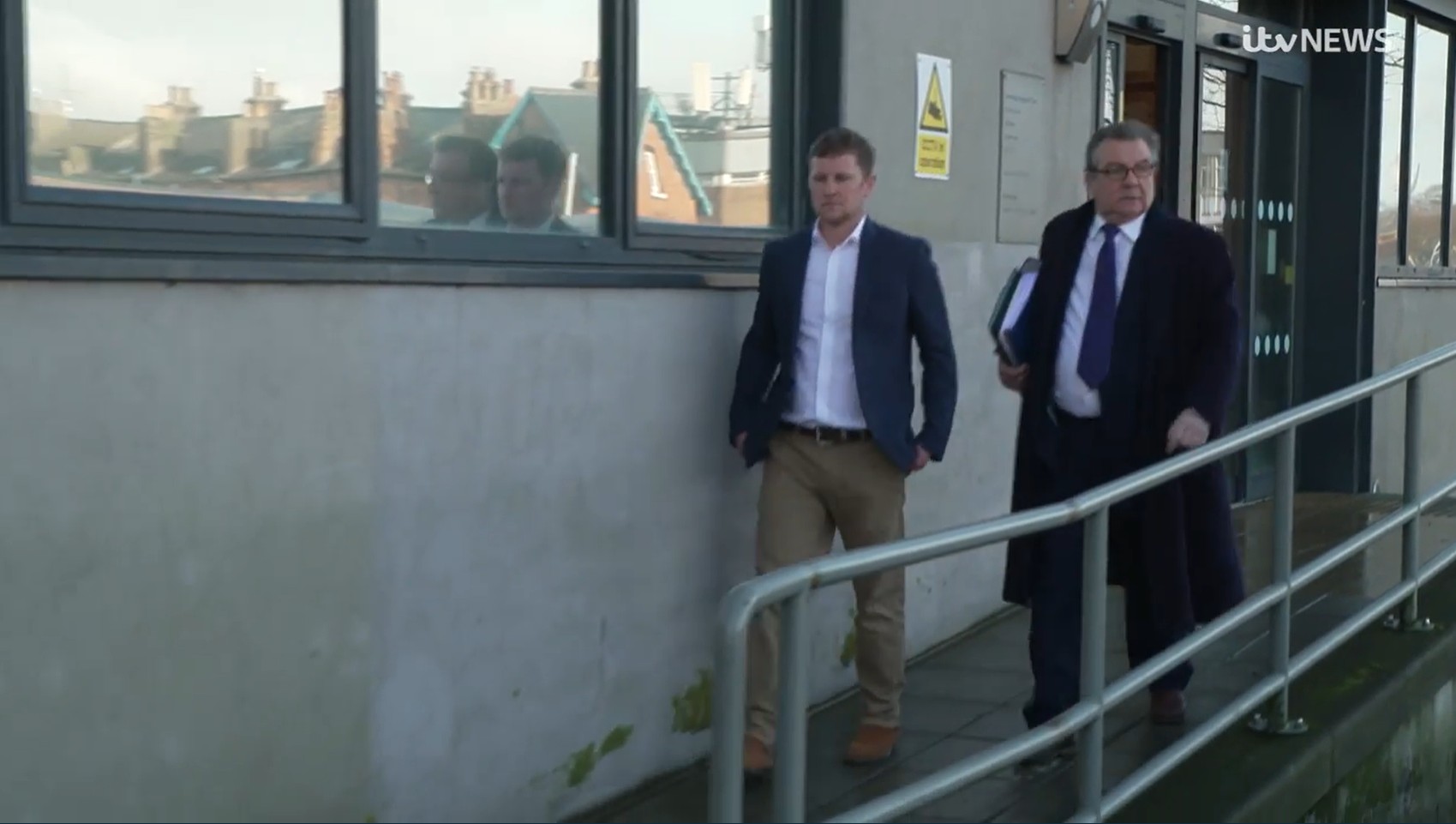
On Monday this week, former gamekeeper Thomas Munday appeared at Scarborough Magistrates’ Court where he was convicted of killing a Buzzard in March 2024 on land owned by the Hovingham Estate in North Yorkshire and was fined £1,215 (see RSPB press release here).
The case drew wide media attention, not least because it centered on disturbing footage captured on an RSPB covert camera showing Munday brutally beating to death the Buzzard that had been captured inside a Crow cage trap. The violence was appalling, and according to a piece on ITV news, even Munday’s solicitor told the court that his client had done “an incredibly cruel thing, it wasadisgusting aberration“.
Thomas Munday (on the left) leaving court with his solicitor (screengrab from ITV News footage)
I said I’d return to this case to provide some commentary. I’m interested in three different aspects of the case: the charge against Munday, the sentence he received, and the location of the crime.
THE CHARGE
Munday was charged with intentionally killing a protected wild bird, a Buzzard. That’s an obvious offence and was clearly evidenced by the RSPB’s video footage. Munday pleaded guilty at the first available opportunity.
But to my mind there were other charges that could have been brought against Munday. For example, using a cage trap to kill or take a protected wild bird, possession of an article (the stick) capable of being used to commit an offence, and perhaps even going equipped (the ATV) to commit an offence.
However, the main additional charge I would have expected to see, based on the video footage, was that of causing unnecessary suffering to the Buzzard (Section 4 of the Animal Welfare Act 2006).
It’s beyond doubt, to me, (and apparently to Munday’s solicitor – see above) that that Buzzard suffered unnecessarily due to the two bouts of inhumane and cruel beating caused by Munday.
The courts are expected to treat animal cruelty seriously, as evidenced by the guidelines provided by the Sentencing Council – see here.
If you follow the step-by-step process outlined by the Sentencing Council, Munday’s actions could be determined as being of either High Culpability or Medium Culpability, and the harm caused (death) falls under Category 1 (the most serious level of harm caused).
Sentencing guidelines for offences determined to be High Culpability Category 1 start at two years’ custody. For Medium Culpability Category 1 offences, the starting point is 26 weeks’ custody.
I wonder why the CPS chose not to bring any charges other than that of intentionally killing a protected wild bird (the Buzzard)? Or maybe the CPS did bring other charges and there was a plea bargain? Along the lines of, ‘My client will plead guilty if the other charges are dropped’? That’s a common and legitimate feature of many criminal prosecutions but if that did happen in this case, why did the CPS accept? Was it a case of getting a quick and easy conviction in the bag and let’s move on to the next case?
This is all conjecture, of course, and until there’s better (any!) transparency about charging decisions then we’ll never know.
THE SENTENCE
Munday was fined a total of £1,215 for killing the Buzzard. This amount was broken down as follows:
£807 – fine
£323 – surcharge
£85 – costs
Some people, and I’m one of them, will consider that this level of fine does not reflect the seriousness of the offence and is at the lower end scale available to the courts. As the RSPB stated in its press release after Munday’s conviction, ‘This penalty provides little deterrent to others who may consider committing similar crimes and fails to reflect the casual and callous acts of cruelty involved‘.
I’ve seen some argue that the other consequences Munday faced (i.e. losing his firearms and shotgun certificates, losing his job, losing his home), in addition to the fine, is sufficient penalty for him. I disagree. Losing a job and home is no different to someone being made redundant, through no fault of their own, and having to relocate to find work.
According to media reports, Munday has re-trained (now a tree surgeon, apparently, so need for firearms/shotgun certs), is employed and has moved away from the house he was renting. Paying off a £1,215 fine shouldn’t be too much of a burden to him.
In addition, this case utilised forensic expertise (including examination of the bloodied stick to identify Buzzard DNA, and swabs taken from the vehicle in to which the bludgeoned Buzzard had been thrown). This work was conducted by the Wildlife DNA Forensic Unit at SASA in Scotland, paid for by the Forensic Analysis Fund (to which organisations like Wild Justice, Northern England Raptor Forum, Tayside & Fife Raptor Study Group, Devon Birds, Rare Bird Alert and many individual donors, including this blog’s readers, have contributed – see here).
One of the conditions of using the Forensic Fund for raptor persecution cases is that if the case progresses to court and costs are recoverable, an application must be made to the court to recover those costs, and any amounts recovered must be reimbursed back into the Forensic Fund to be used for other cases.
In this case, an application was made to the court to recover the costs of the forensics work but the magistrates said that a reimbursement wasn’t possible because the forensics work ‘wasn’t necessary’ to the case.
To explain – Munday committed his offence in March 2024. The RSPB passed on the video evidence to North Yorkshire Police who executed a search warrant (date unknown) at an address and retrieved several items for forensic examination. However, Munday wasn’t interviewed at that time (for reasons best known to North Yorkshire Police).
Munday was only interviewed by North Yorkshire Police in December 2025, some 21 months after the crime was committed. Had he been interviewed in 2024, Munday’s solicitor told the court that his client would have held up his hands and pleaded guilty. Hence, in the magistrates’ opinion, the forensics work wouldn’t have been needed.
THE LOCATION OF THE CRIME
If you’ve read a lot of the media reports about this case, including the RSPB’s press release and North Yorkshire Police’s press release, you might have noticed that the name of the estate where this crime took place has not been reported. It’s invariably been described as ‘near Hovingham’ and ‘near Malton’ – even the CPS charge apparently described the location as being ‘near Ripon’, which is unusual as typically the exact location is included in the charge. The exception was an article on the BBC’s website, which stated, ‘Thomas Munday was filmed killing the buzzard on land which is part of the Hovingham Estate, in North Yorkshire, in March 2024‘.
The court was told that Munday was employed by a ‘management company’ (un-named) who leased the land on an estate for a Pheasant shooting syndicate. According to an observer in court, Munday’s solicitor ‘spent a long time’ telling the court that the estate had nothing to do with the Pheasant shoot, and that as soon as the estate found out about the Buzzard being killed, it terminated the lease. Apparently he went as far as to say he hoped the press would report this sensitively. That’s bizarre – it’s almost as though the solicitor was acting for the estate.
I was intrigued by this apparent reluctance to name the estate and did some digging.
Hovingham Estate (also known as Hovingham Hall) has been in the ownership of the Worsley family for over 450 years. Sir William Worsley (6th Baronet) apparently resides there with his family. He’s big into forestry and conservation, according to Wikipedia, being the former Chairman of the National Forest Company, the former Government’s National Tree Champion, and is the current Chair of the Forestry Commission.
The estate has won awards for its woodland management, including winning a silver award in the 2023 Bede Howell Award for Excellence in Silviculture (the year before the Buzzard was beaten to death in the woods). The judges commented:
“We were impressed by the co-ordination achieved between the several estate departments. For example, the woodlands present an attractive landscape of high amenity and biodiversity character. They also host an important pheasant shoot by paying especially close attention to the character of woodland edges. The result is a profitable woodland enterprise containing excellent stands of timber. this integrates effectively with sporting and other estate priorities“.
I can see why a man of this standing would want to distance the estate from the disgusting and barbaric crime committed by gamekeeper Thomas Munday, and the estate deserves full credit for immediately terminating the shooting lease. I wish more landowners would follow this example and act so quickly and decisively when dealing with sporting agents.
But that Bede Howell awards committee statement about Hovingham Estate made me pause for thought. “They also host an important pheasant shoot….” (emphasis is mine).
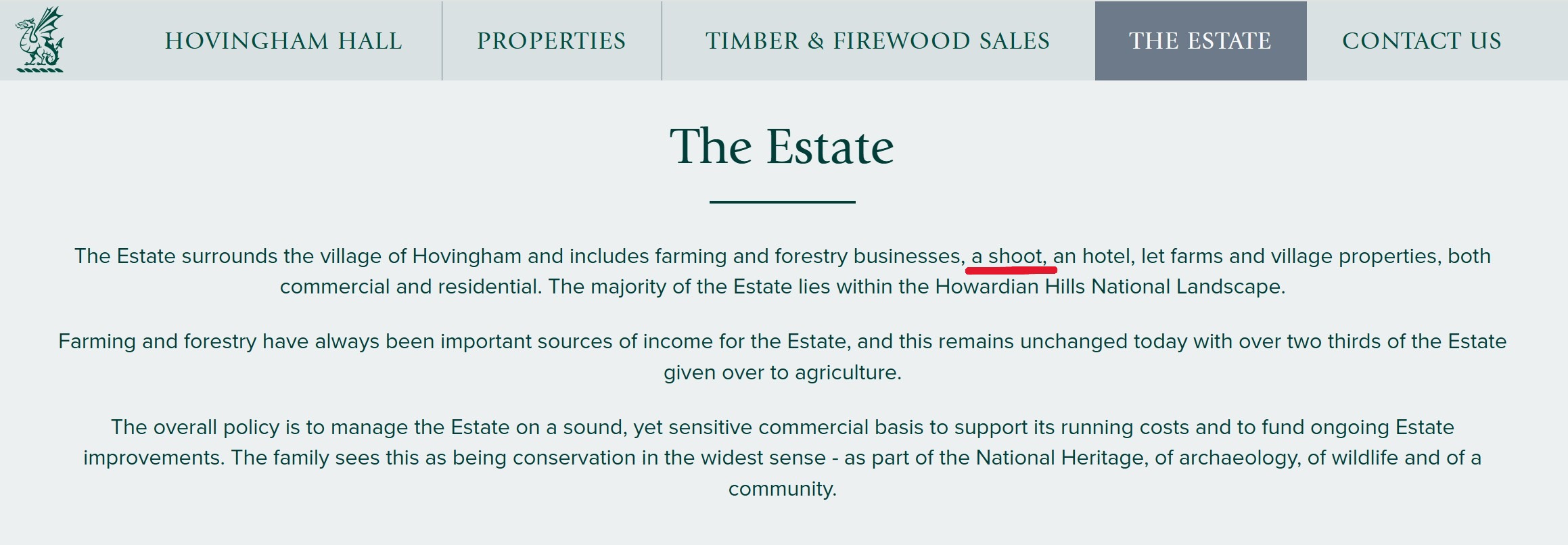
If you look on the Hovingham Hall website, it includes a statement about what goes on at the estate:
It says the estate includes ‘a shoot’, which suggests to me that the estate may be more involved in Pheasant shooting than simply renting the land to a tenant sporting agent.
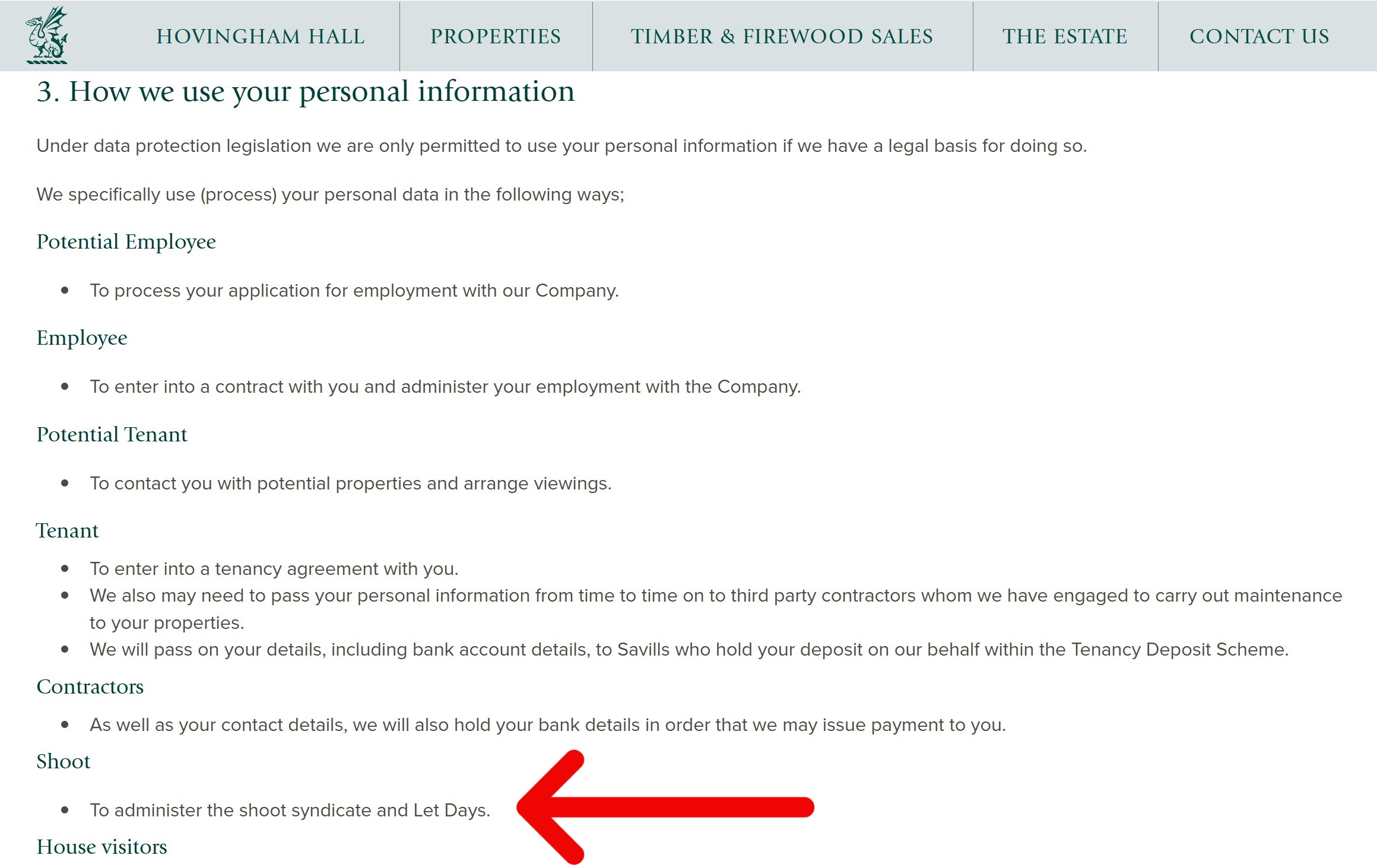
However, when I looked around the rest of the website, I couldn’t see any further mention of ‘a shoot’, until I looked at the estate’s privacy policy (dated 2024).
This privacy policy lays out how the estate handles its responsibilities under the Data Protection Act and how personal information is used. There’s an interesting entry under the header ‘Shoot’, which suggests the estate is involved in the administration of the ‘shoot syndicate and Let Days’.
Hmm.
I decided to phone the estate and ask them about their involvement in Pheasant shooting and whether they still had a Pheasant shoot after terminating the shoot lease in 2024.
I spoke to a nice lady in the main office who gave me a prepared statement, as follows:
“Hovingham Estate is aware of an incident involving one of our tenant’s employees. We take a zero tolerance approach to issues of this kind and therefore we took immediate action to terminate the tenant’s lease. We must emphasise that none of our employees are involved in any way“.
That’s pretty clear, but didn’t answer my questions. I asked the questions again and the nice lady told me:
“I’m sorry, I’m not at liberty to comment“.
To be absolutely clear, there is no evidence to suggest that Hovingham Estate knew about the criminal activity of gamekeeper Thomas Munday, and when it did become aware, it acted responsibly and terminated the lease.
If this estate is still hosting Pheasant (or Partridge) shooting, whether leased to another tenant or managed by the estate, I hope that lessons have been learned and close attention is paid to what might be going on in those award-winning woodlands.
Kudos again to the RSPB’s Investigations Team for securing the evidence that led to this conviction.
Further to last week’s blog about a gamekeeper being due to appear in court charged with killing a Buzzard on a Pheasant shoot at Hovingham, North Yorkshire (here), the case was heard today at Scarborough Magistrates’ Court and Thomas Munday pleaded guilty.
In March 2024, secret RSPB filming caught gamekeeper Thomas Munday brutally killing a protected Buzzard whilst it was caught in a cage trap on a pheasant shoot near Hovingham, North Yorkshire.
Today, at Scarborough Magistrates Court, Munday pleaded guilty to killing a Buzzard and was fined £1,215.
Although cage traps can be legally operated under government licences, they have a history of being repeatedly used in unlawful ways to catch and kill birds of prey on land managed for gamebird shooting. These incidents are generally related to attempts by the operator to remove any potential threat to gamebird stocks, reared for commercial shooting.
The RSPB is urging the UK Government to introduce a licensing scheme for all gamebird shooting to deter bird of prey persecution and to promote better practices.
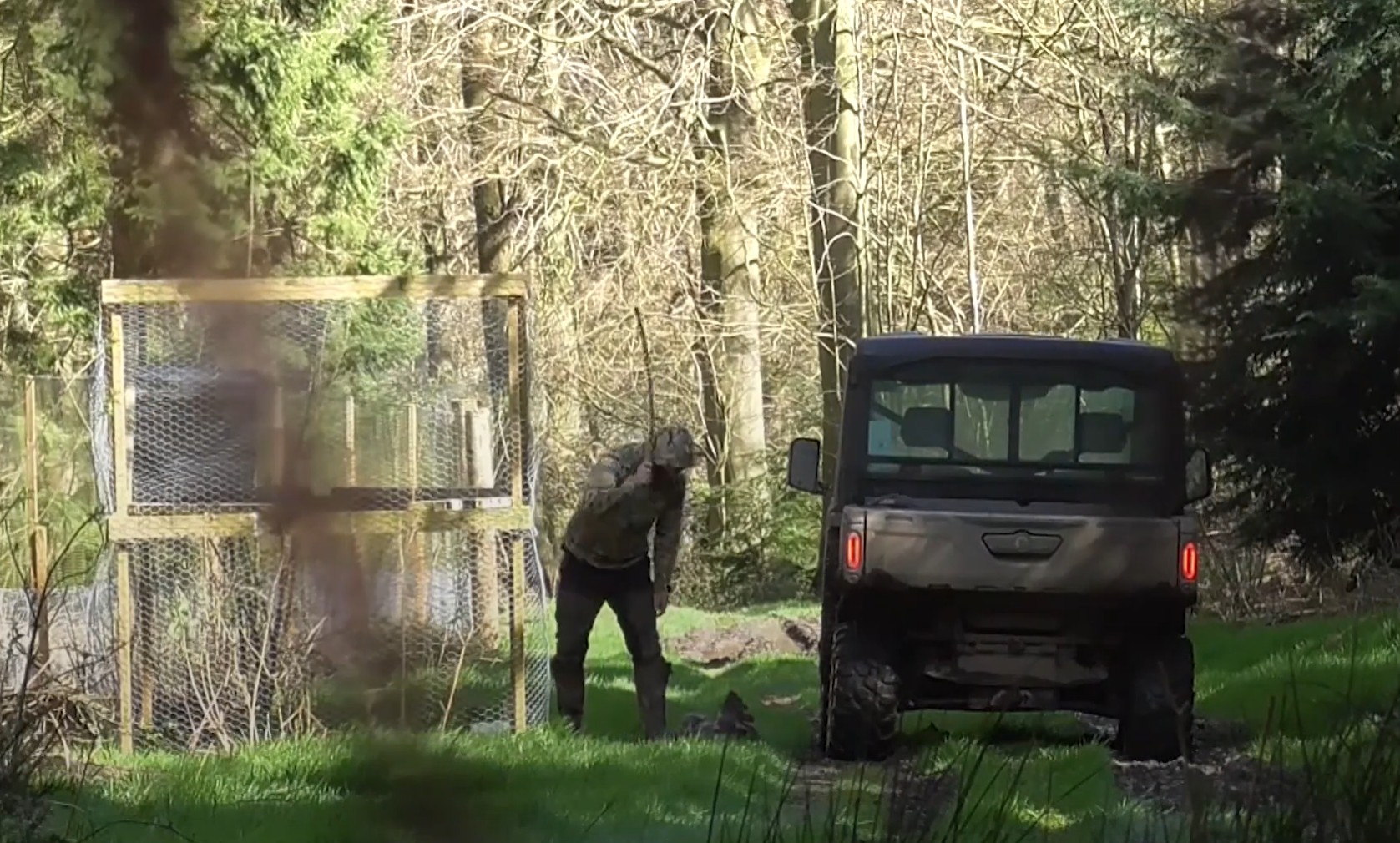
On 30 March 2024, a covertly deployed RSPB camera caught a gamekeeper brutally beating a protected Buzzard to death inside a cage trap set in woodland near Hovingham, North Yorkshire.
Screengrab from the RSPB’s covert footage showing gamekeeper Thomas Munday clubbing the Buzzard to death, having already bludgeoned it inside the crow cage trap. The casual level of brutality and the suffering he caused is very disturbing.
The footage shows a Buzzard entering the crow cage trap. Four hours later, a masked and hooded individual arrives at the trap in an all-terrain vehicle. He enters the trap and is seen repeatedly striking the Buzzard with a stick. The injured and incapacitated Buzzard is then removed from the trap – clearly still alive – and beaten several more times with the same stick. The individual then picks up the bird by its wing and throws it into the vehicle before driving away from the site.
The RSPB shared the footage with North Yorkshire Police, who later identified the individual in the footage as Thomas Munday – employed as a gamekeeper.
Of all individuals convicted of bird of prey persecution-related offences between 2009 to 2023, 75% were connected to the gamebird shooting industry and 68% were gamekeepers.
A police-led search of the land, assisted by the National Wildlife Crime Unit (NWCU), resulted in a number of items being seized including the stick used to kill the Buzzard. Forensic testing by the Scottish Agricultural Science Agency (SASA) funded by the Partnership against Wildlife Crime (PAW) Forensic Analysis Fund found traces of Buzzard DNA on the stick. Munday was subsequently charged with the illegal killing of the Buzzard, an offence under the Wildlife and Countryside Act 1981.
On 12 January 2026, at Scarborough Magistrates Court, Thomas Munday pleaded guilty to killing a Buzzard and was fined £1,215.
Crow cage traps can be legally used under Government General Licence, issued by Natural England, to control corvid species such as Carrion Crows or Magpies, on condition that licence conditions are adhered to. Under these conditions, if a bird of prey or any other non-target species is caught in the trap, on discovery the bird must be released at point of capture without undue delay.
Sadly, this method of targeted killing of birds of prey is a persistent problem in the UK particularly on land managed for gamebird shooting. In a period of ten-years (2015-2024), 30 confirmed incidents of birds of prey being caught and/or dying in unlawful crow cage traps were recorded in the UK. 97% of these incidents were associated with land managed for gamebird shooting. 34 birds of prey were involved in these crimes with Buzzards, Goshawks and Sparrowhawks the most common victims associated with these crimes.
Howard Jones, RSPB Senior Investigations Officer: “The casual and brutal killing of the Buzzard is extremely upsetting to watch and it’s clear that Munday has a complete disregard for the law, and the legislation that protects these birds. Frustratingly, this incident isn’t a one off but is just the latest example of the cruel and disturbing lengths some individuals will go to in order to illegally kill birds of prey.
“These crimes and the wider issue of bird of prey persecution is significantly linked to the gamebird shooting industry. Without long overdue regulation of gamebird shooting we expect to see these crimes continue.”
James Robinson, RSPB Chief Operating Officer said: “Although we welcome Defra’s recent announcement of a review of corvid traps, this latest incident underlines a far wider and deeply entrenched issue for our protected birds of prey.
“For decades, these species have been illegally killed on land managed for pheasant, partridge and grouse shooting. More than half of all 1,529 confirmed persecution incidents recorded from 2009-2023 were linked to gamebird shooting. These crimes will continue without meaningful legislative change.
“Through the introduction of a robust licensing system for all gamebird shooting across the UK, the illegal killing of birds of prey could be effectively deterred. Scotland took this welcome step in 2024 when it introduced licensing for grouse shooting. We need the Government to take action, now.”
Though we welcome the guilty verdict in today’s case, we are disappointed that the sentence imposed is at the lower end of the provisions available to the court. This penalty provides little deterrent to others who may consider committing similar crimes and fails to reflect the casual and callous acts of cruelty involved.
The RSPB thanks the North Yorkshire Police, the NWCU and the Crown Prosecution Service for their vital role in investigating and prosecuting this case.
Members of the public are urged to report any suspected incidents of bird of prey persecution by contacting the police on 101 and by submitting a report to the RSPB.
This can be done via the RSPB’s online reporting form at www.rspb.org.uk/report-crimes or by calling the RSPB’s confidential Raptor Crime Hotline on 0300 999 0101. Reports via the RSPB’s reporting form and Raptor Crime Hotline can be made anonymously.
ENDS
The RSPB covert footage can be viewed here, but BE WARNED, it includes animal cruelty, suffering and death.
My commentary:
I’ll keep this brief because I’m short of time today but I’ll be returning to this particular case later in the week as there are several important points that were not covered in the RSPB’s press release.
For now, the RSPB deserves huge credit for capturing this horrific crime on camera and ultimately securing a conviction. It’s interesting that the defence did not challenge the admissibility of the RSPB’s video footage and the court accepted it without question.
More soon…
UPDATE 16 January 2026: Commentary on the conviction of gamekeeper Thomas Munday (bludgeoned Buzzard to death on Hovingham Estate, North Yorkshire) here
Gamekeeper Thomas Mundy is due to appear at Scarborough Magistrates’ Court next week after being charged with killing a Buzzard on a Pheasant shooting estate at Hovingham, North Yorkshire in April 2024.
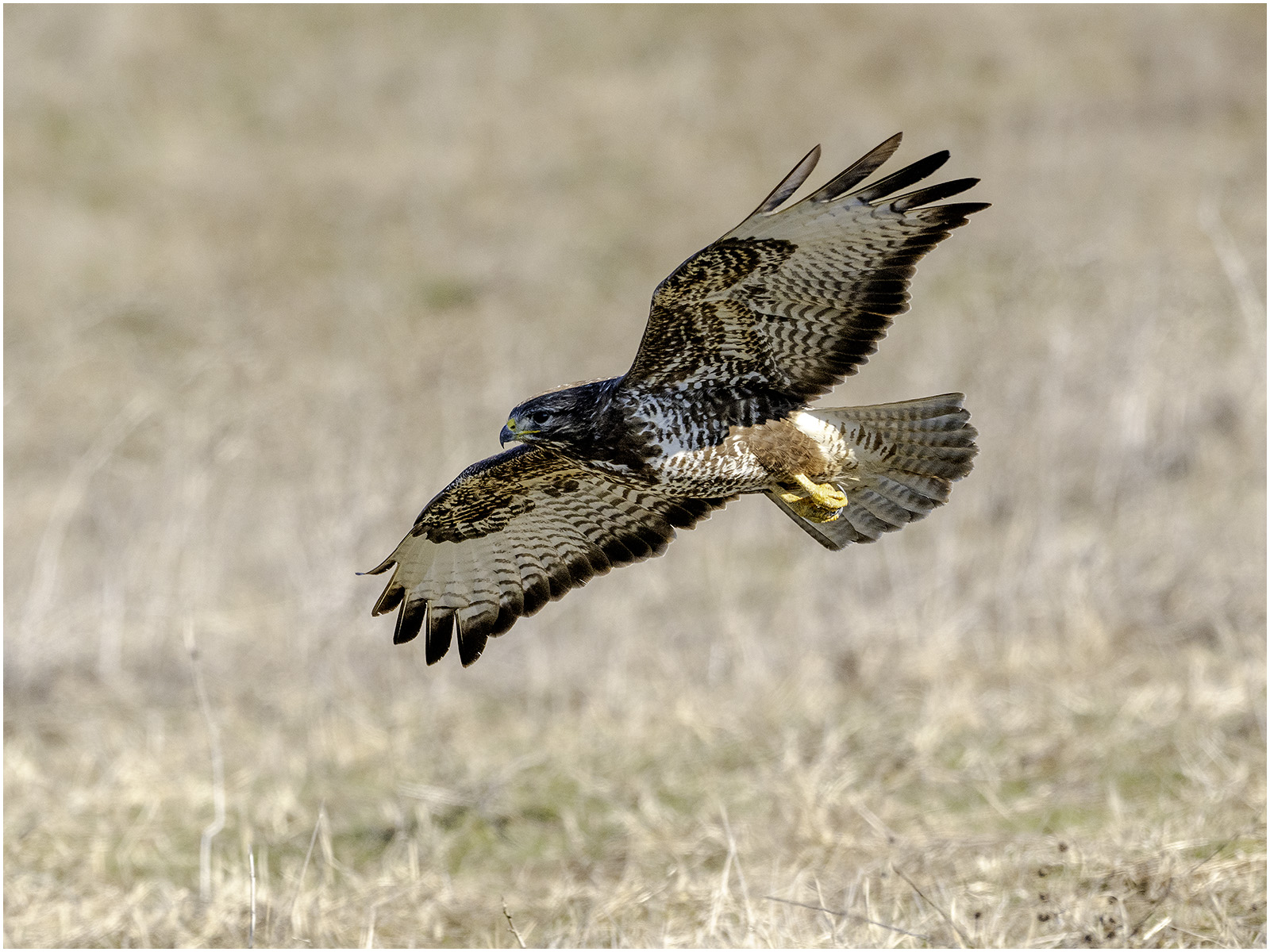
Buzzard photo by Ronnie Gilbert
No plea has been entered yet and this will be the first hearing in this case.
NB: As criminal proceedings are live, comments have been turned off.
UPDATE 12 January 2026: Gamekeeper Thomas Munday convicted after brutally clubbing trapped Buzzard to death on a Pheasant shoot at Hovingham, North Yorkshire (here)
UPDATE 16 January 2026: Commentary on the conviction of gamekeeper Thomas Munday (bludgeoned Buzzard to death on Hovingham Estate, North Yorkshire) here
Many people probably imagine that the use of poisons to kill protected wildlife is something out of the pre-Victorian era, like cock fighting and bull baiting. However, this senseless and cruel slaughter is still happening in Britain, with many mammals and birds of prey suffering horrific and agonising deaths, even though this practice has been banned since 1911.
It is a crime which not only kills wildlife, but also kills much loved family pets and can even kill people. This is a wildlife crime that frequently occurs on remote and private land where the chance of detection is very low and most victims are never found. Those cases which are reported and then investigated must be considered to be a very small tip of a very large ‘iceberg’ of sickening rural felonies.
An illegally poisoned Red Kite (photo via WPRUK)
In 2017, in an attempt to combat this wildlife crime, the UK Government initiated a project to map incidents of illegal bird poisonings. This provided information to the public and other interested parties as to where these crimes were taking place and it was intended that these maps would be updated annually to “provide an invaluable intelligence tool to help fight crimes against birds of prey” (Defra press release 2017).
It now appears that these wildlife poison crime maps have not been updated and there is very little governmental action informing the public that these crimes are still occurring and wildlife is still being deliberately poisoned.
Wildlife Poisoning Research UK (WPRUK) works to place information about the environmental impact of pesticides, biocides and other toxic chemicals into the public domain so that the general public and the media have a better understanding of this situation. Data on cases of deliberate poisoning of birds has been obtained using Freedom of Information requests. This has enabled WPRUK to produce maps showing where these poisoned birds have been found. This is information which the Government, for whatever reason, has now apparently declined to put into the public domain.
WPRUK has now released a report pinpointing where the poisoned birds have been found in Northern England. Future maps will cover other parts of the UK.
Between 2015 to 2023, the bodies of 73 legally protected birds, mostly birds of prey, were found in Northern England. These birds had been illegally and deliberately killed using poisons; 31 birds being Schedule 1 Wildlife and Countryside Act (1981) species, which have the highest level of protection. Due to the very small chance of poisoned birds being found, the real numbers of birds being killed by this criminal activity is likely to be far higher. To date, no one has been convicted for killing any of these 73 birds.
There were two areas in Northern England where particularly high numbers of poisoned birds were found. These were Nidderdale in North Yorkshire and the Glapwell area in Derbyshire.
Releasing the report, Dr Ed Blane from WPRUK said: “The fact that 114 years after this sickening practice was banned, individuals are still poisoning our wildlife is deeply disturbing. People visit the countryside to enjoy nature and they will be truly alarmed to learn that poison is still being used to kill wildlife.”
If this continues it might severely impact on plans to re-introduce white tailed eagles to Northern England. In the Southern England eagle project, at least 2 birds have been killed by poison.
A comment from Steve Downing Chairman Northern England Raptor Forum:
“We proudly, and rightly, identify ourselves as a nation of nature lovers. Every year tens of thousands of tourists, both domestic and foreign, visit the historic and beautiful countryside throughout the North of England to enjoy the scenery and stunning birds of prey that it supports. Collectively they spend £millions supporting our rural communities. What the visitors don’t see is the underbelly of criminality in the countryside where the barbaric practice of deliberately poisoning raptors persists today, as highlighted by the bodies found in Nidderdale, North Yorkshire and around Glapwell in Derbyshire. Thanks to Ed, a spotlight is being shone on this shocking pernicious activity raising public awareness of the danger presented by these lethal poisons, both to themselves and local birds of prey.”
Bob Elliot CEO of Wild Justice said:
“Illegal wildlife poisoning hasn’t faded into history; it’s still being carried out in the shadows with very little oversight. These findings show that wildlife species are still being killed with impunity, and the public is being kept in the dark about the scale of it. Without transparency, enforcement and the political will to confront those responsible, this criminal abuse of our countryside will continue unchecked.”
An x-ray of a grounded Buzzard has revealed two embedded shotgun pellets and a broken tail, according to Brinsley Animal Rescue in Nottinghamshire.
A statement published by the charity yesterday reads as follows:
‘Last Sunday we admitted a buzzard that had been found grounded, the caller had been struggling to find a rescue who were able to help and had them for several days before we took the call, thankfully they had been feeding the buzzard and keeping them safe.
On examination it was clear there they weren’t the best of condition not least the tail position, which was to the side and the bird wasn’t able to move it. X-rays have confirmed that not only was the tail broken, but there are several shot gun pellets lodged in the bird. It is probable that they have been shot and the broken tail is a result of the bird crash landing.
We have successfully treated and released birds with broken tails, but not a bird of prey, whilst the bones will eventually fuse, its vital that they have full mobility before they can be released and only time will tell if this ends well‘.
A young Buzzard was found in a field in Leominster, Herefordshire last week, unable to fly.
An x-ray revealed at least two shotgun pellets lodged in its body. It’s not known when the bird was shot, or where.
Photo by Sasha Norris
Photo via Sasha Norris
The Buzzard is currently receiving expert veterinary care from Dr Sasha Norris of Hereford Wildlife Rescue with assistance from Holmer Veterinary Surgery in Hereford and Battle Flatts Veterinary Clinic in Yorkshire.
Sasha reports that the Buzzard was ‘alert, bright and eating well’ this morning.
Following the recent collapse of the Yorkshire Dales National Park Bird of Prey Partnership (due to its failure to tackle crimes against birds of prey), and the news that since 2015, 29 Hen Harriers have gone ‘missing’ in suspicious circumstances and almost 40 other raptors have been found poisoned, trapped or shot in the Yorkshire Dales National Park since 2015, including Peregrines, Hen Harriers, Red Kites and Buzzards, there’s some welcome news from a local community who has had enough and has decided to do something about it. Bravo!
Friends of the Dales, the environmental campaigning charity, is launching a powerful new campaign − Eyes on the Skies − calling for an end to criminal killing of birds of prey in the Yorkshire Dales. The campaign kicks off with a high-profile live webinar on Tuesday 21 October at 5.30pm, featuring leading conservation expert Kate Jennings, UK Head of Site Conservation & Species Policy at the RSPB.
Kate will highlight the long history of bird crime in the Yorkshire Dales, drawing on evidence and case studies from the RSPB’s Investigations Team which works in support of the police and statutory agencies to bring criminals before the courts.
“We are delighted that Kate is joining us at the Eyes on the Skies launch event,” said Jonathan Riley, Chair of Trustees at Friends of the Dales. “She will shine a spotlight on Bird Crime in the Yorkshire Dales and the illegal and inhumane methods criminals use to trap, shoot and poison birds of prey − crimes that persist despite more than seventy years of legal protection.”
The Yorkshire Dales remains a blackspot for raptor persecution, with species such as hen harriers, short-eared owls, and red kites especially targeted. Just last week the RSPB issued a press release about the disappearance of Sita, a one-year-old female satellite-tagged Hen Harrier. The RSPB said that Sita is the 29th hen harrier “to suspiciously disappear in the national park since 2015” and that the bird “is likely to have been shot”.
“It is appalling that the hen harrier, one of the UK’s rarest birds, continues to be shot, trapped, and poisoned in our National Park, which should be a sanctuary for wildlife,” added Jonathan.
Public concern for these crimes is growing. In early 2024, more than 1,000 people responded to the first consultation on the new Management Plan for the Yorkshire Dales National Park, with ending the illegal persecution of birds of prey emerging as one of the top priorities.
David Butterworth, Chief Executive of the Authority also confirmed: “The Yorkshire Dales National Park Authority is unwavering in its commitment to raptor conservation. We will continue to collaborate with landowners, managers and organisations sharing our vision. We applaud those whose efforts have helped some species recover. But we must also confront the grim reality that criminal persecution still occurs.”
Friends of the Dales Eyes on the Skies campaign supports one of the core objectives of the new management plan for the Yorkshire Dales National Park, as well as the vital work of other organisations such as the National Wildlife Crime Unit, RSPB and Hen Harrier Action. The campaign will amplify messages around the scale and nature of these appalling crimes, educate people in how to spot and report any suspicious or illegal activity they might see and also inspire people to learn more about the birds themselves and why they are vital to a healthy, biodiverse ecosystem.
David Butterworth added: “The uplands of the Yorkshire Dales National Park should be a stronghold for a diverse range of raptor species. As apex predators, their presence signals a healthy environment. Their absence, conversely, is a warning.”
Summing up Jonathan Riley said: “Our Eyes on the Skies campaign will incorporate many more events including further webinars from insider experts, outdoor educational events and even some more creatively focussed activities. So, on behalf of the charity, I would encourage anyone who is interested in learning more to register for the free launch event on Tuesday 21 October at 5:30 pm, and sign up to our monthly email newsletter so they can be kept updated.”
Media attention has been drawn to the Yorkshire Dales National Park this week, following the RSPB’s press release on the suspicious disappearance of a satellite-tagged Hen Harrier named ‘Sita’.
When it comes to the illegal killing of birds of prey, the Yorkshire Dales National Park is rarely out of the news, and that’s hardly surprising when 29 satellite-tagged Hen Harriers have gone ‘missing’ there and 39 other raptors have been found poisoned, trapped or shot there since 2015, including Peregrines, Hen Harriers, Red Kites and Buzzards.
Yorkshire Dales National Park. Photo by Ruth Tingay
Given these appalling figures, the RSPB has described the Yorkshire Dales National Park as a ‘no-fly zone for birds of prey’.
High profile cases within the National Park have included the conviction of a gamekeeper who was filmed shooting two Short-eared Owls on a grouse moor and then stamping the corpse of one of them into the peat and shoving the other one inside a drystone wall (here); a gamekeeper filmed on a grouse moor using a tethered Eagle Owl to attract Buzzards that he then shot and killed from close range (here); the stamping to death of four Hen Harrier chicks in a nest on a grouse moor (after obscuring the camera pointing at the nest, here); the grisly death of a Hen Harrier caused by his head and leg being pulled off whilst he was still alive (here); and three individuals caught on camera on a grouse moor discussing the shooting and killing of a Buzzard and a Raven before apparently shooting and killing a Hen Harrier (here) – one gamekeeper has been charged with conspiracy to kill a Hen Harrier, he has pleaded not guilty and his case will proceed to trial in January 2026 after his barrister failed in his attempt to have the case thrown out on a legal technicality.
The Yorkshire Dales National Park Authority has also long recognised the extent of this criminal activity and has responded to public concern (e.g. see here and here). Earlier this year the Park Authority terminated its five-year ‘partnership’ with the grouse shooting industry to tackle these crimes, after recognising the futility of this endeavour. Two conservation organisations (the RSPB and the Northern England Raptor Forum) had already walked away from the sham in 2023 and 2024 respectively.
In an article published a couple of days ago by the Craven Herald & Pioneer, Mark Corner, a member of the Yorkshire Dales National Park Authority is quoted saying the continued illegal killing of raptors in the Park was “a crying shame“.
He added: “As the member champion for the natural environment, I’m personally embarrassed that we are the worst spot in the country in terms of the illegal killing of birds.”
In the same article, there’s an hilarious quote from the Yorkshire Dales Moorland Group, which is one of a number of regional groups set up in 2015 to represent local grouse moor owners and their gamekeepers in an attempt to counter the bad publicity about ongoing illegal raptor persecution. I think that members of most of these regional moorland groups have been, or still are, the subject of police investigations into illegal raptor persecution.
A spokesperson for the Yorkshire Dales Moorland Group reportedly told the reporter that ‘hen harrier numbers were at a 200-year high across the uplands’.
That’s simply not true – Hen Harrier breeding attempts on grouse moors across the north of England have been in sharp decline over the last two years – the only areas where they remain stable is on land managed for conservation rather than for Red Grouse shooting.
According to its FaceBook page, the Yorkshire Dales Moorland Group claims to have “around 100,000 acres of managed uplands here in the Dales where the estates are members of this group (virtually all of the moors)“.
Why is it then, there were only two Hen Harrier breeding attempts in 2025 across the whole of the Yorkshire Dales and neighbouring Nidderdale? I’d like the Moorland Group to provide a plausible explanation for these absences.
The Yorkshire Dales Moorland Group also told the Craven Herald reporter:
“Our keepers have and will always assist the police in searches for missing persons, lost dogs or missing birds. Tag failure is rare but not unheard of.
“The default accusation that persecution is responsible is regrettable. The conservation work undertaken by moor keepers is commendable as can be seen by the abundance of raptors and other rare species in the Dales“.
What “abundance of raptors” are those then? All the dead ones? Or just the ones that are allowed to breed because they don’t pose any threat to Red Grouse stocks?
And if these grouse shooting estates are so keen to help the police, how many of them signed the letter last year agreeing to allow the police to enter the land and use equipment for the purposes of crime prevention and detection? Did any of them sign it?
And if these gamekeepers are so keen to help police investigations, how many of them have given ‘no comment’ responses when interviewed about suspected raptor persecution crimes on these moors? Maybe it’d be quicker to count how many gamekeeper didn’t give a ‘no comment’ interview.
The article also quotes Alex Farrell, Head of Uplands at BASC:
“As a committed conservation organisation, we are taking progressive steps with our partners to oversee the continued recovery of hen harriers.
“Figures released by Natural England today show that collaborative effort resulted in 106 fledged hen harrier chicks in England this year – up from 80 last year“.
What “progressive steps” is BASC taking?
Oh, and those figures released by Natural England show that the small increase in Hen Harrier fledging rates are in spite of, not because of, any so-called ‘collaborative effort’ from the grouse shooting industry.
Last week I blogged about an appeal for information that had been posted on North Yorkshire Police’s Facebook page, in relation to ‘the suspected shooting of a buzzard‘ near Goathland on 2nd May 2025 (see here).
I’d noted that the appeal was quite vague. It wasn’t clear if the appeal was a result of a witness report of someone seen shooting towards a buzzard or whether a corpse had been found and was awaiting post mortem.
I’ve since been informed by a reliable local source that a dead buzzard had been found and an x-ray revealed it had been shot.
Having a corpse with shot in it is a confirmed shooting, not a suspected shooting.
Without seeing the x-ray it’s not possible for us to determine if it had been shot close to where the body was discovered (e.g. if its wing bones had been shattered by the shot then it’s unlikely to have been able to fly any distance) so it may have been shot near Goathland or it may have been shot elsewhere and just succumbed to its injuries close to the Duchy of Lancaster grouse moor.
It’s obviously pure coincidence that the grouse moors near to Goathland just happen to be a raptor persecution hotspot.
It’s pointless asking North Yorkshire Police for further information about this buzzard – they routinely refuse to answer such requests.






 Raptor Persecution UK