Shot red kite successfully rehabilitated and released

Last month we blogged about an injured red kite that had been found in Malton, North Yorkshire. It had suffered shotgun injuries to the throat and was being cared for by wildlife rehabilitator extraordinaire, Jean Thorpe (see here).

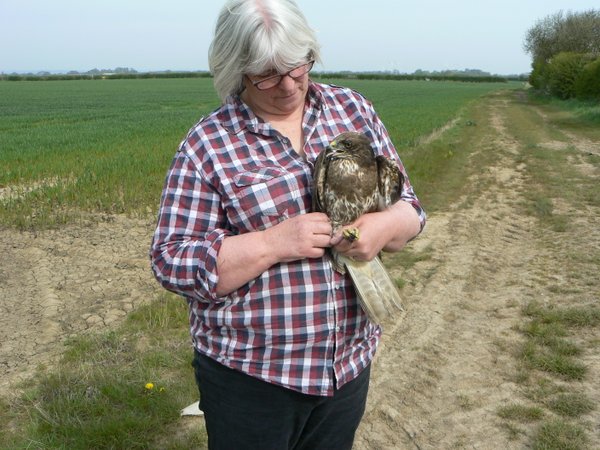
After a few weeks of care and attention, that red kite was successfully released back to the wild yesterday (Photo by Robert Fuller)

13043497_10153433700115812_4569680277323548722_n

Well done and thank you, Jean Thorpe, what a remarkable lady! Remember, Jean does this in a voluntary capacity with no government funding to support her work. Please consider making a small (or large!) donation to help her: HERE.

Of course, North Yorkshire isn’t the only location where red kites are routinely persecuted, either by illegal trapping, shooting or poisoning. There’s a poignant commentary on Mark Avery’s blog today, documenting the disgraceful persecution of red kites on the grouse moors of north east England and how this is suppressing the expansion of the reintroduced kite population. It’s an all too familiar story (e.g. see here).

Join the tens of thousands of ordinary people who are saying enough is enough: HERE

Buzzard shot in East Yorkshire

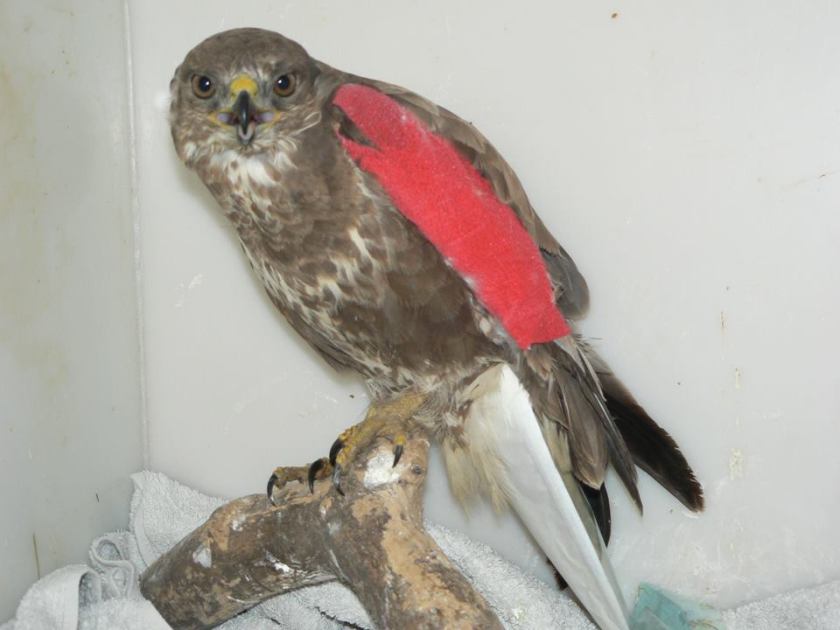
A buzzard with shot gun injuries has been found on farmland at North Frodingham, Driffield, in East Yorkshire.

It has undergone surgery to have its wing pinned and is now being cared for by Jean Thorpe of Ryedale Wildlife Rehabilitation. If you’d like to help support Jean’s never-ending voluntary efforts, please consider a donation here.

Anyone with news about the buzzard shooting please contact Humberside Police on 101.

Buzzard shot Driffield April 2016 Jean Thorpe

Buzzard shot Driffield April 2016 Jean Thorpe 2

More raptor persecution in North Yorkshire

Over the last few years North Yorkshire has emerged as one of the worst raptor persecution hot spots in the UK (see here). It’s a county where much of the landscape is dominated by grouse moors, particularly in the two National Parks: the North York Moors NP and the Yorkshire Dales NP, as well as a large number of pheasant and partridge shoots.

It’s only March and already this year there’s been an illegally shot red kite and a suspected illegally spring-trapped buzzard.

The critically-injured buzzard was found in February at Wykeham, North Yorkshire. It had a broken, crushed ankle and a broken thigh bone; injuries consistent with being caught in a spring trap, says local Police Wildlife Crime Officer Graham Bilton. Local expert raptor and wildlife rehabilitator Jean Thorpe was once again called to the scene to assist but the buzzard’s injuries were considered too serious and it was euthanised by a vet. Article in Yorkshire Post here. Anyone with information please call Police WCO Graham Bilton on 101.

Photographs of the buzzard by Jean Thorpe:

buzzard spring trapped Jean Thorpe Feb 2016

buzzard spring trapped Jean Thorpe Feb 2016 b

Yesterday, Jean posted the following photographs showing an injured red kite that had been found at Low Marishes, Malton. An x-ray revealed it had been shot. This kite is currently being cared for but whether it survives remains to be seen. Anyone with information please call Police WCO Jez Walmsley on 101.

Red kite shot March 2016 Jean Thorpe

Red kite shot March 2016 Jean Thorpe 2

Jean Thorpe (pictured above with the shot red kite) runs Ryedale Wildlife Rehabilitation. She works closely with the RSPB and local Police Wildlife Crime Officers and has her work cut out, living where she does. In 2014 she was awarded an MBE for her tireless voluntary work. If you’d like to make a donation towards her efforts, please click here.

The e-petition to ban driven grouse shooting can be found HERE.

Hooks attached to pigeon’s legs designed to injure raptors

The RSPCA is appealing for information after the discovery of a pigeon that had sharp hooks attached to its legs. The bird was found stuck in someone’s garden in Poolfield Road, Lichfield on Tuesday.

There’s only one reason for attaching hooks like this to a pigeon, and that’s to cause serious damage to any raptor, like a sparrowhawk or a peregrine, that might try to prey on the pigeon.

Pigeon hook 1

pigeon hook 2

Presumably the RSPCA has paid a visit to the local pigeon racing lofts in the Lichfield area as part of their investigation.

Full article in the Lichfield Mercury here

More raptors illegally killed in Peak District National Park: police appeal 5 months later

Derbyshire Constabulary has today issued a press release appealing for information following the illegal killing of an Osprey (caught in a spring trap) and a buzzard (shot) that were discovered in the Peak District National Park last September. The RSPB is offering a £1,000 reward for information that leads to a conviction.

Here’s the press release:

Derbyshire Police and the RSPB are appealing for information following the illegal killing of two birds of prey near to Glossop, Derbyshire. A £1000 reward has been offered by the RSPB for information leading to a conviction.

On September 09, 2015, a dead osprey was found to the west of Derbyshire Level. A post mortem on the bird revealed that both its legs had been recently broken, injuries which were consistent with it being caught in a spring trap prior to its death. Ospreys are rare visitors to the Peak District and this one would have been on migration to West Africa.

On September 30, a buzzard was found shot dead close to Hurst Reservoir, only a short distance from where the osprey was found. This follows the shooting of another buzzard in the same area in March 2014.

Sergeant Darren Belfield from Derbyshire police said: “I would appeal to anyone who might have any information as to who may be responsible for these cruel acts to contact the police on 101. The continued persecution of birds of prey in the Peak District is totally unacceptable. If you suspect someone of committing any crimes against wildlife, act now. Your call will be dealt with in confidence. If you don’t feel you can talk to the police, pass the information to us through Crimestoppers by ringing 0800 555 111.”

RSPB Investigations Officer Alan Firth said: “Yet again, we are seeing the senseless killing of fantastic birds of prey in the National Park.”

Last year, the RSPB published its annual Birdcrime Report 2014, which revealed Derbyshire as one of the worst places in the UK for bird of prey persecution. In 2014, the RSPB received 16 reports of bird of prey incidents in the county including a shot buzzard, a shot sparrowhawk and an illegally trapped goshawk.

END

So these birds were found “close to Hurst Reservoir”. Have a look at this map and see what else is “close to Hurst Reservoir” (reservoir marked with the red pin). See those tell-tale rectangular strips of burnt heather to the south and south-east of the marker? Quelle surprise, it’s driven grouse moor country.

Hurst Reservoir - Copy

You may remember back in November we blogged about the failed ‘Bird of Prey Initiative’ in the Dark Peak region of this National Park. It was a five-year project aimed at restoring the populations of several raptor species in the area and involved various organisations: The Moorland Association, The National Trust, Natural England, Peak District National Park Authority, and the RSPB. None of the targets were met (see here). In response, the Moorland Association and the Peak District National Park Authority said they’d make ‘renewed commitment’ to protect raptors in the National Park (see here). Riiiiiight, that’s working well then.

Interestingly, the failed initiative was widely reported in the local press, including the Derbyshire Times, whose article on 26th November was entitled ‘Birds of prey killed and abused in Derbyshire’. In reponse to that article, Robert Benson, Chairman of the Moorland Association, penned the following letter:

I would like to emphatically state in response to your story, ‘Birds of prey killed and abused in Derbyshire’, on November 26th, that one single bird of prey killed illegally is one too many.

However, the Moorland Association was heartened to see RSPB’s latest bird crime figures show a dramatic cut across the UK. Significant reductions in the illegal trapping of birds of prey represent a 78 per cent drop since 2013, with just four confirmed incidents last year.

Of the 19 prosecutions for wild bird offences, three involved gamekeepers, but none were employed on moorland managed for grouse shooting.

Our members spend £52.5 million a year maintaining and conserving habitats which benefit all moorland wildlife. This year, grouse moor managers in England were praised for their part in the most successful hen harrier breeding season for five years.

Many other threatened species, such as lapwing, curlew, and golden plover – in serious decline elsewhere – are doing well on managed moorland. Not birds of prey, but wild, endangered and important nonetheless.

Wildlife crime is being successfully tackled. We already have a robust wildlife licensing system which needs to be used fairly to manage conflict between rapidly increasing bird of prey populations and legitimate and beneficial land use“. Robert Benson, Chairman, Moorland Association.

END

So there we have it. According to Robert, everything’s just rosy, grouse moors are great, and there are too many raptors so gamekeepers should be given licences to kill them legally.

The thing is, Robert Benson is not telling the whole story. He’s right to say that there were four confirmed illegal trapping incidents recorded in 2014, but what he ‘forgot’ to mention was that those four incidents were just a fraction of the 478 incidents of illegal raptor persecution recorded in 2014, including 179 reports of illegal shooting and destruction (of which 46 raptors were confirmed victims) and a further 53 confirmed victims of illegal poisoning. Doesn’t sound quite so rosy now, does it, Robert? He also ‘forgot’ to mention that Derbyshire was the 4th worst region in the UK for raptor persecution crimes in 2014. Oh, and he also ‘forgot’ to mention the quote from the National Wildlife Crime Unit:

Intelligence continues to indicate a strong association between raptor persecution and grouse moor management“.

One for you anagram fans: Moorland Association = A sad morons’ coalition.

Here are some photos of the latest victims (photos by RSPB)

An x-ray of the shot buzzard:

shot BZ PDNP Sep 2015 - Copy

The osprey alive, with two smashed up legs:

osprey springtrapped PDNP Sep 2015 - Copy

The osprey dead, with two smashed up legs:

osprey springtrapped 2 - Copy

The osprey’s smashed up right leg:

osprey right leg - Copy

Reward doubled for info on peregrine poisoning at Clee Hill, Shropshire

Peregrine male poisoned at Cleehill 2015 Shorrock1 cropThe reward for information leading to the arrest and conviction of the person(s) responsible for poisoning a peregrine at Clee Hill, Shropshire has been doubled.

The male peregrine was found dead in a quarry on 15th June 2015 (see here). This is a notorious raptor persecution blackspot: two peregrines were poisoned there in 2010 and another one in 2011. All four peregrines (including the latest victim) were poisoned with Diazinon.

A generous donor has contributed to the original reward offered by the Shropshire Peregrine Group and the RSPB, and the reward currently stands at £2000.

If you have any information about this crime please call the police on 101 quoting reference #6495 of 15/6/2015.

Photograph of the poisoned peregrine by Guy Shorrock.

Peregrine shot dead at edge of grouse moor

A peregrine falcon has been found shot dead in County Durham.

It was discovered on the south east edge of Stang Forest on 23rd August 2015. A post mortem revealed it had been shot.

Stang Forest shot perg - Copy

It’s interesting to look at the land management around Stang Forest. Google maps shows it’s almost entirely surrounded by grouse moors. This shouldn’t come as a surprise to anybody, especially when we recently learned that peregrines are being wiped out on grouse moors across the UK (see here and here).

Durham Constabulary are appealing for information, four months later.

Article on Rare Bird Alert here

Stang Forest - Copy

Game farmer Michael Wood wins appeal against pole trap conviction

In February this year we blogged about the conviction of game farmer Michael Wood, who was found guilty of permitting the use of a pole trap at his game-rearing facility Westfield Farm in Cropton, North Yorkshire (see here).

Mr Wood’s conviction was based on the magistrate’s opinion that it was “inconceivable” that Wood had not known about the trap, as RSPB surveillance evidence outlined how he had driven past this exposed trap and also another (with the safety catch engaged) a short distance away. Wood had basically claimed it was getting too dark to be able to see the traps. His evidence was contradicted by his wife who outlined the things her husband was checking as he drove around the site.

However, Mr Wood appealed the verdict and the judicial bench at York Crown Court has now upheld his appeal because ‘the prosecution had failed to prove its case’ (see article in today’s Gazette & Herald here).

This is an interesting case. The most interesting feature (from our perspective) is that the RSPB’s surveillance evidence was deemed admissible. At the original trial the defence tried unsuccessfully to have this evidence excluded. At the appeal this was not even contested, neither this time were the actual light levels as shown by photographs taken by the RSPB. Unsurprisingly, Mr Wood’s wife did not give evidence at the appeal. So, it appears the admissibility of the RSPB evidence was NOT an issue at the Crown Court. Mr Wood’s appeal was successful because the prosecution were not able to convince the court that Wood had actually seen the trap, not that he’d been covertly observed driving close to the traps. That’s a very important distinction.

What’s also interesting about this case is that, following the day Wood was seen on site, the North Yorkshire Police, assisted by RSPB, seized a total of five illegal pole traps found set around the breeding facility. However, two employees only received a police caution in relation to these traps – they weren’t prosecuted for setting them. As they’d been cautioned, this infers that they’d admitted to setting them. Why weren’t they prosecuted for setting these illegal traps, if they’d admitted their guilt? In 2014 a gamekeeper on the Swinton Estate (also in North Yorkshire) was convicted of twice setting a pole trap (see here), so how did Mr Wood’s two employees escape prosecution when they’d set five pole traps between them?!

If you look at the position of the traps (see the photo and see the short video made by the RSPB Investigations team here), you can see how discreetly positioned they were. They must have been really easy to miss, eh?

pole-trap-1-of-5-westfield-game-farm-rspb

As we reported in February, Mr Wood has a current criminal conviction for wildlife offences. In 2011 he was successfully prosecuted for releasing thousands of pheasants (for shooting) on a site of special scientific interest when permission had only been granted to release 500 birds. It was argued the birds had caused ‘significant damage’ to the conservation area and Mr Wood and Yorks Sports Ltd (of which Mr Wood was a director) were each fined £20,000, plus £125,000 between them towards the prosecution costs, and they also had to pay a £145,000 defence bill (see here).

Crowd out the wildlife criminals: appeal fund launched

Rare Bird Alert is the UK’s longest running instant bird news service. But more than that, this company has also become a strong ally in the campaign to raise public awareness of raptor persecution.

Following the news a few days ago that a red footed falcon, a scarce visitor to the UK, had been found shot dead in Cambridgeshire (see here), the team at Rare Bird Alert has launched a crowdfunding appeal to help boost the £1,000 reward on offer from the RSPB for information which leads to the conviction of the person responsible for killing this bird. It is hoped that a larger reward will encourage anyone with information to come forward, but the intention is also to send a strong message that people want to see an end to illegal raptor persecution.

If the reward is not claimed, Rare Bird Alert will donate the full amount raised to Birders Against Wildlife Crime – a voluntary group set up two years ago and who organise events such as Hen Harrier Day and the Eyes in the Field Wildlife Crime Conferences.

If you’d like to pledge your support, please visit the donations page HERE

Thank you.

red-footed-falcon_shot Sept 2015


Shameful catalogue of raptor persecution revealed in RSPB’s Birdcrime 2014 report

Birdcrime 2014 cover - CopyThe RSPB has today published its latest annual Birdcrime report (2014), documenting the confirmed, probable and unconfirmed incidents of crimes against wild birds in the UK, including crimes against birds of prey.

In 2014, the RSPB received 179 reports of the shooting and destruction of raptors, including the shooting of 23 buzzards, nine peregrines, three red kites and a hen harrier. Confirmed victims of poisonings included 23 red kites, nine buzzards and four peregrines. These victims represent the tip of the iceberg – many more will have gone undetected.

The National Wildlife Crime Unit says, ‘Intelligence continues to indicate a strong association between raptor persecution and grouse moor management‘.

Sign the petition to ban driven grouse shooting HERE

Looking at the breakdown of incidents against birds of prey in 2014, the top five worst regions were:

North Yorkshire (36 incidents)

Highland Scotland (25 incidents)

Norfolk (19 incidents)

Derbyshire (16 incidents)

Northumberland (16 incidents)

The RSPB Investigations team deserves a huge amount of credit for their continued efforts to document these crimes and publish these annual reports. Without their meticulous work many of these cases would remain hidden from public view, which is what the raptor-killing criminals would prefer.

RSPB press release here

Download Birdcrime 2014 here: Birdcrime 2014