Satellite-tagged hen harrier Marc disappears on grouse moor at Wemmergill

And so it continues.

Joint press release today from RSPB and Durham Police:

YET ANOTHER RARE HEN HARRIER GOES MISSING

Durham Constabulary and the RSPB are appealing for information following the disappearance of a satellite-tagged hen harrier near Middleton-in-Teesdale.

The harrier, named Marc, was one of a nest of two chicks tagged as part of the EU-funded Hen Harrier LIFE+ project in July last year from a nest in the Scottish Borders.

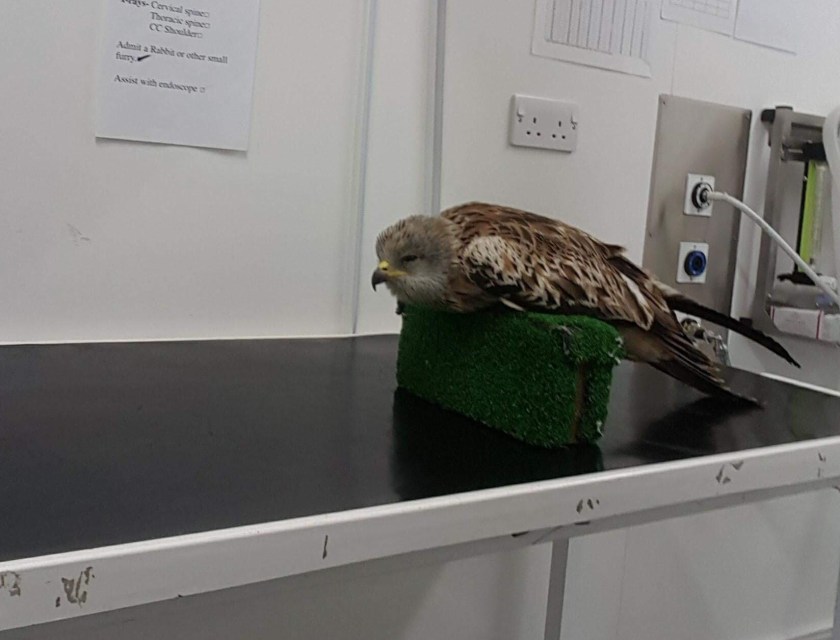
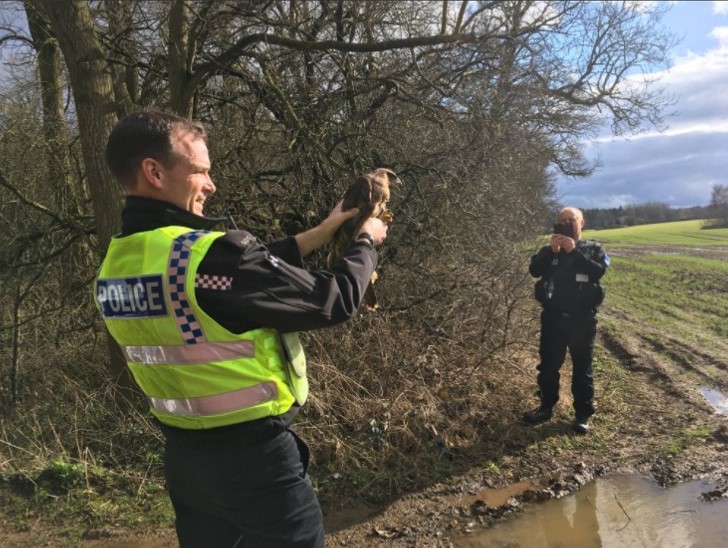
Photo of Hen harrier Marc (right) photographed at the nest last summer with his brother Manu, who also disappeared on a grouse moor in the North Pennines. Photo by Tim Jones.

Marc’s tag had been transmitting regularly, showing no signs of any problems, until it suddenly stopped on the afternoon of 5 February. Data from Marc’s tag indicated he had been in the same area of upland farmland since late November before moving 10km north west on 27 January to an area of driven grouse moor, from here he posted several positions on the 5 February until 2.04pm, after which the tag inexplicably failed to send any further data.

Hen harriers are one of the UK’s rarest raptors with only three successful nests recorded in England in 2017. There have been a number of other hen harriers that have gone missing in similar circumstances both in England and Scotland since the tagging project began in 2015. This includes Marc’s brother, a bird called Manu who was tagged in the same nest but went missing in October 2017 with his last known location being close to a grouse moor in Northumberland.

Mark Thomas, RSPB Principal Specialist, said: “Hen harriers are facing an uncertain future: these spectacular birds should be flourishing in our uplands but studies show that we are down to just a handful of pairs in England with illegal persecution identified as a prime factor. So it’s depressing when yet another hen harrier goes off the radar like this, especially when the supporting tag data is so precise.”

A spokesperson for Durham Constabulary said: “We are very concerned at the disappearance of one of these iconic birds of prey. Hen harriers are fully protected by law and raptor persecution is a national wildlife crime priority. We urge you to come forward if you have any information about the disappearance of this bird.”

If you have any information relating to this incident (ref 163 2022018), call Durham Constabulary on 101 or the confidential Raptor Crime Hotline on 0300 999 0101. All calls are anonymous.

ENDS

The RSPB has also published a blog about Marc’s suspicious disappearance here

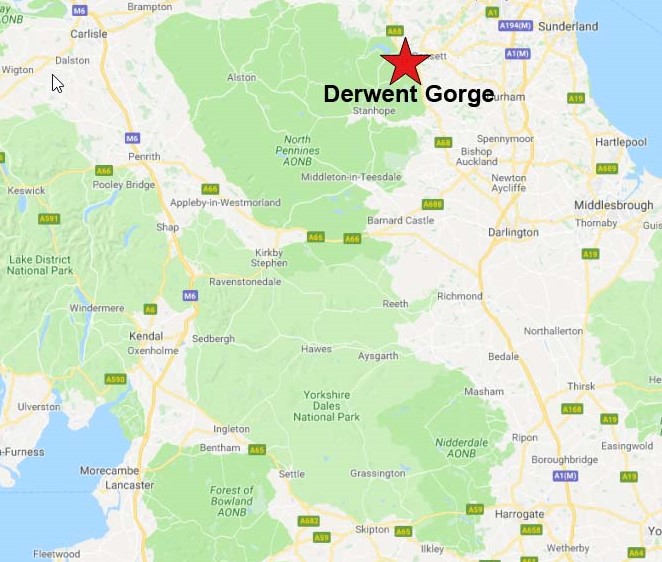
The RSPB has published a map showing the last known location of Marc’s tag:

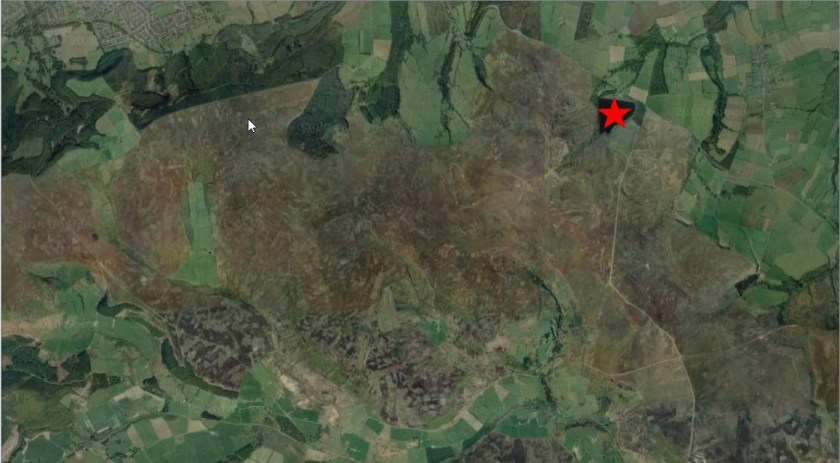
A quick look on Google Earth shows this area is managed for driven grouse shooting:

We’ve done a bit of research and it looks like this area is part of the Wemmergill Estate, a well-known driven grouse shooting location in the North Pennines Area of Outstanding Natural Beauty. It is also part of a Special Protection Area (SPA) designated specifically for hen harriers. There should be at least 11 breeding pairs of hen harriers in this SPA – there are none.

The estate boundary (in red) on our map suggests the estate is divided in to two separate areas, but this could just be a function of the system used to assess rural payments received by the estate, which is the source of the estate boundary we have used above.

This map below, from the North Pennines AONB, suggests Wemmergill is not split in to two separate areas:

This is not the first time that the police have investigated a suspected raptor persecution incident in this location. In 2015, two dead short-eared owls were found shoved inside a pothole – both had been shot (see here).

So, it looks like DEFRA’s outrageous Hen Harrier Action Plan is continuing to fail. Launched in January 2016 and designed to supposedly protect hen harriers from criminal persecution, here we have yet another satellite-tagged hen harrier that has vanished without trace in an area managed for driven grouse shooting.

As Dr Hugh Webster commented recently, “They can hide the bodies. They can hide the tags. But they can’t hide the pattern“.

If you’re sick to the back teeth of hen harrier persecution and you have no faith in DEFRA’s Hen Harrier Action Plan, there’s no better time than now to support this legal challenge to the brood meddling part of that Plan – please support the crowdfunder here.

Buzzard found shot dead in Suffolk

From East Anglian Daily Times (26 Feb 2018)

INVESTIGATION AFTER AT LEAST ONE BUZZARD FOUND DEAD IN SUFFOLK WOODLAND

Police are investigating the shooting of at least one Common buzzard – a legally protected bird of prey – that was found dead in a Suffolk wood.

Two buzzard corpses were reported to Suffolk Constabulary’s wildlife crime team in an incident described by naturalists as “appalling and abhorrent.” The bodies were found in woodland known as Little Carr, “on the edge of a shooting estate” on the banks of the River Dove, near Hoxne, the team’s Sgt Brian Calver said yesterday.

The discovery was reported by “a person with shooting rights”, but when a police officer visited the site only one corpse could be found. It was believed that the birds died in January, he said.

At first it was thought the bird that was found may have died as a result of poisoning but analysis of X-rays has proven that the bird was shot. We are in the process of looking into this and we will be as absolutely thorough in our investigations, as we are with all wildlife crime – and we will be trying to secure a prosecution,” said Sgt Calver.

He urged members of the public who discovered any bird of prey corpse in the countryside to report their find and its exact location to police. Any corpse should not be handled, because of the risk of poison being involved, but photographic evidence would be helpful, he added.

[Buzzard photo by RPUK]

Gi Grieco, chairman of the 400-strong Suffolk Ornithologists’ Group, said the latest persecution case was “appalling and abhorrent.”

The illegal persecution of birds of prey on the grouse moors of upland Britain is a well-documented, ongoing and major conservation issue but cases such as this latest one in Suffolk – which is certainly not the first of its kind – shows that this illegal activity is also a problem in lowland Britain,” said Mr Grieco.

This is a disgraceful incident and we hope that the police investigation results in a prosecution that ends with the appropriate penalty imposed on the perpetrator.”

The site of the incident is in Waveney Bird Club’s catchment area and club founder Steve Piotrowski, the author of The Birds of Suffolk, said: “This is yet another upsetting case of raptor persecution. It’s a shame that countryside thugs are tarnishing the name of the shooting estates that do stick to the law and do some good things for conservation.

The criminals think they can get away with it. The police do seem to struggle with prosecutions and they need all the help a vigilant public can give them.

Common buzzards were rare in Suffolk up to the 1980s because of heavy persecution that took place previously but now they are recovering, hopefully, to the level they should be at. For them to still be persecuted is not just upsetting, it’s illegal.”

Lewis Thornley,the British Association for Shooting and Conservation’s director for central England, said: “While it’s important to remember that an investigation is ongoing, BASC utterly condemns crimes against protected raptors and would urge anyone with information to assist the police.

Anyone shooting a protected species damages shooting’s reputation and puts at risk the freedoms currently enjoyed by those who shoot legally and sustainably. Such actions have no place among the law-abiding shooting community.”

Anyone with information relating to the buzzard deaths is asked to contact Suffolk police on 101 and ask for Pc Lee Andrews-Pearce, quoting the crime reference 37/8990/18

ENDS

Sparrowhawk shot dead nr Knaresborough, North Yorkshire

Press release from North Yorkshire Police:

APPEAL FOR INFORMATION AFTER SPARROWHAWK FOUND SHOT NEAR KNARESBOROUGH

Police are appealing for information after a sparrowhawk was found shot near Knaresborough.

The dead female sparrowhawk was found by a member of the public north of the village of Nidd, between Knaresborough and Ripley, with a fresh, bloodied injury, on Sunday 25 February.

The results from a subsequent x-ray showed that the bird had a smashed and broken wing. The x-ray also revealed a piece of shot lodged in the bird’s body. A police investigation is now underway.

Under the Wildlife and Countryside Act it is an offence to intentionally kill, injure or take wild birds. Nevertheless birds of prey (raptors) are still shot, poisoned and trapped, and North Yorkshire has more confirmed incidents of raptor persecution than any other county in England. As part of a bid to tackle this, in February North Yorkshire Police teamed up with the RSPB, RSPCA, and North York Moors and Yorkshire Dales National Parks to launch ‘Operation Owl’. The joint initiative saw staff distribute flyers and posters to local businesses and talk to members of the public about raptor crime, to raise awareness of the issue.

Sergeant Kevin Kelly, of North Yorkshire Police’s Rural Taskforce, said: “Our wonderful countryside is host to many specially-protected birds of prey. It is absolutely unacceptable that people think they can ignore the law and subject these birds to poisonings, shootings, nest destruction and the illegal use of spring traps without consequence. We will be doing everything in our power to catch these offenders, supported by our colleagues in the RSPB and the volunteers in the national parks.”

Guy Shorrock, RSPB Senior Investigations Officer, added: “Two years ago a red kite was found shot in this same area, so there is clearly a problem here. We believe there will be someone out there who has information about what is going on in this area. We urge you to come forward and call us, in complete confidence, on our Raptor Crime Hotline.”

Anyone with any information about this incident is asked to call North Yorkshire Police on 101, choose option 1 and be ready to quote reference 12180034821.

Alternatively email bill.hickson@northyorkshire.pnn.police.uk. If you wish to remain anonymous, call the RSPB’s confidential Raptor Crime Hotline for free on 0300 999 0101.

ENDS

An impressively detailed and quick press release & clear evidence of genuine partnership working. Great stuff from North Yorkshire Police’s Rural Taskforce.

Barn owl with horrific injuries found in North Yorkshire

A barn owl with horrific injuries has been found near Marishes in the Ryedale district of North Yorkshire.

According to expert raptor rehabilitator Jean Thorpe, the barn owl was found close to death. It had suffered two broken legs and its injuries were consistent with having been caught in a spring trap. Jean believes the owl had been released from the trap and then left to die a lingering death, unable to hunt with badly infected wounds.

The owl was taken to Jean’s wildlife centre but died shortly after arrival.

This area is a notorious raptor persecution blackspot. Spring traps are only legal if they are set within either a natural or artifical tunnel to prevent non-target species getting caught in the trap’s jaws.

Anybody with any information about this horrific case please contact Wildlife Police Officer Jez Walmsley at Malton Police Station (Tel: 101).

Photos by Jean Thorpe. Map by RPUK.

Marsh harrier nest attacked on Yorkshire grouse moor: an update

In August 2017 we blogged about how a marsh harrier nest on Denton Moor in Nidderdale, Yorkshire had been repeatedly attacked by armed men dressed as gamekeepers (see here).

The adult harriers had been shot at and the eggs had been removed from the nest during a series of visits in May 2017, all caught on camera by the RSPB.

North Yorkshire Police launched an investigation, including a public appeal for information, and the RSPB released its video footage in the hope that somebody might be able to identify any of the armed men.

Unsurprisingly, there was a deafening silence from the leading representatives of the grouse-shooting industry (Moorland Association, National Gamekeepers’ Organisation, Countryside Alliance, Game & Wildlife Conservation Trust), which can’t have helped the efforts being made by the police.

As is so often the case we didn’t hear any more about this investigation and we assumed that in the absence of any witnesses or new evidence, and the wall of silence from the shooting industry, the case had been quietly parked along with all the others that never make it to court. However, it seems we’d underestimated North Yorkshire Police’s new Rural Taskforce.

Earlier this week, the RSPB Investigations Team provided an update on this criminal investigation and it’s quite clear that North Yorkshire Police has deployed a certain level of creative determination in its efforts to bring these criminals to justice.

According to the RSPB blog, North Yorkshire Police had tried to use forensic voice analysis to compare the voices caught on the camera footage with the voices of several suspects who had been brought in for interview. Unfortunately, the sound captured on the video footage was of insufficient quality to allow a comparison. That’s a shame, but full marks to the police for trying.

Think how much easier it would be, not to mention the savings to the public purse, if those within the grouse shooting industry stepped forward to help the police identify these criminal gunmen dressed as gamekeepers on this Yorkshire grouse moor.

Last chance saloon for Peak District Bird of Prey Initiative

Following last week’s news that the RSPB has terminated its involvement with the failed Peak District Bird of Prey Initiative (here), one of the local raptor study groups has now issued a statement on where it stands.

The Peak District Raptor Monitoring Group, which has played a central role in raptor monitoring and providing breeding data for the Initiative, has decided to give the Initiative one last chance to succeed, despite strong reservations about the intent of the local grouse shooting industry, particularly the gamekeepers and the Moorland Association.

The full statement can be read on the Peak District Raptor Monitoring Group’s website, here.

The Peak District Bird of Prey Initiative is in the last chance saloon. We learned last week that the Peak District National Park Authority will be “looking for an increase in birds in the breeding season before committing to working with the other organisations in the Initiative beyond 2018” (see here).

All eyes on the Dark Peak this spring.

Gamekeepers’ attempts to suppress Peak District Bird of Prey Initiative report

Earlier this week we blogged about how the Moorland Assocation had blocked the publication of an official press statement on the failed Peak District Bird of Prey Initiative (here) and then shortly afterwards how the RSPB had terminated its involvement with this project (here).

We said at the time that it wasn’t just the Moorland Association that was disrupting this ‘partnership’, but that the local gamekeepers had also played their part. Here’s the evidence, sourced via an FoI to the Peak District National Park Authority:

On 8th November 2017, Rhodri Thomas (Peak District National Park Authority) sent around a copy of the draft Bird of Prey Initiative (BoPI) Report 2016-2017 to all members of the BoPI, asking for comments before the report was published. Here is that draft report: Draft BoPI 2016 2017 report

On 10th November 2017, Amanda Anderson (Director, Moorland Association) had a telephone conversation with Rhodri Thomas about the draft report. We don’t know the full details of that conversation but judging from Rhodri’s email to Amanda shortly afterwards, it’s clear that Amanda was questioning the accuracy of the report:

On 25th November 2017, Amanda wrote to Rhodri and sent him a copy of the draft BoPI report with comments from the local gamekeepers, compiled by ‘Richard’ (a gamekeeper). The main thrust is that the gamekeepers don’t accept the report as accurate, apparently do not understand the BoPI’s terms of reference six years on, and don’t want the 2016/2017 report to be published. Here is a copy of those comments:

Gamekeeper comments in response to draft 2016 2017 BoPI report

And here is Amanda’s email to Rhodri, basically supporting the gamekeepers’ comments:

On 26 November, Rhodri emailed Amanda with his intitial thoughts on the gamekeepers’ comments:

On 27 November 2017, Rhodri wrote a more detailed reponse to Amanda about the gamekeepers’ comments:

Rhodri also sent Amanda his annotated comments to the gamekeepers’ complaints, rejecting the vast majority as being either irrelevant or inaccurate. Here it is (and it’s worth a read): Rhodri response to gamekeeper comments on draft 2016 2017 BoPI report

On 29 November, Rhodri sent the final version of the 2016/2017 BoPI report to the whole group, but before he did, he also sent this explanatory email to Amanda and Robert Benson (Chair, Moorland Assoc) to clarify why he had rejected the majority of the gamekeepers’ comments:

Later the same day, the Moorland Association refused to sign the joint press statement announcing how the BoPI had once again failed to meet any of its targets, and so the 2016/2017 report was quietly posted on the Peak District National Park Authority website without any formal announcement. We blogged about that decision here.

The emails and documents we’ve posted here provide just a flavour of the efforts Rhodri and his team have made to keep the partnership on track and to maintain the focus on tackling rampant illegal raptor persecution within the Dark Peak. In our view the Moorland Association and the gamekeepers have been working to an entirely different agenda (and the BoPI results support this view) whilst enjoying the PR gains of being seen as partners working towards improved raptor protection in the National Park.

The Peak District Bird of Prey Initiative is the epitome of a sham partnership and we applaud the RSPB for calling it out, and getting out.

Moorland Association blocks official statement on raptor persecution in Peak District National Park

Regular blog readers will be familiar with the Peak District Bird of Prey Initiative (BoPI). This so-called partnership was established in 2011 and was originally a five-year project which aimed to restore declining populations of some raptor species in the Dark Peak region of the Peak District National Park.

BoPI partners included the Moorland Association, The National Trust, Natural England, Peak District National Park Authority and the RSPB. Two local raptor study groups (the Peak District Raptor Monitoring Group and the South Peak Raptor Study Group) were also involved.

The BoPI was deemed necessary following years of evidence of wide scale raptor persecution on grouse moors within the region (e.g. see RSPB summary reports here and here). However, the Moorland Association put its own ludicrous spin on the situation by publishing an article to announce the launch of the BoPI but using the misleading headline: ‘Birds of prey thriving on grouse moors’.

By 2015, the BoPI had failed to meet any of its targets (see here). However, in a press release the Peak District National Park Authority said the BoPI would continue and claimed there was “renewed commitment” from the project partners as well as “new rigour and energy” to restore the breeding success of raptors in the Dark Peak.

Strangely, the BoPI failed to publish an annual report in 2016.

In late November 2017, the BoPI published its 2017 annual report, which was bundled together with the 2016 report (see here). Once again, the BoPI had failed to meet any of its targets and for the first time since 1984, there were no successfully breeding peregrines in the Dark Peak. This was clearly a failing partnership.

The results came as no surprise to anybody, but what was surprising, and as we blogged at the time, was that there wasn’t an accompanying press statement from the Peak District National Park Authority or from the BoPI – the annual report was quietly uploaded to a page on the Peak Park Authority’s website that you had to work quite hard to find.

Well now, after an FoI request, we know why.

There was a clear intention by the Peak District National Park Authority to issue a press statement on behalf of the BoPI, but this was blocked by project ‘partner’ the Moorland Association.

Here is the draft press statement produced by the Peak District National Park Authority on behalf of the BoPI with the intention of publishing it at the same time as the 2016/2017 report:

It was pretty measured and accurate, and all project partners had agreed to it, apart from the Moorland Association. Here’s the email from Amanda Anderson (Director, Moorland Association) to the Peak District National Park Authority rejecting the draft press statement, and written in the knowledge that if the project partners couldn’t agree on the draft statement by a set deadline, no press statement would be issued and the 2016/2017 report would be published on its own with no publicity:

And here is the response to Amanda from Rhodri Thomas of the Peak District National Park Authority, who clearly has a sense of humour (note his final sentence, in reference to the publicity about grouse moor owners wanting licences to kill Marsh harriers):

It’s quite clear why the Moorland Association would seek to block this press statement, given the dire results of the BoPI’s 2016/2017 report. Even a skilled PR manipulator like Amanda would struggle to conjure up any positive PR spin from such a catastrophic project failure.

What’s surprising is that the other BoPI partners would accept this situation and allow the 2016/2017 report to be published without any accompanying publicity. In their defence, it may be that the publishing deadline didn’t allow for any more discussion on the issue (the Peak Park Authority was obliged to publish the 2016/2017 report by a certain date because we’d asked for a copy via FoI and so the Park had to comply within the regulatory timeframe). Nevertheless, the press statement could still have been published, but with an additional disclaimer stating the Moorland Association did not agree with the report’s findings. That’s fairly standard practice in situations such as this.

But perhaps the other BoPI partners are not just sitting back and accepting the disruptive role of the Moorland Association in this partnership charade. Perhaps there are on-going discussions behind the scenes about how to address the problem. We’d like to think so, especially as we now also know, through this recent FoI, that it’s not just the Moorland Association that’s trying to prevent any negative publicity about on-going raptor persecution in the Peak District National Park. The local grouse moor gamekeepers are also complicit in this role, and we’ll be blogging more about that shortly.

We also now know that the Peak District National Park Authority, despite its best efforts to hold this partnership together, is struggling to see a future for the collaborative aspect of the BoPI. Good, it’s a bloody sham and the sooner the grouse shooting industry is prevented from masquerading as fully-supportive conservation partners, the better.

On a related topic, have a listen to this recent podcast interview with Amanda Anderson, which includes a discussion about the Moorland Association’s involvement in raptor conservation ‘partnerships’ (starts at 17.55).

UPDATE 14.30hrs: RSPB terminates involvement with failed Peak District Bird of Prey Initiative (here)

UPDATE 25 January 2018: Gamekeepers’ attempts to suppress Peak District Bird of Prey Initiative report (here)

5 red kites, 1 buzzard & 1 raven found dead in suspicious circumstances in Oxfordshire

Press article from today’s Oxford Mail:

A police investigation has been launched after five red kites, a raven and a buzzard were discovered dead in a village in Oxfordshire.

The birds were discovered by a family on Sunday, September 17, near the village of Pyrton, on the edge of the Chilterns, who reported them to the RSPB.

All the birds were recovered and x-rayed by a local vet. The x-rays revealed no signs of shot.

However, the birds have now been sent off for toxicology testing by Natural England as part of the Wildlife Incident Investigation Scheme (WIIS), to see if the birds have been poisoned.

All birds of prey and ravens are protected by UK law, making it illegal to kill or harm them. Those found to have done so could face six months in jail or an unlimited fine.

Thames Valley Police, Natural England and RSPB are now working together on a joint investigation and are appealing to the public for information.

If you have any information relating to this incident, call Thames Valley Police on 101.

With their six-foot wingspan, red kites are Britain’s third-largest bird of prey and feed mainly on carrion.

If you find a wild bird which you suspect has been illegally killed, contact RSPB Investigations on 01767 680551, email crime@rspb.org.uk or fill in the online form: https://www.rspb.org.uk/our-work/our-positions-and-campaigns/positions/wildbirdslaw/reportform.aspx

ENDS

Four months after discovery and still no toxicology report?

UPDATE 31 Dec 2018: This incident has now been reported in the WIIS database as follows:

7 birds were found under a bridge caught in netting or barbed wire. Analysis has confirmed a residue of bromadiolone which may have contributed to the death of a red kite. Case closed as unable to determine where the exposure occurred‘.

Diverting attention from the illegal killing of peregrines on grouse moors

One of the many criticisms about the proposed reintroduction of hen harriers to southern England is that if a population does manage to become established, the grouse-shooting industry will use it to divert attention from the on-going eradication of this species on intensively managed driven grouse moors. ‘Look, hen harriers are doing just fine in the lowlands, the species’ conservation status has improved, everything’s fine, there’s nothing to worry about anymore’.

If you don’t think that that’s what will happen, just take a look at this letter from the Countryside Alliance, published in The Times yesterday:

PEREGRINE’S SUCCESS

Sir, your report that the peregrine falcon is “now seeking sanctuary in cities as it comes under threat” fails to provide vital context (“Prized peregrine falcons falling prey to greed“, News, Jan 9). The peregrine falcon population reached a low of about 150 pairs in the 1960s as a result of the impact of toxic agricultural chemicals such as DDT in the food chain as well as illegal persecution. However, improved legislation and protection has helped the peregrine falcon to expand its range and numbers. The latest estimates place the number of peregrines at a historic high of 1,500 pairs, and has led to the peregrine having its conservation status declared “secure”. The species, like other raptors such as the buzzard and red kite, is an undoubted conservation success.

ENDS

No mention then, of how illegal persecution on the north of England grouse moors is suppressing local peregrine populations (see here).

No mention then, of how the preliminary results of the 2014 national peregrine survey show a sharp decrease in peregrine occupation in the UK’s uplands, especially in areas intensively managed for driven grouse shooting (see here).

No mention then, of how illegal persecution has led to the continuing decline of peregrines in the grouse moor areas of north east Scotland, particularly on the eastern side of the Cairngorms National Park (see here).

No mention then, of how illegal persecution has led to the continuing decline of the peregrine’s breeding population on the grouse moors of Bowland.

No mention then, of how illegal persecution has led to the continuing decline of the peregrine’s breeding population on the grouse moors of the Dark Peak in the Peak District National Park (see here).

Funny, that.

Photo of a dead peregrine that was found shot next to a grouse moor in the Peak District National Park in 2016 (RSPB photo)