Buzzard shot dead in Dorset

RSPB press release (23 July 2018):

DEAD BIRDS OF PREY FOUND IN DORSET

A shot buzzard and dead barn owl spark concerns of a local persecution problem

Dorset Police and the RSPB are appealing for information after a dead buzzard and a dead barn owl were found near Melplash, Dorset in May 2018.

[Photo of the shot buzzard via RSPB]

The buzzard was taken to a nearby vets, where an X-ray revealed the presence of a piece of shot in the bird’s skull, which is believed to be the cause of death. A barn owl was also found dead in suspicious circumstances under its nest box, though the body was too decomposed to determine cause of death. Sadly there are also previous reports of another dead barn owl and a number of dead buzzards in this area, though the bodies were not recovered for testing.

Local enquiries by Dorset Police have not uncovered any leads so far, and they are appealing to the public for information.

Birds of prey and owls are protected by law under the Wildlife and Countryside Act 1981 which makes it an offence to intentionally harm them. Anyone found to have shot or killed these birds faces an unlimited fine and/or up to six months in jail.

Tony Whitehead from RSPB South West Regional Office said: “The deliberate persecution of birds of prey is not only brutal but illegal. Raptors are an essential part of a healthy ecosystem, not to mention a glorious sight to see. We are grateful to the member of the public who took the trouble to report these incidents and we urge anyone with information to come forward.”

The illegal persecution of birds of prey is a widespread and unrelenting problem which continues to affect the conservation status of some raptor species in the UK. As a result, the RSPB has set up a confidential ‘Raptor Crime Hotline’ to give whistleblowers a chance to speak out in confidence and help end this culture of criminality.

Claire Dinsdale of Dorset Police’s Rural Crime Team said: “Raptor persecution is one of the UK Wildlife Crime Priorities which includes poisoning, shooting, trapping, habitat destruction and nest destruction or disturbance. There is a clear responsibility with legitimate firearm users to accurately identify the species before any shot is taken. It is totally unacceptable to act outside the law and shoot these protected birds. I would urge anyone with any information to speak to us or the RSPB in confidence.”

If you have any information relating to this incident, please call Dorset Police online in confidence at www.dorset.police.uk/do-it-online and quote reference 55180073229. Or contact the RSPB’s confidential Raptor Crime Hotline on 0300 999 0101.

If you find a wild bird which you suspect has been illegally killed, contact RSPB investigations on 01767 680551 or fill in the online form here.

ENDS

Salisbury peregrine ‘Peter’ – shot last year, Dad this year

A good news story!

Last year we blogged about a peregrine that had been found shot in Hampshire. His colour ring (Blue GX) identified him as ‘Peter’, one of the chicks that successfully fledged from Salisbury Cathedral in 2014. He’d suffered a fractured wing from the gunshot fragments.

Peter spent a few months in the care of the Hawk Conservancy Trust in Andover where he received specialist veterinary attention and rehabilitation that allowed him to be released back to the wild several months later (see here).

[Photo of Peter’s release by James Fisher]

This year, thanks to his colour ring, Peter has been recorded nesting at a quarry in Hampshire. This breeding attempt has resulted in two successfully fledged chicks. Full details here on the Salisbury Cathedral website.

What a fantastic outcome for all those involved with his rescue and rehabilitation. Well done and thank you!

[Digiscoped photo of Peter at the quarry, by Keith Betton]

Red kite shot dead in Kent

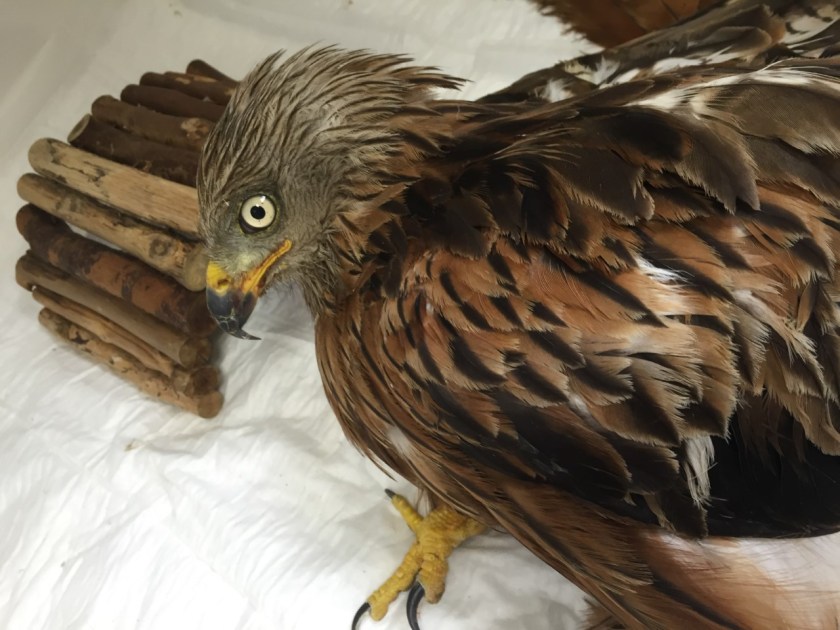
Back in May there was a report (and several photographs) on social media of a dead red kite that had been found on 9th May 2018 by a member of the public, “10-12ft up in a bush” at Woodchurch, Kent.

We believe this was reported to Natural England who eventually arranged for the corpse to go for a post mortem.

A few days ago there was an update from the member of the public, again on social media, who said this:

Re: red kite I discovered at Woodchurch in May and retrieved. The District Officer phoned today and confirmed the bird had been shot. So sad, they are holding on to the bird and investigating“.

We don’t have any further information.

Thanks to the blog reader who drew our attention to this case.

[Photo of the shot red kite by Ian Stewart]

North Yorkshire police watchdog plans inquiry on raptor persecution

Article reproduced from Richmondshire Today (16 July 2018):

BIRD OF PREY PERSECUTION INQUIRY PLANNED

A wide-ranging inquiry examining why North Yorkshire has the country’s worst bird of prey persecution record and efforts to crack down on the crime have failed is set to be launched.

A move has been proposed to create a select group of the county’s Police and Crime Panel to collect evidence from bodies ranging from the Crown Prosecution Service to the RSPB to find potential solutions to the persistent issue.

One of the possible solutions the inquiry will focus on is expected to be ‘vicarious liability’, where landowners are deemed responsible for the actions of their gamekeepers.

Another key line of inquiry will be resolving how to bolster prosecutions, as defendants’ specialist lawyers are regularly seen to “outgun” prosecutors, using legal loopholes.

The latest Government maps of recorded bird of prey shootings, trappings, poisonings and cases where nests have been destroyed between 2011 and 2015 show there were 39 in North Yorkshire – the same number as the next worst three counties, Norfolk, Cumbria and Derbyshire.

The county has been named as the worst area in the UK for criminal attacks on birds of prey for more than a decade.

[Graph from RSPB’s Birdcrime 2016 report]

A report by the county’s Police and Crime Commissioner to the panel outlined a range of actions North Yorkshire Police were running to tackle the issue, but did not highlight any successful prosecutions.

The report states to address wildlife crimes issues, the force had increased the number of wildlife crime officers from 14 in 2015 to 20, and would further increase the number of officers looking at wildlife crimes in November.

It said while the county’s ‘abundance of natural habitat which suits raptors’ contributed to its bird of prey persecution ranking, it would be ‘naive to believe this was the sole cause of the problem’.

The report also highlighted Operation Owl, a joint initiative launched by the force, the RSPB and the RSPCA, and the North York Moors and Yorkshire Dales national parks in February, which features surveillance checks on known raptor persecution hot-spots to disrupt offender activity.

Councillor Peter Wilkinson, deputy chairman of the police watchdog, said a change of culture was needed on a minority of shooting estates, alongside more effective prosecutions.

He said the Government figures represented just the tip of the iceberg and more solutions that got to the root of the issue were desperately needed.

The Northallerton politician, who is a keen ornithologist, said: “Birds of prey persecution is a disgrace for North Yorkshire, but my view is the police are taking it very seriously.”

ENDS

This is encouraging news. It looks like this proposal for an inquiry will be discussed at the next North Yorkshire Police and Crime Panel meeting, due to take place tomorrow (19 July 2018).

The report by the North Yorkshire Police & Crime Commissioner to the panel, as mentioned in the above article, can be read here: Wildlife Crime in North Yorkshire_Police and Crime Panel Report_July2018

The more pressure that is brought to bear on the raptor killers in North Yorkshire, the better, given this county’s appalling track record. For an overview of the scale of ongoing raptor persecution in North Yorkshire, which is what the Police and Crime Panel are faced with, this recent map from the RSPB says it all:

There is news circulating on social media today about a successful hen harrier nest on a grouse moor in the Yorkshire Dales National Park, the first since 2007(!). That is clearly the result of increased pressure and is to be welcomed, although one token pair in such a vast county won’t persuade anyone that illegal persecution is in decline – we’ll need to see many more successful nests, over a sustained period of years, to be convinced that things are changing for the better. And of course successful nests are meaningless if the young harriers from those nests are still routinely killed on other grouse moors once they’ve fledged.

UPDATE 22 July 2018: Prosecutors accused of ‘failing to take raptor persecution seriously’ in North Yorkshire (here)


Raptor rehab expert gets funding support from both Yorkshire National Parks

A bit of a good news story for a change! Yorkshire’s two National Park Authorities have found a creative way of providing funding support to Jean Thorpe, an expert wildlife rehabilitator who works tirelessly (and voluntarily) to care for the victims of illegal raptor persecution across the region.

The Yorkshire Dales National Park Authority and the North York Moors National Park Authority have come up with a plan to make Jean an ‘official volunteer’, which means that they can now cover her travel expenses when she’s called out to help rescue birds of prey and owls within the Parks’ boundaries.

Given the region’s consistent reputation as the worst county in England for illegal raptor persecution, these funds will help Jean’s work considerably.

Of course, there shouldn’t be any raptor persecution within these two National Parks and some may argue that the funds should be directed towards targeting the criminals and enforcing the law. It’s a fair point, but also an idealistic one. In recent months we have seen some significant movement from the National Park Authorities (particularly the Yorkshire Dales NPA) who have stopped pretending raptor persecution doesn’t happen and instead have begun to focus on how to address it (e.g. see here and here), but there’s a long way to go.

Until raptor persecution has been eradicated from these two National Parks, finding a way to provide financial support for Jean’s work is a welcome move and we applaud the two Park Authorities for their creative thinking.

Press release from Yorkshire Dales National Park Authority:

Birds of prey specialist Jean Thorpe has become an official volunteer for the two National Park Authorities in North Yorkshire, the Yorkshire Dales and the North York Moors, meaning that they can cover her travel expenses while she helps rescue and rehabilitate injured birds.

The Malton-based ‘Raptor Rescue Rehabilitator’ provides specialist care for injured raptors and owls.

The Yorkshire Dales National Park Authority’s Sustainable Development Fund has also awarded Mrs Thorpe £150 for a first response kit.  This ‘first aid kit for birds’ will help her provide initial on scene care.

The birds that come to Mrs Thorpe’s attention are from a variety of sources, including road traffic collisions, overhead wire collisions, as well as birds displaying signs of being illegally shot, trapped or poisoned.

A successful example of her work can viewed here.

Jean Thorpe, who was appointed an MBE in 2014, said: “It is excellent to get support from the two National Parks in North Yorkshire.  I am very grateful. They offer some of the best habitats in the English uplands for raptors but unfortunately I do see some horrendous injuries from illegally trapped or shot birds.  Some, but by no means all, make a recovery and get released back into their natural environment ‘’

Yorkshire Dales National Park Authority Area Manager Matt Neale, who works with partner organisations through Operation Owl to tackle illegal bird of prey persecution in the National Park, said:  “Jean has a great deal of knowledge built up over many years when it comes to the rehab of injured birds. This is very specialized work.   I would also like to pay tribute to a number of other individual businesses who support Jean with her work.  This has not gone unnoticed.  Jean x-rays every raptor to help diagnose injuries and to identify the possible cause.

Her biggest expense is mileage, as Yorkshire is a big place, so by signing Jean up as a volunteer we can help.  North York Moors National Park Authority have joined us and done the same.  We are all so grateful for her unstinting support for wildlife in both National Parks.”

Debbie Trafford, Head of Recreation and Ranger Services at the North York Moors National Park Authority, added: “Either through illegal persecution or accidents, injured birds of prey sometimes with appalling injuries are discovered requiring help, and that is where Jean excels.  National Parks are important areas for raptors and we are committed to improving the situation.”

ENDS

Three more satellite-tagged hen harriers ‘disappear’ in suspicious circumstances

RSPB press release, 22 May 2018:

THREE HEN HARRIERS DISAPPEAR IN SUSPICIOUS CIRCUMSTANCES

Police and the RSPB are appealing for information following the disappearance of three protected, satellite-tagged hen harriers in Scotland and Cumbria.

After monitoring her progress since she fledged last June, a hen harrier named Saorsa suddenly ceased sending transmissions in February 2018 whilst located in the Angus Glens, Scotland. She has not been seen or heard of since.

A male bird, named Blue, then raised concerns in March this year when his tag, which had also been functioning perfectly, suddenly and inexplicably cut out near Longsleddale, Cumbria.

In the same month, a tagged bird named Finn – after young conservationist Findlay Wilde – vanished near Moffat, Scotland. Finn was tagged as a chick in 2016 from a nest in Northumberland, one of only three hen harrier nests to fledge young in the whole of England that year.

[RPUK map]:

RSPB Investigations staff conducted a search for all three birds, but no tags or bodies were found. Where tagged hen harriers have died of natural causes in the past, the tags and bodies have generally been recovered. Cumbria Police and Police Scotland are making local enquiries.

Hen harriers are one of the UK’s rarest birds of prey with just three successful nests recorded in England in 2017. There is a slightly larger population in Scotland. These slight, agile birds of prey nest on the ground, often on moorland. Like all wild birds, they are protected by law under the Wildlife and Countryside Act 1981. But, despite full legal protection, studies show that their declining population is largely associated with human persecution.

Several birds have been fitted with a lightweight satellite tag as part of the EU-funded Hen Harrier LIFE project to help build a better understanding of hen harriers, their movements and the threats they face. Since the project began in 2014, a number of tagged hen harriers have disappeared in similarly inexplicable circumstances.

Cathleen Thomas, Hen Harrier LIFE Project Manager, said “The UK population of hen harriers is really hanging in the balance and the disappearance of these three birds is extremely troubling. These tags are over 90% reliable and capable of transmitting long after a bird has died. If these birds had died of natural causes we would expect to recover both the tag and the body. But this has not been the case.

Findlay Wilde said “In the short time we followed Finn, we went through every emotion possible; from the excitement of knowing she had safely fledged to the nagging worries that she was settling in high-risk areas; and then of course to the worst news of all. Finn isn’t just another statistic in growing listing of missing hen harriers. Her life mattered, and she mattered to me.”

If you have any information relating to any of these incidents, call police on 101. Or to speak to RSPB investigations in confidence, call the Raptor Crime Hotline on 0300 999 0101.

ENDS

Dr Cathleen Thomas of the RSPB’s Hen Harrier LIFE Project has written a blog which provides more details of each of the missing harriers – here.

Finn Wilde has also written a blog about the loss of ‘his’ hen harrier – here

The news of these three suspicious disappearances will come as absolutely no surprise to anybody. And neither will the responses of the game-shooting industry, as it trots out the usual, well-rehearsed denials and fake concerns. We’ve seen it time and time again, whether it be about vanishing hen harriers or vanishing golden eagles, and we’ll doubtless see it many more times again. That it’s allowed to continue without sanction is a bloody scandal.

The two young hen harriers that disappeared in Scotland are very interesting.

Saorsa hatched on the Balnagown Estate in Sutherland in 2017. She disappeared in the Angus Glens – a well-known blackspot for illegal raptor persecution and, ironically, in the consituency of Mairi Gougeon MSP, the Hen Harrier Species Champion.

[Photo of Saorsa in the nest, by Brian Etheridge]

We believe the Balnagown Estate was one of several participating in the controversial Heads Up for Hen Harriers Project, whereby estates agree to have cameras installed at hen harrier nest sites to identify the cause of nest failure and help understand the species’ on-going population decline. We’ve blogged about this greenwashing scam many times, and we’ll be doing so again in the very near future, but for now, the fate of Hen Harrier Saorsa is a good demonstration of how futile the project is. She was raised on an estate where there are absolutely no concerns about illegal raptor persecution whatsoever (there’s no driven grouse shooting on the Balnagown Estate) but once she dispersed from the relative safety of that estate, she was at risk. Heading for the Angus Glens, where successfully breeding hen harriers have been absent since 2006, was a seemingly fatal mistake.

Hen Harrier Finn, named after young conservationist Findlay Wilde, hatched on protected Forestry Commission land in Northumberland, 2016. Finn’s last tag transmission came from near Moffat, SW Scotland, which is the location of the controversial golden eagle translocation project, due to start this year.

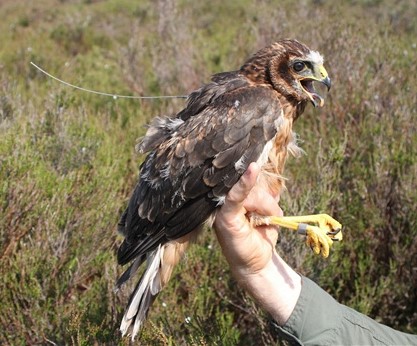
[Photo of Finn by Martin Davison]

Now, let’s assume that DEFRA’s outrageous hen harrier brood meddling plan had been in place in 2016, and that the Forestry Commission had agreed to participate, then Finn and her three siblings would have been removed from the nest, reared in captivity and then released back to the wild in mid-August, close to their natal territory. This brood meddling plan is purported to ‘protect’ young hen harriers, and DEFRA / Natural England / the grouse-shooting industry all claim that this technique will help increase the population of hen harriers. It’s another greenwashing scam.

Would brood meddling have saved Finn? No, of course not, because Finn ‘disappeared’ in suspicious circumstances (presumed to have been illegally killed) in March, several months after she would have been returned to the wild post-brood meddling. So as many of us have been arguing for years, brood meddling will not help hen harriers because it doesn’t address the fundamental issue of illegal raptor persecution, year-round, that has brought this species to its knees.

Brood meddling is due to begin in England this year, but there are two on-going legal challenges, via judicial review, from Mark Avery and the RSPB. We await further news on these cases.

Meanwhile, across the grouse moors of northern England and Scotland, it’s business as usual for the hen harrier killers.

[Cartoon by Mr Carbo]

UPDATE 24 May 2018: Laughable statement from SGA on missing satellite-tagged hen harriers (here)

UPDATE 25 January 2019: SGA fabricates ‘news’ on missing sat-tagged hen harrier Saorsa (here)

Red kite shot & blinded in North Pennines raptor persecution blackspot

Press release from RSPB, 21 May 2018:

SEVENTH RED KITE PERSECUTED IN NORTH PENNINES ‘PROBLEM AREA’

The RSPB is appealing for information after a protected red kite was found shot in Country Durham.

The bird was found alive on 23 April in Derwent Gorge, in the North Pennines AONB, by a member of the public who alerted the group Friends of Red Kites (FoRK). An x-ray by a local vet showed the bird had three shotgun pellets lodged in its head, neck and wing. The bird was cared for but went blind from its injuries and had to be euthanized.

[Photos by Robson & Prescott Vets, Morpeth]

Durham Police visited the area where the bird was found but so far have no leads as to who shot the kite. The RSPB is now appealing to the public for information.

Like all birds of prey, red kites are protected under the Wildlife and Countryside Act 1981 which makes it an offence to deliberately kill or injure a wild bird. Those found to have done so could be given an unlimited fine and/or up to six months in jail.

Since 2010, six kites have been poisoned or shot near Derwent Gorge, including a red kite found poisoned in nearby Muggleswick in 2014.

And in February this year, a rare hen harrier disappeared in suspicious circumstances less than an hours’ drive away from this latest incident. The hen harrier, which was wearing a special satellite tag, suddenly and inexplicably stopped transmitting after it flew over a grouse moor near Middleton-in-Teesdale. [See here]

Jenny Shelton from the RSPB’s Investigations Unit said: “Spring is a crucial time of year when adult kites will be feeding their young, so the death of this bird could have also affected any family it might have been raising. Red kites were almost completely wiped out of the UK until they were reintroduced in the 1980s. This has been a wonderful success, and most of us enjoy watching these impressive birds. But threats like persecution are preventing them from naturally expanding their range and we clearly have a problem area on our hands here. As mainly scavengers, these birds are no risk to anyone. Blasting this bird from the sky was a thoughtless act.”

Jenny added: “We would like to thank Friends of Red Kites and Robson and Prescott Veterinary Hospital in Morpeth who have been a huge help.”

Allan Withrington of Friends of Red Kites said: That anyone could even think about shooting one of these beautiful, graceful birds is beyond my comprehension. We are saddened by yet another wildlife crime and look forward to hearing the results of any investigation.”

If you have any information relating to this incident, call Durham Police on 101 quoting reference number: DHM230420180371.

If you find a wild bird which you suspect has been illegally killed, contact RSPB investigations on 01767 680551 or fill in the online form HERE

ENDS

Well done to the RSPB for putting out this appeal for information. It’s a shame there’s no similar appeal on Durham Constabulary’s website (at least not at the time of writing this blog). Why not?

UPDATE 16.15hrs: We’ve updated the two maps (above) to show the location of Derwent Gorge (as opposed to the nearest town of Shotley Bridge). Derwent Gorge is bang next door to the grouse moor at Muggleswick, and lies within the North Pennines AONB (Area of Outstanding Natural Beauty).

UPDATE 17.00hrs: Well done to the North Pennines AONB for publishing the following statement on their website:

RED KITE KILLED IN NORTH PENNINES

The report of the killing of a protected red kite in the North Pennines Area of Outstanding Beauty (AONB) has come as very distressing news.

Chris Woodley-Stewart, Director of the North Pennines AONB Partnership, said: “We are appalled that someone has committed this despicable crime. Someone must know who is involved and we would urge anyone with any information to come forward. There are so few raptors across the Northern uplands because of this illegal persecution – no one should pretend otherwise.

We met with the police recently to raise awareness of raptor crime and we plan to follow this up. It needs more people to speak out against raptor crime, more resources put into investigation, a commitment to bring prosecutions and stiffer sentences for those found guilty.”

If you have any further information on this incident, please call Durham Police on 101 quoting reference number DHM230420180371 or the confidential Raptor Crime Hotline on 0300 999 0101. All calls are anonymous.

ENDS


Police appeal after red kite found shot on Harewood Estate, Yorkshire

WEST YORKSHIRE POLICE APPEAL FOR INFORMATION, 18th May 2018

POLICE APPEAL FOR INFORMATION AFTER YORKSHIRE RED KITE SHOT IN LEEDS

Police are appealing for information after a Yorkshire Red Kite was shot in Leeds.

The incident happened on Thursday 10 May when an injured Red Kite was found by two walkers on a footpath just inside the northern boundary of the Harewood Estate.

They took the bird to the estate office, who arranged for it to be cared for by staff at the Harewood Bird Garden. It had suffered serious injuries and was taken by staff to a nearby veterinary practice for treatment.

X-rays revealed that the bird had been shot and a pellet was lodged in its right wing. The bird was put down by staff at the practice, as its injuries were too severe for it to survive and wouldn’t have been able to fly any distance.

It is believed the shooting occurred close to the entry point of the public footpath into the Harewood Estate from the A659, near to the junction with the A61 at the bottom of Harewood Bank.

West Yorkshire Police are appealing for witnesses who were in the area and may have seen anything suspicious; to come forward and contact the police to assist with their investigation.

In 2016, at around the same time of the year, six Red Kites were known to have been shot in Yorkshire – two in West Yorkshire and four in North Yorkshire.

In all but one of these cases, the injuries proved fatal. Other instances of kites being targeted by firearms, include one fatally shot at Pateley Bridge in 2017 and several which had been victims of illegal poisoning but which had been found to be carrying lead shot from non-fatal shooting incidents.

Ben Lascelles, Development Manager at Harewood Estate, said: “The Harewood Estate works hard to champion conservation of Red Kites and other native wildlife, and many thousands of people visit us each year to enjoy them. To discover one of these majestic birds has been shot is particularly disappointing and upsetting.”

Howard Jones, RSPB Investigations Officer, said: “Illegal persecution is a real and persistent threat to birds of prey like red kites. They’re a wonderful sight, and the conservation effort to return these birds to our skies has been huge – it is disgraceful that some are spoiling this through their thoughtless and criminal actions.

The RSPB’s new raptor crime hotline on 0300 999 0101 allows whistle-blowers to come forward confidentially in relation to this type of crime and, given the number of illegally kites in Yorkshire, we hope someone will speak up and reveal who is responsible.”

Doug Simpson, Yorkshire Red Kites Co-ordinator, said: “This latest attack on the reintroduced Red Kite population is particularly sickening. A lot of hard work has gone into this programme and for someone to strike right at the heart of it, at the actual release site, is both unbelievable and devastating. It once again raises the question of the suitability of some people to own guns.

No fewer than 43 Red Kites have been confirmed as victims of illegal persecution since releases began in Yorkshire in 1999. That 23 of them have been found by people out in the countryside shows the importance of everyone keeping their eyes open for anything untoward and reporting it.”

Anyone with information about this incident is asked to call West Yorkshire Police on 101 quoting crime reference number 13180232956. Anyone wishing to remain anonymous can call the RSPB’s confidential Raptor Crime Hotline on 0300 999 0101.

ENDS

Police appeal after buzzard found shot in North York Moors National Park

APPEAL FOR INFORMATION FROM CLEVELAND POLICE, 17th May 2018:

SHOT RAPTOR APPEAL

At some point on Friday 4th May between 1pm – 6pm a buzzard was shot near to Lockwood Beck Reservoir in East Cleveland.

The buzzard had received serious wounds to its legs and unfortunately had to be put to sleep by a local vet.

We are appealing for anyone who may have been in the area at the time and seen person / persons / vehicles acting suspiciously.

Please contact Police on 101 quoting event no: SE18078559 and for the attention of PC Ward 542

ENDS

Lockwood Beck Reservoir is in the North York Moors National Park:

Case against grouse moor gamekeeper Timothy Cowin: part 3

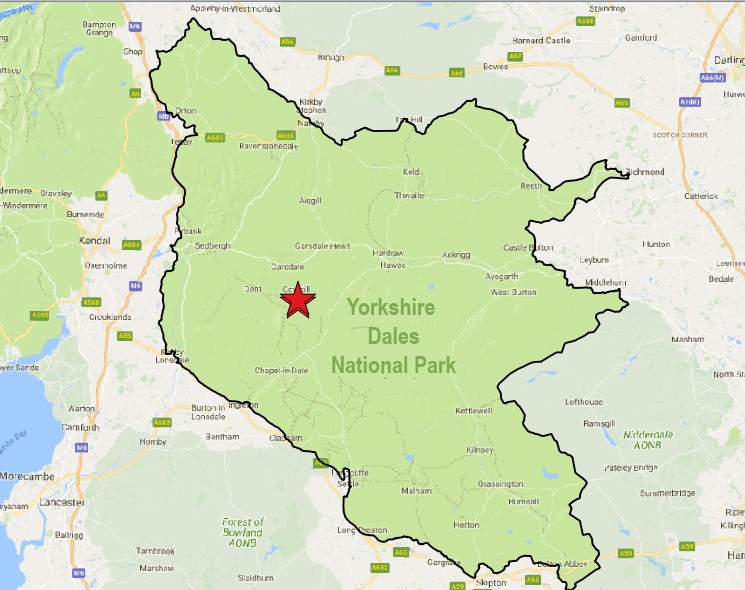
Criminal proceedings continued on Friday (11 May 2018) against grouse moor gamekeeper Timothy Cowin, who is accused of a series of alleged wildlife crimes, including the shooting of two short-eared owls in April 2017 at Whernside, Cumbria in the Yorkshire Dales National Park. It is further alleged he was in possession of items (a shotgun and an electronic calling device) capable of being used to kill wild birds.

Following a farcical hearing at Preston Magistrates Court in March 2018 (see here), the case was due to be heard last Friday but it was adjourned, again, at the request of the defence.

The next hearing is scheduled for July 2018.

For legal reasons, we won’t be accepting any comments on this post.