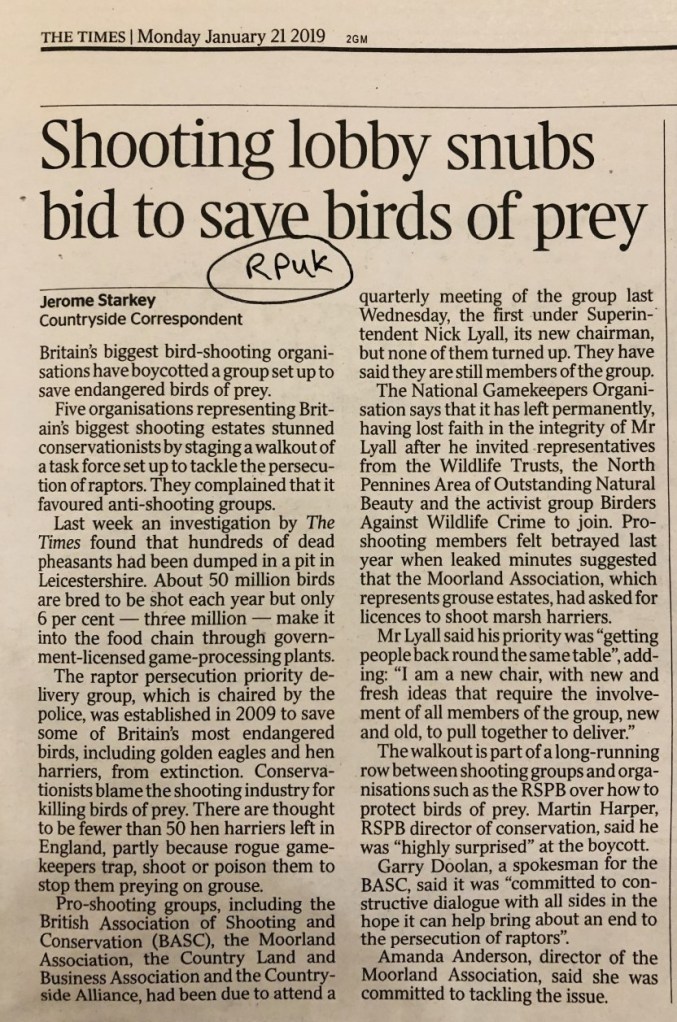
Continued inertia from grouse shooting industry reps on illegal raptor persecution

Last week we blogged about two owls (a short-eared and a tawny owl) that had been found shot on moorland in the Peak District National Park (here). West Yorkshire Police and the RSPB issued a joint statement appealing for information.

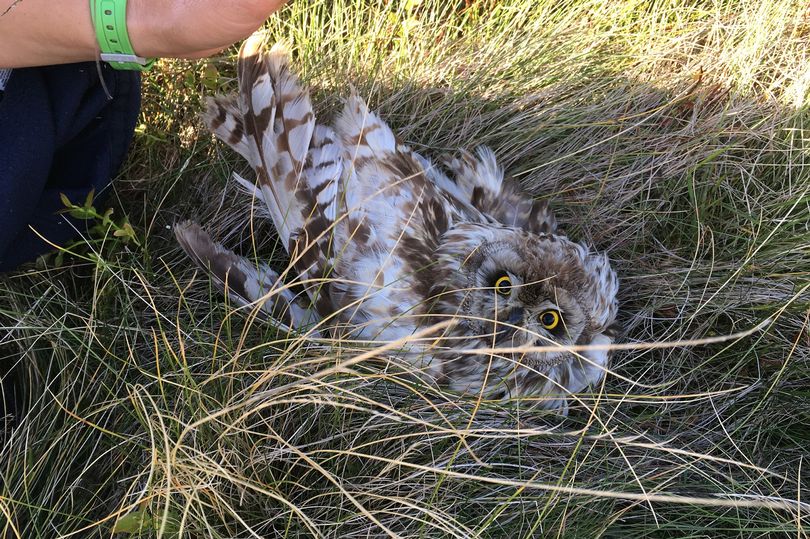
[Photo of the shot short-eared owl from RSPB]

As usual, the Northern England Raptor Forum (NERF) has issued an official response statement on its website (see here).

But what about the other members of the Raptor Persecution Priority Delivery Group (RPPDG), you know, that so-called ‘partnership’ whose main objective includes raising awareness of illegal raptor persecution? How many other ‘partners’ have also issued a statement of condemnation and an appeal for information on their websites?

As we’ve come to expect…… there are no public statements about these two crimes on the websites of the Moorland Association, National Gamekeepers Organisation, BASC or the Countryside Alliance.

There was also silence from the continually failing Peak District Birds of Prey Initiative (of which the Moorland Association is a supposed ‘partner’). This so-called ‘partnership’ is already in the last chance saloon so perhaps the absence of a joint partnership statement is because the Peak District National Park Authority is about to announce the termination of this pointless useless scheme?

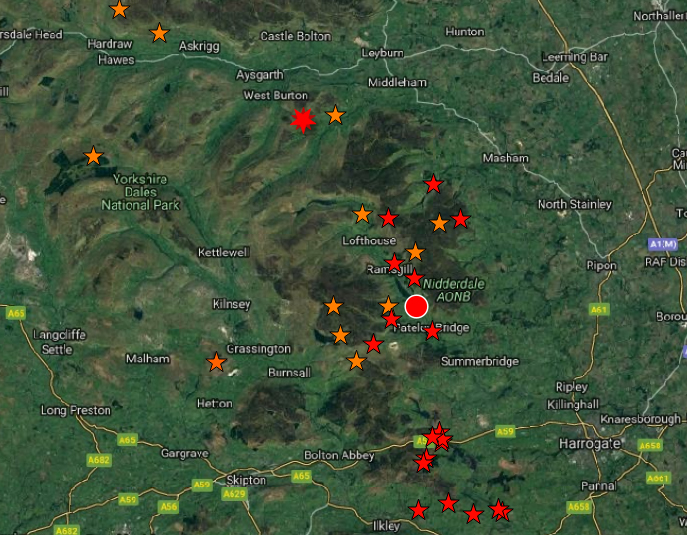
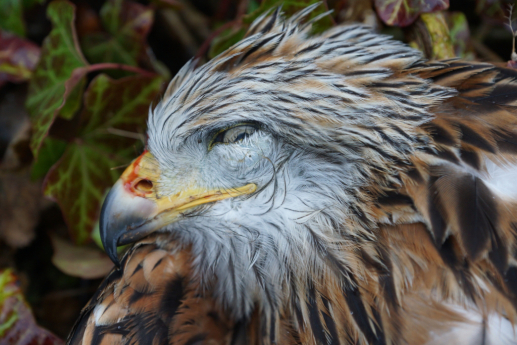
Similarly, there are no public statements on the websites of the grouse shooting industry ‘partners’ about the discovery of a shot red kite found on a grouse moor in the Nidderdale AONB at the end of October – one of the worst places for red kite and hen harrier persecution in the entire country but apparently not significant enough to warrant a mention.

Perhaps they’re sleeping partners?

Or perhaps they’re not genuine partners at all, but are just using their membership of the RPPDG as a convenient cover to portray themselves in the media as ‘concerned conservationists’.

It’ll be interesting to see how long Police Supt Nick Lyall (the new RPPDG chair) will tolerate this long-standing inertia before he starts to put his words in to action and boots out from the ‘partnership’ those who are not contributing to tackling this filthy organised criminality.

Two owls shot in Peak District National Park

Police are appealing for information after the discovery of two shot owls in the Peak District National Park.

On the evening of 11 September 2018 a local runner witnessed a short-eared owl flying overhead, followed by what sounded like gunshots. The following morning she returned to the moorland near Wessenden Head in the northern Peak District. She found the bird on the ground, still alive. It was taken to a vet but had to be euthanized due to its injuries, which included a shattered wing.

[Photo of the shot short-eared owl, via RSPB]

The runner who saw the short-eared owl said: “I had just got back to my car when I suddenly saw a short-eared owl fly over my head – it’s always fantastic to see one of these gorgeous birds. This however was followed by the sound of a gunshots, coming from the direction of a dark-coloured pickup. I really hoped this wasn’t aimed at the owl I’d just seen.

The next morning I returned to the same spot and, there on the ground, was a short-eared owl, still alive but clearly wounded. I was so upset but also furious to think that someone had done this on purpose.”

The police are wanting to speak to the driver of the dark-coloured pick up truck, described as having two dog cages on the back with a thick wooden cover over the cages.

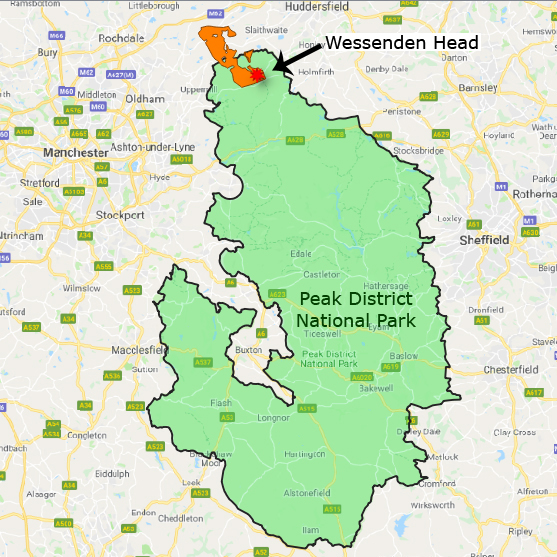
This land (Marsden Moor Estate) is owned by the National Trust and is a designated Special Protection Area (SPA) for short-eared owls.

[RPUK map showing the location of the Marsden Moor Estate (orange) in the Peak District National Park]

On 1 October the dead body of a tawny owl was discovered close to where the short-eared owl was found. It had been shot and stuffed inside a dry stone wall on the Kirklees Way footpath near Greenfield Road (not on National Trust property).

[RPUK map showing proximity of Wessenden Head and Kirklees Way footpath to areas managed for driven grouse shooting in the Peak District National Park]

If you have any information relating to these crimes, call West Yorkshire Police on 101 quoting police log number 174211/09/2018.

To share information about raptor persecution in your community in confidence, please call the Raptor Crime Hotline: 0300 999 0101.

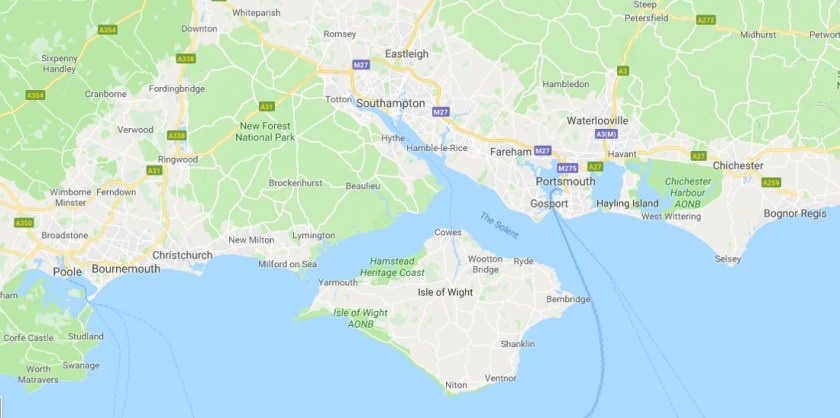
Buzzard & hobby found with horrific spring trap injuries on Isle of Wight

Police press release (4 Dec 2018):

POLICE INVESTIGATION LAUNCHED AFTER BIRDS OF PREY KILLED BY ILLEGAL TRAPS ON ISLE OF WIGHT

Two protected birds of prey, likely to have been caught in illegal spring traps, suffered ‘horrific and traumatic’ injuries.

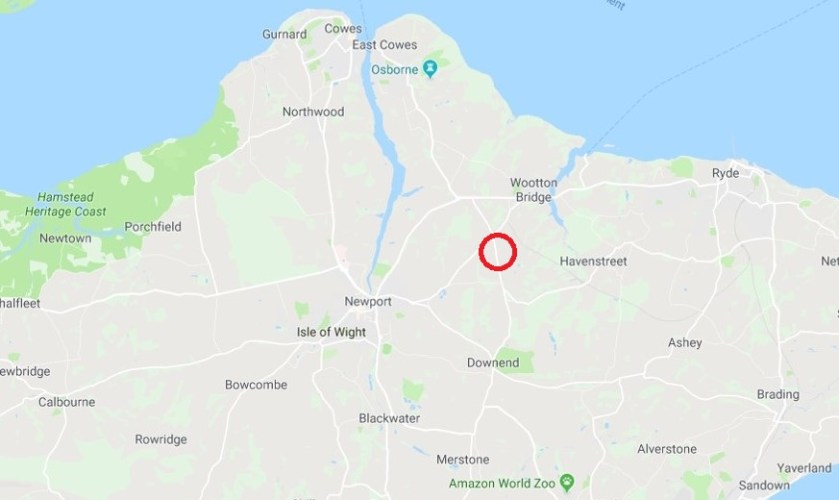
A joint investigation has been launched by Isle of Wight Police and the RSPB after the birds, a buzzard and a hobby, were found with severed legs in woodland at Littletown, near Briddlesford.

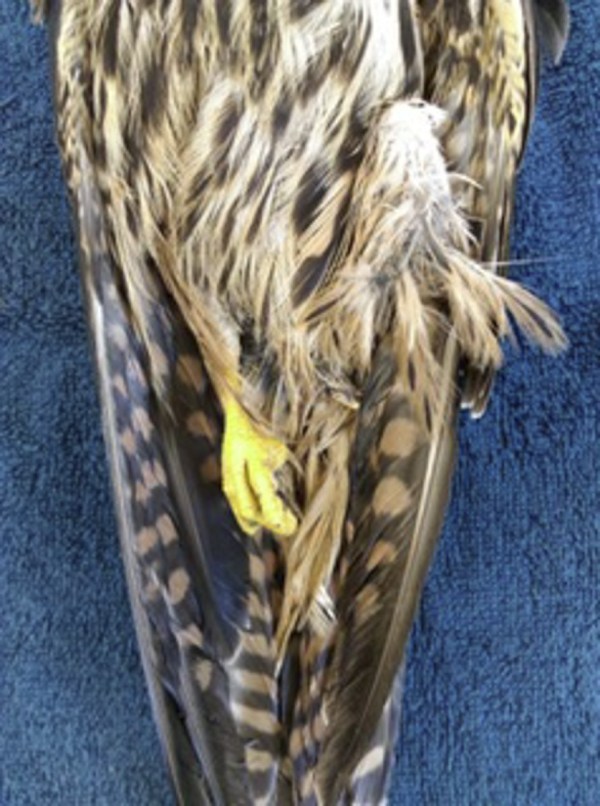
The buzzard was found dead, with a missing foot, on March 14. The hobby — a small falcon similar to a kestrel – was found alive, also with its foot missing, on September 23. It was taken to the RSPCA and put down.

[The buzzard with a severed foot]

[The hobby with a severed foot, photo by RSPCA]

The RSPB said today (Tuesday) the birds were likely to have been illegally trapped.

The birds, a hobby and a buzzard, were found with horrific injuries. Both had lost a foot as a result of becoming caught in a spring trap,” said a spokesperson.

Police were alerted and the birds were sent for post-mortem examinations. The report concluded: ‘Both birds suffered traumatic amputations of one lower limb consistent with the affected leg being caught and held in a spring trap.’

All wild birds are protected by law under the Wildlife and Countryside Act 1981 which makes it an offence to intentionally harm them. Anyone found to have done so faces an unlimited fine with up to six months in jail.

Jenny Shelton, from the RSPB’s investigations unit, said: “Spring traps are sometimes used to catch and kill vermin, and are legal if placed in a tunnel, with a restricted entrance, for this purpose. However spring traps set out in the open are illegal, and pose a huge danger to wildlife. 

We have had numerous reports over the years of birds of prey being deliberately caught in these brutal devices. Birds of prey are incredible creatures and it’s devastating that the lives of these two birds have ended in this way. We are grateful to the people who reported these birds. If you find an injured bird of prey, or come across a metal trap set out in the open or on a pole, call the police on 101 immediately.”

PC Tim Campany, from the Country Watch team, said: “We are working closely with our colleagues from the RSPB to establish what happened. One line of enquiry is that the birds may have been caught and held in a spring-type trap.

This is illegal and is a barbaric method of trapping. It leaves the bird, once freed from the trap, unable to land and feed and it will eventually die of starvation.

Raptor persecution is a priority of the National Wildlife Crime Unit and will not be tolerated.

I would urge anyone with information on suspicious vehicles, persons, or traps located in the Bridlesford area to call us now.”

Anyone with information should call Isle of Wight Police on 101, quoting the reference 44180374840.

ENDS

Illegal raptor persecution is a national wildlife crime priority, so why the hell has it taken nine months for the news of this buzzard to emerge, and two and a half months for the hobby? What’s the point of appealing for information so long after the events?

It’s just not good enough.

These incidents will also cast a shadow on the proposed reintroduction of white-tailed eagles to the Isle of Wight.

Yet another red kite shot & killed in North Yorkshire’s Nidderdale AONB

North Yorkshire Police are appealing for information after the discovery of yet another shot & killed red kite in the Nidderdale Area of Outstanding Natural Beauty (AONB).

The latest in a long line of victims, this red kite was found dead on 25th October 2018 near to Wath.

[X-ray of the shot red kite showing two shotgun pellets. Image from North Yorkshire Police]

[RPUK map showing location of Wath in the Nidderdale AONB]

[RPUK map showing Wath sandwiched between two areas of grouse moor]

Nidderdale AONB is a notorious red kite persecution hotspot with a long history of illegally shot and poisoned red kites (e.g. see here), so much so that last year the Chair of the Nidderdale AONB’s Joint Advisory Committee issued a public statement condemning these killings and warning that it was having a damaging effect on local tourism businesses (see here).

[RPUK map showing the locations of illegally shot or poisoned red kites in the Nidderdale AONB since 2007]

North Yorkshire Police have issued an appeal for information about the latest red kite shooting, and also an appeal for information about a shot buzzard that was found near Selby earlier this month (we blogged about this buzzard a couple of weeks ago, see here).

Appealing for information, Sergeant Kevin Kelly from North Yorkshire Police’s Rural Taskforce said “It’s with much frustration, that I again make another witness appeal regarding two rare birds of prey, that we are privileged to have in our skies, being mindlessly and illegally shot.

If you have any information that will assist the investigation, please come forward and contact police via 101 and pass the information to the Force Control Room. Please quote reference 12180210290 for the buzzard investigation and 12180199938 for the red kite investigation.

We have two extremely experienced wildlife crime officers leading these investigations and they will follow up on any tangible enquiries.  I would also like to take this opportunity to thank the members of public for taking the responsibility to report these matters.

The police press statement includes a quote from the Nidderdale Moorland Group: “We have been made aware of this incident and we are fully supporting the Police investigation. An estate owner and moorland group member found the bird and handed it into the police. The Nidderdale Moorland Group is dismayed by this incident and is committed to helping eradicate wildlife crime. We would ask anyone with information to contact the police“.

Of course, it’s not just red kites that are illegally killed in this grouse moor dominated area of North Yorkshire. Nidderdale AONB and the neighbouring eastern side of the Yorkshire Dales National Park also just happens to be an area where satellite-tagged hen harriers ‘disappear’ without trace in highly suspicious circumstances.

[RPUK map showing Nidderdale AONB and the eastern side of the Yorkshire Dales National Park. Red dot = Wath. Small red stars = locations of illegally shot or posioned red kites since 2007. Orange stars = satellite-tagged hen harriers that have ‘disappeared’ in suspicious circumstances in recent years (data from Natural England). Large red star = hen harrier Bowland Betty who was found shot dead on a grouse moor in 2012]

There has never been a successful prosecution for any of these crimes.

For how much longer do you think DEFRA ministers Michael Gove MP and Dr Therese Coffey MP will continue to be wilfully blind to this so-bloody-obvious serious organised crime?

For how much longer do you think genuine conservation organisations will sit on ‘partnership’ groups with representatives of the grouse shooting industry and pretend that everyone’s working together to eradicate these crimes, when there are zero consequences for the criminals?

[A dead red kite, photo by Marc Ruddock]

Serial egg thief Daniel Lingham receives custodial sentence

Daniel Lingham, 65, was sentenced today at Norwich Magistrates Court after earlier pleading guilty to five charges relating to the unlawful possession of over 5,000 eggs including 75 listed on Schedule 1 of the Wildlife & Countryside Act (species given the highest level of protection) including Marsh harrier.

[Daniel Lingham, photo by Norfolk Police]

Lingham was jailed for a total of 18 weeks, reduced from 26 weeks because of his guilty pleas, and had to fofeit all his equipment. He was also given a 10-year criminal behaviour order (which replace ASBOs) banning him from all Norfolk nature reserves for ten years. If he breaks this ban he could be jailed for five years.

Ah, if only he’d done his Marsh harrier egg-stealing on a grouse moor – he’d probably have been made very welcome and nobody would have reported him. But had one of those pesky RSPB Investigators caught him red-handed on one of their covert cameras, stealing the harrier eggs from the moorland nest, he could have relied upon the deafening silence of the grouse moor manager not to identify him.

This is the second time Lingham has been jailed for egg-collecting offences. In 2005 he was sentenced to ten weeks in custody following the discovery of 4,000 eggs at his home in Newton St Faith.

Well done to the RSPB Investigations Team, Norfolk Police and the Crown Prosecution Service for securing this latest conviction.

It remains to be seen whether this time Lingham’s sentence is serious enough to act as a deterrent.

Details of his guilty plea (here) and his sentence (here).

[RSPB Investigations Officer Mark Thomas with some of Lingham’s collection. Photo by RSPB]

Local community raises concerns about grouse moor management in National Park

The picture often painted by the grouse shooting industry is one of community harmony – a rural idyll where local residents are deliriously enthralled by the activities of the local grouse moor managers and thankful for the boost that grouse shooting brings to the local economy, without which the local community would apparently collapse.

Sounds great, doesn’t it? Until, that is, you realise that the various quotes trotted out in support of the industry are word-for-word identical, even though they were supposedly uttered by local residents living hundreds of miles apart! Quite obviously this was part of a determined PR effort by the industry’s spin doctors to portray widespread support (e.g. see here).

Increasingly, though, we’ve been hearing a different point of view, with local residents finding their voices and speaking out against the damage this industry brings to their door. First we heard from local communities in the Yorkshire Dales National Park (see here and here), then from a community in the Nidderdale Area of Outstanding Natural Beauty (see here), and now from a local community in the North York Moors National Park.

Last month, residents of the village of Goathland called a public meeting to discuss their concerns about the environmental consequences of driven grouse moor management in their area, and particularly their concerns about ‘disappearing’ wildlife.

Here’s Goathland, in the heart of this National Park and practically surrounded by driven grouse moors:

This is a National Park – look at the state of it! And those grouse moors spread a lot further west than shown on this map.

Here’s the agenda for the meeting held on 24 October 2018. We note with some irony the third item listed was ‘Raptors disappearing’. Less than two days after this meeting, the satellite tag attached to hen harrier Arthur sent its last signal from a grouse moor in the North York National Park before both it and Arthur ‘disappeared’.

One of our blog readers attended this meeting and made some notes, as follows:

A few days later the official minutes were circulated as follows:

There’s a lot of interesting stuff to work through in both these documents. Many thanks to the blog reader who sent these through.

Very well done to the Goathland residents for raising these issues and for trying to hold someone to account. It’s brilliant to see them challenging the Moorland Association and exposing its propaganda.

If you’d like to support the Goathland residents and add your voice to theirs, you might like to comment on the current Landscapes Review consultation which is gathering evidence on how England’s National Parks and Areas of Outstanding Natural Beauty (AONBs) should be ‘fit for the future’. If you think intensive grouse moor management and its associated wildlife crime should be ousted from the North York Moors National Park, or that the National Park Authority should be given increased enforcement powers to deal with the associated wildlife crime and environmental damage, then this is your opportunity to comment.

UPDATE 11 January 2019: Local community holds 2nd meeting to raise concerns about grouse moor management in National Park (here)

Licences to kill marsh harriers on grouse moors – an update

In November last year we blogged about some second-hand information we’d received that the Moorland Association (the grouse moor owners’ lobby group in England) was interested in obtaining licences from Natural England for the lethal control of Marsh harriers (see here).

The issue was alleged to have been raised by Amanda Anderson (Director, Moorland Association) at a meeting of the Raptor Persecution Priority Delivery Group (RPPDG – the English/Welsh version of the PAW Raptor Group) on 9 November 2017.

The news was shocking. It was utterly ludicrous that grouse moor owners might consider this species such a significant threat to their over-stocked grouse populations that they would seek licences to kill it.

Marsh harriers are Amber listed on the UK Birds of Conservation Concern and are recovering from a virtual population wipeout – down to one known breeding pair in 1971 thanks to a combination of illegal persecution, habitat loss and DDT and currently with an estimated breeding population of 400-450 pairs.

Marsh harriers are locally common in some areas such as East Anglia but still extremely rare or absent in many others. They most commonly breed in lowland wetland habitat, particularly reedbeds but increasingly on farmland too. This female was found shot next to a lowland partridge release pen in East Yorkshire in 2016. Very rarely do they breed on upland grouse moors although when they do, they are illegally targeted by men dressed as gamekeepers.

When we blogged about the news that the Moorland Association was interested in licences for this species, Amanda Anderson denied the allegation with a two word tweet: “Complete nonsense“, but ignored all requests to clarify the MA’s position.

Amanda wasn’t the only one wanting to keep a lid on this. Philip Merricks (Hawk & Owl Trust) weighed in, even though he wasn’t at the meeting, and Chief Inspector Martin Sims, then head of the National Wildlife Crime Unit and who was at the meeting told us, “There was never any discussion about Marsh harriers” (see comments on this blog – scroll down towards the end).

It’s taken us a year, but we’ve finally got some pretty damning evidence that suggests this conversation did take place at the RPPDG meeting last November.

It’s taken us so long because DEFRA has given us the run around on a series of FoIs we submitted between Nov 2017 and July 2018. We asked for the minutes of the 9 Nov 2017 RPPDG meeting, and, suspecting that those minutes may be santised given the public furore over the alleged Marsh harrier licensing, we also asked for copies of all correspondence between RPPDG members relating to those minutes before they were finally approved.

DEFRA repeatedly failed to comply with the FoI regulations over a period of eight months and didn’t provide us with the information so eventually we resorted to threatening to report them to the Information Commissioner. Shortly afterwards, in August 2018, DEFRA finally released some (but not all!) the info we’d requested.

As expected, the minutes of the Nov meeting were heavily redacted: RPPDG-minutes_9-Nov-17_final_redacted

We looked for any discussion about licences for killing Marsh harriers but only found this:

There was an inference about licensing but nothing unequivocal, and the redactions meant we couldn’t be sure the subject had been raised by Amanda or another MA rep, nor with whom she/another rep was having the conservation.

The latter question was answered when we realised that whoever had done the redactions on those minutes hadn’t done a very good job and if the redacted version was pasted in to another programme the original, unredacted version appeared: Unredacted RPPDG minutes_9_Nov2017_final

The unredacted version was useful as it confirmed that Amanda was the only representative of the Moorland Association at that meeting and it also revealed that the above conversation had taken place between Amanda and ‘GS’ , who was identified in the minutes as Ginny Swaile from Natural England:

But still no mention of the word ‘licence’ or ‘lethal control’, just an inference.

So then we turned our attention to the correspondence between RPPDG members as they discussed the approval of the minutes. DEFRA released SOME of this correspondence (we know it wasn’t all of it) but did any of the members mention the inclusion/exclusion of a discussion on Marsh harrier licensing in the draft version of the minutes?

From what we can see, most of them didn’t mention Marsh harriers, although some of this email correspondence was redacted in parts and also the marked-up copy of the draft minutes was not made available to us, so it’s hard to be sure that most of them chose to ignore the subject, although that’s what it looks like, apart from Natural England and the Moorland Association who clearly commented on the issue but the redactions hide the details:

BASC comments (British Association for Shooting & Conservation)

CLA comments (Country Land & Business Association)

MA comments (Moorland Association)

NE comments1 (Natural England)

NE comments2 (Natural England)

NGO comments1 (National Gamekeepers Organisation)

NGO comments2 (National Gamekeepers Organisation)

Police comments (National Wildlife Crime Unit)

Welsh Gov comments (Welsh Government)

Yorkshire Dales NPA comments (Yorkshire Dales National Park Authority)

But there were two other RPPDG members whose correspondence we were particularly interested to see – the RSPB and the Northern England Raptor Forum (NERF).

First up, the RSPB’s correspondence. Interestingly, and perhaps tellingly, DEFRA did not release the RSPB’s initial comments made to the RPPDG when the minutes were being discussed in early December 2017. Instead, they released two pieces of correspondence, one dated 18 January 2018 and the other dated 12 February 2018. Why do you think the early December correspondence was missing? Perhaps DEFRA ‘forgot’ to include it.

RSPB comments1 (dated 18 January 2018: Bob Elliot (then Head of RSPB Investigations) just asking DEFRA and RPPDG Chair Police Supt Chris Hankinson what was the status of the minutes)

RSPB comments2 (dated 12 February 2018: a heavily readacted email from Bob Elliot to the group saying he didn’t feel the minutes were an accurate reflection of the meeting but his reasons for this were all redacted):

Then we looked at the correspondence from NERF. Again, DEFRA had released two pieces of correspondence, one dated 7 December 2017 where Steve Downing (NERF Chairman) tells the RPPDG he is out of the country but will respond in detail the following week, and the other dated 17 April 2018 where Steve writes to Supt Hankinson telling him he objects to the sanitised final version of the minutes and that he intends to raise this issue at the next RPPDG meeting. Interestingly, and again perhaps tellingly, DEFRA did not release Steve’s email from December where he laid out his comments on the draft minutes. Hmmm.

NERF comments1 (dated 7 December 2017)

NERF comments2 (dated 17 April 2018, see copy below):

It was pretty clear to us by then that both the RSPB and NERF had objected to the way the minutes had been edited but we were still none the wiser about the specific details.

Having had a belly full of DEFRA’s ineptitude with our long-running FoI requests we decided to approach the RSPB and NERF directly to see if they would be prepared to share their unredacted RPPDG correspondence so we could see exactly what was going on.

Being gentlemen of principle, both Bob and Steve agreed but on the condition that they would only share with us their comments, and would redact the comments of any other RPPDG member. Fine by us, because the redacted names can be pieced together from the unredacted version of the minutes for those who want to look.

Here’s what they sent us:

The unredacted version of Bob’s RSPB email to the RPPDG dated 12 February 2018 (we have added the red box for clarity):

The unredacted ‘missing’ email from Steve to the RPPDG, dated 12 December 2017, outlining his recollections of the meeting on 9 Nov based on notes he’d taken during that meeting (we have added the red text box to highlight the bit about licences for the lethal control of Marsh harriers on grouse moors):

So there you have it. Two members of the RPPDG recall a discussion between the Moorland Association and Natural England about the potential for obtaining licences to kill Marsh harriers on grouse moors. None of the other RPPDG members seem to recall it, not even Amanda. Imagine that.

Here’s a reminder of Amanda’s response to our original blog in November last year:

For the record, we’ve checked with Natural England to see whether anyone has submitted an application for a licence to kill Marsh harriers but according to NE (if you believe them), nobody has. Yet.

This sordid episode of what looks like a massive cover-up /suppression exercise is no more than we would expect from the RPPDG. We’ve criticised this so-called ‘partnership’ for several years because, like many other ‘partnerships’, it has contributed absolutely nothing of any value towards the conservation of birds of prey since it was established in 2011. If Supt Chris Hankinson was still in charge of it we’d be calling for his resignation right about now.

Kudos to Bob Elliot (now Director of OneKind) and Steve Downing (NERF Chair) whose integrity speaks volumes. Bob must be delighted not to have to endure this cabal anymore.

However, as some of you may be aware, there’s a new Chair in town and he’s looking to shake things up at the RPPDG. Police Supt Nick Lyall took on the role in September 2018 and already we’ve seen more action from him in the last seven weeks than we have from Chairs over the previous seven years.

He’s bringing transparency to the group (we’ve already had a conversation about the need to provide un-redacted minutes from RPPDG meetings without having to chase them via FoI requests), he’s writing a blog to keep people informed of RRPDG activities, he’s active on Twitter (@SuptNickLyall), he’s inviting more conservation-focused groups to join the RPPDG to counter the current game shooting industry imbalance, and later this week we’ll be attending his national raptor persecution workshop where he intends to gather ideas to put together an action plan for the RPPDG, with measurable targets, instead of letting it fester from year to year with no direction and no accountability. If any blog readers have any ideas please leave a comment – we know Nick will be reading this post (to his credit, we gave him warning that this blog was coming and he didn’t try to dissuade us from writing it).

Buzzard found in North Yorkshire with horrific injuries from shotgun

This buzzard was found today at Skipwith in North Yorkshire, with horrific injuries caused by a shotgun.

[UPDATE 11/11/18: This bird was picked up just of King Rudding Lane on Thursday 8 Nov 2018]

According to Jean Thorpe (raptor rehabilitator extraordinaire) the buzzard was found alive but with a broken shoulder and humerus. She thinks its injuries were so severe it would not have been able to fly from the location where it was shot.

If anyone has any information please contact Police Wildlife Crime Officer Jez Walmsley at Malton Police Station (Tel: 101) or the RSPB Raptor Crime Hotline (Tel: 0300-999-0101).

Has this convicted gamekeeper had his shotgun/firearms certs revoked yet?

You’ll remember Timothy Cowin. He’s the gamekeeper who was convicted this summer for the illegal killing of two short-eared owls on the Whernside Estate in the Yorkshire Dales National Park (see here).

Cowin’s criminal activities were captured on camera by the RSPB Investigations Team, whose extraordinary footage also included a chase across the moor, his dramatic arrest, and then the meticulous police search to find the corpses of the owls (they’d been shot and stamped on before one was hidden in a drystone wall and the other stamped in to the peat).

One of our blog readers sent us this screengrab from Facebook earlier this week, showing Cowin’s Bonfire Night effigies, including one that appears to represent an RSPB Investigator and another one revealing some racist xenophobic tendencies judging by the text on the guy’s t-shirt. Note the comment made by Mr Cowin to the right of the photo:

We’re wondering whether Cumbria Constabulary has revoked Mr Cowin’s shotgun and firearms certificates yet? And if not, why not? Somebody already convicted of a sadistic violent crime against two defenceless owls, showing no sign of remorse, is hardly someone of ‘sound mind and temperate habits’.

If you read the Home Office guidelines on how the police should assess the suitability of a person to be entrusted with a firearm, it seems pretty clear: Guide-on-Firearms-Licensing-Law-2012-13-Suitability

It’s even clearer when you look at this infographic produced by Firearms UK, an organisation dedicated to promoting and protecting firearms ownership:

We haven’t heard whether Cumbria Constabulary has made a decision on Mr Cowin’s suitability to own shotgun and firearms certificates but we’ll certainly be asking them about it….

Red kite shot in Ashwell, Hertfordshire

Press statement from Hertfordshire Constabulary (25 Oct 2018):

Red kite shot in Ashwell

Officers from Hertfordshire Constabulary’s Rural Support Team are currently investigating the shooting of a Red Kite.

The injured bird was spotted by a local gamekeeper on a bridleway called Green Lane, just off Northfields Road in Ashwell, on Saturday September 29. However he was unable to catch it until October 3. He then took the bird to a local vet where x-rays indicated that it had been shot and had also sustained broken wings. Sadly, it was therefore put to sleep.

Officers are appealing for anyone who has any information about the bird and its injuries to contact them as soon as possible.

Detective Constable Amanda Matthews said: “The reintroduction of Red Kites has been a fantastic success story and the expansion of the population into Hertfordshire and Bedfordshire has allowed more people to see these amazing birds.

The persecution of birds of prey is a National Wildlife Crime Priority and we treat all incidents of this nature very seriously. We are therefore urging people to come forward with any information that could assist us to progress this matter.

Anyone who has any information about the incident is asked to contact DC Amanda Matthews via the non-emergency number 101, quoting reference 41/47461/18. You can also report information online.

Alternatively, you can contact the independent crime-fighting charity Crimestoppers anonymously on 0800 555 111 or through their anonymous online form. No personal details are taken, information cannot be traced or recorded and you will never need to go to court.

ENDS

Full credit to the gamekeeper whose persistence enabled this critically-injured kite to be put out of its misery.