3 more satellite-tagged hen harriers ‘disappear’ – all on grouse moors

You could set your clock by the regularity of these reports. In news that will shock absolutely no-one, the RSPB has announced the sudden and inexplicable ‘disappearance’ of three young satellite-tagged hen harriers.

All three had hatched this year, all three had vanished before the end of August, and in all three cases the tag’s last known fix came from a driven grouse moor.

Photo of Hen Harrier Octavia, by Steve Downing:

Read the RSPB blog here

The three ‘missing’ harriers are Hilma (1), Octavia (2) and Heulwen (3).

[RPUK map]

According to the RSPB blog, Hilma’s last known tag fix was on 8 August 2018 ‘near Wooler, Northumberland over land managed for driven grouse shooting’.

From the map on the RSPB blog, we believe this to be on the Lilburn Estate. We’ve blogged about the Lilburn Estate recently (see here).

Here’s a close up map of the habitat at Hilma’s last known location. The rectangular strips of burnt heather give the game away a bit, eh?

According to the RSPB blog, Octavia’s last known tag fix was on 26 August 2018 on ‘privately owned grouse moors near Sheffield’.

From the map on the RSPB blog, we believe this to be the Broomhead Estate in the Peak District National Park. We’ve blogged about the Broomhead Estate quite recently (here, here and here).

Here’s a close up map of the habitat at Octavia’s last known location. The rectangular strips of burnt heather give the game away a bit, eh?

According to the RSPB blog, Heulwen’s last known tag fix was on 29 August 2018 ‘in the vicinity of Ruabon Mountain’.

From the map on the RSPB blog, we believe this to be the Ruabon grouse moor. We’ve blogged about this grouse moor recently (see here, here).

Here’s a close up map of the habitat at Heulwen’s last known location:

And cue obfuscation, denial and deflections from the grouse shooting industry’s social media trolls, deathly silence from the grouse shooting industry’s representative bodies, and wilful blindness (and continued silence) from DEFRA, Michael Gove MP, Therese Coffey MP, Natural England and anyone else who thinks we’re stupid enough to believe that the HH Action Plan is helping hen harrier population recovery.

Cartoon by Gerard Hobley


Whernside Estate: more reaction to gamekeeper’s conviction for shooting owls

On Tuesday gamekeeper Tim Cowin was convicted for shooting, and then stamping on, two short-eared owls before then hiding the corpses on a grouse moor on the Whernside Estate in the Yorkshire Dales National Park (see here).

[Gamekeeper Cowin being arrested on the Whernside Estate shortly after shooting and then stamping on two short-eared owls and hiding their corpses on the moor. Photo by Guy Shorrock, RSPB]

Cowin’s conviction was widely welcomed by the public, and there was also comprehensive revulsion at his criminal and sadistic behaviour after people were able to watch the extraordinary video footage captured on scene by the RSPB’s Investigations Team.

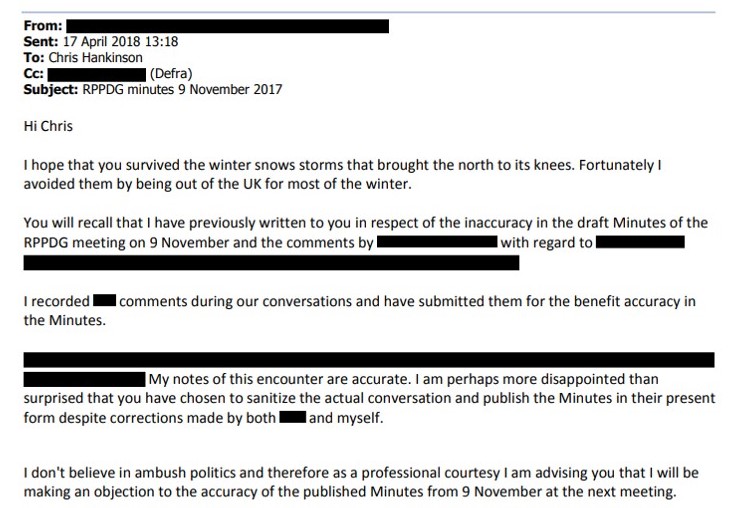
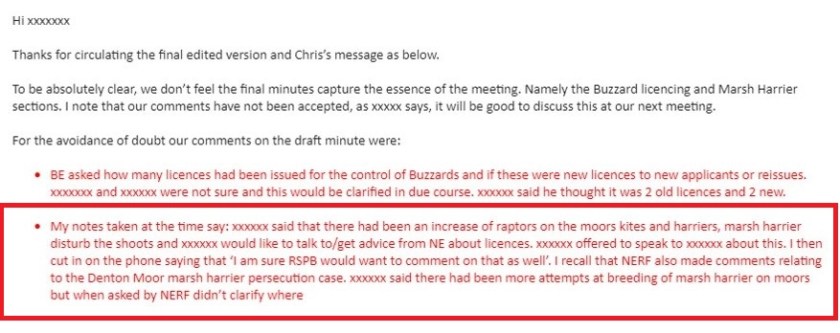
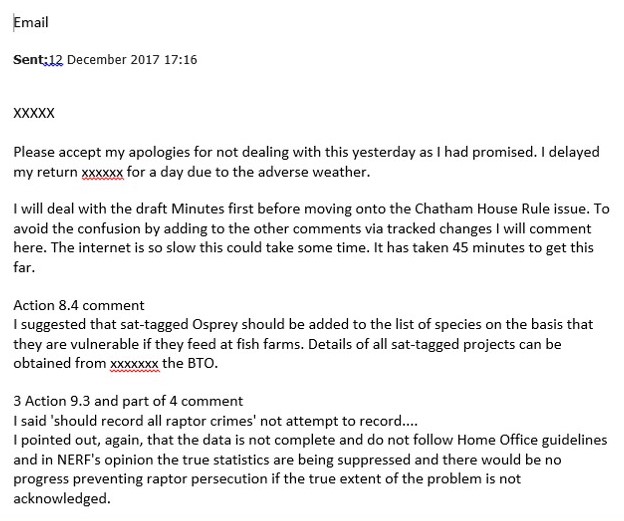
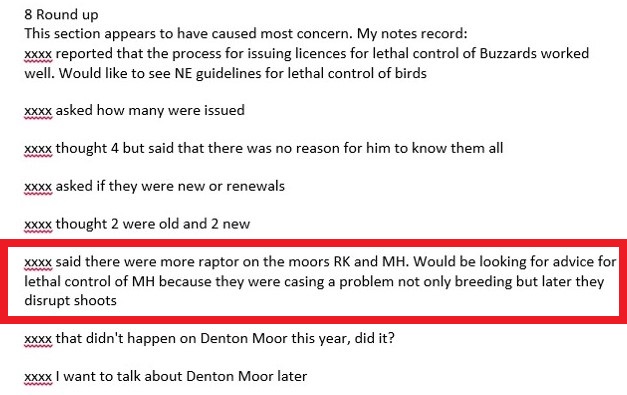
Several organisations involved in the Raptor Persecution Priority Delivery Group (RPPDG – the PAW Raptor Group) have since published statements on their respective websites:

North Yorkshire Police Rural Task Force’s statement can be read here, and it mentions how this conviction ‘should serve as a warning’ to others committing wildlife crime in North Yorkshire.

North Yorkshire Police Crime Commissioner Julia Muligan, who had the foresight to establish the Rural Task Force in response to N Yorkshire’s reputation as a wildlife crime hotspot, has also issued a statement, here. Julia’s statement focuses on the value of the police working in partnership with the RSPB to catch the raptor killers.

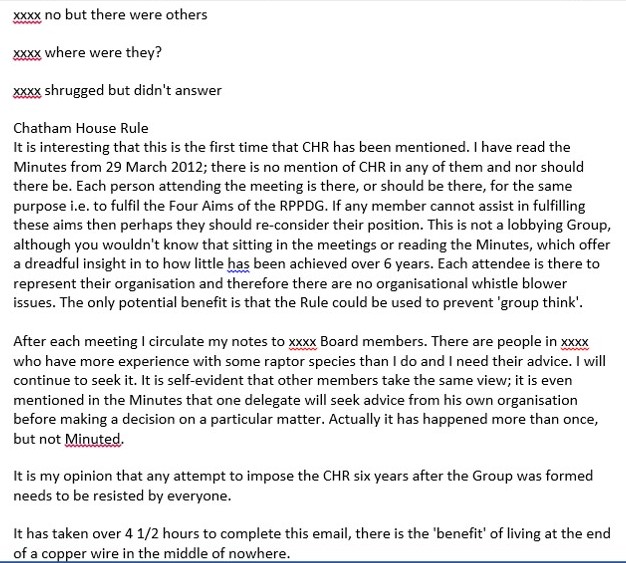
The Northern England Raptor Forum (NERF) has also published a long statement (here), also praising the efforts of the RSPB and North Yorkshire Police (and the CPS) and takes a justified side swipe at fellow RPPDG member, the Moorland Association, for its failure to do likewise.

And what about the other members of the RPPDG ‘partnership’? Three days on, what statements have been issued by the game-shooting industry’s RPPDG representatives about this successful conviction and the outstanding efforts of the RSPB, North Yorkshire Police and the CPS to expose yet another criminal gamekeeper? (Don’t forget, part of the RPPDG’s role is to provide publicity about illegal raptor persecution to ‘build trust and transparency’).

Moorland Association – we blogged about the Moorland Association’s statement on Wednesday (here) which was fully supportive of the Whernside Estate (allowing it to retain its membership of the MA) and didn’t mention the RSPB, Police or CPS at all.

National Gamekeepers Organisation – no statement

British Association for Shooting & Conservation – no statement

Country Land & Business Association – no statement

Countryside Alliance – no statement

Game and Wildlife Conservation Trust – no statement (GWCT isn’t a member of the RPPDG but we include them here because they have a prominent role in the game-shooting world).

This deafening silence comes as no surprise. We’ve seen it time and time again from these so-called ‘partners’ – we either get silence, or a demented attack on the RSPB.

For example, not one of them issued a statement after a gamekeeper was filmed with a poisons cache on the East ArkengarthDale Estate (here), nor after men dressed as gamekeepers were filmed shooting at nesting marsh harriers and then removing their eggs on Denton Moor (here).

We did get statements from the Moorland Association, BASC and the Countryside Alliance after the collapse of a prosecution against a gamekeeper who was alleged to have been filmed trapping a peregrine on its nest ledge on the Bleasdale Estate (here). BASC’s statement was pretty good (here) but the statements from the Moorland Association and Countryside Alliance were appalling.

We blogged about the Moorland Association’s statement on the Bleasdale case (here), which focused on trying to undermine the integrity and credibility of the RSPB.

The Countryside Alliance didn’t issue a statement on its website when the RSPB eventually published its Bleasdale video nasty, but what it did do was have an article published in the Shooting Times earlier in the year, when the Bleasdale prosecution case had collapsed. The article, attributed to Countryside Alliance CEO Tim Bonner, was basically a re-hash of an article the CA had published on its website the previous year, attacking the RSPB for its use of covert filming in Scotland (and incorrectly asserting that the RSPB and police should seek authorisation under the RIPA legislation for such filming, even though RIPA authorisation will not be approved as raptor persecution is not considered ‘serious crime’ by the Sentencing Council).

The title of Bonner’s re-hashed article published by the Shooting Times (June 2018) tells its own story of the game-shooting industry’s attitude to tackling illegal raptor persecution – smug, sniggering and sneering:

These aren’t ‘partners’, genuinely interested in stopping raptor crimes on land managed for game shooting. If they were, they’d all be falling over themselves to heap praise on the actions of the RSPB and North Yorkshire Police that resulted in Cowin’s conviction. None of them have.

They’d all have promoted the RSPB’s raptor crime hotline which allows people to report suspected raptor killers in confidence (here). None of them have.

They’d all be publicly blacklisting the estates and sporting agents known to be involved with the illegal killing of raptors. None of them have.

And they’d all be queuing up to ask the police and RSPB to install covert cameras to monitor the security of any Schedule 1 raptor species nesting on their land. None of them have, although they’re quite happy to install stealth cameras to film the visiting public.

[Photo by Ruth Tingay]

Whernside Estate retains membership of Moorland Association

Following on from yesterday’s news that gamekeeper Timothy Cowin had been convicted for shooting and then sadistically stamping to death two protected short-eared owls on a grouse moor on the Whernside Estate in the Yorkshire Dales National Park (see here), public anger has been justifiably prominent.

Many have commented on Cowin’s pathetic sentence (a £1,210 fine) but there has also been considerable commentary on social media about why the landowner hasn’t also been prosecuted.

If these crimes had taken place in Scotland, there would have been an opportunity to prosecute the landowner and/or shooting agent for alleged vicarious liability, following the introduction of the WANE Act 2011. Although in Scotland a prosecution may not have followed automatically, especially if the landowner and/or agent was able to show due diligence, or if the landowner couldn’t be identified, or if the prosecutors deemed it wasn’t in the public interest to proceed. Since the legislation was enacted on 1 January 2012, six and a half years ago, there have only been two successful prosecutions for vicarious liability in relation to raptor persecution (here and here); two others have failed (here and here) and others simply haven’t been considered for reasons that haven’t been made clear to us (e.g. see here).

However, as Whernside Estate is in the Yorkshire Dales National Park, not in Scotland, there is no hope that a prosecution for alleged vicarious liability will follow in this case.

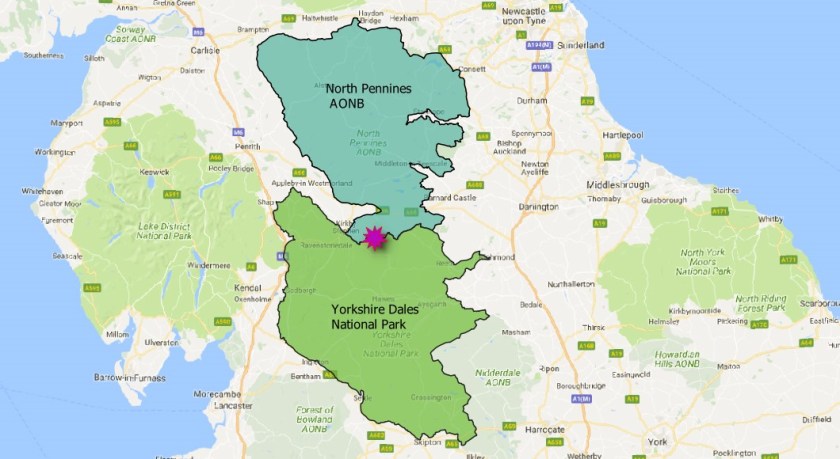
[RPUK Map showing location of Whernside Estate, which is located in the county of Cumbria but also lies within the boundary of the Yorkshire Dales National Park]

So with no prospect of a further prosecution, the least that could be expected would be for the grouse moor owners’ lobby group, the Moorland Association, to expel the Whernside Estate from the ranks of its membership, right?

Well, no. The Moorland Association has done the exact opposite and has instead chosen to publish a statement in support of Whernside Estate and confirmed the estate’s continued membership in the Moorland Association:

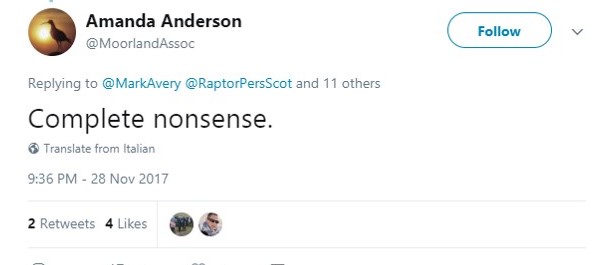
Amanda Anderson’s justification for not expelling Whernside Estate rests with the Moorland Association’s “satisfaction” that the estate had taken “all appropriate measures” to ensure its staff acted within the law and this included written correspondence between the estate and gamekeeper Cowin. Without seeing this correspondence it’s impossible to know whether this evidence would have been sufficient to meet the standards of due diligence required as a defence against vicarious liability in Scotland. It’s our understanding that in Scotland, this correspondence may not be enough to demonstrate due diligence, and other measures may also be required such as the landowner and/or agent undertaking spot checks on their employees and having a written record of those checks.

It’s fairly apparent from the detail we do know about Cowin’s case that had adequate spot checks been undertaken, questions would have been raised about Cowin being in possession of a plastic peregrine decoy, and importantly, his possession of a calling device that had been loaded with the calls of several raptor species, presumably to be used to entice raptors, perhaps towards a plastic decoy, where they could then be shot at close range.

Unfortunately we’ll never get to hear about the details of the estate’s claimed supervision of Cowin because, as there’s no provision for a potential prosecution for alleged vicarious liability in relation to raptor persecution in England, the estate doesn’t have to present this information to the authorities for scrutiny. We only have the word of the Moorland Association, which, of course, has a long track record of denying the bleedin’ obvious.

But let’s take the word of the Moorland Association, and the Whernside Estate, at face value and assume that Cowin’s crimes were as abhorrent to them as they are to the rest of us. That leads to a very interesting question. Two questions, in fact.

Firstly, no matter what claims the Moorland Association makes in all these so-called ‘partnership’ meetings trying to combat illegal raptor persecution, the Moorland Association, and its members, have absolutely no control or influence over gamekeepers working on grouse moors. Cowin is a perfect example of this. If, as the MA and the Whernside Estate claims, Cowin had undergone training, refresher training, and had signed an employment contract undertaking to work within the law, he STILL went on to commit these crimes. So what, exactly, is the point of the Moorland Association attending these ‘partnership’ meetings if it can’t offer any guarantees that gamekeepers won’t kill raptors on grouse moors?

[Gamekeeper Cowin, leaving Whernside Moor after shooting and stamping on two short-eared owls and hiding their corpses. Photo by Guy Shorrock]

Secondly, if the Whernside Estate was “dismayed” at Cowin’s actions of shooting and then stamping on those two short-eared owls, and being in possession of a calling device with raptor calls loaded on to it, did the Whernside Estate pay for Cowin’s legal representation?

Cowin’s solicitor was Michael Kenyon. Mr Kenyon was unlikely to have been a random duty solicitor called in to the police station to represent Cowin when he was questioned and later charged. Mr Kenyon is a well known figure in the game shooting world and is considered a ‘leading expert’ in firearms law and wildlife crime and once served as the legal advisor to the National Gamekeepers’ Organisation (see here) so it seems likely that he was chosen specifically to defend Cowin based on his expertise.

We had thought that perhaps Cowin’s legal representation costs had been covered by his presumed membership of the National Gamekeepers’ Organisation, especially given Mr Kenyon’s links, but according to a tweet from the NGO this morning, Cowin “was not and never has been a member of the NGO“. So it would seem unlikely the NGO paid.

Did Cowin himself pay for Mr Kenyon’s legal services? Perhaps, but this seems unlikely given what the court heard yesterday about Cowin’s financial means.

Was Cowin a member of another ‘professional’ group whose membership dues include the cost of legal representation if faced with a prosecution in relation to gamekeeping activities? We don’t know.

Did the Whernside Estate pay for Cowin’s legal representation? We don’t know that either, but we do know that somebody accompanied Cowin to several court appearances and although we cannot identify that person, it was suggested to us that it was Cowin’s boss. It may well have been, as he was certainly chatty with Mr Kenyon, heard discussing the number of grouse available to shoot on Mossdale Estate (remember them?), but equally as plausible is an explanation that it may have been a member of Cowin’s family attending court to support him.

Unfortunately we’ll never get to find out who paid for Cowin’s defence.

We were also interested in what the other ‘countryside’ organisations had to say about Cowin’s conviction. Would they all be condemning his actions and saluting the efforts of the RSPB et al in securing a successful outcome? Here’s what we found, at the time of writing this blog:

GWCT – silence

BASC – silence

NGO – silence, apart from responding to a tweet to confirm Cowin was never a member.

Countryside Alliance – silence on Cowin’s conviction but leading with the news that the prosecution of three hunting group members for alleged hunting and wildlife crime offences had been dropped, and focusing on the “wasted public resources” by “animal rights extremists” in bringing this case to trial. Interesting – we could argue the same point about the amount of wasted public resources spent in Cowin’s case as it was dragged around five different courts in NW England before his eventual guilty plea.

During our searches for commentary from the grouse shooting industry we did stumble across an article about grouse shooting on Whernside Estate that had been published in The Field magazine in 2012. Strangely, the article seems to have been removed from The Field’s website archives but fortunately we were able to find a cached version elsewhere. It makes for an interesting read, especially the bit about Headkeeper Tim Cowin working as a joiner!

UPDATE 31 August 2018: Whernside Estate: more reaction to gamekeeper’s conviction for shooting owls (here)

Gamekeeper convicted for killing two short-eared owls on grouse moor in Yorkshire Dales National Park

A gamekeeper was convicted at Lancaster Magistrates Court this morning for the killing of two short-eared owls on a grouse moor in the Yorkshire Dales National Park.

Timothy David Cowin, 44, pleaded guilty to shooting the owls on the Whernside Estate in Cumbria (inside the Yorkshire Dales National Park boundary) and to being in possession of a calling device that held the calls of several raptor species.

[Gamekeeper Cowin trying to leave the moor after shooting two short-eared owls. Photo by Guy Shorrock, RSPB]

His sentence? A pathetic £1,210, broken down as £400 for killing each short-eared owl, £200 for possessing the calling device, £170 costs and a £40 victim surcharge. The court heard that Cowin was suspended by the Whernside Estate pending the prosecution but then he later resigned and now apparently works as a joiner in Sedburgh.

Cowin committed these offences in April 2017 and was witnessed doing so by three members of the RSPB’s Investigations Team who just happened to be on the moor. The crimes were videoed (from a distance), and Cowin was observed shooting the owls, then stamping on them, and then disposing of the bodies – one hidden inside a stone wall and one stamped in to the peat. The quick-thinking RSPB team called the police, carried on filming, and one of them made his presence known to Cowin as Cowin tried to leave the moor, resulting in a chase across the hills before the police arrived to arrest him and retrieve the corpses.

For full details, have a read of this RSPB blog here.

And then watch this remarkable RSPB video:

We’ve blogged about this case previously (here), as it’s been dragged around five courts in north west England over a six-month period. At several stages it looked as though it was going to be abandoned on a legal technicality (paperwork issues this time, instead of contesting the admissibility of video evidence), as we’ve seen so often with other cases in recent years, and it is testament to the dedication of all those involved in the prosecution (RSPB, North Yorkshire Police Rural Taskforce, and the Crown Prosecution Service, who all put in extra hours) that it stayed on track and resulted in a conviction.

Of course it wouldn’t have got to court in the first place if it hadn’t been for the RSPB’s Investigations Team being on that grouse moor to install a covert camera for what had looked to them like previous suspicious activity. But just being there wouldn’t have been enough. The team was also skilled enough to recognise what Cowin was up to, quick-witted enough to film him, sharp enough to call the Police as the crime was in progress, and fit enough to chase Cowin across the moor when he was trying to escape. Added to their outstanding efforts was the swift response from North Yorkshire Police to get up to the grouse moor in time to arrest him. And then the dedicated, committed efforts of both the RSPB and the police to return early the next day to search for the second owl corpse before Cowin had an opportunity to get back on the moor and remove the evidence. In court, CPS prosecutor Rachel Parker was forensic in rebutting the attempts by the defence solicitor to have the case thrown out.

The actions of all involved in this successful prosecution were exemplary. Will the grouse shooting industry praise their efforts and encourage them to continue routing out the criminal gamekeepers known to be routinely committing these offences?

Unlikely.

We’ll no doubt hear the disingenuous bleating of the Moorland Association, GWCT, National Gamekeepers Organisation, Countryside Alliance etc, all condemning wildlife crime before swiftly returning to their usual criticism of the RSPB and its efforts to fight the continuing illegal persecution of raptors on driven grouse moors.

There are plenty more ‘Cowins’ out there, and despite the efforts of the grouse shooting industry to deny the extent of these crimes and pay for expensive lawyers to defend the criminals responsible, the public is becoming increasingly aware of how big a problem this is, through the efforts of the RSPB and its genuine conservation partners.

Today’s verdict doesn’t help those two short-eared owls; it’s too late for them, but Cowin’s conviction is yet another nail in the coffin of the driven grouse shooting industry. Kudos to all involved.

UPDATE 29 August 2018: Whernside Estate retains membership of Moorland Association (here)

UPDATE 31 August 2018: Whernside Estate: more reaction to gamekeeper’s conviction for shooting owls (here)

[PC Carr retrieving the pitiful corpse of the second short-eared owl that had been shot then stamped in to the ground. Photo by Guy Shorrock]

Gamekeeper cautioned after merlin killed in illegally-set trap on grouse moor

This merlin was found dead in a trap on an un-named driven grouse moor in Northumberland in July this year. A fell runner discovered the bird and reported it to the RSPB.

The RSPB went to the site the next day and realised that this trap had been illegally-set as no attempts had been made to restrict access to the tunnel entrance, meaning non-target species (such as this merlin) could easily access the tunnel, with the inevitable result.

The incident was reported to Northumbria Police and a wildlife crime officer visited the site with an RSPB investigator.

An ‘experienced’ gamekeeper was formally interviewed and admitted setting the trap. Unbelievably, the police decided to issue him with a police caution instead of seeking a prosecution via the Crown Prosecution Service.

Haven’t we been here before? Ah yes, here and here.

Once again, another gamekeeper gets let off for committing a wildlife crime on a driven grouse moor. And before anyone says, ‘A caution isn’t a let off’, it absolutely is if this gamekeeper is permitted to keep his firearms and shotgun certificates, and his job, despite now having a criminal record.

Sure, he probably didn’t intend to trap and kill this merlin but that’s not the point. If he’s employed as a professional gamekeeper he has a responsibility to operate his traps within the terms of the law. With this trap, he chose not to do that, knowing full well that a non-target species could be killed, which it was. That’s an offence and he should have been charged and prosecuted.

Further details about this merlin case can be read on the RSPB Investigations Team blog here

Farmer guilty of recklessly disturbing Lake District ospreys

A farmer has been convicted of recklessly disturbing a pair of breeding ospreys at Bassenthwaite, in the Lake District, in June last year.

Paul Barnes, 58, of Brook Cottage, Keswick, was today found guilty after a three-day trial at Workington Magistrates. The court heard how he had taken a group of children in his tractor and trailer close to the site, without a Schedule 1 disturbance licence, causing the birds to leave their nest.

He was fined £300 with £2,000 costs.

[Photo of the Bassenthwaite osprey pair with their offspring in 2017, photo by The Lake District Osprey Project]

The Lake District Osprey Project, a partnership between the Forestry Commission, the RSPB and the Lake District National Park Authority, aims to ensure the continued success of breeding ospreys at Bassenthwaite. Since the birds returned in 2001, ospreys have raised over 30 chicks and delighted over a million visitors there.

Like all wild birds, ospreys are protected by law under the Wildlife and Countryside Act 1981 and it is a criminal offence to harm or disturb them during the nesting period. Anyone found to have done so faces an unlimited fine and/or up to six months in jail.

There are 21 breeding pairs in England, and are worth £2million per year to the Cumbrian economy.

Annabel Rushton from the Lake District Osprey Project said: “A huge effort has been made to bring the osprey back to Cumbria and here at The Lake District Osprey Project. Local staff and volunteers have worked tirelessly to ensure the birds can nest in safety, while enabling visitors to be inspired by these wonderful birds from the designated public viewpoints at Dodd Wood and Whinlatter. Barnes acted recklessly by running his own tours which did not follow the correct protocol and resulted in the disturbance of the Bassenthwaite pair of ospreys, which could have been detrimental to their breeding success.

We would like to thank Cumbria Police for their support and diligent work in this case.”

PC Sarah Rolland of Cumbria Police said: “Laws are in place to protect all species of birds and, without these laws and their enforcement, these birds will be put at great risk. The osprey is a rare bird in the UK and therefore has a high level of legal protection under Schedule 1 of the Wildlife and Countryside Act 1981. A disturbance like this during the nesting period could be detrimental to their breeding success and their very existence within the UK.

In this instance, there was a clear offence of disturbing a Schedule 1 bird, whilst having young in the nest during the nesting period. This was fully investigated resulting in a charge following a CPS charging decision.

We hope that today’s result will serve to highlight the importance of adhering to these laws and serve as a warning to others that there will be consequences if the laws are ignored or willfully broken in relation to wildlife crime.”

Lake District Osprey Project website here

UPDATE 26 March 2019: Lake District farmer’s osprey ‘disturbance’ conviction is quashed (here)

Moorland Association’s response to peregrine persecution on Bleasdale grouse moor

The Moorland Association’s response to the RSPB video published on Wednesday is an interesting read.

For new blog readers, the Moorland Association is a lobby group representing the interests of grouse moor owners in England.

Here’s the video again, for those who might have missed it, showing an unidentified individual attending a peregrine nest site where an adult male peregrine had been caught in a spring trap on the nest ledge, and where it thrashed around for over ten hours in a desperate attempt to escape before finally being removed by the unidentified individual. We believe this nest site to have been located on a grouse moor on the Bleasdale Estate in Bowland in April 2016 and that the video footage published by the RSPB related to the prosecution of a Bleasdale Estate gamekeeper – a case that collapsed in April this year due to a series of legal technicalities.

Here’s the Moorland Association’s statement in response to the publication of this video nasty:

The opening line is astonishing: “The suffering of the Peregrine in the RSPB blog is barbaric and abhorrent“.

The peregrine didn’t suffer “in the RSPB blog”, it suffered at its nest site on a driven grouse moor.

A more sincere and accurate Moorland Association statement might have looked like this: “The suffering of the Peregrine in the illegally-set trap that was positioned at the Peregrine’s nest site on a grouse moor on the Bleasdale Estate, a Moorland Association member, is barbaric and abhorrent“.

The rest of the Moorland Association’s statement deflects attention away from the peregrine’s suffering as a result of this crime and instead focuses on trying to undermine the integrity and credibility of the RSPB, as we’ve come to expect.

Not only did the Moorland Association ignore the fact this peregrine suffered on a driven grouse moor (the words ‘grouse moor’ don’t appear anywhere in the MA’s statement!), but it also carefully sidestepped the fact that the grouse moor in question was, at least at the time this footage (and the peregrine) was captured, a Moorland Association member.

How do we know that? Well, as we blogged back in April 2018 when the court case collapsed (see here), in April 2016 when the alleged offences took place, the owner of the Bleasdale Estate was one Jeremy Duckworth, who also happened to be a Director and Regional Representative of the Moorland Association. Here’s a screengrab from the Moorland Association website in 2016:

Strangely, according to documents lodged at Companies House, Mr Duckworth resigned his Directorship of the Moorland Association in September 2016. There are many different reasons why people resign from Directorships but it’s interesting to note that the timing of Jeremy Duckworth’s resignation coincided with the early stages of the police investigation in to the alleged offences on his grouse moor – obviously nothing to do with damage limitation and purely and simply coincidental, of course:

We wonder whether the Bleasdale Estate is a still a member of the Moorland Association?

We wonder whether the Moorland Association is concerned that an unidentified camouflaged individual was able to repeatedly visit this peregrine nest site on the grouse moor of a Moorland Association member and inflict what looks like unimaginable cruelty to this peregrine?

We wonder whether the Moorland Association is concerned that an unidentified armed individual was able to visit this peregrine nest site and fire four shots as another adult peregrine flew from the nest?

We wonder whether the Moorland Association is concerned about the widespread, systematic persecution of peregrines on driven grouse moors in England, as evidenced by an increasing number of scientific papers (here, here, here)? Incidentally, this last paper, ‘Raptor Persecution in the Peak District National Park’ by Melling et al was published by British Birds in May 2018 but the full paper was only available to BB subscribers. British Birds has now kindly published this paper in full so everyone can read it – see here).

We wonder whether the Moorland Association still expects to be considered a genuine partner in the fight against the illegal persecution of raptors on driven grouse moors when it seems to take every opportunity to attack the RSPB’s Investigations Team instead of those responsible for enabling and carrying out these barbaric crimes?

[Photo of an illegally-killed peregrine found next to a driven grouse moor, photo by RSPB]

Peregrine persecution on a grouse moor: Bleasdale video footage finally released

In April this year, a high profile prosecution case for alleged raptor persecution collapsed after covertly-filmed video evidence was deemed inadmissible.

The prosecution was being brought against a gamekeeper from the Bleasdale Estate in Bowland, who had been charged with a string of wildlife offences including the alleged killing of two peregrines in April 2016.

We had followed this case since September 2017, attended each court hearing, and blogged in detail after the case collapsed on a series of technicalities earlier this year (e.g. see here, here, here, here).

The details, as described in court, of what had happened to those two peregrines, were horrific. It was alleged that the adult female peregrine had been shot whilst leaving her nest and the adult male had been caught by the leg in a spring trap that had been set on the nest ledge, where he struggled to escape, in vain, for over ten hours, before being shoved in a bag by an unidentified man and removed from the site.

We’ve been waiting for the RSPB to publish this video footage ever since the case collapsed and the accused walked free. We understand there have been some legal issues about publishing the video and although we don’t know the details, it’s probably a safe bet to guess that some influential people from the grouse shooting industry have probably been working hard to ensure this footage never sees the light of day.

Today the RSPB has released video footage of peregrine persecution in Bowland and although the Bleasdale Estate is carefully not mentioned, it’s quite obvious from the dates cited and the video images that what is being shown in this footage fits the description of what allegedly happened to those two Bleasdale peregrines as desribed to the court earlier this spring.

The RSPB has published a blog describing the circumstances of this footage (here).

Watch the video here but beware, it contains graphic content:

Ater you’ve watched it, think about why nobody has been successfully prosecuted for these crimes.

And then think about why nobody will ever be prosecuted for these crimes.

And then think about why these crimes continue to be committed on grouse moors in 21st Century Britain.

And then think about what you can do to help bring it to an end.

Change must come, but it will only come if people stand up and demand it.

See you at a Hen Harrier Day event this weekend.

UPDATE 10 August 2018: Moorland Association’s response to peregrine persecution on Bleasdale grouse moor (here)

Red kite shot near Corby, Northants

The following article appeared in the Northamptonshire Telegraph on Tuesday 31 July 2018:

POLICE ARE APPEALING FOR WITNESSES AFTER A RED KITE WAS SHOT AND INJURED

The bird of prey is being seen to by a local vet after being shot and injured yesterday (Monday).

The shooting took place in the area of Deene park and Fineshade.

A neighbourhood alert posted by Northants Police about the incident said: “Please be aware it is an offence to injure or kill these birds.”

Anyone who witnessed the shooting, saw anyone that looked suspicious or saw any suspicious vehicles in the area at the time is asked to call Northamptonshire Police on 101.

ENDS

We’ve been unable to find any further detail about this case – there’s no official appeal for information on the Northamptonshire Police website.

UPDATE 13.50hrs: We’ve now been informed this kite was handed in to the Forestry Commission office at Fineshade Wood on THURSDAY 19th JULY (not Mon 30th July as previously thought). It was rescued by a member of the public.

Quote from the Raptor Foundation: “I have taken charge of a red kite that has been shot, with three shotgun pellets, in the leg, shoulder and ear. The leg and shoulder pellets are not really an issue governing the birds potential release as they are below joints. The pellet in the ear is lodged in the bony part of the skull and is causing the bird problems with balance. The vet and I both agree the bird could not be released back with the pellet still inside. We have been treating for infection and pain relief and the bird is making steady improvements. It was unable to stand on admission, but is now mobile along the floor to some degree. The vet is looking to operate later this week“.

[Photo of the shot red kite, by Raptor Foundation]

Red kite found shot in Yorkshire Dales National Park

Press release from North Yorkshire Police (23 July 2018):

APPEAL FOR INFORMATION AFTER RED KITE FOUND DEAD IN THE YORKSHIRE DALES

Police are appealing for information after a red kite was found dead in the Yorkshire Dales.

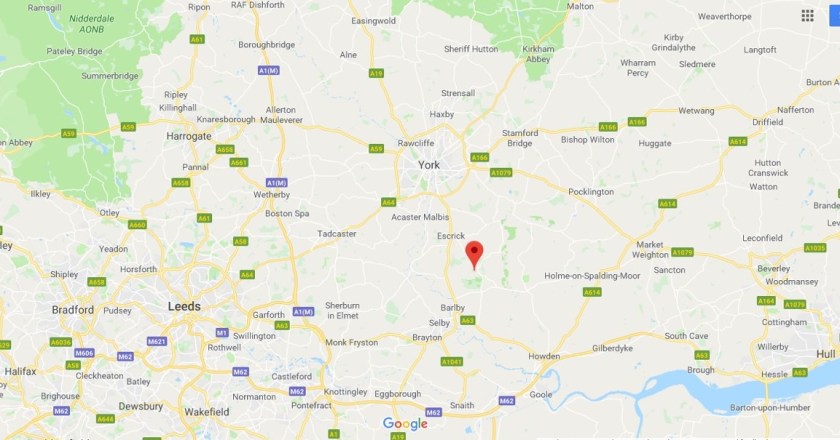
The bird was found on Thursday 12 July 2018, at Barden, near to the popular area known as the Strid. Enquiries are ongoing to establish the cause of death.

Sergeant Kevin Kelly, wildlife crime lead for North Yorkshire Police, said: “We have commenced an investigation and aim to establish the circumstances leading to the bird’s death.

It is key to examine whether the bird has flown to the location injured and subsequently died or whether it has been shot near to where it was found. A detailed pathology report will assist us in establishing this.

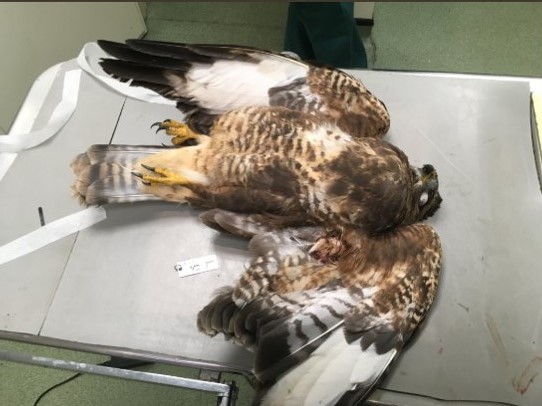
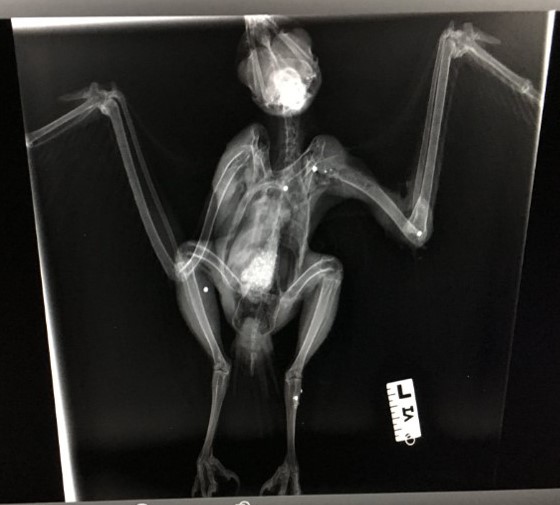
What we know at this time is that a triage x-ray shows a small piece of shot inside the bird. This will be recovered and forensically tested. We will be working with partner agencies and the Bolton Abbey Estate to establish the facts that will assist an effective investigation.

[Photo of the shot red kite via North Yorkshire Police]

Doug Simpson, Yorkshire Red Kite Co-ordinator, said: “This latest incident brings the total confirmed Yorkshire red kite illegal persecution victims up to 42 since releases began in 1999, thirteen of these birds having been shot.

It is sickening that a small minority of people appear intent on breaking the law by targeting these birds, which have become an integral part of our beautiful North Yorkshire countryside.

Benedict Heyes, from the Bolton Abbey Estate, said: “We were disappointed to be notified by a member of the public that they had found a dead red kite on the Bolton Abbey Estate.

Red kites and other birds of prey are often seen at Bolton Abbey and are enjoyed by many visitors to the Estate. The Estate alerted the authorities and would ask that anyone who has any knowledge or information in relation to the death of this bird to contact North Yorkshire Police, so as to assist them in their investigation.”

Sonya Wiggins, who coordinates Yorkshire Dales Moorland Group, said: “We have been made aware of this incident and fully support a police investigation. At Yorkshire Dales Moorland Group we believe in good practice and accountability, we work closely with the local police and other agencies to tackle wildlife crime.

Killing wild birds is unacceptable and we would ask for anyone with any information to contact the police.”

Anyone with any information is asked to contact North Yorkshire Police on 101, select option 2 and ask for Sgt Kevin Kelly, or email kevin.kelly@northyorkshire.pnn.police.uk

Please quote reference number 12180131874 when passing information.

ENDS