More information about the suspicious disappearance of Hen Harrier ‘Sita’ who vanished on a grouse moor in Yorkshire Dales National Park

In May this year I blogged about a young satellite-tagged Hen Harrier named ‘Sita’ who had disappeared under suspicious circumstances from a winter roost site on an unnamed grouse moor in the Yorkshire Dales National Park in February 2025 (here).

There was very little information available – neither North Yorkshire Police or the National Wildlife Crime Unit’s Hen Harrier Taskforce had made any statements or appeals for information.

Eight months on, today the RSPB has helpfully published some information about Sita’s disappearance having been told by North Yorkshire Police and the NWCU that there were no further lines of enquiry.

The RSPB’s press release is as follows:

ANOTHER HEN HARRIER LIKELY TO HAVE BEEN SHOT IN THE YORKSHIRE DALES NATIONAL PARK

  • The satellite tag of a one-year-old Hen Harrier sent its last transmission from land managed for grouse shooting between Swaledale and Wensleydale
  • Illegal persecution of Hen Harriers is the main factor limiting the recovery of this rare, red-listed species in the UK
  • This Hen Harrier is the 29th to suspiciously disappear in the national park since 2015 with each tag worth £3000.

As part of the RSPB’s on-going Hen Harrier monitoring, a female bird, named Sita was fitted with a satellite tag in summer 2024, fledging from her nest in the Forest of Bowland. Subsequently, her tag data showed that she had settled at a wintering site on moorland between Reeth and Redmire, in the northeast of the Yorkshire Dales National Park. However, concern was raised when Sita’s tag stopped transmitting from a roost site on 27 February 2025.

Hen Harrier ‘Sita’ being fitted with a satellite tag in Bowland in 2024. Photo by Northern England Raptor Forum (NERF).

When sat-tagged Hen Harriers die naturally, the tag will continue to transmit, allowing recovery of the bird, which can then undergo analysis to determine the exact cause of death. However, it is accepted that sudden, unexplained transmission loss without signs of tag malfunction in this species sadly indicates that the bird is likely to have been shot, especially if no tag or body is then found.

The RSPB reported the incident to North Yorkshire Police, the National Wildlife Crime Unit (NWCU) and their Hen Harrier Task Force, however, despite launching a police investigation neither Sita nor her tag have been found. In late August, almost six months after the incident took place, the Police and NWCU formally confirmed that there were no further lines of enquiry. Sita is one of several satellite tagged Hen Harriers that have disappeared under suspicious circumstances this year, with several cases being referred to the NWCU in recent weeks.

Dominated by grouse moorland, the Yorkshire Dales National Park, is sadly one of the most well-known hotspots for bird of prey killing. Between 2015 and 2024, 67 confirmed or suspected incidents were recorded within or near the National Park. These include 39 incidents where birds of prey (including Peregrine, Hen Harriers, Red Kites and Buzzards) were targeted, poisoned, trapped or shot and is the location where 28 suspicious disappearances of tagged Hen Harriers have taken place. Sita’s loss brings the total to 29.

Hen Harrier Action, the wildlife conservation charity that sponsored Sita’s satellite tag from public donations, expressed deep concern at her disappearance and the continuing threat to these birds.

Paul Samuels, Hen Harrier Action Co-chair:The Yorkshire Dales National Park is a landscape where Hen Harriers ought to be thriving. Yet time and time again headlines about the Park are dominated by illegal persecution stories, most often associated with grouse moors. Sita’s short life and sad end should be a catalyst for change.”

As repeated police investigations have shown, crimes against Hen Harriers are strongly linked to land managed for grouse shooting, where some individuals illegally kill birds of prey as they are regarded as a threat to their commercial grouse stocks. The RSPB is calling for licensing of grouse shooting to be introduced in England – mirroring the system introduced in Scotland in 2024 under the Wildlife Management and Muirburn (Scotland) Act 2024. Under such legislation, estates implicated in bird of prey persecution could lose their licence to shoot grouse.

Howard Jones, RSPB Senior Investigations Officer:The most effective way to stop the killing of these incredible birds is through licensing grouse shooting in England. It’s very simple, the sooner this is introduced the quicker Hen Harriers will get the protection that they urgently need.”

If you notice a dead or injured bird of prey in suspicious circumstances, call the police on 101 and fill in the RSPB’s online reporting form: https://www.rspb.org.uk/birds-and-wildlife/advice/wild-bird-crime-report-form/

If you have information about anyone killing birds of prey which you wish to report anonymously, call the RSPB’s confidential Raptor Crime Hotline on 0300 999 0101.

ENDS

This is the first time we’ve been given any level of detail about Sita’s last known location, on a grouse moor between Reeth and Redmire on the north-east side of the Yorkshire Dales National Park.

If you look at the land ownership in that area (courtesy of Guy Shrubsole’s excellent website, Who Owns England?), you’ll see there are at least two large grouse shooting estates between Reeth and Redmire:

The turquoise area is Grinton Estate and the green area is Bolton Estate. I don’t know who owns the unmapped area of moorland to the east. There’s no suggestion that any of them were involved in Sita’s suspicious disappearance. I can’t pin down the Hen Harrier’s last known location with any more precision because, sensibly, the RSPB has not publicised the location of the winter roost from which Sita vanished, and nor would I want them to.

I applaud the RSPB for releasing the information they have – there’s no legitimate justification for North Yorkshire Police and the NWCU’s Hen Harrier Taskforce to suppress this case. None whatsoever, especially when they’ve stated they have no further lines of enquiry.

The withholding of information about ‘missing’ and/or confirmed illegally killed Hen Harriers is an ongoing issue, involving several other police forces in northern England. I’m aware of at least 14 cases involving the disappearance and/or illegal killing of Hen Harriers that are currently being withheld from the public, some of them dating back over 18 months so there can be no excuse about not wanting to jeopardise investigations, which in all likelihood have come to a similar dead end (pun intended).

I also noted the following sentence in the RSPB’s press release:

Sita is one of several satellite tagged Hen Harriers that have disappeared under suspicious circumstances this year, with several cases being referred to the NWCU in recent weeks‘ [emphasis is mine].

So just how many suspected or confirmed incidents of Hen Harrier persecution are being withheld, and why? It sounds like we’re quickly heading towards 20 cases.

I’ll be returning to this topic shortly…
Trial of 87-year-old man accused of 11 offences relating to raptor persecution is put on hold as defence applies for Judicial Review of judge’s ruling

The trial of an 87-year-old man, accused of multiple offences linked to alleged raptor persecution, has been put on hold after his defence lawyer told the court he intends to apply for Judicial Review of the judge’s ruling that the case should not be dropped.

Brian Chorlton, of Morkery Lane, Castle Bytham, Lincolnshire, was summoned to court in April 2025 following reports that birds of prey were being poisoned in the Castle Bytham area.

In May 2025, Chorlton appeared at Lincoln Magistrates’ Court and pleaded not guilty to 11 charges relating to the unapproved or unlawful storage of the chemical Aldicarb, possession of a poisoner’s kit, and possession and use of four pole traps. The trial was set to take place in October 2025.

However, on 18 September 2025 a case management hearing took place at Lincoln Magistrates’ Court where the defence submitted three separate legal arguments calling for the case to be dismissed. I won’t elaborate on those arguments at this stage but they are unusual, and are not related to the use of covert surveillance as is often the case.

The District Judge rejected all three legal arguments and the application to dismiss the case was rejected.

The District Judge said he intended for the trial to proceed in October but offered a further case management hearing, due to take place one week later, to allow the defence time to consider the ruling.

That second case management trial took place at Lincoln Magistrates’ Court yesterday (25 September 2025) and the defence announced its intention to apply to the High Court for Judicial Review of the judge’s earlier ruling.

This means the original trial date (October 2025) has now been vacated. There will be a further case management hearing in January 2026 for the defence to update the court on its application for Judicial Review.

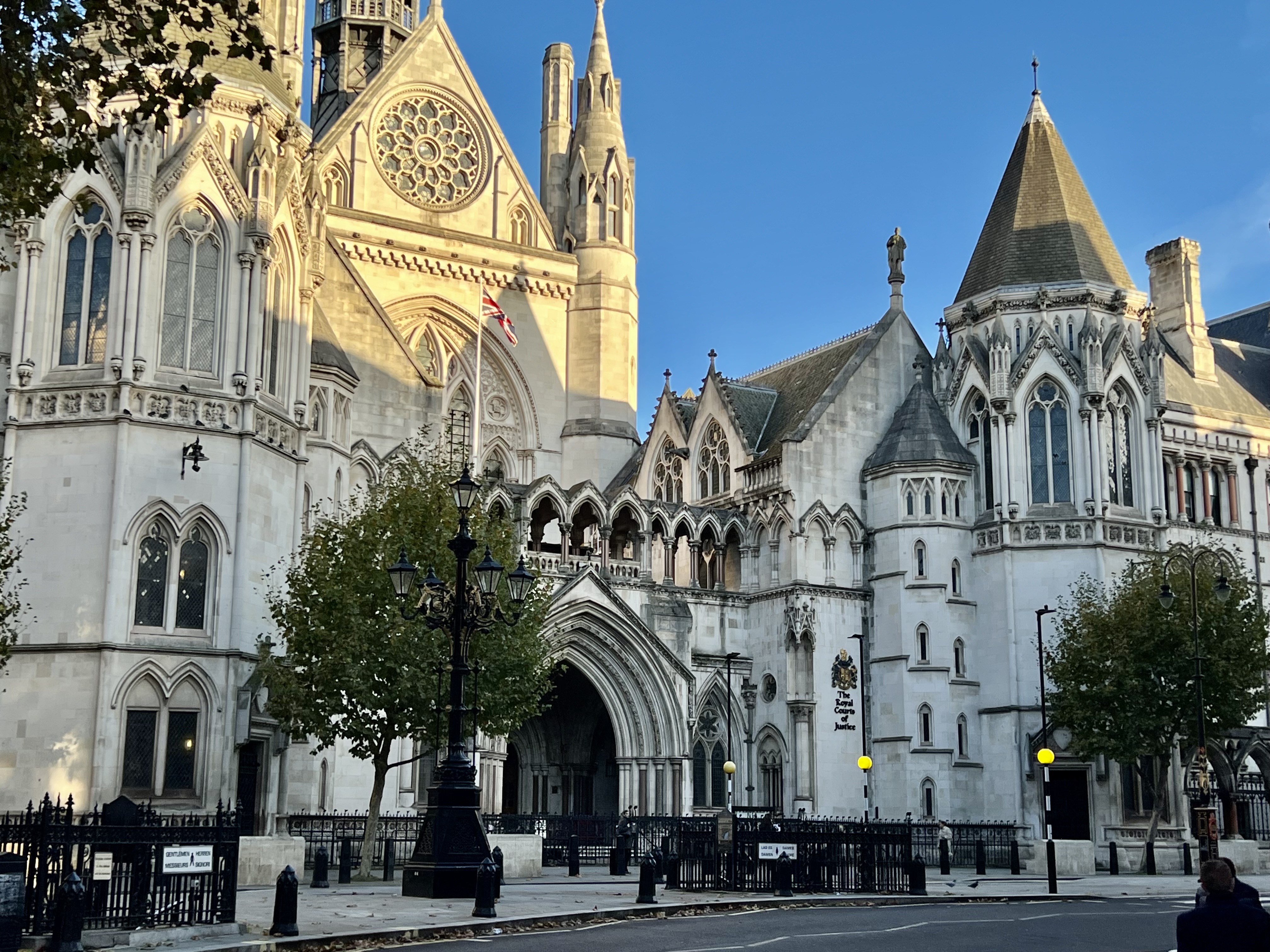
Royal Courts of Justice in London. Photo by Ruth Tingay

The application for Judicial Review is a process whereby the defence will be seeking permission from a High Court judge to proceed to a full Judicial Review. This typically takes between two to six months but can take longer, depending on the court’s schedule and the availability of a judge and also whether the judge wants an oral hearing or is satisfied with the written submissions on which to make a decision.

If permission is granted, the case will then move to a full Judicial Review and that can take up to a year before it’s heard, sometimes longer, and if the judge’s decision is reserved, there can then be a further wait, often months, waiting for the judgement to be delivered.

NB: As criminal proceedings are still live, comments have been switched off.

More detail on court ruling accepting admissibility of RSPB’s covert surveillance in prosecution of gamekeeper accused of conspiracy to kill a Hen Harrier

Earlier this month a judge ruled that covert video surveillance obtained by the RSPB is admissible evidence in the prosecution of gamekeeper Racster Dingwall, who has been charged in relation to the alleged shooting of a Hen Harrier on a grouse moor (Coniston & Grassington Estate) in the Yorkshire Dales National Park on 2nd October 2024.

Mr Dingwall pleaded not guilty to two charges at an earlier court hearing at Skipton Magistrates’ Court in May 2025. Those two charges are:

  1. Possession of an article capable of being used to commit a summary offence under Section 1 to 13 or 15 to 17 of the Wildlife & Countryside Act;
  2. Encourage/assist in the commission of a summary offence believing it will be committed.

The pre-trial hearing at York Magistrates’ Court on 9 September 2025 was specifically to hear legal argument about the admissibility of the RSPB’s video evidence, on which this prosecution is based.

I wrote briefly about the judge’s decision to accept the RSPB’s video evidence at the hearing on 9 September and said I would elaborate further when I had the time.

The following commentary seeks to provide more information about the judge’s decision and is based entirely on the notes I made during that hearing.

York Magistrates’ Court. Photo by Ruth Tingay

This pre-trial hearing was held before District Judge Adrian Lower. The involvement of a District Judge (professionally and legally qualified) is perhaps the reason why this case moved from Skipton Magistrates’ Court to York Magistrates’ Court.

District Judges don’t tend to sit in the smaller, or rural courts, but where a case is legally complex then there is often a request to move the case to another court to be heard before a District Judge rather than the lay magistrates (also known as Justices of the Peace) in a smaller court, who are volunteers and not legally trained/qualified to the extent of a District Judge.

Mr Dingwall and his solicitor did not attend the pre-trial hearing at York on 9 September 2025 – District Judge (DJ) Lower acknowledged that Mr Dingwall had been excused (the reason for his absence wasn’t given in open court).

The sole representative in court for Mr Dingwall was his barrister, Mr Justin Rouse KC. Long-term blog readers may recognise this name – Mr Rouse KC represented a gamekeeper from the Bleasdale Estate in Bowland, Lancashire in 2017-2018 who had been charged with nine offences relating to the alleged killing of two Peregrines on this grouse-shooting estate in 2016 in appalling circumstances. The prosecution had relied heavily on covert surveillance provided by the RSPB but the case collapsed when the presiding District Judge accepted Mr Rouse’s defence argument that the evidence should be ruled inadmissible (not necessarily on the strength of Mr Rouse’s arguments but more likely on the weakness of the prosecution lawyer, who was hopelessly underprepared for court- see here for detailed commentary on that case).

Appearing for the prosecution (CPS – Crown Prosecution Service) at York Magistrates’ Court on 9 September 2025 was Mr Jody Beaumont.

The hearing opened with DJ Lower stating that he’d read the submissions from both sides (about the admissibility of the RSPB’s video surveillance) and that he didn’t intend to hear a repetition of those submissions in court. He asked whether Mr Rouse KC and Mr Beaumont had anything new to add and both replied that they didn’t.

No doubt DJ Lower wanted to save valuable court time, but his decision not to have the legal arguments presented in open court makes it very difficult to provide an informed commentary on what happened next, because I don’t have the benefit of knowing the exact details of each side’s position.

Nevertheless, a general sense of the defence’s argument could be gleaned from some of the remarks made later by DJ Lower and it became apparent that there were two main issues to be discussed – the admissibility of the video evidence and an issue about disclosure.

The interpretation that follows is based on my understanding of what was said and should be viewed with appropriate caution given the circumstances just described.

It was clear that Mr Rouse KC for the defence had made an application to the court to exclude the RSPB’s video evidence (and thus have the case dismissed), under Section 78 of the Police & Criminal Evidence Act 1984 (PACE).

Section 78:

‘…..In any proceedings the court may refuse to allow evidence on which the prosecution proposes to rely to be given if it appears to the court, that, having regard to all the circumstances, including the circumstances in which the evidence was obtained, the admission of the evidence would have such an adverse effect on the fairness of the proceedings that the court ought not to admit it’.

DJ Lower said that Mr Rouse’s view was that the RSPB should be viewed as a public authority in the way it gathered evidence (i.e. regulated by various legislation such as the Human Rights Act 1998 & Regulation of Investigatory Powers Act 2000 (RIPA) which controls the manner of covert surveillance operations) – this is a very similar argument to the one Mr Rouse used in the Bleasdale case and, if accepted by the court in this latest case, would result in the RSPB’s evidence being ruled inadmissible because the RSPB hadn’t operated by the provisions required of a public authority in undertaking covert surveillance on private land (i.e. needing authorisation).

DJ Lower said he could not agree with the submission that the RSPB was a ‘public authority’. He said that the RSPB is arguably a substantial business, “a charity like no other“, but that although the RSPB was involved in the investigation, the material had been handed to North Yorkshire Police. He continued, “There is bound to be close coordination between the RSPB and North Yorkshire Police but that doesn’t mean that the RSPB becomes a public authority and is regulated as such by various legislation“.

DJ Lower agreed that there needs to be consideration about whether the RSPB should be considered a public authority but that this was not a decision a judge could make – it should be for Parliament to consider.

He said that the crux of the S.78 application was – regardless of whether the RSPB is or isn’t a public authority – would submission of the evidence have such an adverse effect on the fairness of proceedings? He said this was a discretionary judgement for the court to make and in his judgement, “there would be no adverse affect“.

He continued: “The RSPB evidence has been subject to review by the CPS and it is their decision to prosecute or not. I cannot see how admitting the evidence gathered from the RSPB would have an adverse effect on the fairness of proceedings. I am not prepared to dismiss the case“.

DJ Lower then referred to an alleged abuse of process, claimed by the defence (the details of this are unknown). DJ Lower asked Mr Rouse whether he had anything more to say on that allegation and Mr Rouse accepted that it had been addressed by the judge.

The legal argument then moved on to the disclosure issues (the details of which are unknown, which made the discussion confusing).

There seemed to be an argument about the defence not yet having had access to between 70-80 hours worth of RSPB video footage. Mr Beaumont (CPS) told the court that there was an ongoing discussion about how to manage the files and send them to the defence, but given that ‘senior management’ were involved, “this should be sorted out very soon“.

The defence was interested in a series of photographs taken by the RSPB between 16 September – 19 October 2024 consisting of “vehicles, houses, males, dogs and moorland“. Mr Rouse thought they may be capable of undermining the defence.

Mr Rouse said that because the RSPB investigators say they were acting on intelligence, the defence had asked for that intelligence material that led the RSPB to installing the surveillance equipment.

Mr Rouse continued, saying the defence’s principal concern about the disclosure of footage was the extent of “data breaches for the defendant and others recorded when they should not have been recorded” because “the RSPB were trespassing and the capture of data was unlawful“.

Mr Rouse also raised concerns about the police’s Section 19 (WCA) search of the moor. He asked how the police knew where to search, was the RSPB involved in that search, and if so, the identities of any RSPB staff involved should be disclosed. DJ Lower and Mr Beaumont agreed.

DJ Lower dismissed Mr Rouse’s concerns over privacy because any images captured by the RSPB could be “pixellated to protect the identity of members of the public“.

He suggested the discussion about disclosure should be continued between the defence and the prosecution, and that disclosure of all relevant evidence should take place within 28 days, and at the latest by 4pm on 7th October 2025.

DJ Lower set a two-day trial date (29th-30th January 2026, pending witness availability) at York Magistrates’ Court and said the case would be reserved for him.

He granted Mr Dingwall unconditional bail and asked his representative to ensure Mr Dingwall understood the consequences of non-attendance at court on 29 January 2026.

NB: Because criminal legal proceedings are live, the comment facility has been switched off.

Lincolnshire Police launch investigation as 7 dead birds of prey found in raptor persecution hotspot

From Lincolnshire Police (11 September 2025)

Officers from Lincolnshire Police Rural Crime Action Team are investigating after a number of dead birds of prey were found in the countryside between Belchford and West Ashby in recent months.

Four birds of prey were previously discovered in the area. As a result of these reports, we carried out a Section 19 search under the Wildlife and Countryside Act today. During this search, a further three dead birds of prey were located.

Also in attendance and assisting with our thanks were members of the RSPB and National Wildlife Crime Unit.

The search team included officers from Lincolnshire Police Rural Crime Action Team, the RSPB and the National Wildlife Crime Unit. Photo via Lincolnshire Police

All of the birds have been recovered and will be sent for specialist testing through the Wildlife Incident Investigation Scheme (WIIS) to establish the cause of death.

The Officer In Charge, Detective Constable Aaron Flint Lincolnshire Police’s Force Wildlife Crime officer, said:

The discovery of multiple dead birds of prey in one locality is deeply concerning. We take all reports of suspected wildlife crime seriously, and our investigation is ongoing. Until we receive toxicology results, we cannot confirm the cause of death, but deliberate harm to birds of prey is a criminal offence and will be fully investigated.

We are appealing for anyone who may have information which could assist our enquiries. Did you see anything suspicious in the area in recent weeks or months? Have you found any other dead wildlife, bait, or unusual items in the countryside locally?

If you can help, please contact Lincolnshire Police on 101, quoting crime number 25000511499, email aaron.flint@lincs.police.uk or alternatively, you can report anonymously via Crimestoppers on 0800 555 111.

ENDS

This isn’t the first police investigation into the illegal killing of birds of prey in this area.

In March this year, gamekeeper John Bryant 40, of West Ashby, Horncastle, Lincolnshire was convicted after a trial at Lincolnshire Magistrates’ Court of four offences in relation to an investigation into the illegal poisoning of a Red Kite and two Buzzards in the Belchford area (here).

Bryant was ordered to pay over £7,000 in fines (see here and here) and he also lost an appeal against the Police’s decision to revoke his shotgun and firearms certificates (here).

The discovery of seven more dead raptors in the same area this year is, as Detective Constable Aaron Flint says, ‘deeply concerning’.

Well done DC Aaron Flint and team for another successful multi-agency raid and a timely press release – this level of transparency is rare and I can think of a number of police forces who could learn lessons from this approach.

Judge rules RSPB covert video surveillance is admissible evidence in prosecution of gamekeeper Racster Dingwall

BREAKING NEWS….AND IT’S EXCELLENT NEWS!

The District Judge presiding at York Magistrates Court has today ruled that the RSPB’s covert video and audio surveillance is to be considered admissible evidence in relation to the prosecution of gamekeeper Racster Dingwall.

He did not accept the defence’s argument that inclusion of the covert surveillance would have an adverse effect on the fairness of proceedings.

Mark Thomas and Ian Thomson from the RSPB’s Investigation Team attended York Magistrates Court today. Photo: Ruth Tingay

The case now moves to trial in January 2026 unless Mr Dingwall changes his not guilty plea in light of today’s ruling.

I’ll write a longer blog in the coming days, setting out the arguments and the Judge’s explanation for his decision.

In haste…

NB: Comments turned off as criminal proceedings are still live.

UPDATE 25 September 2025: More detail on court ruling accepting admissibility of RSPB’s covert surveillance in prosecution of gamekeeper accused of conspiracy to kill a Hen Harrier (here)

Gamekeeper Racster Dingwall back in court today for case relating to Hen Harrier shooting on a grouse moor in Yorkshire Dales National Park

Gamekeeper Racster Dingwall, 34, will appear at York Magistrates Court today for a hearing linked to his alleged involvement with the shooting of a Hen Harrier on a grouse moor (Coniston & Grassington Estate) in the Yorkshire Dales National Park on 2nd October 2024. He has pleaded not guilty.

This prosecution relies on the covert footage filmed by the RSPB’s Investigations team last autumn and later shown on Channel 4 News (here).

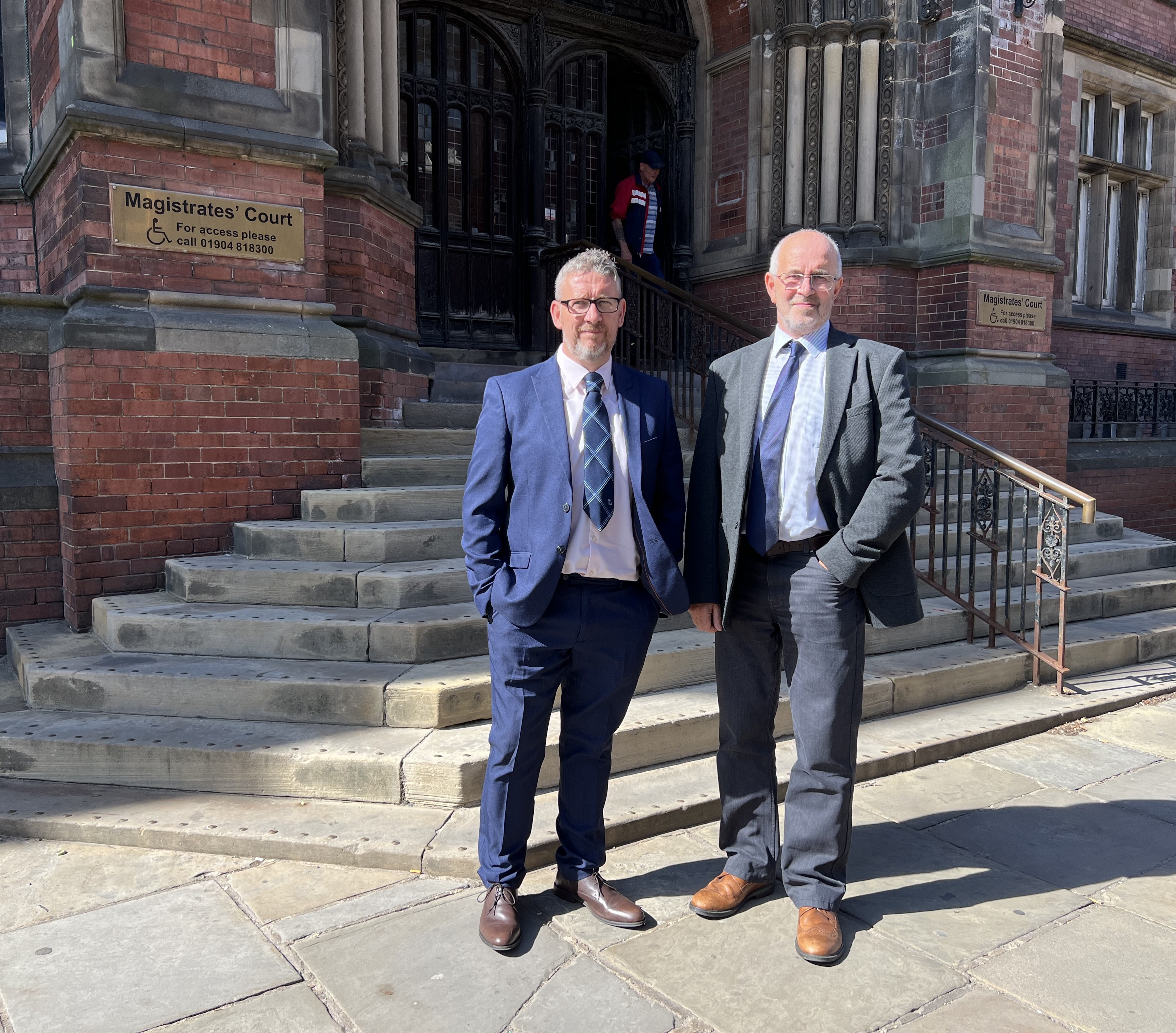
York Magistrates Court. Photo by Ruth Tingay

Dingwall faces two charges, according to the court notice:

  1. Possession of an article capable of being used to commit and summary offence under Section 1 to 13 or 15 to 17 of the Wildlife & Countryside Act;
  2. Encourage/assist in the commission of a summary offence believing it will be committed.

Today’s pre-trial hearing is expected to focus on legal arguments about the admissibility of the RSPB’s covert footage.

This was entirely to be expected. The defence team will be doing its best to have the evidence ruled inadmissible because without it, the prosecution will collapse.

We’ve been here many times before in similar cases. The last one I watched where the judge ruled the RSPB’s footage to be inadmissible was back in 2018, in relation to the illegal and brutal killing of two Peregrines on a grouse moor in Bowland. The legal arguments barely got going because the CPS lawyer was monumentally under-prepared, he hadn’t even watched the video footage in question, and was unable to answer the judge’s questions about it. The judge was really left with no other option than to rule the footage inadmissible and the case collapsed as a result (see here for more detailed blogs about that fiasco).

NB: Comments are closed until criminal proceedings have concluded.

RSPB announces another record year for Hen Harriers in the Forest of Bowland

Statement from the RSPB (4 September 2025)

ANOTHER RECORD YEAR FOR HEN HARRIERS IN THE FOREST OF BOWLAND

Hen Harriers are one of the most charismatic yet also most threatened bird species nesting in our uplands. The Forest of Bowland has long served as their most important breeding stronghold in England thanks to collaborative conservation efforts centred on the United Utilities Bowland Estate, where the RSPB is working in partnership with United Utilities and their tenants to monitor and protect these amazing birds.

During the 2025 breeding season, RSPB staff and volunteers recorded 14 Hen Harrier nests on the United Utilities Estate, of which 12 were successful and fledged an outstanding 40 young. This represents the highest number of fledglings recorded in over 40 years. 

Hen Harriers. Photo by Pete Walkden

However, as reported last month there was also a disappointing setback in the form of two adult males disappearing from neighbouring nests within a few days of each other, something not seen on the United Utilities Estate in years.

At one affected nest, the chicks had already begun hatching and, with the help of some supplementary food provided by RSPB staff under licence from Natural England, the female was able to fledge two chicks on her own. At the other nest, the female was still incubating and deserted her clutch after the male disappeared. 

One additional nest failed as the female was not provisioned sufficiently by her polygamous male and was forced to hunt herself, leaving her young chick unattended and exposed to the elements. Male Hen Harriers often mate with more than one female (known as polygamy), however, when prey availability is low, they may struggle to provide sufficient food for both broods. 

Overall, it was a very good breeding season for Hen Harriers in Bowland. Together with an additional nest recorded by Natural England on a private estate, which fledged 2 chicks, a total of 15 Hen Harrier females bred within the Bowland Fells Special Protection Area (SPA). This meant the SPA again exceeded the threshold of 12 breeding pairs for the second time since 2022.

This sustained recovery over the last eight years reflects highly successful partnership working in Bowland and the commitment of landowners and tenants. However, the species’ overall recovery in England still faces ongoing threats such as illegal persecution, changes in land use and habitat loss.

ENDS

Fantastic work by all those involved – well done.

We still haven’t seen the overall results of the 2025 Hen Harrier breeding season in England but the word on the ground is that it’s been another poor year for Hen Harriers on private estates managed for driven grouse shooting and a good year for those nesting elsewhere. Quelle surprise.

Last year the grouse shooting industry blamed bad weather for the sudden drop in the number of breeding Hen Harriers on private grouse moors, although bad weather didn’t stop Hen Harriers breeding on United Utilities land in Bowland, the RSPB’s Geltsdale Reserve in Cumbria or Forestry England land at Kielder.

Last year there were just five successful nests on privately-owned grouse moors in England and I’m not expecting much to have changed this year. We’ll have to wait for Natural England to publish the 2025 breeding season numbers to find out if this is accurate, and who knows when NE will get its act together to do that.

This is the statutory agency that is STILL suppressing details about the death of at least seven satellite-tagged Hen Harriers, most of whom were found dead over a year ago and yet are still listed on Natural England’s tag database, implausibly, as ‘awaiting post mortem’ (see here for a previous blog about these birds).

They’re not ‘awaiting post mortem’ at all. The post mortems were all completed months ago (and in one case, over 18 months ago). Those post mortems have provided evidence (that I’m aware of) that at least some of these seven dead Hen Harriers were killed illegally.

The longer this information is suppressed, the further public confidence drops in any agency’s ability or desire to tackle these crimes.

Peregrine from Charing Cross Hospital found with shotgun pellet in leg

One of London’s resident breeding Peregrines, Tom, from Charing Cross Hospital in Hammersmith, is receiving veterinary care after an x-ray revealed a shotgun pellet lodged in his leg.

According to reports on social media, Tom was found grounded at the weekend and was taken for assessment at the South Essex Wildlife Hospital. It’s not clear from the information published whether the shotgun pellet was the cause of his grounding or whether it is an old injury that he’d survived.

All photos from South Essex Wildlife Hospital

Hopefully Tom will make a speedy recovery and can be returned to his territory ASAP.

The South Essex Wildlife Hospital has featured a few times on this blog, involved in the treatment and often successful rehabilitation of shot raptors from the south-east. It’s a registered charity – if you’d like to make a donation to support its work, please click here.

Illegal persecution of birds of prey is again a major public concern in Yorkshire Dales National Park

Regular readers of this blog will know that the Yorkshire Dales National Park is a raptor persecution hotspot, and has been for many years.

Hen Harriers, in particular, have been prime targets for illegal killing on the grouse moors of the Yorkshire Dales.

Photo by Ruth Tingay

For example, the following quotes are from the RSPB’s recent report, Hen Harriers in the Firing Line:

Swaledale in the Yorkshire Dales National Park is statistically the worst location in England with three Hen Harriers confirmed to have been illegally killed and 14 more satellite-tagged birds suspiciously disappearing between 2016-2023

and

The most significant declines in Hen Harrier breeding in England in 2024 were observed in the North Pennines and the Yorkshire Dales, with decreases of 67% and 73% respectively, compared to 2023. Both regions are intensively managed for grouse shooting and have been linked to several confirmed and suspected Hen Harrier persecution incidents in recent years“.

Indeed, the forthcoming trial of a gamekeeper alleged to have been involved in the conspiracy to shoot and kill an untagged Hen Harrier relates to an incident filmed on a grouse moor in the Yorkshire Dales last October (as featured on Channel 4 News, here).

And yet another satellite-tagged Hen Harrier ‘disappeared’ in suspicious circumstances on a grouse moor in the Yorkshire Dales National Park earlier this year (here).

The Yorkshire Dales National Park was also where satellite-tagged Hen Harrier ‘Free’ was found dead. His post-mortem concluded that his ‘leg had been torn off while he was alive, and that the cause of death was the head being twisted and pulled off while the body was held tightly’ (see here)

Hen Harrier ‘Free’ during post-mortem examination. Photo via Natural England.

With all this recent history in mind, I’ve been following the progress of the development of the Yorkshire Dales National Park Authority’s latest five-year Management Plan (2025-2030), due to be published shortly.

As part of the Management Plan process, the Management Plan Partnership undertook a six-week public consultation process in January 2024 to find out what issues were important to residents and visitors.

A total of 1,106 responses were received, of which 50% were from people indicating they live and/or work in the National Park; 16% were from younger people (18-34); and 4% were from people identifying as being from non-white ethnic groups.

The online questionnaire identified 18 issues from which people were asked to
rank their top six.

The top two priorities selected by respondents were:

  1. Help nature to recover by creating, restoring and connecting important
    habitats;
  2. Protect rare and threatened species, including ending illegal persecution of
    birds of prey.

That’s quite a significant result! And this isn’t the first time that the public has identified illegal raptor persecution as a major concern in this National Park (see here).

A second Management Plan consultation ran in January 2025 based on 40 proposed draft objectives, which included:

C6.   Support implementation of the national Wildlife Crime Strategy to end the illegal killing and disturbance of birds of prey and other wildlife by 2028.

This proposed draft objective for tackling the illegal killing of birds of prey in the Yorkshire Dales National Park is quite different from the objective listed in the previous Management Plan (2019-2024) which was this:

C5. Work with moorland managers and other key stakeholders to devise and implement a local approach to end illegal persecution of raptors, including independent and scientifically robust monitoring, and co-ordinated hen harrier
nest and winter roost site protection.

The latest draft objective for tackling illegal raptor persecution seems to have shifted significantly, away from the so-called ‘Bird of Prey Partnership’ approach, established in 2020 with representatives from the grouse-shooting industry, the raptor conservation community, RSPB, Natural England, Police, the Yorkshire Dales National Park Authority and the Nidderdale AONB (now renamed Nidderdale National Landscape) Authority.

That ‘partnership’, just like the similar one set up in the Peak District National Park and on which the Yorkshire Dales/Nidderdale Partnership was based, has failed miserably (e.g. see here) and has seen two of the ‘partners’ walk away (RSPB here, Northern England Raptor Forum here), both citing familiar complaints about the behaviour of the grouse moor lobby group, The Moorland Association.

The latest draft objective in the 2025-2030 Management Plan doesn’t mention the ‘partnership’ at all and instead focuses on ‘supporting the implementation of the [Police] National Wildlife Crime Strategy‘, which includes the national wildlife crime priorities of which raptor persecution is a key focus.

Does that mean a formal end to the Yorkshire Dales/Nidderdale Bird of Prey Partnership?

Let’s see.

Pair of Montagu’s Harriers breeds in England after six-year absence

Press release from RSPB (29 July 2025)

BRITAIN’S RAREST BREEDING BIRD RAISED FOUR YOUNGSTERS AT SECRET LOCATION

  • A pair of Montagu’s Harriers, Britain’s rarest breeding bird, have successfully raised four youngsters at a secret location in England
  • The pair of birds which arrived in May have been closely monitored by the RSPB who, working closely with a farmer, installed a protection fence around the nest in early July
  • This week the four chicks have made their first flights, delighting all involved
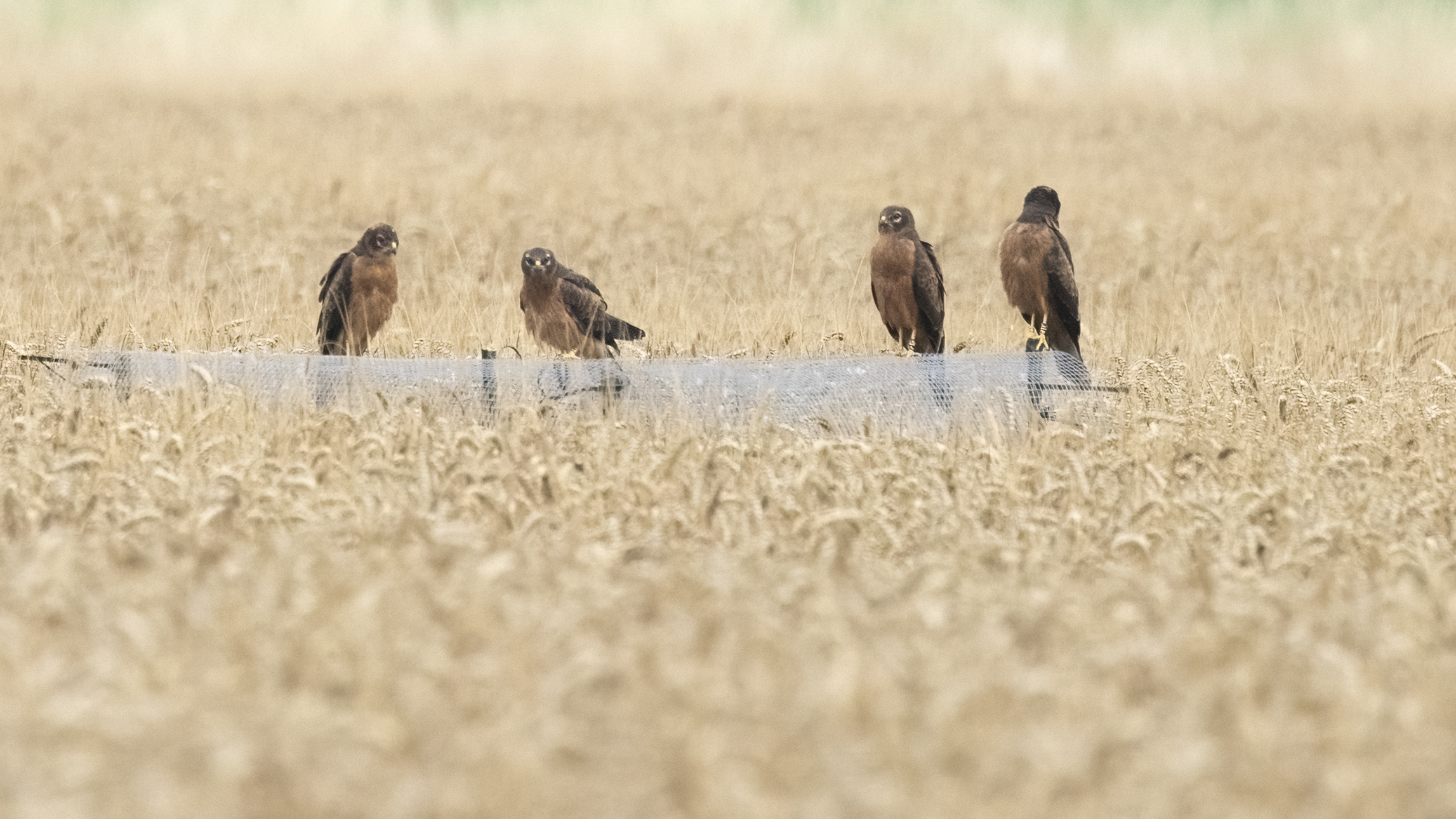
Montagu’s Harrier juveniles, 25 July 2025. Photo by RSPB

The Montagu’s Harrier is Britain’s rarest breeding bird species and hasn’t successfully nested in the UK since 2019. After a high of nine successful nests in 2011, its population has sadly dwindled – with it being officially placed on the Red List in 2021. But this year a pair arrived in the UK and have gone on to delight conservationists by raising four healthy youngsters.

Montagu’s Harriers winter in Africa and return to Europe to nest, often in agricultural fields, in particular winter sown cereals in the UK, and can return to the same nesting areas each year. Their previous strongholds in Spain and France are diminishing due to intensification of agriculture and earlier harvest dates, as well as wetter summers. Many nests across Europe are protected from predators by the installation of small metal fences by conservationists, volunteers and farmers.

The birds were first seen at the now secret location in May, raising hopes they would breed. Their nest was located in June by the licensed use of a drone and then closely monitored by a volunteer birdwatcher and the RSPB. Photographs indicated that both adult birds were ringed, remarkably the male being a chick from a UK nest in 2015 and the female from a nest in France in 2023.

Male Montagu’s Harrier. Photo by RSPB

As soon as their behaviour indicated that youngsters had hatched, the RSPB entered the field under licence and installed a small protective fence to safeguard the nest from ground predators. The chicks were then ringed in mid-July and last week made their first flights, delighting all involved.

Mark Thomas, Montagu’s Harrier species lead at RSPB, said: “We are overjoyed that a pair have returned, they managed to find each other and through the close protection of a dedicated farmer and the RSPB have managed to raise four youngsters. What’s even more remarkable is that we have been able to work out that the male was colour-ringed by the RSPB as a chick in a UK nest in 2015 and that his partner is wearing a ring indicating she is from France. This Anglo-French alliance could just be the springboard needed to save this species in Britain.”

The farmer, who cannot be named in order to protect the location, said: “It’s fantastic to have these amazing birds on the farm and a just reward for the extensive conservation work we have been undertaking for decades.”

It is now hoped the birds will all migrate safely, and the adults will return in 2026.

ENDS 

Channel 4 News has also covered this story with an article and a video, here.

What excellent news this is – kudos to the farmer and the RSPB for protecting the nest. Let’s hope the adults and four juveniles manage to get out of England successfully, unlike some of their predecessors (e.g. see here, here and here).