Buzzard-shooting caught on camera

Press release from RSPB (16 November 2020)

Horror as buzzard gunned down on nature reserve boundary

A member of the public witnessed and filmed the moment the bird of prey was shot out of the sky

The buzzard was found fatally injured over a week later

Due to its injuries the bird could not be saved and sadly had to be euthanised

The RSPB is appealing to the public for information regarding the illegal shooting of a protected bird of prey.

On 10 October 2020, members of the public out walking stopped to watch a buzzard in flight, on land adjoining the south-west boundary of the RSPB’s Northward Hill reserve near High Halstow. One of them started filming it on a mobile phone when they suddenly heard a loud shot, and the bird crumpled and fell from the sky before their eyes.

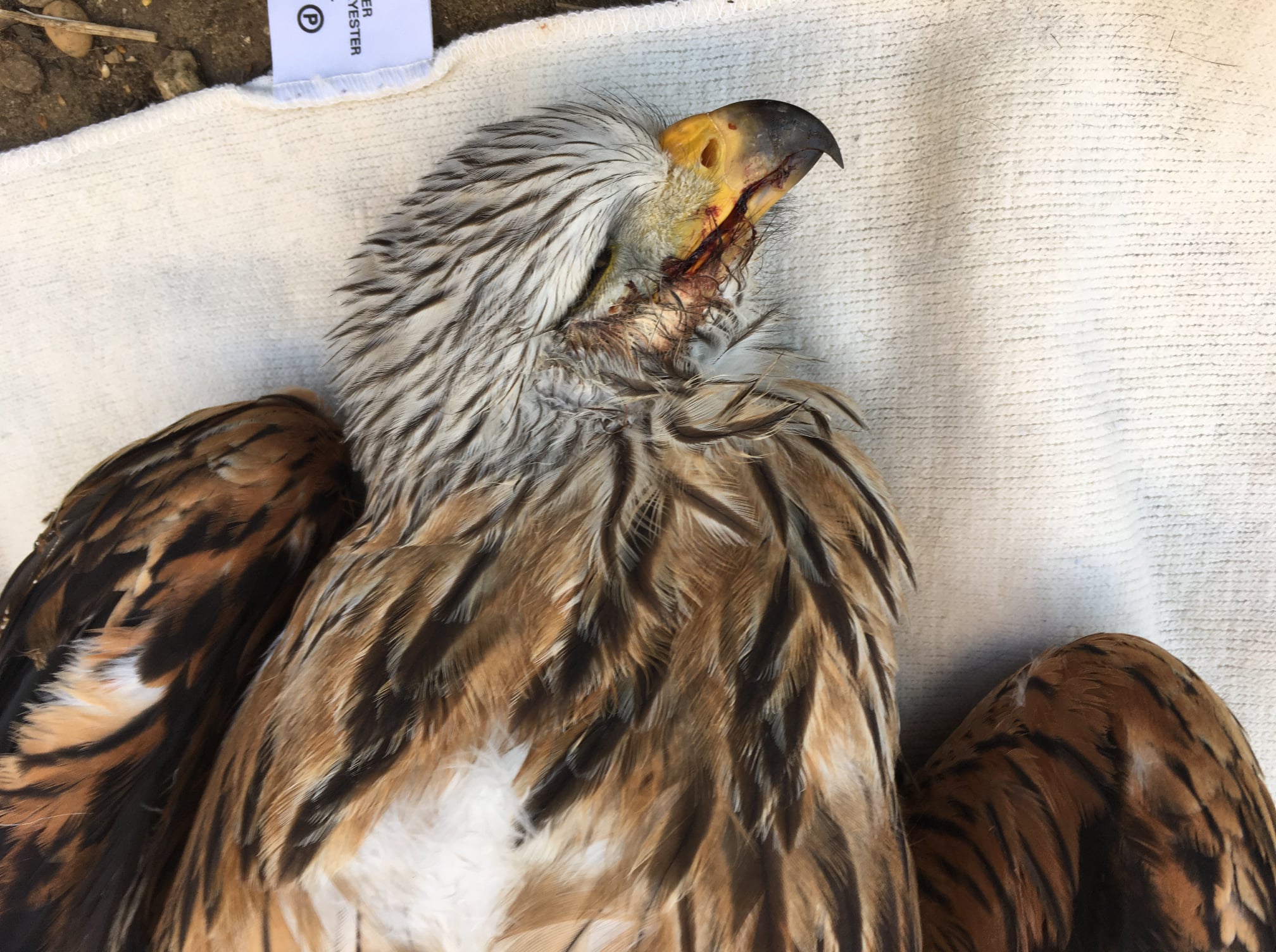
The witnesses called the police on 101. Kent Police and the RSPB conducted a search of the area, but the body could not be found. However, a few days later, on 19 October, a birdwatcher reported seeing a buzzard with a broken wing close to where the buzzard had fallen. RSPB reserve staff set out and discovered a badly injured buzzard on the ground. It was rushed to a local vet but the bird couldn’t be saved and had to be humanely euthanised.

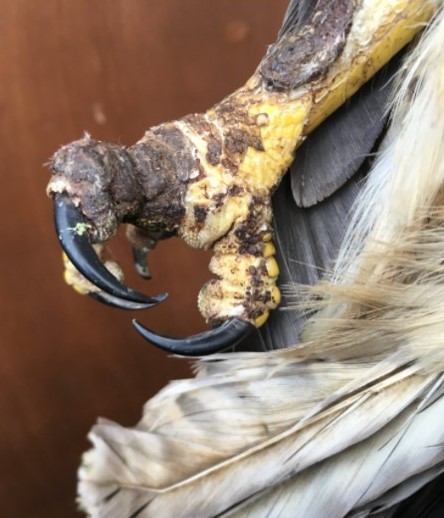
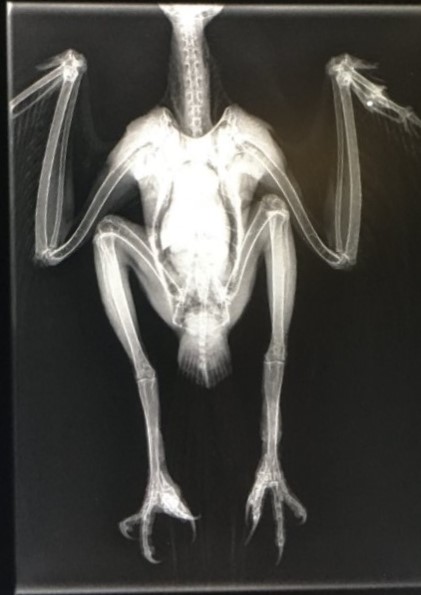
An x-ray of the body revealed that the bird had four pieces of shot lodged in its wing, shoulder and leg. The injury to the wing, which had caused the break, was consistent with the timing of the recent witnessed shooting. However, three of the pellets were older, indicating that the bird had been shot before on an earlier occasion.

Police have spoken with a man in connection with the incident.

All birds of prey are protected by the Wildlife and Countryside Act 1981. To intentionally kill or injure one is a criminal offence and could result in an unlimited fine or up to six months in jail. Yet according to the RSPB’s recent Birdcrime report, there were 85 confirmed incidents of bird of prey persecution in the UK in 2019 – with many more likely to have gone undetected. More buzzards were the object of persecution in 2019 than any other raptor species. 

The witness, who does not wish to be named, said:

Northwood is a really special place for my family. We had just lost a loved one, so my dad suggested we take a walk to clear our heads. We were watching a buzzard flying together with another bird of prey, and I quickly got my phone out and started filming it. It was a beautiful sight. Then suddenly we heard a crack and the buzzard crumpled and fell to the ground. It was a feeling of utter shock; we couldn’t believe what we’d just seen. My sister was in floods of tears, we were just so shaken. It was not what we’d envisaged for our walk together. One moment we were watching something so alive, then the next a human had needlessly and senselessly taken it away – it felt like such a horrific waste.”

Mark Thomas, RSPB Head of Investigations, said: “Nature has the power to lift our spirits, never more so than in these difficult times. No-one should have to witness wildlife being killed illegally before their eyes and our utmost sympathy goes out to the family.

We regularly gather evidence of raptor persecution, either finding bodies full of shot or illegal traps, but it’s rare that a bird is killed and filmed right in front of someone. This incident really brings home the horrible reality of what is happening to our birds of prey.

We are so grateful to them for picking up the phone and reporting this incident. We know that passing on information about any crime can be difficult, but if you do see anything, or have any information about this or any other crime involving birds of prey, please call our confidential hotline number (0300 999 0101). Your call could make all the difference and prevent more birds being killed.

We are in a climate and ecological emergency and losing our wildlife at a frightening rate. We all have a role to play, which is why we need an immediate halt to incidents such as this.”

If you have any information relating to this incident, call Kent on 101 and quote the crime reference: 11-0064. You can also call the RSPB’s confidential Raptor Crime Hotline on 0300 999 0101.

ENDS

There is a short clip of the buzzard-shooting on the RSPB blog here

RSPCA appeals for information after sparrowhawk shot in Scunthorpe

Article from the Lincolnite, written by Ellis Karran, dated 13 November 2020.

Bird of prey had to be put down after it was shot with an air rifle

RSPCA investigating the case

The RSPCA is appealing for tighter controls on air weapons after a sparrowhawk was put to sleep due to being shot by an air rifle in Scunthorpe.

The bird was found lying on its back with its wings out after flying out of woods near Darnholme Crescent on Wednesday, before crashing into a car because of its injuries from the gunshot.

A passer-by spotted the bird of prey and contacted the RSPCA who brought it in for treatment.

The decision was made to put the sparrowhawk down as a result of its injuries, with the bird’s chest and wing damaged beyond repair and rehabilitation being impossible.

[Photos by RSPCA]

RSPCA inspector Claire Mitchell, investigating the case, said: “This poor sparrowhawk was in a very bad way after being shot and after further assessment, very sadly the decision was made to put the bird to sleep to end its suffering.

It is likely that the bird was shot with an air gun while in flight, and it is very concerning that somebody in the area was taking shots at wildlife in this way.

Whilst there are some shooting practices which are legal, it is an offence under the Wildlife & Countryside Act to intentionally injure, kill or take a wild bird, except under licence.

Anyone found guilty could face an unlimited fine and/or six months imprisonment.

The animal welfare charity are now appealing for information about the incident, asking anyone who can help resolve this incident to call 0300 1238018.

ENDS

Reports of wildlife crime almost double according to new figures from Police Scotland

Press release from Police Scotland (13th November 2020)

Reports of wildlife crime almost double

Wildlife crime reports have nearly doubled, according to the latest figures from Police Scotland.

Between April and September 2020, Police Scotland recorded 203 wildlife crime offences compared to 111 in the same period in 2019/20, an increase of 82.9%.

Detection rates also increased, rising to 55.2% in 2020 compared to 34.2% in the same six month period in 2019.

The latest figures were released in Police Scotland’s Quarterly Performance Report covering April to September 2020/21.

[This hen harrier died after suffering horrendous injuries caused by an illegal trap on a grouse moor on Leadhills Estate, South Lanarkshire. Photo by Ruth Tingay]

Detective Chief Superintendent Gary Cunningham, Police Scotland’s lead for Wildlife Crime, said: “Scotland’s diverse wildlife is one of its greatest assets, yet there are those who seek to destroy it. Wildlife crime has an enormous impact not only on our natural heritage but also on those communities that rely on the employment and tourism it brings.

Investigating wildlife crime can be demanding and complex, it requires specialist skills. Earlier this year we introduced a new training course to build our capability and to enhance the skills and knowledge of our officers.

We will continue to invest in tackling wildlife crime and ensuring our officers are trained to the highest level. But we are also asking the public to be aware and if they see anything suspicious to report it to us“.

ENDS

This increase in reported wildlife crimes in Scotland mirrors a surge in reported raptor persecution crimes in England during lockdown (e.g. see here and here).

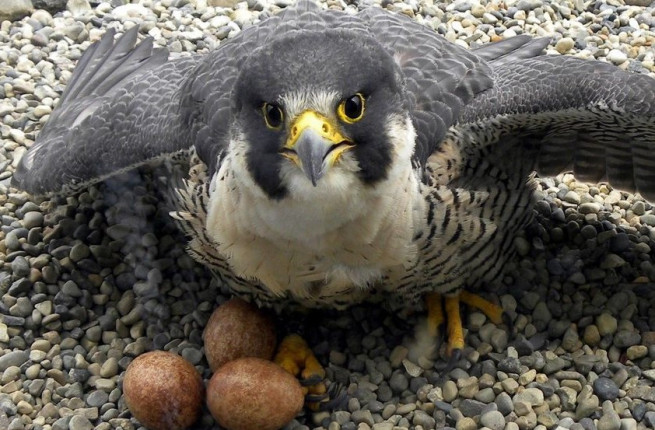
Man charged in relation to alleged theft of peregrine eggs in Derbyshire Peak District

Earlier last year Derbyshire Constabulary appealed for information after a pair of peregrines in the Peak District abandoned their breeding attempt in suspicious circumstances (see here).

It was later reported that eggs had been stolen from three peregrine nest sites in the Peak District this spring (see here) and officers from Derbyshire Constabulary believed they were being stolen for the Middle Eastern falconry trade.

Earlier this evening Derbyshire Constabulary issued a statement on Facebook, as follows:

Things sometimes take a while to come to fruition in our job, but two of our lengthy investigations have finally reached the point where people can be charged and summoned to court to answer for their actions.

The first involves the theft from a farm in the Bradwell area of a collection of vintage tractor parts which were part of a long-term project and labour of love on the part of the owner. Many of the parts were recovered and a salvage business underpinned by crime operating in neighbouring South Yorkshire was uncovered. The recovery of some stolen car parts from Buxton was a bonus too.

Our regular followers will know that we’ve invested a lot of time and effort into the problem of bird of prey persecution and trying to fathom where these illegally taken eggs are ending up and who’s involved. We were very pleased, therefore, back in the spring when we were presented with excellent video evidence of someone taking some peregrine falcon eggs from a breeding site in the Peak District. Thanks to the power of social media helping to identify the suspect we embarked on another long investigation which has now yielded charges, not only for the egg taking offences but for a firearms offence too.

Whilst this is very encouraging for us and those others we work with it doesn’t mean we’ve cracked it. Quite the opposite, in fact, and we’ll be putting next season’s plan together over the coming weeks.

ENDS

Well done, Derbyshire Constabulary.

Shame the RSPB wasn’t credited for providing the covertly-filmed footage, though.

NB: As this is a live prosecution comments won’t be published until criminal proceedings have concluded.

UPDATE 17 November 2020: Derbyshire man due in court in February for alleged theft of Peregrine eggs in Peak District (here)

Another raptor poisoner convicted in Spain

A farmer has been convicted of laying out poisoned baits in the Sierra Magina Natural Park in Andalucía in 2016 that killed two Bearded vultures from a reintroduction programme, as well as one Cinereous vulture, a golden eagle and numerous mammals.

He’s been fined 4,500 Euros and is banned from working as a cattle rancher for three years, although this sentence is apparently being appealed.

Further details about this case, including an extensive multi-agency investigation, can be read on the Vulture Conservation Foundation website here.

[One of the poisoned Bearded vultures, photo via Vulture Conservation Foundation]

Tackling the illegal poisoning of birds of prey is taken seriously in Spain with, for example, the deployment of specialist poison detection dogs and investigators given the authority to conduct unannounced spot checks in areas of suspicion. In recent years successful prosecutions have resulted in massive fines, custodial sentences and extended hunting disqualifications for those convicted of laying poisoned baits (e.g. see herehereherehere and here).

Meanwhile, over here the illegal poisoning of birds of prey (and anything else unfortunate to consume the bait) continues without consequence. These are some of the cases reported this year alone, many during lockdown, and none of them are heading towards a prosecution:

The illegal killing of a white-tailed eagle found on a grouse moor inside the Cairngorms National Park in Scotland (here), the mass poisoning of 23 buzzards in a field in Co Cork, Ireland (here), the poisoning of four peregrines on Guernsey in the Channel Islands (here), the poisoning of a family’s pet dog, believed to have consumed a poisoned bait intended for birds of prey in Nidderdale, North Yorkshire (here), the poisoning of a buzzard found dead on a grouse moor in the North York Moors National Park (here), the poisoning of a buzzard in Nidderdale, North Yorkshire (here), the poisoning of a buzzard and a kestrel in Derbyshire (here), the poisoning of three peregrines and a buzzard in Staffordshire (here), the poisoning of a peregrine in South Yorkshire (here) and the poisoning of two peregrines in North Yorkshire (here).

There may well be further poisoning cases that haven’t yet been publicised.

Peregrine fatally poisoned in Barnsley: South Yorkshire Police appeal for information

Press release from South Yorkshire Police (26 October 2020)

Information sought following the poisoning of a protected bird

Officers investigating reports of a bird of prey being deliberately poisoned are appealing for your help to find those responsible.

On Saturday 4 July officers found a juvenile peregrine falcon in ill health in the Fish Dam Lane area of Barnsley, the bird sadly died a short time later.

[The poisoned peregrine, photo via South Yorkshire Police]

Initial assessment of the bird indicated that it could have been poisoned. Following a forensic examination by the Wildlife Investigation Scheme it has now been confirmed that the bird had been poisoned with Bendiocarb, a highly toxic substance.

Peregrine falcons are protected under Sec1 of The Wildlife and Countryside Act 1981.

Investigating Officer PC Fran Robbs De La Hoyde said: “It is believed the poisoned peregrine falcon ingested bait laced with the poison which was deliberately set out to target the bird.

There is nothing to suggest that this bait was laid in open land.

This was a deliberate act that caused the death of a beautiful and protected bird. I am saddened by this and I am asking for your help to bring those responsible to justice.”

Tom Grose, RSPB Investigations Officer, said: “It’s always a privilege to catch a glimpse of a peregrine. The fastest birds in the world, they are highly adaptable creatures and often make their homes in urban areas these days.

Bendiocarb is one of the most commonly-abused substances for killing birds of prey and we have sadly seen it used for this purpose on many occasions. It is illegal to kill these birds, and we urge anyone with information to come forward.”

Poisons commonly used to commit a crime like this are incredibly toxic to humans and pets. Should any person locate any dead or injured birds they are strongly advised not to touch them or let pets come into contact with them.

If you have any information that can help officers please call 101 and quote crime reference number 14/104692/20.

Alternatively, you can stay completely anonymous by contacting the independent charity Crimestoppers via their website Crimestoppers-uk.org or by calling their UK Contact Centre on 0800 555 111.

SYP are committed to the investigation of serious wildlife offences, including the poisoning of birds of prey.

ENDS

UPDATE 17 November 2020: Police raid property in poisoned peregrine investigation (here)

Two peregrines fatally poisoned in North Yorkshire: police appeal for information

Press release from North Yorkshire Police (21st October 2020)

Police appeal for information after peregrine falcons found dead near Tadcaster

Analysis finds carcasses containing pesticides

North Yorkshire Police is appealing for information following investigations into the death of two peregrine falcons found at a quarry near Stutton, Tadcaster.

[Photos by Guy Shorrock]

A member of the public who had been observing the mating pair of birds, found a male bird dead on a cliff ledge and following investigation by the RSPB and North Yorkshire Police to recover the carcass, a deceased female peregrine falcon was located in the bottom of the quarry.

Both birds were sent away for testing which confirmed high levels of Bendiocarb in their systems and this was found to be the cause of death. The male bird was found next to a pigeon carcass which it is believed may have been used as bait.

Bendiocarb is licensed for use as a pesticide in England but is highly toxic and should never be released into the environment where wildlife, such as birds of prey, could be exposed to it. The pesticide has been found used to kill birds of prey in North Yorkshire previously and as such, police believe this was a deliberate act of poisoning.

North Yorkshire Police Inspector Matt Hagen said:

Poisoning a bird of prey is a crime and it is saddening each time we have another incident reported to us. Every investigation is thoroughly carried out with all lines of enquiry followed to try and find those responsible, but we cannot do this without the public’s help, please be our eyes and ears and report this type of incident to the police.

I’m urging anyone who has any information about bird of prey persecution to get in touch with the police, someone out there knows who is committing these crimes and we need that information to ensure they are stopped.”

Despite extensive investigations, police have yet to identify those responsible for misusing this toxic substance. Anyone with information about this incident should contact North Yorkshire Police quoting reference 12200057190.

If you wish to remain anonymous, you can pass information to Crimestoppers on 0800 555 111.

ENDS

These peregrines were found poisoned six months ago in April 2020. There is no explanation given for the delay in publicising this crime but it is likely to do with long delays at the toxicology lab caused by the Coronavirus lockdown. It’s understood there is still a backlog of samples waiting to be analysed.

Kestrel shot and killed in West Yorkshire

Every report of a shot raptor is shameful, but there’s just something even more senseless about shooting a kestrel.

[Photo by Annette Cutts]

A kestrel has been shot and killed in the Pudsey area of Leeds, West Yorkshire, according to a tweet from West Yorkshire Police’s Leeds Wildlife and Rural Crime Team today.

No further details have been made available yet, i.e. date, specific location or type of weapon etc.

If anyone has any information please contact West Yorkshire Police on 101 and quote the crime reference number #13200496679.

Birds of prey illegally poisoned in Staffordshire/Peak District National Park

It just never bloody stops.

Do you remember way back in May, during lockdown, Staffordshire Police asked the public to be vigilant after the discovery of a dead buzzard and two dead peregrines in the Peak District National Park? Officers suspected those protected raptors had been illegally poisoned and the corpses were sent for toxicology (see here).

Then in early June another peregrine was found dead in suspicious circumstances and that, too, was sent for toxicology analyses (see here).

[One of the illegally poisoned peregrines. Photo by Staffordshire Police]

Well guess what? The toxicology results are in and all four raptors were illegally poisoned with the same (unnamed) pesticide, and at least two of the incidents involved a pigeon bait which had been laced with the pesticide.

These illegal raptor poisonings are in addition to the confirmed illegal poisoning of a buzzard and a kestrel in Derbyshire at the beginning of lockdown (see here) and a shot buzzard found with horrific injuries in the Peak District National Park during the middle of lockdown (see here).

Staffordshire Police has issued a press statement about the latest four killings, as follows:

£1,000 reward for information after birds of prey poisoned

Reward offered for information after bird of prey poisoning incidents in Staffordshire during Covid lockdown.

The Royal Society for the Protection of Birds (RSPB) has offered a £1000 reward for information leading to a conviction after four birds of prey were found dead in Staffordshire.

The appeal follows three separate incidents over a three-week period during Covid lockdown. 

On Saturday 16 May, a common buzzard and peregrine falcon were sadly discovered dead in a wooded area of Longnor. On Tuesday 19 May a second peregrine falcon was found dead at Beeston Tor near Wetton. On Thursday 4 June, a third peregrine falcon was found dead in a quarry near Waterhouses. 

[The latest poisoning victims. Photos via Staffordshire Police]

Two of the incidents occurred in the Peak District National Park, and a few of the locations are believed to be near peregrine falcon breeding sites.

As there were no visible signs of injury, and following contact with Natural England the birds were submitted for post mortem examinations and toxicology tests to establish the cause of death as part of the Wildlife Incident Investigation Scheme (WIIS). The scheme investigates the death or injury of wildlife and companion animals that may have resulted from pesticide poisoning.

The results show that all four birds of prey were illegally poisoned by the same pesticide, and that at least two of the incidents involved a pigeon bait which had been laced with the pesticide. 

A police investigation into the circumstances is underway as all birds are protected by the Wildlife and Countryside Act 1981. To kill or injure one is a criminal offence and could result in an unlimited fine and/or up to six months in jail.

Officers are asking local residents and visitors to these areas to report any suspicious behaviour they may have witnessed in the days leading up to the discovery of the birds and to continue to be vigilant for the signs of criminal activity, including dead or injured birds, poisoned bait and traps.

Detective Inspector Tim Boulton, of the Staffordshire Police Rural and Wildlife Crime Unit, said: “To find out that these birds have been deliberately targeted and poisoned is truly dreadful. We are working to ensure those responsible are identified and brought to justice

It is extremely concerning that a harmful substance has been placed in the countryside putting not only wildlife, but also people and pets at risk too. 

If a member of the public comes across a dead bird or suspicious object, please do not touch or move anything. Please take photographs if you can and make a note of your surroundings and landmarks to help officers to locate it. Every piece of information may be crucial in prosecuting an offender.

We would like to thank Natural England and the Peak District Natural Park for their assistance so far and we are incredibly grateful for the reward offered by the RSPB

Any information, no matter how small and insignificant it may seem, could help with our on-going investigation. Someone out there knows who poisoned these birds, so please do the right thing and get in touch with the police directly or any of our specialist partners.”

Mark Thomas, RSPB Head of Investigations, commented “Peregrines are the fastest birds in the world, yet all too often the lives of these magnificent creatures are cut short by illegal persecution like poisoning.

For incidents like this to repeatedly happen in a National Park is all the more alarming. If you have any information about any of these cases, or if you come across what you believe may be a poisoned bird of prey, please call the police immediately. You are our eyes and ears.

Sarah Fowler, chief executive of the Peak District National Park, added: “I would to thank those individuals who have reported these incidents to the police, and it remains completely unacceptable that illegal activity against wildlife is taking place in and around the Peak District. The nature of poisoning witnessed in these cases is deeply worrying for species both within and outside our National Park boundary.  

These incidents are particularly concerning in a year where many birds of prey – including the peregrine falcon – have successfully bred in other areas. We will continue to support the police in their investigations, and welcome any information from the public that may help capture those involved and bring them to justice.”

Dave Slater, Natural England’s Director for Wildlife Licensing and enforcement cases, said: “Raptor persecution is a national wildlife crime priority and a priority for Natural England. We are a committed partner with the Police and NGOs in tackling these despicable crimes. We would urge anyone witnessing or suspecting persecution to contact the police.

Anyone with any information is asked to call one of the services listed below:

Staffordshire Police: 101 quoting incident number 232 of 16 May. You can also report online at http://www.staffordshire.police.uk/report or by sending a private message to Staffordshire Police on Facebook and Twitter.

Crimestoppers: 0800 555 111

RSPB’s confidential Raptor Crime hotline: 0300 999 0101.

ENDS

Channel 4 bats away shooting industry hysteria

On Monday evening Channel 4 News included an explosive piece about grouse shooting in the North York Moors National Park and its association with the illegal killing of birds of prey.

Fronted by veteran war correspondent Alex Thomson, it was a follow-up to an item that was broadcast back in May where Alex had again focused on the illegal killing of birds of prey on grouse moors in the North York Moors National Park as well as in the Nidderdale AONB (see here).

Monday’s piece was car-crash viewing if you were a member or supporter of the grouse shooting industry, in what was an extraordinary display of arrogance, denial and entitlement from a number of individuals involved with a grouse shoot. All those previous media campaigns, carefully-crafted to showcase this industry to the general public in the best possible light, shot down in tatters during a prime time viewing slot before our very eyes. If you missed it, this six minute film is well worth your time.

Predictably, since the programme aired some members of the shooting industry (which, remember, professes a ‘zero tolerance‘ for raptor persecution) have been in an absolute rage on social media, angrily shouting about how unfair it all was, how dare a high profile journalist question anybody involved in this noble ‘sport’ for their views on illegal raptor persecution, spitting blood that there wasn’t an alternative opinion given (conveniently forgetting that the Moorland Association was given the opportunity to comment, but didn’t).

They were also probably furious that several members of the local community were filmed, dispelling quite a few myths and debunking the propaganda often painted of a moorland community in harmony – a rural idyll where local residents are deliriously enthralled by the activities of the local grouse moor managers and thankful for the boost that grouse shooting brings to the local economy, without which the local community would apparently collapse. Nah, these Goathland residents weren’t having any of it. Kudos to them for standing their ground.

Don’t be surprised to see the launch of a campaign /petition calling for Alex Thomson’s dismissal from Channel 4  –  this thuggish industry has a well-deserved reputation for trying to shoot the messenger, usually by generating a nasty little smear campaign to undermine the integrity of those who dare to speak out against the industry’s criminality and environmental destruction.

Meanwhile, several individuals have already been making complaints about the programme directly to Channel 4. Channel 4 is having none of it. Here’s the standard response that has been sent back:

Brilliant! If you’d like to send Channel 4 a message of support for (a) broadcasting the footage during its main evening news schedule and (b) having the balls to stand up to the resulting howling hysteria of the grouse shooting industry, you can use this form (here) to show your support and appreciation.