Judge rules RSPB covert video surveillance is admissible evidence in prosecution of gamekeeper Racster Dingwall

BREAKING NEWS….AND IT’S EXCELLENT NEWS!

The District Judge presiding at York Magistrates Court has today ruled that the RSPB’s covert video and audio surveillance is to be considered admissible evidence in relation to the prosecution of gamekeeper Racster Dingwall.

He did not accept the defence’s argument that inclusion of the covert surveillance would have an adverse effect on the fairness of proceedings.

Mark Thomas and Ian Thomson from the RSPB’s Investigation Team attended York Magistrates Court today. Photo: Ruth Tingay

The case now moves to trial in January 2026 unless Mr Dingwall changes his not guilty plea in light of today’s ruling.

I’ll write a longer blog in the coming days, setting out the arguments and the Judge’s explanation for his decision.

In haste…

NB: Comments turned off as criminal proceedings are still live.

UPDATE 25 September 2025: More detail on court ruling accepting admissibility of RSPB’s covert surveillance in prosecution of gamekeeper accused of conspiracy to kill a Hen Harrier (here)

Gamekeeper Racster Dingwall back in court today for case relating to Hen Harrier shooting on a grouse moor in Yorkshire Dales National Park

Gamekeeper Racster Dingwall, 34, will appear at York Magistrates Court today for a hearing linked to his alleged involvement with the shooting of a Hen Harrier on a grouse moor (Coniston & Grassington Estate) in the Yorkshire Dales National Park on 2nd October 2024. He has pleaded not guilty.

This prosecution relies on the covert footage filmed by the RSPB’s Investigations team last autumn and later shown on Channel 4 News (here).

York Magistrates Court. Photo by Ruth Tingay

Dingwall faces two charges, according to the court notice:

  1. Possession of an article capable of being used to commit and summary offence under Section 1 to 13 or 15 to 17 of the Wildlife & Countryside Act;
  2. Encourage/assist in the commission of a summary offence believing it will be committed.

Today’s pre-trial hearing is expected to focus on legal arguments about the admissibility of the RSPB’s covert footage.

This was entirely to be expected. The defence team will be doing its best to have the evidence ruled inadmissible because without it, the prosecution will collapse.

We’ve been here many times before in similar cases. The last one I watched where the judge ruled the RSPB’s footage to be inadmissible was back in 2018, in relation to the illegal and brutal killing of two Peregrines on a grouse moor in Bowland. The legal arguments barely got going because the CPS lawyer was monumentally under-prepared, he hadn’t even watched the video footage in question, and was unable to answer the judge’s questions about it. The judge was really left with no other option than to rule the footage inadmissible and the case collapsed as a result (see here for more detailed blogs about that fiasco).

NB: Comments are closed until criminal proceedings have concluded.

RSPB announces another record year for Hen Harriers in the Forest of Bowland

Statement from the RSPB (4 September 2025)

ANOTHER RECORD YEAR FOR HEN HARRIERS IN THE FOREST OF BOWLAND

Hen Harriers are one of the most charismatic yet also most threatened bird species nesting in our uplands. The Forest of Bowland has long served as their most important breeding stronghold in England thanks to collaborative conservation efforts centred on the United Utilities Bowland Estate, where the RSPB is working in partnership with United Utilities and their tenants to monitor and protect these amazing birds.

During the 2025 breeding season, RSPB staff and volunteers recorded 14 Hen Harrier nests on the United Utilities Estate, of which 12 were successful and fledged an outstanding 40 young. This represents the highest number of fledglings recorded in over 40 years. 

Hen Harriers. Photo by Pete Walkden

However, as reported last month there was also a disappointing setback in the form of two adult males disappearing from neighbouring nests within a few days of each other, something not seen on the United Utilities Estate in years.

At one affected nest, the chicks had already begun hatching and, with the help of some supplementary food provided by RSPB staff under licence from Natural England, the female was able to fledge two chicks on her own. At the other nest, the female was still incubating and deserted her clutch after the male disappeared. 

One additional nest failed as the female was not provisioned sufficiently by her polygamous male and was forced to hunt herself, leaving her young chick unattended and exposed to the elements. Male Hen Harriers often mate with more than one female (known as polygamy), however, when prey availability is low, they may struggle to provide sufficient food for both broods. 

Overall, it was a very good breeding season for Hen Harriers in Bowland. Together with an additional nest recorded by Natural England on a private estate, which fledged 2 chicks, a total of 15 Hen Harrier females bred within the Bowland Fells Special Protection Area (SPA). This meant the SPA again exceeded the threshold of 12 breeding pairs for the second time since 2022.

This sustained recovery over the last eight years reflects highly successful partnership working in Bowland and the commitment of landowners and tenants. However, the species’ overall recovery in England still faces ongoing threats such as illegal persecution, changes in land use and habitat loss.

ENDS

Fantastic work by all those involved – well done.

We still haven’t seen the overall results of the 2025 Hen Harrier breeding season in England but the word on the ground is that it’s been another poor year for Hen Harriers on private estates managed for driven grouse shooting and a good year for those nesting elsewhere. Quelle surprise.

Last year the grouse shooting industry blamed bad weather for the sudden drop in the number of breeding Hen Harriers on private grouse moors, although bad weather didn’t stop Hen Harriers breeding on United Utilities land in Bowland, the RSPB’s Geltsdale Reserve in Cumbria or Forestry England land at Kielder.

Last year there were just five successful nests on privately-owned grouse moors in England and I’m not expecting much to have changed this year. We’ll have to wait for Natural England to publish the 2025 breeding season numbers to find out if this is accurate, and who knows when NE will get its act together to do that.

This is the statutory agency that is STILL suppressing details about the death of at least seven satellite-tagged Hen Harriers, most of whom were found dead over a year ago and yet are still listed on Natural England’s tag database, implausibly, as ‘awaiting post mortem’ (see here for a previous blog about these birds).

They’re not ‘awaiting post mortem’ at all. The post mortems were all completed months ago (and in one case, over 18 months ago). Those post mortems have provided evidence (that I’m aware of) that at least some of these seven dead Hen Harriers were killed illegally.

The longer this information is suppressed, the further public confidence drops in any agency’s ability or desire to tackle these crimes.

Peregrine from Charing Cross Hospital found with shotgun pellet in leg

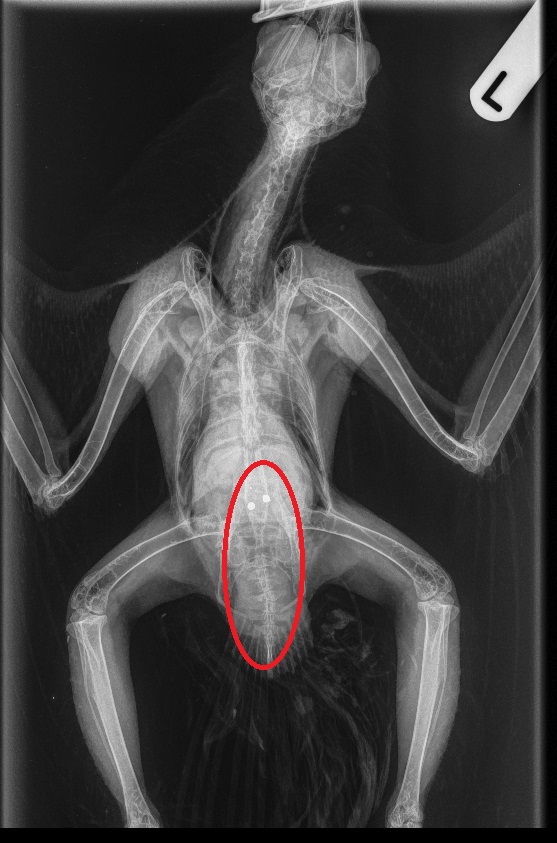
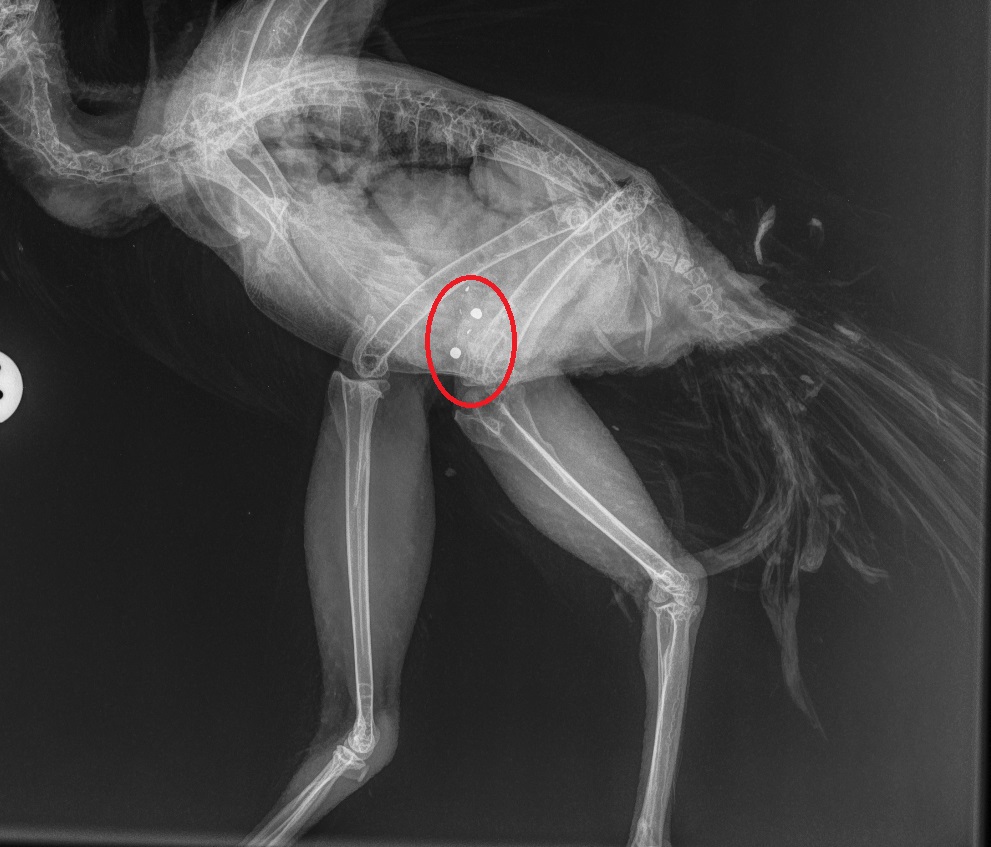
One of London’s resident breeding Peregrines, Tom, from Charing Cross Hospital in Hammersmith, is receiving veterinary care after an x-ray revealed a shotgun pellet lodged in his leg.

According to reports on social media, Tom was found grounded at the weekend and was taken for assessment at the South Essex Wildlife Hospital. It’s not clear from the information published whether the shotgun pellet was the cause of his grounding or whether it is an old injury that he’d survived.

All photos from South Essex Wildlife Hospital

Hopefully Tom will make a speedy recovery and can be returned to his territory ASAP.

The South Essex Wildlife Hospital has featured a few times on this blog, involved in the treatment and often successful rehabilitation of shot raptors from the south-east. It’s a registered charity – if you’d like to make a donation to support its work, please click here.

Illegal persecution of birds of prey is again a major public concern in Yorkshire Dales National Park

Regular readers of this blog will know that the Yorkshire Dales National Park is a raptor persecution hotspot, and has been for many years.

Hen Harriers, in particular, have been prime targets for illegal killing on the grouse moors of the Yorkshire Dales.

Photo by Ruth Tingay

For example, the following quotes are from the RSPB’s recent report, Hen Harriers in the Firing Line:

Swaledale in the Yorkshire Dales National Park is statistically the worst location in England with three Hen Harriers confirmed to have been illegally killed and 14 more satellite-tagged birds suspiciously disappearing between 2016-2023

and

The most significant declines in Hen Harrier breeding in England in 2024 were observed in the North Pennines and the Yorkshire Dales, with decreases of 67% and 73% respectively, compared to 2023. Both regions are intensively managed for grouse shooting and have been linked to several confirmed and suspected Hen Harrier persecution incidents in recent years“.

Indeed, the forthcoming trial of a gamekeeper alleged to have been involved in the conspiracy to shoot and kill an untagged Hen Harrier relates to an incident filmed on a grouse moor in the Yorkshire Dales last October (as featured on Channel 4 News, here).

And yet another satellite-tagged Hen Harrier ‘disappeared’ in suspicious circumstances on a grouse moor in the Yorkshire Dales National Park earlier this year (here).

The Yorkshire Dales National Park was also where satellite-tagged Hen Harrier ‘Free’ was found dead. His post-mortem concluded that his ‘leg had been torn off while he was alive, and that the cause of death was the head being twisted and pulled off while the body was held tightly’ (see here)

Hen Harrier ‘Free’ during post-mortem examination. Photo via Natural England.

With all this recent history in mind, I’ve been following the progress of the development of the Yorkshire Dales National Park Authority’s latest five-year Management Plan (2025-2030), due to be published shortly.

As part of the Management Plan process, the Management Plan Partnership undertook a six-week public consultation process in January 2024 to find out what issues were important to residents and visitors.

A total of 1,106 responses were received, of which 50% were from people indicating they live and/or work in the National Park; 16% were from younger people (18-34); and 4% were from people identifying as being from non-white ethnic groups.

The online questionnaire identified 18 issues from which people were asked to
rank their top six.

The top two priorities selected by respondents were:

  1. Help nature to recover by creating, restoring and connecting important
    habitats;
  2. Protect rare and threatened species, including ending illegal persecution of
    birds of prey.

That’s quite a significant result! And this isn’t the first time that the public has identified illegal raptor persecution as a major concern in this National Park (see here).

A second Management Plan consultation ran in January 2025 based on 40 proposed draft objectives, which included:

C6.   Support implementation of the national Wildlife Crime Strategy to end the illegal killing and disturbance of birds of prey and other wildlife by 2028.

This proposed draft objective for tackling the illegal killing of birds of prey in the Yorkshire Dales National Park is quite different from the objective listed in the previous Management Plan (2019-2024) which was this:

C5. Work with moorland managers and other key stakeholders to devise and implement a local approach to end illegal persecution of raptors, including independent and scientifically robust monitoring, and co-ordinated hen harrier
nest and winter roost site protection.

The latest draft objective for tackling illegal raptor persecution seems to have shifted significantly, away from the so-called ‘Bird of Prey Partnership’ approach, established in 2020 with representatives from the grouse-shooting industry, the raptor conservation community, RSPB, Natural England, Police, the Yorkshire Dales National Park Authority and the Nidderdale AONB (now renamed Nidderdale National Landscape) Authority.

That ‘partnership’, just like the similar one set up in the Peak District National Park and on which the Yorkshire Dales/Nidderdale Partnership was based, has failed miserably (e.g. see here) and has seen two of the ‘partners’ walk away (RSPB here, Northern England Raptor Forum here), both citing familiar complaints about the behaviour of the grouse moor lobby group, The Moorland Association.

The latest draft objective in the 2025-2030 Management Plan doesn’t mention the ‘partnership’ at all and instead focuses on ‘supporting the implementation of the [Police] National Wildlife Crime Strategy‘, which includes the national wildlife crime priorities of which raptor persecution is a key focus.

Does that mean a formal end to the Yorkshire Dales/Nidderdale Bird of Prey Partnership?

Let’s see.

Pair of Montagu’s Harriers breeds in England after six-year absence

Press release from RSPB (29 July 2025)

BRITAIN’S RAREST BREEDING BIRD RAISED FOUR YOUNGSTERS AT SECRET LOCATION

  • A pair of Montagu’s Harriers, Britain’s rarest breeding bird, have successfully raised four youngsters at a secret location in England
  • The pair of birds which arrived in May have been closely monitored by the RSPB who, working closely with a farmer, installed a protection fence around the nest in early July
  • This week the four chicks have made their first flights, delighting all involved
Montagu’s Harrier juveniles, 25 July 2025. Photo by RSPB

The Montagu’s Harrier is Britain’s rarest breeding bird species and hasn’t successfully nested in the UK since 2019. After a high of nine successful nests in 2011, its population has sadly dwindled – with it being officially placed on the Red List in 2021. But this year a pair arrived in the UK and have gone on to delight conservationists by raising four healthy youngsters.

Montagu’s Harriers winter in Africa and return to Europe to nest, often in agricultural fields, in particular winter sown cereals in the UK, and can return to the same nesting areas each year. Their previous strongholds in Spain and France are diminishing due to intensification of agriculture and earlier harvest dates, as well as wetter summers. Many nests across Europe are protected from predators by the installation of small metal fences by conservationists, volunteers and farmers.

The birds were first seen at the now secret location in May, raising hopes they would breed. Their nest was located in June by the licensed use of a drone and then closely monitored by a volunteer birdwatcher and the RSPB. Photographs indicated that both adult birds were ringed, remarkably the male being a chick from a UK nest in 2015 and the female from a nest in France in 2023.

Male Montagu’s Harrier. Photo by RSPB

As soon as their behaviour indicated that youngsters had hatched, the RSPB entered the field under licence and installed a small protective fence to safeguard the nest from ground predators. The chicks were then ringed in mid-July and last week made their first flights, delighting all involved.

Mark Thomas, Montagu’s Harrier species lead at RSPB, said: “We are overjoyed that a pair have returned, they managed to find each other and through the close protection of a dedicated farmer and the RSPB have managed to raise four youngsters. What’s even more remarkable is that we have been able to work out that the male was colour-ringed by the RSPB as a chick in a UK nest in 2015 and that his partner is wearing a ring indicating she is from France. This Anglo-French alliance could just be the springboard needed to save this species in Britain.”

The farmer, who cannot be named in order to protect the location, said: “It’s fantastic to have these amazing birds on the farm and a just reward for the extensive conservation work we have been undertaking for decades.”

It is now hoped the birds will all migrate safely, and the adults will return in 2026.

ENDS 

Channel 4 News has also covered this story with an article and a video, here.

What excellent news this is – kudos to the farmer and the RSPB for protecting the nest. Let’s hope the adults and four juveniles manage to get out of England successfully, unlike some of their predecessors (e.g. see here, here and here).

How can the National Gamekeepers Organisation be seen as a credible partner on the Hen Harrier Taskforce after it published this nonsense?

The police-led Hen Harrier Taskforce was launched in 2024 to tackle the ongoing illegal persecution of Hen Harriers on UK grouse moors.

The Taskforce was set up specifically in response to the ‘all time high’ level of Hen Harrier persecution crimes in 2022/2023 (at least 21 known incidents in 2022 and at least 33 known incidents in 2023). The extent of the criminality had become a major source of embarrassment for the police and for the government and they needed to be seen to be doing something.

The main premise of the HH Taskforce is summarised in this excerpt from the press release announcing the launch:

The Hen Harrier Task Force is an initiative led by the UK National Wildlife Crime Unit and supported by seven police forces (Cumbria, Derbyshire, Durham, Northumbria, North Yorkshire, South Yorkshire and West Yorkshire), DEFRA, the RSPB, National Gamekeepers’ Organisation, British Association for Shooting and Conservation (BASC), The Wildlife Trusts, GWCT, national parks, Country Land and Business Association (CLA), Natural England and The Moorland Association to combat the persecution of hen harriers in the UK. The taskforce aims to detect, deter, and disrupt offenders involved in wildlife crime by using technology and improving partnership working’.

You’ll note the heavy over-representation of game shooting organisations in this so-called ‘partnership’, including the National Gamekeepers Organisation and the Moorland Association (lobby group for England’s grouse moor owners).

However, several months after the launch, the Moorland Association (or at least its Chief Executive, Andrew Gilruth) was expelled from the Raptor Persecution Priority Delivery Group (RPPDG) and presumably that includes the Hen Harrier Taskforce, for ‘wasting time and distracting from the real work‘ of the RPPDG (see here).

After reading what I’m about to write in this blog, you might be wondering how the National Gamekeepers Organisation can be viewed as a credible ‘partner’ in the RPPDG and on the Hen Harrier Taskforce.

On 26 June 2025, the RSPB published its latest damning report about the extent of Hen Harrier persecution on driven grouse moors across the UK. Called ‘Hen Harriers in the Firing Line‘, the report demonstrated that record numbers of Hen Harriers were illegally killed or went ‘missing’ in suspicious circumstances during the years 2020-2024.

The following day, the National Gamekeepers Organisation posted this response in the News section of its website:

The article starts off well with a statement of truth. That is, that wildlife crimes are ‘non-notifiable’, in England & Wales at least, which means that wildlife crime figures are not officially collected at a national level by the Home Office. (In Scotland, wildlife crime recording became a statutory obligation under the Wildlife and Natural Environment (Scotland) Act 2011).

Most wildlife crimes in England & Wales are recorded as ‘miscellaneous’ offences and are therefore invisible in police records, with no duty to be reported upon. This problem has been the subject of a long-running campaign by Wildlife & Countryside LINK (e.g. here), and others, who for several years now have been urging the Home Office to make at least certain wildlife crimes (i.e. those associated with the National Wildlife Crime Priorities) notifiable so that there’s a better record of offences, allowing police resources to be applied appropriately. If the scale of a crime isn’t known, Police and Crime Commissioners are hardly going to allocate what are already tight police budgets towards tackling a crime that doesn’t look like it has any significance.

So having recognised and acknowledged that police forces don’t have to keep records of wildlife crime offences, the National Gamekeepers Organisation (NGO) then inexplicably announces that it has sent FoIs to all UK police forces to seek information on Hen Harrier persecution incidents.

Eh??!! Where’s the logic in that??

The stupidity doesn’t end there. It gets worse.

Let’s assume that the NGO did write FoIs to all 48 UK police forces and received responses from all of them (highly unlikely to get a 100% return rate but let’s go with it for now). Take a look at this particular statement in the NGO’s news article:

The NGO states that, ‘Having carried out Freedom of Information requests the NGO can state that from 2020 through to 2023, the police across all UK forces recorded eight Hen Harrier investigations in total. One was in Cumbria and the other 7 in Northumberland. Foul play was not cited by the police in any investigation‘. [Emphasis is mine].

Really? According to my data on Hen Harrier persecution recorded between 2020 – 2023, there were 82 recorded incidents across eight UK regions (North Yorkshire & Cumbria: 45; Northumberland: 12; County Durham: 11; Scotland: 7; South Yorkshire: 3; Lancashire: 3; Isle of Man: 1).

That’s quite a few more incidents, and is far more widespread, than the NGO’s claim of 8 incidents in just two police force areas.

The vast majority of those 82 incidents involved the suspicious ‘disappearance’ of satellite-tagged Hen Harriers. The number doesn’t include tags that have been listed as no longer transmitting as a result of possible tag failure, or birds that are known to have died a natural death. The National Wildlife Crime Unit, which leads the Hen Harrier Taskforce (on which the NGO serves so should be fully aware), explicitly uses satellite tag data to identify crime hotspots, i.e. locations where Hen Harriers repeatedly disappear in suspicious circumstances. Here’s another relevant excerpt from the Hen Harrier Taskforce launch press release:

Rather than purely focusing on the wildlife aspect of the crime, DI Harrison has tasked his team with taking a holistic view of the criminality and considering all types of offences. Criminals will often steal and destroy the satellite tags to conceal their offending. This could constitute criminal damage, theft and fraud. In the last few years alone, £100,000 worth of satellite tags have been lost in circumstances suspected to be criminal. The apparent use of firearms adds a further level of seriousness to these cases’. [Emphasis is mine].

For the NGO to use the line, ‘Foul play was not cited by the police in any investigation‘ is misleading at best.

Further, in amongst those 82 incidents recorded between 2020 – 2023 are a number of Hen Harriers where police investigations and post mortems explicitly detected ‘foul play’ (I prefer to call it crime, because that’s what this is). These are:

  • 10 February 2022: An unnamed satellite-tagged Hen Harrier ‘disappeared’ in a grouse moor dominated area of the Peak District National Park (here). One year later it was revealed that the satellite tag/harness of this young male called ‘Anu’ had been deliberately cut off (see here).
  • 12 April 2022: Hen Harrier ‘Free’ (Tag ID 201121) ‘disappeared’ at a ‘confidential site’ in Cumbria (here). It later emerged he hadn’t disappeared, but his mutilated corpse was found on moorland in the Yorkshire Dales National Park. A post mortem revealed the cause of death was having his head twisted and pulled off while he was still alive. One leg had also been torn off whilst he was still alive (here).
  • 20 June 2022: Hen harrier chick #1 stamped to death in nest on a grouse moor in the Yorkshire Dales National Park (here).
  • 20 June 2022: Hen Harrier chick #2 stamped to death in nest on a grouse moor in the Yorkshire Dales National Park (here).
  • 20 June 2022: Hen Harrier chick #3 stamped to death in nest on a grouse moor in the Yorkshire Dales National Park (here).
  • 20 June 2022: Hen Harrier chick #4 stamped to death in nest on a grouse moor in the Yorkshire Dales National Park (here).
  • 14 December 2022: Hen Harrier female (brood meddled in 2022, #R3-F1-22) ‘disappeared’ from winter roost (same as #R2-F2-20) on moorland in the North Pennines AONB (here). Later found dead with two shotgun pellets in corpse (here).
  • 9/10 May 2023: Hen Harrier male called ‘Dagda’, tagged by the RSPB in Lancashire in June 2022 and who was breeding on the RSPB’s Geltsdale Reserve in 2023 until he ‘vanished’, only to be found dead on the neighbouring Knarsdale grouse moor in May 2023 – a post mortem revealed he had been shot (here).
  • 29 July 2023: Hen Harrier female (brood meddled in 2020, R2-F2-20) ‘disappeared’ at a confidential site in the North Pennines. Later notes from the NE spreadsheet: “Dead. Recovered – awaiting PM results. Final transmission location temporarily withheld at police request“ (here). Later report stated she’d been found dead with 3 shotgun pellets in corpse (here).

So, clearly the police forces that allegedly responded to the National Gamekeeper Organisation’s FoI requests haven’t been accurately recording Hen Harrier persecution crimes (because they don’t have to) but regardless of that, for the NGO to take that misinformation at face value, when (a) it knows that these crimes are not notifiable so individual police force records have to be viewed as unreliable, and (b) the NGO would have been fully aware of these high profile crimes (because they were all over the press and they’d also have been raised at the RPPDG meetings in which the NGO is a participant) can be viewed as either a measure of the NGO’s stupidity or what I see as an indication of its willingness to deceive.

What’s even more revealing is the lengths the NGO will go in its efforts to tarnish the RSPB’s reputation. Why submit FoI requests to 48 UK police forces to ask for Hen Harrier persecution data when you’re already a member of the RPPDG and the Hen Harrier Taskforce, where those persecution data are reliably recorded and readily available?

The whole premise of the NGO’s ‘news article’ seems to me to be using obviously unrepresentative data it received from an unspecified number of police forces to smear and undermine the reputation of the RSPB. You could paraphrase the NGO’s whole article as:

Aha! The RSPB’s Hen Harrier persecution data are clearly fabricated because all UK police forces only recorded eight Hen Harrier persecution incidents in two force areas between 2020 and 2023. There, we told you the RSPB make up the data just to make us gamekeepers look bad. You can’t believe a word the RSPB says. We love all raptors and especially Hen Harriers‘.

It’s half-baked nonsense and exposes the National Gamekeepers Organisation’s real intentions.

The NGO suggests that the RSPB is fabricating persecution data “to damage the public perception of gamekeepers” when actually it’s the NGO mispresenting information to damage the reputation of the RSPB. The NGO is right to suggest that the public’s perception of gamekeepers is poor, but that’s because gamekeepers are consistently linked to raptor persecution crimes. If gamekeepers want to improve their reputation it’s quite simple – stop killing birds of prey.

Three Peregrines fledge successfully at St Albans Cathedral as police investigation continues into trampling of first clutch of eggs

Good news!

Three young peregrines have successfully fledged from St Albans Cathedral in Hertfordshire.

This is the site where the breeding pair’s first clutch of eggs was trampled on in April 2025, as seen on the Cathedral’s livestream webcam overlooking the peregrine’s nest scrape, leading to a man ‘helping police with enquiries’ (see here, here and here for previous blogs).

Two of the three Peregrine fledglings at the cathedral. Photo by Michael Barrett via BBC website

The police investigation is apparently still ongoing, three months after the trampling incident.

According to the St Albans Cathedral website:

‘Hertfordshire Constabulary have today confirmed (Friday 11 July) that “Our investigation is ongoing, and we are working with the Crown Prosecution Service following further lines of enquiry.”

Incident update: Buzzard found dead near Goathland in North York Moors National Park ‘was shot’

Last week I blogged about an appeal for information that had been posted on North Yorkshire Police’s Facebook page, in relation to ‘the suspected shooting of a buzzard‘ near Goathland on 2nd May 2025 (see here).

I’d noted that the appeal was quite vague. It wasn’t clear if the appeal was a result of a witness report of someone seen shooting towards a buzzard or whether a corpse had been found and was awaiting post mortem.

Buzzard photo by Pete Walkden

I’ve since been informed by a reliable local source that a dead buzzard had been found and an x-ray revealed it had been shot.

Having a corpse with shot in it is a confirmed shooting, not a suspected shooting.

Without seeing the x-ray it’s not possible for us to determine if it had been shot close to where the body was discovered (e.g. if its wing bones had been shattered by the shot then it’s unlikely to have been able to fly any distance) so it may have been shot near Goathland or it may have been shot elsewhere and just succumbed to its injuries close to the Duchy of Lancaster grouse moor.

It’s obviously pure coincidence that the grouse moors near to Goathland just happen to be a raptor persecution hotspot.

It’s pointless asking North Yorkshire Police for further information about this buzzard – they routinely refuse to answer such requests.

Satellite-tagged Hen Harrier ‘Sita’ vanishes in suspicious circumstances on grouse moor in Yorkshire Dales National Park

Further to yesterday’s news about the disappearance of two breeding male Hen Harriers from the RSPB’s Geltsdale Reserve in Cumbria, suspected to have been illegally killed whilst away hunting on neighbouring grouse moors (here), there’s news of another suspicious disappearance.

This time it’s a young female Hen Harrier called ‘Sita’ who was satellite-tagged in Bowland in 2024, using a tag paid for by public funds raised by the charity Hen Harrier Action.

Hen Harrier ‘Sita’ being fitted with a satellite tag in Bowland in 2024. Photo by Northern England Raptor Forum (NERF).

Sita spent her first winter in the Yorkshire Dales National Park but her tag suddenly and unexpectedly stopped transmitting on 27 February 2025 from a roost site on an unnamed grouse moor within the National Park.

Apparently her disappearance is being investigated by North Yorkshire Police and presumably the Hen Harrier Taskforce, run by the National Wildlife Crime Unit, but three months later I haven’t seen any public appeal for information or announcement about her suspicious disappearance in what is one of the UK’s worst raptor persecution hotspots.

I’ll be updating the HH kill list shortly.

UPDATE 1 October 2025: More information about the suspicious disappearance of Hen Harrier ‘Sita’ who vanished on a grouse moor in Yorkshire Dales National Park (here)