
Iceland (the supermarket) really wants us to believe that the food they sell is “food you can trust“. It’s their tagline. It appears twice on the front of this store we recently visited. If the customer fails to notice it as they enter the shop they get another opportunity to read it as they walk away. It’s clearly an important marketing strategy for this company.

It’s an interesting word, ‘trust’. Synonyms include ‘confidence’, ‘belief’, ‘faith’, ‘sureness’, ‘certainty’, ‘assurance’. It implies ‘freedom from suspicion/doubt’.
Antonyms include ‘disbelief’, ‘doubt’, ‘uncertainty’, ‘distrust’.
“Food you can trust” is certainly an interesting choice of tagline. As consumers, we might all expect the food we buy from high street supermarkets to be trustworthy, yes? Well, no, as the recent horse meat scandal showed. In fact it was as a result of the horse meat scandal that Iceland rolled out this tagline in a bid to reassure customers of the quality of its foods. Since then, Iceland has gone to great lengths to demonstrate that nay, their beefburgers do not contain horse (see here). Marvellous, what a comfort.
But what about trusting other food sold by Iceland? Say, red grouse for example? As regular blog readers will be aware, this summer Iceland began selling frozen red grouse that was shot last year. When this news broke in July, we had a number of questions to ask of Iceland (see here) about how the sale of this product fitted in with their published statement on corporate responsibility, especially as they claim to be “committed to providing safe, healthy and ethically sourced food”. We wondered how Iceland could meet these standards when Marks and Spencer had abandoned their red grouse sales for two years running (here and here) because they couldn’t meet their own ethical standards?
Sadly, Iceland CEO Malcolm Walker failed to respond directly to our questions – he was probably too busy being trustworthy – and instead Iceland published a rather vague statement on its website (see here). Incidentally, it was noted in the August 2015 minutes of the Lead Ammunition Group meeting that ‘the Iceland supermarket website information on game was not in line with current Food Standards Agency guidance’ (see here).
Following Iceland’s press statement, we asked more questions of Malcolm Walker, specifically about our concerns (distrust) that the red grouse being sold in his supermarkets could be described as safe, healthy and ethically sourced (see here). Alas, it seems that being ‘trustworthy’ doesn’t include being transparent about the food supply chain – Mr Walker has refused to answer the questions. So instead of being filled with ‘confidence’,’ belief’, ‘faith’, ‘sureness’, ‘certainty’ and ‘assurance’, we are left with ‘disbelief’, ‘doubt’, ‘uncertainty’ and ‘distrust’ of this product.
We’ve got a feeling this won’t be the last we hear about Iceland red grouse this year…..


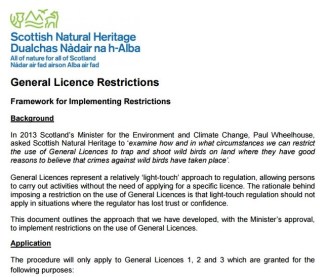 In July 2013, the then Environment Minister, Paul Wheelhouse MSP announced a series of new measures to tackle the raptor killers. One of these new measures was to give SNH the authority to issue a (temporary) restriction order on the use of General Licences on land where evidence of raptor crime was apparent. The restriction order could be applied retrospectively to incidents that had taken place since 1st January 2014. (See
  On Wednesday last week (4th September) we encouraged blog readers to contact SNH and Natural England to ask whether they would provide guidance on the lawfulness of deploying gas gun bird scarers on grouse moors (see
  The Countryside Alliance has launched an attack on Chris Packham and is urging the BBC to sack him. The basis of their argument is that Chris, in their opinion, is ‘abusing his position’ as a BBC presenter to ‘promote an extreme agenda’ (see
  Never ones to miss an opportunity to stick the boot in on the RSPB, those wildlife crime-fighting heroes at the Scottish Gamekeepers’ Association have mis-kicked, again.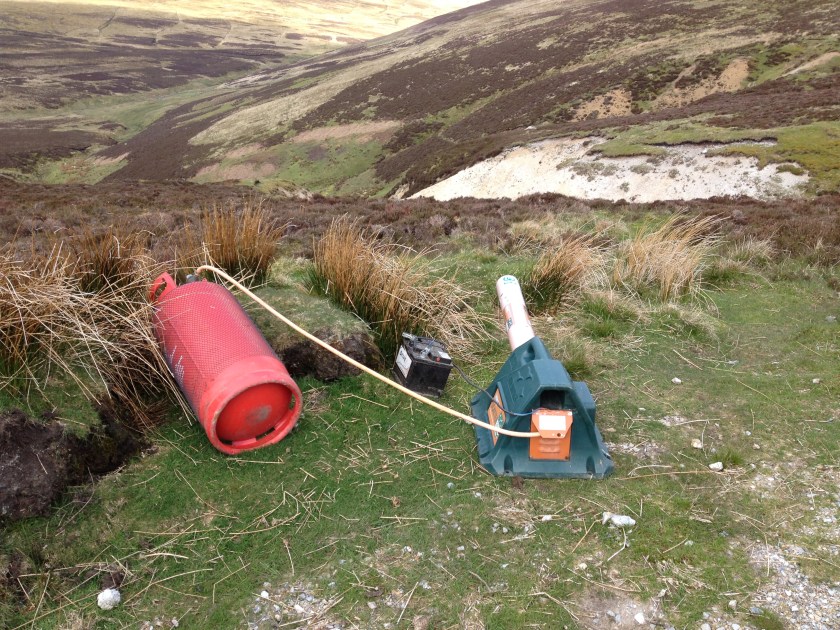
 One year ago today saw the closure of the Scottish Government’s public consultation on increasing the SSPCA’s investigatory powers in relation to wildlife crime investigations, and particularly in relation to raptor persecution.
 There’s an article on the BBC News website today about a proposal to take golden eagle chicks from the Highlands and release them in southern Scotland in an attempt to boost the tiny, depleted population currently clinging on by its talons (BBC report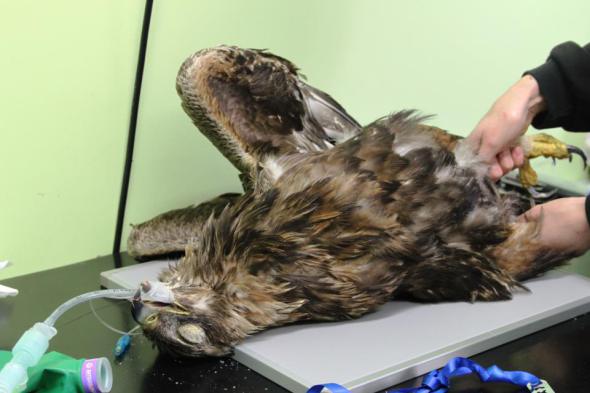
 Raptor Persecution UK