24 more White-tailed eagles reintroduced in Ireland

Press release from the Irish Government:

WHITE-TAILED EAGLE CHICKS SPREAD THEIR WINGS FURTHER INTO IRISH SKIES

  • 24 white-tailed eagle chicks were released in August around the country, as part of an ongoing National Parks and Wildlife Service (NPWS) programme to reintroduce this once extinct species
  • A total of 171 white-tailed eagles have now been released through the programme to date
  • A small, established population of eagles is now fledging chicks around the country and has even produced triplets

Over the past week, twenty-four white-tailed eagle chicks have been released in locations around Lough Derg, the Shannon Estuary and the west of Ireland, as part of a long term reintroduction programme managed by the NPWS.

White-tailed eagles are predators who play an important role in nature and the ecosystem.

Once native to Ireland, they became extinct in the nineteenth century. Since 2007, the NPWS has been working with partners in Norway along with farmers and communities around the country to reintroduce the white-tailed eagle to Ireland.

Young White-tailed eagle. Photo: Valerie O’Sullivan

Minister of State for Heritage and Electoral Reform, Malcolm Noonan TD, who released four chicks at Killarney National Park as part of the release programme, said:

The juvenile white-tailed eagles we have released this week are joining a growing population across our island. This incredible endeavour is the result of 16 years’ work and collaboration, not just on the reintroduction programme, but also on habitat restoration and engagement with landowners to secure their ongoing protection.

These apex predators perform a vital role in our ecosystems and the sight of them soaring in the thermals is a privilege that everyone who lives in or visits Ireland will now have the opportunity to enjoy. I would like to pay tribute to NPWS staff for their commitment and dedication to this initiative, our international partners from Norway, and the communities around the country who are embracing the return of the white-tailed eagle to our landscapes.”

A comprehensive satellite tagging system is now in place so that the birds can be monitored as they disperse around the country.

Minister for Housing, Local Government and Heritage, Darragh O’Brien who also participated in the release of chicks at in the vicinity of Lough Derg added:

This reintroduction programme is the result of a combined effort by my Department’s National Parks and Wildlife Service, participating landowners and communities and endangered species experts. I commend each of them for the role they are playing in protecting these iconic birds of prey“.

Niall Ó Donnchú, Director General with the NPWS said:

This programme is one of several initiatives underway in the NPWS to protect endangered species in Ireland and prevent their decline. This work takes time, and calls for a partnership approach if it is to be sustainable in the long term. Collaboration with the science community and international partners, along with the involvement of our expert staff and communities around the country has been key to the success we have seen so far“.

Eamonn Meskell, Divisional Manager NPWS, Killarney National Park who heads up the white-tailed eagle reintroduction Programme added:

There is huge interest from the public in the white-tailed eagle programme. Locations where they are spotted attract many visitors and local interest and we love to hear about sightings of the birds around Ireland and further afield. There are great stories to tell about the project. For example, the first Irish bred female to breed in over a hundred years has fledged seven chicks in three years! In Lough Derg this year for the second time a nesting pair fledged triplets. This is incredibly unusual – even in the wilds of Norway, and it shows how well suited Ireland really is for the white-tailed eagle from both a habitat and a feeding perspective. We’ll be watching this year’s chicks with interest as they mature and hopefully go on to fledge more chicks“.

Bente Lyngstad, chargé d’affaires at the Norwegian Embassy in Ireland said:

Watching the release of the white-tailed sea eagles is a truly extraordinary and mighty experience. Over the years more than 150 eagle chicks have been collected in Norway and released in Ireland. Today’s stock in Ireland is the result of a long-term collaboration between Norway and Ireland, which again stems from our deep friendship and our shared values. I would like to acknowledge all volunteers whose efforts have been imperative to make this happen“.

The retention of species is essential for maintaining the intricate web of life and the functioning of ecosystems. It contributes to the sustainable use of natural resources and the well-being of both present and future generations. Yet we now see a rapid loss of species world-wide. This development must be halted. The reintroduction of white-tailed sea eagles into their natural habitat is a great example of how we can work together against biodiversity loss.”

ENDS

These releases form part of phase two of the reintroduction project. Phase one involved releasing 100 White-tailed eagles into Killarney National Park in County Kerry, between 2007-2011. A scientific review of the project in 2019 suggested that the small population was still vulnerable to issues such as Avian Influenza, extreme weather events and illegal poisoning so phase two began in 2020, to reintroduce more young birds and release them in different parts of the country.

Unfortunately some of the eagles released in phase two have already been killed illegally after consuming poisoned bait (see here and here).

‘Any bad publicity is good’ – Chris Packham haters celebrate as Sunday Telegraph publishes pathetic ‘bird sniffing’ accusation

Further to the blog I wrote three days ago about a journalist digging around for a story on Chris Packham sniffing goshawks (yes, really – see here), well surprise, surprise, the Sunday Telegraph has published this pathetic piece today:

Here’s the text:

Presenter is referred to police after enthusiast claimed star disturbed rare goshawks on live TV

When Chris Packham appeared on The One Show with three goshawk chicks, the naturalist took great pride in showing how a bird of prey once near extinction in Britain is at last thriving.

But, that BBC recording is now at the centre of a police investigation over whether a wildlife crime – including the somewhat unusual practice of bird sniffing – was committed before the nation’s very eyes. 

In the four minute and 30-second clip, Mr Packham, 62, took part in biometric tests on the woodland predators in the New Forest.

The Springwatch presenter sniffed one of three goshawks to detect their “characteristic scent or perfume” once they were weighed, sexed and ringed in line with a licence issued by the British Trust for Ornithology (BTO).

The clip, broadcast in June following a morning of filming, prompted a complaint to police that a filming licence may not have been obtained.

It was also suggested the time the birds were out of the nest and the “sniffing incident” amounted to a “disturbance” of a protected species.

Mr Packham has insisted no laws were broken, adding that those concerned about “goshawk welfare should worry less about a naturalist having an occasional sniff” and more about “widespread persecution” by some gamekeepers who have illegally killed goshawks.

The man who complained – a shooting enthusiast who does not want to be named for fear of reprisals – said: “I watched the programme and was struck by the way Mr Packham was handling and sniffing the birds. These birds are Schedule 1 protected and it is a crime to ‘intentionally or recklessly disturb at, on or near an active nest’.”

When the man contacted Natural England about a filming licence he was told: “I have checked our various systems and contacted potentially relevant groups within Natural England and have not been able to locate any relevant licences.”

Jemima Parry-Jones, a leading authority on birds of prey and conservation, said handling any wild bird must be done quickly, with the minimum of noise, numbers of people and interference to minimise the risk of harm.

“When the face of a human, effectively their only natural predator, appears over the edge of a nest it will cause them huge distress.

“There is absolutely no excuse for spending half a day filming like this.”

A Hampshire Police spokesman said: “We received a report on July 2 relating to an alleged offence under the Wildlife and Countryside Act 1981 and it is currently being reviewed by our Countrywatch team.”

Mr Packham told The Telegraph: “Raptor persecution is illegal yet every year a huge number of goshawks are killed by gamekeepers … not by scientists or people in the media. All three of these birds fledged the nest – lets hope they survive.”

A BBC spokesman said: “The One Show had permission to film and followed all protocols around filming wildlife.”

ENDS

It’s amusing that they used a quote from Jemima Parry Jones, instead of the response they received from a licensed goshawk ringer who they’d first approached for comment. You can imagine what he told them. It presumably didn’t fit the narrative so they went with Parry Jones – the woman who is running the hen harrier brood meddling trial in cahoots with the Moorland Association and who was quite happy to be filmed with the brood meddled hen harrier chicks for a Moorland Association propaganda video. Hypocritical? Yes, I think so.

I’d argue that there is “absolutely no excuse” for permanently removing entire broods of hen harrier chicks from their parents and holding them in captivity for several weeks and then releasing them back into the wild to be shot and killed by grouse moor gamekeepers, but that’s just my view. The irony of asking the brood-meddler-in-chief to comment on ‘disturbance’ to raptors won’t be lost on anyone.

The Sunday Telegraph article identifies the complainant as a ‘shooting enthusiast’, and that’s what’s key here. As I wrote a few days ago (here), if the shooting industry had the tiniest concern about goshawk welfare then they’d stop shooting, trapping and bludgeoning them to death.

Have they stopped? No, of course they haven’t. There’s even a forthcoming court case, in the next fortnight, of yet another gamekeeper accused of killing a goshawk.

It’s so obvious what the agenda is here – that this complaint was made by a member of the shooting industry as part of a long-running smear campaign against Chris Packham, in yet another feeble attempt to discredit him and/or have him sacked by the BBC. It’s no secret that the shooting industry despises Chris because he’s outspoken about their environmentally-damaging practices and also about their crimes, especially the continued illegal killing of birds of prey.

The shooting industry has taken a lot of hits recently and is floundering under the pressure, so its chosen course of action is to lash out. Chris Packham is an obvious target given his high profile and popularity amongst the British public, and his relentless campaigning for wildlife and the environment.

My interpretation is backed up by comments made on social media today by other ‘shooting enthusiasts’ in response to the article being published in the Sunday Telegraph:

This comment by Sarah Sullivan is particularly telling – I assume she’s referring to Chris winning his recent libel action but being left with mammoth costs as the two individuals he took action against immediately declared themselves bankrupt (although more on that in due course).

Even the main shooting organisations are brazenly encouraging their members to complain about Chris (and other high profile individuals, as well as the RSPB), as demonstrated in this excerpt from a BASC blog written by Dr Conor O’Gorman and published this week:

It’s nothing new – the shooting industry has been aggressively attacking Chris for years (e.g. see here, here). The irony of it is, is that it’s actually more damaging to their own reputation than it is to Chris’s but they’re mostly too stupid to see it. Although I did watch Patrick Galbraith, editor of Shooting Times, trying to make this point at the recent Game Fair – sadly without much success.

UPDATE 29th August 2023: ‘No case to answer’ – Hampshire Police close ridiculous ‘Chris Packham sniffed a goshawk’ investigation (here)

McKellar twins from Auch Estate sentenced for killing cyclist & burying his body in a stink pit

Twin brothers Alexander and Robert McKellar have today been sentenced at the High Court in Glasgow for their roles in knocking down cyclist Tony Parsons and burying his body in a stink pit on the notorious Auch Estate near the Bridge of Orchy, where their father had previously been convicted for the illegal possession of two hand guns and a banned pesticide (Carbofuran) after the discovery of a poisoned golden eagle (see here).

Alexander & Robert McKellar. Photos: Police Scotland

Alexander McKellar, who had previously been charged with murder but pleaded guilty to a lesser charge of culpable homicide, was sentenced to 12 years in prison.

Robert McKellar was sentenced to five years and three months for attempting to defeat the ends of justice by assisting his brother in covering up the crime by burying Mr Parsons in a remote spot on the Auch Estate.

Aerial view of Auch Estate. Photo: COPFS

Mr Parsons was knocked off his bicycle by Alexander McKellar’s vehicle, part-way through a charity ride on a rainy night in September 2017. Instead of providing him with assistance, the McKellar twins drove back to Auch Estate, switched vehicles, and returned to collect Mr Parsons and his possessions and then hid everything under a tarpaulin in some woods on the estate. Mr Parson’s body was later moved to a stink pit on the estate where he was buried, and the McKellar twins burned his possessions.

Their hideous crimes only came to light in 2021 after Alexander McKellar confessed to his then girlfriend, who went to the police. That they’d been able to conceal these offences for so long, despite major searches by Police Scotland officers, mountain rescue teams, police dogs, police air support unit, as well as volunteers, and with repeated media appeals, is a clear demonstration of how easy it is for criminal evidence to be hidden on vast, remote sporting estates. Makes you think, doesn’t it?

Previous blogs on this case here and here.

Biggest threat to UK goshawks is gamekeepers, not Chris Packham!

It’s become apparent today that a journalist is sniffing around for a story about Chris Packham in what looks like the latest attempt to discredit his reputation and integrity.

Apparently ‘someone’ has made a complaint to the BBC, the BTO, and Hampshire Constabulary accusing Chris of being a ‘wildlife criminal’ because he sniffed some goshawks chicks whilst they were waiting to be ringed in the New Forest in June for a feature on the BBC’s The One Show.

That ‘someone’ has even bragged on social media about making the complaint:

That ‘someone’, or more likely one of the game shooting organisations, has tipped off a journalist in the hope of trying to make mischief for Chris in the mainstream papers.

It’s so obviously just the latest in a long-running malicious smear campaign against Chris.

If there was a genuine concern for goshawk welfare from the game-shooting sector then I think we’d have heard a bit more from them when actual crimes against goshawks have been uncovered and publicised, e.g. the trapping and beating to death of a goshawk by a gamekeeper on a pheasant shoot in Scotland (here), the shooting of a goshawk by a gamekeeper on a pheasant shoot in Norfolk (here), the disturbance of a goshawk nest in the Peak District National Park (here), the disturbance of a goshawk nest in Scotland (here), the disturbance of another goshawk nest in Scotland by masked gunmen (here), the shooting of a goshawk in the Forest of Dean (here), the trapping of a goshawk by a masked man on a pheasant shoot in Norfolk (here), the killing of a goshawk caught in a gamekeeper’s trap in the Scottish Borders (here), the shooting of a goshawk in a raptor persecution hotspot in Scotland (here), the shooting of a goshawk in Staffordshire (here), the shooting of a goshawk on a sporting estate in the Cairngorms National Park (here), the felling of an active goshawk nest in Gloucestershire (here), the setting of an illegal trap by a gamekeeper next to a goshawk nest on a sporting estate in Scotland (here), the shooting and dumping of five young goshawks in Suffolk (here), the trapping of a goshawk on a grouse shooting estate in the North York Moors National Park (here), etc etc.

It’s not difficult to predict the headline: ‘Chris Packham under police investigation’, a bit like the headlines we saw a couple of years ago when the Scottish Gamekeepers Association told Hampshire Constabulary that they had ‘evidence’ that Chris wrote a death threat letter to himself…only it turned out that their ‘evidence’ was wholly unreliable (here) and the allegation was so far off the mark it was dismissed by Hampshire Constabulary (here) and condemned by a judge in a recent and related libel trial (here).

The latest (non) ‘story’ / smear campaign hasn’t emerged in the press yet but it may appear in the next day or so.

Meanwhile, Chris has responded this afternoon – well worth a watch:

UPDATE 27th August 2023: ‘Any bad publicity is good’ – Chris Packham haters celebrate as Sunday telegraph publishes pathetic ‘bird sniffing’ accusation (here)

UPDATE 29th August 2023: ‘No case to answer’ – Hampshire Police close ridiculous ‘Chris Packham sniffed a goshawk’ investigation (here)

Ospreys breed in Ireland for the first time in over 200 years

Press release from Ulster Wildlife & the Northern Ireland Raptor Study Group

24th August 2023

OSPREYS BREED IN IRELAND FOR THE FIRST TIME IN OVER 200 YEARS

A pair of ospreys have bred at a confidential nest site in County Fermanagh – a first in Ireland for more than 200 years.  

This beautiful bird of prey, also known as a fish hawk, has re-colonised naturally in the area and has successfully produced at least two, possibly three chicks – the first known wild osprey chicks on the island of Ireland in modern times. 

The historic discovery was made by Giles Knight, Environmental Farming Scheme Advisor with Ulster Wildlife, who has been observing the breeding pair for the last three seasons alongside his local farm visits in the area. 

I have been keeping this news close to my chest for a long time to ensure the safety and welfare of these spectacular but vulnerable birds,” he said. 

Along with my son Eoin, I have watched the adults return to the same site since 2021, so you can imagine my excitement the moment that I saw three chicks and two adults this year. It was a rub- your-eyes, once-in-a-lifetime moment; an absolute highlight of my 30-year wildlife career – like finding long-lost treasure.

With at least two of the chicks fledging this season, this is a huge conservation success story and indicates a healthy wetland ecosystem with plenty of suitable habitat and fish to bring this apex predator back to our skies and plunging into the Fermanagh Lakelands. Truly the return of a living countryside!

Ospreys are thought to have become extinct as a breeding bird in Ireland in the late 18th century due to systematic persecution. Although often sighted on migration to and from sub-Saharan Africa, confirmed breeding in Ireland has been elusive until now with Scotland their UK breeding stronghold. 

Dr Marc Ruddock from the Northern Ireland Raptor Study Group was delighted with this positive development.

All the signs and sightings in recent years have been pointing towards this, but now actual breeding success has finally been confirmed – truly brilliant news!” he said.  

To avoid disturbance, close local liaison has been ongoing around the undisclosed site. 

Mr Knight added: “Now these birds are back in Ireland and breeding successfully, it is critical that they are left in peace so their numbers can continue to grow by returning year on year to breed. We believe and hope that this could be the start of a raptor dynasty.

It has been both encouraging and heartwarming to see the landowner, the local farming community and our partners welcome the ospreys’ return. Their ongoing support will enable future generations to enjoy these magnificent birds far into the future.

Across Ireland, osprey monitoring, the erection of nesting platforms, and planning for translocation and re-introduction programmes have been ongoing for many years. These efforts have now been boosted by Fermanagh’s naturally established pair. 

ENDS

Director Amanda Anderson set to leave the Moorland Association

It’s been announced that Moorland Association Director Amanda Anderson will be leaving at the end of this year “to take on a fresh challenge”.

May be she’s seen the writing on the wall and is jumping ship after ten years of propping up this dying industry.

Grouse-shooting butt in North Yorkshire. Photo: Ruth Tingay

Amanda has been a strong influence in her ten years in post, particularly in her role as what I think of as ‘chief contortionist’ in the so-called ‘partnerships’ designed to crack down on the illegal killing of birds of prey on grouse moors.

‘Partnerships’ that haven’t managed to deliver anything at all of conservation value (e.g. Peak District Bird of Prey Initiative (here and here), Yorkshire Dales Birds of Prey Partnership (here), Raptor Persecution Priority Delivery Group (here)).

Amanda has also given us a few classic quotes over the years:

These birds [raptors] are there on these moors. I see them from my kitchen window” – from an oral evidence session at Westminster in 2016 prior to the first debate on banning driven grouse shooting;

and

If we let the hen harrier in, we will soon have nothing else. That is why we need this brood management plan” – from an article in The Times in 2016, reported on Mark Avery’s blog here.

Her successor will have his/her work cut out to defend the indefensible. Let’s hope it’s someone with more credibility than the current Chair of the Moorland Association, Mark Cunliffe-Lister, who recently told BBC Radio 4’s Farming Today listeners,

Clearly, any illegal [hen harrier] persecution is not happening“.

Perhaps all the upheaval at the Moorland Association explains why the organisation has yet to publish a statement of condemnation about the latest ‘disappearance’ of three more satellite-tagged hen harriers, all gone from driven grouse moors this month (here), or the damning figure of 101 missing/killed hen harriers, mostly on grouse moors, since the start of the brood meddling sham in 2018 (here).

Incidentally, I was sent an interesting note the other day about a comment that Amanda is alleged to have sent to Moorland Association members last week about hen harriers…I’ll blog about that shortly.

UPDATE 12 December 2023: Moorland Association appoints Andrew Gilruth as new CEO (here)

Scottish Government announces plan to ban snares

Press release from Scottish animal welfare charity and REVIVE coalition member, OneKind (22nd Aug 2023)

SCOTTISH ANIMAL WELFARE CHARITY AND PATRON CHRIS PACKHAM WELCOME SCOTTISH GOVERNMENT’S PLAN TO BAN SNARES

Today, the Scottish Government has announced its intention to ban the use of snares in Scotland, following decades of campaigning from Scottish animal welfare charity, OneKind.  

OneKind strongly welcomes the Government’s proposal, which would put an end to the suffering of the wild, companion and farmed animals frequently trapped in cruel snares.  

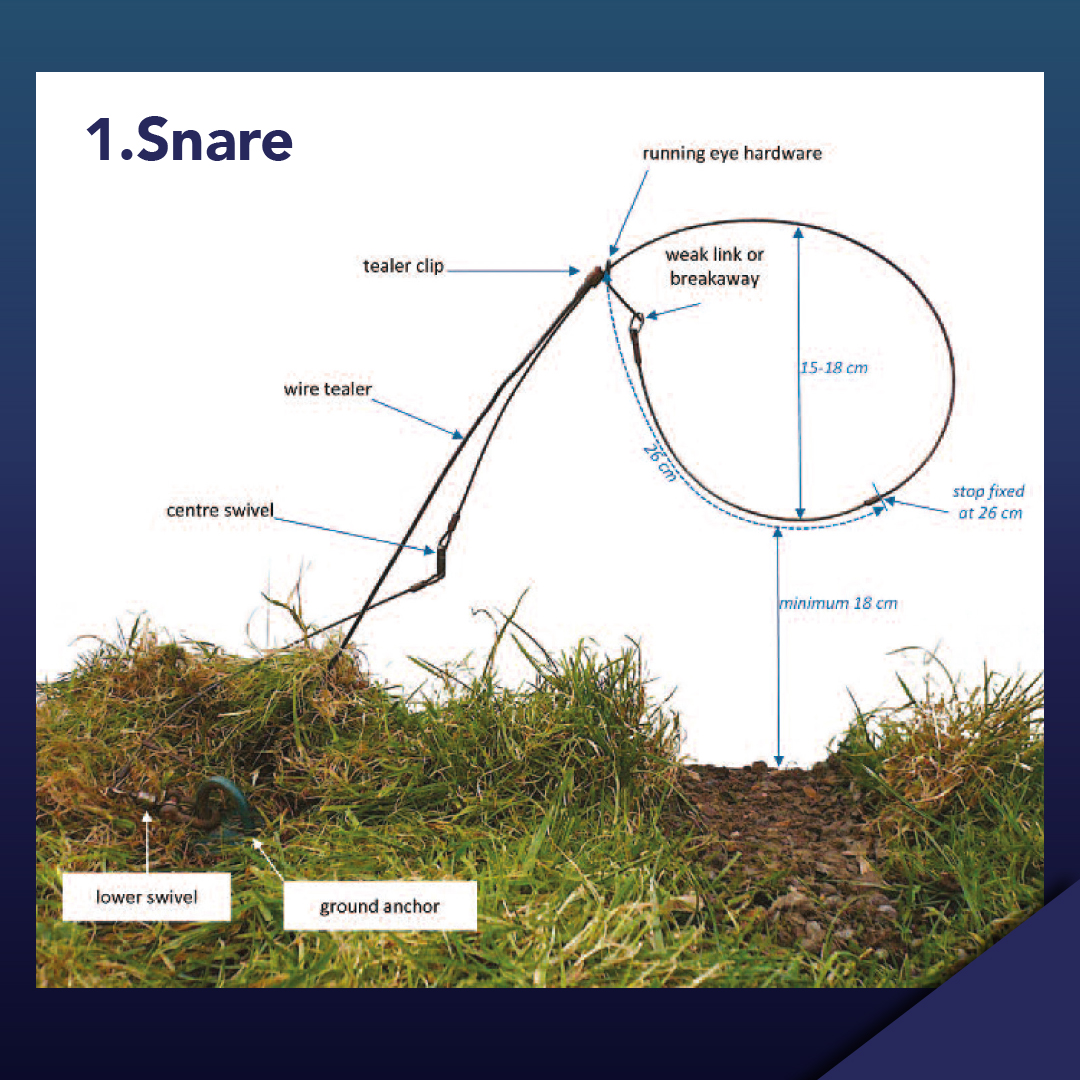
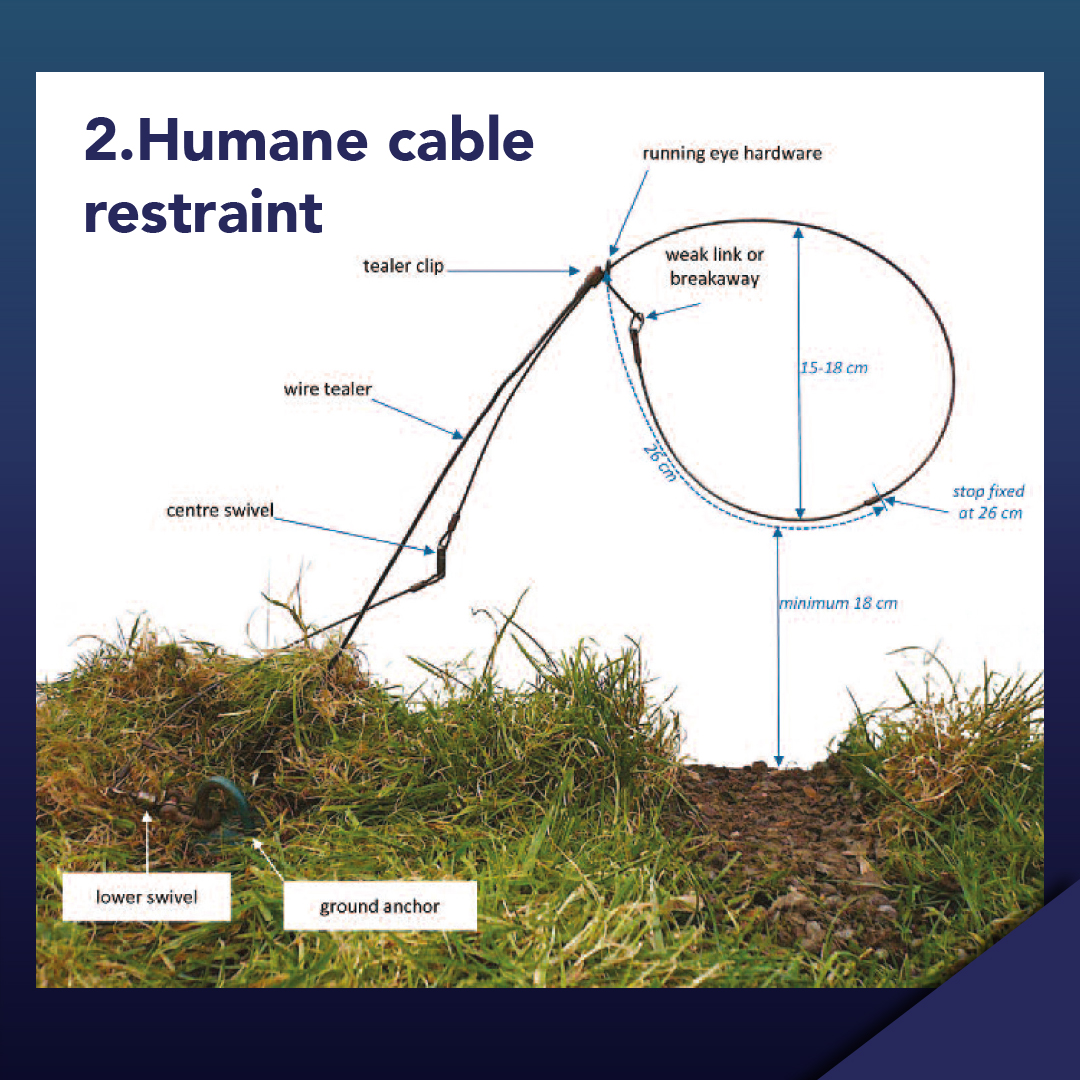
Snares are archaic traps used, in Scotland, primarily to protect birds such as grouse and pheasants from foxes, so there is a surplus of these birds for people to shoot for ‘leisure’. However, snares are indiscriminate and often trap, injure and kill a wide range of non-target species including deer, badgers, lambs and even companion animals, such as cats and dogs.  

OneKind Director, Bob Elliot, says: 

We are delighted that today the Scottish Government has finally announced their intention to consign snares to Scotland’s history books. The regulation of snares has failed to protect animals from the extreme physical and mental suffering caused by these archaic devices. Furthermore, 76% of the Scottish public support a snaring ban on the use and sale of snares. We are pleased that the Scottish Government has listened to the voices of Scotland’s people

Nothing short of a full ban will put an end to the suffering inflicted by snares. We urge the Scottish Government to make this ban watertight and not consider any exceptions to it.

OneKind has campaigned for decades for a full ban on snares in Scotland. Indeed, late last year, we marched down Edinburgh’s Royal Mile and rallied outside Parliament with hundreds of supporters, like-minded organisations, and MSPs, to call on the Scottish Government to introduce a snaring and real foxhunting ban. Now we have a commitment to ban the use of snares and legislation to end the ‘sport’ of foxhunting in Scotland.” 

Bob added: 

Scotland’s wild animals are sadly often considered to as ‘pests’ or ‘vermin’ and thus are routinely persecuted. By proposing a snaring ban, the Scottish Government is helping send a message that wild animals deserve protection. Of course, a complete shift in mindset in how we view wild animals – as sentient individuals rather than ‘vermin’ – is desperately needed, but today’s announcement shows we’re heading in the right direction.” 

OneKind’s Patron, Wildlife TV Presenter and Conservationist, Chris Packham, said: 

What excellent news, and a potential win for wildlife, today. These torture devices ought to have been banned a long time ago and I’m glad that the Scottish Government has finally recognised snares for the unacceptably cruel traps that they are.  

Snares inflict so much suffering on wild animals and so I’m delighted that both the Scottish Government and the Welsh Government have taken a stand against snares. The UK Government must not lag behind.” 

ENDS

The Scottish Government’s announcement can be read here.

There is now a six-week consultation, open now and running until 3rd October 2023 – you can participate by clicking here.

Highly pathogenic bird flu outbreak at pheasant & duck-rearing game farm in Angus

Ministers have confirmed the presence of Highly Pathogenic Avian Influenza at a game-rearing farm in Angus (here).

The infected premises were declared on 18th August 2023 at Forester’s Croft, Oathlaw, Forfar, DD8 3SA and Ministers have enforced a 3km Protection Zone and a wider 10km Surveillance Zone. This means various measures are now in place in both zones, and the release of gamebirds is prohibited in both zones.

Aerial view of postcode DD8 3SA, which appears to be a game-rearing farm

The wider Surveillance Zone covers part of Glenogil Estate in the Angus Glens, a name that will be familiar to long-term readers of this blog. Glenogil offers red grouse shooting but also pheasant and partridge shoots. If the estate is releasing pheasant/partridge this year, then its shooting plans may be affected if it hadn’t already released its gamebirds prior to 18th August (as they’ll still be classed as livestock/poultry until their release, when they suddenly morph into ‘wildlife’).

Forester’s Croft, the location of the infected premises, is interesting. An undated (although maybe 2017) sales brochure (here) shows its proximity to the grouse moors at the southern end of the Angus Glens, which should be of great concern given the highly contagious nature of avian influenza:

The infected premises are believed to be linked to a company called Angus Game Plus Ltd, whose website suggests it raises 50,000 poults (pheasants, partridge and ducks) a year for the gamebird shooting industry. I would usually provide a link to its website here but it is showing as ‘unsecure’, so I won’t. This company also offers what it calls ‘shooting packages’ in the wider area, including on other estates, especially goose, duck and pigeon shooting.

This isn’t the first time Forester’s Croft has come to the attention of the authorities. In 2019 the owner was found to be in breach of planning laws because he didn’t have permission for his gamebird-rearing facilities (see here and here).

Following the recent news that Highly Pathogenic Avian Influenza has been confirmed in red grouse in the Scottish Borders (here), and now confirmed at a game-rearing facility in Angus, the Scottish Government’s decision not to restrict gamebird shoots this year looks to be increasingly risky.

BASC & Countryside Alliance accused of attempting to limit proposed new gun legislation after fatal shootings in Plymouth & Skye

There was an interesting article in The Guardian last week where the ‘UK gun lobby’ (BASC and Countryside Alliance) are accused of attempting to ‘skew’ a Government consultation on the tightening of gun legislation after fatal shootings in Plymouth and on the Isle of Skye.

The article can be read here.

The Westminster Government launched an eight week consultation in late June to ask for the public’s views on a number of recommendations made to the Home Office after licensed shotgun owner Jake Davison went on the rampage in Plymouth and shot and killed five people in 2021, and after licensed shotgun owner Finlay MacDonald, allegedly shot and killed one and attempted to murder others on the Isle of Skye in 2022. His trial begins next year.

The recommendations on which the Home Office is consulting all seem to be fair and proportionate, e.g. that the person applying for a shotgun certificate should provide two referees instead of one, and that at least one of the referees should be of certain standing in the community (e.g. of a professional background).

However, BASC has argued that the recommendations are ‘harmful proposals’ and has urged its members and supporters to respond to the consultation to challenge the proposals.

According to the Guardian article, ‘Peter Squires, a professor of criminology and public policy at the University of Brighton, said: “It is not unlike the way the NRA [National Rifle Association] operates in the USA, with a narrow and single-minded approach to swamping the ballots.

Virtually every independent-minded expert agrees on what needs to be done and then the Home Office conducts one of these farcical consultations and allows the self-interested single-issue shooting lobby to school its members through the process of rejecting the proposals.

The farce is complete when the Home Office takes the results of this skewed survey and cites public opposition to the necessary reforms as a reason for inaction.”’

The article continues: Luke Pollard, the MP for Plymouth, Sutton and Devonport, said: “The gun lobby are arguing for no changes to Britain’s broken gun laws, meaning they are deliberately failing to learn the lessons from the Plymouth shooting.

We need ordinary people who want changes to gun laws to make a stand and send in their views to the Home Office consultation. If we don’t learn the lessons of the tragedy in Keyham, we will be doomed to repeat them.”

Given how many wildlife crimes, and especially crimes against birds of prey, are committed by licensed shotgun holders, I think readers of this blog might have a view on whether licensing laws need to be tightened.

The public consultation closes on Wednesday 23 August 2023. If you’d like to contribute to the public consultation you can do that here.

Detailed background reading is available here.

Cornwall Osprey Project needs some help

Kernow Conservation is a relatively new not-for-profit conservation organisation working in partnership with others to restore wildlife and biodiversity across Cornwall.

Amongst many other things, they’re already leading a project to reintroduce the Water Vole to southern Cornwall and now they’ve turned their sights to a potential reintroduction of the Osprey.

Formerly a breeding bird in Cornwall, these days it’s only seen on migration.

Kernow Conservation has been working with landowners to install Osprey breeding platforms in an attempt to draw them in but they’re also now investigating the feasibility of a full-blown reintroduction, similar to the successful projects at Rutland Water and Poole Harbour.

Kernow Conservation has been running a crowd funder to help support the costs of this effort and today is the last day to donate.

If you’d like to support them in their efforts to bring back the Osprey, please click here.

NB: All donations are being double matched, thanks to support from the Aviva Fund & Save Our Wild Isles Community Fund. So for every £1 donated, Kernow Conservation will receive £3.