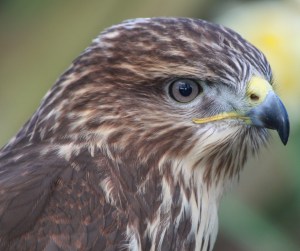
Statement expected from Environment Minister on shot buzzard

Following yesterday’s story on the shot buzzard found dead in the Scottish Borders, we tweeted Environment Minister Paul Wheelhouse and asked him this:

@PaulWheelhouse Minister, are you now ready to take the action you promised? Another raptor crime on your watch.

To his credit, he responded this morning:

@RaptorPersScot I will say more when I have a full briefing but my first reaction is instinctive – I’m both disgusted and very much angered.

We wait with interest…

Police appeal 3 weeks after shot buzzard found dead in Borders

Police in the Scottish Borders are appealing for information after a shot buzzard was found dead close to St Mary’s Loch.

The dead bird was found by a dog walker on 6th March and it’s believed to have been there for about three days.

BBC news article here

It’s good to see the police launch an appeal but why did it take three weeks? Good to see also that this incident features on their own website (here). Perhaps this is the influence of the new wildlife crime officer in this region, PC Hannah Medley? Good for her if it is.

Anyone with info about this incident, please call the police on 101.

Oh, and Environment Minister Paul Wheelhouse, we’re hope you’re watching. Here’s ANOTHER crime against birds of prey in Scotland – and another one that won’t show up on the annual poisoning maps. How many more incidents are needed before you take the action you’ve promised us you’ll take?

Pets killed by the bird poisoners

poisonThere’s an article in the Express today talking about pets that have been poisoned by gamekeepers (see here). According to the article, ‘new figures show 60 dogs and 28 cats have been poisoned in the last decade’. Unfortunately, the article doesn’t tell us who published these ‘new figures’ or on what evidence they’re based.

We do know that pets are poisoned, snared, shot etc by gamekeepers because we’ve read the stories in the newspapers and seen the toxicology reports –  we just aren’t sure about the accuracy of these ‘new figures’.

The article goes on to say, ‘over the past decade more than 250 protected birds such as golden and white-tailed eagles, peregrine falcons, red kites and buzzards have died and there are fears a child could fall victim if they touch the bait’. This figure, we know, is definitely an underestimate of the number of raptors poisoned over the last decade.

The main thrust of the article is based around last week’s news that the UK government has decided to ignore the Environmental Audit Committee’s recommendations for addressing wildlife crime (see here) and how the Opposition are now slagging them off for it.

If you think gamekeepers should be held accountable for what they get up, please sign this e-petition: HERE.

2013 wildlife crime conference: Nevin Hunter, NWCU

NWCUThis is the second blog in our series from the 2013 Scottish Police Wildlife Crime Conference. Here is what Nevin Hunter, Head of the National Wildlife Crime Unit had to say:

“I’m going to talk about the National Wildlife Crime Unit, erm, and we’ll talk a bit about, I know many of you will know who we are, what we do, but there’ll be people who won’t be familiar necessarily about what we are, so we’ll talk about this.

We are a police unit, we cover Scotland, England, Wales and Northern Ireland, we have funding for another year now until April next year and you can see there the various funding streams that we get, erm, it is quite convoluted our funding which does mean I spend quite a bit of my time as did my predecessors, er, securing funding but we’re, we’re there for another year, er, there to support you, we, we’re a unit to support law enforcement across the UK, er, and we’ve now got 12 members of staff. Five of those are, er, new members, erm, part-time but we’ve got four intelligence officers, part-time intelligence officers, already you’ve heard mention of Alan Stewart, so Alan’s come to, to bring us his expertise as well from his wildlife crime background, er, as well as, er, being trained as an intelligence officer, erm, we’ve also got amongst those an internet intelligence officer for the first time, funded by DEFRA for 18 months, that’s gonna allow us to support, er, investigations, er, relating to internet and internet crime and we’ve also been joined by an analyst, erm, from, erm, Miranda from Strathclyde on secondment to us, erm, and it’s great to report that in addition to having, er, Miranda, who’s taken over from, er, Sarah who left us over a year ago, er, today marks the return Sue Eddy, er, back to the team, er, having been away, er, on maternity leave and that really does bring us back up to full strength now. But we are a free resource, there to support the law enforcement agencies.

Ok, so our role is, some of you here have heard this before, we’re there to provide intelligence, analysis and operational support to deliver the UK wildlife crime priorities. We’re there to try and provide coordination at local, regional, national and international levels and from a communication point of view we’re there to provide a direct link to all UK law enforcement agencies and that includes people like the Border Force, UK Border Agency, Serious and Organised Crime Agency, er, and south of the border National Crime Agency as that develops.

In terms of actual responsibilities, what we’re there to do, we’re there to support the UK government coordinating the international response to wildlife crime. And just to give you an example, er, I’m not going to steal any thunder but you can hear a bit later on about the unit’s involvement with Operation Prey which is an Interpol-led operation, erm, involving work that we’ve supported in Nepal.

Ok, we’re there to support the strategic and operational response to wildlife crime across the UK, on behalf of the UK, er, Chief Police Officers. Examples of that is we produce a, we’re now to produce again a UK tactical assessment, we produce strategic and tactical assessments, erm, for wildlife crime across the United Kingdom. And to give you an idea of, in terms of strategic way ahead of things that we’ve been involved with this last year, erm, I talked last year at this conference about us re-focusing on the UK wildlife crime priorities, er, we have a strategic review of the UK wildlife crime priorities, should have occurred in January this year but with various funding issues that’s now been put back to September, er, this year, so we’ll be looking at all those wildlife crime priorities. We’ve, we, we’ve reviewed how we deliver the national intelligence model processes, the, the focus in the past in the unit has been very much on trying to provide, er, a, a full picture but based around incidents, incident recording, and that’s caused us real problems and we, we’ve gone back to the core business of intelligence, dealing with intelligence and intelligence actions. Er, as head of unit, I said last year about wanting to drive deliveries and outcomes with the priority delivery groups, er, and we’re looking at, er, the work we’ve done of driving the consistency of approach across all of the priority delivery group areas. The Minister mentioned earlier on that the six priorities, you know, we’re trying to push ahead with those as much as we can in terms of consistency.

Ok, but we’re there also to support other types of criminal investigations across the UK and internationally and I’m just going to give one example. Erm, you know, you hear reference to wildlife crime but if you take wildlife out of it it’s still crime and to give an example of – the gentleman on the left-hand side there with the bird, er, he was prosecuted south of the border last year, er, during a series of investigations that we, we mounted on a link to an Interpol operation. Interesting he sold a bird, erm, to the gentleman on the bottom right-hand side there, erm, and during the course of that investigation we identified that that sale had occurred had been done through the use of a mobile phone. It was actually that use of that mobile phone that has now led to the, the gentleman on the bottom right-hand side now being linked and er, convicted of conspiracy to commit, er, multiple burglaries, erm, that was all found to result of intelligence submitted by wildlife crime officers, erm, linked to a mobile phone. That isn’t wildlife crime but it is crime, yeah? And it’s really important that people understand that’s a problem we’ve got as well.

Ok, we’re there also to support a network of police wildlife crime officers. Last year I talked about a black hole, erm, and that intelligence units from a policing point of view are often looked at as a black hole, that we got all of this information that comes in and actually people see very little that comes out from us, we’ve tried to turn that around over the last year.

Ok, so again last year, erm, in putting that in context, we talked about disrupting criminality, er, intelligence processing by NWCU increasing with new staff is aiding police officers so I’ve talked about the extra policing staff that we’ve got, er, we wanna make the NWCU relevant not only to police officers but to everybody else. Erm, we’re there to provide operational support, we’re a free resource available. Erm, and one of the things we put in place last year is, we talked about was, looking to do a weekly dissemination of key intelligence issues to police wildlife crime officers but when we reviewed that we actually looked at it, looked to get a, a fortnightly intelligence bulletin, er, and the 20th edition of that, er, actually circulated yesterday across the United Kingdom.

Ok, just to put it in context, the Minister mentioned earlier on about priorities and the areas we look at. Everything that we deal with now from the national intelligence model point of view is focused around three key areas: prevention, intelligence and enforcement, the ACC mentioned that as well. In terms of intelligence issues, er, Fresh Water Pearl Mussel is an example of something we’ve been involved with directly, er, many of you know Charlie Everitt has led on some of these issues and it’s about one of the issues that we have with Fresh Water Pearl Mussel is we have a gap, how do we close that gap, erm, and put into place an operation that involved visits to, er, a number of jewellers across Scotland and, er, down south as well, trying to establish was there a trade whether illegal or legal trade of Fresh Water Pearl Mussels. You know, what is that gap, is there, is there something going on there that may be driving that? So they’re the sort of areas that we focused on to try and fill these gaps.

Matthew Gonshaw Ok we’ve got other intelligence requirements as well, er, we’ve been looking at, to give you an example of other work that’s moved on, er, the illegal taking of wild bird eggs is one of those intelligence requirements, not a priority area but it’s something that’s been sat there causing us concern, er, from the intelligence we’ve received, so we’re looking actually now to a revamp of operations, we’ve been looking at, erm, and even taking wild bird eggs, case such as Matthew Gonshaw has been discussed over the last, er, year or two at different conferences, er, of the serial egg collector being convicted in Scotland, we’ve identified er, from intelligence reports and in addition to getting egg collectors we’re also getting people involved increasingly in nest disturbances. Interestingly some of those who are involved in nest disturbances are also, erm, people that have been previously convicted of egg collecting, erm, so we’ve revamped Operation Easter and Alan, Alan who led on that initially in his Tayside days is now going to be leading on that within the unit for us on Operation Easter.

We looked at considering other platforms, er, for the police as well particularly and we’ve put together, erm, through a number of different people, erm, a, a wildlife crime messaging process on the Police On-Line Knowledge Area commonly called POLKA and it’s about sharing knowledge and information, erm, we’ve now got 302 members of, er, wildlife crime community, er, we’ve got 72 active discussions that are on-going at the moment.

So going forward into 2014 2013, er, through the rest of the year, what are the challenges that we’ve got. We wanna look at, erm, better representation on, on POLKA, particularly er, in Scotland. We’ve got very good representation south of the border, we don’t have as many people as we’ll really like, er, up in Scotland and it’s available POLKA, although it’s called the Police On-Line Knowledge Area it is actually available to people who are on pnn email system but it’s also available to people in the gsi, that’s government agencies as well. Erm, particularly south of the border we do have a, a number of, of individuals from organisations like, er, Natural England, er, who signed up to that and actually take active part on and raise discussions as well there. It’s not available, POLKA is not available to non-government organisations but there is no reason why anybody from a non-governmental organisation if they want us to raise a query, er, to try and find out, er, issues, to try and gauge the views of people on there put it out to the full wildlife crime community.

We’re hoping over the next year to develop a partnership bulletin. I’ve mentioned the two-weekly intelligence bulletin that are prepared for police officers and law enforcement agencies, we’re hoping to produce that as a partnership bulletin that will highlight key issues and look for support there. We haven’t yet decided how we’re actually going to deliver that, er, but it may well be that we can do it from our live website, we’re in the process at the moment of actually developing, many of you will have seen it, we’ve had a website that’s sat there for a lengthy period of time, we’re trying to push ahead with that now and hopefully over the next month we’ll actually start to go live with the full new updated website.

Ok in terms of the enforcement challenges, you know, it’s really important, you’ve heard talk already, erm, from the Minister and, er, er, from the Assistant Chief Constable, you know, we’ve got challenges. We wanna be looking at opportunities, you know, our role from a policing point of view is that we have to support the majority who undertake lawful activities, we’ve gotta target the minority of people who undermine the, those operating at a local, national, er, serious and organised, international levels as well.

And a final idea I’ve just put on there, this is an issue particularly south of the border, erm, the badger cull, yeah? We, we, we need to be aware, erm, you know, we look at that, what’s going on south of the border, whether there be any type of implications of that, there are, there are political challenges with those but our role from the policing point of view obviously is to investigate crime and to support officers involved in that.

Ok, one of our big areas is absolutely key areas that we need to, need to address is bird of prey persecution. Key that we’ve gotta work with partners on all sides shooting and conservation organisations, you know, it is the role of the police to investigate wildlife crime and the NWCU and PWCOs work to very strict protocols relating to different issues such as surveillance, investigation, interviewing people, er, handling of productions, disclosure of evidence and with all of these as with any of the other priority areas intelligence is absolutely key. I’ve mentioned it throughout my talk, it’s absolutely key for us, it’s not about intelligence directly to the unit, it’s about getting it into your local wildlife crime officers who will then feed it to us. It’s a massive opportunities and massive advantages in, in Scotland, you’ve got a, the police have got a single intelligence data base, we don’t have that south of the border, yeah? You’ve got opportunities there for the intelligence does get fed in for wildlife crime, we’ll get to know about it and be able to work with the wildlife crime officers to, to progress that.

What we aim to provide is, provide support to Police Scotland in the new structures that the ACC has, has mentioned. Again, you’ve got massive opportunities and I see that over the next year that you’ve got real opportunities to work more closely. The unit is there not just for Charlie Everitt to provide support, er, you’ve got the whole backroom staff to provide support as and when we need to, you know, we can bring the resources from south of the border up to support investigations and, er, up here as well. We can provide that, that support to the new, er, new force.

Other things we’re thinking about is, you know, who are the top wildlife criminals in Scotland? From a policing point of view we often look at it, erm, general policing, you know, we have what we call target criminals, we have key people but who are the people that we need to be looking at in Scotland? We need to identify those people. We’ll support actions to target them, it’s not just about intelligence but taking intelligence, analyse it, we wanna look at how we can put disruption methods in, into place, erm, enforcement and then as the Minister said earlier on, we need to, we need to take successful prosecutions and support those.

What we need from everybody here is, is early contact. Intelligence from partners. As I said, that intelligence needs to come through police wildlife crime officers, feed it in in whichever way you can, er, that’ll get to us we will then work closely with forces, with the new, er, teams that are gonna be in place, erm, early contact from PWCOs as well, those of you that are out there that haven’t perhaps, er, dealt with, with me, investigations, you know, we are a free resource, we’re there to support you, erm, please I’ll reiterate it time and time again that we’ve found over the last year that officers get involved in enquiries that, erm, they don’t have experience, that they are not competent in and can make some poor judgements. What we aim to do is not, we don’t come and take over cases, we’re there to provide you with providing support to you from the earliest point, that’ll be not just from the first point of intelligence but it’ll be to take you right through the case. Once you’ve been through a case you understand how we work, you come back, people come back time and again to work with us.

Ok, as I said, my name is Nevin Hunter, I’ve just covered some of the key things that we’ve dealt with over the last year and, er, also where we’re looking to go ahead now. The role that we play is to supply support to the police, erm, it’s all about that provision of support from all the different areas that I’ve talked about. But wherever we go to with any type of investigation you can’t go anywhere thereafter without taking a case, er, successfully through court, and what I’m gonna hand on to now, erm, is to, to Craig Harris, erm, to, er, discuss issues in terms of the, er, the role that the Crown Office, er, have played over the last year, er, and it’s absolutely key to our role, the National Wildlife Crime Unit so for police officers to take cases forward successfully. Thank you”.

Comment:

Another barely coherent presentation (for the second year running). You might forgive him that if you could see that the NWCU are delivering on tackling raptor persecution, but as far as we can tell, they’re still not. We can’t comment on whether they’re delivering on other types of wildlife crime because that’s not our area of expertise, but casual conversations with representatives of other specialist wildlife interest groups suggests that at least some of them are similarly dissatisfied. 

He asks who are the top wildlife criminals in Scotland? We reckon most regular readers of this blog would be able to answer that. Why doesn’t he already know?

He talks about re-launching Operation Easter (aimed at catching egg collectors) but openly admits this is not one of the six national wildlife crime priorities. Why re-launch it then? Yes, illegal egg-collecting is a serious wildlife crime and there is the odd high-profile case, but we all know that ever since custodial sentences were introduced several years ago, this particular crime has dropped significantly. The NWCU said themselves that last year the known number of egg-thieves had dropped to ‘an all-time low’ (see here). Could it be that getting convictions for this crime (which is a whole lot easier than getting a conviction for poisoning/shooting/trapping a raptor) reflects well on the NWCU in terms of annual success rates? Fine, catch the egg collectors and lock them up, they deserve it, but don’t do it at the expense of tackling the national priorities, notably the raptor persecutors.

Reading between the lines, we think this presentation subtly aims to marginalise the work of the RSPB and SSPCA in terms of addressing raptor persecution. There is much emphasis placed on reporting incidents to police wildlife crime officers (who he then slags off for being inexperienced and incompetent), but no mention of the ability and experience of these two non-police, non-governmental organisations, one of whom holds the only long-term database of raptor persecution incidents in the country and the other has its own law enforcement capabilities. We’ve blogged about this before when the new PAW Scotland raptor crime reporting protocols were published (see here). Many of us are no longer prepared to report incidents to the police, simply because we’ve had too many experiences of the report being ignored or mis-handled. The discovery of these crimes is a rare event, given the remoteness of most of the crime locations, so we simply cannot afford to have the police cock up the investigation. Yes, there are some excellent police wildlife crime officers out there, some of whom we’ve blogged about on here, but there are also some bloody crap ones. Unless you know who’s who, you run the risk that absolutely nothing will happen as a result of your report. At least if you report it to the RSPB and SSPCA you can be fairly confident that they’ll look into it, and, if necessary, bring in the police. Importantly, they’ll also chase up the police if they find that the investigation isn’t progressing as it should.

There’s nothing we’d like more than to be able to report NWCU successes in the raptor persecution field, but, as the recent Deeside golden eagle ‘investigation’ showed, we are still a long way from being able to do that.

Red kite poisoned, 20 months after its mother suffered the same fate

Poisoned kite photo Marc RuddockA young red kite has been poisoned in County Wicklow in the Republic of Ireland, 20 months after its mother was killed the same way.

The young bird was found in January and tests have confirmed it had been poisoned with both Carbofuran and Alphacloralose – the first time both chemicals have been found in an Irish kite. It’s mother was poisoned with Alphachloralose in December 2011.

The Golden Eagle Trust (the group behind the reintroduction of golden eagles, white-tailed eagles and red kites in the Irish Republic) described the poisoning of two generations of a red kite family as “totally devastating”.

The latest bird (Blue White 21) is the first of 21 Irish-born kites to be poisoned. It was found by a member of the public close to the golf club in the town. The bird was still alive but died shortly afterwards.

News article from Golden Eagle Trust here

News article in the Irish Independent here

2013 wildlife crime conference: Paul Wheelhouse, Environment minister

The 2013 Scottish Police Wildlife Crime conference took place last Thursday (14th March). Many of this year’s presentations were once again directly relevant to raptor persecution and we’ll be commenting on these in due course.

To start off this year’s blog series, here are excerpts from the Environment Minister’s speech. He started by thanking the organisers etc before moving onto the meaty stuff:

“We’re now more than a year on since the passing of the Wildlife & Natural Environment (Scotland) Act 2011 and my predecessor, Stewart Stevenson, stood here last year and, amongst other things, talked about the new vicarious liability provisions. Now, we’ve not seen any prosecutions under the vicarious liability yet; I think it remains very likely that circumstances will arise in the future when these provisions can be brought into play and we will all be very interested to see how they work out in court.

In the meantime though, I am certain that whilst persecution of wild birds does exist in parts of our countryside, this change in the law has already had a deterrent effect as responsible land managers take a close look at management practices and training for employees and contractors. As Stewart said last year, we’ve never been out to get prosecutions; we just want to see an end to these criminal acts. However, if a conviction is what it takes to make those breaking the law stop, take notice and address their behaviour, then so be it. I shall be keeping an eye on this particular area with interest. A true test of course may be when we see raptors in all areas that should be their natural habitat and a disappearance of these ‘not spots’.

So what’s coming up in 2013? Legislative changes my team of policy officials have been working on which are of relevance to the conference include provisions relating to snaring, and invasive non-native species, and you will be hearing more from Catherine Murdoch about non-native species later today, and Kenny Wilmott from BASC will be talking about the importance of keeping up to date in relation to the use of snares and traps.

2013 will also see the publication of the first government report into wildlife crime. Policy officials are currently working on this and I’m sure it will make for an interesting read and it will no doubt provide a focal point to drive forward the debate on what is a very important topic. What we are looking to achieve with this report is an idea of what wildlife crime in Scotland looks like overall, the big picture if you will. This will not be easy because it’s the first report, there’ll be nothing to compare it with. However, like poisoning maps, once we have a few reports published we will hopefully start to see trends and pictures emerge. It will also be a challenge to compare data from all of the different agencies such as the police, National Wildlife Crime Unit, the Crown Office and the Scottish Government Justice Department. However challenging that may be, it is an extremely worthwhile cause. And unfortunately crimes and any resulting prosecutions don’t fall neatly into calendar years. They also are not always recorded in a manner which allows for obvious interpretation of the charges. So for example, where there is more than one charge, which so often occurs in the lesser charges of wildlife crimes, then the main charge is usually what appears in the records. We’ll therefore be looking to present the data as simply as possible, but with a view to ensuring any comparisons are meaningful, if indeed that is possible. And I’m looking forward to the publication of this report to act as a standard we can use going forward. I will leave the experts to talk to you about the legislative changes across the rest of today, however should you fancy a chat with a policy official over a sausage roll at lunch, please feel free to collar any one of them.

I’d like now to turn to the annual raptor poisoning maps which were published this morning. These maps generate significant media interest and many of you will already have seen the figures. There has been a major drop in confirmed incident numbers recorded for 2012 and this must be welcomed in the warmest possible terms. Whilst any poisoning is unacceptable, the fact that just three birds were confirmed poisoned in 2012 – a golden eagle and two buzzards – must represent progress. This is the second significant drop in two years and we hope it is evidence of the beginning of the end of poisoning of birds of prey in Scotland. We are now, however, facing a critical moment with the maps. The purpose of the maps is to highlight problem areas with an agreed and confirmed set of data, and to build the partnership working within PAW. So, so far we’ve made good progress on those objectives but we cannot now afford to see things slipping back. So let me make it abundantly clear: poisoning cannot be replaced with other types of persecution, and whilst it’s not appropriate for me to elaborate, I was heartened to hear that the police investigation into the 2012 poisoning case for a buzzard has made progress. And it does sicken me that unfortunately, once again, a bird has died as a result of Carbofuran poisoning, but I very much hope to see a positive outcome in that particular case. If we do continue to see a downward trend with the poisoning maps, but there is evidence perhaps of other types of persecution taking its place, as I’ve already said on the record, I will have no hesitation nor indeed very little option but to consider what other measures might be necessary.

optableLast year we lost two golden eagles – one was poisoned, another was found dead in suspicious circumstances, whilst a third which was shot is thankfully in recovery with the SSPCA, and I must thank Chief Superintendant Mike Flynn and his colleagues for their excellent efforts in caring for the eagle so far and I look forward to one day seeing that particular victim of a crime return to good health. These golden eagle incidents generated a huge amount of media and public interest and rightly so, as our golden eagles are part of what makes up our national identity. As a partnership we share a duty of care to work hard to stop wildlife crime and as I stated earlier, we will know if we’ve achieved success when we see the raptors return to areas where they are currently absent. And we must also recognise that this will not happen overnight.

Keeping on the raptor theme, the Raptor Persecution Priority Delivery Group, which is a key PAW Scotland group, has been continuing to look at a number of initiatives, latest being a hen harrier action plan. The members of this group have come up with a strategy to look at the status of this species across Scotland and see what can be done to help it recover. Whilst the plan is still being finalised I wanted to draw your attention to it and highlight what work is being done in the background. This is an exciting piece of work and I hope it will build on the partnership working approach by involving all those on the ground in monitoring and reporting on nesting birds. If I’m standing here this time next year, I hope that I’ll be able to give you an update as to what’s been accomplished and that genuine progress is being observed”.

The Minister then went on to discuss other areas of wildlife crime, police reform in Scotland and the Year of Natural Scotland. He ended by thanking everyone for their work and particularly on behalf of “the innocent victims of wildlife crime who clearly cannot speak for themselves”.

Comment:

It’s tempting to make comparisons between Scotland’s Environment Minister and his UK equivalent. In light of the UK government’s appalling recent attitude towards dealing with wildlife crime, Wheelhouse looks like an environmental god. He isn’t that, but he is certainly a good way further ahead than his contemporaries south of the border. But although comparisons are useful, it’s also important to assess his presentation just within the context of Scottish wildlife crime, and particularly within the field of raptor persecution.

In our opinion, this presentation drew the battle line. Wheelhouse is exceptionally well-informed on the persecution issue (especially for someone who has only been in post for six months), he understands the important details of how these crimes are reported (or not reported) and he seems genuinely determined that raptor persecution will not be allowed to continue on his watch.

Wheelhouse is clearly not fooled by the superficial short-term results of the poisoning maps. He understands that other persecution methods are being used to achieve the same effect. He understands that despite vicarious liability and other measures, persecution will undoubtedly continue. He understands that the only true measure of success will be the return of raptors into areas where currently they are conspicuously absent. He understands the shambolic state of raptor crime reporting and the limitations of the data in their current format. He understands the fury and frustration we all experience when we hear of yet another persecuted bird of prey and he seems to understand that our patience has run out – we simply will not tolerate this disgraceful practice any longer.

Of course, it’s easy to give a rousing speech and to say the things the audience wants to hear. It’s fair to say that most of us have become jaded by the empty rhetoric that’s been heaped on us decade after decade while the raptor killing continues right under our noses. However, to be fair to Wheelhouse, he personally is not responsible for all those previous platitudes and promises. Is he going to be different and stick by his commitment to stamp out persecution? More than with any other Environment Minister of recent years, there is a sense that something is going to happen this time. As always though, it will be the actions that follow the words that we’ll be taking the most interest in. The battle line has most definitely been drawn and now it’s a question of watching and waiting. The next persecution incident is just around the corner…

No need to criminalise possession of Carbofuran, reckons UK govt

EACLast October the cross-party Environmental Audit Committee recommended a range of measures to help tackle wildlife crime in the UK (excluding Scotland) following an extensive public inquiry into the scale of wildlife crime (see here, here, here, here, here for previous blog entries). The recommended measures included:

  • Criminalising the ‘possession’ — not just the use — of the poison Carbofuran, to make it easier to secure bird poisoning convictions;
  • Introducing an offence of vicarious liability to make landowners responsible for wildlife crimes on their land;
  • Providing long-term Home Office and Defra funding to the National Wildlife Crime Unit, and
  • Tightening up the recording of wildlife crime data to help keep track and tackle trends in wildlife crime.

Today, the Government has published its response to the EAC report and has rejected calls from MPs to criminalise possession of Carbofuran and has refused to give funding certainty for the National Wildlife Crime Unit.

Chair of the Environmental Audit Committee, Joan Walley MP, said:

“The Government has missed an opportunity to take two simple measures to protect important wildlife threatened by poachers and criminals in the UK.

It has failed to follow Scotland’s lead in criminalising possession of carbofuran – the main poison used to kill birds of prey. And it has refused to provide the long-term financial certainty that the National Wildlife Crime Unit needs, only making money available for the next 12 months.

It’s good news that the Government will watch how well the ‘vicarious liability’ law works in Scotland, making landowners responsible for what happens on their estates. But the Government should also look at how well the tougher law in Scotland acts as a deterrent, not simply how many convictions there are there.”

Here are the government’s specific responses on the two measures directly relating to raptor persecution:

Recommended measure: To discharge its obligations under the EC Birds Directive, to demonstrate its commitment to addressing raptor persecution and to send a clear signal that it regards poisoning birds of prey as wholly unacceptable, we recommend that the Government immediately introduces an Order under Section 43 of the Natural Environment and Rural Communities Act 2006 proscribing possession of carbofuran and other similar substances in England and Wales.

Government’s response: The Government is firmly committed to addressing raptor persecution in England and Wales and this is one of the UK’s wildlife crime priorities (with a focus on hen harrier, goshawk, golden eagle, white-tailed eagle, red kite and peregrine). There is a robust legal framework for protecting birds of prey with penalties which can include imprisonment for offenders.

Approvals for pesticide products containing carbofuran were revoked in 2001; this means that the advertisement, sale, supply, storage or use of products containing carbofuran is already a criminal offence under existing UK pesticide legislation. This offence carries, on conviction, an unlimited fine.

Similar restrictions apply to all other pesticides as the basis of UK and EU pesticide legislation is that no pesticide may be sold, stored or used unless it is first approved. All sale, storage and use of approved pesticides are subject to strict legislative control and are also subject to a code of practice3  as published by Defra.

Additionally the use of any poisonous substance to kill or take wild birds is already an offence under section 5 of the Wildlife and Countryside Act 1981. The laws surrounding the possession of pesticides, such as carbofuran, which are harmful to wildlife, have been considered, and the conclusion is that there are alternative ways to handle the issue other than introducing an Order under s.43 of the Natural Environment and Rural Communities Act 2006. These include the existing powers under UK pesticide legislation (the Plant Protection Products Regulations 2011 and the Plant Protection Products (Sustainable Use) Regulations 2012), or by encouraging participation in amnesty initiatives, such as the Home Office’s pesticide amnesty, which have already been run very successfully.

 It is difficult to see what more the Government could do that could make it any worse for someone caught using or possessing carbofuran or other similar pesticides.

Recommended measure: Given the scale of ongoing persecution of birds of prey, the current law appears to carry insufficient deterrent weight. We recommend that the Government evaluates the effect of the introduction of an offence of vicarious liability in relation to raptor persecution in Scotland and considers introducing a similar offence in England and Wales in that light. We expect the Government to report to us, or otherwise publish, the results of that review within the next 12 months.

Government’s response: There is already strong legal protection afforded to birds of prey through the provisions of the Wildlife and Countryside Act 1981 where it is an offence to intentionally kill or injure any wild bird; take, damage or destroy the nest of any wild bird while that nest is in use or being built; or take or destroy an egg of any wild bird.

Some birds are further protected by their listing in Schedule 1 to the Act. It is an offence to intentionally or recklessly disturb them while they are building a nest, or are on, in, or near a nest containing eggs or their young. Native raptors are listed in the Schedule and so are afforded this additional protection.

The Scottish Government introduced the concept of vicarious liability for certain offences by an employee or agent through the Wildlife and Natural Environment Act (Scotland) 2011 which inserted a new section 18A into the Wildlife and Countryside Act 1981 (as it applies in Scotland). This provision came into force in January 2012 but it is early days, and as yet there have not been any convictions under the new provisions. While there are no plans to introduce similar vicarious liability offences in England, we will be looking closely at how the new offences in Scotland work in practice and once prosecutions begin to be brought forward it will be possible to start to assess the impact that the introduction of this legislation has made. It is important that such measures are able to deliver a real improvement in the enforcement of wildlife offences if they are to be considered in the shaping of our future wildlife crime policy in England and as yet it is not possible to assess the effect of these measures.

We are happy to review this as soon as suitable statistics are available.

To read all of the Government’s responses, read the report here.

Analysis of the SGA’s Deeside eagle report

Last month the SGA released a report into their ‘investigation’ into the death of the Deeside golden eagle (see here to read their report).

At the time we said we would comment on their report once we’d received responses to some pending Freedom of Information requests. We’re now in a position to comment.

So, the motivation for the SGA’s ‘investigation’ into the circumstances of this eagle’s death was because of what they perceived as “irregularities” in the media reports put out by the RSPB. Let’s have a look at those ‘irregularities’ in turn.

May2012 GE tayside grampianThe SGA don’t believe that the eagle was caught in an illegally-set trap because during their discussions with the estate’s staff, it was claimed they only ever use Mark 4 Fenn traps as opposed to Mark 6 Fenn traps (and of course statements made by those involved with grouse moor management should always be believed). The SGA say the Mark 4 Fenn trap is too weak to smash the legs of a golden eagle and it would be impossible for an eagle to get both feet caught inside the trap at the same time. However, if you read the RSPB’s original media statement about this incident (released 24th September 2012 – here) nowhere do they mention a Fenn trap. All they mention is a “spring type trap”, which covers a wide array of different traps, both legal and illegal, that could have caused the injuries sustained by that eagle. Indeed, independent veterinary pathology experts at the Scottish Agricultural College laboratory concluded that the two broken legs sustained by this eagle “could be consistent with an injury caused by a spring type trap”. It’s up to the reader to decide whether the statements made by the estate’s staff and the SGA are more authoritative than those of the independent veterinary pathologist experts at the SAC lab.

The SGA say they visited the precise location of the ‘alleged’ trapping on the estate. They say, “Close by, on one side, was a large multi-catch crow cage. On the other was a 7-8 foot deer fence”. This is an interesting interpretation of what “close by” means. We understand that the deer fence is actually at least 80m away from the location where the bird was static for 15 hours.

The SGA say that the eagle could have broken both its legs by crashing into the fence at a speed that could have been in excess of 50mph (according to their falconer friend). However, the post mortem report clearly states that the eagle’s injuries could be consistent with being caught in a spring type trap, not crashing into a static object at high speed. In the event of crashing into the fence with an estimated speed in excess of 50mph, you might expect injuries to the feet and to the pelvis, as a bare minimum. The post mortem report documented two broken legs as the bird’s only injuries. It’s up to the reader to decide whether the statement of an un-named falconer with an unknown level of ‘expertise’ holds more authority than the statements of the independent veterinary pathologist experts at the SAC lab.

The SGA say that after hitting the fence the eagle “would then have undoubtedly tried to regain flight. This is consistent with the GPS signals which we were shown by the RSPB, which appeared to show variations in the readings. The readings do not show that the bird was “static” for 15 hours”. It seems that the SGA have a limited understanding of how to interpret GPS sat tag signals. The variations in the readings are entirely within the +/- 18m variation quoted by the manufacturer (Microwave Telemetry). In other words, all of the signals received during the 15 hour period in question were within an 18m circle radius. To all intents and purposes the bird was “static”. It’s up to the reader to decide whether the SGA’s interpretation of the satellite data is more authoritative than those of the sat tag manufacturer or the experienced biologists tracking this eagle.

The SGA say, “The RSPB state that the eagle could no longer become airborne. We disagree, having witnessed on several occasions various bird species gaining flight with leg injuries”. But it wasn’t the RSPB who said that the eagle could no longer become airborne, it was the independent veterinary pathologists at the SAC, who said the injuries were so severe “they would prevent the bird from being able to take off”. If anyone has ever watched a golden eagle take off they will know that the bird bends its legs to push off from the ground/perch. Clearly, two broken legs would prevent this from happening. The SGA suggest that the bird could have used the “advantageous slope of the ground” to “get air below its wings”. Actually the area where this bird was static for 15 hours is relatively flat – not on the edge of a high cliff where an injured bird might be able to roll off and find a thermal uplift. So, imagine an eagle with two broken legs on the flat ground – it will be lying on its side, back or front – do you think it could get airborne? It’s up to the reader to decide whether the SGA’s explanation is more plausible than that of the independent veterinary pathologist experts at the SAC lab.

The SGA say that the eagle could have flown 15km in the dark, tried to land but crashed into the tree and fell to its final resting place underneath a tree branch. This crash would, according to them, explain the eagle feathers found between the road lay-by and the dead eagle. Unfortunately the post mortem report doesn’t show any evidence of the eagle having crashed into a dense conifer tree. It’s up to the reader to decide whether the opinion of the SGA is more authoritative than that of the independent veterinary pathologist experts at the SAC lab.

To conclude then, the SGA’s version of what happened to this eagle was that it died as a result of a terrible accident. However, they haven’t been able to provide any convincing evidence and what they propose happened is not supported by the evidence provided by the independent veterinary pathology experts.

The RSPB’s reaction to the SGA’s report included this statement:

This is a rather desperate statement from the SGA, which seemingly does more to reveal their nature as apologists for the worst types of wildlife crime, as they try to defend the indefensible. Indeed, it calls into question their very commitment to the aims and objectives of the partnership for Action Against Wildlife crime Scotland (PAWS)”.

It’s interesting (and obviously totally unrelated) to learn that in a recent meeting with the Environment Minister Paul Wheelhouse, the SGA were told very clearly that they would not be issued with licences to kill raptors for the foreseeable future due to the ongoing incidents of criminal raptor persecution. According to the police, the case of this particular eagle obviously falls within that category.  

Unfortunately we’ll probably never find out who was responsible for this eagle’s death. Had a full police search, under warrant, taken place then further supporting evidence might have been retrieved. As it stands, it appears that this supposedly ‘on-going investigation’ is as dead as the eagle.

This bird will simply join the long list of other dead or ‘missing’ eagles whose killers have never been brought to justice: 26 eagles in six years at our last count, including ‘Alma’ who was found poisoned in 2009 on, er, this estate.

Prison officer Liddell pleads guilty to egg trading

At long last the case against Inverness prison officer Keith Liddell has finished. Today he pleaded guilty to the majority of the charges against him connected to the possession and trading of wild birds’ eggs. He is due to be sentenced on 9 April.

This case has dragged on and on and on, no doubt at considerable expense. For previous blog entries about Liddell’s case see here, here, here, here, here, here, here, here.

Article on today’s guilty pleas in Highland News here

RSPB press release on today’s guilty pleas here

Well done to all involved, especially wildlife fiscal Kate Fleming.

Poisoning stats down, incredulity up

Poisoning 2008-2012The ‘official’ 2012 incidents of confirmed poisoned raptors in Scotland have just been published and show a marked decline in the number of poisoning incidents. According to the latest figures, the number of reported poisoned raptors fell from 16 in 2011 to three in 2012 (one golden eagle and two buzzards).

PAW Scotland press release here

BBC news article here

Are these figures an accurate reflection of what’s going on? We don’t think so. In fact we know they’re not. What the latest poisoning maps fail to show is the number of poisoned baits that were discovered in 2012, the number of other bird species that were poisoned in 2012, and the number of other animals that were poisoned in 2012. And obviously the maps don’t show the poisoning incidents that went undetected/unreported in 2012.

We know for certain that missing from this map is a poisoning incident recorded in the ‘Border’ region in May 2012. According to the published SASA statistics, a poisoned raven and crow were found, along with meat bait and two rabbit baits. This incident is listed as being subject to an ‘on-going police investigation’. Notably, this incident was not reported in the press. Why not? More importantly, why is this incident missing from this map? Why is the focus just on the number of confirmed poisoned raptors? Yes, the illegal poisoning of raptors is of huge concern, but it’s not just raptors that are victim to this barbaric practice. By excluding the discovery of poisoned baits and other types of poisoned species, the wider picture is not being shown. Why is that?

For example, we also know from the SASA stats that a horse and a dog were poisoned with Strychnine in January 2012, a cat was poisoned with Carbofuran and Isofenphos in March 2012, and another cat was poisoned with Carbofuran and Isofenphos in July 2012. None of these incidents appear on this map. There may well be others but the published SASA stats only go up to September 2012 – there’s the customary six-month delay in publishing more recent incidents. Obviously it’s not in the public interest to know where and when lethal poison is being laid out until many months after the event.

On a similar note, has anyone noticed the dot on the map in the Whithorn region (SW Scotland)? Could this possibly be the dead buzzard we blogged about last week (see here)? All we were told was that a man had been arrested following an investigation into a dead buzzard that had been found on the Glasserton Estate. Why didn’t the police press statement mention that the forensic tests confirmed it had been poisoned? Why are we not warned when potentially lethal poisoned baits are being placed out in areas where we might visit with our children and our pets? Why is it so difficult to tell the public what’s actually going on?

On a superficial level then, the latest figures suggest that all those people who’ve been busily poisoning our raptors for the last 100+ years have suddenly stopped. It’s highly implausible, but of course it is possible. Other possibile explanations include (a) the illegal poisoners have just got better at hiding the evidence; (b) they’ve switched to a new type of poison that isn’t currently being screened for in the SASA lab; (c) they’ve switched from poisoning as their method of choice to other methods that are less detectable, such as shooting and trapping.

Fortunately, the authorities are wise to point (c). Environment Minister Paul Wheelhouse said: “There has been real progress but we will not be complacent. I am determined to stamp out these practices once and for all and will remain vigilant to any change in approach being taken by those who seek to persecute raptors“. Of course, this statement is almost a carbon copy of statements made by previous Environment Ministers, going back several years, all of whom were ‘determined to stamp out illegal raptor persecution’ and all of whom failed. The current Minister has recently been presented with three perfect opportunities to make a stand: the dead golden eagle found on Deeside with two broken legs which is believed to have been caught in an illegal trap on an Angus grouse moor before being dumped further north away from the estate (we’ll be blogging more about this case in the next few days); the shot and critically injured golden eagle found on a grouse moor in Dumfries and Galloway; and the shot hen harrier that was found dead on another sporting estate in Grampian. It’ll be interesting to see how many more of these incidents he will tolerate before stronger sanctions are applied. Or, more to the point, how many more incidents we will allow him to tolerate.