Lincolnshire Police posted the following on social media yesterday:
Sadly the beautiful buzzard in the picture has died as a result of being shot.
The bird was found alive on Saturday 4 January at Grainthorpe and taken to the emergency vets where it was treated and later collected by Cleethorpes Wildlife Rescue. The buzzard didn’t survive it’s injuries. Crime ref 24*10683 refers.
If is an offence to kill or injure any wild bird. They are protected under the Wildlife and Countryside Act 1981. It is also an offence to interfere with nests, or remove any chicks or eggs.
DC Aaron Flint from our Rural Crime Action Team said: “I’d like to hear from anyone who has information about the shooting of birds in our county. Please don’t think it’s not worth reporting, it very much is and helps us to build a picture of this sort of crime.”
If you have any information that will help with this investigation or similar offences, please get in touch by emailing aaron.flint@lincs.police.uk.
Alternatively contact the independent charity Crimestoppers on 0800 555 111 or online at Crimestoppers-uk.org.
Press release from The National Parks & Wildlife Service (NPWS), 14 January 2025:
INVESTIGATION UNDERWAY FOLLOWING THE DEATH OF A WHITE-TAILED EAGLE IN COUNTY WESTMEATH
The National Parks and Wildlife Service (NPWS) appeal to the public for information.
The NPWS has launched an investigation following the recent shooting dead of a White-tailed Eagle beside Lough Owel, near Mullingar, Co. Westmeath and is appealing to the public for information.
The two-year old female eagle was part of the NPWS White-tailed Eagle Reintroduction Programme. She was released in 2022 on the Shannon Estuary. Investigating officers have established that the bird was shot, but, are awaiting further results of forensic analysis that may provide additional information.
The NPWS deplores the deliberate killing of rare and endangered species, and takes bird of prey persecutions extremely seriously.
NPWS is appealing for any information the public may have in relation to the incident.
As part of the reintroduction programme, White-tailed Eagle chicks are fitted with satellite tags to monitor their movement. Information from the satellite tag for the dead eagle indicates that she died sometime on Friday the 6th of December, the day before Storm Darragh, in the Ballynafid / Portnashangan area at Lough Owel.
Satellite information shows that she was present in the area over the previous couple of weeks having travelled widely across the country since her release in 2022. In early 2023, she left north Kerry, and spent time at various locations along the western seaboard. She also travelled to Donegal and spent a lot of time making trips over and back to north Antrim, Fermanagh, Cavan and other counties, including visiting Lough Ree in the north midlands. Lately she had come back to Westmeath where she moved between local lakes- Lough Owel, Lough Derravaragh and Lough Ennell.
Members of the public can contact the NPWS by emailing wildlifeenforcement@npws.gov.ie. All reports will be treated in the strictest of confidence.
ENDS
There is a further NWPS statement dated 15 January 2025:
MINISTER NOONAN APPEALS TO THE PUBLIC FOR INFORMATION FOLLOWING THE DEATH OF A WHITE-TAILED EAGLE AT LOUGH OWEL IN CO. WESTMEATH
“Like all who cherish our wildlife, I was devastated to hear of the recent shooting dead of a White-tailed Eagle beside Lough Owel, near Mullingar in Co. Westmeath. White Tailed Eagles are magnificent creatures; their presence are such good indicators of the health of our ecosystems and countryside and now part of our wider efforts to restore nature. It is an absolute deplorable act to kill such a rare and endangered species.
“This young female eagle was part of the very successful NPWS White Tailed Eagle Reintroduction Programme in partnership with Norway. I was honoured to be present at the release of these stunning creatures to the wild in my role as Minister of State for Nature and Heritage.
“After being released into the Shannon Estuary in 2022 she had peacefully settled into the Irish landscape travelling from north Kerry, spending time in Western Seaboard before travelling to Armagh, Fermanagh, Cavan and other counties, including visiting Lough Ree in the north midlands. Lately she had returned to Westmeath where she moved between local lakes- Lough Owel, Lough Derravaragh and Lough Ennell. Satellite tags fitted by NPWS indicate that she died on 6th December the day before Storm Darragh, in the Ballynafid/ Portnashangan area at Lough Owel.
“White Tailed Eagles are treasured by local communities and visitors to Ireland alike and any loss resonates throughout. I appeal to the public to come forward with any information that they may have in relation to this incident. I am assured that NPWS are undertaking a thorough investigation led by the Wildlife Crime Directorate with the support of An Garda Siochána and will, where possible, bring the perpetrators of this unacceptable crime to justice. Members of the public can contact the NPWS by emailing wildlifeenforcement@npws.gov.ie. All reports will be treated in the strictest of confidence“.
The Scottish Government has confirmed an outbreak of Highly Pathogenic Avian Influenza (HPAI, H5N1) near Kirriemuir, in Angus.
The infected premises were declared at 20.15hrs last night (10 Jan 2025) at Over Ascreavie House, Kingoldrum, Kirriemuir, DD8 5HA.
A 3km Protection Zone and a 10km Surveillance Zone around the infected premises is now in force, meaning various measures are now in place to restrict the spread of this highly contagious disease.
Here’s the official declaration and details of the restrictions in place:
This is the second outbreak of highly pathogenic bird flu in this area in recent years – last time the infected premises was a pheasant and duck-rearing game farm (see here).
This time the infected premises does not appear to be a commercial poultry or gamebird breeding facility – it’s an ordinary farmhouse with a very small hen house and locals tell me there is absolutely no gamebird breeding, rearing, releasing or shooting at these premises.
The restrictions in place in the Protection Zone and Surveillance Zone do not allow the release of any gamebirds, but given it’s almost the end of the shooting season for pheasant and RLPs (1st Feb) nobody should be releasing anymore at this time of year anyway, so no problems there.
However, the restrictions do not prevent gamebird shooting from taking place within the two zoned areas. I’m told that the area is infested with vast numbers of pheasants and red-legged partridges that have been released on shooting estates around Kirriemuir, and which roam around roads and the countryside unchecked.
If shooting now takes place inside a so-called protected zone, there’s a high likelihood that already-infected pheasants and partridges will be flying around the area even more as they’re chased towards the waiting guns, spreading a highly contagious disease to other wildlife. Then there’s the distribution and consumption of potentially-infected gamebird carcasses outside of the zoned areas…
In December 2024, long-delayed recommendations by the Health & Safety Executive (HSE) for restrictions to be placed on the use of lead ammunition in the UK were finally published.
Used shotgun cartridges. Photo by Ruth Tingay
A press release issued by the HSE at the time of publication stated that under the new proposals the use of lead shot for live quarry shooting and target shooting would be prohibited.
Dr Richard Daniels, HSE’s Director of Chemicals Regulation Division was quoted:
“Following a comprehensive analysis of the evidence, we propose new restrictions to protect wildlife, particularly wildfowl and birds of prey, from lead poisoning. They would prevent an estimated 7,000 tonnes of lead entering the environment each year.
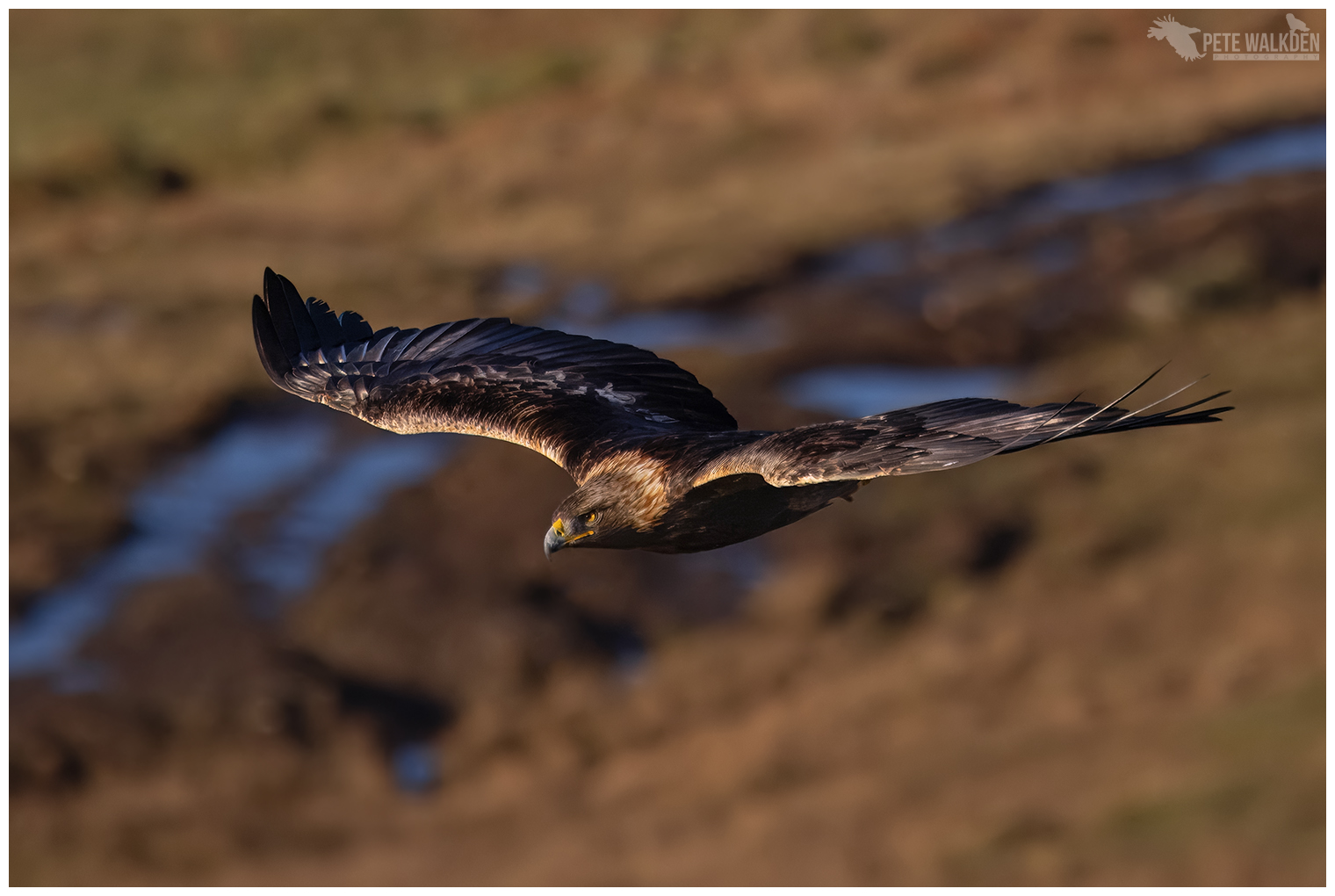
Golden eagles are particularly susceptible to lead poisoning. Photo by Pete Walkden
“The final agency opinion follows significant responses to two public consultations. We worked through nearly 11,000 responses – dwarfing the recent exercise in the EU.
“This detailed work, carried out under our UK REACH obligations, sets out the necessary balance we have struck to protect the environment and minimise disruption to those who shoot.
“Currently, the risks of lead shot to the wider environment are not adequately controlled. While there are already legally binding measures in place to protect Britain’s wildlife in designated wetlands from the use of lead shot, our analysis has demonstrated the need for further restrictions.
“People will still be able to continue to shoot, but we are proposing that for some outdoor uses in the future, alternatives to lead ammunition would need to be used.”
For those who want to read the detailed proposals, here’s the document:
This issue has dragged on for far too long in the UK (e.g. see here) but now the recommendations have been published, the Governments in England, Wales and Scotland have a limited time period to respond.
A consortium of wildlife and environmental organisations has now written an open letter to the Secretary of State at DEFRA and his colleagues in the devolved Governments, urging them to use this opportunity to finally bring an end to the use of toxic lead ammunition, removing this pollutant from our environment and protecting the health of wildlife and human populations alike. Here’s the letter:
The same campaigners have also set up an e-action that provides an opportunity for you to contact Minister Steve Reed MP at DEFRA, urging him to implement a swift and full ban on the use of lead ammunition. If you’d like to participate (it only takes a couple of minutes), please click here.
For blog readers in Scotland I’d encourage you to email Minister Gillian Martin MSP, the Acting Cabinet Secretary for Net Zero and Energy (contact details here).
For blog readers in Wales, I’d encourage you to email Minister Huw Irranca-Davies MS, Cabinet Secretary for Climate Change and Rural Affairs (and also Deputy First Minister), whose contact details are here.
Don’t be under any illusion that the shooting industry will be rolling over and taking this lying down. They won’t. They’ll be lobbying hard to introduce further delays and to minimise the impacts of the proposed restrictions. It’s what they’ve been doing for years (e.g. here), whilst simultaneously claiming to be undertaking a five-year so-called ‘voluntary transition’ to using non-lead ammunition but failing miserably (see here), and failing to comply with current regulations on using lead ammunition in sensitive environments in England (here) and Scotland (here).
It’s important that Ministers hear from a wider section of society than those with vested interests in maintaining the status quo. Please do make use of the e-action and/or email Ministers in Scotland and Wales. For blog readers with a special interest in birds of prey, this article and the linked scientific paper from researchers at the University of Cambridge should provide all the motivation you need.
To make sure the DEFRA Secretary of State meets the legal requirements for responding to the HSE recommendations within three months of receiving them, lawyers representing conservation campaign group Wild Justice have written to him with the intention of holding him to that deadline. You can read the letter here.
UPDATE 18 March 2025: UK Governments miss deadline for responding to recommendations for restrictions on use of toxic lead ammunition (here)
Last week I wrote a blog about three separate proposals to release White-tailed Eagles in Cumbria, Wales, Severn Estuary and Exmoor National Park in a strategic attempt to bolster and connect the current populations in Scotland, Ireland, Northern Ireland and southern England (see here).
A journalist from The Times has picked up on that blog and an article was published yesterday in TheSunday Times featuring quotes from the National Farmers Union (NFU), who, predictably, do not support the proposals.
The article is behind a paywall so I’ve reproduced it below:
The white-tailed eagle was persecuted to extinction in the British Isles by gamekeepers, farmers and collectors over several centuries, culminating in the last known wild bird being shot dead in 1918.
But now the nation’s largest bird of prey could once again become a common sight thanks to a new set of rewilding schemes across England and Wales.
The birds, also known as sea eagles, were first reintroduced to Scotland in the Seventies by conservationists, and a similar effort was started on the Isle of Wight in 2019. Until then, the last recorded breeding pair in southern England was in 1780.
Now these small populations are set to be bolstered and connected by a growing number of separate reintroduction projects planned in Cumbria, Wales, the Severn Estuary and Exmoor.
But the reintroduction of the birds, which are legally protected under the Wildlife and Countryside Act 1981, has caused a backlash from farming groups and landowners, who claim they could harm their livestock, primarily lambs, and the environmental schemes they already carrying out.
They also want compensation schemes in place should their livestock start falling prey to the fourth largest eagle in the world.
The Welsh farmers union told The Times it does not support efforts to reintroduce the white-tailed eagle, known as the “flying barn door” thanks to its two-metre wingspan.
Hedd Pugh, the NFU Cymru rural affairs board chairman, said there are “no longer any truly wild areas in Wales”, with all the countryside being “a managed landscape — created, shaped and maintained by farmers over generations”.
“There is a real concern that any reintroduction of this species would cause risk to animal health and welfare and have an impact on livestock production, with newborn lambs particularly at risk,” he said.
“There is also the unknown effect the white-tailed eagle could have on other birds, wildlife and protected species.”
Pugh said that NFU Cymru believes species recovery efforts “should firstly focus on supporting species that are already present in Wales before reintroduction is considered.”
After their reintroduction in Scotland 50 years ago, there are now there are an estimated 150 breeding pairs in the country.
Juvenile white-tailed sea eagles can roam 200km beyond their nest site and when settled, the its hunting territory can be up to 70 sq km.
The eagle is found in dozens of European countries, with no substantial recorded problems relating to livestock attacks, but farmers in Scotland have consistently said their lambs are being killed by the reintroduced species.
The Scottish government launched its Sea Eagle Management Scheme in 2015, which gives money to affected farmers, in acknowledgment that lambs are being taken.
A research paper published at the end of 2023, analysing more than 11,000 food fragments found in sea eagle nests, found lamb accounted for 6 per cent of prey items. However, some nests in the study contained more than 30 per cent lamb remains.
Victoria Vyvyan, the president of the Country Land and Business Association, acknowledged reintroducing species can be beneficial but said “it must be backed by clear research and plans to manage risks like predation, otherwise it risks livestock and livelihoods”.
“It’s crucial to listen to rural communities, address their concerns, and offer fair compensation for any losses,” she said. “Conservation must protect the environment without harming those who rely on it for a living.”
The NFU said reintroductions can play a role in delivering nature recovery but highlighted “concerns about the adverse impacts a reintroduction could have”.
Richard Bramley, NFU environment forum chair, has called on the government to develop and implement a framework “which outlines the process it will follow when managing species reintroductions in England to help minimise impact, risks and any unintended consequences”.
“We also ask that where it is shown there will be an impact that this is properly funded,” he said.
In 2019, Natural England granted a licence to release about 60 birds on the Isle of Wight as part of a reintroduction project led by Forestry England and the Roy Dennis Wildlife Foundation.
The foundation is now considering releasing up to 20 eagles in Exmoor national park over a three year period. The park said it has been doing “a lot of liaison with local landowners and shoots regarding white-tailed eagles already visiting Exmoor”.
The Eagle Reintroduction Wales project is also looking into the feasibility of bringing the eagle back to southeast Wales and the Severn Estuary.
The Cumbrian white-tailed eagle project is exploring the possibility of bringing the birds back to the southern part of Cumbria. The University of Cumbria, Cumbria Wildlife Trust, the Lifescape Project, RSPB, the Wildland Research Institute and the Lake District national park authority want to see their return, after the last recorded white-tailed eagle breeding attempt was near Haweswater in 1787.
Research has already been undertaken to assess prey availability, habitat suitability and a population viability assessment has been completed.
The team is now carrying out a social feasibility study and has launched a questionnaire to evaluate the public’s attitudes and views on a potential reintroduction.
ENDS
I suppose I shouldn’t be surprised that this newspaper only published quotes from those who hold what seem to be ‘anti-eagle’ views – where are the quotes from conservationists with opposing views, or farmers from southern England who have direct experience with the reintroduced WTEs from the Isle of Wight?
And although I’m pleased that journalists from The Times are using this blog as a material source, I’m less impressed that large chunks of my research/writing have been plagiarised and passed off as the journalist’s own work. It’s not a difficult or onerous task to give credit to the original source, e.g. with a simple link.
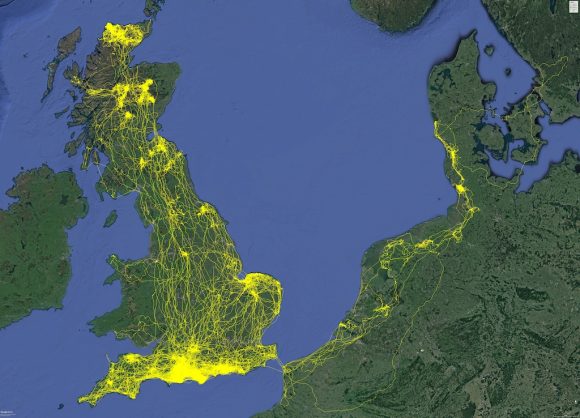
As for the concerns raised by the NFU and Country Land & Business Association about the proposed releases of White-tailed Eagles – a quick look again at that map showing the widespread dispersal of satellite-tracked WTEs that were released on the Isle of Wight indicates that the eagles are on their way, with or without more releases, and in some cases are already there (Exmoor National Park), although not yet breeding as far as I’m aware.
Satellite tracking data up to Jan 2024 of WTEs released in southern England. Copyright Tim Mackrill / Roy Dennis Wildlife Foundation
This map also raises another issue. One of the requirements to justify the translocation of a species is that the species in question shouldn’t be able to get there of its own accord, e.g. through natural expansion of the population.
Given the dispersal capabilities of those WTEs on the coast of southern England, and of the expanding WTE population in Argyll in Scotland, it seems to me it’s quite likely that WTEs will reach these proposed release areas of their own accord sooner rather than later. Sure, translocations would speed things up, but given the proximity of the proposed release areas to where WTEs are already established, I do wonder whether it’d be a good use of valuable funding, as much as I’d like to see WTEs in more places.
Given the academic credentials of all those involved in each of the three release proposals, I don’t doubt that they’ll be giving this careful consideration.
In October 2024, prominent falconer and eagle breeder Andrew Knowles-Brown was found guilty at Lanark Sheriff Court of multiple offences relating to the welfare of approx 90 eagles and some parrots at his breeding facility, the Scottish Eagle Centre at Elvanfoot, near Biggar (see here).
Knowles-Brown was due to be sentenced in November 2024 but I’ve learned that sentencing has been further delayed until June 2025. His lawyer apparently told the court that Knowles-Brown was continuing to scale down his facility, having already transferred 30 eagles (I don’t know to where) and was improving the size of the remaining aviaries.
It’s an interesting situation. When Knowles-Brown was convicted in October 2024, the Sheriff was reportedly considering whether to disqualify him from keeping birds. However, if suitable homes couldn’t be found for all the eagles then it would be unlikely that disqualification would occur, because who would then take care of his birds?
It looks to me like the sentencing delay is probably in the interests of those remaining eagles – with a sentencing decision hanging over his head, Knowles-Brown may be more likely to make improvements for those remaining eagles and that work will undoubtedly be monitored/reported back to the court in June and may be considered as mitigation during sentencing.
If sentencing hadn’t been delayed, and the court had simply imposed a financial penalty at the November hearing, Knowles-Brown may not have had any incentive to make improvements for the welfare of those remaining eagles (bearing in mind that he’d pleaded not guilty to all charges during the trial).
Yes, Knowles-Brown deserves to be punished for his offences but I’d argue that the welfare of those eagles is a more urgent issue and perhaps that’s what the Sheriff had in mind when deciding to delay sentencing for seven months.
Reading the description of the squalid conditions in which the eagles had been kept by Knowles-Brown (here), I’m pleased that work is underway to improve their environment. I also hope that sentencing, when it comes, reflects the seriousness of the suffering he inflicted on those birds.
UPDATE 15 October 2025: Prominent falconer Andrew Knowles-Brown fined almost £14,000 for ‘shocking’ animal cruelty (here)
A few weeks ago just before Xmas, Natural England published an update on the fates of three brood meddled satellite-tracked hen harriers: one that had been found dead in north Devon on 5th March 2024 (it died of natural causes) and two that had both vanished within a week of each other from a winter roost site in the North Pennines in December 2022 and whose gunshot-riddled corpses were later found in April and June 2023 (see here).
An illegally killed hen harrier. Photo by Ruth Tingay
Both of these shot hen harriers were found in the North Pennines National Landscape (previously known as an AONB, Area of Outstanding Natural Beauty) and the North Pennines NL was quick to highlight these ongoing crimes by posting a statement on its website the following day.
The Director of the North Pennines NL, Chris Woodley-Stewart, has long been proactively involved in raising awareness about raptor persecution in the area (e.g. see here) and he’s quoted in the North Pennines NL statement as follows:
“It has taken some time to come to light and given that the bodies were on the ground for months before being found, the precise cause of death is uncertain. However, the two birds were found with lead shot in them, near to a North Pennines roost site.
“Whatever the conclusion about the explicit cause of death, the shotgun pellets tell an unequivocal story of illegality. Someone shot these birds with the intent of ending their lives; why else do it? This, regardless of the ultimate cause of death, is evidence of ongoing illegal raptor persecution in the North Pennines.
“This has to stop. We will continue to work with others to raise awareness and support practical action where we can. We’re asking, as always, for anyone with information about any incidents of raptor persecution, to come forward using the confidential hotline“.
The confidential hotline Chris mentioned is the RSPB’s Raptor Crime Hotline, Tel: 0300 999 0101, for sensitive information specifically relating to the illegal targeting of birds of prey.
Meanwhile, we’re still waiting for Natural England to provide updates / post mortem results on four other satellite-tagged hen harriers that were found dead during the first eight months of 2024, and all four of them in Northumberland:
Hen harrier ‘Susie’, female, Tag ID 201122. Last known transmission 12 February 2024, Northumberland. Found dead. Site confidential. In NE’s April 2024 update, Susie was listed as, ‘recovered, awaiting post mortem‘. In NE’s August 2024 update her listing says, ‘Ongoing police investigation, final transmission location temporarily withheld at police request‘. You might remember ‘Susie’ – she’s the hen harrier whose chicks were brutally stamped on and crushed to death in their nest on a grouse moor in Whernside in the Yorkshire Dales National Park, in June 2022 (here).
Hen harrier ‘Edna’, female, Tag ID 161143a. Last known transmission 7 June 2024, Northumberland. ‘Recovered, awaiting post mortem‘.
Hen harrier, female, Tag ID 254843. Last known transmission 29 July 2024, Northumberland. ‘Recovered, awaiting post mortem‘.
Hen harrier, male, Tag ID 254839. Last known transmission 5 August 2024, Northumberland. ‘Recovered, awaiting post mortem‘.
Natural England last updated its online database of satellite-tagged hen harriers in August 2024. That was five months ago, so who knows how many more may have ‘disappeared’ or been found illegally killed since then?
We know of at least one more killed, as revealed exclusively by Channel 4 News in October 2024 when it published covert footage filmed by the RSPB of three gamekeepers on an undisclosed grouse moor in northern England discussing the shooting of an untagged hen harrier and casually chatting to one another about other protected species they’d shot that same afternoon (see here). The police haven’t released any information about a subsequent investigation.
My current running tally of hen harriers that have either been illegally killed or have ‘disappeared’ in suspicious circumstances, most of them on or close to grouse moors, since 2018 stands at 130 birds and this list doesn’t include any of the four Natural England-tagged hen harriers listed above because their causes of death have not yet been revealed.
Various separate projects are gaining traction to release White-tailed Eagles (WTE) in Cumbria, Wales, Severn Estuary, and Exmoor National Park in a strategic attempt to bolster and connect the current populations in Scotland, Ireland, Northern Ireland and southern England.
EXMOOR NATIONAL PARK
The Roy Dennis Wildlife Foundation, responsible for the successful reintroduction of WTEs to southern England, is now considering small-scale releases in other areas to help restore the former population. The Foundation’s first proposed location is Exmoor National Park in Somerset/Devon.
This area was identified as an important location for WTEs as tracking data from the reintroduced eagles on the Isle of Wight show it’s somewhat of an eagle hotspot, with at least seven individuals making regular visits.
Satellite tracking data up to Jan 2024 of WTEs released in southern England. Copyright Tim Mackrill / Roy Dennis Wildlife Foundation
The Roy Dennis Wildlife Foundation and Forestry England is partnering with the Exmoor National Park Authority (ENPA) with a view to releasing up to 20 WTEs over a three year period.
A press release from ENPA says, “Over the last few years we have been doing a lot of liaison with local landowners and shoots regarding white-tailed eagles already visiting Exmoor“.
I’ll bet they have! Exmoor is heaving with pheasant and partridge shoots, including several run by, shall we say, ‘interesting’ sporting agents. An earlier plan to release Hen Harriers on Exmoor was met with resistance by local shoots because they feared it would ‘lead to increased scrutiny of legal activities‘(!) (see here).
The ENPA is currently running a ‘public perception survey’ to find out people’s views on the proposed release of WTEs. The online survey is open to everyone, but especially those who live and work within Exmoor NP and those who visit. If you’d like to participate, the survey is here.
WALES and the SEVERN ESTUARY
A different project is planning to release White-tailed eagles back into Wales and to the Severn Estuary after several years of careful research and consultation.
White-tailed Eagles were formerly distributed across Wales but haven’t bred there for over 150 years since being wiped out by persecution (see here and here).
The Eagle Reintroduction Wales (ERW) Project has been undertaking research for quite a few years (e.g. here) and is now working in partnership with the Durrell Wildlife Conservation Trust, Gwent Wildlife Trust and the Wildfowl & Wetlands Trust on actively planning for a WTE reintroduction in southeast Wales and the wider Severn Estuary.
The ERW Project has also launched a public opinion survey to find out people’s views on the release of WTEs. Again, the survey is open to everyone but especially those who live and/or work in the region and the wider Bristol Channel area. If you’d like to participate, the survey is here.
CUMBRIA
The Cumbrian White-tailed Eagle Project is exploring the possibility of bringing WTEs back to the southern part of Cumbria. This is a consortium of organisations, including the University of Cumbria, Cumbria Wildlife Trust, The Lifescape Project, RSPB, the Wildland Research Institute and the Lake District National Park Authority.
The last recorded WTE breeding attempt was near Haweswater in 1787.
Research has already been undertaken to assess prey availability, habitat suitability and a population viability assessment has been completed.
The team is now undertaking a social feasibility study and has launched a questionnaire to evaluate the public’s attitudes and views on a potential WTE release. The questionnaire is aimed at individuals living in Cumbria and the surrounding areas. If you’d like to participate, the questionnaire is here.
UPDATE 6th January 2025: Predictable backlash from NFU to proposed releases of White-tailed Eagles (here)
UPDATE 23 October 2025: Should White-tailed Eagles be reintroduced to Cumbria? Another questionnaire seeks your views (here)
The University of Edinburgh is seeking applications for a fully-funded PhD scholarship (4 years) on the subject of The Impacts of Avian Influenza and Toxicants in Scottish Raptors.
SUMMARY
This project will investigate how HPAI outbreaks and rodenticide exposure are affecting the health of Scottish raptor populations, to inform future surveillance approaches and conservation strategy.
PROJECT BACKGROUND
Highly pathogenic avian influenza (HPAI) viruses have caused disease outbreaks in domestic poultry, wild birds and occasionally wild mammals on multiple continents for several decades. Since 2021, new strains have spread globally causing an unprecedented number of outbreaks and affecting a broader range of wild bird and mammal species. In the UK, the most prominent impacts have been on waterbirds (seabirds and geese), with visible mass mortality events. Numerous other species including raptors have also been affected, but we currently have limited understanding of HPAI virus prevalence, pathogenicity and immunity in raptor populations.
Rodenticide use is widespread on farms in Scotland and exposure has been documented in a range of non-target wildlife species including raptors. Most studies have investigated lethal effects of rodenticide exposure, but little is known about the sub-lethal effects of these anticoagulant toxins. Long-term, sub-lethal exposure could impact on health and immunity, potentially influencing susceptibility to infectious agents including avian influenza viruses. In addition, raptors are exposed to lead and other environmental contaminants, which could also be impacting their health.
Raptor populations in Scotland are monitored through the Scottish Raptor Monitoring Scheme. These data are already informing our understanding of the population-level impacts of HPAI: aside from the deaths of adult birds of a range of species, most notably buzzards (Buteo buteo), the virus appears to have contributed to poor breeding success in some iconic species such as Scotland’s two eagle species, white-tailed sea eagles (Haliaeetus albicilla) and golden eagles (Aquila chrysaetos). Raptor species of conservation concern in Scotland include kestrels (Falco tinnunculus), for which there has been a notable population decline in recent years. Prey preference in this species suggest that exposure to rodenticides could be a contributing factor to this decline.
This project will investigate the exposure of selected free-living raptor populations to HPAI, rodenticides and potentially other environmental contaminants and how this is impacting their health at an individual and population level. A range of species justify research focus based on their prey preference, likelihood of exposure to these potential threats, and/or conservation interest, which include the buzzard, peregrine falcon (Falco peregrinus), kestrel, eagles and/or owls. There is scope for the student to choose the focal species according to their interest. Potential research questions include:
What proportion of the target population has evidence of historical exposure to HPAI virus? Therefore, what can we infer about the development and length of immunity to HPAI viruses in these species? Is it possible to deduce risk factors for infection?
What is the prevalence and degree of exposure of raptors to rodenticides? Is it possible to deduce impacts on fitness or disease susceptibility resulting from sub-clinical exposure?
Can we link epidemiological data to population monitoring data to further understand impacts from HPAI and/or rodenticides on the selected Scottish raptor populations?
METHODS
The project will work closely with Scottish Raptor Study Groups and the Scottish Raptor Monitoring Scheme to support the collection of samples from selected raptor species including live birds and cadavers. Some archived samples collected from golden eagles are also available for study. Laboratory investigations will include molecular, serological and toxicological techniques to investigate disease status and exposure. Demographic data will be accessed through the Scottish Raptor Monitoring Scheme and will be analysed alongside the disease data.
Year 1: Training in data management, laboratory and necropsy techniques, statistical modelling and Home Office Personal Licence course. Review of current research and establishing a working relationship with the Scottish Raptor Study Group network and other collaborators.
Year 2: Field work to allow sample collection and initial analysis of samples to validate techniques.
Year 3: Continuation of field work and sample collection. Processing of samples and analysis of outcomes.
TRAINING
A comprehensive training programme will be provided comprising both specialist scientific training and generic transferable and professional skills. The successful applicant will receive academic support from wildlife veterinarians and others with expertise in quantitative ecology, ornithology, epidemiology, laboratory and necropsy techniques. They will be provided with training in data management, analysis and statistical modelling. Specialised skills training will include raptor handling and blood sampling. Laboratory training will include the processing of samples for serology, toxicology and PCR for viral detection. They will have the opportunity to interact with a range of research scientists and policy advisors involved in the field of avian influenza surveillance. Additionally, there will be an opportunity to engage with the activities of the CASE partner, NatureScot, to support their awareness of policy and regulatory activities.
CANDIDATE REQUIREMENTS
A masters-level qualification in a relevant field and a veterinary degree are preferred, although candidates with a 2:1 or equivalent degree in a biological science subject will be considered. Field experience working with wild birds, and good laboratory / data analysis skills would be advantageous.
APPLICATION CLOSING DATE
Monday 6 January 2025 by 12.00hrs.
For further information & details of how to apply, see here.
On 24 November 2024 South Yorkshire Police issued a press release outlining a search warrant that had been executed on 21 November 2024, leading to an arrest, as part of a wider, coordinated police investigation into the taking, possessing and trading of wild birds’ eggs (see here).
A few days later, Essex Police published a statement relating to a similar raid, resulting in the seizure of more eggs and another arrest (see here).
This morning, an article in The Guardian has provided more information about the scale of this international police operation, with coordinated raids also taking place in Scotland, Wales and Gloucester, as well as overseas.
These UK raids were part of Operation Pulka. They began in Norway in June 2023 resulting in 16 arrests and the seizure of 50,000 eggs. More raids followed in Australia with the seizure of up to 3,500 eggs.
The National Wildlife Crime Unit (NWCU) says that intelligence suggests this is a single, international crime network and says it is the largest of its kind in the UK in terms of the number of eggs and the scale of the network.
Work is ongoing to count and identify the seized eggs.