
Back in the Goyt Valley in the Derbyshire Peak District National Park, one of Henry’s burly minders buys him an ice cream as they discuss an important question (see here).

Back in the Goyt Valley in the Derbyshire Peak District National Park, one of Henry’s burly minders buys him an ice cream as they discuss an important question (see here).
 Regular blog readers will know how difficult it is to find out whether farms and shooting estates that have a proven link with wildlife crime have had any of their agricultural subsidies withdrawn as a result of their non-compliance with the subsidy regulations.
A good example is the ridiculous on-going saga of Stody Estate in Norfolk – blog readers have, for the last six months, been asking the Rural Payments Agency about any potential subsidy withdrawal, ever since their gamekeeper Allen Lambert was convicted of poisoning 11 birds of prey last October (see here for blog posts). We’re still non the wiser.
You’d think, given the potentially large sums of money involved, that the authorities would be shouting about these penalties from the rooftops. The realistic threat of having thousands of pounds of public money removed from your business is an excellent deterrent and is far greater than the typically pathetic fine imposed by the criminal justice system.
Another case in point is that of Ninian Johnston Stewart, the first landowner in Scotland to be convicted under the vicarious liability legislation. Johnston Stewart received a puny £675 fine for his crimes (see here). His gamekeeper, Peter Bell, convicted of poisoning a buzzard and having a stash of banned poisons capable of killing 10,000 birds received a £4,450 fine. Johnston Stewart’s miserable fine is hardly likely to see other landowners quaking in their tweeds.
However, in March we were able to blog about Johnston Stewart’s subsidy penalty, which amounted to almost £66,000 (see here). Now THAT’S a deterrent!
But where did we get this information from? We didn’t read about it in a Government press release. We didn’t read about it in the mainstream media. Nor did we read about it on SLE’s website.
The place we found it was in the RSPB’s Legal Eagle newsletter; an excellent publication but one of specialist interest that is probably mostly only read by those with a special interest in crimes against birds of prey.
Here it is: Legal Eagle 75 March 2015
Since then, we’re only aware of a couple of other publications that have mentioned it. One, authored by RSPB Scotland’s Head of Investigations Ian Thomson, appeared in another specialist journal, Scottish Justice Matters Vol 3(1). This can be downloaded here:
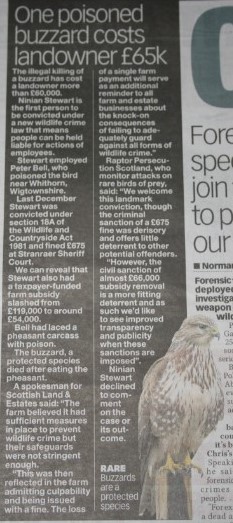
The other publication that we’re aware of was much more mainstream – the Sunday Mail (22nd March 2015) had a headline-grabbing article, ‘One poisoned buzzard costs landowner £65k’.
We were pleased to be quoted in this piece, as follows:
“We welcome this landmark conviction, though the criminal sanction of a £675 fine was derisory and offers little deterrent to other potential offenders. However, the civil sanction of almost £66,000 subsidy removal is a more fitting deterrent and as such we’d like to see improved transparency and publicity when these sanctions are imposed“.
Well done to the RSPB for getting the info out there in the first place, and thanks to journalist Billy Briggs for reading this blog and taking the story to a wider audience.
Michael James Johnston has been convicted at Dumfries Sheriff Court for possession of a banned poison.
Johnston, 45, of Pretoria Road, Eastriggs, Dumfriesshire, was disturbed at Dryfesdale Gate Farm in Lockerbie in April 2014. The Police were called and they found the banned poison Strychnine in his vehicle.
Strychnine is one of eight poisons banned under the Possession of Pesticides (Scotland) Order 2005. The other seven substances are Aldicarb, Alphachloralose, Aluminium phosphide, Bendiocarb, Carbofuran, Mevinphos and Sodium cyanide. All eight poisons are known to have been used to poison wildlife. Anyone caught in possession of any of these can face fines of up to £5,000 and/or a six month custodial sentence.
At a hearing on 23rd March 2015 Johnston was fined £400.
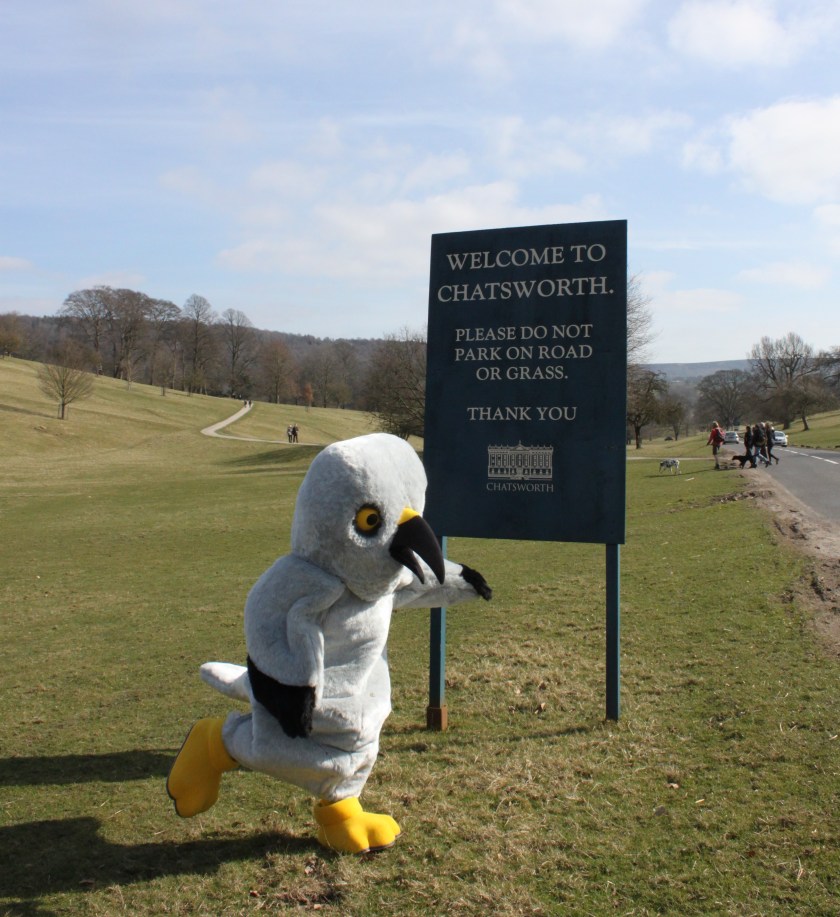
Henry decides to leg it from Chatsworth. Nice tea rooms but not enough girls to keep him here.
He should have been over at the Dee Estuary (see here).
The trial of Scottish gamekeeper William Dick has been continued at Dumfries Sheriff Court.
Dick, 24, of Whitehill Cottages, Kirkmahoe, Dumfries is accused of bludgeoning a buzzard with rocks and then repeatedly stamping on it. The offences are alleged to have taken place in Sunnybrae, Dumfries in April 2014. He is also accused of alleged firearms offences. He has denied the charges.
Dick’s legal representative in court is Brian McConnachie QC, who has been described as ‘one of the country’s leading defence lawyers’.
The trial will continue on 2nd April 2015.
Previous blogs on this case here, here, here, here, here, here, here
PLEASE NOTE: WE WON’T BE ACCEPTING COMMENTS UNTIL AFTER THE VERDICT. THANKS.

Today Henry is visiting the Chatsworth Estate in the Derbyshire Peak District.
The bloke who lives in this mansion is called Peregrine and his late mum used to go grouse shooting with the late Prime Minister Harold Macmillan.
Henry sky-danced all over the front lawns but unfortunately there weren’t any females around to see him.
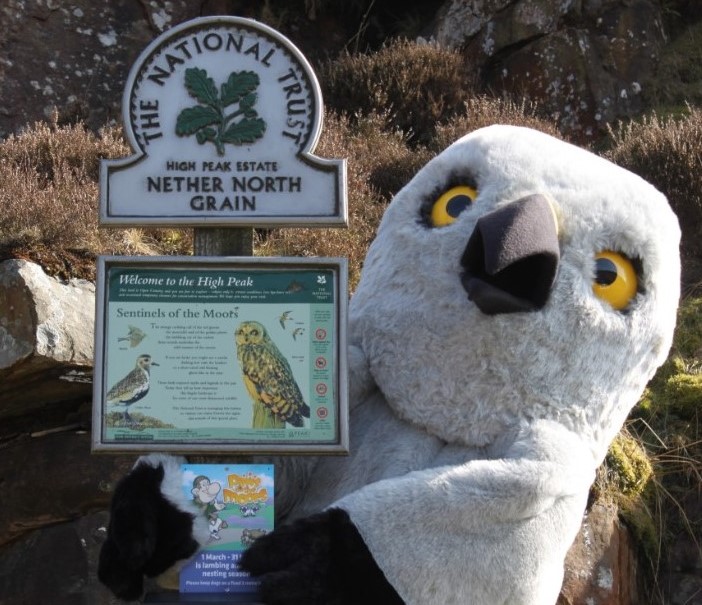
Today Henry is dancing around the National Trust’s High Peak Estate looking for a girl.
And wondering why he doesn’t feature as a ‘Sentinel of the Moors’ on that National Trust sign. Here’s what it says:
The strange cackling call of the red grouse
The mournful wail of the golden plover
The bubbling cry of the curlew
These sounds symbolise the wild mystery of the moors.
If you are lucky you might see a merlin, dashing low over the heather, or a short-eared owl floating ghost-like in the mist.
These birds inspired myths and legends in the past.
Today they tell us how important this fragile landscape is for some of our most threatened wildlife.
The National Trust is managing the habitat so visitors can enjoy forever the sights and sounds of this special place.
What’s that Henry?
What did you say?
Ban what?
Ban driven grouse shooting?
Ok – we’ll ask our mates to sign here for you.
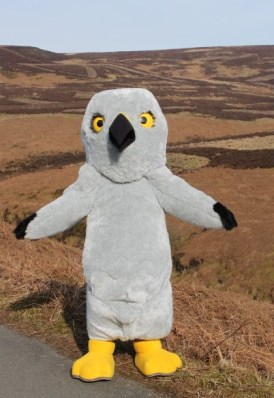 Meet Henry. Henry is a 6ft-tall Hen Harrier who’s very, very lonely. He’s struggling to find a mate because most of his potential girlfriends have been bumped off on grouse moors. Henry is flying around the British Isles in search of a significant other and you can follow his progress as he posts daily photographs from his travels. He’s being accompanied by several burly minders to protect him from those who’d like to shoot, trap or poison him.
Here he is last Sunday visiting a grouse moor in the Derbyshire Peak District National Park.
Where will he be tomorrow?
You can follow his progress via his Twitter account: @HenryHenHarrier
Regular updates will also appear on this blog, on Mark Avery’s blog (here) and the Birders Against Wildlife Crime website (here).
#HaveYouSeenHenry?
Criminal proceedings against Scottish gamekeeper William Dick have progressed to trial, which began yesterday at Dumfries Sheriff Court.
Dick, 24, of Whitehill Cottages, Kirkmahoe, Dumfries is accused of bludgeoning a buzzard with rocks and then repeatedly stamping on it. The offences are alleged to have taken place in Sunnybrae, Dumfries in April 2014. He is also accused of alleged firearms offences. He has denied the charges.
The trial is expected to continue for several days.
Previous blogs on this case here, here, here, here, here, here.
 Raptor Persecution UK