Calls to put ravens on General Licence to allow indiscriminate culls

Calls are being made to put ravens on the General Licence, which would allow them to be killed indiscriminately (see here).

Bert Burnett of the Scottish Gamekeepers’ Association is supporting the latest petition and said:

Ravens, no matter where you go now in our countryside you have every chance to see or hear ravens, but they are not like small children who as the saying goes ‘should be seen and not heard’, if you see them they will be doing damage and even if you hear them they will be planning damage“.

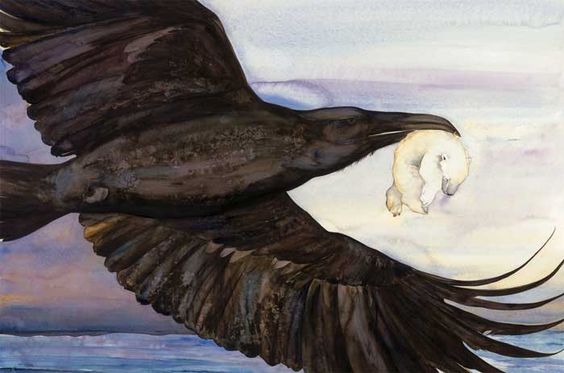
Here’s a raven carrying off a polar bear cub.

raven carrying polar bear cub

[Artwork by Jackie Morris, from The Ice Bear]

Buzzard shot in East Yorkshire

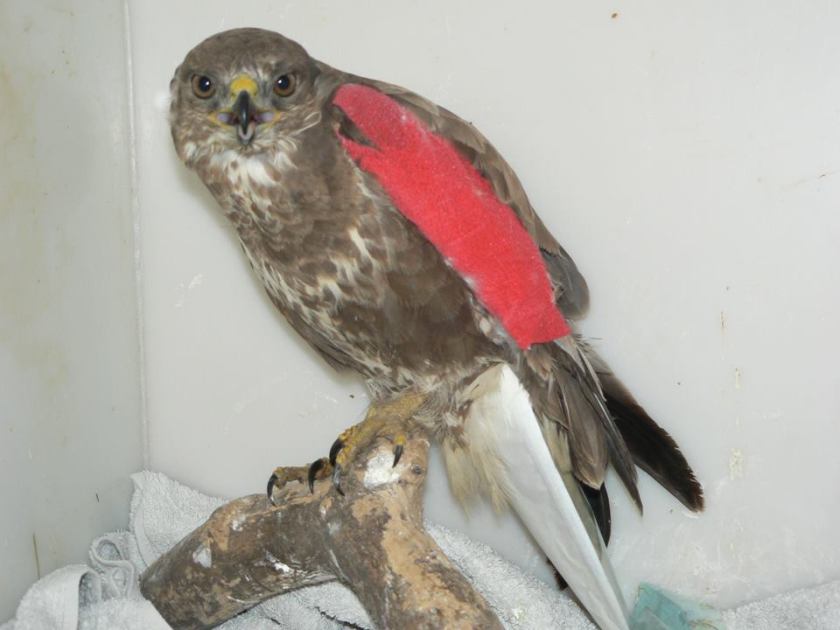
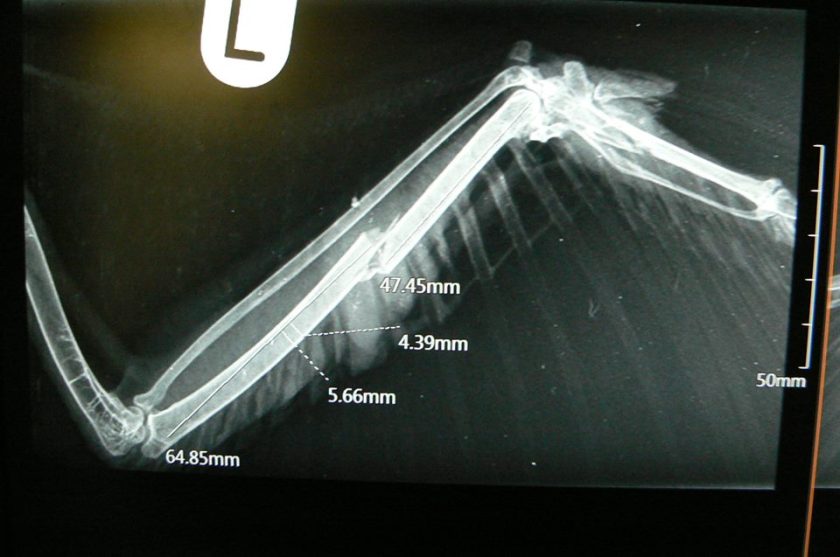
A buzzard with shot gun injuries has been found on farmland at North Frodingham, Driffield, in East Yorkshire.

It has undergone surgery to have its wing pinned and is now being cared for by Jean Thorpe of Ryedale Wildlife Rehabilitation. If you’d like to help support Jean’s never-ending voluntary efforts, please consider a donation here.

Anyone with news about the buzzard shooting please contact Humberside Police on 101.

Buzzard shot Driffield April 2016 Jean Thorpe

Buzzard shot Driffield April 2016 Jean Thorpe 2

Linklater on Langholm: fake facts from a ‘respected journalist’

Following the recent news that the Langholm Moor Demonstration Project (‘Langholm 2’) was winding down prematurely (see here), as predicted it hasn’t taken long for those within the grouse-shooting industry to start claiming it a massive failure.

On Saturday (2nd April), ‘respected journalist’ Magnus Linklater had an article about Langholm 2 published in The Times (see here for paywall version and here for free copy). The inverted commas around ‘respected journalist’ are used deliberately because not everyone agrees with this credibility rating, based on Linklater’s previous musings on raptors and grouse moors (e.g. see here, here and here).

This latest article is littered with what we’ll politely call fake facts; a common theme from Linklater. Either this ‘respected journalist’ has just made stuff up (again), or he hasn’t done the research you might expect from such a feted correspondent (and editor!).

Here are just some of those fake facts.

Linklater says: “Grouse numbers have declined to an unsustainable level” and “There are no longer enough grouse to justify commercial shooting” and “Grouse numbers have never sufficiently recovered” and “Although grouse numbers did revive from their previous low level, there were never enough to justify letting the moor for driven grouse shoots“.

So, four times in this article Linklater mentions that there aren’t enough red grouse to shoot at Langholm. It’s clearly a point he wants to drive home to the reader, but it’s just not true. As we, and others, have previously commented, the red grouse population at Langholm has recovered sufficiently, to a density which previously supported driven grouse shooting activity on this moor (see here, here, here).

Linklater says: “There are currently 14 hen harrier nests on the moor“.

Really? On 2nd April? That would be extraordinary. Blimey, climate change has really kicked in. Or, Linklater is clumsily using last year’s hen harrier breeding status and applying it to this year. But wait! There weren’t 14 hen harrier nests at Langholm in 2015. There were eight, and six of those produced fledglings. How about in 2014? There were 12 hen harrier nests in that year (the highest recorded during the Langholm 2 project) and of those, 10 nests produced fledglings. So from where has Linklater conjured up the “current 14 hen harrier nests“? Has he just made it up?

Linklater says: “More than 100 [hen harrier] pairs were fledged“.

Er, if that were true it would mean that more than 200 birds had fledged during the Langholm 2 project. Again, untrue. More than 100 individuals have fledged – half the number Linklater is claiming. It could be a simple slip of the keyboard or it could be that Linklater wants to give the impression of a moor ‘plagued’ by hen harriers. Note his phrase “uncontrolled birds of prey” earlier in the article and pair it with his repeated referral to a (supposed) lack of red grouse and it becomes apparent what he’s trying to do here.

Linklater says (when describing the results of the earlier Langholm 1 project): “Harriers multiplied until there were more than 20 pairs, and grouse became virtually extinct“.

If there were “more than” 20 pairs, why not give the exact number? Could it be that there weren’t “more than” 20 pairs after Langholm 1? Could it be that there were actually 20, which, incidentally, just happened to coincide with a peak in the cyclical vole population? Why exaggerate? Surely not to try and create an impression that there were more hen harriers than there actually were?

And what’s this about red grouse becoming “virtually extinct“?! This is made up nonsense of the highest order. Red grouse didn’t become ‘virtually extinct’ after Langholm 1. What actually happened was that raptor predation reduced the autumn grouse abundance by 50%. In other words, the ‘surplus’ birds from an artificially-high red grouse population were no longer available to be shot. The red grouse population (and the hen harrier population) dropped back down to what some would call ‘normal’ (natural) densities. That’s a very, very, very different scenario from becoming ‘virtually extinct’.

Perhaps, if you were a grouse moor owner like Linklater (well, he, his wife and their lawyer are trustees of a Trust that owns a grouse moor), you might consider the red grouse population ‘virtually extinct’ because, for all intents and purposes, if there aren’t enough to shoot then they might as well, from the grouse moor owner’s perspective, be ‘virtually extinct’.

Linklater uses two quotes just to ram home the point to any reader who hasn’t yet caught on to his notion that hen harriers need sorting out (legally, of course). The first is from Teresa Dent of the GWCT (an organisation known to promote illegal activities as ‘best practice’ – see here). She says:

There is a lot of work to do…..to find solutions to the conflict between hen harriers and red grouse that can be applied elsewhere“.

Oh, so no mention of the successful use of diversionary feeding of hen harriers during the Langholm 2 project, which has shown that the proportion of red grouse in the diet of diversionary-fed hen harriers was a negligible 0-4% (see here)? How strange. And by the way, Teresa, the conflict isn’t ‘between hen harriers and red grouse’ – it’s between hen harriers and driven grouse shooting; hen harriers and red grouse have survived together for thousands of years, duh!

The final quote is from someone associated with the Langholm 2 project but who prefers to remain anonymous:

If you want ground-nesting birds, including hen harriers, then you need moors to be managed [by game keepers]. The success of the harriers at Langholm has come about because of intensive and expensive management. Unfortunately, the losers are the grouse“.

Actually, the success of the hen harriers at Langholm has come about because the keepers haven’t been allowed to illegally kill them.

Here’s one worthwhile way of responding to ‘respected journalist’ Linklater’s article: Please sign the petition to ban driven grouse shooting HERE

Vicarious liability prosecution: Andrew Duncan (Newlands Estate) part 5

Criminal proceedings continued yesterday  against landowner Andrew Walter Bryce Duncan, who is alleged to be vicariously liable for the crimes committed by gamekeeper William (Billy) Dick in April 2014.

Gamekeeper Dick was convicted in August 2015 of killing a buzzard on the Newlands Estate, Dumfriesshire by striking it with rocks and repeatedly stamping on it (see here). Dick was sentenced in September 2015 and was given a £2000 fine (see here), although he is appealing his conviction.

Here’s a quick review of the proceedings against Andrew Duncan so far:

Hearing #1 (18th August 2015): Trial date set for 23rd Nov 2015, with an intermediate diet scheduled for 20th Oct 2015.

Hearing #2 (20th October 2015): Case adjourned. Nov trial date dumped. Notional diet hearing (where a trial date may be set) scheduled for 18th January 2016.

Hearing #3 (18th January 2016): Case adjourned. Another notional diet & debate scheduled for 11th March 2016.

Hearing #4 (11th March 2016): Case adjourned, pending the result of gamekeeper Billy Dick’s appeal. Another notional diet scheduled for 4th April 2016.

Hearing #5 (4th April 2016): Case adjourned, pending the result of gamekeeper Billy Dick’s appeal. Another notional diet scheduled for 3rd June 2016.

Vicarious liability in relation to the persecution of raptors in Scotland (where one person may potentially be legally responsible for the criminal actions of another person working under their supervision) came in to force four years ago on 1st January 2012. To date there have been two successful convictions: one in December 2014 (see here) and one in December 2015 (see here).  One further case did not reach the prosecution stage due, we believe, to the difficulties associated with identifying the management structure on the estate where the crimes were committed (see here).

“Burning heather is the same as getting your hair cut” claims grouse moor propagandist

Burning heather is the same as getting your hair cut“, according to Tim (Kim) Baynes of the Scottish Moorland Group.

Yes, I always look forward to visiting the hairdresser to have my hair doused with a fire accelerant and then lit with a blow torch.

Burnrps - Copy

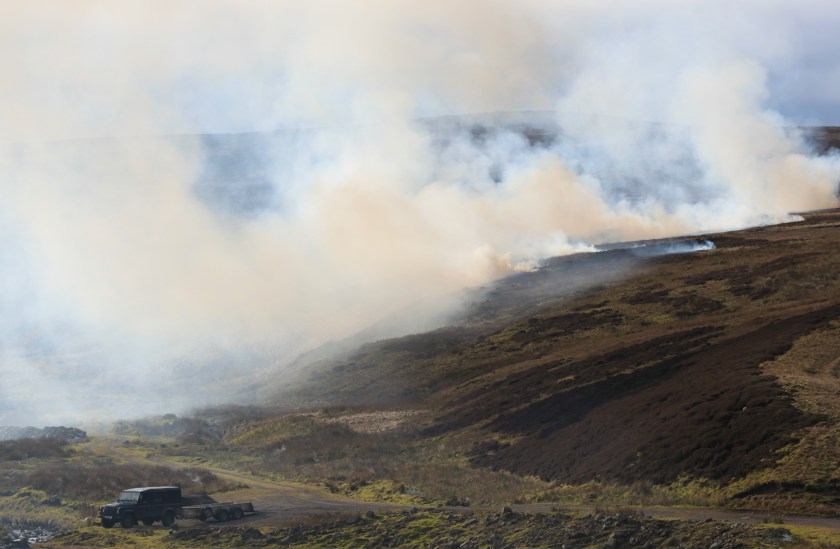
The grouse-shooting industry’s latest outlandish claim comes as part of another PR damage limitation exercise, this time in a failed attempt to explain to the public why huge areas of grouse moor-dominated landscape are being set alight. You can read this latest propaganda piece here.

It’s true that burning can be a useful conservation tool in certain circumstances, on some habitat types and if used in moderation. However, the increasing intensity with which grouse moor managers burn sensitive upland moorland habitats is not a useful conservation tool. It’s actually far from it, despite the latest vacuous claims of the grouse shooting industry.

See here for the key findings of a recent study by scientists at Leeds University in to the effects of moorland burning on peatlands. Not many conservation benefits described here.

See here for the findings of a recent study by scientists from the RSPB in to the extent of moorland burning in the UK. Not many conservation benefits described here either. In fact burning was detected in 55% of Special Areas of Conservation and in 63% of Special Protection Areas. These sites are designated under EU legislation for their conservation value and yet many are in ‘unfavourable condition’ with burning identified as the primary cause.

And see here for Mark Avery’s view on how burning (combined with draining) is likely to be linked to increased flooding downstream.

Sign the petition calling for a ban on environmentally, economically and socially damaging driven grouse shooting HERE.

Photo of grouse moor ablaze, March 2016 (RPS).

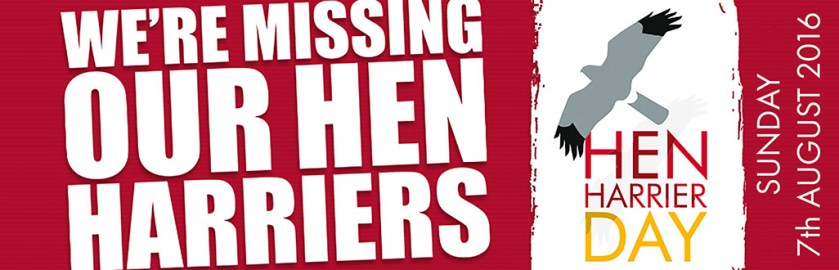
Hen Harrier Day 2016 (Sunday 7th August)

bawc_slider_hen_harrier_day2016

Hen Harrier Day returns for its third year and this time takes place on Sunday 7th August 2016.

Some campaigners are already at an advanced planning stage and have confirmed that Hen Harrier Day events will take place in Dorset, Lancashire and on the Isle of Mull. Other groups are in the early preparation stages and anticipate announcing their venues in the near future.

To keep up to date with the news and to find an event near you, please bookmark the Hen Harrier Day website (here), coordinated by the fine folk at Birders Against Wildlife Crime (BAWC). If you’re planning to hold your own event and you want it listed on the Hen Harrier Day website, please contact phil@birdersagainst.org

BAWC has also been busy producing a new range of Hen Harrier Day merchandise, including a massive array of t-shirts, sweatshirts, hats, and, we’re told, much more to come! If you want to show your support for Hen Harrier Day, and by doing so help raise awareness and contribute vital funds to the campaign, please visit BAWC’s online shop here.

Remember, this is a grassroots campaign, organised entirely by volunteers, and relies on (extra)ordinary people like YOU getting involved in whatever way you can. Please show your support.

The e-petition to ban driven grouse shooting has passed 15,000 signatures in 14 days. If you’d like to sign, please click HERE.

Confusion reigns on admissibility of covert video footage

The admissibility (or, more to the point, the inadmissibility) of covert video footage as evidence in wildlife crime cases has long been a source of fascination and, for us at least, confusion.

We’ve blogged about it a lot over the years and we’ve received some interesting and useful responses from some legal commentators (e.g. see the comment from ‘Edinburgh Observer’ on this 2012 blog). Sometimes covert video footage has been accepted as admissible evidence (more so in English courts than Scottish courts, although it is being increasingly challenged in raptor persecution trials in the English courts) and other times, inexplicably to us lay observers, it has been ruled inadmissible. The decision to rule on inadmissibility in Scotland has, for a long time, been taken by the Crown Office rather than by a Sheriff, which has caused consternation among some observers, with a notable exception being the Mutch trial, where the Sheriff ruled the RSPB’s video evidence was indeed admissible, but only because the RSPB was able to show the footage was a by-product of a wider, legitimate research project (in this case the use of crow cage traps), rather than the camera being placed with the sole intention of filming someone committing a criminal act.

We were surprised, then, to read the news yesterday about the use of covert video footage obtained by the League Against Cruel Sports Scotland (LACS) that has led to the arrest of two people accused of alleged fox-hunting offences in the Borders. Not only that, but the video footage has already been placed in the public domain by the BBC, prior to any subsequent trial. The footage can be seen on the BBC news website here, included in a mini-documentary about fox-hunting in general. It’s well worth a look.

So what was it about this video footage that made it admissible, rather than inadmissible evidence? At this stage, we know the footage has been deemed admissible because two individuals have been charged on the basis of what was filmed. In the British justice system, you arrest on suspicion, charge on evidence, and convict on proof. If this case does reach trial, the footage may well be later challenged in court and ruled inadmissible by the Sheriff; we’ll have to wait and see. But for now, the Police (and presumably the Crown Office who would have advised on whether charges could be brought) have accepted the footage as admissible evidence, otherwise these two individuals would not have been charged.

There are several ways to look at admissibility in this case. If you watch the BBC’s mini-documentary, there’s an interview with Robbie Marsland, the Director of LACS Scotland. In that interview, Robbie seems to suggest that LACS Scotland hired wildlife crime investigators specifically to monitor the activities of Scottish hunts. He said he gave his investigators explicit instructions to remain covert while filming, because, justifiably, he didn’t want the overt presence of observers to alter the behaviour of the hunts they were monitoring. So in this case, you could argue that the LACS investigators were filming covertly and specifically to catch someone committing a criminal offence. On the other hand, it’s also quite clear from the interview with Robbie that this was part of a wider research project being undertaken by LACS. It wasn’t just the Jedforest Hunt that was being filmed – other Scottish hunts were also being filmed because LACS had received persistent intelligence reports that some hunts were breaking the law, even though the Police and Crown Office said they hadn’t received any reports.  LACS began a wider research project to investigate patterns of behaviour among Scottish hunts.

To our mind, this scenario is very similar to the way the RSPB investigations team operates. When they undertake covert video monitoring they’re not just filming on one estate, they’re actively monitoring many estates because, as with LACS, they receive persistent intelligence reports that some estates are illegally killing raptors. Surely this could be viewed as being a ‘wider research project’, in the same way that LACS has operated?

The public release of the LACS footage, prior to a subsequent trial, is also interesting. We’re not sure the RSPB has ever done this before a trial, although they certainly have released footage post trial. Perhaps the early release of the LACS footage can be explained because, as the footage was captured from some distance to the hunt, it is virtually impossible to identify any individuals in the released LACS video. That’s important, especially in Scotland, where identification can be an issue in a trial. Because of this, it can be considered contempt of court to publish an image of the accused prior to conviction (although apparently you can in England) because it might prejudice a fair trial by influencing the jury. RSPB video footage, on the other hand, tends to be have been filmed at much closer range where the suspect’s identity is often clear.

However, as the two suspects in the LACS case have been charged with alleged summary offences (case heard by a single Sheriff rather than by a jury), as is often the case with suspects charged with summary offences on the basis of RSPB footage, then there’s no jury to prejudice so why not release the footage early?

All in all then, an intriguing (and still confusing) situation and we’ll watch with interest to see how this develops.

‘Sustainable’ mountain hare culls – where’s the evidence?

Hares_Lecht_25Feb2016 (2) - CopyTwo staff members from Scottish Land & Estates, the landowners’ lobby group, have been desperately trying to defend the indefensible mass slaughter of mountain hares on grouse moors.

Tim (Kim) Baynes of SLE’s Scottish Moorland Group wrote a lame article on the subject a couple of weeks ago (we blogged about it here) where he claimed mountain hare slaughtering was done “in accordance with best practice” and that these culls are “informed and balanced” and that they didn’t take place every year. He was also quoted extensively in an article in Scottish Farmer (here), where he stated that ‘voluntary restraint was exercised’ and claimed that mountain hares were culled because “hares can affect fragile habitats through grazing pressure, can spread sheep tick which also affects red grouse, and can cause the failure of tree-planting schemes“.

A similar article was published in the Sunday Herald last week (here), penned by SLE’s CEO Doug McAdam. (For those affected by the Herald’s paywall, the article is reproduced here and here). McAdam recites the exact same reasons for mountain hare culling: “hares can affect fragile habitats through grazing pressure, can spread sheep tick which also affects red grouse, and can cause the failure of tree-planting schemes“. He also states that mountain hare culls are “properly organised and humane” and also says culls don’t take place every year. He then tries to nonsensically suggest that mountain hare culling is no different to deer culling, but ‘forgets’ to mention that deer no longer have any natural predators to keep their populations in check, whereas mountain hares do, or at least they would do if some of those predators (notably golden eagles) weren’t illegally shot, trapped or poisoned on grouse moors.

Let’s just have a look at those excuses for the mass slaughtering of mountain hares.

Hares can affect fragile habitats through grazing pressure“. They probably can, although if their natural predators weren’t being exterminated this would lessen any pressure. And would those be the same fragile habitats that are routinely burned with increasing frequency and intensity as part of grouse moor ‘management’, causing industrial-scale environmental damage (e.g. see here and here)?

Mountain hares can cause the failure of tree-planting schemes“. They probably can, but how many tree-planting schemes are taking place on driven grouse moors? According to McAdam, hare culling takes place “to conserve the open heather habitat“. So which is it? It can’t be both.

Mountain hares can spread sheep tick which also affects red grouse“. Ah, and there it is! What this all comes down to – mountain hares are inconvenient to grouse moor managers whose sole interest is to produce an absurdly excessive population of red grouse so they can be shot for fun.

Both Baynes and McAdam claim that hare culling doesn’t take place every year and when it does that it’s proportionate, “typically reduce the population by 10-20% maximum“.

Compare that claim with the opinion of leading upland ecologist Dr Adam Watson, who wrote in his 2013 book Mammals in north-east Highlands:

“I know of no grouse-moor estate within the range of the mountain hare that has not practiced or does not practice heavy killing of hares, with the exceptions of Edinglassie, Invermark, Glen Muick and Balmoral (but most of Balmoral is deer land rather than grouse moor). The only other heather-moorland areas that I know which are free from heavy killing are those owned by non-sporting agencies or by individuals primarily interested in wildlife conservation, such as the RSPB at Abernethy, SNH at Inshriach, the National Trust for Scotland at Mar Lodge, and Miss Walker of the Aberlour shortbread company, who owns Conval hills near Dufftown“.

He goes on to name various estates who, he alleges, “have been reducing the numbers of mountain hares greatly“, some dating back to the 1980s. His named estates include Altyre, Castle Grant, Lochindorb, Farr, Millden, Glenogil, Glen Dye, Dinnet, Invercauld, Tillypronie, Glen Buchat, Candacraig, Allargue, Delnadamph, Crown Estate, Fasque, Cabrach, Glenfiddich, Glenlochy, Gannochy, Fettercairn, Cawdor, Corrybrough, Moy, Glen Lyon.

If Baynes and McAdam are to be believed, then their claims ought to be backed up by scientific evidence. Just taking their word for it doesn’t cut it. So, let’s take several grouse moor estates from within the Cairngorms National Park (named by Dr Watson as allegedly involved in unsustainable mass hare slaughtering, some since the 1980s) and ask Baynes & McAdam to provide supporting evidence that Dr Watson is mistaken.

For the following estates within the CNP (Glenlochy Moor, Glenlivet [Crown estate], North Glenbuchat, Allargue, Delnadamph, Invercauld, Candacraig), can Baynes and McAdam provide the following information from the past ten years:

  1. In what years did mountain hare culling take place?
  2. How many hares were present on each estate before the cull in each year?
  3. What methods were used to assess population size before each cull?
  4. How many hares were culled on each estate in each year?
  5. How many hares were present after the cull on each estate in each year?
  6. What methods were used to assess population size after each cull?
  7. What acreage of grouse moor on each estate was under a tree-planting scheme in each year?

According to the Cairngorms National Park Authority, hare slaughtering within the National Park is “part of a planned annual management cull” (see here), in which case the above data should be easily at hand to share with the concerned general public.

And Tim and Doug, no fogging the figures like you did with your unsupported claims that grouse moors in the Angus Glens support 81 species of ‘breeding or feeding’ birds (see here).

We await with interest.

Meanwhile, the e-petition to ban driven grouse shooting can be signed HERE

More raptor persecution in North Yorkshire

Over the last few years North Yorkshire has emerged as one of the worst raptor persecution hot spots in the UK (see here). It’s a county where much of the landscape is dominated by grouse moors, particularly in the two National Parks: the North York Moors NP and the Yorkshire Dales NP, as well as a large number of pheasant and partridge shoots.

It’s only March and already this year there’s been an illegally shot red kite and a suspected illegally spring-trapped buzzard.

The critically-injured buzzard was found in February at Wykeham, North Yorkshire. It had a broken, crushed ankle and a broken thigh bone; injuries consistent with being caught in a spring trap, says local Police Wildlife Crime Officer Graham Bilton. Local expert raptor and wildlife rehabilitator Jean Thorpe was once again called to the scene to assist but the buzzard’s injuries were considered too serious and it was euthanised by a vet. Article in Yorkshire Post here. Anyone with information please call Police WCO Graham Bilton on 101.

Photographs of the buzzard by Jean Thorpe:

buzzard spring trapped Jean Thorpe Feb 2016

buzzard spring trapped Jean Thorpe Feb 2016 b

Yesterday, Jean posted the following photographs showing an injured red kite that had been found at Low Marishes, Malton. An x-ray revealed it had been shot. This kite is currently being cared for but whether it survives remains to be seen. Anyone with information please call Police WCO Jez Walmsley on 101.

Red kite shot March 2016 Jean Thorpe

Red kite shot March 2016 Jean Thorpe 2

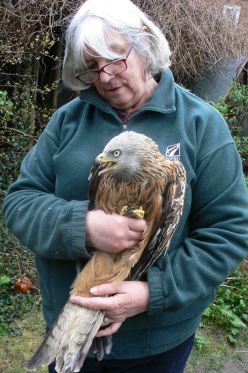
Jean Thorpe (pictured above with the shot red kite) runs Ryedale Wildlife Rehabilitation. She works closely with the RSPB and local Police Wildlife Crime Officers and has her work cut out, living where she does. In 2014 she was awarded an MBE for her tireless voluntary work. If you’d like to make a donation towards her efforts, please click here.

The e-petition to ban driven grouse shooting can be found HERE.

Langholm Project winding down prematurely

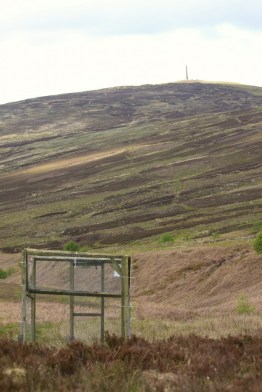
Langholm moorFollowing the news last month that Langholm Project head gamekeeper Simon Lester was resigning (see here), the project directors have now issued a statement about what will happen for the duration of the Project’s final 18 months:

Undertaking a review of structure and activity over the final year and a half of the project, the LMDP Board Directors have confirmed the project will continue until October 2017, with important changes to the management of the moor.

Directors acknowledged significant project successes in recovering heather habitats, stimulating black grouse numbers and demonstrating the role of diversionary feeding in reducing hen harrier predation on red grouse broods. The many and varied visitors to the project have illustrated the contribution of LMDP to demonstrating good moorland practice. The hard work of the keepering team was central to these results, with valuable support from the project science and volunteers.

However Directors agreed that with no realistic chance of reaching the target grouse density necessary for driven shooting, game keepering should be wound down, ending fully by April 2016. As well as the cessation of traditional keepering activities, there will be no diversionary food provided at the harrier’s nests or further novel habitat restoration. SRDP funded habitat management measures will continue through Langholm Farms.

Importantly the project will carry out another full year and half of monitoring, tracking habitat quality, numbers of moorland birds and the breeding success of the hen harriers over the 2016 and 2017 breeding seasons. This gives the project time to gather further information on the beneficial effects of moorland management, while the project scientists finalise a variety of reports for the Directors to review before publication.

A detailed review of the project’s achievements is available in the 7-year review. A Question & Answer paper, covering the next steps in more detail, will be available on the website soon“.

So, as predicted (here), it looks very much like this project is being set up to be seen as a ‘failure’ by the grouse-shooting industry, based on the claim that red grouse density has not recovered sufficiently to enable driven grouse shooting to occur. That’s a highly contentious position, as the data have shown the red grouse population at Langholm has recovered sufficiently, without the need for raptor culling, to a density which previously supported driven grouse shooting activity (see here, here and here). For some (as yet unexplained) reason, the target density for red grouse in the current Langholm 2 project has been set absurdly high at 200 birds per kmsq, rather than the standard 60 birds per kmsq that has been touted for years by the grouse-shooting industry as being the suitable target density required for driven grouse shooting to take place.

We already know that one of the project directors, Mark Oddy (representing Buccleuch Estates), wants “lethal control” [of raptors] at Langholm (see here); can we expect to now see further calls for raptor culls on grouse moors, based on the ‘evidence’ (ahem) of Langholm 2? We’d put money on it.

The petition to ban driven grouse shooting is doing well – please sign HERE