On 14 March 2025, Natural England announced the end of the ridiculous Hen Harrier brood meddling trial (see here).
For new blog readers, the hen harrier brood meddling trial was a conservation sham sanctioned by DEFRA as part of its ludicrous ‘Hen Harrier Action Plan‘ and carried out by Natural England between 2018 – 2024, in cahoots with the very industry responsible for the species’ catastrophic decline in England. In general terms, the plan involved the removal of hen harrier chicks from grouse moors, they were reared in captivity, then released back into the uplands just in time for the start of the grouse-shooting season where many were illegally killed. It was plainly bonkers. For more background see here and here.
The closure of the brood meddling sham was announced via a Natural England blog, attributed to John Holmes, NE Strategy Director.
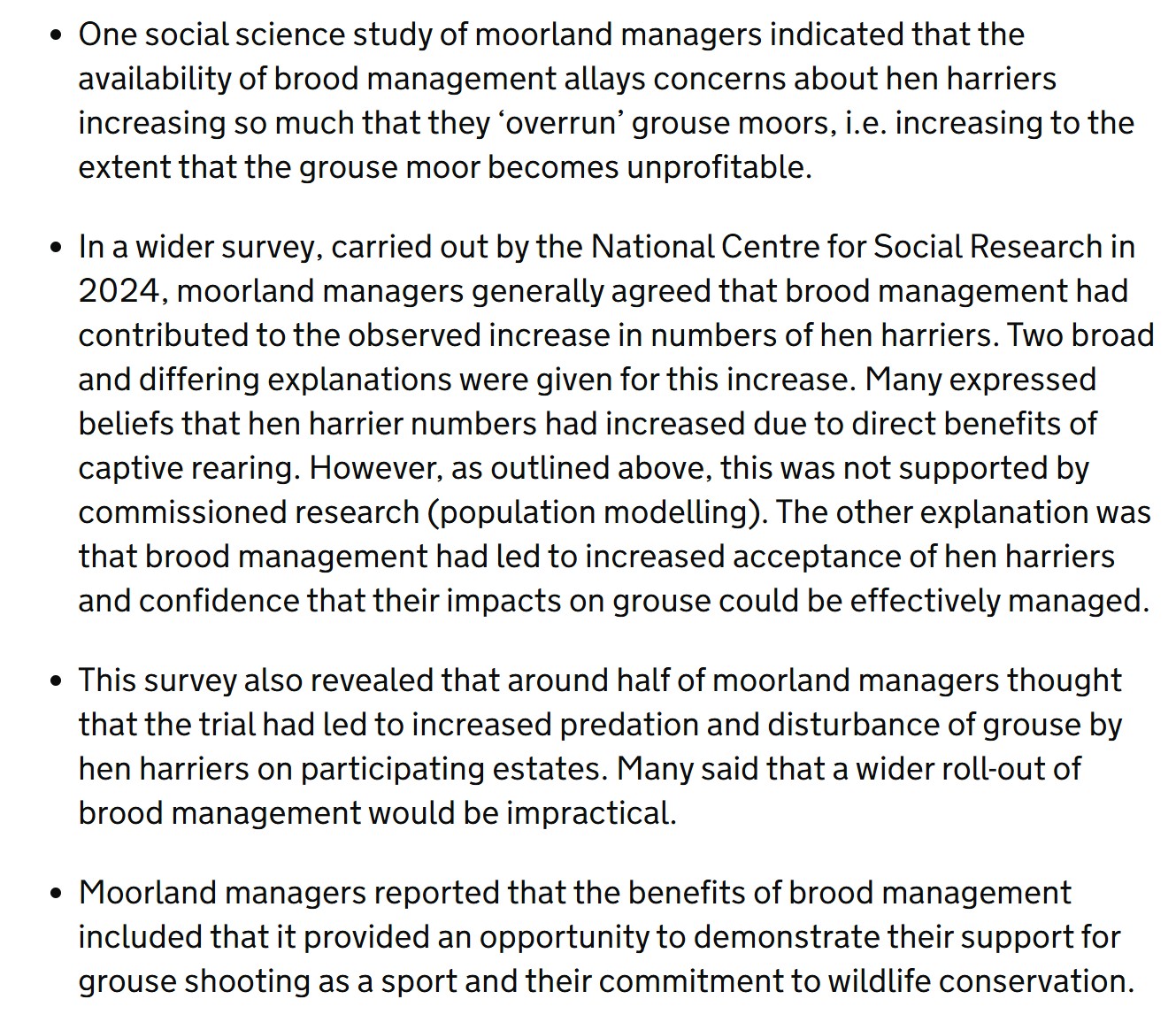
In that blog, Holmes outlined the key results from the brood meddling trial which included a heavy reliance on two social science surveys of moorland managers:
These social science surveys/studies were intended to help Natural England ‘to evaluate any changes in social attitudes by those involved in upland management‘. In other words, did the availability of brood meddling stop the illegal killing of hen harriers on grouse moors? (The answer to that was a resounding NO – see here).
The first social science survey was undertaken as an interim study in 2021, in the middle of the brood meddling trial. This ‘study’ was hopelessly flawed in that it was limited to just 19 participants, and seven of those were NE employees and others were directly benefiting financially from their involvement in brood meddling. The findings of this ‘study’ were thus wholly unsuitable for assessing whether the attitudes of grouse moor owners had changed as a result of brood meddling – you can read my review of the ‘study’ here.
The second social science study, described by Holmes as a ‘wider survey’, was apparently conducted by National Centre for Social Research in 2024. Holmes referred to the findings of this study in his blog but Natural England didn’t publish the report to allow the public to draw its own conclusions.
Rather than rely upon Holmes’ interpretation of the study’s findings, I wanted to read it for myself so on 14 April 2025 I lodged an FoI request with Natural England, asking for a copy of the report:
‘Please provide a copy of the Natural England-commissioned report, undertaken by the National Centre for Social Research and completed in 2024 on grouse shooting industry attitudes to hen harrier brood management‘.
It was a simple, straightforward request that shouldn’t have posed any compliance issues for Natural England and I expected them to provide the report within the statutory time limit of 20 working days.
However, 20 working days later on 15 May 2025, Natural England wrote to me to tell me that a further 20 working days were needed “because of the complexity/voluminous nature of the request“.
Eh? There’s nothing ‘complex’ or ‘voluminous’ about asking for a copy of a report that had been written a year earlier!
Why will it take Natural England 40 working days to send it? Not only does this look like an abuse of process, but it also seems to me that Natural England has something to hide.
I did write back to Natural England and said, ‘You’re having a laugh – please send the report without further delay’.
So far, silence.
UPDATE 23 June 2025: Natural England still refusing to release social science report on Hen Harrier brood meddling (here)
Bob Elliot, CEO of Wild Justice, in conversation with Emma Judd, Head of Campaigns & Communications at the League Against Cruel Sports, discussing why driven grouse shooting should be banned.
Press release from National Parks & Wildlife Service (30 May 2025)
Minister O’Sullivan calls for co-operation in the investigation of the possible poisoning of a white-tailed eagle
The National Parks & Wildlife Service appeals to the public for information
An investigation is underway following the discovery of one of Ireland’s oldest breeding white-tailed eagles, Caimin (Y) who was found dead in Clare last Saturday. Initial post mortem results from the Regional Veterinary Laboratory indicate a possible death from poisoning.
Caimin held territory at the Mountshannon nest site on Lough Derg for the past seventeen years. During that time, he mated and fledged a number of chicks. He was one of the first chicks to arrive as part of an NPWS Reintroduction Programme to bring back this formerly extinct species to Irish skies and was released from Killarney National Park in 2008. All of the white-tailed eagle chicks reintroduced under the programme are fitted with satellite tags, which enables them to be monitored and tracked.
White-tailed Eagle ‘Caimin’. Photo by Bob Foyle
In 2013, Camin mated with Saoirshe, a female eagle who was also part of the Reintroduction Programme. They became the first white-tailed eagles to successfully raise and fledge chicks in the wild in Ireland in over one hundred years. Caimin raised and fledged chicks into the wild until 2016, when Saoirshe died of Avian Influenza. He held the territory and mated again with Bernardine (B) in 2023 to successfully fledge more chicks to the wild from the same nest site in Mountshannon. Despite the loss of her mate, Bernardine is continuing to raise a chick on the nest site in Mountshannon.
Minister of State for Nature, Heritage and Biodiversity, Christopher O’Sullivan said:
“Any loss in the wild not due to natural causes, is usually the result of human activity and this tragic loss of a wonderfully aged bird, breeding happily in the Irish wild, is deeply regrettable.
“The Reintroduction Programme had been making significant progress in restoring this lost flagship species to Irish skies. These birds are part of Ireland’s natural heritage and are important for our biodiversity, as they are a good indicator species regarding the health of our ecosystems.
“We will continue with our efforts to introduce, nurture and protect these birds and I have tasked the NPWS with leaving no stone unturned to try to get to the bottom of this heinous potential crime.”
Eamonn Meskell, Divisional Manager, NPWS said:
“The knowing destruction of this wonderful bird of prey displays a wanton disregard for our re-introduction and nature protection efforts.
“These noble birds are beloved of the public and each loss is keenly felt by them and indeed by the staff of NPWS who have nurtured these birds from chicks to fledglings, onto adult life and into successfully breeding pairs. We know we can rely on the public’s help in this investigation”.
The main threat to the species in Ireland is persecution, predominantly through shooting and the illegal use of poison and wind turbine strikes. The misuse/illegal use of poisons accounts for nearly 50% of eagle deaths where the cause of mortality was able to be determined. Other causes of death include wind turbine strikes, lead shot poisoning and shooting. Avian Influenza and adverse weather also negatively impacted the breeding population.
If you have any information, please notify your local Garda station or your local National Parks and Wildlife Service office.
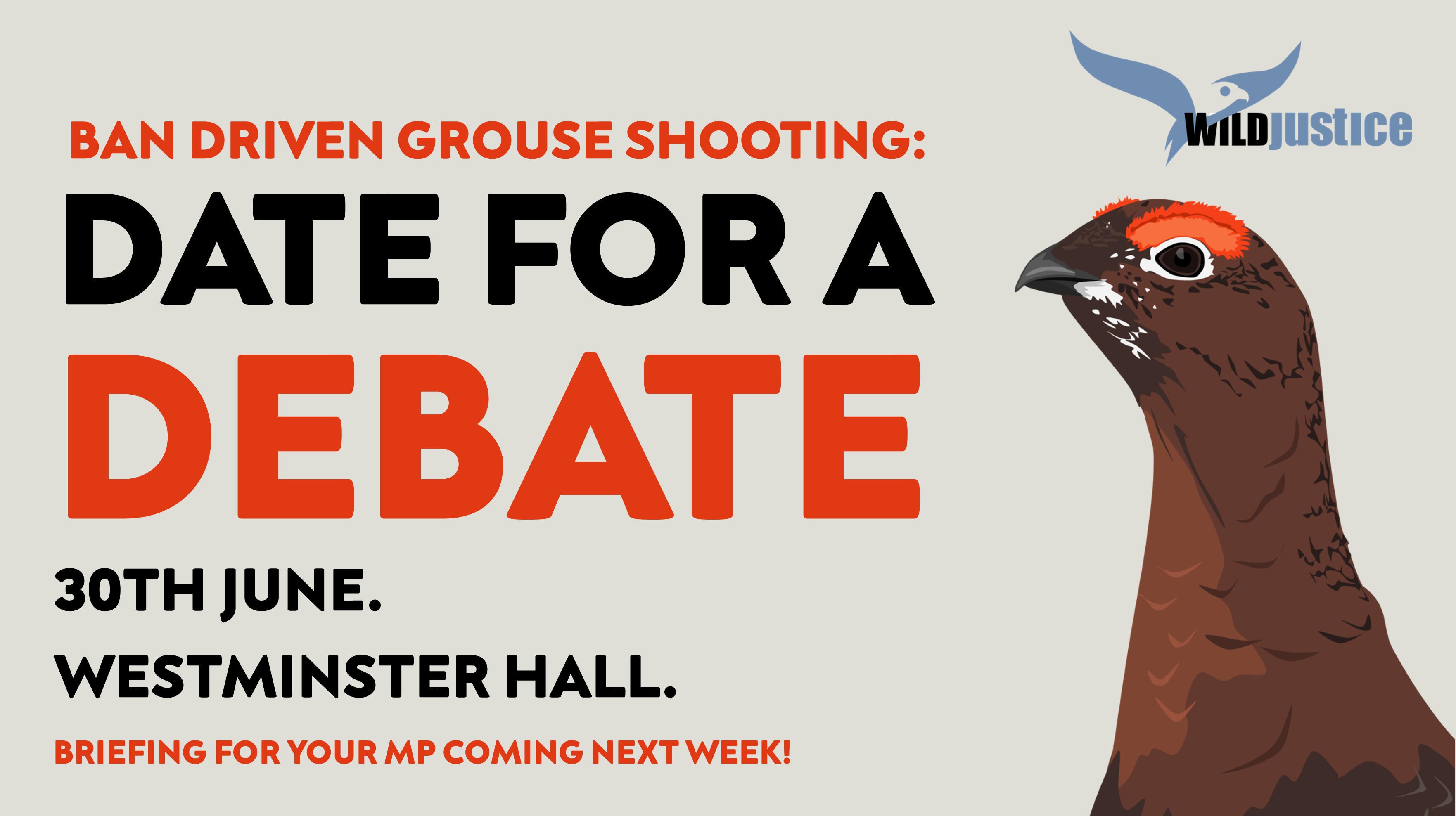
Wild Justice’s most recent petition calling for a ban on driven grouse shooting recently passed the 100,000 signatures required to trigger a parliamentary debate in Westminster.
The date of the debate has now been announced as Monday 30 June 2025 at 4.30pm.
Thank you to everyone who promoted the petition and to the 100,000+ that signed it, helping to keep this issue in the public and political eye.
The debate is open to the public (although public seating in Westminster Hall is ridiculously limited) but the debate will also be live streamed and a full transcript will be published a short time afterwards.
More information to come soon about how to lobby your MP.
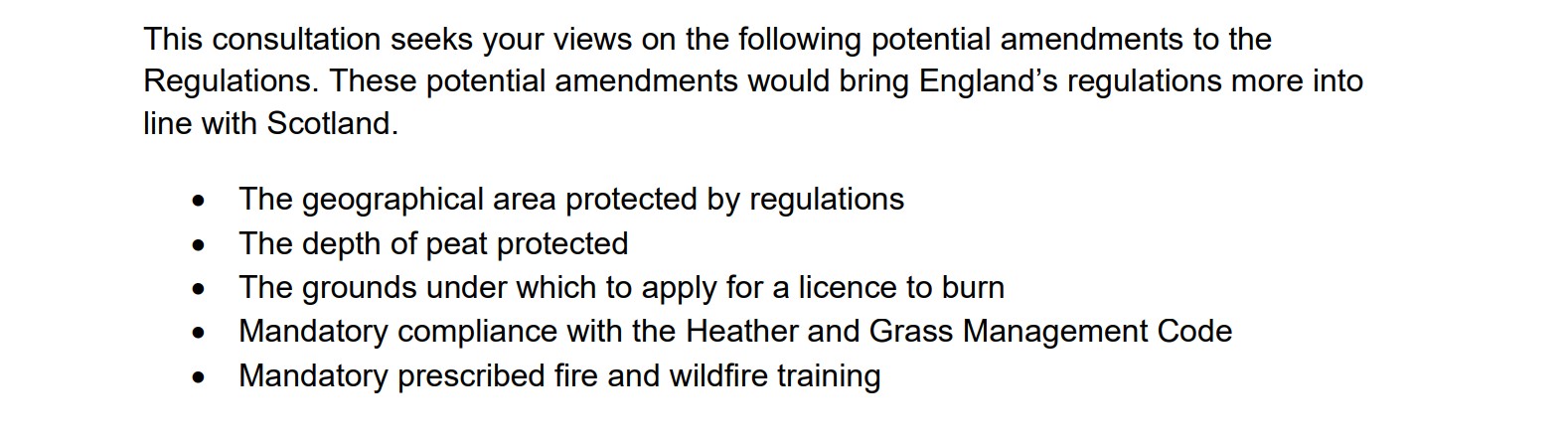
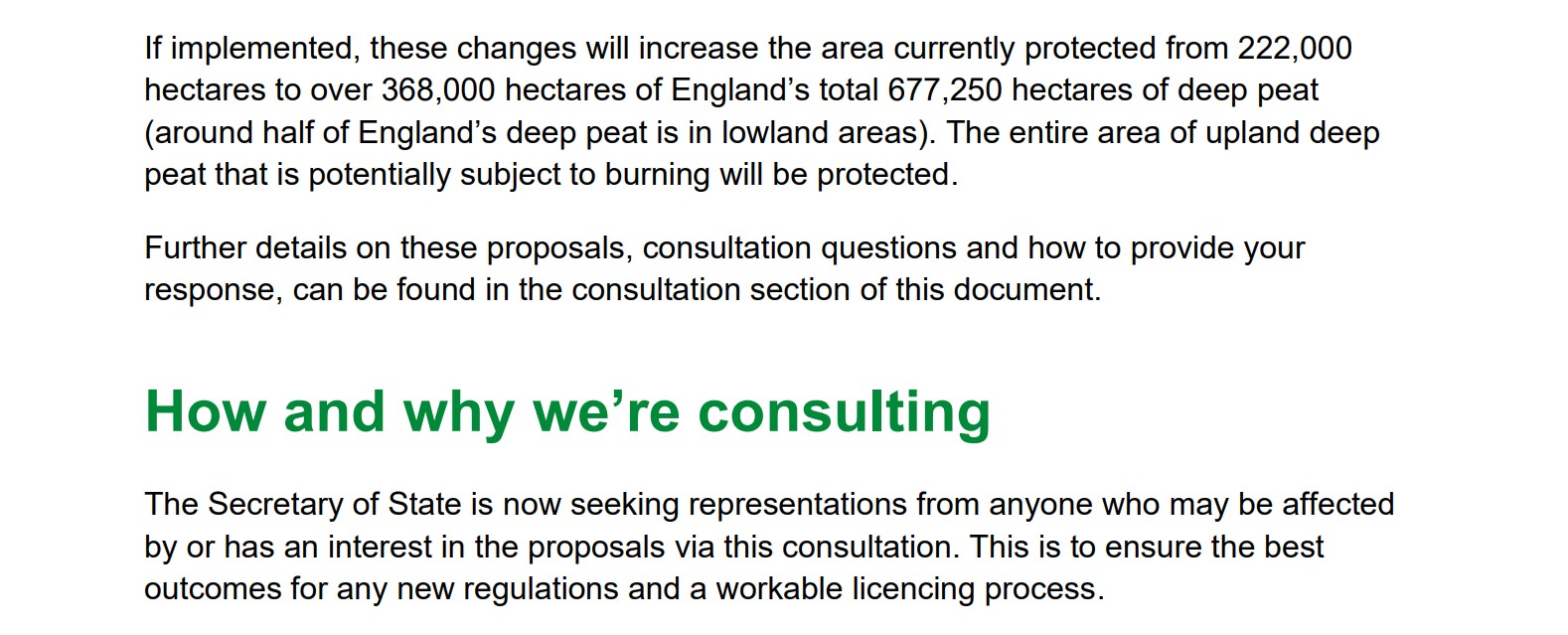
The UK Government recently announced a public consultation on proposed changes to The Heather and Grass etc Burning (England) Regulations 2021.
This is an important area of policy because England’s peatlands are of huge international importance. 80% of them are currently degraded, with rotational burning (typically on moorland managed for driven grouse shooting) being a contributory factor to that degradation in the uplands. Protecting peat from further damage is crucial to its restoration and recovery.
Toxic smoke heading towards Sheffield after gamekeepers set a grouse moor alight in the Peak District National Park. Photo by Ruth Tingay
Here’s the consultation introductory blurb from the Government:
It would be good if as many of you as possible would respond to the public consultation, which closes at 11.59 pm this Sunday (25 May 2025).
It’s relatively straightforward, there are only ten questions that will be relevant to most of you, and Wild Justice has put together an easy-to-follow guide to each question – see here.
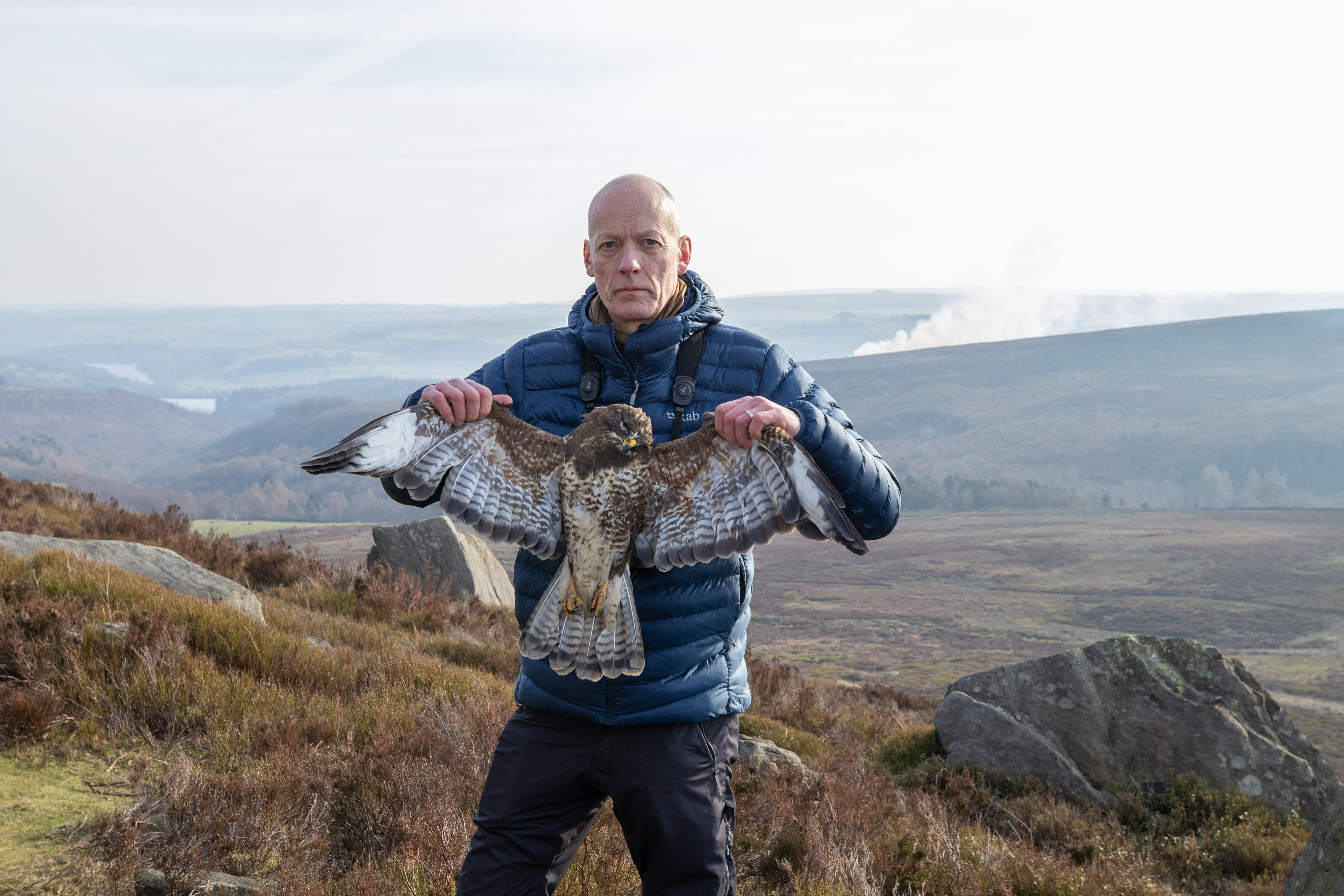
Last week I blogged about an appeal for information that had been posted on North Yorkshire Police’s Facebook page, in relation to ‘the suspected shooting of a buzzard‘ near Goathland on 2nd May 2025 (see here).
I’d noted that the appeal was quite vague. It wasn’t clear if the appeal was a result of a witness report of someone seen shooting towards a buzzard or whether a corpse had been found and was awaiting post mortem.
I’ve since been informed by a reliable local source that a dead buzzard had been found and an x-ray revealed it had been shot.
Having a corpse with shot in it is a confirmed shooting, not a suspected shooting.
Without seeing the x-ray it’s not possible for us to determine if it had been shot close to where the body was discovered (e.g. if its wing bones had been shattered by the shot then it’s unlikely to have been able to fly any distance) so it may have been shot near Goathland or it may have been shot elsewhere and just succumbed to its injuries close to the Duchy of Lancaster grouse moor.
It’s obviously pure coincidence that the grouse moors near to Goathland just happen to be a raptor persecution hotspot.
It’s pointless asking North Yorkshire Police for further information about this buzzard – they routinely refuse to answer such requests.
For anyone who still wants to pretend that the grouse shooting industry isn’t responsible for the systematic extermination of hen harriers on grouse moors across the UK, here’s the latest catalogue of crime that suggests otherwise.
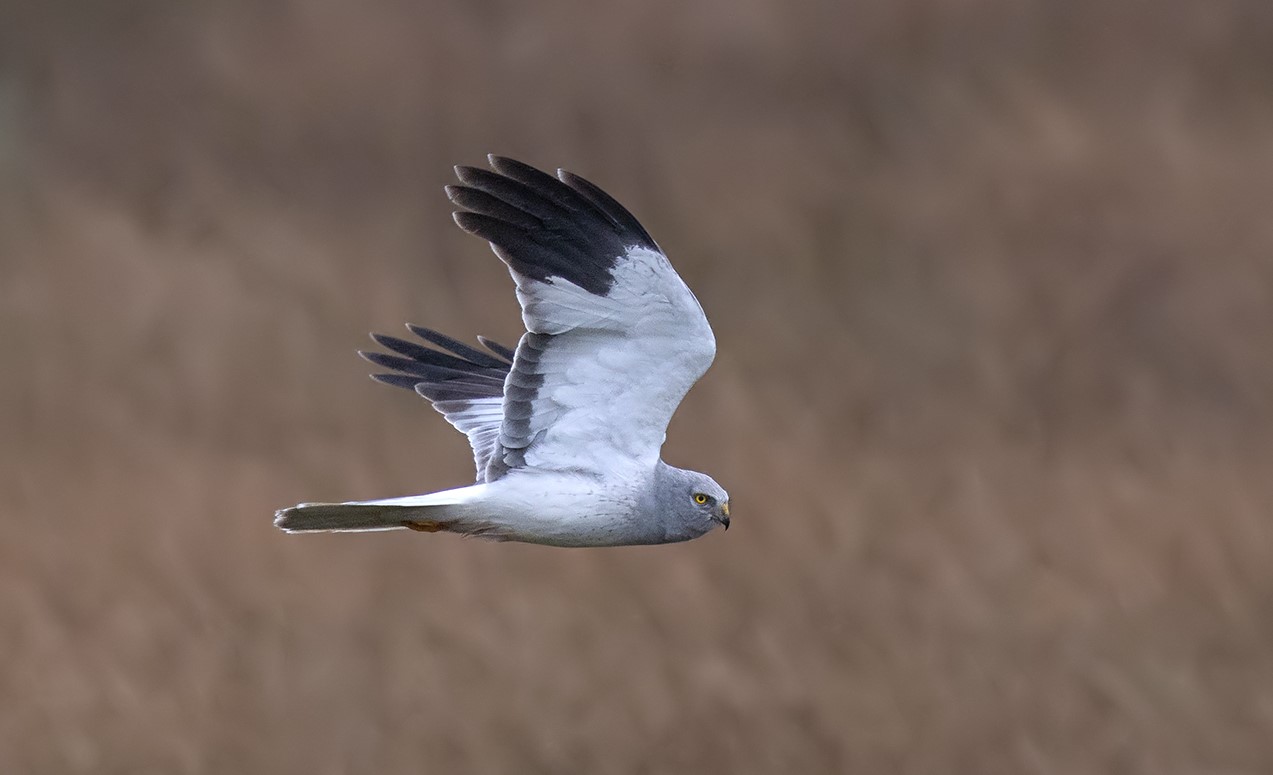
This male hen harrier died in 2019 after his leg was almost severed in an illegally set trap that had been placed next to his nest on a Scottish grouse moor (see here). Photo by Ruth Tingay
This is the blog I now publish after every reported killing or suspicious disappearance.
“They disappear in the same way political dissidents in authoritarian dictatorships have disappeared” (Stephen Barlow, 22 January 2021).
Today the list has been updated to include the three most recently reported victims: a satellite-tagged female called ‘Sita’ who vanished from a roost site on a grouse moor in the Yorkshire Dales National Park on 27 February 2025 (here) and two breeding males who vanished from the RSPB’s Geltsdale Reserve in Cumbria in May 2025 (here).
I’ve been compiling this list only since 2018 because that is the year that the grouse shooting industry ‘leaders’ would have us believe that the criminal persecution of hen harriers had stopped and that these birds were being welcomed back on to the UK’s grouse moors (see here).
This assertion was made shortly before the publication of a devastating new scientific paper that demonstrated that 72% of satellite-tagged hen harriers were confirmed or considered likely to have been illegally killed, and this was ten times more likely to occur over areas of land managed for grouse shooting relative to other land uses (see here). A further scientific paper published in 2023 by scientists at the RSPB, utilising even more recent data, echoed these results – see here.
2018 was also the year that Natural England issued a licence to begin a hen harrier brood meddling trial on grouse moors in northern England. For new blog readers, hen harrier brood meddling was a conservation sham sanctioned by DEFRA as part of its ludicrous ‘Hen Harrier Action Plan‘ and carried out by Natural England (NE), in cahoots with the very industry responsible for the species’ catastrophic decline in England.
For more background see here and for a critical evaluation of the trial after 5 years see this report by Wild Justice. In 2024 the brood meddling trial appeared to collapse for reasons which are not yet clear (see here) and the licence for the so-called ‘scientific trial’ expired. In March 2025 Natural England announced the end of the brood meddling trial (here) and in April 2025 announced that a licence application to continue brood meddling, submitted by the Moorland Association, had been refused (here).
Brood meddling was earlier described as a sort of ‘gentleman’s agreement’ by commentator Stephen Welch:
“I don’t get it, I thought the idea of that scheme was some kind of trade off – a gentleman’s agreement that the birds would be left in peace if they were moved from grouse moors at a certain density. It seems that one party is not keeping their side of the bargain“.
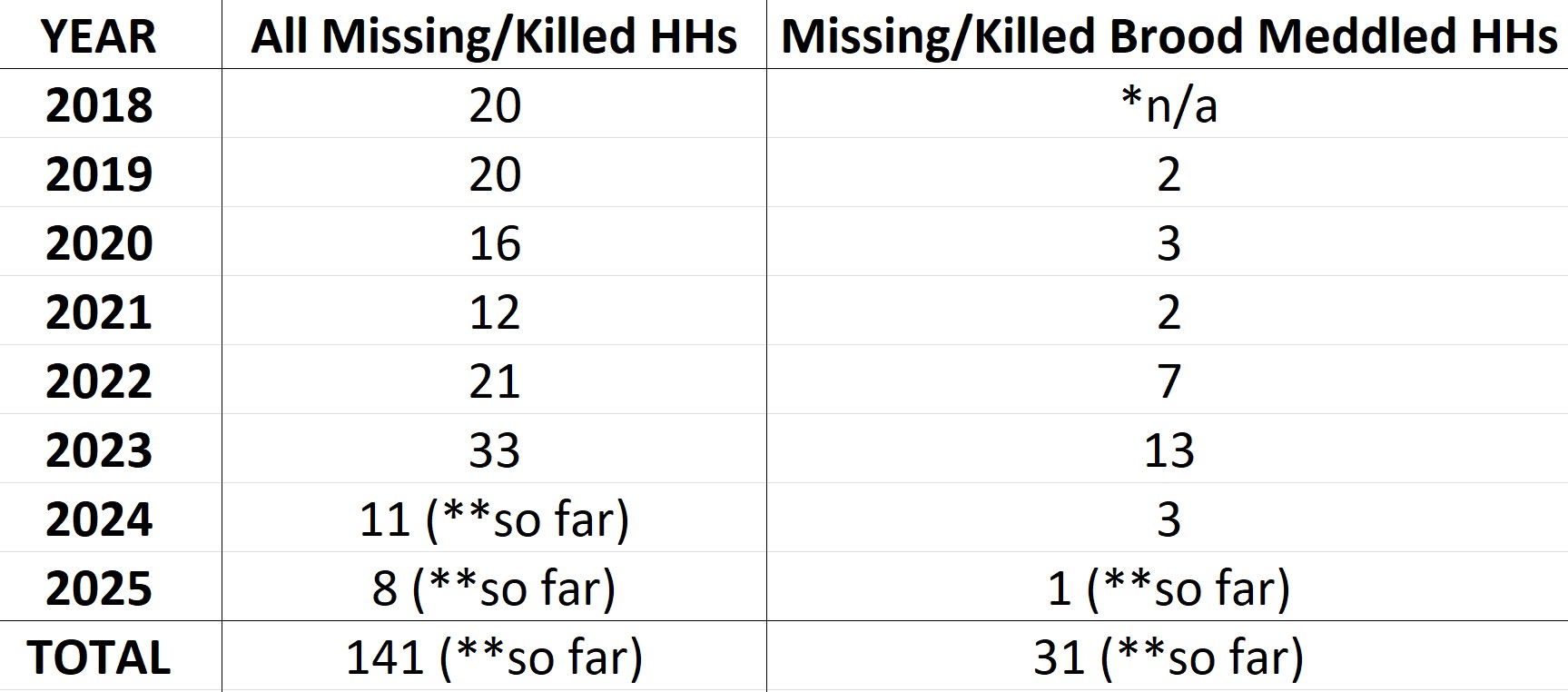
With at least 141 hen harriers gone since 2018, and 31 of those being brood meddled birds, there is no question that the grouse shooting industry was simply taking the piss. Meanwhile, Natural England pretended that ‘partnership working’ was the way to go and consecutive Tory DEFRA Ministers remained silent for all those years.
*n/a – no hen harriers were brood meddled in 2018. **Post mortem reports on a further seven hen harriers found dead in 2024/2025 are awaited. Those seven individuals are not included in this table.
‘Partnership working’ according to Natural England appeared to include authorising the removal of hen harrier chicks from a grouse moor already under investigation by the police for suspected raptor persecution (here) and accepting a £75k ‘donation’ from representatives of the grouse shooting industry with a contract clause that prevented Natural England from criticising them or the sham brood meddling trial (see here). This was in addition to a further £10k ‘donation’ that Natural England accepted, under the same terms, in 2021 (here).
Thankfully, the Scottish Government finally decided to act by introducing a grouse moor licensing scheme under the Wildlife Management & Muirburn (Scotland) Act 2024. The intention behind this new legislation is that grouse shooting estates could have their licences suspended/revoked if, on the balance of probability, it is shown that any raptor persecution crimes (& some other associated offences) are linked with grouse moor management on that estate. There, are, however, ongoing issues with the licence as it’s been significantly watered-down after an intervention from the grouse shooting industry (see here). Work is underway to address this.
In England a new Hen Harrier Taskforce was established in 2024, led by the National Wildlife Crime Unit, to use innovative techniques to target hen harrier persecution hotspots (locations where hen harriers repeatedly ‘disappear’ or are found illegally killed). It’s too early to judge the Taskforce’s success/failure and it’s been met with considerable resistance from the Moorland Association, the grouse moor owners’ lobby group (e.g. see here). So far though, it’s quite clear that the the illegal killing continues.
So here’s the latest gruesome list of ‘missing’/illegally killed hen harriers since 2018. Note that the majority of these birds (but not all) were fitted with satellite tags. How many more [untagged] harriers have been killed? We now have evidence that gamekeepers are specifically targeting untagged hen harriers, precisely to avoid detection (see here for extraordinary footage/audio captured by the RSPB’s Investigations Team as featured on Channel 4 News in October 2024).
February 2018: Hen harrier Saorsa ‘disappeared’ in the Angus Glens in Scotland (here). The Scottish Gamekeepers Association later published wholly inaccurate information claiming the bird had been re-sighted. The RSPB dismissed this as “completely false” (here).
5 February 2018: Hen harrier Marc ‘disappeared’ on a grouse moor in Durham (here).
9 February 2018: Hen harrier Aalin ‘disappeared’ on a grouse moor in Wales (here).
March 2018: Hen harrier Blue ‘disappeared’ in the Lake District National Park (here).
March 2018: Hen harrier Finn ‘disappeared’ near Moffat in Scotland (here).
18 April 2018: Hen harrier Lia ‘disappeared’ in Wales and her corpse was retrieved in a field in May 2018. Cause of death was unconfirmed but police treating death as suspicious (here).
8 August 2018: Hen harrier Hilma ‘disappeared’ on a grouse moor in Northumberland (here).
16 August 2018: Hen harrier Athena ‘disappeared’ on a grouse moor in Scotland (here).
26 August 2018: Hen Harrier Octavia ‘disappeared’ on a grouse moor in the Peak District National Park (here).
29 August 2018: Hen harrier Margot ‘disappeared’ on a grouse moor in Scotland (here).
29 August 2018: Hen Harrier Heulwen ‘disappeared’ on a grouse moor in Wales (here).
3 September 2018: Hen harrier Stelmaria ‘disappeared’ on a grouse moor in Scotland (here).
24 September 2018: Hen harrier Heather ‘disappeared’ on a grouse moor in Scotland (here).
2 October 2018: Hen harrier Mabel ‘disappeared’ on a grouse moor on the edge of the Yorkshire Dales National Park (here).
3 October 2018: Hen Harrier Thor ‘disappeared’ next to a grouse moor in Bowland, Lanacashire (here).
23 October 2018: Hen harrier Tom ‘disappeared’ in South Wales (here).
26 October 2018: Hen harrier Arthur ‘disappeared’ on a grouse moor in the North York Moors National Park (here).
1 November 2018: Hen harrier Barney ‘disappeared’ on Bodmin Moor (here).
10 November 2018: Hen harrier Rannoch ‘disappeared’ on a grouse moor in Scotland (here). Her corpse was found nearby in May 2019 – she’d been killed in an illegally-set spring trap (here).
14 November 2018: Hen harrier River ‘disappeared’ on a grouse moor in the Nidderdale AONB (here). Her corpse was found nearby in April 2019 – she’d been illegally shot (here).
16 January 2019: Hen harrier Vulcan ‘disappeared’ in Wiltshire close to Natural England’s proposed reintroduction site (here).
28 January 2019: Hen harrier DeeCee ‘disappeared’ in Glen Esk, a grouse moor area of the Angus Glens (see here).
7 February 2019: Hen harrier Skylar ‘disappeared’ next to a grouse moor in South Lanarkshire (here).
22 April 2019: Hen harrier Marci ‘disappeared’ on a grouse moor in the Cairngorms National Park (here).
26 April 2019: Hen harrier Rain ‘disappeared’ on a grouse moor in Nairnshire (here).
11 May 2019: An untagged male hen harrier was caught in an illegally-set trap next to his nest on a grouse moor in South Lanarkshire. He didn’t survive (here).
7 June 2019: An untagged hen harrier was found dead on a grouse moor in Scotland. A post mortem stated the bird had died as a result of ‘penetrating trauma’ injuries and that this bird had previously been shot (here).
5 September 2019: Wildland Hen Harrier 1 ‘disappeared’ on a grouse moor nr Dalnaspidal on the edge of the Cairngorms National Park (here).
11 September 2019: Hen harrier Romario ‘disappeared’ on a grouse moor in the Cairngorms National Park (here).
14 September 2019: Hen harrier (Brood meddled in 2019, #183704) ‘disappeared’ in the North Pennines (here).
23 September 2019: Hen harrier (Brood meddled in 2019, #55149) ‘disappeared’ in North Pennines (here).
24 September 2019: Wildland Hen Harrier 2 ‘disappeared’ on a grouse moor at Invercauld in the Cairngorms National Park (here).
24 September 2019: Hen harrier Bronwyn ‘disappeared’ near a grouse moor in North Wales (here).
10 October 2019: Hen harrier Ada ‘disappeared’ on a grouse moor in the North Pennines AONB (here).
12 October 2019: Hen harrier Thistle ‘disappeared’ on a grouse moor in Sutherland (here).
18 October 2019: Member of the public reports the witnessed shooting of an untagged male hen harrier on White Syke Hill in North Yorkshire (here).
November 2019: Hen harrier Mary found illegally poisoned on a pheasant shoot in Ireland (here).
November 2019: Hen harrier Artemis ‘disappeared’ near Long Formacus in south Scotland (RSPB pers comm).
14 December 2019: Hen harrier Oscar ‘disappeared’ in Eskdalemuir, south Scotland (here).
December 2019: Hen harrier Ingmar ‘disappeared’ in the Strathbraan grouse moor area of Perthshire (RSPB pers comm).
27 January 2020: Members of the public report the witnessed shooting of a male hen harrier on Threshfield Moor in the Yorkshire Dales National Park (here).
23 March 2020: Hen harrier Rosie ‘disappeared’ at an undisclosed roost site in Northumberland (here).
1 April 2020: Hen harrier (Brood meddled in 2019, #183703) ‘disappeared’ in unnamed location, tag intermittent (here).
5 April 2020: Hen harrier Hoolie ‘disappeared’ on a grouse moor in the Cairngorms National Park (here)
8 April 2020: Hen harrier Marlin ‘disappeared’ on a grouse moor in the Cairngorms National Park (here).
19 May 2020: Hen harrier Fingal ‘disappeared’ on a grouse moor in the Lowther Hills, Scotland (here).
21 May 2020: Hen harrier (Brood meddled in 2019, #183701) ‘disappeared’ on a grouse moor in Cumbria shortly after returning from wintering in France (here).
27 May 2020: Hen harrier Silver ‘disappeared’ on a grouse moor on Leadhills Estate, Scotland (here).
2020: day/month unknown: Unnamed male hen harrier breeding on RSPB Geltsdale Reserve, Cumbria ‘disappeared’ while away hunting (here).
9 July 2020: Unnamed female hen harrier (#201118) ‘disappeared’ from an undisclosed site in Northumberland (here).
25 July 2020: Hen harrier Harriet ‘disappeared’ on a grouse moor in the Yorkshire Dales National Park (here).
14 August 2020: Hen harrier Solo ‘disappeared’ in confidential nest area in Lancashire (here).
7 September 2020: Hen harrier Dryad ‘disappeared’ on a grouse moor in the Yorkshire Dales National Park (here).
16 September 2020: Hen harrier Fortune ‘disappeared’ from an undisclosed roost site in Northumberland (here).
19 September 2020: Hen harrier Harold ‘disappeared’ on a grouse moor in the Yorkshire Dales National Park (here).
20 September 2020: Hen harrier (Brood meddled in 2020, #55152) ‘disappeared’ next to a grouse moor in North Yorkshire (here).
24 February 2021: Hen harrier Tarras ‘disappeared’ next to a grouse moor in Northumberland (here)
12th April 2021: Hen harrier Yarrow ‘disappeared’ near Stockton, County Durham (here).
18 May 2021: Adult male hen harrier ‘disappeared’ from its breeding attempt on RSPB Geltsdale Reserve, Cumbria whilst away hunting (here).
18 May 2021: Another adult male hen harrier ‘disappeared’ from its breeding attempt on RSPB Geltsdale Reserve, Cumbria whilst away hunting (here).
24 July 2021: Hen harrier Asta ‘disappeared’ at a ‘confidential site’ in the North Pennines (here). We learned 18 months later that her wings had been ripped off so her tag could be fitted to a crow in an attempt to cover up her death (here).
14th August 2021: Hen harrier Josephine ‘disappeared’ at a ‘confidential site’ in Northumberland (here).
17 September 2021: Hen harrier Reiver ‘disappeared’ in a grouse moor dominated region of Northumberland (here)
24 September 2021: Hen harrier (Brood meddled in 2021, R2-F-1-21) ‘disappeared’ in Northumberland (here).
15 November 2021: Hen harrier (brood meddled in 2020, #R2-F1-20) ‘disappeared’ at the edge of a grouse moor on Arkengarthdale Estate in the Yorkshire Dales National Park (here).
19 November 2021: Hen harrier Val ‘disappeared’ in the Lake District National Park in Cumbria (here).
19 November 2021: Hen harrier Percy ‘disappeared’ in Lothian, Scotland (here).
12 December 2021: Hen harrier Jasmine ‘disappeared’ on a grouse moor (High Rigg Moor on the Middlesmoor Estate) in the Nidderdale AONB in North Yorkshire (here).
9 January 2022: Hen harrier Ethel ‘disappeared’ in Northumberland (here).
26 January 2022: Hen harrier Amelia ‘disappeared’ in Bowland (here).
10 February 2022: An unnamed satellite-tagged hen harrier ‘disappeared’ in a grouse moor dominated area of the Peak District National Park (here). One year later it was revealed that the satellite tag/harness of this young male called ‘Anu’ had been deliberately cut off (see here).
12 April 2022: Hen harrier ‘Free’ (Tag ID 201121) ‘disappeared’ at a ‘confidential site’ in Cumbria (here). It later emerged he hadn’t disappeared, but his mutilated corpse was found on moorland in the Yorkshire Dales National Park. A post mortem revealed the cause of death was having his head twisted and pulled off. One leg had also been torn off whilst he was still alive (here).
April 2022: Hen harrier ‘Pegasus’ (tagged by the RSPB) ‘disappeared’ on a grouse moor at Birkdale in the Yorkshire Dales National Park (here).
May 2022: A male breeding hen harrier ‘disappeared’ from a National Trust-owned grouse moor in the Peak District National Park (here).
May 2022: Another breeding male hen harrier ‘disappeared’ from a National Trust-owned grouse moor in the Peak District National Park (here).
14 May 2022: Hen harrier ‘Harvey’ (Tag ID 213844) ‘disappeared’ from a ‘confidential site’ in the North Pennines (here).
20 June 2022: Hen harrier chick #1 stamped to death in nest on a grouse moor in the Yorkshire Dales National Park (here).
20 June 2022: Hen harrier chick #2 stamped to death in nest on a grouse moor in the Yorkshire Dales National Park (here).
20 June 2022: Hen harrier chick #3 stamped to death in nest on a grouse moor in the Yorkshire Dales National Park (here).
20 June 2022: Hen harrier chick #4 stamped to death in nest on a grouse moor in the Yorkshire Dales National Park (here).
17 August 2022: Hen harrier (brood meddled in 2022, #R1-M1-22) ‘disappeared’ on moorland in the Yorkshire Dales National Park (here).
September 2022: Hen harrier ‘Sullis’ (tagged by the RSPB) ‘disappeared’ on a grouse moor in Cumbria (here).
5 October 2022: Hen harrier (brood meddled in 2022, #R3-M2-22) ‘disappeared’ on moorland in the Yorkshire Dales National Park (here).
10 October 2022: Hen harrier ‘Sia’ ‘disappeared’ near Hamsterley Forest in the North Pennines (here).
October 2022: Hen harrier (brood meddled in 2021, #R1-F1-21) ‘disappeared’ in the North Sea off the North York Moors National Park (here).
1 December 2022: Hen harrier male (brood meddled in 2021, #R1-M1-21) ‘disappeared’ on moorland in the Yorkshire Dales National Park (here).
7 December 2022: Hen harrier female (brood meddled in 2020, #R2-F2-20) ‘disappeared’ from winter roost (same as #R3-F1-22) on moorland in North Pennines AONB (here). Later found dead with 3 shotgun pellets in corpse.
14 December 2022: Hen harrier female (brood meddled in 2022, #R3-F1-22) ‘disappeared’ from winter roost (same as #R2-F2-20) on moorland in the North Pennines AONB (here). Later found dead with two shotgun pellets in corpse.
15 December 2022: Hen harrier female (brood meddled in 2022, #R2-F1-22) ‘disappeared’ on moorland in the Yorkshire Dales National Park (here).
30 March 2023: Hen harrier female (brood meddled in 2022, #R1-F3-22) ‘disappeared’ in Yorkshire (here). Notes from NE Sept 2023 spreadsheet update: “Final transmission location temporarily withheld at police request“.
1 April 2023: Hen harrier male (brood meddled in 2022, #R2-M1-22) ‘disappeared’ in Yorkshire (here). Notes from NE Sept 2023 spreadsheet update: “Final transmission location temporarily withheld at police request“.
April 2023: Hen harrier ‘Lagertha’ (tagged by RSPB) ‘disappeared’ in North Yorkshire (here).
April 2023: Hen harrier ‘Nicola’ (Tag ID 234078) ”disappeared’ in North Yorkshire (here).
April 2023: Untagged male hen harrier ‘disappeared’ from an active nest on RSPB Geltsdale Reserve in Cumbria (here).
April 2023: Another untagged male hen harrier ‘disappeared’ from an active nest on RSPB Geltsdale Reserve in Cumbria (here).
April 2023: Untagged male hen harrier ‘disappeared’ from an active nest in Durham (here).
4/5 May 2023: Satellite-tagged male hen harrier called ‘Rush’ ‘disappeared’ from a grouse moor in Bowland AONB in Lancashire (here).
9/10 May 2023: Hen harrier male called ‘Dagda’, tagged by the RSPB in Lancashire in June 2022 and who was breeding on the RSPB’s Geltsdale Reserve in 2023 until he ‘vanished’, only to be found dead on the neighbouring Knarsdale grouse moor in May 2023 – a post mortem revealed he had been shot (here).
17 May 2023: Satellite-tagged hen harrier called ‘Wayland’ ‘disappeared’ in the Clapham area of North Yorkshire, just north of the Bowland AONB (here).
31 May 2023: Hen harrier male (brood meddled in 2022, tag #213932, name: R2-M3-22) ‘disappeared’ in Northumberland (grid ref: NY765687) (here).
11 June 2023: Hen harrier male (brood meddled in 2021, tag #213922, name: R2-M1-21) ‘disappeared’ at a confidential site in the Yorkshire Dales National Park. Notes from the NE spreadsheet: “Final transmission location temporarily withheld at police request“ (here).
12 June 2023: Hen harrier male (brood meddled in 2020, tag #203004, name: R1-M2-20) ‘disappeared’ on a grouse moor in Co. Durham (grid ref: NY976322) (here).
6 July 2023: Satellite-tagged female hen harrier named ‘Rubi’ (tag #201124a) ‘disappeared’ on a grouse moor in Co. Durham (grid ref: NY911151) (here).
23 July 2023: Hen harrier female (brood meddled in 2023, tag #55154a, name: R1-F1-23) ‘disappeared’ on a grouse moor in Co. Durham (close to where ‘Rubi’ vanished), grid ref: NY910126 (here).
29 July 2023: Hen harrier female (brood meddled in 2020, tag #55144, name: R2-F2-20) ‘disappeared’ at a confidential site in the North Pennines. Notes from the NE spreadsheet: “Dead. Recovered – awaiting PM results. Final transmission location temporarily withheld at police request“ (here).
9 August 2023: Satellite-tagged hen harrier called ‘Martha’ ‘disappeared’ on a grouse moor (Westburnhope Moor) near Hexham in the North Pennines (here).
11 August 2023: Satellite-tagged hen harrier called ‘Selena’ ‘disappeared’ on a grouse moor (Mossdale Moor) in the Yorkshire Dales National Park (here).
11 August 2023: Hen harrier female (brood meddled in 2023, tag #201118a, name: R3-F1-23) ‘disappeared’ in Co. Durham (grid ref: NZ072136) (here).
15 August 2023: Satellite-tagged hen harrier called ‘Hepit’ ‘disappeared’ on a grouse moor (Birkdale Common) near Kirkby Stephen in the Yorkshire Dales National Park (here).
24 August 2023: Hen harrier female (brood meddled in 2023, tag #55155a, name: R1-F2-23) ‘disappeared’ at a confidential site in Northumberland. Notes from the NE spreadsheet: “Final transmission location temporarily withheld at police request“ (here).
August-Sept 2023: Satellite-tagged hen harrier called ‘Harmonia’ ‘disappeared’ in the Yorkshire Dales National Park (here).
September 2023: Hen harrier female ‘Saranyu’, tagged by the RSPB in Cumbria in June 2023, ‘disappeared’ in Durham in September 2023 (no further details available yet – just outline info provided in 2022 Birdcrime report) (here).
September 2023: Hen harrier female ‘Inger’, a female tagged by the RSPB in Perthshire in July 2022, ‘disappeared’ on a grouse moor in the Angus Glens in September 2023 (here).
15 September 2023: Hen harrier male called ‘Rhys’, tagged in Cumbria on 1st August 2023, ‘disappeared’ on a grouse moor in the Yorkshire Dales National Park. Grid ref: SD798896 (here).
24 September 2023: Hen harrier female (brood meddled in 2023, name: ‘R2-F2-23’) ‘disappeared’ in the North Pennines, grid ref: NY888062 (here).
25 September 2023: Hen harrier female (brood meddled in 2022, name: ‘R1-F4-22’) ‘disappeared’ on a grouse moor in the Yorkshire Dales National Park, grid ref: SE077699 (here).
26 September 2023: Hen harrier female called ‘Hope’, tagged in Cumbria on 21 July 2023, ‘disappeared’ next to a grouse moor in the Yorkshire Dales National Park, grid ref: SD801926 (here).
4 October 2023: Hen harrier male (brood meddled in 2020, name: ‘R1-M3-20’) ‘disappeared’ in Co Durham, grid ref: NY935192 (here).
4 October 2023: Hen harrier female (brood meddled in 2023, name: ‘R4-F1-23’) ‘disappeared’ on a grouse moor in the Yorkshire Dales National Park, grid ref: SE003981 (here).
14 October 2023: Hen harrier male called ‘Cillian’, tagged in Cumbria on 1 August 2023, ‘disappeared’ in south west Scotland, grid ref: NY051946 (here).
15 November 2023: Hen harrier female called ‘Hazel’, tagged in Cumbria on 21 July 2023, ‘disappeared’ on the Isle of Man, grid ref: SC251803 (here).
27 November 2023: Hen harrier female called ‘Gill’, tagged in Northumberland on 10 July 2023, ‘disappeared’ at a confidential location in Teeside (here).
12 February 2024: Hen harrier female called ‘Susie’, Tag ID 201122, found dead at a confidential location in Northumberland and the subject of an ongoing police investigation (here).
15 February 2024: Hen harrier female called ‘Shalimar’, tagged on the National Trust for Scotland’s Mar Lodge estate in 2023, ‘disappeared’ in suspicious circumstances on a grouse moor in the notorious Angus Glens (here).
7 March 2024: Hen harrier male (brood meddled in 2023, name R2-M1-23) found dead in Devon. According to an FoI response from Natural England in June 2024 this death is the subject of an ongoing police investigation (here).
24 April 2024: Hen harrier male called ‘Ken’, Tag ID 213849a, ‘disappeared’ in suspicious circumstances close to a grouse moor in Bowland, grid ref SD 684601 (here).
17 May 2024: Hen harrier male (brood meddled in 2023, name R2-M2-23) ‘disappeared’ in suspicious circumstances next to Middlesmoor grouse moor in Nidderdale, grid ref SE043754 (here).
25 June 2024: Hen harrier female (brood meddled in 2023, name R2-F1-23) ‘disappeared’ in suspicious circumstances on a grouse moor in Yorkshire Dales National Park, grid ref NY985082 (here).
July 2024: Hen harrier female named ‘Helius’ satellite tagged by the RSPB ‘disappeared’ in suspicious circumstances in Bowland (here).
October 2024: An un-tagged hen harrier was seemingly shot on a grouse moor by one of three gamekeepers being secretly filmed by the RSPB (here).
1 October 2024: Hen harrier female named ‘Dreich’, Tag ID: 254842, ‘disappeared’ in Lanarkshire. Listed by NE as ‘Missing Fate Unknown, site confidential – ongoing investigation‘ (here).
15 October 2024: Hen harrier male named ‘Baldur’, Tag ID: 240291, ‘disappeared’ in Northumberland. Listed by NE as ‘Missing Fate Unknown, site confidential – ongoing investigation‘ (here).
19 October 2024: Hen harrier female named ‘Margaret’, Tag ID: 254844, ‘disappeared’ in Northumberland. Listed by NE as ‘Missing Fate Unknown, site confidential – ongoing investigation‘ (here).
12 January 2025: Hen harrier female named ‘Dina’, Tag ID: 254837, ‘disappeared’ near a grouse moor in the Lammermuirs, south Scotland (grid ref: NT 681512). Listed by NE as ‘Missing Fate Unknown’ (here).
15 January 2025: Hen harrier female named ‘Red’, hatched on the Tarras Valley Nature Reserve in 2024, ‘disappeared’ on a grouse moor in County Durham in the North Pennines, in the same area another tagged hen harrier (Sia) vanished in 2022 (here).
3 February 2025: Hen harrier female (brood meddled in 2022, name R3-F2-22) ‘disappeared’ on a grouse moor in the North York Moors National Park. Listed by NE as ‘Missing Fate Unknown’ (here).
27 February 2025: Hen harrier female named ‘Sita’, satellite-tagged on behalf of Hen Harrier Action in Bowland in 2024 and tracked by the RSPB, ‘disappeared’ from a roost site on an unnamed grouse moor in the Yorkshire Dales National Park (here).
4 April 2025: Hen harrier female named ‘Bonnie’, Tag ID: 254841, ‘disappeared’ in Scotland. Listed by NE as ‘Missing Fate Unknown. Site confidential – ongoing investigation’ (here).
10 April 2025: Hen harrier female named ‘Gill’, Tag ID: 240294, ‘disappeared’ in Scotland. Listed by NE as ‘Missing Fate Unknown. Site confidential – ongoing investigation’ (here).
May 2025: Male hen harrier (with active nest on RSPB Geltsdale Reserve in Cumbria ‘disappeared’. Strongly suspected to have been shot whilst away hunting on nearby grouse moor (here).
May 2025: Another male hen harrier (with another active nest on RSPB Geltsdale Reserve in Cumbria) ‘disappeared’. Strongly suspected to have been shot whilst away hunting on nearby grouse moor (here).
To be continued…….
Of these 141 incidents, only one has resulted in an arrest and a subsequent prosecution (ongoing – gamekeeper due in court in September 2025, see here).
I had thought that when we reached 30 dead/missing hen harriers then the authorities might pretend to be interested and at least say a few words about this national scandal. We’ve now reached at least ONE HUNDRED AND FORTY ONE hen harriers, and still Govt ministers remain silent on the illegal persecution issue. They appear not to give a monkey’s. And yes, there are other things going on in the world, as always. That is not reason enough to ignore this blatant, brazen and systematic destruction of a supposedly protected species, being undertaken to satisfy the greed and bloodlust of a minority of society.
And let’s not forget the response from the (now former) Moorland Association Chair (and owner of Swinton Estate) Mark Cunliffe-Lister, who told BBC Radio 4 in August 2023 that, “Clearly any illegal [hen harrier] persecution is nothappening” (here), in the year when a record 33 hen harriers had been confirmed ‘missing’ and/or illegally killed.
Nor should we forget the response from the Game and Wildlife Conservation Trust’s (GWCT) Director of Policy Dr Alistair Leake who wrote a letter to the Guardian newspaper in November 2023 stating that the hen harrier brood management [meddling] scheme “is surely a shining example of human / wildlife conflict resolution that would be the envy of other countries trying to find similar solutions“ (I kid you not – here).
Wild Justice has launched another petition calling for a ban on driven grouse shooting. This latest petition is intended to gauge the view of the new Labour Government, as previous petitions were all lodged under the Conservative Government with its well-documented vested interests. Labour issued an appallingly pathetic interim response to the petition, via DEFRA, in January 2025 after the petition had reached 10,000 signatures, and indicated it had no intention of banning driven grouse shooting (see here).
The petition is live until 22 May 2025. It has already passed the 100,000 signature threshold required to qualify for a debate in Westminster Hall and a date has just been set (announcement due tomorrow) so we’ll see how on earth the Government is going to defend the status quo.
Further to yesterday’s news about the disappearance of two breeding male Hen Harriers from the RSPB’s Geltsdale Reserve in Cumbria, suspected to have been illegally killed whilst away hunting on neighbouring grouse moors (here), there’s news of another suspicious disappearance.
This time it’s a young female Hen Harrier called ‘Sita’ who was satellite-tagged in Bowland in 2024, using a tag paid for by public funds raised by the charity Hen Harrier Action.
Hen Harrier ‘Sita’ being fitted with a satellite tag in Bowland in 2024. Photo by Northern England Raptor Forum (NERF).
Sita spent her first winter in the Yorkshire Dales National Park but her tag suddenly and unexpectedly stopped transmitting on 27 February 2025 from a roost site on an unnamed grouse moor within the National Park.
Apparently her disappearance is being investigated by North Yorkshire Police and presumably the Hen Harrier Taskforce, run by the National Wildlife Crime Unit, but three months later I haven’t seen any public appeal for information or announcement about her suspicious disappearance in what is one of the UK’s worst raptor persecution hotspots.
I’ll be updating the HH kill list shortly.
UPDATE 1 October 2025: More information about the suspicious disappearance of Hen Harrier ‘Sita’ who vanished on a grouse moor in Yorkshire Dales National Park (here)
Vanishing Hen Harriers Point To Yet More Illegal Killing
Two male Hen Harriers have suddenly disappeared from the RSPB Geltsdale Nature Reserve in Cumbria. It is strongly suspected these birds have been killed illegally.
RSPB says it is ‘sickened by the losses’, as both birds were in attendance at their nests until vanishing.
Fears over losses prompt renewed calls for tougher regulation of grouse shooting industry.
Two rare male Hen Harriers have suddenly disappeared from their nest sites at Geltsdale in Northern England within a few days of each other. This comes on the back of another Geltsdale male Hen Harrier being found shot dead on neighbouring land in spring 2023.
Hen Harriers are a rare, protected species, known for their acrobatic ‘skydancing’ courtship display over the uplands. The Hen Harrier is categorised as a red-listed species in the UK, due to its low breeding population levels, following historic declines.
Despite being legally protected, multiple studies and reports confirm that illegal killing is the main factor limiting the recovery of Hen Harrier in the UK, causing a reduction in nesting success, annual productivity, and survival of breeding females. A recent study which investigated the illegal killing of Hen Harriers in association with gamebird management (Ewing, et al., 2023) has shown that the survival rates of Hen Harriers in the UK is “unusually low” with birds surviving for just 121 days after fledging, and bird persecution accounting for 27-41% of deaths of Hen Harriers aged under one year and 75% of deaths in birds aged between one and two years. It also highlighted a strong overlap between Hen Harrier mortality and the extent of grouse moors.
Although this pattern of male birds disappearing from breeding sites has been seen before, the RSPB is particularly concerned and upset by these males going missing within a matter of days of each other. Observations show that the males haven’t returned to their nests since going missing and the RSPB local team is now providing food to the female at one of the nests in a desperate attempt to save the chicks. Male Hen Harriers hunt for prey several miles away from their nest sites and it is this activity which causes conflict with those who might wish to kill them in order to protect their grouse stocks used for commercial shooting.
RSPB Geltsdale is surrounded by grouse moors and male birds from Geltsdale have gone missing time and time again, most recently when a male was found shot dead on a neighbouring grouse moor in 2023 when the Police unable to prove who had killed it [Ed: Hen Harrier ‘Dagda’ found shot on the Knarsdale Estate, here. Other Geltsdale HHs that have ‘disappeared’ in recent years whilst away from the reserve hunting include males in 2020, 2021 and 2023, here].
Beccy Speight, RSPB Chief Executive, said – “Although sadly we are used to crimes against Hen Harriers, it is truly sickening to lose these particular birds from Geltsdale in such a short space of time and with them our hopes of a successful breeding season. The last five years have seen a high count of crimes against Hen Harriers with 102 suspected or confirmed incidents, the majority happening on or close to grouse moors. If these magnificent birds are ever going to have a sustainable population in England, this killing has to stop. We need the immediate introduction of a licencing system for grouse shooting, so estates proven by the Police and Natural England to be linked to raptor persecution would simply lose their licence to operate.”
The disappearances have been reported to the Police. The RSPB is currently campaigning for England to follow Scotland’s lead and licence grouse shooting. The wildlife charity says that any grouse shoot which breaks wildlife protection laws to the satisfaction of the Police and Natural England should risk closure for a defined period to provide a meaningful deterrent to such activities. With such a system, responsible shoots would have nothing to fear, while those who commit crimes can be held to account.
This week RSPB is asking the public to contact their MP and ask for action to be taken to protect our precious uplands, and to make crime against birds of prey a thing of the past.
If you have information about anyone killing birds of prey which you wish to report anonymously, call the RSPB’s confidential Raptor Crime Hotline on 0300 999 0101.
Conservation campaign group Wild Justice has provided an update on how its Raptor Forensics Fund has helped UK police forces investigate suspected crimes against birds of prey.
The fund was established in 2020 to cover the costs of early-stage investigations where there is a suspicion of a crime but insufficient evidence to meet the criteria required to submit a carcass for tests in a Government-funded lab.
Police officers have immediate access to the fund to prevent any delay in progressing a case and typically it covers costs such as x-rays and post-mortems. If a crime is then confirmed, officers can apply for further funds to cover costs such as DNA work or other specialist work. If a case results in a conviction, an application is made to the court to recover the costs and these are returned to the forensic fund.
Photo by Ruth Tingay
The fund is administered by the PAW Forensic Working Group (a sub-group of the Partnership for Action Against Wildlife Crime) and is open to any regional or national statutory agency in the UK. For further details please visit the PAW Forensic Working Group website here.
Additional funding support has been provided by The Northern England Raptor Forum, Tayside & Fife Raptor Study Group, Devon Birds, Rare Bird Alert and a number of individuals who wish to remain anonymous.
Since being established in 2020, the fund has supported 68 police investigations and has been used to pay for 43 post mortems, 29 x-rays, one CT scan and two DNA profilings.
Some of those 68 investigations have now ended, either because, for example, there wasn’t any evidence of criminality, or there was some evidence but it was insufficient to meet the criminal threshold, or because no suspects were identified, or because the carcass tested positive for avian influenza which prevented any further analysis. Some investigations are on-going.
Eight investigations have so far resulted in prosecutions and subsequent convictions. Seven of the eight convictions involved gamekeepers on Pheasant shoots. You can read the details here.