Man charged in connection with death of raptor in Inverness-shire

Some very good news!

Police Scotland has issued the following statement this afternoon:

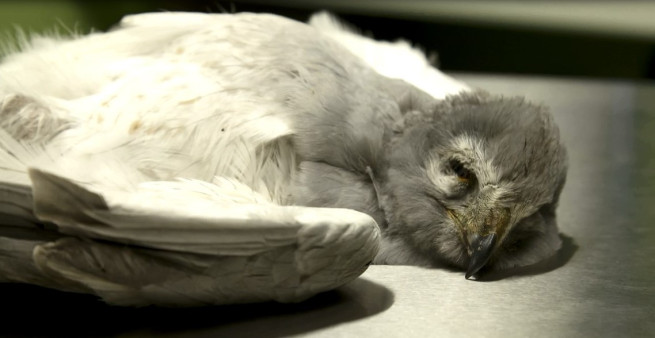
A 22-year-old man has been arrested and charged in connection with the death of a sparrowhawk in Inverness-shire.

Officers were called to land south of Inverness following a report of a bird of prey which had been killed on Thursday, 16 September.

The man has been charged with wildlife crime offences following a police investigation and a report will be submitted to the Procurator Fiscal.

Detective Chief Superintendent Laura McLuckie, Police Scotland’s lead for wildlife crime, said: “We are committed to tackling wildlife crime in the Highlands and work closely with a range of partners to ensure all incidents are thoroughly investigated.

We know this is an issue which concerns many people in communities across the region and I would encourage anyone who has concerns about wildlife crime in their area to call Police Scotland on 101.”

ENDS

As the individual has now been charged no more can be said about this prosecution until court proceedings commence. Suffice to say this case will be of significant interest to readers of this blog and, I dare say, Government officials. I’ll be following it closely.

Well done to the police wildlife crime officers in the Highland division of Police Scotland – the charging of this man is as a result of some top-level police work, with officers responding at significant speed. That they’ve also produced a press statement is excellent.

Compare and contrast with the frankly pathetic response of wildlife crime officers in the Tayside division in relation to the shot peregrine and illegally trapped long-eared owl that I’ve been blogging about this week (see here and here).

This inconsistency of approach is hugely frustrating and I hope will be addressed by senior officers responsible for dealing with wildlife crime at a national level.

UPDATE 7th September 2022: Court hearing delayed for Scottish gamekeeper accused of killing sparrowhawk (here)

UPDATE 11th November 2022: Court hearing delayed again for Scottish gamekeeper accused of killing sparrowhawk on grouse moor (here)

NatureScot considering another out-of-season muirburn licence for notorious Leadhills Estate

You may remember last year that NatureScot (formerly known as Scottish Natural Heritage), the statutory conservation agency, granted an out-of-season muirburn licence to the notorious Leadhills Estate in South Lanarkshire (see here, here, here, here).

This was a controversial decision for a number of reasons, not least because at the time muirburn had been banned across the whole of Scotland after emergency Coronavirus legislation was passed in April 2020, but also because Leadhills Estate is notorious as being at the centre of wildlife crime investigations (approx 70) over the last 18 years and is currently serving a three-year General Licence restriction, imposed on the estate by SNH because Police Scotland provided ‘clear evidence’ of wildlife crimes having being committed by persons unknown in recent years. The estate is reportedly under further police investigation since more wildlife crime allegations were made last year, so questions were asked about why it was receiving ‘special treatment’ from the licensing authority.

[An example of muirburn on a grouse moor in the Angus Glens, April 2021]

The environmentally damaging consequences of muirburn (setting fire to upland heather moorlands as part of the routine ‘management’ for grouse shooting) are well documented, with some of these fires leading to increased carbon emissions, increased flood risk, increased air pollution and threats to other ecosystem services.

With the intensification of grouse moor management in some areas of Scotland comes an increase in the extent and intensity of rotational heather burning. These fires have even been lit on areas of deep peat (forbidden by the voluntary Muirburn Code, which many land managers seem to simply ignore) causing damage to protected blanket bog habitat – in fact 40% of the area of land burned for grouse moor management in Scotland is on deep peat (see here).

Why on earth, in a climate emergency, is NatureScot permitting out-of-season burning, and especially on this particular estate that is supposedly the subject of sanctions due to ongoing wildlife crime?

As it turns out, the management of Leadhills Estate (which appears to be a company run by our old friend Mr Osborne) decided against using its out-of-season muirburn licence last year, because, according to its licence return, of the Coronavirus restrictions, although NatureScot has told me that the restrictions did not apply at the time the estate wanted to set fire to the moor.

Fast forward a year and guess what? In June 2021 Leadhills Estate applied yet again for another out-of-season muirburn licence and according to a series of FoI responses I’ve received, NatureScot is actively considering the application.

Here’s a copy of the licence application:

And here is the map showing the proposed area of burning on the grouse moor:

The licence application was submitted in June 2021 and it requested permission to set fire to the grouse moor from 1st – 30th September (the official muirburn season in Scotland runs from 1st October to 15th April, although this can be extended to 30th April at the landowner’s discretion, right at the time when ground-nesting birds have commenced their breeding season – its totally bonkers).

Here’s a summary of the FoI responses I’ve received from NatureScot about this year’s licence application:

17 June 2021 – I asked NatureScot whether a licence application had been made for Leadhills Estate.

15 July 2021 – NatureScot confirmed an application had been received (on 9 June) but said it hadn’t yet been assessed and that they were advising customers that there was a six week waiting time for applications relating to anything other than health and safety purposes.

16 July 2021 – I asked again about the status of the application.

12 August 2021 – NatureScot told me ‘the licensing team intend to assess this application in the next few days’.

1st September 2021 – I asked again about the status of the application (as this was the start date for the out-of-season licence to begin).

2nd September 2021 – NatureScot replied, ‘The licensing team is awaiting for some further information from one of our advisors before taking this further’.

15th September 2021 – I asked again about the status of the application.

16th September 2021 – NatureScot replied, ‘I have chased up licensing team but haven’t heard anything back from them yet’.

So apparently, NatureScot still hasn’t made a decision on this licence application, and with only nine days remaining until the muirburn season officially opens anyway, perhaps this is a clever stalling tactic to avoid having to issue the licence. Although I would argue, for all the reasons stated above, that the licence application should have been dismissed at first sight back in June.

The issue of setting fires to grouse moors in a climate emergency is quite high on the political agendas of both the Westminster and Scottish Governments. In November 2020, in response to the long-awaited Werritty Review on grouse moor management, then Environment Minister Mairi Gougeon announced there would be a statutory ban on burning peatland except under licence for strictly limited purposes such as habitat restoration. She also said that the Government would revisit the definition of ‘peatland’ and consider whether a tighter and stricter definition was required.

We’re still waiting to see progress on that commitment.

I’ve done some further digging about out-of-season muirburn on Leadhills Estate and have found the following information:

2017 – Licence issued (although apparently the estate failed to provide a licence return, which is a breach of the licence conditions).

2018 – The estate did not apply for an out-of-season muirburn licence.

2019 – Licence application made but was refused. The NatureScot assessor wrote: ‘Removing dead Molinia does not constitute a licensable purpose as burning within the muirburn season will achieve this aim and is a common management practice’. And, ‘Evidence of high Molinia not presented [in photographs]’.

2020 – Licence application made. NatureScot refuses it but estate appeals and NatureScot caves in and approves the licence.

The explanation given by NatureScot for its refusal of the 2019 licence is very interesting, because the removal of Molinia is again the stated purpose on Leadhills Estate’s current licence application for permission to conduct out-of-season muirburn.

What’s the decision going to be this year?

What’s more important – grouse shooting or the climate emergency?

Long-eared owl illegally held in trap on same Strathbraan grouse moor where shot peregrine found

Further to yesterday’s blog about a shot peregrine being found dead on a grouse moor in the notorious raptor persecution hotspot of Strathbraan (see here), further news has just emerged of another offence being committed on the same shooting estate.

Ian Thomson, Head of Investigations at RSPB Scotland has just tweeted the following:

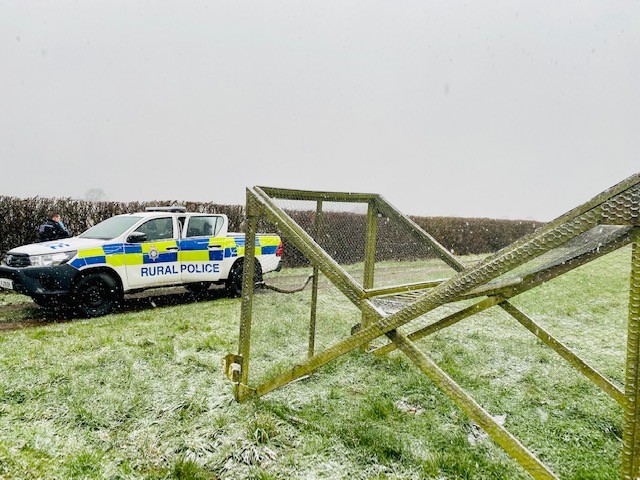
The dead peregrine was found during a police/SSPCA follow-up to incidents of cage trap abuse on the same estate – eg. this LE Owl had been illegally held in a trap, in pouring rain, for >24hrs. IMO there is no legitimate reason for a grouse moor be using crow traps in October…

Here is a photo of the illegally-trapped Long-eared owl:

Crow cage traps are not illegal to use under the General Licences, as long as certain conditions are met. Birds of prey can often enter these traps and are then unable to escape. Catching a raptor is not an offence in itself. However, the trap operator has a legal obligation to check the trap at least once every 24 hours and if a trapped raptor (or any other non-target species) is found and it is uninjured, the trap operator MUST release it back to the wild immediately. If the trapped raptor is held for longer than 24 hours then the trap operator has committed an offence under the Wildlife & Countryside Act 1981.

To not release this long-eared owl within 24 hours of capture is a clear offence and there may also be other welfare offences to consider under the Animal Health & Welfare (Scotland) Act 2006 if the owl did not have adequate food, water and shelter.

Ian also raises the question of the legitimacy of operating a crow cage trap in October. He’s absolutely right to question this. Crow cage traps can be used under the General Licences in Scotland for three purposes:

  • GL 01/2021: To kill or take certain birds for the conservation of wild birds.
  • GL 02/2021: To kill or take certain birds for the prevention of serious damage to livestock, foodstuffs for livestock, crops, vegetables and fruit.
  • GL 03/2021: To kill or take certain birds for the preservation of public health, public safety and preventing the spread of disease

For what legitimate purpose was this crow cage trap being deployed on a Strathbraan grouse moor in October??

I’m very curious about why a charge has not been brought against the trap operator in this case. All crow cage traps now have to be registered with NatureScot by the trap operator and a sign affixed to the trap to show the trap operator’s registration number. Police Scotland can use this number to identify the trap operator and pursue a prosecution if an offence has been committed.

I’m even more curious to know why NatureScot has not imposed a General Licence restriction on this estate. The crow cage trap offence was committed in October 2020. The shot peregrine was discovered in November 2020. The Scottish SPCA is pursuing a case for alleged snaring offences also discovered in November 2020.

It’s now September 2021.

Just what is going on here? There are serious questions to be asked of Police Scotland and NatureScot.

Why no publicity?

Why no prosecution?

Why no General Licence restriction?

Peregrine found shot dead on grouse moor in Strathbraan – Police Scotland refuse to publicise

A peregrine falcon was found shot dead on a grouse-shooting estate in the Strathbraan area of Perthshire in November 2020.

The discovery was made during a police-led multi-agency raid following reports of suspected wildlife crime taking place on the estate. I blogged about that raid in February this year (see here).

This is an estate that has previously been under investigation for alleged wildlife crime offences.

My understanding is that the Scottish SPCA are progressing a case for alleged snaring offences but that Police Scotland were dealing with the shot peregrine (because it was already dead and so was beyond the (current) remit of the SSPCA)

Strathbraan is an area that has received much attention on this blog. Dominated by grouse-shooting estates, it has a very well-earned reputation as a wildlife crime hotspot, and is particularly notorious for the suspicious disappearance of satellite-tagged eagles (one of whose tags turned up in a river, its harness cut and the tag wrapped in lead sheeting to prevent transmission – see here). It is also the area where SNH issued a (flawed) licence in 2018 permitting the mass killing of ravens on the basis of ‘seeing what happened’ – but which was later withdrawn after a legal challenge by the Scottish Raptor Study Group.

[Evidence of intensive grouse moor management in Strathbraan. Photo by Ruth Tingay]

Given the reputation of Strathbraan as a wildlife crime hotspot, and given that raptor persecution is a national wildlife crime priority, and given that Police Scotland has spent much of the last year with a dedicated campaign to try and raise public awareness of wildlife crime and encourage people to recognise and report suspected incidents, it’s difficult to understand why the police have deliberately withheld this crime from the public.

And it has been deliberately withheld. This wasn’t an oversight, or an admin error. It was a conscious decision not to say anything about it. How do I know that? Well, because I’ve been talking to Police Scotland about this crime since January 2021 and have asked, repeatedly, when they were planning on putting out the news / making an appeal for information because I believed it to be in the public interest to do so.

At first I was told that no press release was planned “until I have done a little bit more enquiry in to the circumstances“.

Fair enough.

Three months later I asked again but got no response. I tried again at four months and then finally five months later I was told, “There was no need for us to put out anything in the press from our perspective“, and “As you say from the evidence we have, we will never know where and when it was shot“.

Good grief.

Where’s the x-ray of the shot bird? An examination of its injuries (e.g. broken wings) would provide a pretty good indication of whether it was shot close to where it had been found dead, or whether it might have had the capacity to fly several miles before succumbing to its injuries. In which case, an appeal for information would have been a logical next-step, surely?

And if the police decide to say nothing, as they have in this case, where is the public record of this offence? It’s been almost a year since it was found.

How many more raptor persecution crimes are Police Scotland keeping quiet about? Quite a few, as it happens. More to come….

UPDATE 21st September 2021: Long-eared owl illegally held in trap on same Strathbraan grouse moor where shot peregrine was found (here)

Chris Packham to host REVIVE national conference: 14 November 2021

REVIVE, the coalition for grouse moor reform in Scotland has announced details of its 2021 national conference, taking place at Perth Concert Hall on Sunday 14th November from 10.30am.

The event will be hosted by Chris Packham and will include speakers from the five coalition partners (Raptor Persecution UK, Friends of the Earth (Scotland), OneKind, Common Weal and League Against Cruel Sports) as well as guest speakers including journalist and broadcaster Lesley Riddoch and a range of politicians and representatives from various environmental and land reform organisations.

REVIVE’s first conference was held at Perth Theatre in 2019 and was a sell out event. Two years on, interest and support for the coalition’s aims continues to grow so this year’s conference has been moved to the larger concert hall venue. Perth Concert Hall has implemented a suite of measures to help everyone stay safe – see here

This year’s full conference programme will be announced in the coming weeks but tickets are now on sale HERE

[Panellists at REVIVE’s 2019 conference included Bob Elliot (OneKind), Andrea Hudspeth (Scottish Raptor Study Group), Alison Johnstone MSP (Scottish Greens), Ian Thomson (RSPB) and Ruth Tingay (RPUK). Photo by REVIVE]

As well as presentations and panel discussions, there’ll be a number of stalls and plenty of time in the breaks for chatting with the REVIVE directors and guest speakers, as well as opportunities for making new connections and for catching up with old friends.

I look forward to seeing some of you there.

For those of you who want to find out more about the REVIVE coalition for grouse moor reform, please visit the website here

Multi-agency raid following suspected raptor persecution in Norfolk

Norfolk Police led a multi-agency raid in yesterday, executing a warrant in Breckland in relation to suspected raptor persecution crimes.

The police were joined by staff from Natural England, National Wildlife Crime Unit and RSPB Investigation’s team. Items were seized and dead birds of prey were found.

The investigation is ongoing.

[Photo by RSPB]

The Breckland district of Norfolk:

This is at least the 8th multi-agency search in England this year, all in response to raptor persecution crimes. On 18th January 2021 there was a raid in Suffolk (here), on 15th March there was a raid in Lincolnshire (see here), on 18th March a raid in Dorset (here), on 26th March a raid in Devon (see here), on 21st April a raid in Teesdale (here), on 2nd August a raid in Shropshire (here), on 12th August a raid in Herefordshire (here) and now this raid in Norfolk.

That’s a lot of raids in a relatively short space of time, in comparison to recent years. It’s testament to the agencies involved that they are being so proactive and working well together in a genuine multi-agency partnership, which is brilliant to see. It’s also testament to the fact that raptor persecution continues in many locations across the UK, despite what the game-shooting organisations would have us believe.

Whether these investigations result in prosecutions is another matter entirely, but personally I’m delighted that at least this early part of the criminal justice process appears to have been re-energised after a long period of stagnation. Well done to all those involved.

Blatant wilful blindness from Environment Minister Rebecca Pow on illegal killing of birds of prey on driven grouse moors

How about this for blatant wilful blindness from an Environment Minister.

This response to a Westminster parliamentary question on the continued illegal persecution of birds of prey in the uplands is about as disingenuous as it gets. I doubt very much if Rebecca Pow wrote it herself – this’ll be the work of a DEFRA civil servant – but Rebecca Pow has allowed her name to be put to it without even a hint of shame.

[Westminster Environment Minister Rebecca Pow]

Here’s the written question from Fleur Anderson MP (Labour Shadow Minister):

To ask the Secretary of State for Environment, Food and Rural Affairs, what steps he is taking to prevent the killing of (a) hen harriers, (b) golden eagles, (c) peregrines, (d) goshawks and (e) other birds of prey in the uplands and support the recovery of each species’ populations’.

And here is the response from Environment Minister Pow, published in Hansard yesterday (10th September 2021), ironically on the same day that I’d blogged about there being no prosecution for the shooting of five buzzards found shot and buried on a grouse moor in the North York Moors National Park during the first lockdown in April 2020:

All wild birds including birds of prey are protected under the Wildlife and Countryside Act 1981, which provides a powerful framework for the conservation of wild birds, their eggs, nests and habitats. The Government is committed to ensuring the protection afforded to birds of prey is effectively enforced. There are strong penalties for offenders, including imprisonment.

To address concerns about the illegal killing of birds of prey, senior government and enforcement officers have identified raptor persecution as a national wildlife crime priority. Defra sits on the police-led Raptor Persecution Priority Delivery Group, which takes forward activities to raise awareness and facilitate intelligence and incident reporting, leading to increased prevention and enforcement activity. The group focuses on ‘hotspot’ areas of the country (which will include some upland areas) rather than specific species, although the golden eagle, goshawk, hen harrier, peregrine and white-tailed eagle have been identified as being of particular concern.

Additionally, the Hen Harrier Action Plan seeks to secure the long-term future of the hen harrier as a breeding bird in England. It includes measures to stop illegal persecution, and an action to reintroduce the hen harrier in the south of England. The long-term plan was published in January 2016 and we believe that it remains the best way to safeguard the hen harrier in England. This year has seen a further increase in the number of breeding hen harriers in England. 84 chicks fledged from nests across the uplands in County Durham, Cumbria, Lancashire, Northumberland and Yorkshire. These are the highest numbers for hen harrier breeding in England since the 1960s’.

It’s quite obvious that this answer has been designed to pull the wool over the eyes of your average member of the public, assuring the uninformed and the gullible that the Government has this under control and there’s no reason for anyone to be concerned because the Government is ‘committed’ to effective enforcement and the criminals are sent to jail. That would all be fine if there WAS effective enforcement, and that offenders DID get sent to jail for these heinous crimes, but it’s an utter fallacy.

Yes, it’s accurate to say there are strong penalties available for raptor persecution crimes, including imprisonment, but as Minister Pow will know, there’s a huge gulf between there being a provision for this in the legislation and it being applied in real life. For example, when was the last time that a criminal gamekeeper was sent to jail for killing a bird of prey? That’s an easy one to answer – never, in England & Wales. It has never happened. The only time a gamekeeper has received a custodial sentence for killing a bird of prey in the UK was in 2014 when a gamekeeper was filmed clubbing to death a goshawk on the Kildrummy Estate in Scotland two years earlier (see here). It was headline news at the time precisely BECAUSE it was the first ever custodial sentence, and it was the last, too.

It’s also complete deception to claim that the Raptor Persecution Priority Delivery Group (RPPDG) is delivering increased prevention or increased enforcement in the hotspot persecution areas. There isn’t ANY evidence to support such claims. The RPPDG is, in my opinion, a partnership sham, designed to look as though efforts are being made to effectively tackle illegal raptor persecution in England and Wales. It’s been in existence since 2011 and the ‘delivery’ results speak for themselves – so far it has achieved absolutely sod all in terms of contributing towards the conservation of raptors in the UK and instead has frustrated the efforts of those organisations who are genuinely trying to stamp out persecution (e.g. see here).

And as for the so-called Hen Harrier Action Plan – readers of this blog don’t need reminding what an absolute joke this is. It does seem, however, that the Minister needs to be reminded that the illegal persecution of hen harriers on grouse moors is systemic, as demonstrated by the Government’s own commissioned research published in 2019 (here) which showed that satellite-tagged hen harriers are ten times more likely to be killed on land managed for driven grouse shooting than any other type of land management.

Surely it’s not beyond the understanding of the Minister and her aides that the number of chicks fledged since the brood meddling trial began is irrelevant if the slaughter of those birds continues after the fledging period? We know that at least 56 hen harriers have been illegally killed and/or have ‘disappeared’ in suspicious circumstances in the last three years alone (see here for the grim catalogue of death) and this number is set to rise when the police get around to publicising more incidents that have happened this year. Oh, and there hasn’t been a successful prosecution for any of them.

Nothing has changed. Raptors continue to be poisoned, trapped and shot on driven grouse moors and the Westminster Environment Minister’s wilful blindness is responsible for enabling that to continue.

No prosecution for 5 shot buzzards found hidden on Bransdale Estate, North York Moors National Park

In April 2020, during the first lockdown, North Yorkshire Police conducted a search of Bransdale Estate in the North York Moors National Park where they discovered five dead buzzards that had been shoved in a hole under a large rock, presumably to conceal them.

X-rays confirmed that at least four of those buzzards had been shot. A later post-mortem suggested the 5th buzzard had also been shot.

Eight individuals were interviewed under caution.

North Yorkshire Police issued a press statement in May 2020, including an appeal for information (see here).

The following day, Channel 4 News featured the crime in a six minute film (here) which included shocking footage from the police officer’s body camera of when the dead buzzards were being pulled from the hole.

In early June 2020 I blogged about the game-shooting industry’s response to these abhorrent crimes – see here. Remember, this is the industry that has professed to supposedly having a ‘zero tolerance’ policy when it comes to raptor persecution. I’m not quite sure how a wall of silence from the main shooting organisations reflects this policy.

One group did comment (the North York Moors Moorland Association), some of whose members may well have been among those interviewed under caution by the police in the course of this investigation, but I’m not sure that the group’s decision to slag off the police was all that bright or did them any favours (see here).

Fast forward one year and four months to August 2021, and Inspector Matt Hagen of North Yorkshire Police revealed during an online interview about the difficulty of investigating raptor persecution incidents, that this particular criminal investigation is not going any further:

There was one estate on the North York Moors National Park, there were five dead buzzards that were found. Four of them had definitely been shot and from the post mortem it suggested that the 5th one had been shot as well.

We’ve analysed mobile phones and all this takes such a long time and costs a lot of money and ultimately at the end of it all we are not going to be able to progress this case because we have to be able to prove beyond reasonable doubt, to a court, who is responsible, and on this case we’re not able to do that, unfortunately“.

It’s been suggested to me from several locals that a number of gamekeepers have since ‘moved on’ from this estate (to work on game-shooting estates in other parts of the UK) and also that the shooting rights have changed hands since these crimes were uncovered. If true, all coincidental, I’m sure.

I don’t know whether the estate is still lauded as an accredited member of the British Game Alliance, the industry’s so-called official marketing board, which now appears to have changed its name to British Game Assurance. Ironic really because the BGA doesn’t seem to do transparency (e.g. here and here).

So there we have it. Yet another disgraceful raptor persecution crime uncovered on a UK driven grouse shooting estate, inside a National Park no less, where armed culprits have got away with committing wildlife crimes without suffering any consequence whatsoever. And in this case, not through lack of effort by North Yorkshire Police.

[X-ray of one of the five shot buzzards found concealed in a hole on the grouse shooting estate]

Here’s what Natural England hasn’t told you about this year’s hen harrier brood meddling scandal

The scandalous hen harrier brood meddling trial lurched onwards again this year, with reports that two nests were ‘meddled’ with (i.e. the chicks were removed under a licence issued by Natural England, they were raised in captivity, and were then released back in to the wild, to be illegally killed on a grouse moor somewhere in England, Wales or Scotland, e.g. see here and here).

Regular blog readers will know all about DEFRA’s hen harrier brood meddling trial but for new blog readers, hen harrier brood meddling is a conservation sham sanctioned by DEFRA as part of its ludicrous ‘Hen Harrier Action Plan‘ and carried out by Natural England (NE), in cahoots with the very industry responsible for the species’ catastrophic decline in England. For more background see here.

A blog reader who wishes to remain anonymous sent me this photograph of one of the HH release aviaries on a grouse moor in the Yorkshire Dales National Park in July this year. Look at the state of it! It’s no wonder European countries won’t ‘donate’ hen harriers for a proposed southern reintroduction project if this is how we treat our own supposedly protected species!

The young hen harriers that were taken from their parents and shoved inside this structural monstrosity came from the Swinton Estate in North Yorkshire. I won’t publicise the name of the estate they were removed to in case the young birds are still hanging around there but this estate is within the Yorkshire Dales National Park and although it’s not an estate with a bad reputation for raptor persecution, some of it’s near neighbours are absolute shockers with a long, long, long history of poisoned and shot raptors being found on their grouse moors. God help the four young hen harriers released here.

As a side issue, a condition of the previous brood meddling licence (here) was that it was recommended that ‘Brood managed hen harriers should not be released in sight of burnt heather strips where possible‘. I don’t know if that condition still applies in the current licence (I haven’t seen the latest version) but if it does, it appears to have been ignored, judging by the photograph of the release aviary. Ignoring licence conditions seems to be a running theme when it comes to Hen Harrier meddling, doesn’t it?!

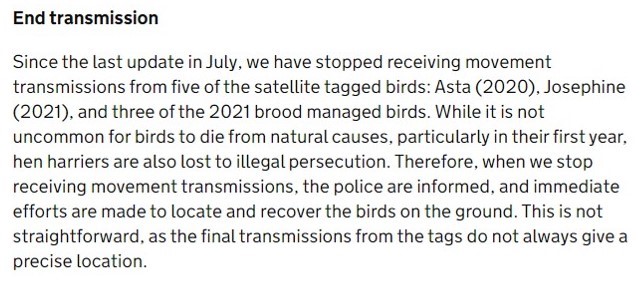
But that’s not the main focus of this particular blog. Something else happened this year during the brood meddling trial and seeing as Natural England aren’t being very forthcoming (surprise, surprise, when are they ever?), I’m going to write about it because I believe this information should be in the public domain, especially as this is supposedly a scientifically-rigorous trial (ha!) and at the end of the five-year trial period, there will need to be a public consultation on any decision Natural England / DEFRA makes about whether brood meddling is wheeled out as a standard (mis)management option. The public should have access to ALL the information, not just the bits that Natural England decides to share.

For example, on 13th August this year Natural England wrote the following about this year’s brood meddling trial:

In 2021, trial interventions were approved at two nests: one in North Yorkshire and one in Lancashire. All eight chicks from these nests have been successfully reared to become healthy fledglings and released‘.

That was it. The full extent of what Natural England thought we ought to know about the brood meddling trial this year. It’s pathetic. We’re not five. We don’t need the fairy story approach, (‘and they all lived happily ever after‘) we want details (albeit not any details that would compromise the safety of the released hen harriers).

We do know a little bit more – Dr Mark Avery and his legal team continue to try to hold Natural England to account on hen harrier brood meddling and Natural England released some more detail to them (see here), but I noted without surprise that Natural England had still not revealed the almighty cock-up that happened at one of this year’s two brood meddled nests.

So here’s what happened, according to numerous sources.

Two nests were brood meddled, one in North Yorkshire (Swinton) and one in Lancashire.

At the Lancashire site, the male was polygynous. In other words, he was providing food for two different females at two different nests. The fieldworkers should have known this because the male had been previously satellite-tagged. One nest was further ahead than the other in terms of breeding chronology and this would be considered the ‘primary’ nest, the other one the ‘secondary’ nest.

When it came to making the decision about which nest to brood meddle, ‘someone’ (and I don’t know who, see discussion below) decided to brood meddle the primary nest, where the chicks were at a more advanced age than the chicks in the secondary nest. So the chicks from the primary nest were removed and taken in to captivity, and the chicks in the secondary nest were left alone.

However, this brood meddling (removal of the chicks) at the primary nest caused such disruption to the male that he immediately took off and flew from the area, abandoning not just the brood meddled nest, but also the secondary nest where his second female was still present with chicks, all of whom were reliant upon that male to provision them with food. He didn’t return – apparently his satellite tag data confirmed he had abandoned all breeding attempts at these sites and had moved on.

A gamekeeper was instructed to provide additional supplementary food for the secondary nest and I understand that all the chicks managed to fledge successfully with this extra support. It would have taken an enormous effort and I suggest that Natural England and DEFRA officials owe that gamekeeper a massive drink because his/her efforts have saved their blushes, as well as those harriers. I can’t imagine the gamekeeper was thrilled about having to spend so much time provisioning these chicks (it’s a beautiful irony) and even if s/he had wanted to do them in, they wouldn’t have had the chance given the panic that a potential nest failure would have caused to everyone involved with the trial and the subsequent attention they’d have paid to that secondary nest. Nevertheless, full credit to the keeper for his/her efforts supporting the chicks to the fledging stage. That was a job well done.

So who decided to brood meddle the primary nest and not the secondary nest? According to the original brood meddling project plan, the decision on which nest to plunder is made collectively by the Project Board:

I’m pretty sure the make-up of the Board no longer looks like this. I understand that Rob Cooke and Adrian Jowitt have both been moved from hen harrier work and are doing something else. Steve Redpath took early retirement so presumably isn’t still involved as a representative from Aberdeen University. Jemima Parry Jones is still involved – she’s the licence holder so is central to all decisions made about brood meddling. Is Adam Smith still at GWCT? He may be, but if he is he’s flying low under the radar these days. Philip Merricks is no longer at Hawk & Owl Trust. Amanda Anderson is still a key player at the Moorland Association but Robert Benson is no longer Chair – that role is currently taken by Lord Masham of, wait for it, the Swinton Estate!

Here’s the flow chart of decision-making that the Project Board must follow, also from the project plan:

I doubt Natural England will offer any voluntary insight in to this year’s calamitous actions but it’ll have to include the details in the annual report the brood meddling team is required to provide, and also report the details to the scientific advisory panel.

It’ll be interesting to see what they make of this on-going fiasco.

Scotland’s Programme for Government announced: grouse moor licensing, SSPCA powers & General Licence review

Scotland’s First Minister Nicola Sturgeon has today revealed the 2021 to 2022 Programme for Government, outlining the policies and actions that are expected to take place over the coming year as well as the expected legislative programme for the forthcoming parliamentary year.

This programme for Government is the first one since the historic power-sharing agreement between the SNP and the Scottish Greens and it’s apparent that there has been some influence from the Greens’ policy machine.

The 2021 to 2022 Programme for Government can be downloaded here:

Of obvious interest to this blog is when the Scottish Government is finally going to pull its finger out and deliver the grouse shooting licence it promised in response to the Werritty Review, back in November 2020. We’re fast approaching a year since that commitment was made, which came a full year after the Werritty Review’s recommendations were presented to the Government (Nov 2019), which came more than two years after the Werritty Review was commissioned (May 2017) on the back of a devastating report that showed the extent of ongoing golden eagle persecution and its link to the driven grouse shooting industry. That report had been commissioned by the Government in August 2016 on the back of an RSPB press release about eight young satellite-tagged golden eagles disappearing in highly suspicious circumstances on grouse moors in the Monadhliaths over a period of five years.

As you can see, and as many of you already know, the Government has been promising action on this for a very long time and now having committed to taking that action, it needs to bloody well get on with it.

Since the Government’s announcement in Nov 2020 that it would, finally, introduce a grouse-shooting licence without delay, more birds of prey have turned up illegally killed, including this young golden eagle, found ‘deliberately poisoned’ (according to Police Scotland) on an Invercauld estate grouse moor in the Cairngorms National Park, in the heart of Royal Deeside.

We cannot afford to have any further procrastination, navel-gazing or can-kicking.

Here’s what the Programme for Government (p90) says about delivering the Werritty Review recommendations:

As the 2021 grouse-shooting season is already underway, I would want to see progress on this policy before the start of the 2022 season, in August next year. That means Scot Gov needs to get on with its stakeholder and public consultations as soon as possible.

Also featuring in the Programme for Government is a review of the use of General Licences, which are used to permit the widespread killing of millions of birds each year (typically various crow species, and others) without any real oversight or monitoring, ostensibly for quite sensible reasons such as the protection of crops, to protect public safety and to conserve some bird species. Campaign group Wild Justice has been busy challenging the lawfulness of these licences in England, Wales (and currently Northern Ireland), arguing that the current licences are not fit for purpose and that they allow too much ‘casual killing’. The group’s efforts have forced significant review and change by the statutory authorities. It is believed that this proposed review of the General Licence system in Scotland is designed to head off any potential legal challenge that Wild Justice may be considering. That’s smart.

Here’s what the Programme for Government (p90) says about its General Licence review:

Animal welfare issues feature quite strongly in the Programme for Government and many of my colleagues in other organisations will no doubt be pleased that these issues feature, but will probably be less pleased about the ongoing delay beyond this parliamentary year for tackling some of them.

Here’s what the Programme for Government (p89) says about animal welfare issues:

The issue of increased powers for the Scottish SPCA is of significant interest, not just for the benefit it’ll bring to animal welfare but specifically, for the boost these additional powers will provide to wildlife crime investigations in Scotland.

However, this is a subject that the Scottish Government has been procrastinating on for over ten years. Personally, I don’t believe that the new ‘independent taskforce’ (still to be appointed) will ‘report before the end of 2022’. Why don’t I believe it? Because the Scottish Government has failed, repeatedly, to stick to its promises on this subject:

For new blog readers, here’s the timeline of embarrassment:

February 2011: Increased powers for the SSPCA was first suggested by former MSP Peter Peacock as an amendment during the Wildlife & Natural Environment (Scotland) Bill debates. The then Environment Minister Roseanna Cunningham rejected it as an amendment but suggested a public consultation was in order.

September 2011: Seven months later Elaine Murray MSP (Scottish Labour) lodged a parliamentary motion that further powers for the SSPCA should be considered.

November 2011: Elaine Murray MSP (Scottish Labour) formalised the question in a P&Q session and the next Environment Minister, Stewart Stevenson MSP, then promised that the consultation would happen ‘in the first half of 2012’.

September 2012: Nine months later and nothing had happened so I asked Paul Wheelhouse MSP, as the new Environment Minister, when the consultation would take place. The response, in October 2012, was:

The consultation has been delayed by resource pressures but will be brought forward in the near future”.

July 2013: Ten months later and still no sign so I asked the Environment Minister (still Paul Wheelhouse) again. In August 2013, this was the response:

We regret that resource pressures did further delay the public consultation on the extension of SSPCA powers. However, I can confirm that the consultation document will be published later this year”.

September 2013: At a meeting of the PAW Executive Group, Minister Wheelhouse said this:

The consultation on new powers for the SSPCA will be published in October 2013“.

January 2014: In response to one of this blog’s readers who wrote to the Minister (still Paul Wheelhouse) to ask why the consultation had not yet been published:

We very much regret that resource pressures have caused further delays to the consultation to gain views on the extension of SSPCA powers. It will be published in the near future“.

31 March 2014: Public consultation launched.

1 September 2014: Consultation closed.

26 October 2014: I published my analysis of the consultation responses here.

22 January 2015: Analysis of consultation responses published by Scottish Government. 233 responses (although 7,256 responses if online petition included – see here).

I was told a decision would come from the new Environment Minister, Dr Aileen McLeod MSP, “in due course”.

1 September 2015: One year after the consultation closed and still nothing.

25 February 2016: In response to a question posed by the Rural Affairs, Climate Change & Environment Committee, Environment Minister Dr Aileen McLeod said: “I have some further matters to clarify with the SSPCA, however I do hope to be able to report on the Scottish Government’s position on this issue shortly“.

May 2016: Dr Aileen McLeod fails to get re-elected and loses her position as Environment Minister. Roseanna Cunningham is promoted to a newly-created position of Cabinet Secretary for the Environment.

12 May 2016: Mark Ruskell MSP (Scottish Greens) submits the following Parliamentary question:

Question S5W-00030 – To ask the Scottish Government when it will announce its decision regarding extending the powers of the Scottish SPCA to tackle wildlife crime.

26 May 2016: Cabinet Secretary Roseanna Cunningham responds with this:

A decision on whether to extend the investigatory powers of the Scottish SPCA will be announced in due course.

1 September 2016: Two years after the consultation closed and still nothing.

9 January 2017: Mark Ruskell MSP (Scottish Greens) submits the following Parliamentary question:

Question S5W-05982 – To ask the Scottish Government by what date it will publish its response to the consultation on the extension of wildlife crime investigative powers for inspectors in the Scottish SPCA.

17 January 2017: Cabinet Secretary Roseanna Cunningham responds:

A decision on whether to extend the investigatory powers of the Scottish Society for the Prevention of Cruelty to Animals will be announced in the first half of 2017.

31 May 2017: Cabinet Secretary Roseanna Cunningham rejects an extension of powers for the SSPCA ‘based on legal advice’ and instead announces, as an alternative, a pilot scheme of Special Constables for the Cairngorms National Park (here). It later emerged in 2018 that this pilot scheme was also an alternative to the Government’s 2016 manifesto pledge to establish a Wildlife Crime Investigation Unit as part of Police Scotland – a pledge on which it had now reneged (see here).

November 2019: The pilot scheme of Special Constables in the Cairngorms National Park was an absolute failure as a grand total of zero wildlife crimes were recorded by the Special Constables but plenty were reported by others (see here).

June 2020: Mark Ruskell (Scottish Greens) proposed further powers for the SSPCA at Stage 2 of the Animals and Wildlife Bill. The latest Environment Minister, Mairi Gougeon persuaded him to withdraw the proposed amendment on the basis that she’d consider establishing a taskforce to convene ‘this summer’ to consider increased powers (see here).

December 2020: Mark Ruskell (Scottish Greens) submits two Parliamentary questions asking about the status of the taskforce and who is serving on it (see here).

January 2021: New Environment Minister Ben Macpherson says the taskforce has not yet been appointed but that it is “expected to be established later this year“ (see here).

September 2021: In the 2021 to 2022 Programme for Government it was announced that the ‘independent taskforce [Ed: still to be appointed] will report before the end of 2022’ (see today’s blog, above).

Given the Government’s embarrassing track record on kicking this issue in to the long grass, I fully expect to be writing a blog in a year’s time about how zero progress has been made. I hope I’m proved wrong.