The Moorland Association, a lobby group for grouse moor owners in England, has jumped the gun and prematurely declared the 7-year hen harrier brood meddling trial “a remarkable success story” and says its Board has decided to apply to Natural England for what it describes as a ‘conservation licence’ to permit continued hen harrier brood meddling on an annual basis now that the trial has ended (see Moorland Association blog here).
For new blog readers, the hen harrier brood meddling trial was a conservation sham sanctioned by DEFRA as part of its ludicrous ‘Hen Harrier Action Plan‘ and carried out by Natural England between 2018 – 2024, in cahoots with the very industry responsible for the species’ catastrophic decline in England. In general terms, the plan involved the removal of hen harrier chicks from grouse moors, they were reared in captivity, then released back into the uplands just in time for the start of the grouse-shooting season where many were illegally killed. It was plainly bonkers. For more background see here and here.
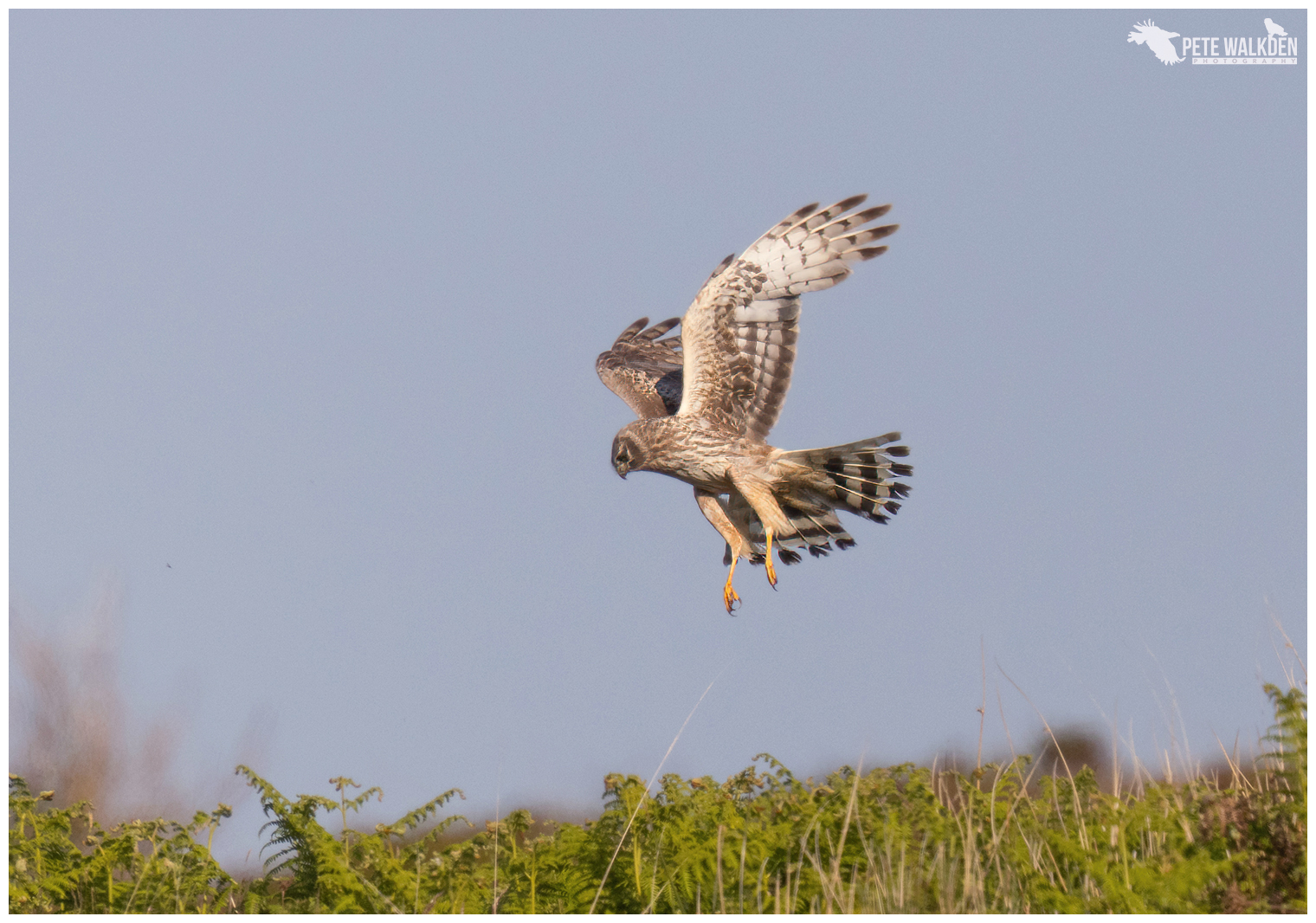
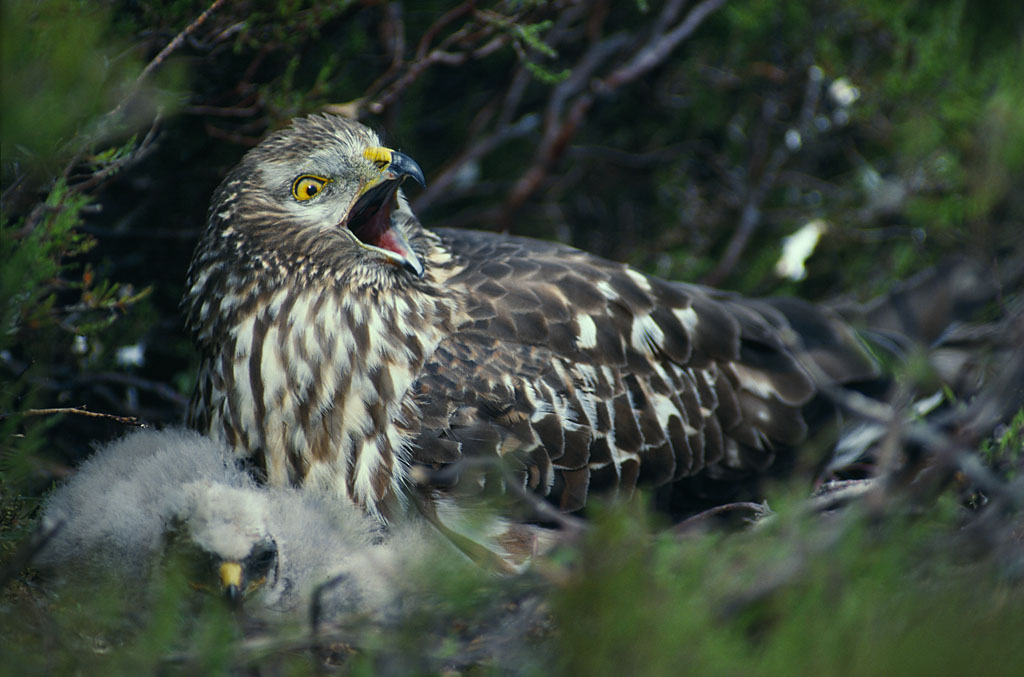
Hen harrier photo by Laurie Campbell
I’ve written a bit about hen harrier brood meddling this year, including the news that no hen harriers were brood meddled in the trial’s final year (2024) and possible reasons why that might have been (here) and the news that one of the project partners, the Hawk & Owl Trust, has recently withdrawn from the project now the trial has ended (here).
We also know that Natural England is “currently reviewing and analysing the data” [from the brood meddling trial] and that this is “a process which will be concluded later this year. These findings will play a critical role in informing Natural England’s judgement as to the effectiveness of brood management as a conservation technique“.
As a reminder, the brood meddling trial, initially set up as a five-year trial and later extended for a further two years, was supposedly designed to test two specific objectives:
The practicalities of brood management: can [hen harrier] eggs or chicks be taken from the wild and raised in captivity, can those chicks be released back in to the wild and the implications for their subsequent behaviour and survival;
Changes in societal attitudes by those involved in upland land management to the presence of hen harriers on grouse moors with a brood management scheme in place.
It’s quite clear that objective 1 has been answered by the trial – although chicks rather than eggs have been brood meddled due to concerns about transporting the eggs from the nests over rough terrain, but that’s no big deal in terms of assessing the viability of the objective.
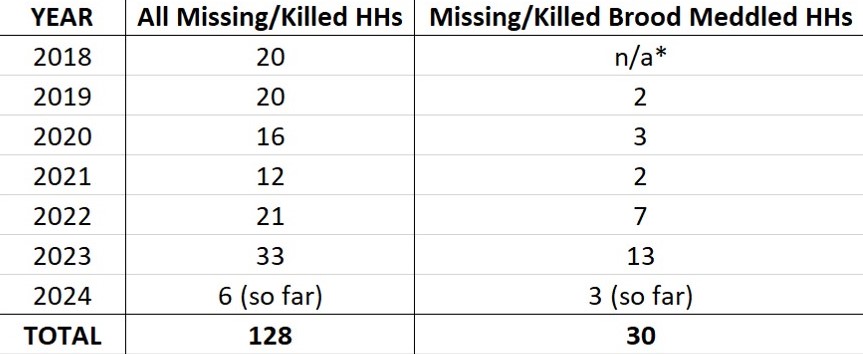
But what about objective 2? It seems pretty clear to me that apart from the handful of estates involved in the brood meddling trial (whether they be ‘donor’ or ‘receptor’ sites), that a high level of illegal hen harrier persecution continues amongst the wider grouse moor industry (128 hen harriers reported as ‘missing’/illegally killed so far since the trial began in 2018, including at least 30 brood meddled hen harriers) and the killing is on such a scale that the police have had to set up a new Hen Harrier Taskforce, designed to use techniques usually seen when dealing with serious and organised crime, to address the ongoing criminality.
It’s obvious then that attitudes towards hen harriers from within the wider grouse shooting industry have not changed as a result of the trial, so the Moorland Association’s claim of the trial being “a remarkable success story” is unsubstantiated nonsense.
Incidentally, Natural England has already produced an interim report (in April 2022) on the social science aspect of the brood meddling trial, which is hilariously bad, but I’ll write about that separately as it deserves its own blog post.
Back to the Moorland Association’s premature announcement that it intends to apply to Natural England for a (currently non-existent) ‘conservation licence’ to continue hen harrier brood meddling, the MA states that, “This approach fitswith global guidelines onwildlife conflict resolution, produced by the International Union for the Conservation of Nature (IUCN)“.
On the contrary, those IUCN guidelines are quite clear that animal translocations (in the context of human/wildlife conflict, as opposed to translocations for conservation purposes) should not take place if the perceived ‘problems’ caused by that species at the original location (in this case, on driven grouse moors) would simply be transferred to the new location(s). We’ve already seen that removing hen harrier chicks from a few grouse moors and releasing them somewhere else does not fix the problem – hen harriers are still not tolerated on other grouse moors and continue to be killed.
It’s also interesting that the Moorland Association’s blog details what it claims to be “the format of the conservation licence“, when that licence doesn’t even exist, let alone any details of its format/content! The Moorland Association claims the format includes, “A single release site” [for brood meddled hen harriers], presumably to get around the problem of there not being sufficient receptor sites willing to take the brood meddled harriers, and, “No further requirement for satellite tags“, presumably because the data from current satellite-tagged hen harriers have been so very effective at revealing the devastating extent of ongoing hen harrier persecution (e.g. see here and here). Awkward!
My guess is that the Moorland Association has made this announcement now, knowing full well that Natural England is still in the process of evaluating the success/failure of the brood meddling trial and the MA is using this announcement as a way of piling on the pressure on Natural England.
I’m really looking forward to Natural England’s full evaluation of the brood meddling trial, apparently due by the end of this year. And maybe by then it’ll also provide updates about the current ongoing police investigations into hen harriers that have died/gone ‘missing’ this year.
UPDATE 14 April 2025: Natural England / DEFRA turns down licence application for hen harrier brood meddling in 2025 (here)
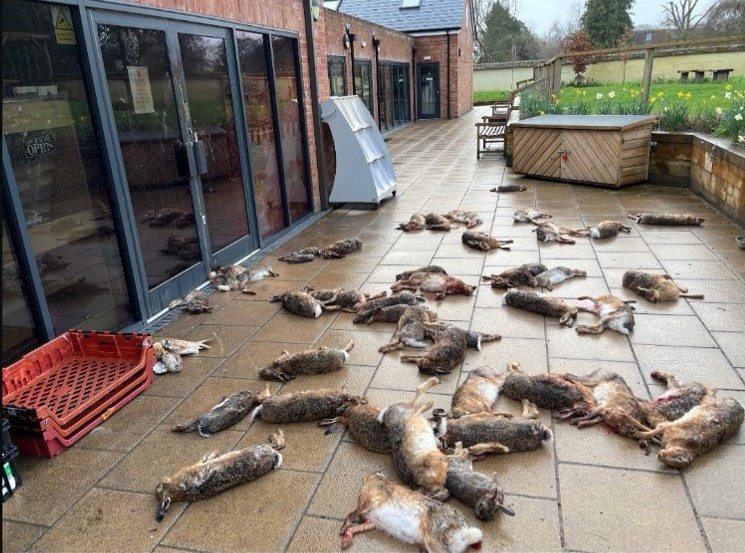
James Kempster, 37, of Bury Brickfield Park, Totton made a second appearance at Southampton Magistrates Court on 23 September 2024 to face charges in relation to the dumping of approximately 50 hares, a shot barn owl and a shot kestrel outside Broughton Community Shop near Stockbridge, Hampshire in March this year.
The shot kestrel and shot barn owl had been impaled on the shop door handles and blood & guts had been smeared over the windows. Photo: Broughton Community Shop
Hampshire Police charged Kempster in August with possessing live/dead Schedule 1 wild bird or its parts, possessing live/dead non-Schedule 1 wild bird or parts, and causing £5,000 worth of criminal damage to the shop window.
He had first appeared in court on 10th September but the case was adjourned. Appearing again in court on 23rd September, Kempster pleaded not guilty to all charges and a trial date has been set for 7 May 2025.
Kempster was released on bail on condition that he doesn’t enter the village of Broughton.
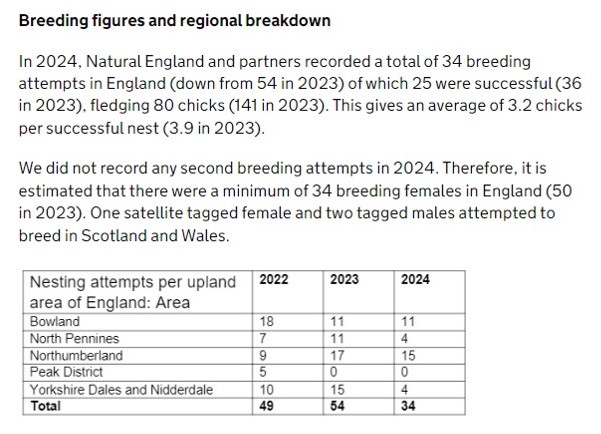
Last week Natural England published its results of the 2024 hen harrier breeding season and has reported a drop in breeding attempts (here).
This drop has been mainly attributed to poor weather, which is a reasonable assumption, although I’m pretty sure that it’s also been rainy in Northumberland (especially Kielder) and Bowland, where hen harriers continue to do well on land that isn’t managed for grouse shooting. Hmm, funny that.
And in the North Pennines, two pairs bred successfully on the RSPB’s Geltsdale reserve producing eight fledglings, the most successful breeding season there since the 1990s (here) and thanks in no small part to the round-the-clock nest protection provided by the RSPB. It also helps that none of the breeding males were found dead with shotgun injuries on the neighbouring grouse moor.
Disappointingly, Natural England’s end-of-season blog does not even mention any of the ongoing police investigations into dead/’missing’ hen harriers this year (currently 8 that we know about), let alone provide any level of detail about the causes of death. This lack of transparency has become Natural England’s hallmark.
Nor does the blog say anything about the collapse of its hen harrier brood meddling sham trial, other than ‘No nests were brood managed in 2024‘. We already knew that (see here) but I suppose it was a bit much to expect NE to admit to being mugged off by the grouse shooting industry in which it had ludicrously placed so much trust.
The blog does say that NE is “currently reviewing and analysing the data” [from the brood meddling sham trial] and that this is “a process which will be concluded later this year“. NE intends to use its findings to assess whether brood meddling will be rolled out as an annual so-called ‘conservation licence’. This seems an utterly untenable proposition given that (a) at least 128 hen harriers have been illegally killed or gone ‘missing’ in suspicious circumstances, mostly on or close to grouse moors, since brood meddling began (here) and (b) Andrew Gilruth, the CEO of NE’s main brood meddling partner, the Moorland Association, has recently been booted off the national police-led effort to tackle raptor persecution for “wasting time and distracting from the real work” of the Hen Harrier taskforce (here).
I look forward to NE’s brood meddling analysis with great interest. I wonder whether it’ll be as shabby as NE’s behaviour revealed in two examples this morning (see here and here)?
For anyone who still wants to pretend that the grouse shooting industry isn’t responsible for the systematic extermination of hen harriers on grouse moors across the UK, here’s the latest catalogue of crime that suggests otherwise.
[This male hen harrier died in 2019 after his leg was almost severed in an illegally set trap that had been placed next to his nest on a Scottish grouse moor (see here). Photo by Ruth Tingay]
This is the blog I now publish after every reported killing or suspicious disappearance.
“They disappear in the same way political dissidents in authoritarian dictatorships have disappeared” (Stephen Barlow, 22 January 2021).
Today the list has been updated to include the most recently reported victims, comprising five of eight reported incidents on Natural England’s latest sat tag update (August 2024) and that I blogged about here a couple of days ago. Three of the hen harriers have, like so many others, ‘disappeared’ without trace and two others have been found dead and are, according to an FoI response I received from Natural England in June, the subject of police investigations. The three of the eight that I’m not including on the list yet have all been found dead but Natural England has not yet reported on the post mortem results nor stated whether they are under police investigation so it’s not yet clear whether they are the victims of illegal persecution.
I’ve been compiling this list only since 2018 because that is the year that the grouse shooting industry ‘leaders’ would have us believe that the criminal persecution of hen harriers had stopped and that these birds were being welcomed back on to the UK’s grouse moors (see here).
This assertion was made shortly before the publication of a devastating new scientific paper that demonstrated that 72% of satellite-tagged hen harriers were confirmed or considered likely to have been illegally killed, and this was ten times more likely to occur over areas of land managed for grouse shooting relative to other land uses (see here). A further scientific paper published in 2023 by scientists at the RSPB, utilising even more recent data, echoed these results – see here).
2018 was also the year that Natural England issued a licence to begin a hen harrier brood meddling trial on grouse moors in northern England. For new blog readers, hen harrier brood meddling is a conservation sham sanctioned by DEFRA as part of its ludicrous ‘Hen Harrier Action Plan‘ and carried out by Natural England (NE), in cahoots with the very industry responsible for the species’ catastrophic decline in England. For more background see here and for a critical evaluation of the trial after 5 years see this report by Wild Justice. This year the brood meddling trial appears to have collapsed for reasons which are not yet clear (see here).
Brood meddling has been described as a sort of ‘gentleman’s agreement’ by commentator Stephen Welch:
“I don’t get it, I thought the idea of that scheme was some kind of trade off – a gentleman’s agreement that the birds would be left in peace if they were moved from grouse moors at a certain density. It seems that one party is not keeping their side of the bargain“.
With at least 128 hen harriers gone since 2018, and 30 of those being brood meddled birds, there is no question that the grouse shooting industry is simply taking the piss. Meanwhile, Natural England pretends that ‘partnership working’ is the way to go and DEFRA Ministers remain silent.
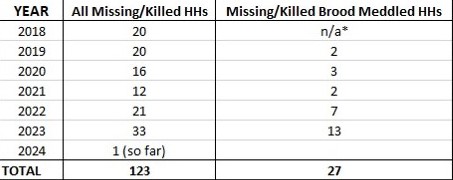
*n/a – no hen harriers were brood meddled in 2018
‘Partnership working’ according to Natural England appears to include authorising the removal of hen harrier chicks from a grouse moor already under investigation by the police for suspected raptor persecution (here) and accepting a £75k ‘donation’ from representatives of the grouse shooting industry that prevents Natural England from criticising them or the sham brood meddling trial (see here). This is in addition to a £10k ‘donation’ that Natural England accepted, under the same terms, in 2021 (here).
Thankfully, the Scottish Government has finally decided to act by introducing a grouse moor licensing scheme under the Wildlife Management & Muirburn (Scotland) Act 2024. The intention behind this new legislation is that grouse shooting estates could have their licences suspended/revoked if, on the balance of probability, it is shown that any raptor persecution crimes (& some other associated offences) are linked with grouse moor management on that estate.
So here’s the latest gruesome list of ‘missing’/illegally killed hen harriers since 2018. Note that the majority of these birds (but not all) were fitted with satellite tags. How many more [untagged] harriers have been killed?
February 2018: Hen harrier Saorsa ‘disappeared’ in the Angus Glens in Scotland (here). The Scottish Gamekeepers Association later published wholly inaccurate information claiming the bird had been re-sighted. The RSPB dismissed this as “completely false” (here).
5 February 2018: Hen harrier Marc ‘disappeared’ on a grouse moor in Durham (here).
9 February 2018: Hen harrier Aalin ‘disappeared’ on a grouse moor in Wales (here).
March 2018: Hen harrier Blue ‘disappeared’ in the Lake District National Park (here).
March 2018: Hen harrier Finn ‘disappeared’ near Moffat in Scotland (here).
18 April 2018: Hen harrier Lia ‘disappeared’ in Wales and her corpse was retrieved in a field in May 2018. Cause of death was unconfirmed but police treating death as suspicious (here).
8 August 2018: Hen harrier Hilma ‘disappeared’ on a grouse moor in Northumberland (here).
16 August 2018: Hen harrier Athena ‘disappeared’ on a grouse moor in Scotland (here).
26 August 2018: Hen Harrier Octavia ‘disappeared’ on a grouse moor in the Peak District National Park (here).
29 August 2018: Hen harrier Margot ‘disappeared’ on a grouse moor in Scotland (here).
29 August 2018: Hen Harrier Heulwen ‘disappeared’ on a grouse moor in Wales (here).
3 September 2018: Hen harrier Stelmaria ‘disappeared’ on a grouse moor in Scotland (here).
24 September 2018: Hen harrier Heather ‘disappeared’ on a grouse moor in Scotland (here).
2 October 2018: Hen harrier Mabel ‘disappeared’ on a grouse moor on the edge of the Yorkshire Dales National Park (here).
3 October 2018: Hen Harrier Thor ‘disappeared’ next to a grouse moor in Bowland, Lanacashire (here).
23 October 2018: Hen harrier Tom ‘disappeared’ in South Wales (here).
26 October 2018: Hen harrier Arthur ‘disappeared’ on a grouse moor in the North York Moors National Park (here).
1 November 2018: Hen harrier Barney ‘disappeared’ on Bodmin Moor (here).
10 November 2018: Hen harrier Rannoch ‘disappeared’ on a grouse moor in Scotland (here). Her corpse was found nearby in May 2019 – she’d been killed in an illegally-set spring trap (here).
14 November 2018: Hen harrier River ‘disappeared’ on a grouse moor in the Nidderdale AONB (here). Her corpse was found nearby in April 2019 – she’d been illegally shot (here).
16 January 2019: Hen harrier Vulcan ‘disappeared’ in Wiltshire close to Natural England’s proposed reintroduction site (here).
28 January 2019: Hen harrier DeeCee ‘disappeared’ in Glen Esk, a grouse moor area of the Angus Glens (see here).
7 February 2019: Hen harrier Skylar ‘disappeared’ next to a grouse moor in South Lanarkshire (here).
22 April 2019: Hen harrier Marci ‘disappeared’ on a grouse moor in the Cairngorms National Park (here).
26 April 2019: Hen harrier Rain ‘disappeared’ on a grouse moor in Nairnshire (here).
11 May 2019: An untagged male hen harrier was caught in an illegally-set trap next to his nest on a grouse moor in South Lanarkshire. He didn’t survive (here).
7 June 2019: An untagged hen harrier was found dead on a grouse moor in Scotland. A post mortem stated the bird had died as a result of ‘penetrating trauma’ injuries and that this bird had previously been shot (here).
5 September 2019: Wildland Hen Harrier 1 ‘disappeared’ on a grouse moor nr Dalnaspidal on the edge of the Cairngorms National Park (here).
11 September 2019: Hen harrier Romario ‘disappeared’ on a grouse moor in the Cairngorms National Park (here).
14 September 2019: Hen harrier (Brood meddled in 2019, #183704) ‘disappeared’ in the North Pennines (here).
23 September 2019: Hen harrier (Brood meddled in 2019, #55149) ‘disappeared’ in North Pennines (here).
24 September 2019: Wildland Hen Harrier 2 ‘disappeared’ on a grouse moor at Invercauld in the Cairngorms National Park (here).
24 September 2019: Hen harrier Bronwyn ‘disappeared’ near a grouse moor in North Wales (here).
10 October 2019: Hen harrier Ada ‘disappeared’ on a grouse moor in the North Pennines AONB (here).
12 October 2019: Hen harrier Thistle ‘disappeared’ on a grouse moor in Sutherland (here).
18 October 2019: Member of the public reports the witnessed shooting of an untagged male hen harrier on White Syke Hill in North Yorkshire (here).
November 2019: Hen harrier Mary found illegally poisoned on a pheasant shoot in Ireland (here).
November 2019: Hen harrier Artemis ‘disappeared’ near Long Formacus in south Scotland (RSPB pers comm).
14 December 2019: Hen harrier Oscar ‘disappeared’ in Eskdalemuir, south Scotland (here).
December 2019: Hen harrier Ingmar ‘disappeared’ in the Strathbraan grouse moor area of Perthshire (RSPB pers comm).
January 2020: Members of the public report the witnessed shooting of a male hen harrier on Threshfield Moor in the Yorkshire Dales National Park (here).
23 March 2020: Hen harrier Rosie ‘disappeared’ at an undisclosed roost site in Northumberland (here).
1 April 2020: Hen harrier (Brood meddled in 2019, #183703) ‘disappeared’ in unnamed location, tag intermittent (here).
5 April 2020: Hen harrier Hoolie ‘disappeared’ on a grouse moor in the Cairngorms National Park (here)
8 April 2020: Hen harrier Marlin ‘disappeared’ on a grouse moor in the Cairngorms National Park (here).
19 May 2020: Hen harrier Fingal ‘disappeared’ on a grouse moor in the Lowther Hills, Scotland (here).
21 May 2020: Hen harrier (Brood meddled in 2019, #183701) ‘disappeared’ on a grouse moor in Cumbria shortly after returning from wintering in France (here).
27 May 2020: Hen harrier Silver ‘disappeared’ on a grouse moor on Leadhills Estate, Scotland (here).
2020: day/month unknown: Unnamed male hen harrier breeding on RSPB Geltsdale Reserve, Cumbria ‘disappeared’ while away hunting (here).
9 July 2020: Unnamed female hen harrier (#201118) ‘disappeared’ from an undisclosed site in Northumberland (here).
25 July 2020: Hen harrier Harriet ‘disappeared’ on a grouse moor in the Yorkshire Dales National Park (here).
14 August 2020: Hen harrier Solo ‘disappeared’ in confidential nest area in Lancashire (here).
7 September 2020: Hen harrier Dryad ‘disappeared’ on a grouse moor in the Yorkshire Dales National Park (here).
16 September 2020: Hen harrier Fortune ‘disappeared’ from an undisclosed roost site in Northumberland (here).
19 September 2020: Hen harrier Harold ‘disappeared’ on a grouse moor in the Yorkshire Dales National Park (here).
20 September 2020: Hen harrier (Brood meddled in 2020, #55152) ‘disappeared’ next to a grouse moor in North Yorkshire (here).
24 February 2021: Hen harrier Tarras ‘disappeared’ next to a grouse moor in Northumberland (here)
12th April 2021: Hen harrier Yarrow ‘disappeared’ near Stockton, County Durham (here).
18 May 2021: Adult male hen harrier ‘disappeared’ from its breeding attempt on RSPB Geltsdale Reserve, Cumbria whilst away hunting (here).
18 May 2021: Another adult male hen harrier ‘disappeared’ from its breeding attempt on RSPB Geltsdale Reserve, Cumbria whilst away hunting (here).
24 July 2021: Hen harrier Asta ‘disappeared’ at a ‘confidential site’ in the North Pennines (here). We learned 18 months later that her wings had been ripped off so her tag could be fitted to a crow in an attempt to cover up her death (here).
14th August 2021: Hen harrier Josephine ‘disappeared’ at a ‘confidential site’ in Northumberland (here).
17 September 2021: Hen harrier Reiver ‘disappeared’ in a grouse moor dominated region of Northumberland (here)
24 September 2021: Hen harrier (Brood meddled in 2021, R2-F-1-21) ‘disappeared’ in Northumberland (here).
15 November 2021: Hen harrier (brood meddled in 2020, #R2-F1-20) ‘disappeared’ at the edge of a grouse moor on Arkengarthdale Estate in the Yorkshire Dales National Park (here).
19 November 2021: Hen harrier Val ‘disappeared’ in the Lake District National Park in Cumbria (here).
19 November 2021: Hen harrier Percy ‘disappeared’ in Lothian, Scotland (here).
12 December 2021: Hen harrier Jasmine ‘disappeared’ on a grouse moor (High Rigg Moor on the Middlesmoor Estate) in the Nidderdale AONB in North Yorkshire (here).
9 January 2022: Hen harrier Ethel ‘disappeared’ in Northumberland (here).
26 January 2022: Hen harrier Amelia ‘disappeared’ in Bowland (here).
10 February 2022: An unnamed satellite-tagged hen harrier ‘disappeared’ in a grouse moor dominated area of the Peak District National Park (here). One year later it was revealed that the satellite tag/harness of this young male called ‘Anu’ had been deliberately cut off (see here).
12 April 2022: Hen harrier ‘Free’ (Tag ID 201121) ‘disappeared’ at a ‘confidential site’ in Cumbria (here). It later emerged he hadn’t disappeared, but his mutilated corpse was found on moorland in the Yorkshire Dales National Park. A post mortem revealed the cause of death was having his head twisted and pulled off. One leg had also been torn off whilst he was still alive (here).
April 2022: Hen harrier ‘Pegasus’ (tagged by the RSPB) ‘disappeared’ on a grouse moor at Birkdale in the Yorkshire Dales National Park (here).
May 2022: A male breeding hen harrier ‘disappeared’ from a National Trust-owned grouse moor in the Peak District National Park (here).
May 2022: Another breeding male hen harrier ‘disappeared’ from a National Trust-owned grouse moor in the Peak District National Park (here).
14 May 2022: Hen harrier ‘Harvey’ (Tag ID 213844) ‘disappeared’ from a ‘confidential site’ in the North Pennines (here).
20 June 2022: Hen harrier chick #1 stamped to death in nest on a grouse moor in the Yorkshire Dales National Park (here).
20 June 2022: Hen harrier chick #2 stamped to death in nest on a grouse moor in the Yorkshire Dales National Park (here).
20 June 2022: Hen harrier chick #3 stamped to death in nest on a grouse moor in the Yorkshire Dales National Park (here).
20 June 2022: Hen harrier chick #4 stamped to death in nest on a grouse moor in the Yorkshire Dales National Park (here).
17 August 2022: Hen harrier (brood meddled in 2022, #R1-M1-22) ‘disappeared’ on moorland in the Yorkshire Dales National Park (here).
September 2022: Hen harrier ‘Sullis’ (tagged by the RSPB) ‘disappeared’ on a grouse moor in Cumbria (here).
5 October 2022: Hen harrier (brood meddled in 2022, #R3-M2-22) ‘disappeared’ on moorland in the Yorkshire Dales National Park (here).
10 October 2022: Hen harrier ‘Sia’ ‘disappeared’ near Hamsterley Forest in the North Pennines (here).
October 2022: Hen harrier (brood meddled in 2021, #R1-F1-21) ‘disappeared’ in the North Sea off the North York Moors National Park (here).
December 2022: Hen harrier female (brood meddled in 2020, #R2-F2-20) ‘disappeared’ on moorland in Cumbria (here).
1 December 2022: Hen harrier male (brood meddled in 2021, #R1-M1-21) ‘disappeared’ on moorland in the Yorkshire Dales National Park (here).
14 December 2022: Hen harrier female (brood meddled in 2022, #R3-F1-22) ‘disappeared’ on moorland in the North Pennines AONB (here).
15 December 2022: Hen harrier female (brood meddled in 2022, #R2-F1-22) ‘disappeared’ on moorland in the Yorkshire Dales National Park (here).
30 March 2023: Hen harrier female (brood meddled in 2022, #R1-F3-22) ‘disappeared’ in Yorkshire (here). Notes from NE Sept 2023 spreadsheet update: “Final transmission location temporarily withheld at police request“.
1 April 2023: Hen harrier male (brood meddled in 2022, #R2-M1-22) ‘disappeared’ in Yorkshire (here). Notes from NE Sept 2023 spreadsheet update: “Final transmission location temporarily withheld at police request“.
April 2023: Hen harrier ‘Lagertha’ (tagged by RSPB) ‘disappeared’ in North Yorkshire (here).
April 2023: Hen harrier ‘Nicola’ (Tag ID 234078) ”disappeared’ in North Yorkshire (here).
April 2023: Untagged male hen harrier ‘disappeared’ from an active nest on RSPB Geltsdale Reserve in Cumbria (here).
April 2023: Another untagged male hen harrier ‘disappeared’ from an active nest on RSPB Geltsdale Reserve in Cumbria (here).
April 2023: Untagged male hen harrier ‘disappeared’ from an active nest in Durham (here).
4/5 May 2023: Satellite-tagged male hen harrier called ‘Rush’ ‘disappeared’ from a grouse moor in Bowland AONB in Lancashire (here).
9/10 May 2023: Hen harrier male called ‘Dagda’, tagged by the RSPB in Lancashire in June 2022 and who was breeding on the RSPB’s Geltsdale Reserve in 2023 until he ‘vanished’, only to be found dead on the neighbouring Knarsdale grouse moor in May 2023 – a post mortem revealed he had been shot (here).
17 May 2023: Satellite-tagged hen harrier called ‘Wayland’ ‘disappeared’ in the Clapham area of North Yorkshire, just north of the Bowland AONB (here).
31 May 2023: Hen harrier male (brood meddled in 2022, tag #213932, name: R2-M3-22) ‘disappeared’ in Northumberland (grid ref: NY765687) (here).
11 June 2023: Hen harrier male (brood meddled in 2021, tag #213922, name: R2-M1-21) ‘disappeared’ at a confidential site in the Yorkshire Dales National Park. Notes from the NE spreadsheet: “Final transmission location temporarily withheld at police request“ (here).
12 June 2023: Hen harrier male (brood meddled in 2020, tag #203004, name: R1-M2-20) ‘disappeared’ on a grouse moor in Co. Durham (grid ref: NY976322) (here).
6 July 2023: Satellite-tagged female hen harrier named ‘Rubi’ (tag #201124a) ‘disappeared’ on a grouse moor in Co. Durham (grid ref: NY911151) (here).
23 July 2023: Hen harrier female (brood meddled in 2023, tag #55154a, name: R1-F1-23) ‘disappeared’ on a grouse moor in Co. Durham (close to where ‘Rubi’ vanished), grid ref: NY910126 (here).
29 July 2023: Hen harrier female (brood meddled in 2020, tag #55144, name: R2-F2-20) ‘disappeared’ at a confidential site in the North Pennines. Notes from the NE spreadsheet: “Dead. Recovered – awaiting PM results. Final transmission location temporarily withheld at police request“ (here).
9 August 2023: Satellite-tagged hen harrier called ‘Martha’ ‘disappeared’ on a grouse moor (Westburnhope Moor) near Hexham in the North Pennines (here).
11 August 2023: Satellite-tagged hen harrier called ‘Selena’ ‘disappeared’ on a grouse moor (Mossdale Moor) in the Yorkshire Dales National Park (here).
11 August 2023: Hen harrier female (brood meddled in 2023, tag #201118a, name: R3-F1-23) ‘disappeared’ in Co. Durham (grid ref: NZ072136) (here).
15 August 2023: Satellite-tagged hen harrier called ‘Hepit’ ‘disappeared’ on a grouse moor (Birkdale Common) near Kirkby Stephen in the Yorkshire Dales National Park (here).
24 August 2023: Hen harrier female (brood meddled in 2023, tag #55155a, name: R1-F2-23) ‘disappeared’ at a confidential site in Northumberland. Notes from the NE spreadsheet: “Final transmission location temporarily withheld at police request“ (here).
August-Sept 2023: Satellite-tagged hen harrier called ‘Harmonia’ ‘disappeared’ in the Yorkshire Dales National Park (here).
September 2023: Hen harrier female ‘Saranyu’, tagged by the RSPB in Cumbria in June 2023, ‘disappeared’ in Durham in September 2023 (no further details available yet – just outline info provided in 2022 Birdcrime report) (here).
September 2023: Hen harrier female ‘Inger’, a female tagged by the RSPB in Perthshire in July 2022, ‘disappeared’ on a grouse moor in the Angus Glens in September 2023 (here).
15 September 2023: Hen harrier male called ‘Rhys’, tagged in Cumbria on 1st August 2023, ‘disappeared’ on a grouse moor in the Yorkshire Dales National Park. Grid ref: SD798896 (here).
24 September 2023: Hen harrier female (brood meddled in 2023, name: ‘R2-F2-23’) ‘disappeared’ in the North Pennines, grid ref: NY888062 (here).
25 September 2023: Hen harrier female (brood meddled in 2022, name: ‘R1-F4-22’) ‘disappeared’ on a grouse moor in the Yorkshire Dales National Park, grid ref: SE077699 (here).
26 September 2023: Hen harrier female called ‘Hope’, tagged in Cumbria on 21 July 2023, ‘disappeared’ next to a grouse moor in the Yorkshire Dales National Park, grid ref: SD801926 (here).
4 October 2023: Hen harrier male (brood meddled in 2020, name: ‘R1-M3-20’) ‘disappeared’ in Co Durham, grid ref: NY935192 (here).
4 October 2023: Hen harrier female (brood meddled in 2023, name: ‘R4-F1-23’) ‘disappeared’ on a grouse moor in the Yorkshire Dales National Park, grid ref: SE003981 (here).
14 October 2023: Hen harrier male called ‘Cillian’, tagged in Cumbria on 1 August 2023, ‘disappeared’ in south west Scotland, grid ref: NY051946 (here).
15 November 2023: Hen harrier female called ‘Hazel’, tagged in Cumbria on 21 July 2023, ‘disappeared’ on the Isle of Man, grid ref: SC251803 (here).
27 November 2023: Hen harrier female called ‘Gill’, tagged in Northumberland on 10 July 2023, ‘disappeared’ at a confidential location in Teeside (here).
12 February 2024: Hen harrier female called ‘Susie’, Tag ID 201122, found dead at a confidential location in Northumberland and the subject of an ongoing police investigation (here).
15 February 2024: Hen harrier female called ‘Shalimar’, tagged on the National Trust for Scotland’s Mar Lodge estate in 2023, ‘disappeared’ in suspicious circumstances on a grouse moor in the notorious Angus Glens (here).
7 March 2024: Hen harrier male (brood meddled in 2023, name R2-M1-23) found dead in Devon. According to an FoI response from Natural England in June 2024 this death is the subject of an ongoing police investigation (here).
24 April 2024: Hen harrier male called ‘Ken’, Tag ID 213849a, ‘disappeared’ in suspicious circumstances close to a grouse moor in Bowland, grid ref SD 684601 (here).
17 May 2024: Hen harrier male (brood meddled in 2023, name R2-M2-23) ‘disappeared’ in suspicious circumstances next to Middlesmoor grouse moor in Nidderdale, grid ref SE043754 (here).
25 June 2024: Hen harrier female (brood meddled in 2023, name R2-F1-23) ‘disappeared’ in suspicious circumstances on a grouse moor in Yorkshire Dales National Park, grid ref NY985082 (here).
To be continued…….
Not one of these 128 incidents has resulted in an arrest, let alone a prosecution. I had thought that when we reached 30 dead/missing hen harriers then the authorities might pretend to be interested and at least say a few words about this national scandal. We’ve now reached ONE HUNDRED AND TWENTY EIGHT hen harriers, and still Govt ministers remain silent. They appear not to give a monkey’s. And yes, there are other things going on in the world, as always. That is not reason enough to ignore this blatant, brazen and systematic destruction of a supposedly protected species, being undertaken to satisfy the greed and bloodlust of a minority of society.
And let’s not forget the response from the (now former) Moorland Association Chair (and owner of Swinton Estate) Mark Cunliffe-Lister, who told BBC Radio 4 in August 2023 that, “Clearly any illegal [hen harrier] persecution is not happening” (here).
Nor should we forget the response from the Game and Wildlife Conservation Trust’s (GWCT) Director of Policy Dr Alistair Leake who wrote a letter to the Guardian newspaper in November 2023 stating that the hen harrier brood management [meddling] scheme “is surely a shining example of human / wildlife conflict resolution that would be the envy of other countries trying to find similar solutions“ (I kid you not – here).
It remains to be seen whether DEFRA Ministers under the new Labour Government will be prepared to tolerate such blatant criminality. Watch this space.
James Kempster, 37, of Bury Brickfield Park, Totton appeared at Southampton Magistrates Court on Tuesday 10th September 2024 to face charges in relation to the dumping of approximately 50 hares, a shot barn owl and a shot kestrel outside Broughton community shop near Stockbridge, Hampshire in March this year.
Hampshire Police charged Kempster in August with possessing live/dead Schedule 1 wild bird or its parts, possessing live/dead non-Schedule 1 wild bird or parts, and causing £5,000 worth of criminal damage to the shop window.
The shot kestrel and shot barn owl had been impaled on the shop door handles and blood & guts had been smeared over the windows. Photo: Broughton Community Shop
Kempster spoke only to confirm his name and address and did not enter a plea. The case was adjourned and will continue on 23 September 2023. Kemspter’s bail conditions ban him from entering Broughton.
Natural England has published its latest update (Aug 2024) on the fates of the satellite-tracked hen harriers it has tagged and subsequently been following, which reveals that eight more have either been found dead (and are listed as ‘awaiting post mortem’) or have gone ‘missing’ in suspicious circumstances.
Strangely (but not really), I haven’t seen a single press release from Natural England and/or the police about any of these 2024 incidents.
I mentioned two of them in a blog in early August (here) after Natural England told me in response to an FoI request in June that they were withholding information about the two cases so as not to jeopardise police investigations. Since then, the number has risen.
It has now emerged from Natural England’s August 2024 update that five of the eight have been found dead and are listed as ‘awaiting post mortem’, with one of these now upgraded to a full blown police investigation, and three others are listed as ‘missing, fate unknown’. The last known transmissions of these eight harriers were in February, March, April, May, June, July and August and three of them are brood meddled youngsters.
Here’s the list:
FOUND DEAD, AWAITING POST MORTEM:
Hen harrier ‘Susie’, female, Tag ID 201122. Last known transmission 12 February 2024, Northumberland. Found dead. Site confidential. In NE’s April 2024 update, Susie was listed as, ‘recovered, awaiting post mortem‘. Now her listing says, ‘Ongoing police investigation, final transmission location temporarily withheld at police request‘. You might remember ‘Susie’ – she’s the hen harrier whose chicks were brutally stamped on and crushed to death in their nest on a grouse moor in Whernside in the Yorkshire Dales National Park, in June 2022 (here).
Hen harrier R2-M1-23 (brood meddled in 2023), male, Tag ID 213927a. Last known transmission 7 March 2024, Devon. ‘Recovered, awaiting post mortem‘. I can’t believe the post mortem hasn’t been conducted six months on. This bird, along with Susie, is apparently the subject of a police investigation, according to Natural England’s earlier FoI response to me in June. [UPDATE 18 Dec 2024: Natural England has now reported this HH died of natural causes].
Hen harrier ‘Edna’, female, Tag ID 161143a. Last known transmission 7 June 2024, Northumberland. ‘Recovered, awaiting post mortem‘. Three months later and no post mortem result?
Hen harrier, female, Tag ID 254843. Last known transmission 29 July 2024, Northumberland. ‘Recovered, awaiting post mortem‘.
Hen harrier, male, Tag ID 254839. Last known transmission 5 August 2024, Northumberland. ‘Recovered, awaiting post mortem‘.
MISSING FATE UNKNOWN:
Hen harrier ‘Ken’, male, Tag ID 213849a. Last known transmission 24 April 2024, Bowland. Grid Ref: SD684601. ‘Missing, fate unknown‘. Very close to a grouse moor.
Hen harrier R2-M2-23 (brood meddled in 2023), male, Tag ID 213928. Last known transmission 17 May 2024, Nidderdale. Grid Ref: SE043754. ‘Missing fate unknown‘. Right next to a grouse moor. Apparently this is Yorkshire Water-owned land, where the shooting is rented out to Middlesmoor Estate – some of you may remember a previous blog about Middlesmoor Estate and a now former Moorland Association Director – here for those who want a reminder.
Hen harrier R2-F1-23 (brood meddled in 2023), female, Tag ID 213923. Last known transmission 25 June, Yorkshire Dales National Park. Grid Ref: NY985082. ‘Missing fate unknown‘. On a grouse moor, apparently on the Arkengarth Estate owned by the Duke of Norfolk.
These eight are in addition to the hen harrier ‘Shalimar’ who disappeared in suspicious circumstances on a grouse moor in the notorious Angus Glens in February 2024 (here) and the list also doesn’t include any of the RSPB’s tagged hen harriers – we’re waiting to hear about how many they’ve lost so far this year. And it’s only September – we’re now in peak hen-harrier-killing-season so I’m sure there’ll be more added to the list by the end of the year.
Not all of the most recent eight may turn out to be the victims of crime – we need to wait for the post mortem results to be published before they can be assigned, but some of them definitely can now be added to the running tally of illegally killed/’missing’ hen harriers, which currently stands at 123 harriers since brood meddling began in 2018.
You know, brood meddling, the so-called partnership (sham) where grouse moor owners gave Natural England a ‘gentlemens’ agreement’ that hen harriers wouldn’t be killed as long as Natural England/DEFRA removed hen harrier chicks from grouse moors during the breeding season. Given the number of harriers that have been killed during the partnership (sham), that ‘gentlemens’ agreement’ turned out to be utter tosh. And now the ‘partnership’ has gone belly up because the grouse moor owners are in a rage about the police wanting to catch the armed criminals responsible for all the killing, which the grouse moor owners claim have nothing to do with them but strangely don’t seem concerned about the apparent armed trespassers visiting their private estates to commit serious firearms offences and other crime!
I’ll be updating the hen harrier death list shortly…
Police Scotland appeal for information (26 August 2024):
APPEAL FOR INFORMATION FOLLOWING DEATH OF OSPREY IN PERTHSHIRE
We are appealing for information following the death of an osprey in Perthshire.
On Monday, 12 August, 2024 the injured osprey was found in distress by a gamekeeper in the Glen Doll area. The SSPCA was called and the bird taken to the wildlife resource centre in Fishcross for treatment, however it had to be euthanised due to the severity of the injuries.
Following further investigations, x-rays revealed the osprey had been shot and Police Scotland was contacted.
Officers are appealing for anyone with information on what happened to contact them.
Detective Constable Daniel Crilley, Wildlife Crime Investigation, said: “It’s illegal to kill any protected species and we’re working with partner agencies to fully investigate the circumstances.
“Information from the local community is vital and I’d ask anyone who was in the area around 12 August and thinks they may have information which could assist our enquiries to come forward. We’re keen to speak to anyone who may have seen anything suspicious or has information about shooting activity in the area.”
Anyone with information is urged to contact Police Scotland on 101 quoting reference 1671 of 26 August. Alternatively, you can call Crimestoppers anonymously on 0800 555 111.
It’s unusual for an Osprey to be shot in the UK, given that they’re a fish-eating specialist and therefore no threat to gamebirds such as red grouse, pheasants or partridges.
Police Scotland’s appeal for information doesn’t say what type of gun was used (shotgun or air rifle) which would have been evident from the x-ray, nor the extent of the osprey’s injuries (i.e. was it able to still fly? If not, it was obviously shot close to where it was found), so it’s quite difficult to comment in detail.
However, given it was found on the opening day of the annual grouse shooting season, in the Angus Glens, an area dominated by driven grouse moors and with a long, long history of illegal raptor persecution, then it’s difficult not to perceive this osprey has been shot by somebody out on a day’s grouse shooting.
Perhaps a case of mistaken identity? One too many sloe gins? Something similar has happened before, that time it was a buzzard shot during a pheasant shoot (see here).
Oh, and the osprey shooting happened inside the Cairngorms National Park.
What better advertisement for the gamebird shooting industry, eh?
This will be an interesting investigation to follow. If it was shot on a moor when a grouse shoot was taking place, how will that impact on the estate’s new licence?
Over the last few months I’ve heard from various well-placed sources that hen harrier brood meddling has not taken place this year.
For new blog readers, hen harrier brood meddling is a conservation sham sanctioned by DEFRA as part of its ludicrous ‘Hen Harrier Action Plan‘ and carried out by Natural England, in cahoots with the very industry responsible for the species’ catastrophic decline in England. In general terms, the plan involves the removal of hen harrier chicks and eggs from grouse moors, rear them in captivity, then release them back into the uplands just in time for the start of the grouse-shooting season where they’ll be illegally killed. It’s plainly bonkers. For more background see here and here.
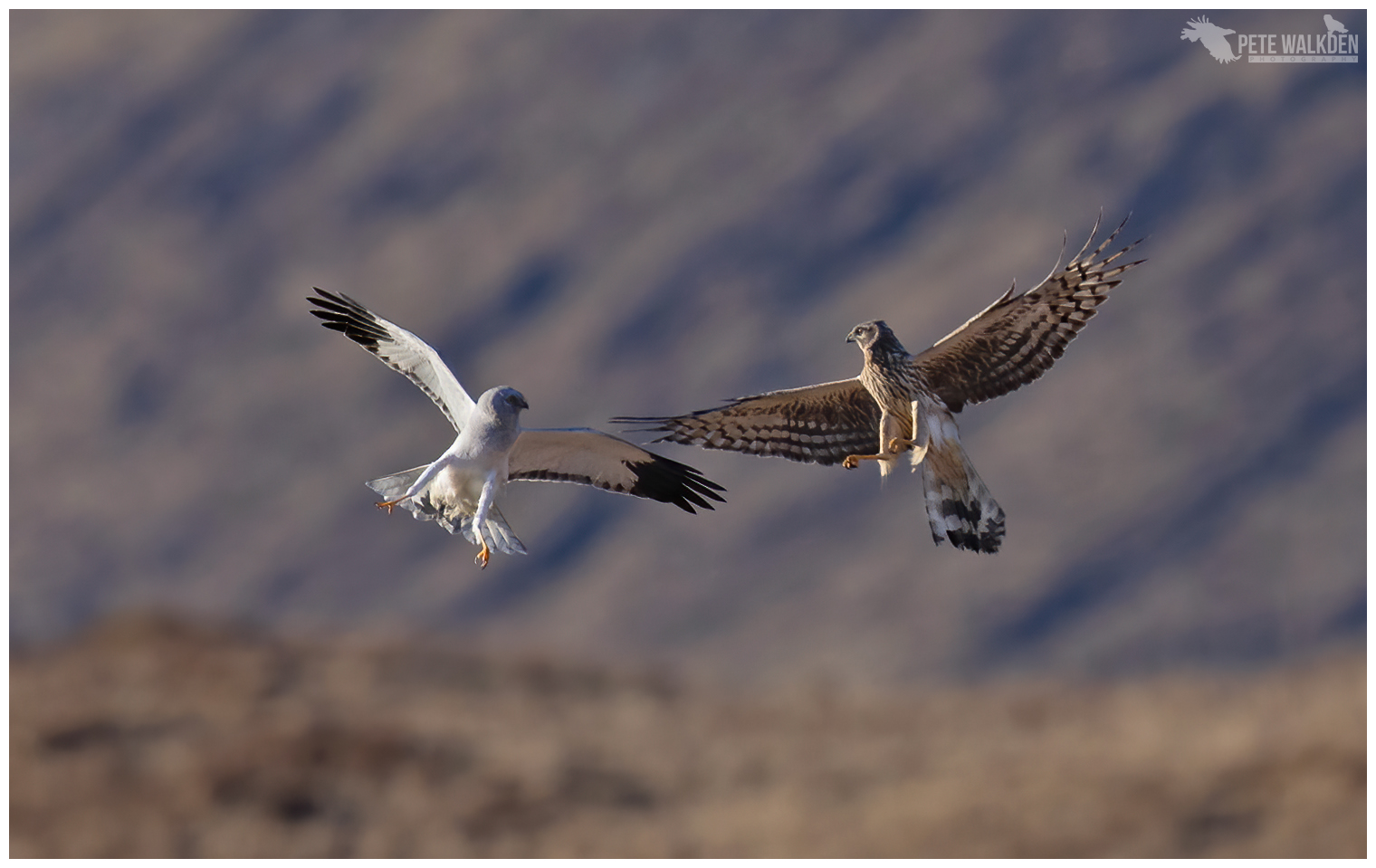
Photo: Laurie Campbell
I’ve asked Natural England (the licensing authority for hen harrier brood meddling) about the status of brood meddling this year but they haven’t responded yet.
If the rumours are true, and brood meddling hasn’t taken place this year despite there being broods available to meddle with, it raises a lot of questions, not just about what happened this year but also about any future prospects for brood meddling, whether that be as part of the continuing so-called scientific trial or the full roll-out of brood meddling as a recurrent annual practice, which is what the grouse shooting industry wants (laughingly calling it a ‘conservation licence’)!
Long-term blog readers will know that the initial brood meddling trial ran for five years from 2018-2022 inclusive. At the end of that trial, the brood meddling project board (which unbelievably includes vested-interest representatives from the grouse shooting industry such as the Moorland Association and GWCT, as well as the licence applicant, Jemima Parry Jones, who’s paid by the MA to do the brood meddling) decided it wanted to extend the trial and Natural England agreed to a further five year trial period (here).
An initial two-year extension licence was granted for 2023 and 2024 (NE isn’t permitted to grant a licence for longer than a two-year period in one go) with a few changes to the licence conditions as requested by the ‘project board’, including:
An increase in the number of times a pair of breeding hen harriers can have their nest brood meddled (previously, intervention was restricted to prevent the same pair being brood meddled in successive years – this time intervention was permitted in successive years);
No further requirement to satellite tag ALL the brood meddled chicks, only a sub-sample;
In the case of the North Pennines Special Protection Area (SPA) Southern Zone, no further requirement for brood meddled birds from this Zone to be released back into this Zone specifically, but still must be released into the wider North Pennines SPA (the project board had sought to remove entirely the requirement for brood meddled birds to be returned to the same SPA from where they were originally removed – this is important, I’ll come back to this point below).
For more detail about the changes to the licence conditions for 2023/2024 extension, see this Case Submission to Natural England’s High Risk Casework Panel in April 2023 and released to me under FoI:
So if the brood meddling ‘project board’ was so keen for an extension to the brood meddling trial/sham, why would they only take advantage of the extension for one year (2023) instead of the two years for which it was licensed? Just adding a one year extension to the trial doesn’t seem sufficient time (to me) to provide the data required to address the questions the so-called scientific trial was seeking to address, which is why NE approved a two-year licence extension within an extended five-year trial extension.
Well, there are a few hypotheses circulating about that. Of course these are all speculative at the moment because we don’t know for sure that brood meddling didn’t take place this year, but let’s assume for now that it didn’t.
The first hypothesis is that the grouse shooting industry simply hasn’t been able to find sufficient ‘receptor sites’ where the brood meddled chicks would be released post-captivity. We know, from an official internal NE report released via FoI, dated April 2022 (heading into the last year of the initial five year trial), that only four estates had been involved as ‘intervention sites’ (i.e. their hen harriers were brood meddled: one nest in 2019, two nests in 2020 and two nests in 2021) and only three estates had functioned as ‘receptor sites’. That’s not very many estates willing to engage in hen harrier brood meddling, is it?
Incidentally, data from the 2022 breeding season show there were four broods meddled with that year and six broods meddled with in 2024. I haven’t seen any information about how many estates were involved (as intervention or receptor sites) but the figure must still be staggeringly low.
Out of a purported 190 grouse moor member estates, the Moorland Association seems only to have found a handful willing to participate in the brood meddling trial, whether as an ‘intervention’ site or a ‘receptor’ site. I wonder why that is?
It could be that a lot of grouse shooting estates don’t see the point of getting involved in brood meddling because they’ve already got a tried and tested way of removing hen harriers from their moors (i.e. illegally killing them) and the chance of getting caught and prosecuted for it is virtually nil (see here).
It could be that a lot of grouse shooting estates won’t get involved in brood meddling unless it’s guaranteed that after the ‘trial’ period, brood meddling will be rolled out as a standard, legal technique that grouse moor owners can use every year to get rid of hen harriers. There’s some evidence that this hypothesis is more than speculative, as follows:
Cast you minds back to Valentine’s Day 2023 when the Natural England Board and some of its senior staff had a day out at Swinton Estate in Nidderdale (an estate at the epicentre of hen harrier brood meddling and also an estate with a long track record of confirmed and suspected raptor persecution offences, including some relating to hen harriers). I wrote about that day out (here and here).
After their soiree on the Swinton grouse moors, Natural England’s Board and senior staff went out to dinner and invited some fascinating guests. The NE Board had been issued with an internal briefing document to help them navigate what were described as “elephant traps and tricky issues”, which included hen harrier brood meddling. Here’s the briefing document, released to me under FoI – pay attention on page 3 under the heading Future of Brood Management, where it says this:
“NE Board has taken the in-principle decision to continue participation I [sic] brood management on a scientific trial basis. The MA is the principal partner in the trail [sic], promoting participation by estates, organising and funding release facilities and enabling access for our fieldworkers to tag and monitor chicks. Along with all our brood management partners, they are rightly proud of the success so far and are clear that an estate’s appetite for tolerating or welcoming breeding hen harriers is directly related to the availability of brood management as a ‘pressure valve’ to avoid a build-up of breeding hen harriers. The MA has supported the proposal of extending the trial but is clear that this should lead to the eventual wide availability of the technique as a practical and affordable tool“. (Emphasis added by me).
Also of interest in this internal briefing document is the news that the Moorland Association had asked for a ‘fixed release site’ (for brood meddled hen harriers) instead of having to release the birds back the same SPA from where they were removed. The MA had suggested Moorhouse NNR in Upper Teesdale or Ingleborough NNR in the Yorkshire Dales National Park as potential fixed sites. NE didn’t support this and the briefing document states:
“[REDACTED] judgement is that this represents too great a risk to the ‘NNR-brand’ as a whole and individual sites as long as illegal persecution remains a real threat to any hen harrier nest: additionally the MA should have sufficient contacts with access to vast tracts of suitable land if a long term commitment to hen harrier recovery is their goal“. [Emphasis is mine].
So there’s that issue I flagged earlier about the difficulty the MA appears to be having in providing ‘receptor’ sites. Funnily enough, this issue has also been raised again this year in a Moorland Association blog posted on 12 April 2024 (here), where there is quite a lot of moaning about having to release brood meddled hen harriers back in to the same SPA from where they were removed, and of course the now obligatory veiled threat about this potentially being in breach of IUCN guidelines, an argument the MA has also used recently in relation to the Police-led Hen Harrier Taskforce and one that the National Wildlife Crime Unit has summarily dismissed (see here).
A further hypothesis that’s been put forward about why the hen harrier brood meddling sham appears to have collapsed this year is that the Moorland Association probably doesn’t want to have to keep spending a fortune on paying for satellite tags when those tags are the primary source of evidence that demonstrate that brood meddling has not put an end to hen harrier persecution – indeed, last year (2023) was the worst on record since the brood meddling sham began in 2018, with 33 individual hen harriers reported as being illegally killed or to have disappeared in suspicious circumstances, including 13 brood meddled birds, and most of them on or close to driven grouse moors:
Over the next few weeks there should be more information available about this year’s hen harrier breeding season, including the number of breeding attempts, breeding failures and successes, the number of hen harriers satellite-tagged by Natural England and by the RSPB in various regions, the number of dead/missing hen harriers reported so far this year, and whether brood meddling did take place this year or whether the whole sham has just come tumbling down.
Whatever has happened this year, Natural England’s two-year extended brood meddling licence (2023-2024) has now expired and we can expect a substantial review of the seven-year ‘scientific trial’ which will be used to determine whether the trial is now closed or extended again, whether the grouse shooting industry will get a permanent ‘conservation licence’ (ha!) to continually remove hen harriers from the grouse moors, or whether the new Government will be pressed into dropping the whole sorry pantomime and instead focus its attention (and our money) into taking more effective action against the hen harrier killers.
Press release from Hampshire Constabulary (13 August 2024):
MAN CHARGED IN CONNECTION WITH BROUGHTON WILDLIFE CRIME INVESTIGATION
A man has been charged in connection with an incident in which dead animals were left outside a shop in Broughton.
James Kempster, 37, of Marchwood Road in Totton, has been charged with possessing live/dead Schedule 1 wild bird or its parts, possessing live/dead non-Schedule 1 wild bird or parts, and criminal damage.
On the morning of March 15 this year, police received reports that around 50 dead hares, a kestrel and a barn owl were found outside Broughton Community Shop in High Street.
Officers from Hampshire & Isle of Wight Constabulary’s Country Watch Team have been investigating the incident alongside the Criminal Investigation Department, which has now resulted in these charges.
Kempster is due to appear at Southampton Magistrates Court on Tuesday 10 September.
ENDS
For previous blogs on this case see here, here and here.
As this case is now live, comments are turned off until criminal proceedings have concluded so as not to jeopardise the case.
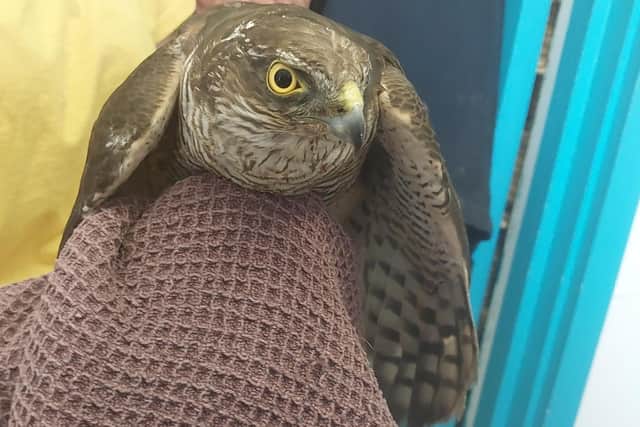
Derbyshire Police are appealing for information after a sparrowhawk died from gunshot injuries.
The injured sparrowhawk was found by a member of the public on 24 July 2024 in the Walton area of Chesterfield and was taken to the Pet Samaritans Animal Sanctuary in Old Whittington.
A Derbyshire Police spokesperson said:
“The injured Sparrow Hawk was found by a member of public in the Walton area on July 24. On closer inspection, it has become apparent that the bird has been shot by what we believe to be an air rifle.
Sadly, despite the best efforts from the staff at Pet Samaritans, the Sparrow Hawk has since died from its injuries.
Sparrow Hawks are protected under the Wildlife and Countryside Act 1981 which means that it is illegal to intentionally kill, harm or physically move them. Anyone found guilty of killing a Sparrow Hawk could face an unlimited fine and up to six months imprisonment“.
If you have any information about this incident please contact Derbyshire Police’s Rural Crime Team via 101 or email: drct@derbyshire.police.uk and quote reference number 24*454772.





 Raptor Persecution UK